 Pest Pro Reviews Editorial Team • • 20 min read •
 Carpenter Ants vs Termites: How to Tell the Difference (2026)
Learn the key differences between carpenter ants and termites, how to identify each, and the most effective DIY solutions for wood pest infestations in 2026. Find out which treatment is right for your home.
Carpenter ants vs termites: Carpenter ants tunnel through wood but don’t eat it, while termites actually consume and digest wood. For visible debris and active ants, DIY baits work well. If you spot mud tubes or hollow wood, suspect termites - these demand faster action and may require professional help for lasting results.
- Carpenter ants are easier to identify and treat with consumer baits; termites hide deeper and cause faster, more severe structural damage.
- Termites leave mud tubes and eat wood from the inside out, making early detection harder but more critical for your home’s safety.
- DIY solutions are effective for small carpenter ant problems, but termite infestations often demand professional-grade products or specialist intervention.
Key Differences Between Carpenter Ants and Termites
When it comes to wood pest identification, understanding the physical and behavioral differences between carpenter ants and termites is your first step to getting control. Both can damage wood, but the way they look, act, and the harm they cause are very different.
Identify your needs and get personalized recommendations
Just starting out and looking for easy-to-use, beginner-friendly pest removal solutions.
Wants to understand the differences between products and learn what matters most.
Likes to compare features, reviews, and performance before making a choice.
Focuses on getting the best mix of price, features, and proven effectiveness.
Wants a fast, reliable solution and is ready to make a purchase now.
Willing to pay more for the most reliable and advanced pest removal product.
Physical Appearance Comparison
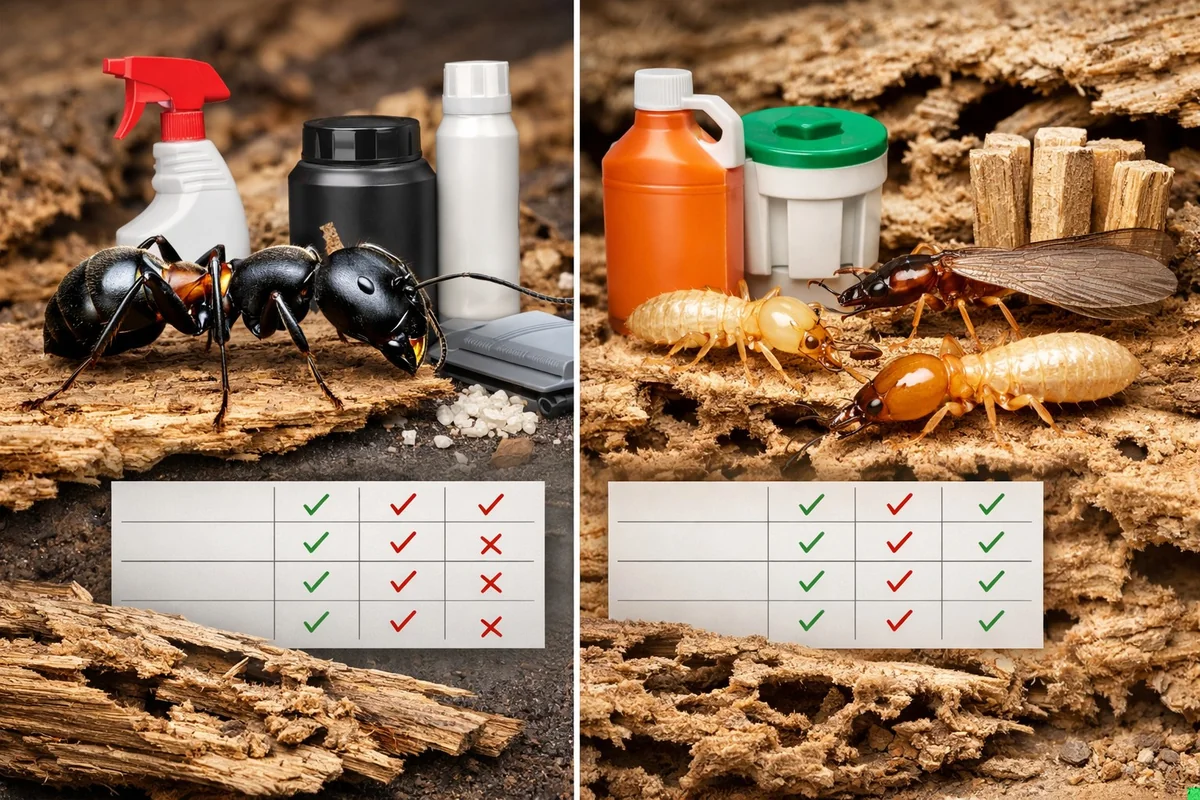
Carpenter ants have a distinctly narrow waist, almost like an hourglass, with antennae that are bent at sharp angles. Termites, on the other hand, have a thicker waist and straight antennae that look like tiny strings of beads.
Their wings provide another clear difference: termite wings are equal in length and extend well past the abdomen, while carpenter ant wings are uneven, with the front pair noticeably longer than the hind pair. Color also helps - carpenter ants are usually black, dark brown, or reddish, while termites tend to look pale, creamy, or almost translucent.
Behavior and Habitat Distinctions
Carpenter ants excavate wood to create smooth galleries for nesting, but they don’t eat the wood - just push it out as frass (a mix of sawdust and insect parts). Termites actually consume wood and digest it, making them far more destructive over a shorter period.
Moisture needs differ as well: termites require constant dampness to survive, so you’ll often find them in wet, decaying wood or near plumbing leaks. Carpenter ants are more flexible, nesting in both dry wood (like wall studs) and damp areas (rotting window sills or decks).
Finally, look for the mess: sawdust piles and wood shavings near entry holes usually point to carpenter ants, while mud tubes and gritty, packed galleries are classic termite signs.
For a broader look at wood-boring pest control options - including beetles and other invaders beyond ants and termites - see Carpenter Ant, Beetle & Wood Borer Control.
Signs of Infestation: What to Look For
Knowing whether you have carpenter ants or termites comes down to the evidence they leave behind. Check for wood damage patterns and visible debris before you start any DIY treatment - this will make your first step the right one, not a wasted weekend.
Wood Damage Patterns
Carpenter ants leave smooth, sanded galleries inside wood. If you break open an infested board, the tunnels look clean and almost polished. Termite damage is messier - galleries are rough, ragged, and packed with mud or termite droppings.
Termites weaken wood from the inside out. Structural beams can become dangerously hollow within months if a colony is left unchecked. Carpenter ants usually take years of neglect to cause that level of harm.
Spotting mud tubes running along your foundation or basement walls is a classic termite giveaway. Carpenter ants never build mud tubes.
Visible Clues and Debris
Look for frass - a mix of sawdust and tiny insect parts - near cracks, baseboards, or window frames. That’s almost always a carpenter ant sign. If you see small, pellet-like piles or discarded wings (especially after a swarm), termites may be the culprit.
Sawdust-like debris is a hallmark of carpenter ants. Termite debris is finer, often resembling gritty pellets or a dusty smear inside wood voids.
Life Cycle and Colony Structure
Understanding how each pest’s colony operates can help you predict how fast an infestation will grow - and how much time you have to stop it.
Reproduction and Swarming
Both carpenter ants and termites produce winged swarmers, but termite swarms are usually larger and more dramatic, often appearing in spring. Carpenter ant swarms tend to happen at night, while termite swarmers may emerge during the day.
Finding piles of discarded wings near windows or doors means a colony is mature and expanding. This is a sign you need to act quickly, no matter which pest you’re dealing with.
Colony Organization and Growth
Termite colonies are highly organized, with a king, queen, soldiers, and workers. They can reach populations in the millions and expand rapidly, sometimes doubling in size each year. Carpenter ant colonies are smaller - usually in the thousands - and led by a single queen and worker castes.
Termites are far more likely to cause severe, hidden damage quickly. Carpenter ants spread more slowly, giving you a better chance to catch and control the problem early.
Damage Assessment: Impact on Homes
The real danger lies in how each pest affects your home’s safety and your wallet. Quick identification makes a huge difference in repair costs and peace of mind.
Structural Risks and Repair Costs
Termites can render load-bearing beams structurally unsound in a matter of months if left untreated. That means floors may sag, walls can bow, and repairs get extremely expensive - often hidden until the damage is extensive.
Carpenter ants rarely cause catastrophic collapse unless they go undetected for years. Most of the time, their damage is localized and repairable without major reconstruction.
Repair bills for termite damage almost always run higher, mainly because termites eat from the inside out, making the destruction hard to spot until it’s severe.
Speed of Infestation Progression
Termite colonies can double in size each year, quickly compounding the damage. They work 24/7 and are relentless if not stopped at the source.
Carpenter ants expand at a slower pace, so infestations progress over months or years. That gives you more breathing room to intervene, but don’t wait too long - large colonies can still cause headaches.
Early detection is crucial for both pests, but with termites, time is truly against you. If you suspect termites, move fast.
DIY Identification Methods You Can Use
If you’re not sure what’s inside your walls, you don’t have to guess. There are several simple ways to tell the difference at home - no expensive lab tests needed for most infestations.
Simple At-Home Tests
- Tapping on suspicious wood - if it sounds hollow, termites are more likely the cause. Carpenter ant galleries may sound less hollow, but still different from solid wood.
- Use a flashlight to check hidden spots for mud tubes (termite sign) or piles of frass and sawdust (carpenter ant sign).
- If you catch an insect, examine its body shape and wings. Bent antennae and uneven wings? Carpenter ant. Straight antennae and equal-length wings? Termite.
When to Seek Professional Identification
If you’re still unsure after these checks, it’s time to call in an expert. Some pest species look almost identical to the untrained eye, and misidentifying them can cost you both time and money.
Professionals have access to lab tools and years of experience, making them the best choice if your infestation is severe or the signs are unclear. Don’t waste money on the wrong treatment - confirm before you act.
If you want to see a full list of recommended home and professional treatments for wood pests, check the Best Carpenter Ant and Wood Borer Treatments 2026 guide.
Best DIY Treatment Options for Each Pest
Choosing the right product can mean the difference between a fast win and months of frustration. Here’s what actually works for each pest, with real pros and cons for every product we recommend.
Carpenter Ant Control Strategies
For most household infestations, bait gels with borax are the gold standard. The active ingredient works slowly, giving ants time to carry it back to the queen. This is how you eliminate the colony, not just the foragers.
Direct dusting with diatomaceous earth or boric acid can kill a nest if you know exactly where it is, but that’s rarely the case - the nest is often hidden deep inside walls. Liquid sprays create a barrier to keep new ants out, but won’t touch the queen unless applied directly to the nest.
The Terro Liquid Ant Baits system is the best budget-friendly option for most homes. It uses a sweet liquid formula that attracts sugar-feeding ants, and the borax concentration is optimized for colony-wide transfer before the workers die.
- No mixing or measuring - just place the pre-filled stations along ant trails and let the foragers do the work.
- Safer for homes with kids and pets due to the enclosed design.
- Best for kitchens, laundry rooms, or anywhere you see active ant trails.
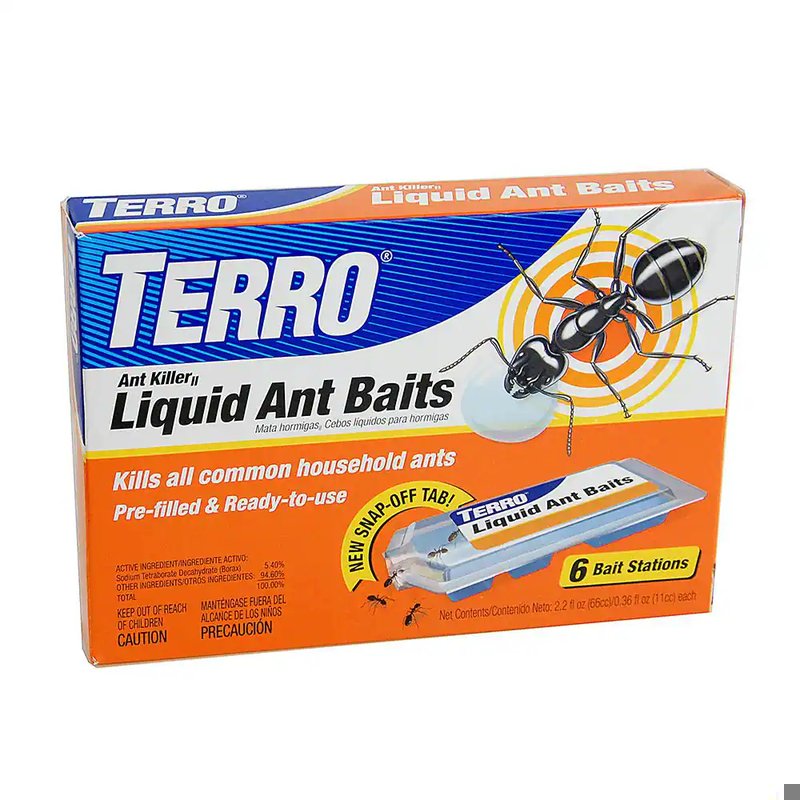
Terro Liquid Ant Baits
Terro Liquid Ant Baits provide fast, effective control of common household ants by using a sweet, borax-based liquid that attracts foraging ants and enables them to carry the active ingredient back to the colony. The pre-filled stations are easy to deploy and designed to minimize mess, making them suitable for use in kitchens, pantries, and other high-traffic areas. Optimized for sugar-feeding ant species, these baits offer long-term colony elimination when used as directed.
Why We Recommend This
We recommend Terro Liquid Ant Baits as the best budget pick for most homes dealing with sugar-feeding ants. The slow-acting borax formula is proven to disrupt entire colonies, and the pre-filled stations make setup straightforward even for those new to DIY pest control. This product stands out for its ease of use and reliable performance at a price point accessible to most households.
vs Competitors: Compared to granular or spray ant killers, Terro's liquid formula is cleaner and more effective for sugar-feeding ants, though it is not suitable for termite infestations. Other brands may offer faster kill times, but Terro's delayed action maximizes colony elimination.
Best For:
Homeowners and renters dealing with nuisance ants indoors who want a low-cost, easy-to-use bait solution and are comfortable following safety instructions.
- Ideal for treating visible ant trails in kitchens, bathrooms, and near entry points
- Suitable for homeowners seeking a budget-friendly DIY ant control option
- Contains 6 pre-filled liquid bait stations (12g each) for easy setup
- Active ingredient: 5.4% Sodium Tetraborate Decahydrate (Borax)
- Targets the entire colony by exploiting ant foraging behavior
- Easy-to-use, disposable stations reduce user contact with chemicals
- Not effective against termites or non-sugar-feeding ants
- Requires patience, as full colony elimination can take several days to weeks
For perimeter defense, Ortho Home Defense Insect Killer for Indoor & Perimeter offers long-lasting protection around entry points and baseboards. It’s a bifenthrin-based spray that creates a residual barrier for up to 12 months after drying.
- Works well as a preventative around windows, doors, and foundations.
- Non-staining, odorless formula safe for most indoor surfaces once dry.
- Ideal for those who want to stop new ants before they come inside, but it won’t eliminate a nest already inside the wall.
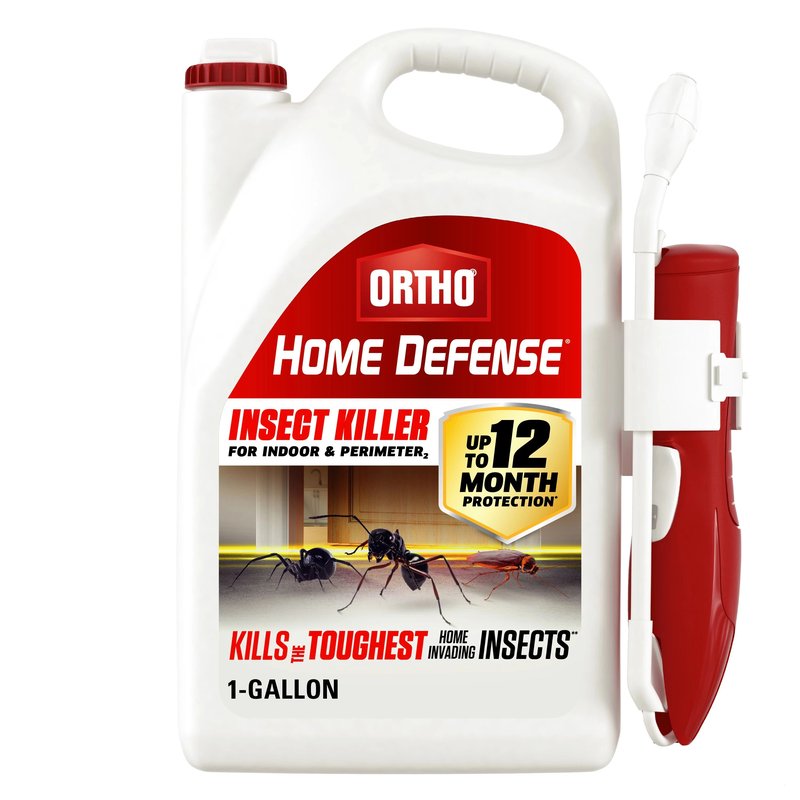
Ortho Home Defense Insect Killer for Indoor & Perimeter
Ortho Home Defense Insect Killer for Indoor & Perimeter creates a protective ant barrier lasting up to 12 months indoors and 3 months outdoors. The bifenthrin-based formula is designed for easy application along baseboards, thresholds, and exterior foundations to block ants before they invade living spaces. Suitable for use in high-traffic entry points and around the entire home perimeter.
Why We Recommend This
We recommend Ortho Home Defense for readers who want a straightforward, effective way to block ants from entering their home. Its bifenthrin formula stands out for reliably protecting high-risk entry points, and the convenient spray wand makes application quick and precise. Based on user reviews, it's a top performer for creating lasting barriers with minimal maintenance.
vs Competitors: Compared to granular or bait products, Ortho's spray delivers faster perimeter coverage and longer indoor residual protection, though it may require more frequent reapplication outdoors than some professional-grade concentrates.
Best For:
Homeowners and renters seeking a reliable, long-lasting ant barrier for both indoor living spaces and the exterior perimeter.
- Spraying along baseboards, door frames, and window sills to prevent ant entry
- Applying around exterior foundations, patios, and garage thresholds for whole-home protection
- Active ingredient: Bifenthrin 0.05% for targeted ant control
- Covers up to 5,000 sq. ft. per 24 fl. oz. bottle
- Long-lasting indoor and outdoor protection (up to 12 and 3 months, respectively)
- Easy-to-use spray wand minimizes mess and ensures even coverage
- Requires reapplication outdoors after heavy rain or every 3 months
- Not suitable for direct use on food prep surfaces or pet bedding
Termite Control Strategies
Termite infestations are trickier to treat yourself, but there are a couple of effective options for small, localized problems. For most homeowners, non-repellent liquid termiticides applied to the soil around the home are the first line of defense.
BASF Termidor SC Termiticide/Insecticide is a professional-grade concentrate that’s trusted by pest control pros. It uses a non-repellent formula, so termites don’t detect it - they walk through, pick up the poison, and spread it throughout the colony before dying.
- Best for: homeowners who want a long-term, invisible barrier around the home’s foundation.
- Requires mixing and careful application; not ideal for those unfamiliar with termiticide use.
- Premium investment, but delivers results that consumer baits can’t match in severe cases.
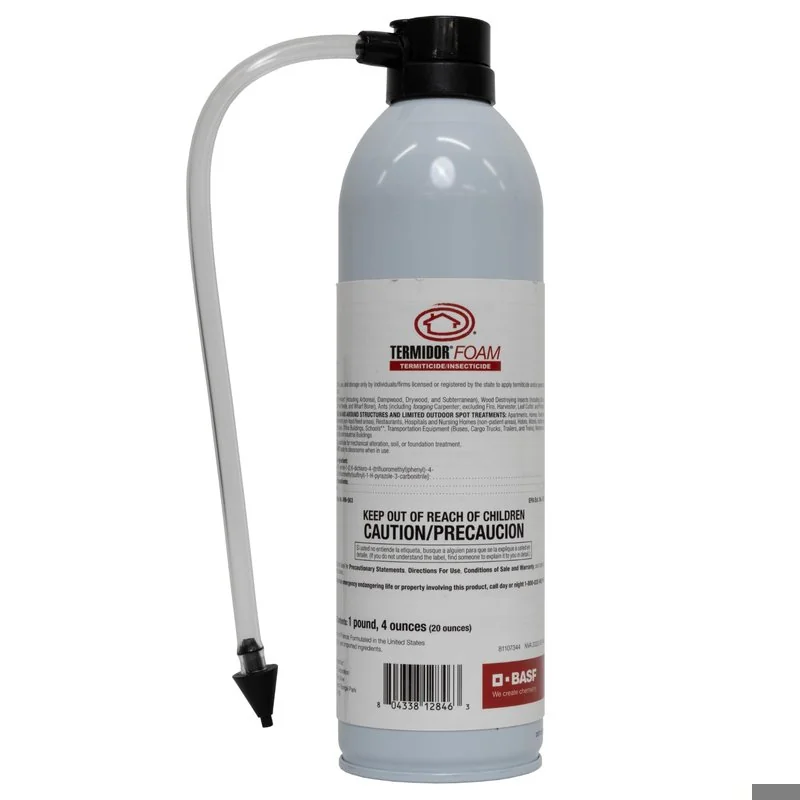
BASF Termidor SC Termiticide/Insecticide
BASF Termidor SC Termiticide/Insecticide delivers professional-grade termite control with a non-repellent liquid formula that eliminates entire colonies. Its 78 oz concentrate covers up to 100 linear feet, making it ideal for perimeter and trench treatments around homes. Trusted by pest control experts, it ensures long-lasting protection against subterranean termites in residential settings.
Why We Recommend This
We recommend BASF Termidor SC for readers who want professional-level termite protection and are comfortable with or have access to expert application. Its non-repellent formula is a gold standard in the industry, delivering reliable colony elimination that outperforms typical DIY solutions and many competing termiticides in owner reviews.
vs Competitors: Compared to repellent termiticides or bait systems, Termidor SC offers more consistent colony elimination and longer residual effects, though it does require careful handling and may have licensing restrictions.
Best For:
Homeowners, property managers, and pest control professionals seeking proven, long-lasting termite control for residential or light commercial buildings.
- Applying a protective barrier around residential foundations to prevent or address termite infestations
- Trenching and perimeter treatments for active subterranean termite colonies in homes or small commercial structures
- Non-repellent fipronil-based formula (9.1% active ingredient) ensures termites carry the treatment throughout the colony
- Provides up to 10 years of residual protection after application (manufacturer data)
- Eliminates entire termite colonies, not just individual insects
- Long-lasting residual effect reduces need for frequent reapplications
- Requires careful mixing and application; not intended for untrained homeowners
- Restricted use in some states and may require a professional license
For early-stage or spot infestations, Spectracide Terminate Termite Detection & Killing Stakes are a practical pick. These in-ground bait stations use hexaflumuron to disrupt termite growth and can be checked regularly for activity.
- Great for monitoring and spot treatment - especially in areas where you’ve seen termite activity before.
- Easy to install and use; ideal for DIYers who want a less invasive solution.
- Best for: supplementing professional treatments or providing early warning of new infestations.
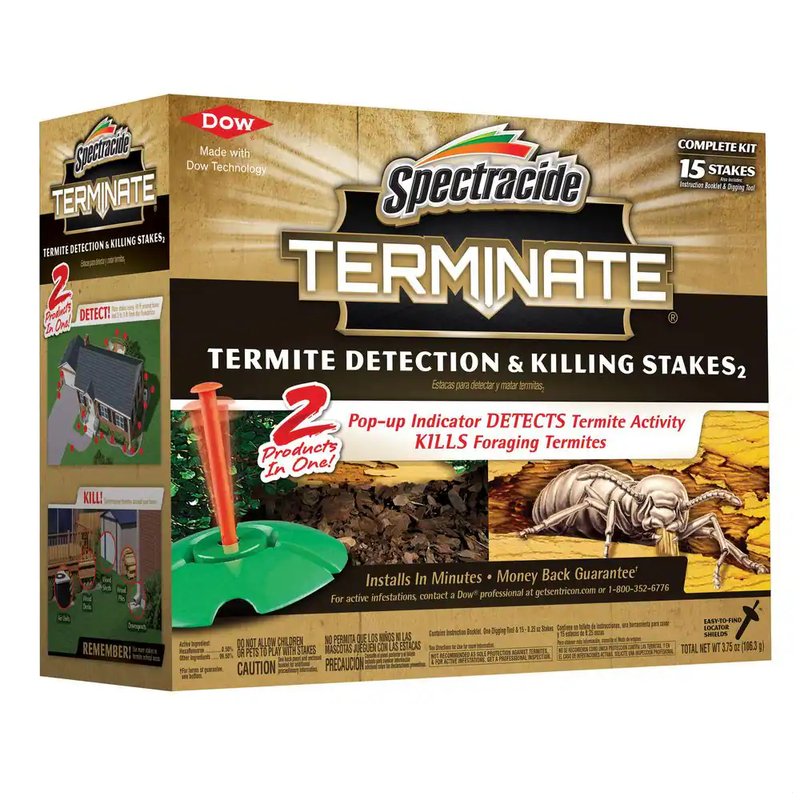
Spectracide Terminate Termite Detection & Killing Stakes
Delivers fast termite detection and targeted colony suppression for small yards with 15 in-ground bait stakes containing hexaflumuron. Each stake provides continuous monitoring over a 12-month period, making it ideal for homeowners seeking straightforward, hands-off termite protection without professional intervention.
Why We Recommend This
We recommend Spectracide Terminate stakes for homeowners prioritizing affordability and ease of use over professional-level coverage. These stakes are a smart starting point for early detection and localized protection, especially in low-to-moderate risk areas. While not suited for severe infestations, they offer dependable monitoring and colony suppression for typical residential needs.
vs Competitors: Compared to premium systems like the Sentricon baiting system, Spectracide Terminate offers a more accessible DIY option but with a lower capacity for colony elimination and less frequent servicing.
Best For:
Budget-conscious homeowners seeking convenient, DIY termite detection and prevention for small to medium-sized yards.
- Ideal for homeowners protecting small yards or specific high-risk zones
- Useful as a supplemental measure alongside liquid barriers for added peace of mind
- Includes 15 in-ground bait stakes for perimeter coverage
- Uses 0.5% hexaflumuron as the active ingredient for termite colony suppression
- Affordable DIY solution suitable for spot treatments and small properties
- Easy installation with visual monitoring - no special tools required
- Less effective for large infestations or expansive properties compared to professional-grade systems
- Requires regular checking and annual replacement for continued protection
Safety Considerations and When to Call a Professional
DIY pest control can save money and time, but there are real risks if you choose the wrong product or use it incorrectly. Here’s what to watch out for - and when it’s time to call in backup.
Risks of DIY Pest Control
- Improper use of insecticides can create health hazards for people and pets. Always follow label instructions and use personal protective equipment if recommended.
- Partial or incomplete treatment may cause pests to relocate, making the problem even harder to solve later.
- Some infestations are simply too large or deep-seated for DIY methods - especially with termites, where hidden damage can spread quickly.
Indicators for Professional Help
- If pest activity continues after multiple DIY attempts, the infestation is likely larger than you think.
- Visible structural damage, sagging floors, or widespread hollow-sounding wood are all signs that professional assessment is urgent.
- Licensed pest control pros have access to stronger, regulated chemicals and advanced detection tools that can reach hidden colonies.
Our Verdict: Choosing the Right Solution for Your Home
For most homeowners, visible sawdust and ant trails mean you’re dealing with carpenter ants. Start with a quality bait system like Terro Liquid Ant Baits and monitor results for two weeks. If you see mud tubes, hollow wood, or discarded termite wings, prioritize a termite bait system or soil-applied termiticide - don’t hesitate to call a professional if damage is severe.
DIY methods are cost-effective for minor carpenter ant issues if you act early and monitor closely. For termites, even small mistakes or delays can lead to expensive repairs and structural risk. Early, correct identification is the key - collect a specimen if you’re unsure and get an expert opinion before starting treatment.
Combining perimeter sprays, targeted baits, and careful monitoring maximizes your odds of success and minimizes wasted time and money. Don’t wait for a small problem to become a major one - taking action at the first sign of trouble is your best bet for a safe, pest-free home in 2026.
Frequently Asked Questions About Carpenter Ants vs Termites
❓ Frequently Asked Questions
What is the difference between carpenter ants and termites?
What is the difference between carpenter ants and termites?
Carpenter ants are large black or red ants that excavate wood for nesting but don’t eat it, while termites are pale, soft-bodied insects that feed on wood, causing structural damage. Carpenter ant galleries appear clean and smooth, whereas termite tunnels contain mud and soil for moisture retention.
How do I identify a carpenter ant infestation?
How do I identify a carpenter ant infestation?
To identify a carpenter ant infestation:
- Look for sawdust-like frass near wood structures
- Listen for faint rustling noises in walls
- Spot large winged ants indoors, especially in spring
- Check for smooth, hollowed galleries in wood
Most users report finding frass piles and ant trails as the first signs.
What are the signs of termite damage compared to carpenter ant damage?
What are the signs of termite damage compared to carpenter ant damage?
Termite damage often features hollowed wood with mud tubes or soil, while carpenter ant damage appears as clean, smooth tunnels without mud. Termites eat wood from the inside out, weakening structures, whereas carpenter ants excavate galleries for nesting, causing less immediate structural harm but still requiring prompt attention.
How do I get rid of carpenter ants or termites in my home?
How do I get rid of carpenter ants or termites in my home?
To remove carpenter ants or termites:
- Locate the nest or main colony
- Eliminate moisture sources and repair leaks
- Apply targeted baits or insecticidal dusts
- Seal entry points around foundations and windows
Professional pest control is recommended for severe infestations, as DIY methods often miss hidden colonies.
How often should I inspect my home for carpenter ant or termite activity?
How often should I inspect my home for carpenter ant or termite activity?
Industry standards recommend inspecting your home for carpenter ants and termites at least once per year. Homes in humid or wooded areas may need checks every 6 months. Early detection reduces repair costs and prevents extensive structural damage. Look for new frass piles, mud tubes, or unusual insect activity during inspections.
What should I look for when choosing a pest removal service for ants or termites?
What should I look for when choosing a pest removal service for ants or termites?
When choosing a pest removal service, consider:
- Licensing and certification: ensures compliance with regulations
- Experience with ant and termite control: proven results
- Treatment guarantees: covers retreatments if pests return
- Transparent pricing: no hidden costs
Request written estimates and check verified user reviews before hiring any provider.
Why is it important to treat carpenter ants and termites quickly?
Why is it important to treat carpenter ants and termites quickly?
Treating carpenter ants and termites promptly prevents structural damage and costly repairs. Termites can weaken wood from within, making homes unsafe, while carpenter ants expand nests over time. Fast intervention limits colony growth and reduces the risk of repeated infestations, saving homeowners time and money in the long run.
Related Articles

Best Carpenter Ant and Wood Borer Treatments 2026: Top Baits, Sprays, and Safe Solutions
Discover the best carpenter ant treatments and wood borer control products for 2026. Compare effective baits, sprays, natural solutions, and expert tips to eliminate pests and protect your home - DIY-friendly and budget-conscious.
Best Termite Treatments and Baits 2026: Expert Picks for DIY Control
Best termite treatments and baits for 2026. Compare top-rated liquid barriers, bait stations, sprays, and natural solutions for effective DIY termite control.

Guide to Identifying Household Pests: Spot, Compare, and Act on Common Pest Signs in 2026
Learn how to identify household pests quickly and accurately with our 2026 step-by-step pest identification guide. Spot common pest signs, compare DIY and professional methods, and take control of your home without costly exterminators.
Best Ant Killers for Home Use 2026: Top Baits, Sprays, and Natural Options Compared
Discover the best ant killers for home use in 2026. Compare top baits, sprays, natural options, and expert tips for safe, effective ant control - without hiring an exterminator.