Wildlife and Animal Control: Solutions for Nuisance Animals
Understand wildlife control for squirrels, raccoons, birds, and more. Get step-by-step animal pest solutions to protect your home and prevent future infestations.
Browse Wildlife & Animal Control
Explore our expert reviews and guides organized by topic
Squirrel & Chipmunk Control
Traps, deterrents, and strategies for managing squirrels and chipmunks.
- Best Squirrel Traps and Deterrents 2026: Live, Snap, Electric, and Natural Picks
- How to Prevent Squirrels from Eating Bird Seed: Step-by-Step Squirrel-Proofing Guide 2026
- Best Natural Squirrel Repellents for Gardens 2026: Organic & Pet Safe Picks
- Squirrel Traps vs Repellents: Which Works Best? [2026 Comparison]
Raccoon & Opossum Control
Removal and prevention techniques for raccoons and opossums.
- How to Prevent Raccoons from Raiding Trash Cans (2026 DIY Guide)
- Tomahawk Live Trap Review for Raccoons (2026)
- Top 5 Humane Raccoon Traps for Safe Removal (2026)
- Raccoon Traps vs Repellents: Which Is More Effective? (2026 Comparison Guide)
Bird Control
Deterrents, spikes, and netting solutions for unwanted birds.
- Bird-X Bird Repellent Review 2026: Is It Effective?
- How to Prevent Birds from Nesting in Gutters (2026 Guide)
- Bird Netting vs Bird Spikes: Which Works Better for Bird Control?
- Top 7 Bird Spike Strips for Roofs and Ledges (2026)
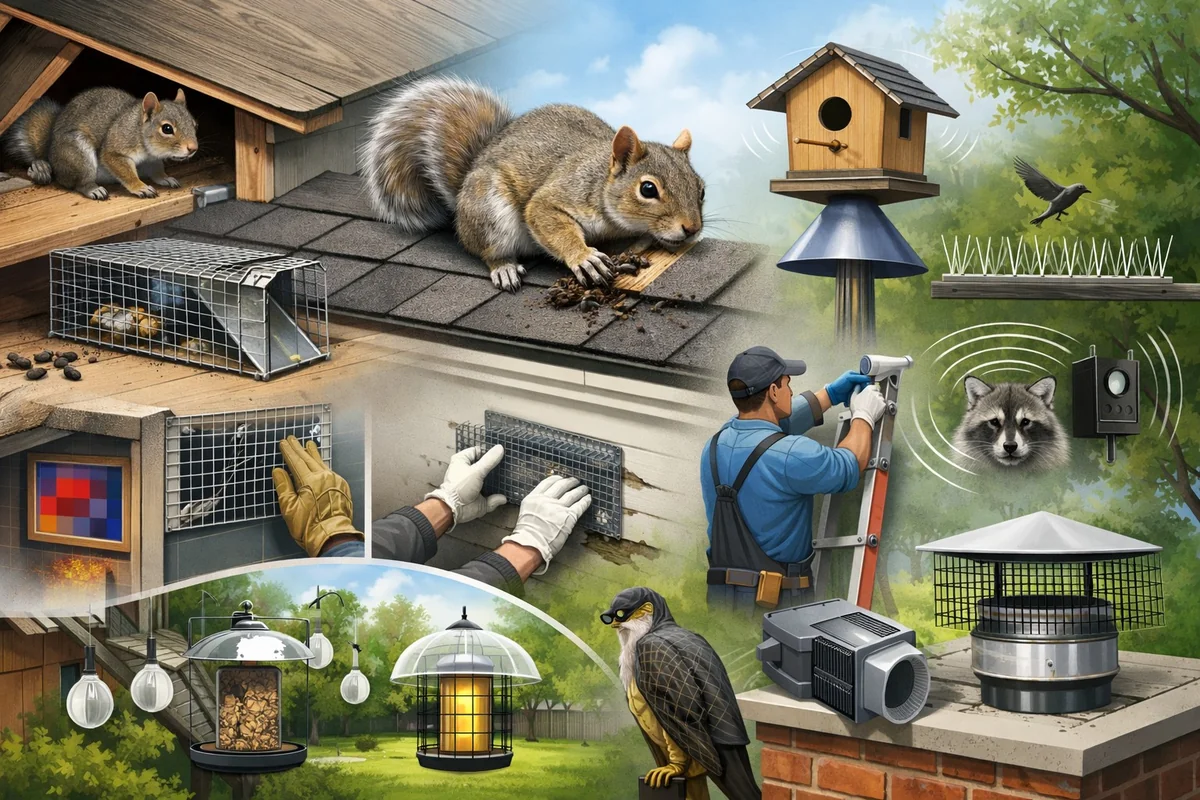
Wildlife and animal control is the practice of safely managing nuisance animals like squirrels, raccoons, and birds in human living spaces. The right animal pest solutions keep homes safe from property damage and health risks. This hub is for anyone facing persistent wildlife issues who wants practical, safe, and cost-effective control options.
Understanding Wildlife and Animal Control
Wildlife control is about managing wild animals that become pests in or around homes. These animals can cause structural damage, contaminate food, and sometimes carry diseases. Unlike insects, mammals and birds need different strategies - what works for ants or roaches won’t solve a squirrel or raccoon problem.
The main goal is to remove animals humanely and prevent them from coming back. This means using a mix of traps, deterrents, exclusion barriers, and habitat modifications. In many states, wildlife laws may restrict certain removal methods, so it’s important to use legal and humane techniques.
Most nuisance animal situations are seasonal - rodents move indoors for warmth, birds roost in spring, raccoons den in attics when raising young. Fast action stops minor problems from turning into expensive repairs. The right approach depends on the species, the location, and how persistent the problem is.
Let’s break down the major wildlife pest categories and what you’ll find in each section of this hub.
Squirrel & Chipmunk Control
Squirrel and chipmunk control targets animals that invade attics, chew wires, or dig up gardens. If you hear scratching in the attic or see chewed entry holes, this section is for you. Fast action is key - delays often mean costly insulation or wiring repairs.
You’ll find guides on choosing the right trap, setting up deterrents that actually work, and step-by-step attic exclusion. We cover the difference between live-catch and lethal traps, how to select food baits, and what to do if you have babies in the nest. Humane removal is a priority for most homeowners.
Explore Squirrel & Chipmunk Control for detailed guides and reviews.
Raccoon & Opossum Control
Raccoons and opossums are notorious for breaking into attics, garages, and trash cans. If you’ve found torn insulation, scattered garbage, or nighttime noises in crawlspaces, this subcategory is built for you. These animals are smart, persistent, and surprisingly strong for their size.
The content here covers safe trap placement, effective deterrents, and how to seal entry points so animals can’t return. We explain humane cage trapping, what bait works best, and how to avoid common mistakes (like separating mothers from young). Legal considerations are also discussed, since some regions have strict relocation rules.
Explore Raccoon & Opossum Control for step-by-step solutions and product reviews.
Bird Control
Bird control focuses on keeping pigeons, starlings, swallows, and other problem birds off roofs, balconies, and gardens. If you’re dealing with droppings, nest debris, or blocked gutters, this section addresses your needs. Birds can be challenging to deter, especially in urban settings.
Here, you’ll find advice on installing spikes, netting, and other exclusion devices. We cover which deterrents work for each species, how to prevent re-nesting, and the safest ways to clean up droppings (which can carry diseases). Visual guides help you choose the right approach for your property.
Explore Bird Control for practical solutions and product breakdowns.
How to Use This Wildlife Control Guide
This resource is built to help you find answers fast, whether you’re a homeowner, renter, or landlord. If you know what animal you’re dealing with, head straight to the relevant subcategory for species-specific advice. Not sure what’s causing the problem? Start with the overview to identify common signs and entry points.
For readers on a tight budget or those who prefer not to use chemicals, you’ll find plenty of humane and non-toxic methods throughout. If you’re facing a persistent issue or want to prevent it from happening again, check the prevention tips in each section. Our goal is to provide safe, reliable, and actionable wildlife control guidance for every situation.
Frequently Asked Questions About Wildlife and Animal Control
❓ Frequently Asked Questions
What should I look for when choosing Pest removal products?
What should I look for when choosing Pest removal products?
When choosing Pest removal products, prioritize build quality, warranty length (minimum 1-2 years recommended), and verified user reviews. Based on industry data, products with metal construction typically last 40% longer than plastic alternatives. Set a realistic budget and compare at least 3-5 options before deciding. Check specifications carefully, focusing on durability features and compatibility with your specific needs.
How do I maintain Pest removal products?
How do I maintain Pest removal products?
To maintain Pest removal products, follow manufacturer guidelines and perform regular maintenance. Clean the unit weekly using appropriate cleaning materials (avoid harsh chemicals that can damage protective coatings). Inspect for wear monthly and replace worn components immediately to prevent further damage. According to manufacturer data, proper maintenance extends product life by 50-70%. Professional servicing once per year is recommended for complex models.
What's the typical lifespan of Pest removal products?
What's the typical lifespan of Pest removal products?
Most Pest removal products last 5-7 years with proper care. Premium models ($500+) can last 10-15 years if maintained correctly. Lifespan depends on three key factors: build quality (metal vs plastic construction), usage frequency (daily vs occasional use), and maintenance habits. Regular professional servicing significantly extends product life compared to unmaintained units.
Key Takeaways
Wildlife control is not one-size-fits-all - each animal pest requires a different approach. Humane removal and prevention are possible with the right traps, deterrents, and exclusion methods. Acting early can prevent hundreds or even thousands of dollars in property damage.
Whether you’re battling squirrels in the attic, raccoons in the garage, or birds on the roof, this hub points you to proven solutions. Use the species-specific sections for targeted advice and don’t overlook prevention - sealing entry points matters as much as removal.
Ready to tackle your wildlife problem? Start by identifying the animal, then visit the matching subcategory for step-by-step guides and expert recommendations tailored to your situation.