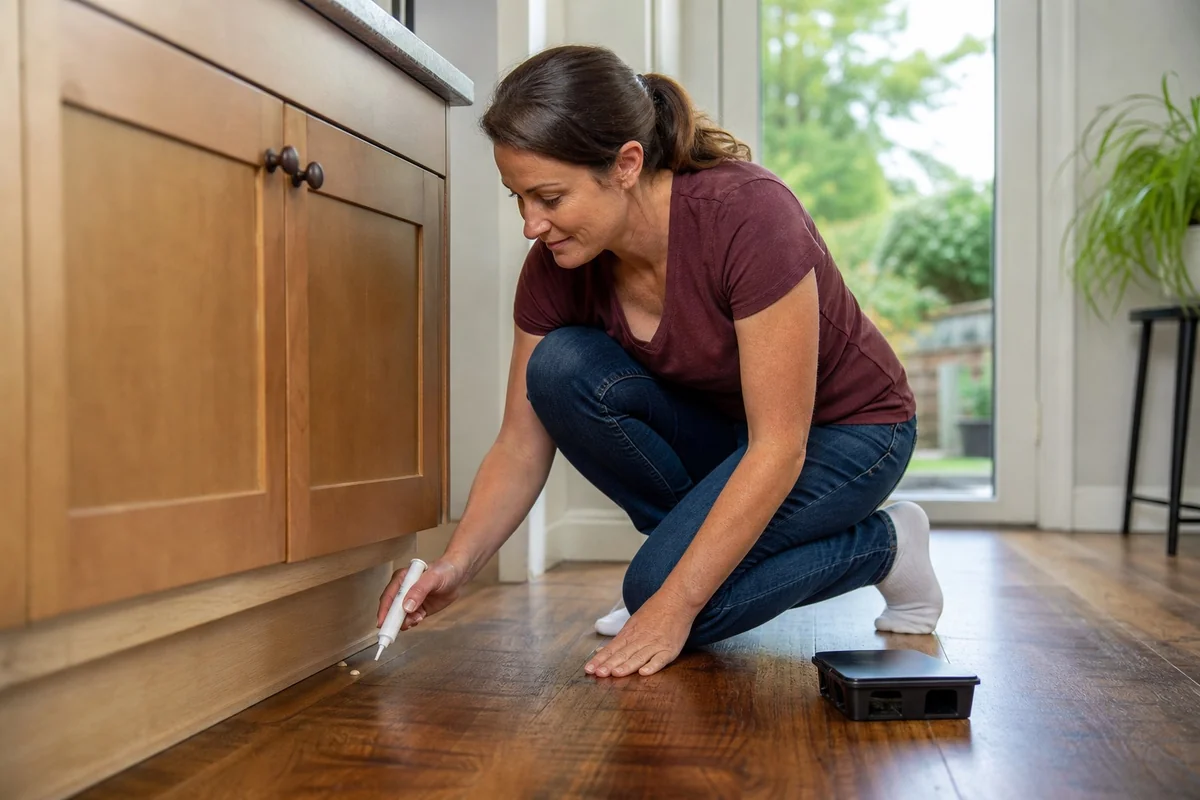

Pet-Safe Roach Control You Can Do Yourself
Best DIY pet-safe roach control: pet food management, sealing, vacuuming, traps out of reach and boric acid only in voids, plus remedies to avoid with dogs and cats.
The best DIY pet-safe roach control combines methods that use no insecticide at all, such as sanitation, sealing, vacuuming and traps placed out of reach, with boric acid used only where pets cannot get to it. Pet food management matters as much as any product, because a full bowl overnight feeds roaches too.
What Pet-Safe Roach Control Means
Pet-safe roach control keeps your dog, cat, bird or fish away from anything that could hurt them while you get rid of roaches. Some DIY methods carry no risk at all because they involve no insecticide. Others, such as boric acid, are low in toxicity but still harmful if a pet eats enough, so safety comes from where you put them.
Dogs mostly get into trouble by eating bait or licking dust, cats by walking through dust or sprays and grooming their paws, and birds and fish by breathing or absorbing anything airborne. A pet-safe plan avoids open products on floors and anything sprayed into the air.
Our guide on how to get rid of roaches naturally covers the full natural plan, and the natural roach control section links the homemade recipes and fast DIY methods.
DIY Roach Methods Ranked by Pet Safety
DIY roach methods range from completely pet-safe to risky if placed carelessly. The table ranks the common options by the risk to pets and shows where each belongs in a home with animals.
| Method | Pet Risk | Effect on Roaches | Pet-Safe Use |
|---|---|---|---|
| Pet food and water control | None | Removes food and water | Pick up bowls at night, seal kibble |
| Sealing, decluttering, vacuuming | None | Removes shelter and roaches | Any time |
| Greased jar traps | Very low | Catches wandering roaches | Inside cabinets |
| Sticky traps | Low; glue can catch fur | Catches and monitors | Under appliances, out of reach |
| Boric acid dust | Low if kept in voids | Reaches hidden roaches | Kick panels, wall gaps, under sinks |
| Homemade boric acid bait | Moderate if reachable | Roaches eat it | Behind appliances or in a closed jar |
| Essential oil sprays | A concern for cats | Kills on contact only | Avoid in cat homes |
The safest methods do the most work in a pet home. Starving roaches of food, water and shelter shrinks the population without any product, and traps and vacuuming remove roaches you can reach. Boric acid then handles the hidden population in places pets never go. Methods near the bottom of the table are the ones to skip or use with the most care, especially with cats.
No-Insecticide Methods That Work
- Pet food control: feed at set times, pick up bowls before bed, store kibble in sealed bins and sweep crumbs around feeding spots.
- Water control: fix leaks, dry sinks at night and move pet water bowls off the kitchen floor overnight if roaches are active there, leaving fresh water elsewhere.
- Sealed food: move human food into sealed glass or plastic containers and wipe grease.
- Vacuuming: clean cracks, hinges and behind appliances to remove roaches and egg cases, bagging the contents outside.
- Decluttering: remove cardboard, paper bags and piles of newspaper that roaches use as shelter.
- Sealing: caulk cracks and gaps around pipes, and add door sweeps.
These steps alone often cut roach numbers sharply within a couple of weeks, and they make any bait you add later far more effective, because the bait becomes the only food left.
Using Boric Acid Safely Around Pets
Boric acid is the most effective DIY roach killer, and it can be used in a pet home with care. The National Pesticide Information Center's boric acid fact sheet describes it as low in toxicity but notes it affects animals much as it affects people and that signs can appear within about 2 hours if a pet eats it.
The rule is placement. Puff a barely visible film into voids pets cannot reach: under the refrigerator and stove kick panels, behind the dishwasher, inside cabinet gaps and around pipe openings under the sink. Never dust floors, pet beds or areas where cats walk and groom.
Homemade boric acid dough bait works the same way, but it looks and smells like food to a dog. Place it only behind appliances or inside a closed container with small holes, such as a jar with a punched lid, set where your pet cannot reach. Our homemade roach killer recipes cover the dough itself.
Traps in a Pet Home
Sticky traps catch roaches with no insecticide, but the glue can trap a curious cat's paw or a dog's nose and fur. Place them under appliances, inside cabinets and behind furniture, where pets cannot reach, rather than along open baseboards.
Greased jar traps are a pet-friendlier option: a glass jar with petroleum jelly around the inside rim and a piece of bread inside, set in a cabinet. Roaches climb in and cannot get out, and there is nothing a pet can stick to. Our guide on fast DIY roach control describes the setup.
Check traps every few days. A trap full of roaches tells you where to focus boric acid, and an empty one after a week means it is in the wrong place, not that the roaches are gone.
DIY Remedies to Avoid in Pet Homes
- Essential oil sprays around cats: many essential oils are a concern for cats, which can swallow oil when grooming.
- Foggers: fog settles on pet bowls, beds and fur, and it is especially risky for birds and fish.
- Dust spread on floors: pets walk through it and lick it off their paws.
- Open bait in bottle caps: a dog will eat it in seconds.
- Baking soda mixes: no reliable evidence they kill roaches, so they waste time while the population grows.
Common Questions About Pet-Safe Roach Control
What gets rid of roaches but is pet friendly?
What gets rid of roaches but is pet friendly?
The most pet-friendly approach uses no insecticide: pick up pet food at night, seal human food, vacuum hiding spots, declutter and seal gaps. Add boric acid only in voids pets cannot reach, and use traps inside cabinets or under appliances.
Is diatomaceous earth safe for pets?
Is diatomaceous earth safe for pets?
Food-grade diatomaceous earth is low in toxicity if a small amount is eaten, but the fine dust irritates the nose and lungs. Keep it inside wall voids and behind appliances rather than on floors or pet bedding, and avoid blends with added essential oils in cat homes.
Do roaches eat cat and dog food?
Do roaches eat cat and dog food?
Yes. Kibble left in bowls overnight and crumbs around feeding spots are easy meals for roaches, and they compete with any bait you put out. Feeding at set times and storing pet food in sealed bins is one of the most effective changes a pet owner can make.
How do I keep my dog away from roach bait?
How do I keep my dog away from roach bait?
Put bait where your dog physically cannot reach: behind the fridge and stove, inside latched cabinets or in a closed jar with small holes set on a high shelf near the trail. Feed your dog in another room while baiting, and check each placement weekly to make sure none has been moved or chewed.
Key Takeaways
The safest roach control in a pet home starts with no insecticide: managing pet food and water, sealing human food, vacuuming hiding spots, decluttering and sealing gaps. These steps shrink the population and make any bait you add work faster.
Boric acid dust and homemade bait reach the hidden roaches, but only belong in voids and containers your pets cannot reach. Skip essential oil sprays around cats, foggers and anything spread on floors, and call your vet if a pet gets into a product.
Tonight, pick up the pet bowls before bed and seal the kibble in an airtight bin.
Related Articles
How to Get Rid of Roaches Fast With DIY Methods That Work
The best DIY way to get rid of roaches fast: vacuum, soapy water, greased jar traps, thin boric acid dust and a homemade dough bait, plus DIY tricks that waste time.
Homemade Roach Killers: Boric Acid Bait Recipes That Work
The best homemade roach killer: a boric acid dough bait with flour, milk, sugar and onion, plus borax and dust options, soap spray, jar traps and remedies that fail.
How to Get Rid of Roaches Naturally: What Works and What Doesn't
How to get rid of roaches naturally: sanitation and sealing, vacuuming hiding spots, boric acid and diatomaceous earth, and the remedies to skip.
Best Sprays for Roaches: What Actually Ends an Infestation
Best sprays to get rid of roaches: Temprid FX non-repellent concentrate, Bengal Gold and Bengal dry aerosols and Raid Ant & Roach, plus where spray fits with bait.