Wildlife Control: Raccoons, Squirrels, Snakes and Moles
Humane wildlife control for homes and yards: keeping raccoons, squirrels and snakes out, what repellents can really do, and how to trap moles in a lawn.
Browse Wildlife & Critters
Explore our reviews and guides organized by topic
Raccoon Repellents
Store-bought raccoon repellents and sprays for yards, gardens and attics, and how to keep raccoons away.
- Best Raccoon Repellent Sprays for the Garden: What Works Instead
- What Deters Raccoons From Attics and Yards: What Really Works
- Best Raccoon Repellents: Motion Sprinklers, Trash Locks and More
Homemade Raccoon Repellents
DIY raccoon repellents and home remedies for the yard, garden and attic.
- Homemade Raccoon Repellents: What Works and How to Use It
- How to Make a DIY Raccoon Repellent for the Attic, Step by Step
Squirrel Deterrents
Sprays, spikes, balls and homemade deterrents that keep squirrels out of gardens, yards, attics, bird feeders and cars.
- Best Squirrel Deterrents for the Attic: Seal, Exclude, Then Repel
- Homemade Squirrel Repellents: Pepper Spray and DIY Barriers
- Best Squirrel Deterrents for the Garden: Beds, Bulbs and Crops
- Best Squirrel Deterrents: Sprinklers, Mesh, Baffles and Spikes
Snake Repellents
Snake repellent sprays and powders for yards and homes, what works, and options safe for dogs.
Keeping Snakes Out of the House
How to keep snakes out of the house and garage, including homemade repellents.
Mole Traps
Mole traps, baits and killers and how to use them in a lawn.
Start Here: Topic Guides
- Best Mole Traps: Scissor, Tube and Bait Options That Work
- Best Raccoon Repellents: Motion Sprinklers, Trash Locks and More
- Best Snake Repellents: Barriers, Granules and Sprays That Help
- Best Squirrel Deterrents: Sprinklers, Mesh, Baffles and Spikes
- Homemade Raccoon Repellents: What Works and How to Use It
- How to Keep Snakes Out of Your House: Seal, Clear and Check
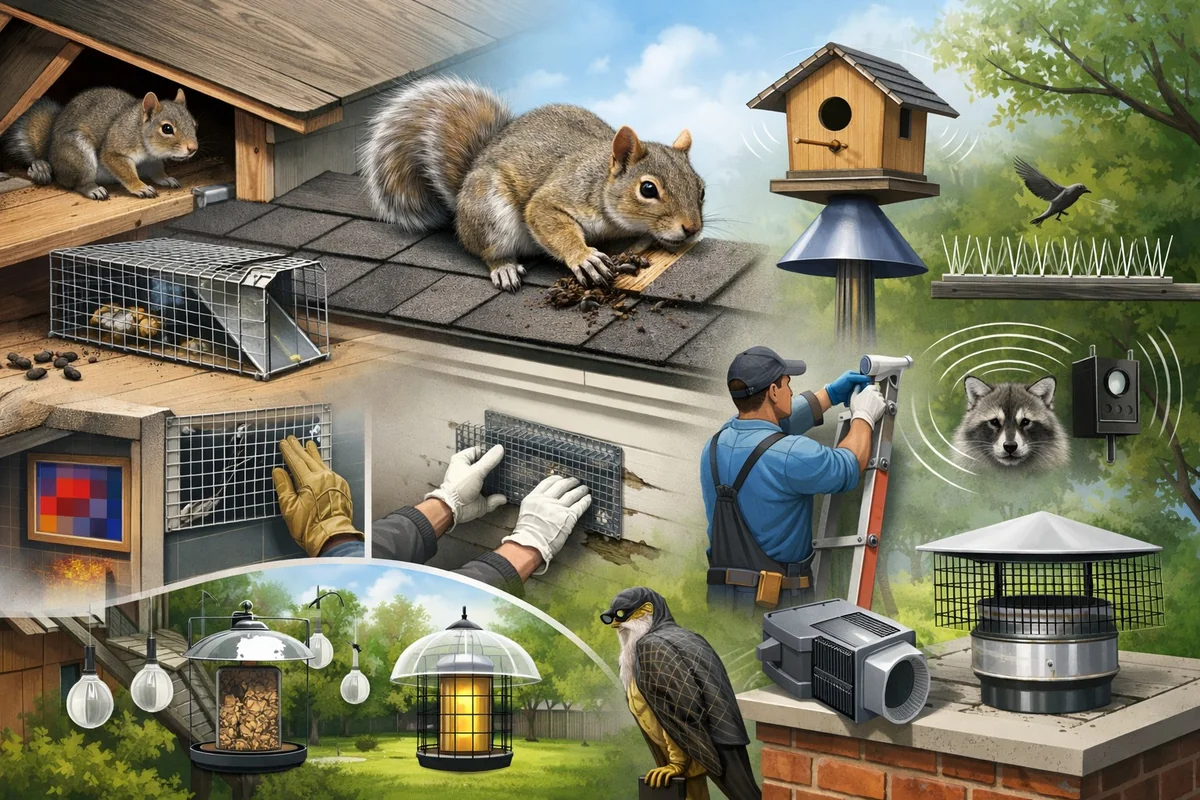
Wildlife control covers the larger animals that visit or move into a home: raccoons in the trash and attic, squirrels in gardens and bird feeders, snakes in the yard or garage, and moles tunneling under the lawn. This section is for homeowners who want to keep these animals out humanely and know which repellents and traps are worth buying.
How Wildlife Control Works
Wild animals come for food, water and shelter, so the most reliable control removes those three things. Secure trash cans with locking lids, bring pet food in at night, pick up fallen fruit, and close the gaps in roofs, vents, crawl spaces and sheds with sturdy materials such as hardware cloth or metal flashing. An animal with nothing to eat and nowhere to den usually moves on.
Repellents promise an easier route, but research on most of them is discouraging: scents and sprays rarely keep raccoons, squirrels or snakes away for long. Physical barriers, motion-activated sprinklers and careful exclusion work better. When an animal is already living in an attic or under a deck, especially with young, local wildlife rules and a licensed wildlife professional are often the right next step.
Raccoon Repellents
Store-bought raccoon repellents include granules, sprays and electronic devices for yards, gardens and attics. These guides look honestly at how well each one works and what keeps raccoons away more reliably.
You will find why motion-activated sprinklers and locking trash lids beat most scent repellents, how to protect a vegetable garden without spraying the crops and how to make an attic less inviting. Start with our raccoon repellent guides.
The guides also cover health precautions, since raccoon droppings can carry roundworm eggs and need careful cleanup with gloves and a mask.
Electronic and light-based devices get a realistic review as well, since raccoons often grow used to them within days.
Homemade Raccoon Repellents
Many home remedies circulate for raccoons, from pepper sprays and vinegar to ammonia-soaked rags and mothballs. These guides explain what each can and cannot do and which ones are unsafe to use.
Topics include why mothballs should never be used outdoors or in attics, how bright lights and noise work only briefly and which DIY barriers protect gardens and trash. Read our homemade raccoon repellent guides before trying a recipe.
For attics, the guides explain how to confirm the animal has left, especially in spring when mothers may have young, before sealing the entry for good.
Each remedy comes with notes on safety for pets and children, since some popular mixes irritate eyes and skin.
Squirrel Deterrents
Squirrels dig up bulbs, raid bird feeders, chew into attics and sometimes nest in car engines. These guides cover sprays, spikes, baffles, mesh and homemade deterrents for gardens, yards, attics, bird feeders and cars.
You will learn why baffles and well-placed feeders beat sprays, how to cover bulb beds with hardware cloth and how to seal attic entry points after squirrels leave. See our squirrel deterrent guides for each problem.
Pepper-based treatments for bird seed and plants are covered too, with notes on how often they need reapplying after rain.
For parked cars, the guides add simple habits such as keeping the hood area free of nuts and seeds.
Snake Repellents
Snake repellent sprays and powders are widely sold, but wildlife researchers have found little evidence that they keep snakes away. These guides explain what the studies show and what does reduce snakes around a yard.
Topics include removing rodents, woodpiles and tall grass that attract snakes, snake-proof fencing for small areas and options for homes with dogs. Our snake repellent guides give a realistic picture.
Safety advice runs throughout: give any snake space, learn which venomous species live in your area and call a professional if one is inside the house.
The guides also explain why mothball-based products are risky around pets and children and what labels allow.
Keeping Snakes Out of the House
Snakes enter homes and garages through gaps around doors, pipes, vents and foundations, usually following mice or seeking cool shelter. These guides show how to find and seal those openings and make the area around the house less appealing.
You will find how to fit door sweeps, screen vents and crawl space openings, why controlling mice matters and which homemade repellents to skip. Read our guides to keeping snakes out of the house.
The guides also explain what to do if a snake is already inside, from keeping pets away to safely guiding it out or calling for help.
Garages get extra attention, since clutter and open doors on warm evenings invite both snakes and their prey.
Mole Traps
Moles tunnel under lawns and gardens hunting earthworms and grubs, and traps are the most reliable way to remove them. These guides cover scissor, harpoon and tunnel traps, along with baits and the many home remedies that rarely work.
Topics include finding an active tunnel, setting a trap correctly and why castor oil repellents and grub control often disappoint. See our mole trap guides for step-by-step help.
You will also learn how to tell moles from voles and gophers, which leave different signs and need different solutions.
Timing matters too: the guides explain when moles are most active near the surface and easiest to catch.
Common Questions About Wildlife Control
Is it legal to trap and relocate wildlife?
Is it legal to trap and relocate wildlife?
Rules vary by state and species, and many places restrict or ban relocating animals. Check with your state wildlife agency before trapping, or hire a licensed wildlife control operator.
How do I know what animal is in my attic?
How do I know what animal is in my attic?
Timing and sounds help. Squirrels are active by day, raccoons and rats at night; raccoons sound heavy, squirrels scurry. Droppings, tracks in dust and the size of the entry hole confirm it.
When should I call a wildlife professional?
When should I call a wildlife professional?
Call one when an animal is inside the living space or attic, when young may be present, when the animal is acting sick or aggressive, or when the species is protected or venomous.
What attracts wildlife to my yard?
What attracts wildlife to my yard?
Open trash, pet food, bird seed, fallen fruit, compost, water features and sheltered spaces under decks and sheds. Removing or securing these makes the yard far less attractive.