Mosquito Repellents and Traps: Protection for Home and Yard
Mosquito control for people, patios and yards: choosing skin repellents, area repellers, store-bought and homemade traps, and killers that actually help.
Browse Mosquitoes
Explore our reviews and guides organized by topic
Mosquito Repellents
Mosquito repellents for skin and clothing for adults, kids and travel, including natural and EPA-registered options.
- Best Mosquito Repellents: Picaridin, DEET, Plant-Based and Patio
- Best Mosquito and Tick Skin Repellents: Picaridin, DEET and OLE
- Best Mosquito Repellents for Skin: Lotions, Body Sprays and OLE
Mosquito Repellent Devices
Devices, sprays and plants that keep mosquitoes and other bugs off a yard, patio, home or campsite.
Mosquito Traps
Store-bought mosquito traps for indoors, patios, garages and yards, and whether they work.
- Best Mosquito Traps for the Patio and Garage: What Actually Helps
- Best Mosquito Traps: UV Fan, Indoor and Egg-Laying Picks
- Does the Mosquito Magnet Work? How It Works and Why Results Vary
DIY Mosquito Traps
Homemade mosquito traps for indoors and the yard.
Mosquito Killers
Mosquito killer machines and sprays for the home and yard.
Start Here: Topic Guides
- Best Home Mosquito Killer Machines: Zappers, Traps and More
- Best Mosquito Repellent Devices: Patio Units, Fuel and Dunks
- Best Mosquito Repellents: Picaridin, DEET, Plant-Based and Patio
- Best Mosquito Traps: UV Fan, Indoor and Egg-Laying Picks
- How to Make a Mosquito Trap: Box Fan, Dunk Bucket, Yeast Bottle
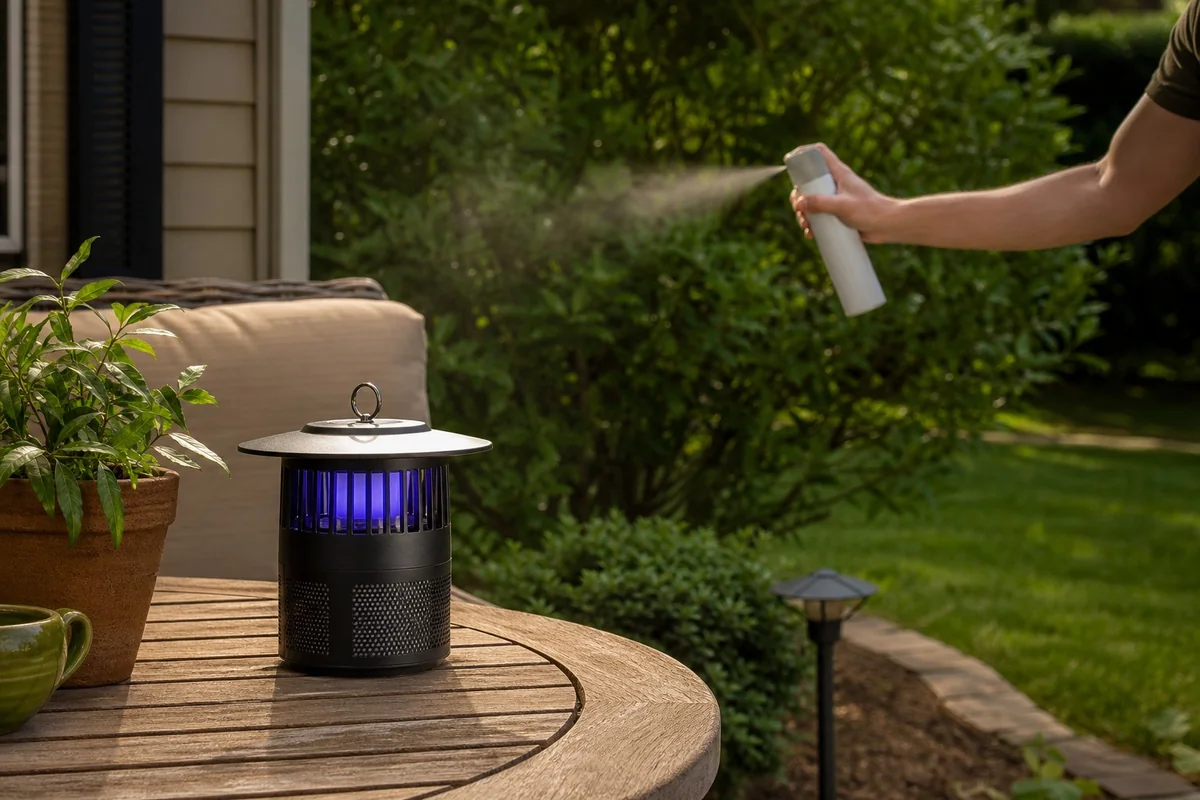
Mosquito control at home comes down to two jobs: keeping mosquitoes off people and reducing how many live around the house. This section covers repellents for skin and clothing, patio devices, store-bought and homemade traps, and killer machines and sprays, for anyone who wants to enjoy the yard, patio or campsite with fewer bites.
How to Protect Yourself From Mosquitoes
The most effective protection is a layered one. On your body, an EPA-registered repellent with an ingredient such as picaridin, DEET or oil of lemon eucalyptus prevents bites wherever you go. Around the home, removing standing water stops mosquitoes before they can fly, since larvae develop in anything that holds water for about a week: buckets, saucers, gutters, toys and birdbaths.
Devices and traps add to those basics but rarely replace them. Area repellers protect a seated group on calm evenings, fan traps thin out mosquitoes at the yard's edge, and larvicide treats water you cannot drain. Some popular products, such as ultrasonic repellers and outdoor bug zappers, do little or more harm than good.
Mosquito Repellents
Skin and clothing repellents are the first line of defense and the one that travels with you. These guides cover picaridin, DEET and plant-based options for adults and families, permethrin for clothing and gear, and how to apply each safely.
You will find how concentration affects how long a repellent lasts, why unregistered natural sprays wear off quickly, and how to put repellent on a child's face without spraying it. Start with our mosquito repellent guides for skin, clothes and travel.
For areas with ticks as well as mosquitoes, the guides explain which repellents cover both and how treated clothing adds protection on trails.
Families will also find the age limits that appear on labels, why sunscreen goes on before repellent and how to wash repellent off at the end of the day.
Mosquito Repellent Devices
Devices protect a space instead of a person, so nobody at the table needs repellent on their skin. These guides cover rechargeable and fuel-powered area repellers, larvicide for ponds and rain barrels, and the candles, coils and plants often sold as repellents.
Topics include placing a repeller upwind of the table, why wind shrinks its zone, and which popular options have little evidence behind them. Our mosquito repellent device guides compare what works on a patio, deck or campsite.
Running costs get attention too, since refills and mats for area repellers add up over a summer of evenings outside.
For indoor rooms, the guides point to screens, closed doors at dusk and fans rather than plug-in gadgets with unclear ingredients.
Mosquito Traps
Store-bought traps catch mosquitoes with light, fans, carbon dioxide or water that attracts egg-laying females. These guides look honestly at how much each type helps and where to place it so it draws mosquitoes away from people.
You will read about UV fan traps for yards, plug-in traps for bedrooms, egg-laying traps for container-breeding mosquitoes and propane carbon dioxide traps such as the Mosquito Magnet. Our mosquito trap guides cover the patio, garage and yard.
Each guide also explains how to judge a trap by the bites you get rather than by the number of insects in its basket.
Placement advice runs through every guide: traps belong between the shady resting spots and the seating area, never right beside the table.
DIY Mosquito Traps
Homemade traps can catch mosquitoes for very little money when they use the right principle. These guides show how to build a box fan trap with mesh, an egg-laying dunk bucket with Bti, and what sugar, yeast and baking soda traps can realistically do.
Topics include where to set homemade traps, electrical safety for fans outdoors and common mistakes that keep traps from working. See our DIY mosquito trap guides for indoor and yard versions.
The guides keep expectations realistic: homemade traps thin out mosquitoes but work best alongside water removal and repellent.
Most of the materials are already in a garage or kitchen, and each build takes less than an hour, so you can test a trap for a week before deciding whether it earns a place in the yard.
Mosquito Killers
Mosquito killers include electric zappers, fan traps, foggers and larvicides. These guides explain which belong indoors, which suit the yard and which should be avoided, since outdoor zappers kill many insects that eat mosquitoes.
You will find how to use a zapper in a closed room or garage, when a fogger makes sense before a party and why larvicide kills the most mosquitoes over a season. Read our mosquito killer guides before buying a machine.
Safety around children, pets and fish ponds is covered for every product type, along with label rules for indoor and outdoor use.
The guides also cover keeping a zapper working through the season, from replacing faded bulbs to cleaning the grid, and what no machine can fix on its own.
Common Questions About Mosquito Control
Why do mosquitoes bite some people more than others?
Why do mosquitoes bite some people more than others?
Mosquitoes follow carbon dioxide, body heat and skin odor, and those vary from person to person. You cannot change your chemistry much, so a registered repellent and covering skin at dusk matter more than diet or soaps.
When are mosquitoes most active?
When are mosquitoes most active?
Many species bite most at dusk and dawn, while the Asian tiger mosquito bites during the day in shade. Check when bites happen in your yard and plan repellent and outdoor time around it.
What is the single best thing I can do about mosquitoes at home?
What is the single best thing I can do about mosquitoes at home?
Walk the yard once a week and empty, scrub, turn over or cover anything that holds water. Treat water you cannot drain with Bti, and use repellent when you are outside.
Should I hire a mosquito spraying service?
Should I hire a mosquito spraying service?
Spraying gives temporary relief and also affects other insects. Try water removal, repellent and a patio repeller first; if bites remain heavy, ask a service what product they use and how they protect pollinators.