Mouse and Rat Control: Traps, Baits and Repellents
Mouse and rat control for the home, attic, garage and yard: choosing and baiting traps, using bait stations safely, sealing entry points and judging repellents.
Browse Mice & Rats
Explore our reviews and guides organized by topic
Mouse Traps
Snap, live, glue and bucket traps for mice, where to set them and how to bait them.
- Do Mouse Traps Work? Why Some Fail and How to Fix It
- How to Make a DIY Mouse Trap for Indoors
- Best Mouse Traps for Homes With Pets: Enclosed and No-Kill Picks
- Best Mouse Snap Traps: Wooden and Easy-Set Plastic Picks
Rat Traps
Store-bought rat traps for the home, attic and yard, how well they work and whether they are humane.
- Do Rat Traps Work? Why Rats Avoid Them and How to Fix It
- Best Rat Traps for a Chicken Coop: Covered, Hen-Safe Picks
- Are Rat Traps Humane? How Each Method Compares
- Are Rat Traps Loud? What You Will Hear and Why
Traps for Large & Smart Rats
Traps for big rats and rats that avoid traps.
- How to Make a Homemade Trap for Large Rats That Holds
- Best Rat Traps for Large Rats: Covered, Open and Live Picks
- Best Rat Traps for Smart Rats: Picks and Methods That Work
- How to Make a DIY Trap for Smart Rats That Avoid Traps
Mouse Trap Bait
What to put on snap, glue, live and bucket traps to catch mice, including homemade bait.
- Best Bait for Live Mouse Traps: Non-Toxic Picks
- Best Mouse Trap Bait Besides Peanut Butter
- Best Mouse Trap Bait: What Works and How Much to Use
- Best Bait for Glue and Sticky Mouse Traps
Rat & Mouse Poison Bait
Rat and mouse poison baits, blocks and bait stations, and baits for rat traps.
- Best Rat Bait: Blocks, Bromethalin, Birth Control and Trap Gel
- Best Bait for Rat Traps: What Works and How to Use It
- Best Rat Bait Blocks for Stations, Farms and Outbuildings
- Best Bait for Mice and Rats: Trap Baits, Poison and Stations
Rodent Repellents
Sprays, pouches and ultrasonic repellers that keep mice and rats out of homes, cars and RVs.
- Best Rodent Repellent Pouches for Closets, Storage and Vehicles
- Best Rodent Repellents for RVs and Campers in Storage
- What Repels Rodents? Scents, Remedies and What Really Works
- Best Rodent Repellents for Car Engines and Parked Vehicles
Getting Rid of Mice
Step-by-step ways to clear mice and rats from a house, apartment or kitchen, including fast and natural methods.
- How to Get Rid of Mice Fast: A One-Week Plan
- How to Get Rid of Mice in an Apartment
- How to Get Rid of Mice Overnight: A Before-Dark Plan
- How to Get Rid of Mice in the Kitchen
Mice in Attics & Garages
How to get mice and rats out of attics, garages and the yard.
- How to Get Rid of Mice in the Attic
- How to Get Rid of Mice in the Garage
- How to Get Rid of Mice Outside: Yard and Foundation Plan
Start Here: Topic Guides
- Best Bait for Mice and Rats: Trap Baits, Poison and Stations
- Best Mouse Trap Bait: What Works and How Much to Use
- Best Mouse Traps: Snap, Electronic, Live and Glue Picks
- Best Rat Traps for Large Rats: Covered, Open and Live Picks
- Best Rat Traps for the Home: Snap, Covered, Electric and Live
- Best Rodent Repellents for the Home: What Actually Keeps Them Out
- How to Get Rid of Mice in the Attic
- How to Get Rid of Mice: A Step-by-Step Plan That Works
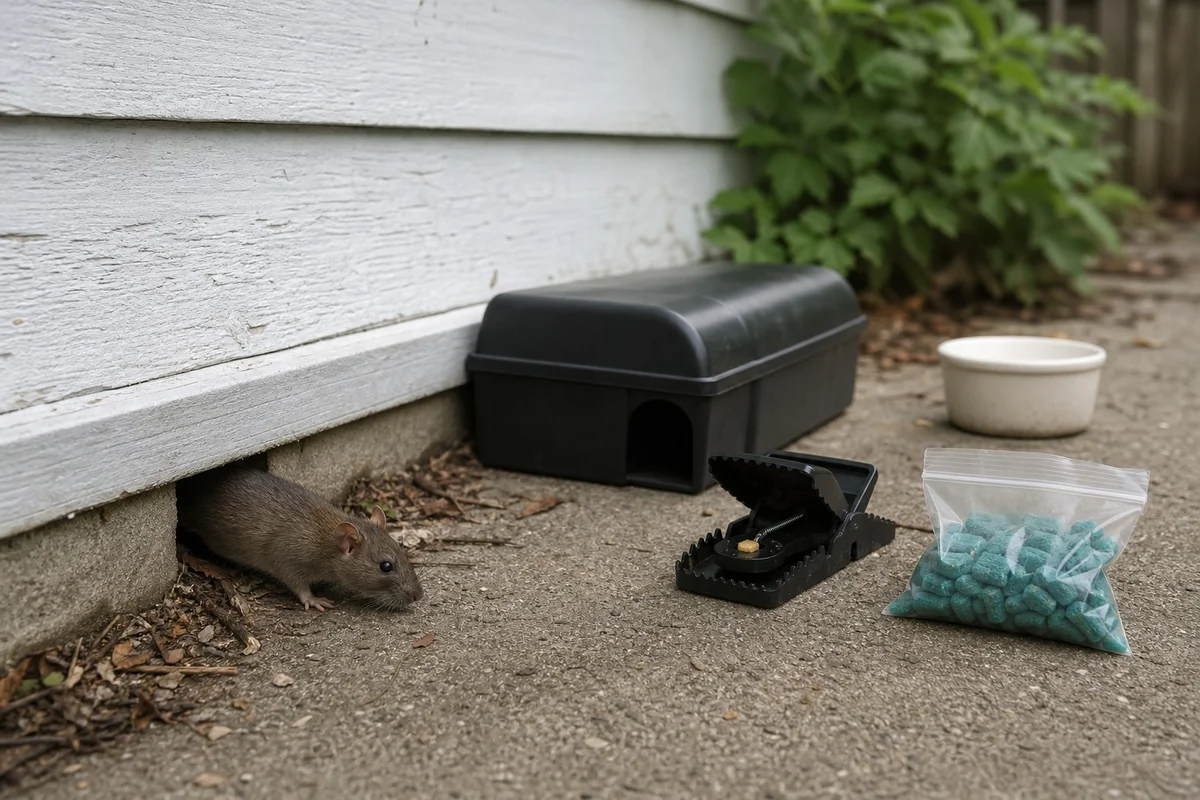
Mouse and rat control covers everything from choosing and baiting a trap to sealing the gaps rodents use to get inside. This section is for homeowners and renters dealing with mice or rats in the kitchen, attic, garage or yard who want practical, safe ways to clear them out and keep them out.
How Mouse and Rat Control Works
Successful rodent control follows three steps in order. First, find how the animals get in and seal those openings with materials they cannot chew, such as steel wool packed with caulk, metal flashing or hardware cloth. Second, remove what attracts them: open food, pet food left out overnight, bird seed, clutter and nesting material. Third, trap the rodents already inside.
Snap traps remain the most reliable tool for most homes, set in the right places and in enough numbers. Mice and rats behave differently, though. Mice are curious and explore new objects quickly, while rats are wary of anything new and may avoid a trap for days. That difference shapes the trap, the bait and the setup you choose.
Poison baits and repellents have a place, but a narrow one. Bait belongs in tamper-resistant stations away from children and pets, and most repellents only buy time while you seal and trap.
Mouse Traps
Mouse traps come in more styles than most people expect: classic wooden snap traps, plastic snap traps that are easier to set, electronic traps, enclosed traps for homes with pets, and live-catch traps. These guides help you pick the right type for where the mice are and who shares the house.
You will find where to place traps along walls and behind appliances, how many to use, and why setting them perpendicular to the wall catches more. Start with our mouse trap guides for indoor and outdoor picks.
The guides also explain why one or two traps rarely finish the job: set several in a line along each active wall and check them every morning until a few nights pass with no catches.
Rat Traps
Rats are larger, stronger and far more cautious than mice, so they need bigger traps and a little more patience. This part of the site covers rat snap traps, electronic traps and covered stations for the home, attic and yard, along with an honest look at how well traps work and which methods are humane.
Topics include pre-baiting unset traps so rats lose their fear of them, placing traps along runways and roof lines, and handling a catch safely with gloves. Our rat trap guides compare options for each part of the house and yard.
For attics and roof spaces, the guides cover reaching the spots rats travel, checking traps without crawling through insulation every day and sealing the roof gaps afterward.
Traps for Large and Smart Rats
Some rats are simply too big for an ordinary trap, and others learn to steal bait without setting it off. These guides focus on those hard cases: heavy-duty traps with a stronger strike and wider trigger, and setups that work on rats that have learned to avoid traps.
You will read about pre-baiting for several nights, hiding traps under cover along walls, using several traps at once and changing positions when rats stop visiting. The guides to traps for large and smart rats also include a DIY setup that works on wary rats.
Patience matters more here than anywhere else: a trap-shy rat may need a week of free meals from unset traps before it takes the one that is finally set.
Mouse Trap Bait
The right bait makes a good trap work, and a poor one turns it into a free snack bar. These guides cover what to put on snap, glue, live and bucket traps, how much to use, and homemade baits that hold up for days.
Topics include why a small amount pressed into the trigger beats a large lump, which foods mice find hard to resist besides peanut butter, and when to swap baits if catches stop. Our mouse trap bait guides match the bait to the trap you use.
You will also find how to keep bait fresh in a hot attic or garage, and why nesting material such as cotton or floss can work when food is plentiful.
Rat and Mouse Poison Bait
Poison bait can reduce a large rodent population, but it carries real risks to children, pets and wildlife, and poisoned rodents may die inside walls. These guides explain how to use bait responsibly, in tamper-resistant stations placed where only rodents can reach them.
You will find how consumer bait products are sold in ready-to-use stations, the difference between bait blocks and soft baits, and when trapping is the better choice indoors. Read our rodent bait guides before putting out any poison.
Each guide also covers how to record where stations are placed, how to check them and what to do if a pet or child may have touched bait.
Rodent Repellents
Repellents promise to keep mice and rats away without traps or poison. This part of the site looks at sprays, scent pouches and ultrasonic devices for homes, cars, RVs and storage, and gives an honest picture of what they can and cannot do.
Topics include why peppermint and other scents fade quickly, why ultrasonic repellers are not recommended, and how to protect a parked car's engine bay. The rodent repellent guides put sealing gaps first and repellents second.
For vehicles and campers that sit for weeks, the guides add practical steps such as parking away from tall grass and keeping food and seed out of the cabin.
Getting Rid of Mice
These step-by-step guides pull everything together for a house, apartment or kitchen with a mouse problem. They follow the order that works: find the entry points, clean up food sources, trap, then seal, with fast options and natural methods explained honestly.
You will find how to tell mice from rats by droppings and damage, how to clean droppings safely without stirring up dust, and how to know when the problem is over. Start with our guides to getting rid of mice.
Apartment dwellers will also find what to ask a landlord or building manager, since gaps in shared walls and pipes often need fixing from more than one unit.
Mice in Attics and Garages
Attics, garages and yards bring their own challenges: insulation that hides droppings, stored boxes that make perfect nests, and gaps around garage doors and roof lines that let rodents walk in. These guides cover clearing rodents from each space and keeping them out.
Topics include sealing the gap under a garage door, storing bird seed and pet food in metal bins, and trapping safely in a hot or cramped attic. Our guides to mice in attics and garages include the yard as well.
They also explain how to clean nesting material and droppings from stored items and insulation safely, wetting them first and wearing gloves, rather than sweeping or vacuuming dry.
Common Questions About Mouse and Rat Control
How do I know if I have mice or rats?
How do I know if I have mice or rats?
Droppings are the quickest clue. Mouse droppings are small, like grains of rice, while rat droppings are much larger and thicker. Rats also leave greasy rub marks along walls and gnaw larger holes.
How long does it take to get rid of mice?
How long does it take to get rid of mice?
A small mouse problem often clears within one to two weeks of steady trapping once entry points are sealed. Larger infestations or rats can take several weeks, especially if gaps remain open.
Should I call a professional for rodents?
Should I call a professional for rodents?
Call one if rodents keep returning after you seal and trap, if you cannot reach where they nest, or if there are many rats around the property. A professional can also find entry points that are hard to see.
Is it safe to clean up mouse droppings myself?
Is it safe to clean up mouse droppings myself?
Yes, with care. Air out the space, wear gloves, spray droppings and nesting material with a disinfectant or bleach solution, let it soak, then wipe up with paper towels and bag the waste. Do not sweep or vacuum dry droppings.