Flying Insects: Fly Traps, Wasp Sprays and Moth Traps
Control flying insects at home: fly and fruit fly traps, homemade versions, wasp and hornet sprays, safe DIY nest removal and moth traps for closets and pantries.
Browse Flies, Wasps & Moths
Explore our reviews and guides organized by topic
Indoor Fly Traps
Fly traps for inside the house and whether fly traps work, smell or are safe.
- Best Indoor Fly Traps: Fly Paper, Light Traps and Swatters
- Do Fly Traps Work? What Each Type Catches and Why Some Fail
- Are Fly Traps Worth Using? When They Pay Off and When They Don't
Outdoor Fly Traps
Fly traps for the yard, patio, garage and chicken coop, including traps that don't smell.
- Best Outdoor Fly Traps: Bait Bags, Reusable Traps and Sticks
- Best Fly Traps for the Garage: Sticky, Light and Outdoor Bait
Homemade Indoor Fly Traps
DIY fly traps for inside the house, with or without vinegar.
Homemade Outdoor Fly Traps
DIY fly traps for the yard, garage and chicken coop.
Fruit Fly Traps
Store-bought fruit fly traps and killers for the kitchen and whether they work.
Homemade Fruit Fly Traps
DIY fruit fly traps with apple cider vinegar, other vinegars or no vinegar.
Wasp & Hornet Sprays
Wasp and hornet sprays for nests, long range, indoors and walls, and how safe and effective they are.
Homemade Wasp Killers
Homemade wasp sprays, powders and DIY ways to kill a nest.
Moth Traps
Traps and repellents for clothes moths and pantry moths.
- How to Use Moth Traps: Clothes and Pantry Moths, Step by Step
- Best Moth Traps for Carpets: Pheromone Traps for Wool Rugs
Start Here: Topic Guides
- Best Fruit Fly Traps: Bait Bottles, Fan Traps and Light Traps
- Best Indoor Fly Traps: Fly Paper, Light Traps and Swatters
- Best Outdoor Fly Traps: Bait Bags, Reusable Traps and Sticks
- Best Wasp Sprays: Long-Range Jets, Pro Knockdown and Nest Dust
- How to Make Homemade Wasp Spray, and When Not to Use It
- How to Make a Fly Trap: Bottle, Jar and Homemade Fly Paper
- How to Make a Fruit Fly Trap: Vinegar, Funnel, No-Vinegar Traps
- How to Make an Outdoor Fly Trap: Jug, Bottle, Bag and Cone Traps
- How to Use Moth Traps: Clothes and Pantry Moths, Step by Step
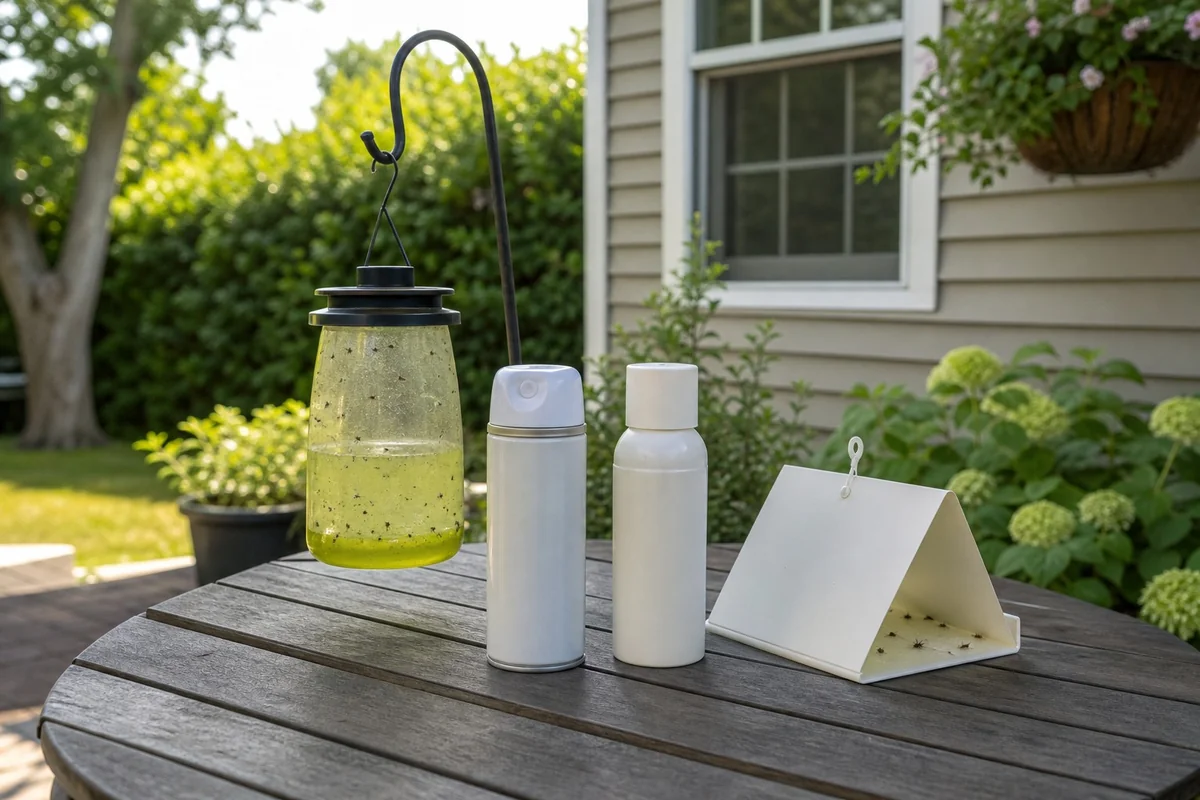
Flying insects around the home include house flies, fruit flies, wasps, hornets and moths, and each needs a different approach. This section covers store-bought and homemade fly traps, fruit fly traps, wasp and hornet sprays, homemade wasp killers and moth traps, for anyone who wants fewer flying pests inside the house, on the patio or in the garage.
How to Handle Flying Insects
Almost every flying pest problem starts with a breeding or feeding source nearby. House flies breed in garbage, compost and pet waste; fruit flies in overripe produce, drains and recycling; pantry moths in stored grains; clothes moths in wool left undisturbed. Traps catch the adults, but the problem ends only when the source is found and removed.
Stinging insects are different. Wasps and yellowjackets defend their nests, and treating a nest is a safety job first: the right product, the right time of day, protective clothing and an exit plan. Some nests, such as those inside walls or ground nests near play areas, are worth leaving to a professional, and anyone with a sting allergy should never treat one.
Indoor Fly Traps
Indoor fly traps range from classic fly paper and window traps to plug-in light traps with glue cards. These guides explain which types work in kitchens, living rooms and basements, whether traps smell or are safe around food and pets, and how to judge if a trap is worth it.
You will find where to hang fly paper so it catches flies without catching you, why light traps work best in darker rooms and how screens and tight trash lids prevent most indoor fly problems. Start with our indoor fly trap guides.
The guides also cover finding the source when flies keep appearing, such as a forgotten bag of potatoes, a pet food bowl or a dirty trash can.
Outdoor Fly Traps
Outside, flies gather around trash bins, compost, pet areas and chicken coops. These guides cover bait bags, reusable bottle traps and sticky traps for the yard, patio, garage and coop, including options that do not smell as strongly as the classic bait traps.
Topics include hanging traps between the fly source and your patio rather than beside the table, how long baits last and how to dispose of a full trap. See our outdoor fly trap guides for each spot around the house.
For coops and barns, the guides add manure management and moisture control, which reduce flies far more than any trap.
Homemade Indoor Fly Traps
A few household items make a surprisingly good indoor fly trap. These guides show how to build bottle traps, jar traps and sticky traps, with and without vinegar, and explain which baits house flies prefer.
You will learn why a funnel entrance keeps flies inside, how a drop of dish soap stops them escaping a liquid bait and where to set a homemade trap so it catches flies before they reach food. Our homemade indoor fly trap guides walk through each build.
They also explain when a homemade trap is enough and when a cluster of flies points to a hidden source that needs cleaning.
Homemade Outdoor Fly Traps
For the yard, garage and chicken coop, homemade traps can use stronger baits and bigger containers. These guides cover bottle and bucket traps baited with fermenting fruit, meat scraps or sugar water, and how to keep them from becoming a nuisance themselves.
Topics include placing traps downwind of seating areas, protecting coop birds from traps and baits, and emptying traps before they smell. Read our homemade outdoor fly trap guides for practical builds.
Sanitation tips run through every guide, from bagging trash tightly to cleaning up after pets, because outdoor flies follow the smell of food and waste.
You will also see how to reuse bottles and buckets season after season with a quick rinse.
Fruit Fly Traps
Fruit flies appear almost overnight in summer and multiply quickly on ripe produce. These guides compare store-bought fruit fly traps and killers for the kitchen and look honestly at whether they work.
You will find which lures attract fruit flies best, where to place traps near the fruit bowl, sink and recycling, and why the breeding source has to go before any trap can win. Our fruit fly trap guides help you choose.
The guides also help you tell fruit flies from fungus gnats and drain flies, which look similar but need different fixes.
Plug-in traps get an honest look as well, since many catch gnats better than fruit flies.
Homemade Fruit Fly Traps
Homemade fruit fly traps work about as well as store-bought ones and cost almost nothing. These guides cover the classic apple cider vinegar jar, versions with other vinegars, wine or beer, and baits for homes without vinegar.
Topics include why a drop of soap matters, how small the holes in the plastic wrap should be and why a trap fails when ripe fruit sits nearby. See our homemade fruit fly trap guides for recipes.
Each guide adds how to stop fruit flies from coming back, from refrigerating produce to scrubbing drains and rinsing recycling.
A quick side-by-side test of two baits is explained too, so you can find what your kitchen's flies prefer.
Wasp and Hornet Sprays
Wasp and hornet sprays shoot a long jet so you can treat a nest from a safe distance. These guides compare jet aerosols, professional knockdown sprays and insecticide dusts for ground nests and wall gaps, and explain how safe and effective each is.
You will learn why treating at dusk or night is safest, how to dress and plan an exit, and why nests inside walls are best left to a professional. Our wasp spray guides cover eaves, trees, ground nests and indoor wasps.
The guides also explain how to tell paper wasps, yellowjackets, hornets and harmless mud daubers apart, since the type decides the treatment.
Homemade Wasp Killers
Some homemade methods work on small wasp nests, and some are dangerous myths. These guides cover soap and water sprays, homemade yellowjacket traps, decoy nests and peppermint sprays, with honest notes on what each can do.
Topics include which nests are safe to treat yourself, why gasoline and spray lubricants should never be used, and how to tell wasps from honeybees before treating. See our homemade wasp killer guides before you approach a nest.
Spring checks get special attention, since knocking down a golf-ball-sized nest early is far easier than dealing with a full colony in late summer.
Moth Traps
Household moths come in two main kinds: clothes moths that eat wool, silk and fur, and pantry moths that infest flour, grains and dried foods. These guides cover pheromone traps for each, how to use them, and repellents such as cedar and lavender.
You will find how to identify the moth before buying a trap, where to place traps in closets, pantries and near rugs, and how to clean out an infestation for good. Our moth trap guides explain each step.
The guides also cover safe storage of woolens and dry goods, which prevents most moth problems from starting.
Carpets and rugs get their own guide, since moth larvae feed under furniture where traps and vacuums rarely reach.
Common Questions About Flying Insects
Why are there so many flies in my house all of a sudden?
Why are there so many flies in my house all of a sudden?
A sudden swarm usually means flies are breeding nearby, such as in a forgotten bag of produce, an overflowing trash can, pet waste or a dead animal in a wall. Find and remove the source, then trap the adults that remain.
How do I tell a wasp from a bee?
How do I tell a wasp from a bee?
Wasps are smooth and shiny with a narrow waist, while honeybees are fuzzy and golden brown. Wasps build paper nests; honeybees build wax comb. Call a beekeeper for honeybees rather than spraying them.
What time of year are flying pests worst?
What time of year are flying pests worst?
Most peak in mid to late summer, when warm weather speeds breeding and wasp colonies reach their largest size. Clothes and pantry moths can be active year-round indoors.
Do bug zappers help with flies?
Do bug zappers help with flies?
Zappers kill some flies in enclosed spaces such as a garage or barn, but outdoors they mostly kill harmless insects. Traps, screens and good sanitation work better for flies around the house.