 Pest Pro Reviews Editorial Team • • 20 min read •
 Flea Sprays vs Powders: Which Works Best for Home Flea Control in 2026?
Compare flea sprays vs powders for effective home flea control in 2026. Find out which flea treatment method is best for your needs, including safety, cost, and expert tips.
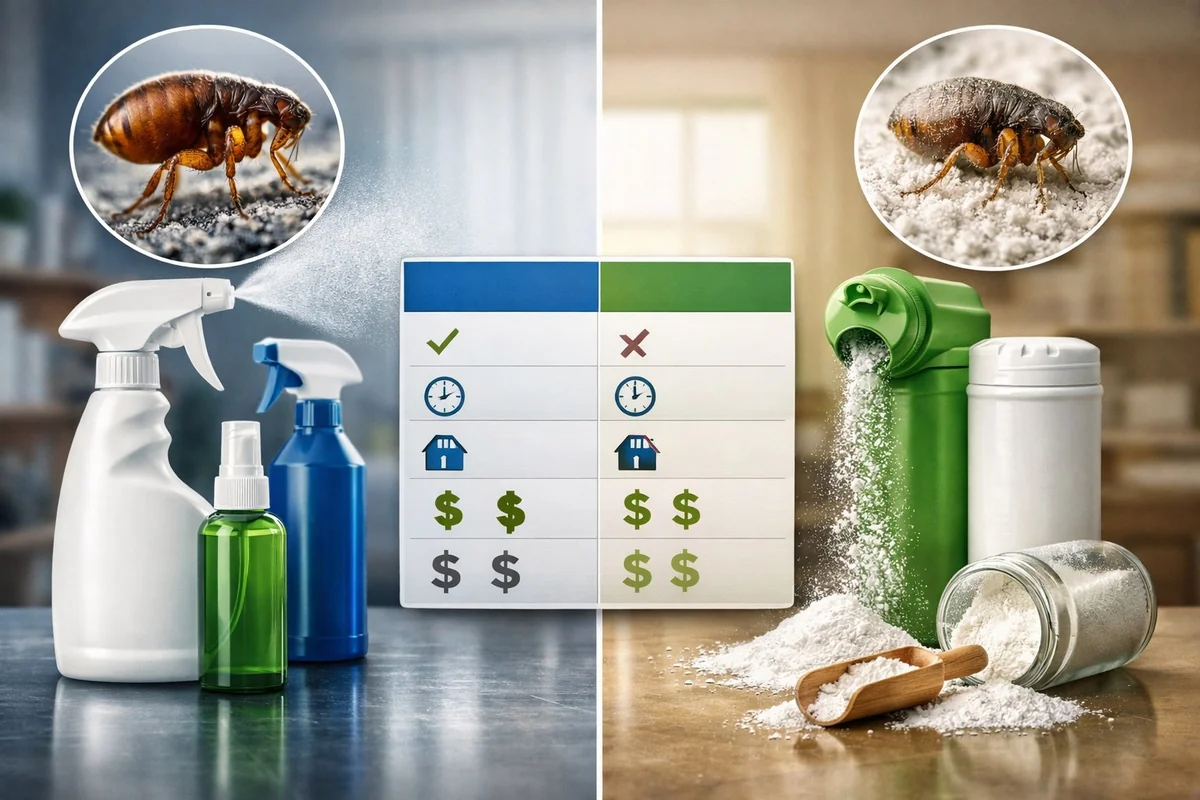
Flea sprays vs powders: Flea sprays give you faster relief for active outbreaks, while powders offer longer-lasting, low-toxicity protection for ongoing problems. Sprays work best for rapid knockdown in fabrics and carpets; powders excel in dry, undisturbed areas. If you want immediate results, start with sprays.
For whole-house prevention, powders are the better value.
- Flea sprays deliver rapid knockdown, making them ideal for visible, biting infestations.
- Flea powders provide longer-lasting, low-toxicity protection in dry, low-traffic areas.
- For the most stubborn or recurring infestations, combining both methods is the most effective strategy.
Criteria for Comparing Flea Sprays and Powders
Choosing between flea sprays and powders isn’t just about preference - it’s about matching the product to your infestation and home environment. Our analysis looks at:
- Speed of results (knockdown vs. ongoing protection)
- Coverage and surface compatibility
- Effectiveness against different flea life stages
- Safety for people and pets
- Cost, convenience, and cleanup requirements
We also consider practical issues like odor, residue, and whether you can treat without disrupting daily life. This approach helps you pick the method (or combination) that actually solves your flea problem - not just what sounds good on the label.
Key Differences Between Flea Sprays and Powders
Understanding how sprays and powders work makes it easier to pick the right solution for your home. Let’s break down what actually separates them in real use.
Identify your needs and get personalized recommendations
Learning about home flea control for the first time and wants something easy and safe.
Seeks to understand what matters when choosing between sprays and powders.
Wants to compare performance, safety, and ease of use between leading products.
Focused on getting the most coverage and effectiveness for the money.
Has decided to buy and wants the best balance of price, reliability, and immediate availability.
Wants the top-rated product at the best possible deal, focusing on proven results and satisfaction.
Active Ingredients and How They Work
Most flea sprays use synthetic pyrethroids or insect growth regulators (IGRs). Pyrethroids paralyze fleas on contact, knocking down adults fast. IGRs disrupt flea development - so eggs can’t hatch and larvae can’t mature, which helps break the lifecycle.
Powders take a different approach. The most common are desiccants like diatomaceous earth or boric acid. These physically dehydrate fleas and larvae as they crawl through treated areas.
It’s a mechanical kill - no resistance risk, but slower results.
Because powders don’t rely on chemical absorption, they’re less likely to trigger resistance over time. However, they can’t penetrate as deeply into fabrics or reach eggs inside cocoons.
Application Areas and Surface Suitability
Sprays can saturate upholstery, carpets, rugs, and even baseboard cracks. This makes them great for treating spots where fleas hide deep - like pet bedding or couch cushions. That said, they can leave behind residue or cause staining on delicate materials.
Powders are best used in dry, low-traffic zones: under furniture, along baseboards, and inside cracks. They lose effectiveness in damp or humid areas, and they’re messy if tracked on shoes or paws. Cleanup means vacuuming thoroughly after the treatment window.
Choosing the right product for each surface is key. For a detailed breakdown of top products by surface and scenario, see Best Flea Sprays and Powders for Home 2026.
Side-by-Side Feature Comparison: Flea Sprays vs Powders
| Feature | Flea Sprays | Flea Powders |
|---|---|---|
| Speed of results | Within hours (kills on contact) | Slow (can take days to weeks) |
| Residual protection | Short-term (few days to 2 weeks) | Long-lasting (up to 30+ days if undisturbed) |
| Penetration | Deep into fabrics, upholstery, and carpets | Surface only (best in cracks, dry carpets) |
| Odor/Staining risk | Possible (especially with essential oils) | Dust/mess risk (trackable, powder residue) |
| Safety | Can irritate skin/lungs; some chemical risk | Low toxicity (unless inhaled), safer for pets |
| Best for | Active outbreaks, immediate relief | Long-term prevention, low-traffic areas |
- Flea sprays win for rapid knockdown and deep penetration - choose them for visible, biting infestations.
- Flea powders win for long-term, low-toxicity control in dry, undisturbed areas - ideal for ongoing prevention.
When to Choose Flea Sprays for Home Use
Sprays are the go-to when you need results fast - think fleas jumping on your socks or biting the family dog. Here’s why sprays often make sense for first-line treatment.
Rapid Knockdown for Active Infestations
Flea sprays are formulated to kill on contact, with results visible within a few hours of application. If fleas are biting you or your pets, this immediate knockdown is a huge relief.
However, the effect drops off as the spray dries or is absorbed into fabrics. You may need to reapply every few weeks if the infestation persists.
Products like Vet's Best Flea and Tick Home Spray use plant-based actives for quick results with less chemical odor. It’s especially popular with pet owners who want to treat bedding and living areas without harsh fumes.
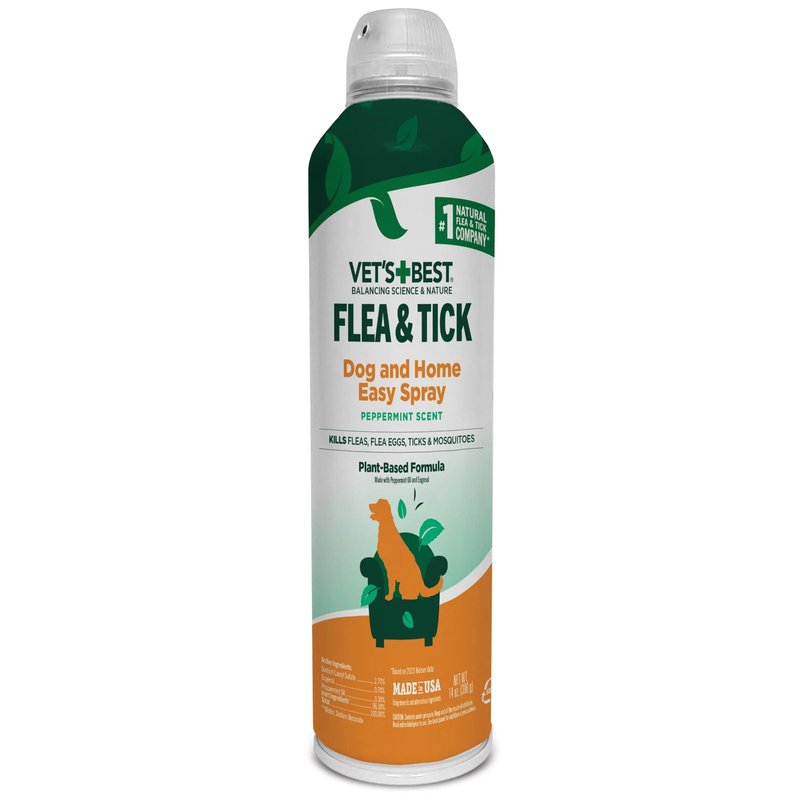
Vet's Best Flea and Tick Home Spray
Vet's Best Flea and Tick Home Spray uses plant-based ingredients to kill fleas, flea eggs, and ticks on contact, making it a safe choice for treating areas where pets and families spend time. The 32 fl oz spray covers multiple rooms or several rounds of spot treatment on bedding and upholstery. Its low-odor formula is especially valued by pet owners aiming to avoid harsh chemical fumes indoors.
Why We Recommend This
We recommend Vet's Best Flea and Tick Home Spray for pet owners who prioritize safety and odor control indoors. Its plant-based formula stands out in the budget to moderate price range, offering effective surface treatment without the strong fumes of traditional sprays. This is a practical pick for families managing recurring flea problems in shared spaces.
vs Competitors: Compared to powder treatments, Vet's Best offers faster drying and less mess, while its plant-based actives provide a lower chemical load than many leading synthetic sprays. Wondercide is a similar alternative but may have a stronger scent.
Best For:
Pet owners seeking a low-odor, plant-based flea and tick spray for treating living areas, bedding, and furniture without resorting to harsh chemicals.
- Treating pet bedding, carpets, and upholstery after spotting fleas indoors
- Regular maintenance spraying in homes with dogs or cats to prevent flea and tick infestations
- Contains certified natural essential oils (peppermint oil 0.30%, eugenol from clove 0.70%)
- 32 fl oz spray bottle treats up to 5 pet beds or 2-3 rooms
- Plant-based actives minimize chemical exposure in the home
- Low-odor formula is well-tolerated by pets and sensitive individuals
- Requires thorough, repeated applications for heavy infestations
- Not labeled for direct use on pets; intended for home surfaces only
Wondercide Flea & Tick Spray for Home offers a natural approach using cedarwood oil and lemongrass. It doubles as a repellent for mosquitoes and ticks, making it a multitasker for homes that want to avoid synthetic chemicals.
This spray is best for families sensitive to traditional insecticides but still needing fast knockdown. The main trade-off is a stronger botanical scent and a higher upfront investment compared to basic pyrethroid sprays.
Best for: households seeking plant-based ingredients and added repellent action.
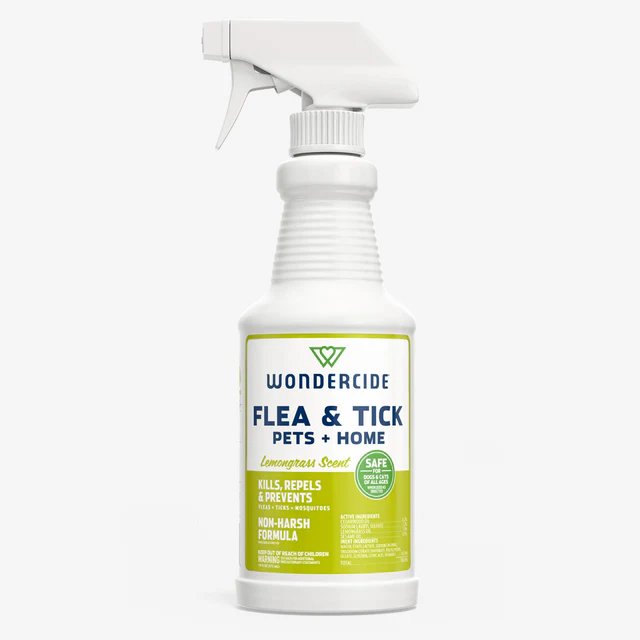
Wondercide Flea & Tick Spray for Home
Wondercide Flea & Tick Spray for Home uses a plant-based formula with cedarwood oil and lemongrass to kill and repel fleas, ticks, and mosquitoes inside your home. The 32 fl oz bottle covers up to 2,000 sq ft, making it practical for treating carpets, furniture, and pet bedding. Its non-staining, fast-drying spray is ideal for families seeking an alternative to traditional chemical treatments.
Why We Recommend This
We recommend Wondercide Flea & Tick Spray for Home for households wanting effective pest control without resorting to synthetic insecticides. Its plant-based formula is well-suited for families and pet owners who prioritize safety indoors, and its coverage area makes it practical for routine prevention as well as active infestations.
vs Competitors: Compared to traditional flea powders, Wondercide offers a residue-free application and is easier to use on soft surfaces like furniture and bedding. While both sprays and powders can be effective, Wondercide’s plant-based formula is a standout for those avoiding harsh chemicals.
Best For:
Ideal for pet owners, families with children, and anyone seeking a natural indoor pest control solution without harsh chemicals.
- Treating carpets, upholstery, and pet bedding in homes with active flea or tick infestations
- Preventing pest recurrence in multi-pet households, especially during peak flea season
- Plant-based formula with cedarwood oil (1.5%) and lemongrass oil (1.0%)
- Covers up to 2,000 sq ft per 32 fl oz bottle
- Natural ingredients reduce exposure to synthetic chemicals in the home
- Versatile for controlling fleas, ticks, and mosquitoes indoors
- Needs to be reapplied weekly or after cleaning for continued effectiveness
- Strong cedar scent may be overpowering for sensitive individuals
Penetration Into Fabrics and Carpets
Flea sprays excel at soaking into upholstery, rugs, and the fibers of pet beds - places where fleas lay eggs and larvae burrow deep. This is where powders struggle, since they stay on the surface and can’t reach hidden pests.
Sprays are also easier to apply to vertical surfaces or hard-to-reach corners, using the adjustable nozzle to direct product right where it’s needed. Just be careful with delicate fabrics and test on a hidden spot first to avoid staining.
Limitations: Ventilation and Safety Concerns
Most flea sprays require good ventilation and a waiting period before re-entering the treated room. Some people experience respiratory irritation or headaches, especially from strong essential oils or chemical actives.
It’s generally not safe to spray near bird cages or aquariums (even with “natural” formulas). For households with chemical sensitivities or pets that lick surfaces, consider spot treatments or lower-toxicity options instead.
For a broader overview of home flea control - including non-spray options - see our Flea Control resource.
When to Choose Flea Powders for Home Use
Flea powders shine when you want residual control that keeps working after the initial application. They’re a solid choice for prevention and for treating spaces you don’t use every day.
Long-Lasting Residual Protection
Unlike sprays, powders like Harris Diatomaceous Earth Crawling Insect Killer can remain effective for weeks if left undisturbed. This makes them a favorite for treating under furniture, along baseboards, or in the cracks where fleas hide between vacuuming sessions.
The kill is slower - fleas die after crawling through the powder, not instantly. But because the effect is mechanical (not chemical), there’s little risk of resistance, and the product keeps working as long as it stays dry and in place.
This is especially useful for ongoing prevention in homes with recurring flea issues or in spaces that are hard to clean thoroughly every week.
Harris Diatomaceous Earth is a natural, chemical-free powder that dehydrates fleas on contact. Because it’s non-toxic and contains no additives, it’s often chosen by families seeking a minimal-ingredient approach.
The trade-off is that it can be dusty and requires careful application to avoid clumping. It’s not the best fit for humid basements or areas where kids and pets play directly on the floor.
Best for: eco-conscious users and those needing safe, long-term residual control in dry areas.
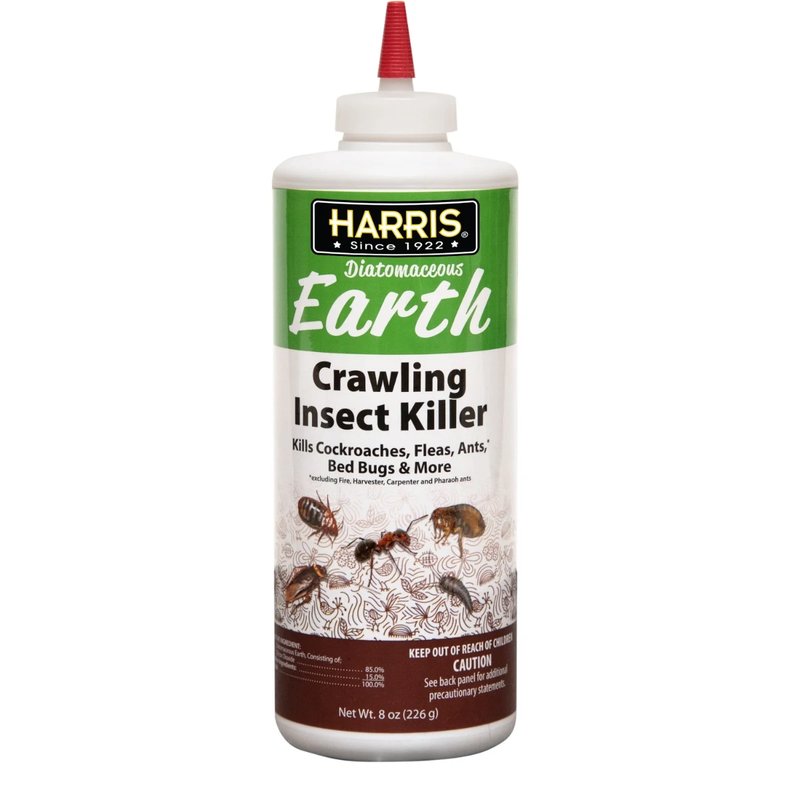
Harris Diatomaceous Earth Crawling Insect Killer
Provides long-lasting flea control by dehydrating insects with 100% pure diatomaceous earth powder. Remains effective for up to several weeks when undisturbed, making it suitable for hard-to-reach areas such as under furniture or along baseboards. The chemical-free formula is safe for use in homes with children and pets when applied as directed.
Why We Recommend This
We recommend Harris Diatomaceous Earth Crawling Insect Killer for readers looking for a natural, residue-free alternative to chemical sprays. Its ability to provide weeks of residual flea control in hard-to-reach areas makes it a reliable choice for ongoing pest management, especially in households with children or pets.
vs Competitors: Compared to liquid flea sprays, this powder offers longer-lasting protection but may take longer to deliver visible results. It stands out for its chemical-free composition and versatility on various surfaces.
Best For:
Homeowners and pet owners seeking a natural, long-lasting flea control solution for indoor areas, especially those concerned about chemical exposure.
- Treating flea infestations under furniture, along baseboards, and in cracks
- Maintaining ongoing flea prevention on carpets and pet bedding between cleanings
- Contains 100% freshwater diatomaceous earth with no chemical additives
- Delivers residual effectiveness for up to 4 weeks if left undisturbed
- Offers weeks-long protection between vacuuming sessions, unlike most sprays
- Chemical-free and safe for use around pets and children when applied properly
- Powder may be messy or visible on dark surfaces until vacuumed
- Requires several hours to days for full effect compared to instant-kill sprays
Adams Flea & Tick Carpet Powder is a dual-action product that adds an insect growth regulator to the mix. This means it can disrupt the flea lifecycle by stopping eggs from hatching while also dehydrating larvae and adults.
With up to 30 days of protection in carpets and rugs, it’s a strong pick for homes that want to treat large, carpeted areas with minimal reapplication. The downside is a stronger scent and more chemical ingredients compared to pure diatomaceous earth powders.
Best for: treating carpets in homes with repeated flea outbreaks where an IGR is needed for stubborn infestations.
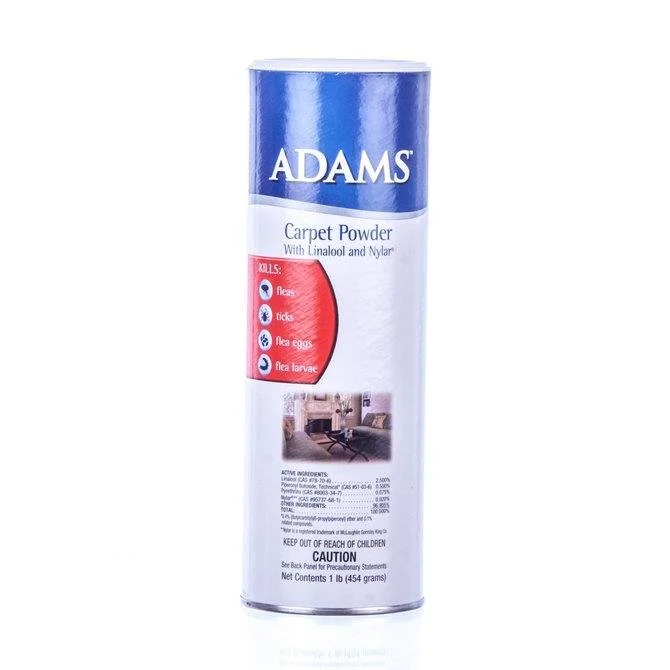
Adams Flea & Tick Carpet Powder
Adams Flea & Tick Carpet Powder uses a dual-action formula with an insect growth regulator (IGR) to break the flea lifecycle in carpets and rugs, providing up to 30 days of protection. The powder targets eggs, larvae, pupae, and adult fleas, reducing the risk of reinfestation. Its 16 oz canister treats up to 400 square feet, making it suitable for multi-room applications.
Why We Recommend This
We recommend Adams Flea & Tick Carpet Powder for households facing stubborn or repeated flea issues, as its IGR formula specifically halts the development of eggs and larvae - a critical step often missed by standard powders. In our research, it stands out for its month-long efficacy and ability to target all life stages, making it a reliable option for pet-friendly homes.
vs Competitors: Compared to many basic carpet powders that only target adult fleas, Adams includes an IGR to stop eggs and larvae, reducing reinfestation risks and offering longer-lasting protection than most competitors in this price range.
Best For:
Homeowners and pet owners seeking long-lasting flea control for carpets and rugs, especially those dealing with persistent or recurring infestations.
- Effective for homes with recurring flea infestations in carpeted areas
- Ideal for pet owners needing to treat multiple rooms or high-traffic pet zones
- Contains an insect growth regulator (IGR) to prevent flea eggs from hatching
- Dual-action formula kills adult fleas and ticks on contact
- Breaks the flea lifecycle by targeting all stages, including eggs and larvae
- Long-lasting: one treatment protects for up to a month
- Requires vacuuming after application, which can be inconvenient
- Powder residue may be noticeable on dark-colored carpets until removed
Best Surfaces and Application Techniques
Powders work best on dry, low-traffic surfaces - think under couches, along wall edges, or inside closet floors. For maximum coverage, use a hand duster or soft brush to distribute evenly and avoid clumps.
Don’t use powders in damp environments (like bathrooms or mudrooms) because moisture reduces their effectiveness and can create paste-like messes. Always vacuum thoroughly after the treatment window to remove both powder and dead fleas.
Limitations: Mess and Inhalation Risks
Powders can be tracked onto hard floors, causing slip hazards or visible dust trails. This is especially true in homes with active pets or young kids.
While diatomaceous earth is low in toxicity, inhaling fine particles can irritate lungs. Apply with care, keep kids and pets away until cleanup, and always wear a mask during application.
Effectiveness for Different Flea Life Stages
Beating a flea infestation means more than just killing the adults. Eggs, larvae, and pupae are all part of the problem - and some are much harder to reach than others.
Adult Fleas: Immediate vs Residual Kill
Sprays kill adult fleas on contact, reducing bites and visible bugs almost instantly. This makes them great for areas where people or pets spend a lot of time and need relief now.
Powders rely on fleas crawling through treated areas, so the effect is slower and more dependent on flea movement. If adults are hiding deep inside fabrics, powders may miss some bugs unless they venture to the surface.
Eggs, Larvae, and Pupae: Breaking the Cycle
Sprays that include IGRs (like Adams Flea & Tick Carpet Powder) can stop eggs from hatching and disrupt larval development. This is critical for breaking the cycle and preventing reinfestation.
Powders dehydrate and kill larvae that move across treated surfaces but don’t penetrate tough egg casings or pupal cocoons. Neither sprays nor powders can reliably kill fleas inside cocoons, so multiple treatments and vacuuming are often necessary to catch emerging adults.
If you’re comparing options for all life stages, don’t rely on any single product to do it all - layering methods increases your odds of complete control.
Safety Considerations for Families and Pets
When it comes to home flea treatment, safety is just as important as effectiveness - especially if you have kids, pets, or chemical sensitivities in your household.
Chemical Exposure and Allergic Reactions
Sprays may contain synthetic chemicals or strong plant oils that can irritate skin, eyes, or lungs. Essential oil-based sprays (like Wondercide) are generally safer but can still cause reactions in sensitive individuals or pets.
Powders like Harris Diatomaceous Earth are considered safer but can dry out skin or irritate airways if inhaled. Always look for EPA registration and read the label for age, pet, or allergy restrictions before use.
Best Practices for Safe Application
- Remove pets and children from the treatment area during application and until surfaces are dry or vacuumed.
- Wear gloves and a mask when applying both sprays and powders to minimize exposure.
- Store all products out of reach, and dispose of vacuum bags after cleaning to prevent reinfestation.
Cost and Value Comparison
Budget matters - especially if you’re treating a whole house or dealing with a recurring problem. Here’s what you need to know about the real value of sprays and powders.
Upfront Costs and Ongoing Expenses
Sprays like Vet's Best Flea and Tick Home Spray and Wondercide fall in the budget to moderate price range for their categories. One bottle typically covers several rooms or a whole round of spot treatments on furniture and pet bedding.
Powders such as Harris Diatomaceous Earth and Adams Flea & Tick Carpet Powder are generally more affordable per application, but require reapplication after each vacuuming or in high-traffic areas. Large, carpeted homes may go through several containers per month during peak flea season.
Hidden Costs: Cleanup and Repeat Treatments
Sprays sometimes leave residue or lingering odors, especially on porous fabrics - meaning you may need additional cleaning products or to air out rooms after use. Powders create visible dust and require frequent vacuuming, including more vacuum bag changes and potential carpet cleaning if not fully removed.
Long-term infestations can drive up costs over time regardless of method. The fastest route to savings is to knock out the infestation quickly, monitor for recurrence, and use prevention strategies tailored to your home and pets.
Which Method Is Best for Your Situation?
There’s no one-size-fits-all answer - your best choice depends on how severe the infestation is, your home layout, and your family’s sensitivity to chemicals or dust.
Best for Severe Active Infestations
If fleas are biting now, sprays provide immediate relief. Choose a product with both a contact killer and an IGR for maximum effect - pairing with frequent vacuuming boosts results.
This approach is especially useful in homes with pets, where you need to treat both the animal’s bedding and the places they frequent. Just remember: not suitable for every household - ventilation and chemical sensitivities matter.
Best for Preventive and Long-Term Control
For ongoing issues or seasonal outbreaks, powders are a solid investment. They deliver lasting protection in dry, undisturbed areas and are less likely to trigger allergic reactions or chemical sensitivities.
Patience is key: results accumulate over 1-3 weeks as eggs hatch and larvae crawl across treated surfaces. Consistent application and follow-up vacuuming are required to keep the cycle broken.
Combining Methods for Maximum Effectiveness
An integrated approach - using sprays for immediate knockdown and powders for ongoing control - delivers the best results for stubborn or recurring infestations. This targets all flea life stages and hiding places, reducing the chance of reinfestation.
Balance your strategy with safety and convenience in mind. Layering methods may mean more cleanup, but it typically means fewer bites and a faster return to normal life.
Frequently Asked Questions About Flea Sprays vs Powders
❓ Frequently Asked Questions
What is the difference between flea sprays and flea powders for home use?
What is the difference between flea sprays and flea powders for home use?
Flea sprays are liquid formulations applied to surfaces or fabrics to kill fleas on contact, offering quick results and broad coverage. Flea powders are dry, dust-like substances sprinkled on carpets or pet bedding and work by dehydrating or poisoning fleas. Sprays often provide faster relief, while powders can offer longer-lasting effects.
How do I apply flea spray effectively in my home?
How do I apply flea spray effectively in my home?
To apply flea spray in your home:
- Vacuum carpets, rugs, and upholstery thoroughly
- Remove pets and cover food or dishes
- Spray targeted areas, including baseboards and pet bedding
- Allow treated surfaces to dry completely
- Ventilate the area before re-entering
Most users find repeating the process in 2–3 weeks helps control emerging fleas.
Which is more effective for severe flea infestations: spray or powder?
Which is more effective for severe flea infestations: spray or powder?
For severe flea infestations, most users report that sprays work faster by killing adult fleas on contact, while powders can provide residual control by targeting larvae and eggs. Combining both methods can increase effectiveness, but sprays alone are generally preferred for rapid results in heavy infestations.
How often should I reapply flea spray or powder at home?
How often should I reapply flea spray or powder at home?
Reapplication frequency depends on product type and infestation severity. Most flea sprays require reapplication every 2–4 weeks, while powders can last up to a month but may need refreshing after vacuuming. Always follow label instructions, and repeat treatments if fleas reappear, especially during peak seasons.
What should I look for when choosing between flea sprays and powders for home use?
What should I look for when choosing between flea sprays and powders for home use?
When choosing between flea sprays and powders, consider these factors:
- Speed of action: sprays tend to kill fleas faster
- Residual effect: powders often last longer between applications
- Safety: check for pet and child-safe formulas
- Odor: some sprays have strong scents
Match your choice to the area treated and your household needs.
Are flea sprays or powders safe to use around pets and children?
Are flea sprays or powders safe to use around pets and children?
Most modern flea sprays and powders are formulated to be safe for households with pets and children when used as directed. However, safety guidelines recommend removing pets and children during application and allowing treated areas to dry or settle before re-entry. Always check product labels for specific precautions and age restrictions.
Why do I need to use both vacuuming and flea treatments for effective flea control?
Why do I need to use both vacuuming and flea treatments for effective flea control?
Vacuuming removes flea eggs, larvae, and debris, reducing the flea population and improving the effectiveness of sprays or powders. Most users find that combining regular vacuuming with chemical treatments prevents reinfestation and targets all flea life stages, leading to more thorough, long-lasting control.
Our Verdict: Flea Sprays vs Powders in 2026
If you need rapid relief from a biting flea outbreak, sprays are your best bet - especially in areas with lots of fabric and where pets spend most of their time. Look for products with IGRs for added life cycle disruption.
For long-term prevention and control in dry, less-trafficked spots, powders are the better value. Choose natural options like diatomaceous earth for sensitive households, or a dual-action powder with IGRs for stubborn infestations in carpeted homes.
Most homes benefit from a layered approach: start with a spray for quick knockdown, then maintain with powder in vulnerable areas. Monitor for new activity, vacuum consistently, and treat pets at the same time for the fastest, safest results. Flea-free living is possible - with the right strategy and a bit of patience.
Related Articles
Best Flea Sprays and Powders for Home 2026: Top Picks by Type
Find the best flea sprays and powders for your home in 2026. Explore top-rated, safe, and effective flea control products for carpets, furniture, and pets - plus expert buying tips and FAQs.

Best Pest Control Products for Summer 2026: Baits, Sprays, Natural Options
Discover the best pest control products for summer 2026. Compare baits, sprays, traps, and natural solutions to tackle ants, roaches, mosquitoes, and more - safe, effective, and budget-friendly options for every home.

Complete Guide to Pest Prevention in Homes: Stop Pests in 2026
Protect your home in 2026 with this complete pest prevention guide. Discover proven DIY methods, room-by-room tips, safe solutions for families, and expert advice to stop pests before they start.

Best Natural and Organic Pest Control Products 2026: Safe, Eco-Friendly Solutions for Every Home
Find the best natural and organic pest control products for 2026. Safe, eco-friendly solutions for ants, roaches, rodents, and more - ideal for families and pet owners.