Complete Guide to Pest Prevention in Homes: Stop Pests in 2026
Protect your home in 2026 with this complete pest prevention guide. Discover proven DIY methods, room-by-room tips, safe solutions for families, and expert advice to stop pests before they start.
Pest prevention in homes means taking proactive steps to keep insects and rodents out, rather than reacting after an infestation. This guide covers proven home pest prevention strategies, practical DIY methods, and safety tips to stop pests before they become a problem.
What Is Home Pest Prevention?
Home pest prevention is the process of using physical, behavioral, and sometimes chemical methods to block access, remove attractants, and break the life cycles of unwanted pests before they establish themselves inside. Effective prevention not only stops infestations but also reduces the need for harsh chemicals later on.
How Pests Enter Homes
Most pests use tiny entry points that often go unnoticed. Cracks as small as 1/4 inch around windows, under doors, in foundations, and through utility lines are prime access routes. Vents, damaged weatherstripping, and open drains also act as highways for insects and rodents.
Even small gaps matter. Mice, for example, can squeeze through an opening the width of a pencil. Cockroaches only need a sliver under a door or a gap around a pipe.
Insects like ants and spiders exploit even hairline cracks, especially during seasonal migrations.
Whether you live in a single-family home or an apartment, entry risk varies. Apartments often share walls, making it easier for pests to travel between units. Single-family homes may have more exterior access points but fewer shared infestations. See How to Identify Entry Points for Pests for a hands-on walkthrough of finding and sealing these vulnerabilities.
Why Prevention Beats Extermination
Stopping pests before they get inside interrupts their life cycles and avoids the headache of battling an established infestation. Prevention uses fewer chemicals, reducing health risks to people and pets. It also saves money over time, since extermination can be costly and disruptive.
The main limitation: prevention isn't a cure-all for severe, existing infestations. Once pests are inside and breeding, you'll need targeted control methods alongside prevention. Still, a strong prevention routine means you rarely get to that point.
If you want broader context or more prevention ideas, see our General Pest Prevention archive for additional strategies and troubleshooting tips.
Identifying Common Household Pests
Knowing what you’re up against is half the battle. Accurate pest identification helps you choose the right prevention steps, avoid wasted treatments, and spot early warning signs before things spiral.
Signs of Infestation for Key Pests
Look for clear evidence like droppings (mouse pellets, cockroach specks), shed insect skins, gnaw marks on food packaging or wiring, and live or dead pests. Rodents leave greasy rub marks along walls and baseboards, while insects sometimes leave frass (sawdust-like waste) near entry points.
Odors and sounds are also clues. Mouse and rat nests create a musky ammonia odor. Cockroaches can produce a musty scent, especially when present in large numbers. Listen for scratching in walls or ceilings at night - classic signs of rodents or larger insects.
Visual trails can reveal the problem. Ants leave clear foraging lines, while cockroaches and rodents may leave smudges or debris piles in corners and behind appliances.
Seasonal Pest Patterns
Some pests are more active at specific times. Ants and wasps surge in spring and summer, attracted by warmth and food. Rodents and spiders become a problem in fall and winter, looking for shelter from the cold.
Climate and region matter too. For example, termites are a constant threat in humid southern states, while cluster flies or boxelder bugs cause headaches in northern climates each autumn. Unpredictable weather can shift these patterns, so pay attention to local trends each year.
Misidentification Risks
Misidentifying pests wastes time and money. For example, confusing ants with termites leads to the wrong treatment - termites require urgent action, while most ants are less destructive. Carpet beetles are often mistaken for bed bugs, causing panic and unnecessary chemical use.
When in doubt, especially with venomous spiders or wood-destroying insects, seek expert identification. Some local extension offices or pest professionals offer free ID from photos. For more on common errors, see 10 Common Pest Prevention Mistakes to Avoid.
Essential Prevention Strategies for Every Home
The best home pest prevention guide combines three main strategies: sealing entry points, removing food and water sources, and reducing hiding spots. You don’t need chemicals for every step - physical and behavioral changes go a long way.
Sealing Entry Points Effectively
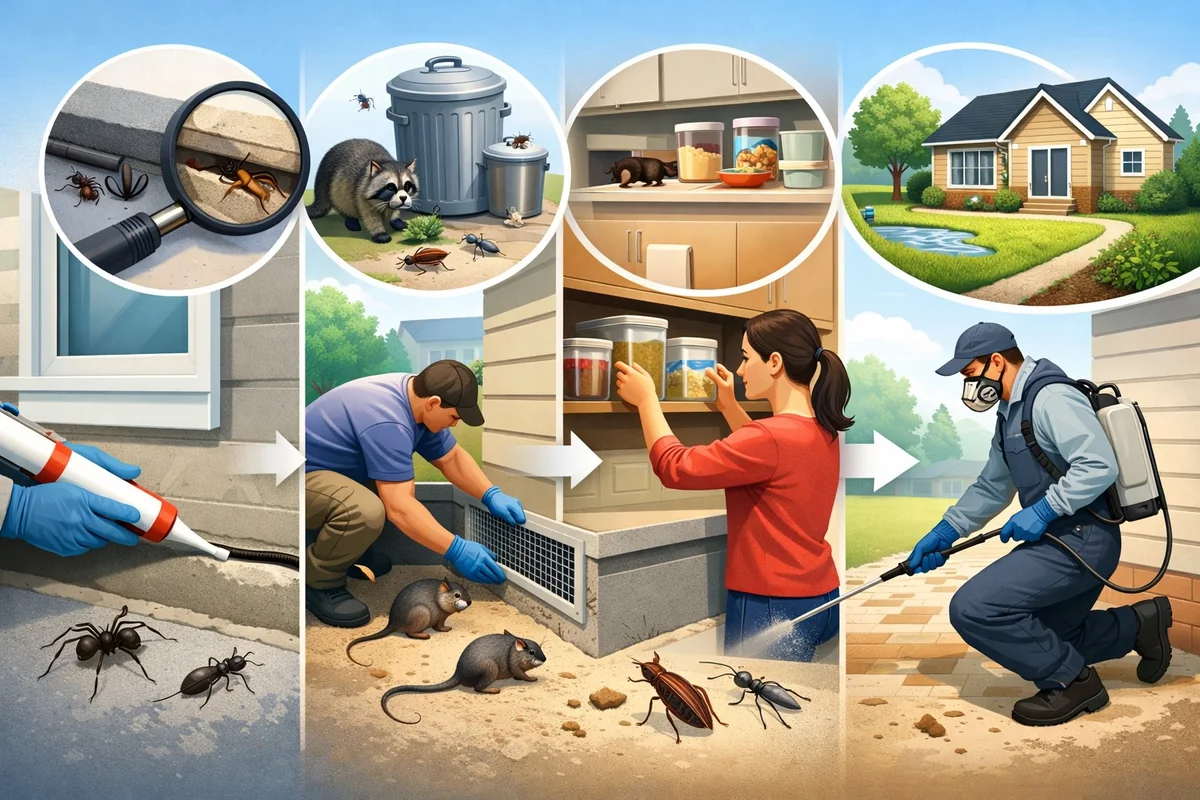
Use silicone caulk for cracks and gaps around windows, baseboards, and pipes. Weatherstripping and door sweeps block gaps under exterior doors. For rodents, steel wool stuffed into holes and then caulked is much harder for them to chew through compared to expanding foam.
Expanding foam is tempting for large gaps, but mice and rats can gnaw right through it. For utility penetrations or bigger holes, use metal mesh or a combination of steel wool and caulk. The downside: comprehensive sealing takes time and needs regular inspections, especially after weather changes or renovations.
Reducing Food and Water Sources
Airtight containers are essential for pantry staples - most standard packaging is no match for mice or insects. Store grains, cereals, and pet food in containers with snap-lock lids. Clean up crumbs, spills, and dirty dishes daily to avoid attracting pests overnight.
Leaky pipes and open pet water bowls provide a constant water source. Fix drips immediately and empty pet bowls overnight. The catch: these changes require new habits.
Consistency is key - one day of neglect can undo weeks of good work.
Managing Clutter and Hiding Spots
Clutter gives pests places to hide and breed, especially in basements, attics, and garages. Cardboard boxes, stacks of newspaper, and rarely-used items are favorite nesting spots for mice and cockroaches.
Focus on high-risk zones first. Store items off the floor, use sealed plastic bins instead of cardboard, and minimize piles of laundry or storage. For homes with little storage or sentimental items, this step may be tough, but even small improvements help.
| Method | ★Difficulty Level | ★Time Required | Cost Range | ★Best For | Effectiveness | Coverage Area |
|---|---|---|---|---|---|---|
| Physical Barriers & Sealing | Medium | 3-6 hours for typical 3-bedroom home | Moderate | Homeowners seeking long-term, low-maintenance solutions | High | Up to 2,000 sq ft per session |
| Chemical Sprays (Targeted Use) | Easy | 1-2 hours per application | Budget-friendly | Quick results in small to medium spaces | Very High | Up to 1,000 sq ft per application |
| Integrated Pest Management (IPM) | Hard | Ongoing (initial setup: 6-8 hours, monitoring weekly) | Premium | Advanced users or those seeking environmentally responsible, comprehensive control | Excellent | Whole-home and outdoor perimeter |
| Biological Controls (Natural Predators & Deterrents) | Medium | 2-5 hours initial setup, with periodic checks | Moderate | Eco-conscious households; not suitable for severe infestations | Moderate | Targeted indoor/outdoor areas (up to 1,500 sq ft) |
Comparing DIY Pest Control Methods
Choosing the right method makes a huge difference in results, cost, and safety. DIY pest control options fall into three main categories: natural remedies, chemical solutions, and physical traps or barriers. Each has strengths - and real trade-offs.
Natural Remedies vs. Chemical Solutions
Natural choices like diatomaceous earth (a fine, abrasive powder) damage insect exoskeletons and work best in dry areas. Essential oils - like peppermint or citronella - repel some pests, but typically need reapplication every few days. These methods are safer for people and pets, but require patience and might only reduce, not eliminate, infestations.
Chemical sprays and baits knock down pests faster and can kill hidden colonies. The downside: higher toxicity, lingering residue, and risk to kids or pets if not applied carefully. Use targeted applications only where needed, not blanket spraying.
Traps, Baits, and Barriers
Bait stations work by having pests carry poison back to their nest, eliminating the colony at the source. They take 1–2 weeks to show results, so patience is needed. Traps - snap, glue, or electronic - deliver fast results but only catch local pests, not the whole population.
Physical barriers like mesh, door sweeps, and sealing cracks are best for prevention. They don’t eliminate an active infestation but are critical for long-term control. Barriers work especially well for rodents and larger insects.
Cost vs. Effectiveness Trade-Offs
Baits and traps have a higher upfront cost but last longer per application. Chemical sprays and “natural” repellents may seem budget-friendly, but need frequent reapplication, adding up over time. Prevention - sealing, decluttering, and fixing leaks - offers the best return on investment by avoiding repeated extermination costs.
Some DIY methods require regular checking and replacement, so factor in ongoing effort. If you need an at-a-glance summary, here’s a table comparing major approaches:
| Method | Best For | Speed | Difficulty | Cost | Limitations |
|---|---|---|---|---|---|
| Natural Remedies | Light infestations, prevention, sensitive homes | Slow (days–weeks) | Easy | Low–moderate | May need repeated use |
| Chemical Baits/Sprays | Hidden colonies, moderate–severe infestations | Fast (hours–days) | Moderate | Moderate–high | Toxicity, residue |
| Physical Traps | Rodents, visible pests, small areas | Immediate | Easy–moderate | Low–moderate | Won’t eliminate colonies |
| Physical Barriers | Prevention, long-term control | None (prevents only) | Moderate–hard | Low upfront | Time intensive, not a cure |
Room-by-Room Pest Prevention Tips
Pest problems often start in specific rooms, depending on food, water, and shelter opportunities. Adapting your home pest prevention tactics to each area makes your efforts way more effective and efficient.
Kitchen and Pantry Safeguards
Store food in airtight containers, wipe counters and floors daily, and don’t let dirty dishes pile up overnight. Take out trash and compost frequently, and use bins with tight lids. Don’t forget hidden areas - check under appliances and behind cabinets for crumbs and spills.
Garbage and compost bins attract flies, ants, and rodents. Clean bins weekly and keep them as far from entry doors as possible. Even a single missed spill under the fridge can fuel a pest surge.
Bathroom and Laundry Area
Moisture is the main attractant here. Use exhaust fans, seal tile grout, and fix leaks under sinks or behind toilets right away. Drains and pipes are top entry points for cockroaches and silverfish - use mesh screens and clean out hair and debris regularly.
If you notice musty smells, check for hidden leaks or standing water. Some fixes, like replacing old pipes or resealing grout, may require minor plumbing work, but they’re worth it for long-term pest resistance.
Bedrooms and Living Spaces
To prevent bed bugs and fleas, reduce clutter, vacuum regularly (especially along baseboards and under beds), and wash bedding in hot water weekly. Dust mites thrive in soft furnishings - upholstered furniture, rugs, and pillows - so frequent cleaning is key.
Remember, even with good habits, soft surfaces can harbor pests. If you suspect an issue, thoroughly inspect seams, tufts, and folds in mattresses and sofas.
Basement, Attic, and Garage
These areas are rodent magnets. Store items in sealed plastic bins, elevate them off the ground, and seal any gaps where pipes or wires enter. Install door sweeps and metal mesh over vents and utility openings.
Control humidity with dehumidifiers and ensure good ventilation to deter insects and mold. Older homes may need professional repairs - crumbling foundations and rotting wood are hard to fix on your own.
Outdoor Measures to Stop Pests Before They Enter
Most pest problems begin outside. Managing your yard, garden, and home perimeter dramatically lowers the chance of pests getting inside, especially during seasonal migrations.
Yard and Garden Management
Overgrown shrubs and mulch pressed against the foundation provide cover and moisture for insects and rodents. Keep vegetation trimmed back at least 12 inches from exterior walls. Use gravel or stone borders instead of mulch where possible.
Firewood and outdoor waste should be stored far from the house (ideally 20 feet or more). Piles up against walls are a direct invitation for termites, ants, and mice. Some landscaping choices - like dense ground cover - may look nice but actually increase pest risk.
Perimeter Treatments and Barriers
Granular insecticides create a zone pests must cross to enter, while liquid sprays form a chemical barrier on walls and foundations. Use these products early in the season or after heavy rain. Physical barriers, like mesh on crawl space vents or gravel strips at the base of walls, add a layer of defense.
The limitation: chemicals can wash away in rain and sometimes harm pollinators or beneficial insects, so follow label instructions exactly and reapply as needed.
Managing Standing Water
Mosquitoes breed in birdbaths, clogged gutters, old tires, and planters that collect rainwater. Clean gutters regularly and empty standing water at least once a week. For unavoidable water features, consider mosquito dunks (biological larvicides) that are pet-safe.
Some sources of water - like constant rain or high water tables - are tough to eliminate entirely, but reducing what you can makes a significant difference.
Safe Pest Prevention for Homes with Kids and Pets
When children or pets are in the house, safety must come first. Many pest control products are effective but not all are safe for curious hands and paws. Prioritize physical and behavioral measures before reaching for chemicals.
Child- and Pet-Safe Products
Tamper-resistant bait stations and low-toxicity repellents are the best options for safety. Always look for products labeled as safe for use around children and animals. Ultrasonic plug-in devices are marketed as safe and “chemical-free,” but studies show little to no real impact on most pests.
The trade-off is that safer products may work slower or need more frequent application. Still, the peace of mind is worth it for most families.
Storage and Application Best Practices
Place traps and bait stations only in areas inaccessible to kids and pets - behind appliances, inside locked cabinets, or in crawl spaces. Store all chemicals in high or locked locations, and always keep original labels for first aid reference.
Mechanical traps and barriers (like mesh or door sweeps) pose less risk than sprays or powders. Choose these wherever possible, especially in living areas.
Recognizing and Treating Accidental Exposure
If a child or pet is exposed to pest control products, follow first aid instructions on the product label immediately. Wash skin with soap and water, flush eyes with clean water, and contact poison control or your veterinarian for further advice.
Not all symptoms appear right away, so monitor for unusual behavior or illness after any exposure. Keep the product packaging to help professionals assess the risk.
Frequently Asked Questions About Home Pest Prevention
❓ Frequently Asked Questions
What is the most effective way to prevent pests in homes?
What is the most effective way to prevent pests in homes?
The most effective way to prevent pests in homes is by eliminating food sources, sealing entry points, and maintaining cleanliness. This reduces attraction and access for pests. For example, keeping food in sealed containers and repairing cracks in walls significantly lowers the risk of infestations.
How do I pest-proof my home?
How do I pest-proof my home?
To pest-proof your home effectively:
- Seal cracks and gaps around windows, doors, and foundations
- Store food in airtight containers and clean up spills promptly
- Remove standing water and fix leaks
- Trim vegetation away from the house
- Regularly inspect for signs of pests
Local health guidelines recommend annual inspections for best results.
What should I look for when choosing pest removal products?
What should I look for when choosing pest removal products?
When choosing pest removal products, consider these key factors:
- Active ingredients: verify EPA-registered chemicals for safety
- Target pest type: select products designed for your specific problem
- Application method: sprays, baits, or traps suit different needs
- Safety: check for kid- and pet-safe labels
Read user reviews and follow usage instructions for best results.
How often should I inspect my home for pests?
How often should I inspect my home for pests?
Most experts recommend inspecting your home for pests at least once every three months. High-risk areas like kitchens, attics, and basements may require monthly checks. Regular inspections help catch early signs of infestation and reduce the need for chemical treatments, saving time and money over the long term.
What is the difference between DIY pest control and professional pest removal?
What is the difference between DIY pest control and professional pest removal?
DIY pest control involves using over-the-counter products and home prevention methods, while professional pest removal uses specialized equipment and licensed chemicals. Professionals can address severe or recurring infestations and follow safety regulations. However, DIY methods may be sufficient for minor problems and are often more affordable.
How do I safely apply pest removal products indoors?
How do I safely apply pest removal products indoors?
To safely apply pest removal products indoors:
- Read and follow all label instructions carefully
- Wear gloves and protective clothing
- Keep children and pets away from treated areas
- Ventilate rooms after application
- Store chemicals securely
Never mix products, as this can produce harmful fumes or reduce effectiveness.
When is the best time of year to treat for common household pests?
When is the best time of year to treat for common household pests?
The best time to treat for common household pests is early spring and late summer. Warmer temperatures increase pest activity, making these periods ideal for prevention. Applying treatments before peak seasons helps stop infestations before they start. Adjust timing for local climate and specific pests for optimal results.
When DIY Isn’t Enough: Recognizing Limits and Next Steps
DIY pest prevention works for most situations, but sometimes the problem is bigger than it looks. Knowing when to call in pros can save you money, time, and prevent lasting property damage.
Signs Professional Help Is Needed
Recurring infestations, especially after consistent prevention efforts, usually signal hidden nests, structural vulnerabilities, or pest populations too large for DIY solutions. Large-scale termite, cockroach, or bed bug infestations often require commercial-grade products and expertise.
The downside: professional services are a higher investment and may even require temporary relocation, especially for extensive fumigation or structural repair.
What to Expect from a Professional Inspection
Pros use specialized tools - moisture meters, borescopes, pheromone traps - to uncover hidden colonies and structural weaknesses. They’ll identify entry points you may have missed and can access commercial-only products for targeted treatments.
This level of inspection often reveals the root cause, not just the symptoms, leading to a more lasting solution. You get a full report with recommendations for both immediate and long-term fixes.
DIY Preparation Before Pros Arrive
Clear clutter, move furniture away from walls, and empty cabinets or closets near problem spots for better access. Document pest sightings, droppings, and damage with photos or a written log - this helps pros diagnose faster and more accurately.
Some prep work can be physically demanding, especially in attics or crawl spaces. If you’re unable to do it yourself, ask if the professional service offers prep support.
Key Takeaways for Effective Pest Prevention
Effective home pest prevention starts with sealing entry points, eliminating food and water sources, and maintaining regular inspections. Combining these physical steps with targeted DIY treatments creates a layered defense that keeps pest levels below nuisance thresholds.
If you see recurring pests despite your best efforts, or if you face a large-scale infestation, it’s time to call in a professional. Keep records of your prevention actions so experts can build on your work, not start from scratch.
For a broader overview of proactive pest management, visit our Pest Control Tips and Guides: Maintenance, Prevention, and Safety hub for more in-depth resources and next steps you can take right now.
Related Articles
10 Common Pest Prevention Mistakes to Avoid in 2026
Learn the top 10 pest prevention mistakes homeowners and renters make, why they matter, and practical fixes. Avoid common pest errors and protect your home with expert, budget-friendly tips for 2026.
How to Identify Entry Points for Pests: Step-by-Step Home Guide (2026)
Struggling with recurring pests? Learn how to identify pest entry points, find hidden access routes, and pest proof your home with this expert 2026 step-by-step guide. Save money and keep your space safe - no pro required.