
How to Make an Outdoor Fly Trap: Jug, Bottle, Bag and Cone Traps
How to make an outdoor fly trap: a jug trap with meat or fish bait, bottle, bag and screen cone designs, the best baits for outside, and where to hang them.
The best homemade fly trap for outside is a lidded jug or bucket with entry holes near the top, baited with water, a little sugar and a scrap of raw meat or fish, plus a drop of dish soap so flies drown. The rotting-protein smell draws house flies and blow flies far better than vinegar does outdoors. Hang or set it well away from doors and seating, empty it before it smells unbearable, and pair it with weekly trash removal and daily pet waste cleanup, which do more than any trap.
What You Need
- For a jug or bucket trap: a gallon milk jug or a small plastic bucket with a lid, a drill or a hot nail to make holes, and wire or string to hang it.
- For bait: water, sugar, dish soap and a small piece of raw meat, fish, shrimp shells or old cat food; overripe fruit for a milder version.
- For a bottle trap: a two-liter soda bottle, scissors and tape.
- For a bag trap: a gallon resealable plastic bag and a clothespin or string.
- For safety: disposable gloves and a spare trash bag for emptying traps.
All of these designs cost almost nothing to make. The main investment is a little patience, since bait traps take a day or two to start catching well as the bait ripens in the sun.
Why Outdoor Traps Need Smelly Bait
Outdoor flies are mostly house flies, blow flies and bottle flies, and they breed in garbage, manure and anything rotting. They are drawn by smell, and the stronger and more rotten the smell, the better. That is why the vinegar jars that work so well on fruit flies indoors catch few flies in a yard, and why store-bought outdoor bait bags smell so bad.
University of California IPM's pest note on flies explains how to use baited traps well: place them at some distance from occupied buildings, and expect them to be effective only when they are not competing with nearby garbage or animal waste. A homemade trap next to an open trash can catches a few flies while the can breeds hundreds more.
Our flying insect guides compare store-bought outdoor traps too, and the homemade outdoor fly trap section has versions for chicken coops and garages.
Step-by-Step: Make a Jug or Bucket Fly Trap
- Prepare the container: rinse a gallon jug or small bucket and keep its lid or cap.
- Make entry holes: drill or melt four or five holes about the width of a pencil around the upper third of the container, below the lid.
- Add water: fill the container about a quarter full.
- Add the bait: drop in a small piece of raw meat or fish and a spoonful of sugar; for a milder trap, use overripe fruit instead.
- Add soap: a drop of dish soap so flies sink instead of crawling back out.
- Close it: put the lid or cap back on firmly so flies can only enter through the holes.
- Hang or set it: in a sunny spot near where flies gather, such as the trash area, dog run or compost, and well away from doors, windows and seating.
- Let it ripen: give it a day or two in the sun; the bait becomes more attractive as it breaks down.
- Empty and rebait: when it is full or the smell is too strong, seal it in a trash bag or empty it far from the house, rinse and start again.
Quick Checklist
How to make an outdoor jug or bucket fly trap.
- Warning: Take care with a hot nail or drill.
- Warning: Keep it out of reach of pets and children.
Holes the width of a pencil let flies in easily but make it hard for them to find the way back out, since they tend to fly up toward the light at the lid rather than down to the holes. If wasps start visiting the trap, move it farther from the house and make the holes slightly smaller.
If the Trap Is Not Catching
An empty outdoor trap after two or three days usually has one of a few problems. The bait may still be too fresh; meat and fish need time in the sun before they smell strong enough. The trap may be in the shade, where the bait stays cool and flies are less active. It may be too far from where flies actually gather, or it may be competing with a stronger smell nearby, like an overflowing trash can or a pile of dog waste. Move it closer to the source, into full sun, and fix the competing smell, and catches usually pick up within a day.
Weather matters too. Flies slow down in cool, cloudy or windy weather and catches drop, then rise again on the next warm, still day. A trap that catches little in spring often fills quickly in midsummer, when flies breed fastest.
Three More Outdoor Fly Trap Designs
Bottle Funnel Trap With Protein Bait
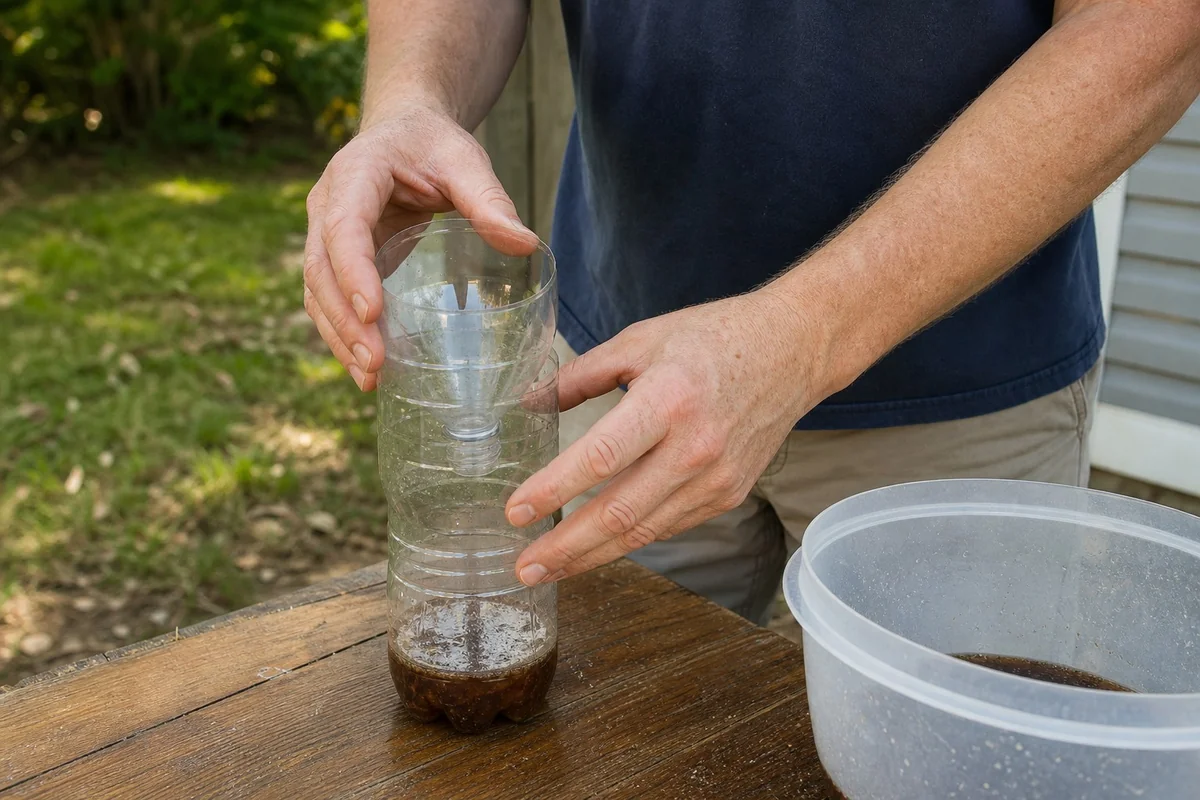
The familiar soda bottle trap works outdoors if you change the bait. Cut the top third off a two-liter bottle, pour water with a little sugar and a small scrap of meat or fish into the base, add a drop of soap, then turn the top upside down into the base as a funnel and tape the seam. Flies smell the bait, walk down the funnel and drown. It is smaller than a jug trap and fills faster, so it suits a patio edge or a dog run where you can empty it often.
Hanging Bag Water Trap
For a disposable version of store-bought fly bags, put water, a spoonful of sugar and a small piece of meat or a few shrimp shells in a gallon resealable bag. Seal the bag except for a gap of about an inch at one corner, then pin it to a fence or branch so the opening faces up. Flies crawl in, drown and pile up. When the bag is full, seal it completely and throw it in an outdoor bin on collection day.
Screen Cone Trap for Barns and Large Yards
Farms often use a cone trap: a cylinder of window screen with an inverted screen cone at the bottom, set over a dish of bait on short legs. Flies feed on the bait, then fly up toward the light, pass through the cone and end up trapped in the cylinder above, where they die. It takes more work to build, but it holds a large number of flies, needs no water and can be emptied and reused for years. Set it in a sunny spot near manure or feed areas, away from the house.
Best Baits for Outdoor Fly Traps
| Bait | Flies It Attracts | Smell | Notes |
|---|---|---|---|
| Raw meat, fish or shrimp shells | House flies, blow flies, bottle flies | Very strong | Most effective outdoor bait |
| Wet cat or dog food | House flies, blow flies | Strong | Easy to portion |
| Sugar water with yeast | House flies | Mild, fermented | Milder option near the house |
| Overripe fruit | House flies, fruit flies | Mild | Good near gardens and compost |
| Vinegar | Fruit flies | Mild | Weak on outdoor house flies |
What liquid attracts and kills flies? Water does the killing, with a drop of soap so flies sink. The bait floating in it, meat, fish, fermenting sugar or fruit, provides the smell that draws them in. Adding a packet of baker's yeast to sugar water starts fermentation and makes a stronger, less offensive bait than meat for traps closer to the house.
Start traps early in the season, as soon as the first flies appear in spring. Each fly caught early is one that will not lay eggs, so a few traps in May do more to keep summer numbers down than many traps hung in July.
Avoid poisons in homemade traps. Insecticide baits can harm pets, birds and children who reach the trap, and a well-placed water trap does the job without them.
Where to Put Homemade Outdoor Fly Traps
- Away from people: UC IPM advises placing baited traps at some distance from occupied buildings; put them at the edge of the yard, not beside the patio.
- Near the source: by trash cans, compost, dog runs and livestock areas, where flies already gather.
- In the sun: warmth ripens the bait and flies are more active in sunny spots.
- Downwind: so the smell drifts away from the house and neighbors.
- Out of reach: hang traps high enough that dogs, raccoons and children cannot knock them down.
Think of the trap as a decoy that draws flies away from where you sit. Placing it between the main fly source and your outdoor living area intercepts flies before they arrive, while placing it right next to the seating draws more flies toward people. Our guides on making fly traps for the garage and the chicken coop cover those spaces, which need gentler baits and different placement.
Cleaning Up and Keeping Flies Down
Emptying a full bait trap is the least pleasant part. Wear disposable gloves, do it at the far end of the yard or over a trash bag, and seal the contents in a bag before it goes into an outdoor bin. If the smell is overwhelming, simply cap the jug and throw the whole trap away; a new one costs nothing.
Traps work best as part of a cleanup routine. The weekly habits in the UC IPM pest note are simple: put the trash out for every collection, full or not, and clear dog droppings and other organic waste from the yard at least once a week. Bagging kitchen scraps and pet waste before they go into outdoor bins, rinsing bins now and then, and keeping compost covered remove most breeding sites around a home.
On the patio, a fan is the best natural fly repellent: flies struggle to land in a steady breeze. Herbs such as basil and mint are often recommended, but they do little on their own. Cover food, clear plates promptly and keep grills clean, and the trap at the edge of the yard will have far fewer flies to deal with.
Common Questions About Homemade Outdoor Fly Traps
What is the fastest way to get rid of flies outside?
What is the fastest way to get rid of flies outside?
Remove what they breed in and feed on first: take out trash, pick up pet waste and cover compost. Then set baited traps at the edge of the yard and run a fan on the patio to keep flies from landing near people.
Can I make an outdoor fly trap without meat?
Can I make an outdoor fly trap without meat?
Yes. Sugar water with baker's yeast or overripe fruit ferments and attracts house flies, with a milder smell than meat. It catches fewer flies than a protein bait but is easier to live with near the house.
Will a homemade fly trap attract wasps?
Will a homemade fly trap attract wasps?
Sweet and meat baits can draw yellowjackets in late summer. Hang traps away from doors and play areas, make entry holes smaller and empty traps carefully, especially if wasps are inside.
Does baking soda work in an outdoor fly trap?
Does baking soda work in an outdoor fly trap?
No. Baking soda does not attract flies; recipes use it only to make vinegar fizz. Outdoors, protein baits or fermenting sugar draw far more flies.
Key Takeaways
- A lidded jug or bucket with pencil-width holes, water, a little sugar, a scrap of meat or fish and a drop of soap is the best homemade outdoor fly trap.
- Outdoor flies respond to rotting protein far more than to vinegar.
- Place traps away from seating, near the fly source, in the sun and downwind.
- Empty traps with gloves and seal the contents in a bag before it goes in the bin.
- Weekly trash pickup and prompt pet waste cleanup do more to reduce flies than any trap.
- Start trapping early in the season, and move traps into full sun if they catch little.