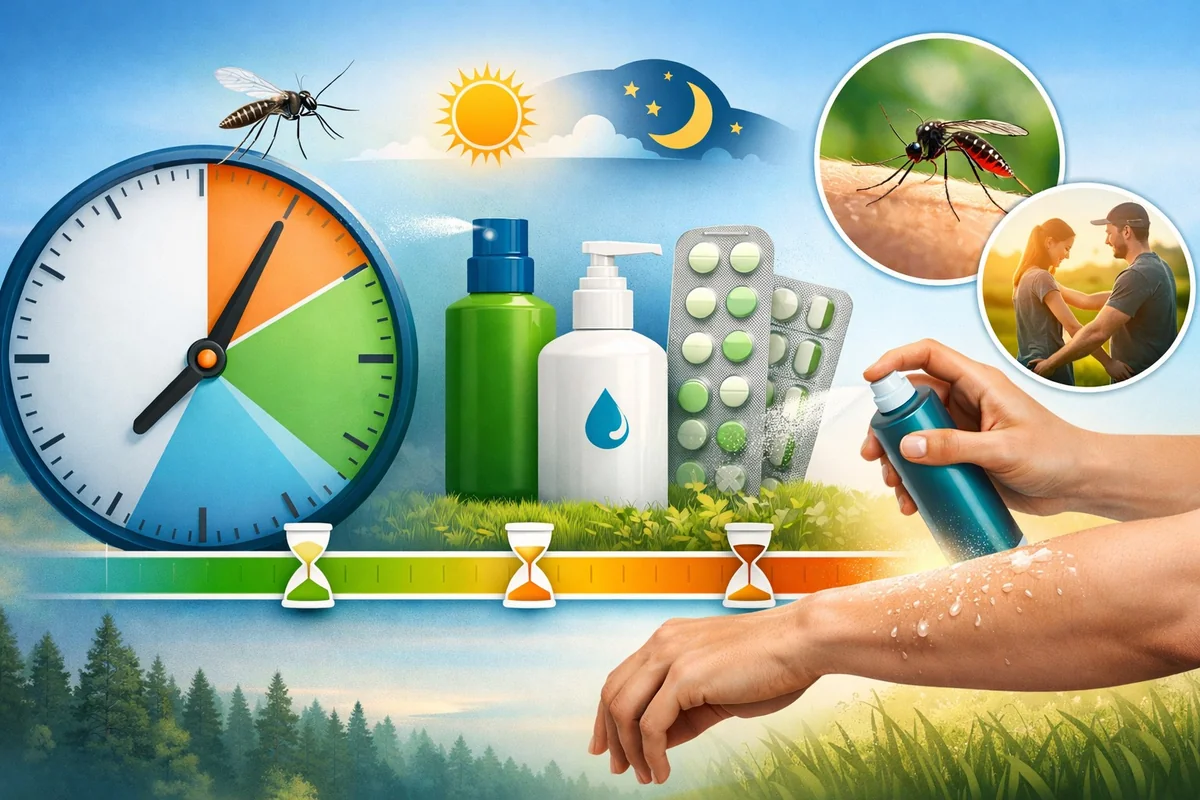

How Long Does Mosquito Repellent Last? Duration & Real-World Tips (2026)
Wondering how long mosquito repellent lasts? Learn about repellent duration by ingredient, real-world factors that affect protection time, and expert tips to maximize effectiveness at home in 2026.
Mosquito repellent duration refers to how long a product actively protects you from bites after application. The effective time depends on the active ingredient, concentration, weather, and how you use it. Knowing how long mosquito repellent lasts helps you avoid bites, reapply at the right time, and stay safe during peak mosquito hours.
What Determines Mosquito Repellent Duration?
Mosquito repellent duration isn’t just a number you read on the label - it’s the result of chemical science, your activities, and the environment. Not all repellents protect for the same length of time, and real-world conditions often shorten the expected coverage.
Active Ingredients and Their Longevity
The active ingredient in any mosquito repellent is the biggest factor in how long it lasts. Synthetic ingredients like DEET, picaridin, IR3535, and oil of lemon eucalyptus (OLE/PMD) all have different breakdown rates on your skin. The higher the concentration (up to a limit), the longer the protection - 30% DEET lasts much longer than 10%.
Natural oils, like citronella or lemongrass, evaporate faster than synthetics, so they need more frequent reapplication. Some ingredients, like OLE, are sensitive to heat and sunlight, which can reduce their effective lifespan by hours compared to laboratory settings.
Environmental and Personal Factors
Even the best repellent will wear off quickly in high heat or humidity because evaporation speeds up. If you’re sweating, swimming, or wiping your skin, you’re removing repellent and cutting down its protection time. Outdoor activities - think gardening, hiking, or sports - lead to faster breakdown than sitting indoors in a climate-controlled room.
Kids, who touch their faces and play hard, or anyone who reapplies sunscreen often, will find their repellent wears off faster than advertised. Understanding these factors is key to knowing when you’re really protected - and when you need to reapply.
For more on the science and practicalities of mosquito management, see our Mosquito Control resource.
Mosquito Repellent Duration by Ingredient Type
Repellents aren’t created equal - some trade longevity for comfort or safety, while others offer hours of protection at the cost of stronger odors or skin irritation. Here’s a closer look at the major ingredient types and what you can expect from each.
DEET-Based Repellents: Standard for Longevity
DEET has set the bar for repellent duration for decades. 30-50% DEET formulas provide up to 8 hours of protection in ideal conditions - indoors or in mild weather. DEET is fairly resistant to sweat and brief water exposure, so a quick walk in the rain or light perspiration won’t immediately remove it.
However, DEET’s odor and potential for skin irritation are drawbacks for some people. Lower concentrations (10-20%) offer 2-4 hours of protection, which is fine for short outings but not an all-day solution. DEET remains the longest-lasting choice when maximum duration is your top priority.
Picaridin, IR3535, and Oil of Lemon Eucalyptus
Picaridin at 20% offers 6-8 hours of protection - almost matching DEET but with less smell and a lighter feel on the skin. It’s less likely to cause irritation and is often a good choice for families or those with sensitive skin. Oil of lemon eucalyptus (OLE/PMD), a plant-derived synthetic, typically lasts 4-6 hours, but loses effectiveness faster in heat or with heavy sweating.
IR3535 is milder and often found in combination formulas, but expect just about 4 hours of reliable coverage. With all these, swimming, excessive sweating, or towel drying means you’ll need to reapply sooner than the label suggests.
Natural and Plant-Based Repellents
Citronella, lemongrass, and peppermint oil-based repellents are popular for those avoiding chemicals, but they come with a trade-off: 30-90 minutes of protection at best. Outdoors, in wind or humidity, that window can shrink to as little as 20 minutes.
Natural oils are less likely to irritate sensitive skin and are often the first pick for young children, but the need to reapply frequently increases the risk of missed spots. If you’re in an area with aggressive mosquitoes, these are best used as a backup or for short, low-risk outings.
For a practical breakdown of which repellents are most effective for different needs, check our Best Mosquito Repellents for Home and Outdoor Use 2026 guide.
| Option | ★Typical Duration (Hours) | ★Application Difficulty | ★Coverage Area | Residue or Odor | Best For | Limitations |
|---|---|---|---|---|---|---|
| Topical Chemical Repellents | 4 | Easy | Personal (applied to skin/clothing) | May leave mild scent or residue | Outdoor activities, hiking, travel | Requires reapplication after sweating or swimming |
| Natural/Plant-Based Repellents | 1.5 | Easy | Personal (applied to skin/clothing) | Often pleasant, herbal scent | Short outings, sensitive skin, children | Shorter protection; less effective in high-infestation areas |
| Spatial Repellents (Coils, Vaporizers, Mats) | 6🏆 | Medium | Small rooms or outdoor seating (up to 100 sq ft) | Noticeable smoke or chemical odor | Patios, porches, evening gatherings | Not suitable for large open areas or windy conditions |
| Physical Barriers (Nets, Screens) | Continuous while barrier is intact | Medium | Entire room or bed (varies by installation) | Odorless; no residue | Sleeping, long-term indoor protection | No mobile protection; requires correct installation |
How Label Claims Compare to Real-World Results
It’s easy to trust the bold numbers on a repellent’s label, but those figures come from carefully controlled lab tests - usually with minimal movement, sweating, or water exposure. In daily life, you’re likely to get less protection time than advertised.
EPA-Approved Testing vs. Everyday Use
Label claims are based on EPA-approved protocols, where volunteers sit still in a controlled space and avoid touching or washing the treated area. In that setting, a repellent may last 8 hours. But regular activities - gardening, playing with kids, walking the dog - can cut that time by half or more.
If you’re active, you should expect to reapply more often than the maximum hours listed on the bottle. Setting realistic expectations reduces frustration and keeps you better protected.
Factors That Shorten Effective Protection
- Sweating, rain, or swimming strip repellent from the skin much faster than sitting indoors
- Clothing friction (collars, cuffs) gradually wears away applied product
- Applying sunscreen over repellent removes the protective layer - always apply sunscreen first, let it dry, then add repellent
- High UV exposure can degrade natural oils, shortening their useful lifespan
Recognizing these triggers is crucial for avoiding unexpected bites and knowing when to reapply.
Comparing Spray, Lotion, and Wearable Repellents
The application method has a surprising effect on how long mosquito repellents last. Some forms offer more even coverage, while others trade convenience for shorter protection.
Sprays vs. Lotions: Application and Absorption
Lotions are absorbed into the skin more slowly, which means they typically last longer - sometimes by 30-60 minutes - compared to sprays. They’re easier to spread evenly, reducing the chance of missed spots, but can feel greasier or stickier, which some users dislike.
Sprays are quick and easy, especially for large areas like arms and legs, but are easy to miss on hands, face, or in between fingers. They also evaporate faster, so coverage may not last as long, especially in hot weather.
Wearables and Repellent Devices
Wearable bands, clip-ons, and battery-powered repellent devices create a protective vapor barrier around your body. Most last 2-8 hours depending on the refill, but only protect a small radius - wind or lots of movement reduces their effectiveness quickly.
These are convenient for low-risk situations, but aren’t a substitute for topical repellents if you’re in a mosquito-heavy area or need all-over protection.
How to Maximize Mosquito Repellent Effectiveness
Getting the most from your repellent isn’t just about picking the right product - it’s about how you apply, layer, and reapply it throughout your day. A few simple changes can stretch your protection time and keep bites to a minimum.
Application Techniques for Longer Protection
- Apply repellent evenly to all exposed skin - mosquitoes will find and bite any missed spot
- For your face, spray repellent into your palms first, then gently apply
- If you’re using sunscreen, put it on first, let it dry, and add repellent on top
- Use enough product to create a thin, even layer - not so much that it drips or pools
Proper application is the number one reason some people avoid bites while others don’t, even when using the same product.
When and How Often to Reapply
- Always reapply after swimming, sweating, or towel drying - even if the label promises all-day coverage
- In hot, humid conditions, check for mosquito activity and consider reapplying every 2-4 hours depending on the repellent type
- If you notice mosquitoes landing or biting, don’t wait - reapply immediately
- Carry a travel-size repellent so you’re never caught unprotected outdoors
Special Considerations for Kids, Pets, and Sensitive Skin
Choosing and using mosquito repellent safely is even more important for children, pets, and anyone with skin sensitivities. The right approach protects your loved ones without unnecessary risk.
Child-Safe Repellent Duration and Risks
DEET and picaridin are both approved for children over 2 months old, but use the lowest effective concentration - often 10% or less - for outings shorter than two hours. Natural repellents are less likely to cause irritation, but require much more frequent reapplication, raising the chance of missed spots or accidental ingestion.
Always avoid applying any repellent to children’s hands, eyes, or mouth. For infants, protective clothing and netting are usually safer than chemical repellents.
Pets and Repellent Exposure
Most human mosquito repellents are toxic to cats and dogs if licked or absorbed, especially those with DEET or OLE. Pet-specific repellents use lower concentrations and often need to be reapplied every couple of hours.
Let repellent dry completely before letting pets come in contact with treated skin or surfaces. Watch for signs of drooling, lethargy, or skin rash - these may indicate exposure and require veterinary attention.
Signs Your Mosquito Repellent Has Worn Off
Knowing when your repellent has stopped working is just as important as knowing when and how to apply it. Mosquitoes are quick to find unprotected skin, so pay attention to these clues.
Behavioral and Physical Cues
- You feel mosquitoes landing or notice new bites on skin that was previously protected
- The repellent’s scent has faded or your skin no longer feels oily or slightly tacky
- Increased itching, redness, or swelling may signal the product has evaporated or worn away
These signs mean it’s time to reapply - don’t wait for more bites to confirm protection has lapsed.
Environmental Triggers for Reapplication
- Swimming, sweating, or towel drying can remove most of the repellent, even long-lasting formulas
- Heavy rain or high wind can strip away topical products quickly
- If you’ve been outdoors for over 2 hours, check for signs of mosquito activity and consider reapplying, especially in humid or buggy areas
Frequently Asked Questions About Mosquito Repellent Time
❓ Frequently Asked Questions
How long does mosquito repellent last after application?
How long does mosquito repellent last after application?
Most mosquito repellents last between 2 to 8 hours, depending on the active ingredient and concentration. DEET-based products typically protect for 4-6 hours, while picaridin offers about 6-8 hours. Natural repellents, such as oil of lemon eucalyptus, may only last 2-4 hours. Reapply as directed for continued effectiveness.
What factors affect how long mosquito repellent works?
What factors affect how long mosquito repellent works?
Key factors influencing repellent duration include the active ingredient, its concentration, environmental conditions (such as sweating, swimming, or rain), and skin type. Higher concentrations of ingredients like DEET or picaridin generally provide longer protection. However, excessive sweating or water exposure can significantly reduce how long repellents remain effective.
How often should I reapply mosquito repellent?
How often should I reapply mosquito repellent?
Reapply mosquito repellent every 4-8 hours, depending on the product’s instructions and your activity level. If you swim, sweat heavily, or towel off, reapplication may be needed sooner. Always follow the label directions for maximum safety and effectiveness, especially for children or sensitive skin.
What is the difference between DEET and natural mosquito repellents?
What is the difference between DEET and natural mosquito repellents?
DEET is a synthetic chemical proven to provide 4-8 hours of protection, making it suitable for high-risk areas. Natural repellents, like oil of lemon eucalyptus or citronella, typically last 2-4 hours and may require more frequent application. However, some users prefer natural options for sensitive skin or mild conditions.
Which mosquito repellent lasts the longest?
Which mosquito repellent lasts the longest?
Repellents containing 20-30% DEET or 20% picaridin generally offer the longest-lasting protection, up to 8 hours. Oil of lemon eucalyptus provides moderate duration (about 4 hours). For extended outdoor activities, choose a product with a higher concentration of DEET or picaridin for maximum longevity.
How do I maximize the effectiveness of mosquito repellent?
How do I maximize the effectiveness of mosquito repellent?
To get the best results:
- Apply repellent evenly to all exposed skin.
- Avoid applying under clothing.
- Reapply after sweating or swimming.
- Combine with long sleeves and pants for added protection.
Avoid using expired products, as their effectiveness can degrade over time.
What should I look for when choosing a mosquito repellent?
What should I look for when choosing a mosquito repellent?
When selecting mosquito repellent, compare these criteria:
- Active ingredient: DEET, picaridin, or oil of lemon eucalyptus for proven protection
- Duration: Choose based on expected exposure time
- Safety: Check suitability for children or sensitive skin
- Formulation: Spray, lotion, or wipes for preferred use.
Always check product labels for EPA registration.
Key Takeaways on Mosquito Repellent Duration
How long mosquito repellent lasts depends on the active ingredient, concentration, and how you use it day to day. DEET and picaridin provide the longest real-world coverage, but no repellent is truly “set it and forget it” - especially in hot, humid, or active conditions.
Always apply evenly, reapply after water or heavy sweat exposure, and watch for the earliest signs that protection is fading. Being proactive with your repellent routine is the surest way to avoid bites and stay comfortable through mosquito season.
For a deeper dive into your best options and practical advice for every situation, our “Best Mosquito Repellents for Home and Outdoor Use 2026” guide is packed with expert recommendations and real-world tips tailored for this year’s most persistent mosquito problems.
Understanding mosquito repellent duration isn’t about memorizing a single number - it’s about knowing what factors actually matter for your safety and comfort. Choose the right active ingredient for your outing, adjust your expectations based on activity and weather, and always reapply at the first sign of mosquito activity.
With this knowledge, you can confidently protect yourself, your family, and your pets from bites - without relying on guesswork or outdated advice. If you’re still unsure which product is best for your needs, use our guides and comparison tables to match your situation with the right repellent.
For more in-depth pest management resources, practical tips, and up-to-date advice, explore our site or consult a professional for severe or persistent infestations.
Related Articles
Best Mosquito Repellents for Home and Outdoor Use 2026
Find the best mosquito repellents for home and outdoor use in 2026. Compare sprays, lotions, traps, natural options, and devices with expert reviews and buying tips.
Best Tick Sprays and Yard Treatments 2026: Top Products for Safe Tick Control
Find the best tick sprays and yard treatments for 2026. Compare top tick control products, natural options, and expert tips to keep your yard tick-free and safe for family and pets.
Complete Guide to Pest Prevention in Homes: Stop Pests in 2026
Protect your home in 2026 with this complete pest prevention guide. Discover proven DIY methods, room-by-room tips, safe solutions for families, and expert advice to stop pests before they start.
Best Natural and Organic Pest Control Products 2026: Safe, Eco-Friendly Solutions for Every Home
Find the best natural and organic pest control products for 2026. Safe, eco-friendly solutions for ants, roaches, rodents, and more - ideal for families and pet owners.