
How to Make a Fly Trap: Bottle, Jar and Homemade Fly Paper
How to make a fly trap at home: a bottle funnel trap with sugar and vinegar, a cider vinegar jar for fruit flies, homemade fly paper, and the best baits to use.
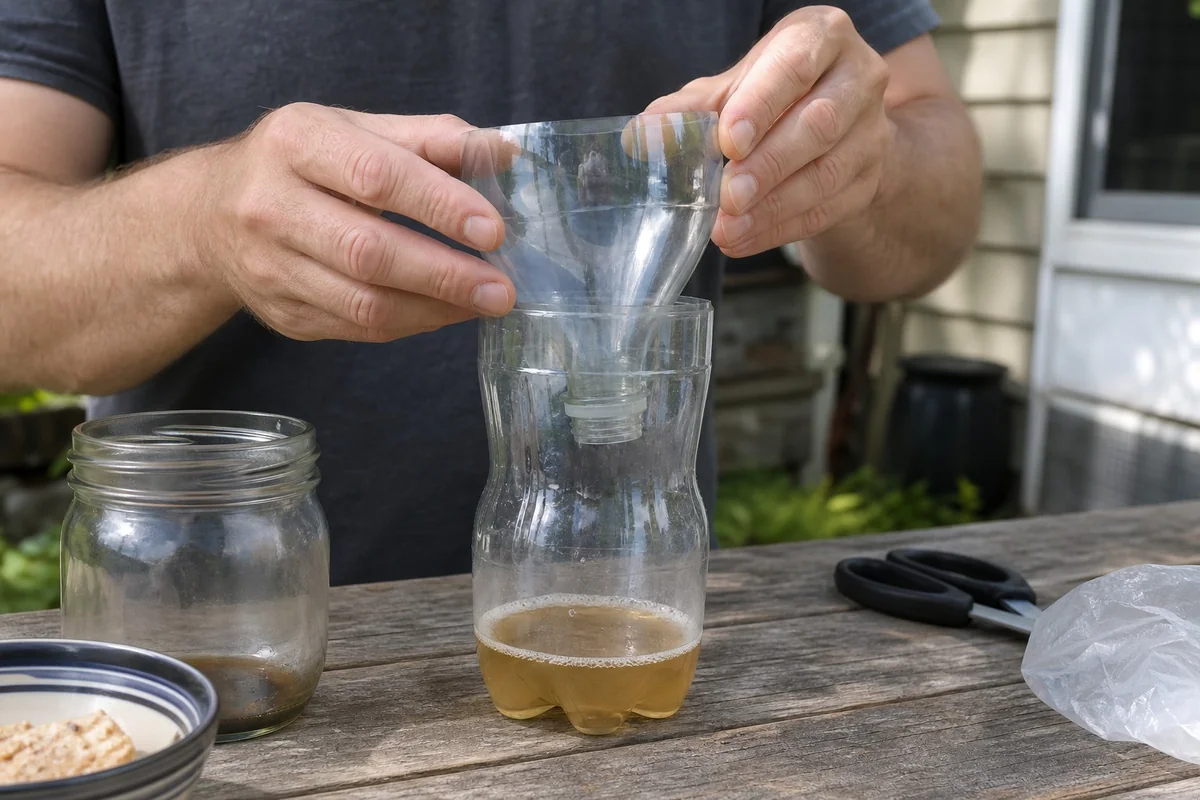
To make a fly trap at home, cut the top off a plastic bottle, flip it into the base as a funnel, and fill the bottom with sugar water and a splash of vinegar plus a drop of dish soap; flies crawl in after the smell and drown. For fruit flies, a jar of cider vinegar under a paper funnel or punctured plastic wrap works best, and homemade fly paper made from brown paper and corn syrup catches house flies in garages and porches. Homemade traps catch flies already inside, so pair them with finding and removing what the flies breed in.
What You Need
- For a bottle trap: a clean plastic bottle, scissors or a utility knife, tape, sugar, water, vinegar and dish soap.
- For a jar trap: a glass jar, apple cider vinegar, a sheet of paper or plastic wrap, a rubber band and a toothpick.
- For homemade fly paper: brown paper bags or kraft paper, corn syrup or honey, sugar, a small pot, string and a hole punch.
- Bait options: overripe fruit, banana peel, wine or beer dregs, and for outdoor traps, a scrap of meat or fish.
Everything here is household material. Each trap takes five to ten minutes to make and can be refreshed for pennies.
Which Homemade Fly Trap Works Best?
It depends on the fly. House flies, the larger gray flies, are drawn to sugar and fermenting or rotting food. Fruit flies, the tiny tan flies with red eyes, go for vinegar, wine and ripe fruit. University of California IPM's pest note on flies notes that sticky traps are effective at eliminating a few flies in relatively confined areas, which is exactly what homemade traps are good at.
| Trap | Best Bait | Best For | Notes |
|---|---|---|---|
| Bottle funnel trap | Sugar water with vinegar | House flies indoors, porches | Add soap so flies sink |
| Jar with paper funnel or plastic wrap | Apple cider vinegar | Fruit flies | Small holes keep flies inside |
| Bowl of vinegar and soap | Vinegar, dish soap | Fruit flies, gnats | Simplest, no assembly |
| Homemade fly paper | Sugar syrup | Garages, porches, sheds | Messy; hang out of the way |
| Outdoor bait jug | Meat or fish scrap in water | Yards, trash areas | Smells strongly; outdoors only |
How to Tell Your Flies Apart
Before choosing a recipe, take a close look at the flies. House flies are about a quarter inch long, gray with dark stripes on the back, and they buzz around trash, pet bowls and windows. Fruit flies are much smaller, tan or brown with red eyes, and they hover lazily over fruit bowls, recycling bins and sink drains. Fungus gnats are tiny and dark, with long legs, and they rise from houseplant soil when you water. Drain flies look fuzzy, almost like miniature moths, and rest on bathroom walls near showers and sinks.
The trap that catches one rarely does much for the others. A sugar-water bottle aimed at house flies will catch some fruit flies, but a cider vinegar jar does far better on fruit flies, and neither touches fungus gnats breeding in damp potting soil. Matching the trap to the fly saves days of frustration.
Our flying insect guides compare store-bought traps as well, and the homemade indoor fly trap section has variations with and without vinegar.
Step-by-Step: Make a Bottle Fly Trap
- Clean the bottle: rinse a one- or two-liter plastic bottle and remove the label.
- Cut the top off: slice around the bottle about a third of the way down, just where the shoulder straightens.
- Mix the bait: stir a few spoonfuls of sugar into a cup of warm water until it dissolves, then add a splash of vinegar.
- Add soap: a single drop of dish soap breaks the surface tension so flies sink instead of standing on the liquid.
- Pour it in: fill the bottom section an inch or two deep.
- Make the funnel: remove the cap, turn the top upside down and set it into the base so the neck points down without touching the liquid.
- Seal the edges: tape around the joint so flies can enter only through the funnel.
- Place it: set it where flies gather, near the trash, a sunny window or the back door, away from food prep areas.
- Refresh it: empty and refill every few days, or sooner once it fills or starts to smell.
Quick Checklist
How to make a bottle fly trap.
- Warning: Cut away from your hands.
Why Your Bottle Trap Is Not Catching Flies
If a trap sits empty after a day or two, one of a few things is usually wrong. The bait may be too weak; flies respond to smell, so add a piece of overripe fruit or let the sugar water sit for a day to start fermenting. The funnel may be too wide, letting flies walk back out, so tape a smaller opening or use a narrower bottle. The trap may be in the wrong place: flies spend their time near food, trash and bright windows, not in the middle of a room. Or there may be something more attractive nearby, such as an open trash can or a bowl of pet food, that the trap cannot compete with.
Finally, check that the liquid has a drop of soap. Without it, flies can land on the surface, feed and fly back out through the funnel, and the trap looks busy without catching anything.
For house flies outdoors, swap the sugar water for water with a small piece of raw meat or fish, which smells strongly enough to draw them in. Keep that version outside and away from doors and seating, since the smell is unpleasant.
Jar Trap for Fruit Flies
The University of Kentucky's entomology fact sheet on fruit flies describes the classic version: roll a sheet of paper into a funnel, set it into a jar baited with a few ounces of cider vinegar, and place the jar wherever fruit flies are seen. The flies follow the scent down the funnel and cannot find the narrow exit.
- Plastic wrap version: cover the jar with plastic wrap held by a rubber band and poke a few small holes with a toothpick.
- Bowl version: a shallow bowl of cider vinegar with a drop of dish soap catches fruit flies without any cover.
- Boosters: a slice of overripe banana or a splash of wine makes the bait more attractive.
Fungus gnats and drain flies need a different approach from fruit flies. For gnats, let the top inch of potting soil dry between waterings and set a yellow sticky card at soil level; a vinegar jar catches only a few. For drain flies, scrub the drain with a stiff brush and pour boiling water down it, since they breed in the slimy film inside pipes rather than in food.
The same fact sheet warns that the problem will continue as long as breeding sites remain. A single forgotten onion or potato can breed thousands of fruit flies, so check produce bins, recycling, drains and the bottom of the trash can.
How to Make Homemade Fly Paper
- Cut strips: cut brown paper bags into strips about two inches wide and a foot long.
- Punch a hole: at one end of each strip and thread a loop of string through it.
- Make the syrup: warm equal parts corn syrup or honey, sugar and water in a small pot, stirring until the sugar dissolves, then let it cool until thick and tacky.
- Coat the strips: dip or brush them on both sides, letting the excess drip off over the pot.
- Let them set: hang them over newspaper for an hour or two until tacky rather than runny.
- Hang them up: near windows, light fixtures and doors in garages, porches and sheds.
Keep homemade fly paper away from pets, children and long hair. Sugar syrup is not toxic, but it is very sticky, and a strip that falls on a dog or cat is hard to clean off. Warm water or a little cooking oil loosens it from skin and fur.
Homemade fly paper is messier and less sticky than store-bought ribbon, and it drips in heat. It works best in utility spaces where a few drips do not matter. Replace strips once covered or dry.
Best Baits for Homemade Fly Traps
- Apple cider vinegar: the top choice for fruit flies; plain white vinegar works less well because it lacks the fruity smell.
- Sugar water: attracts house flies, especially with a splash of vinegar or a little fruit.
- Overripe fruit: banana peel, mashed peach or a bit of melon draws both fruit flies and house flies.
- Wine or beer dregs: fermenting liquids are strong fruit fly lures.
- Meat or fish scraps: the strongest house fly bait, but for outdoor traps only.
- Dish soap: not a bait, but a drop in any liquid makes flies sink instead of floating.
If one bait is not working, try two traps side by side with different baits for a day and keep the one that catches more. Flies in different homes respond to different smells, and a quick comparison is faster than guessing.
Baking soda shows up in many online recipes, but it does not attract flies; it is usually added only to make vinegar fizz. Our separate guides cover vinegar-free and baking soda versions if you want to try them.
How to Make Homemade Fly Traps Work Better
- Find the source first: UC IPM notes that house flies breed in animal waste and decaying organic material, and that garbage should go out at least once a week; take out the trash, clean the bin and pick up pet waste.
- Use several traps: one per problem room, near where flies gather.
- Keep traps fresh: bait loses its pull after a few days and starts to smell.
- Keep them away from food: place traps near the trash or a window, not next to the fruit bowl you are trying to protect.
- Close the door: check screens and keep doors shut, since homemade traps cannot keep up with a steady flow of flies from outside.
If you still see many flies after a few days of trapping, look again for a hidden source. Large metallic flies at windows often mean a dead animal in a wall or attic, and swarms of tiny flies around a sink usually point to a dirty drain.
Common Questions About Homemade Fly Traps
How do you make a homemade fly trap without vinegar?
How do you make a homemade fly trap without vinegar?
Use sugar water with a piece of overripe fruit, or a splash of wine or beer, in a bottle funnel trap, and add a drop of dish soap so flies sink. Fermenting fruit and sugar attract both house flies and fruit flies.
Can you use regular vinegar instead of apple cider vinegar?
Can you use regular vinegar instead of apple cider vinegar?
White vinegar works, but less well, because fruit flies are drawn to the fruity, fermented smell of cider vinegar. Add a slice of ripe fruit or a splash of wine to white vinegar to make it more attractive.
Does dish soap kill fruit flies?
Does dish soap kill fruit flies?
Not by itself, but it breaks the surface tension of the bait, so flies that land on the liquid sink and drown instead of standing on top. One drop per trap is enough.
How long do fruit flies live?
How long do fruit flies live?
Adults live a few weeks, and they can go from egg to adult in about a week in warm conditions. That is why removing their breeding site matters more than any trap.
How do I make my own fly bag for outdoors?
How do I make my own fly bag for outdoors?
Put a small piece of raw meat or fish, a little sugar and water in a resealable plastic bag or bottle, leave a small opening near the top, and hang it well away from doors and seating. It smells strongly, so keep it outside only.
Key Takeaways
- A bottle funnel trap with sugar water, vinegar and a drop of soap is the most versatile homemade fly trap.
- For fruit flies, a jar of cider vinegar under a paper funnel or punctured plastic wrap works best.
- Homemade fly paper made with sugar syrup suits garages and porches, not kitchens, and should hang out of reach of pets.
- Dish soap makes flies sink; baking soda does not attract them.
- Traps catch adults only, so remove garbage, pet waste and overripe produce to stop new flies.
- Match the trap to the fly: house flies, fruit flies, gnats and drain flies each need a different approach.