 Pest Pro Reviews Editorial Team • • 10 min read •
Best Mole Traps: Scissor, Tube and Bait Options That Work
The best mole traps: Polaflex scissor traps, Wire Tek Easyset, Victor DeadSet, GopherHawk and Talpirid worm baits, plus how to find tunnels and set traps.
The best mole trap is the Polaflex scissor 2-pack, a galvanized steel trap that sets with a step of the foot into a mole's tunnel without digging. Wire Tek's heavy-gauge steel 2-pack is the US-made choice at a higher price, Victor's DeadSet is the budget plastic trap, GopherHawk handles gophers as well as moles, and Talpirid's worm-shaped baits are the option when trapping is not practical. University research ranks trapping as the most dependable way to get rid of moles.
- University of California IPM calls trapping the most universally applicable and dependable method of mole control.
- Moles mostly eat earthworms, so grub-control products do not get rid of them, and grain baits rarely work.
- Traps catch moles only in active tunnels: step a run flat and set traps where the mole pushes it back up within a day.
Do Mole Traps Work?
Yes, better than anything else available to homeowners. University of California IPM's pest note on moles calls trapping the most universally applicable and dependable method of mole control. Repellents, vibrating stakes and home remedies are not supported by research, and because moles are territorial, usually only one lives in a set of tunnels, so catching one often ends the damage.
The catch is technique. A mole trap works only when it sits in a tunnel the mole is still using, set firmly enough that the mole pushes into it. Most failed traps are set in old tunnels, in mounds or in soil too hard to set the trap properly. Getting those details right matters more than which brand you buy.
Our wildlife control guides cover moles along with raccoons, squirrels and snakes, and the mole trap section collects the articles on trapping methods, baits and mole killers.
Identify your needs and get personalized recommendations
Soft soil, active runs.
Mixed mounds.
Traps hard to set.
Mole or Gopher? Identify the Pest First
Moles, pocket gophers and voles damage lawns in different ways, and each needs a different trap. Moles are insect-eating mammals, not rodents; they eat earthworms and grubs and rarely damage plants directly. UC IPM notes that chewed roots and bulbs are almost always the work of rodents such as gophers or voles.
- Moles: raised ridges across the lawn and round, volcano-shaped mounds, often in a line over a tunnel.
- Pocket gophers: crescent- or fan-shaped mounds with a plugged hole off to one side, and plants pulled down into the soil.
- Voles: shallow surface runways through grass, small open holes and gnawed bark at the base of shrubs.
Mole tunnels come in two kinds. Surface runways are feeding tunnels just under the grass, which you see as ridges; some are used once and abandoned. Deeper permanent tunnels, about 8 to 12 inches down according to UC IPM, connect the mounds and are used again and again, which makes them the best places for traps.
Types of Mole Traps
| Type | How It Works | Best Tunnels | Notes |
|---|---|---|---|
| Scissor trap | Spring jaws close across the tunnel | Deep, permanent runs | Most reliable; needs a firm set |
| Harpoon trap | Spring-driven spikes strike down into the run | Surface runways | Easy to set over a pressed-down ridge |
| Pincer or choker trap | Jaws or a loop grip the mole | Main tunnels dug open | Set fully below ground |
| Tube or probe trap | Trap slides into a probe hole | Gopher and mole tunnels | Less digging; check fit |
| Worm-shaped bait | Bromethalin poison eaten underground | Active runways | Toxic to pets; slower |
Purdue University's plant and pest diagnostic lab sums up the choice in its article on moles in lawns: scissor traps are better for deep runs, while harpoon traps are usually easier to use where tunnels are near the surface.
How We Selected These Products
We compared mole traps and baits on trap type, materials, how they set, the tunnels they suit and what buyers report about catches, setting and durability. Our sources were the makers' listings, Amazon's review digests and the UC IPM and Purdue guidance cited here; we did not test the products.
We favored all-metal scissor traps with strong buyer reports, plus one budget trap, one tube-style trap for yards with gophers and one bait for situations where trapping is not practical. We left out grain and peanut-style baits, since moles eat worms and insects rather than grain, gopher bait granules with mostly negative value reviews, and new trap listings with few ratings.
Best Mole Traps
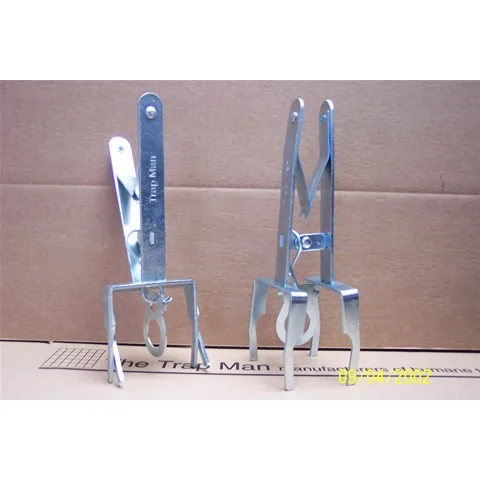
Polaflex Scissor Mole Trap 2-Pack: Best Overall Mole Trap
Polaflex's 2-pack of galvanized steel scissor traps suits the deep, active runs moles use every day.
- The maker says it needs no digging: insert the jaws into an active tunnel and step on it to set.
- Buyers find it effective, solid and durable, with some catching several moles within days.
- Many say the spring is very strong and the trigger can be too sensitive or hard to set, especially in dry, hard ground.
Choose it for a lawn with active ridges and mounds, and set both traps at once in separate runs. Water the area the day before setting traps in dry weather, and wear gloves; the jaws close with real force.
Polaflex Galvanized Steel Scissor Mole Trap 2-Pack
Best for: Lawns with active, deep runs
- ✓Galvanized steel, per the maker
- ✓Effective, per buyers
- ✓Solid and durable, per buyers
- −Very strong spring, per buyers
- −Trigger too sensitive or hard to set, per some buyers
Specifications (2)
- Style
- Spring-loaded Scissor
- Unit Count
- 2 Count
Wire Tek Easyset: Best US-Made Mole Trap
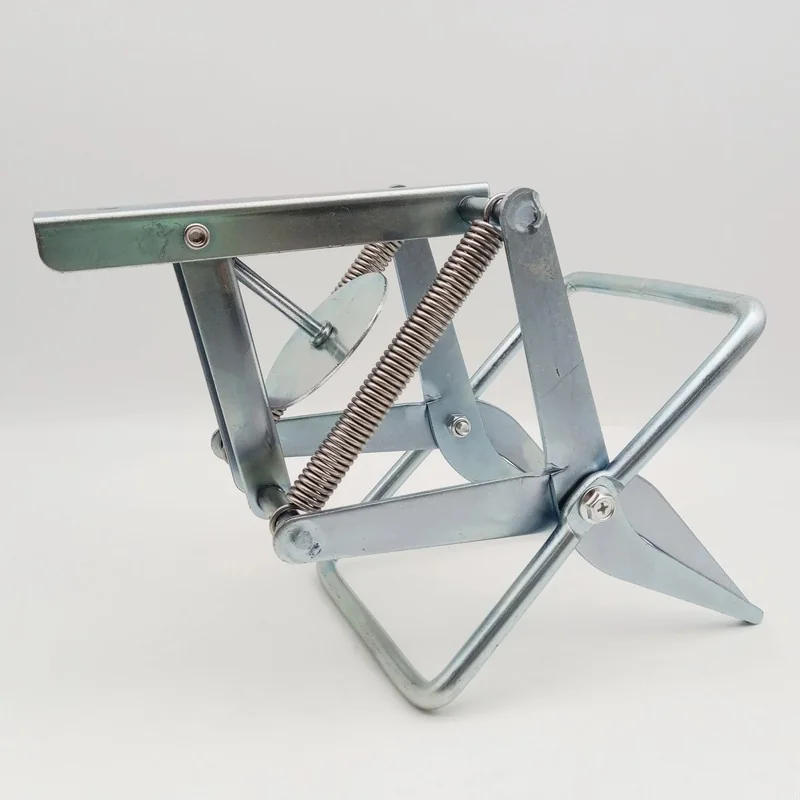
Wire Tek's 2-pack of heavy-gauge steel scissor traps is made in the USA, per the maker, and sets into a tunnel with a foot step rather than a shovel.
- The maker says it was the first trap that could be set into a mole tunnel without digging, and that it sets easily in soft soil, sand and mulch.
- Clay and other hard soils need to be prepared as the user manual describes.
- Buyers find it highly effective, with many catching moles within a couple of days, and say it is well-built with few false trips; some find it expensive.
Choose it for a lawn with active ridges and mounds, especially if you have tried cheaper traps without success. Set both traps at once in separate active runs to speed results.
Wire Tek 1001 Easyset Mole Eliminator Trap 2-Pack
Best for: A heavy-gauge, US-made trap
- ✓Sets without digging in soft soil, per the maker
- ✓Highly effective, per buyers
- ✓Well-built with few false trips, per buyers
- −Hard soils need preparation
- −Expensive, per some buyers
Specifications (2)
- Number of Pieces
- 2
- Target Species
- Mole
Victor Easy-to-Set DeadSet Mole Trap: Best Budget Mole Trap
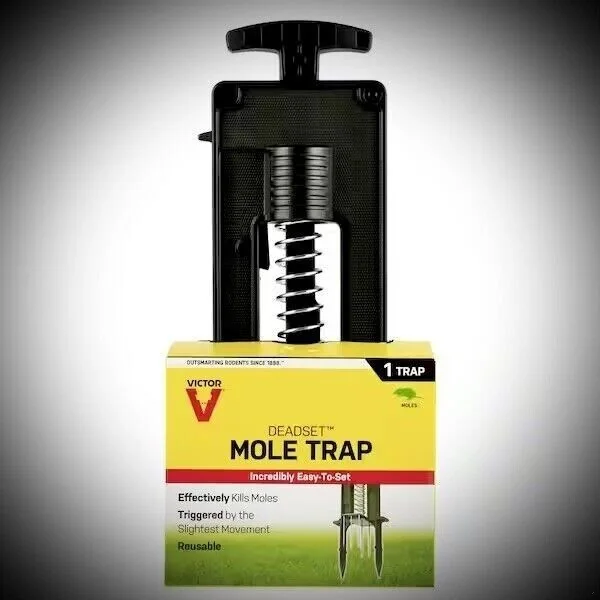
Victor's DeadSet is the low-cost choice: a plastic trap with an easy-grip handle and an oversized trigger plate that sits in the tunnel, per the maker.
- The maker says its moving parts stay below ground, away from children and pets.
- Buyers find it easy to set; results are mixed, with some catching several moles and others none.
- Durability gets mostly negative reviews, with broken plastic stakes and handles.
Choose it for a single mole in a small yard when you want to try trapping cheaply. If it breaks or fails after a few tries, move up to a steel scissor trap.
Victor Easy-to-Set DeadSet Mole Trap
Best for: A low-cost first try
- ✓Easy to set, per buyers
- ✓Moving parts below ground, per the maker
- ✓Low price
- −Durability mostly negative, per buyers
- −Mixed results, per buyers
Specifications (2)
- Material
- Plastic
- Unit Count
- 1 Count
GopherHawk: Best for Yards With Gophers and Moles
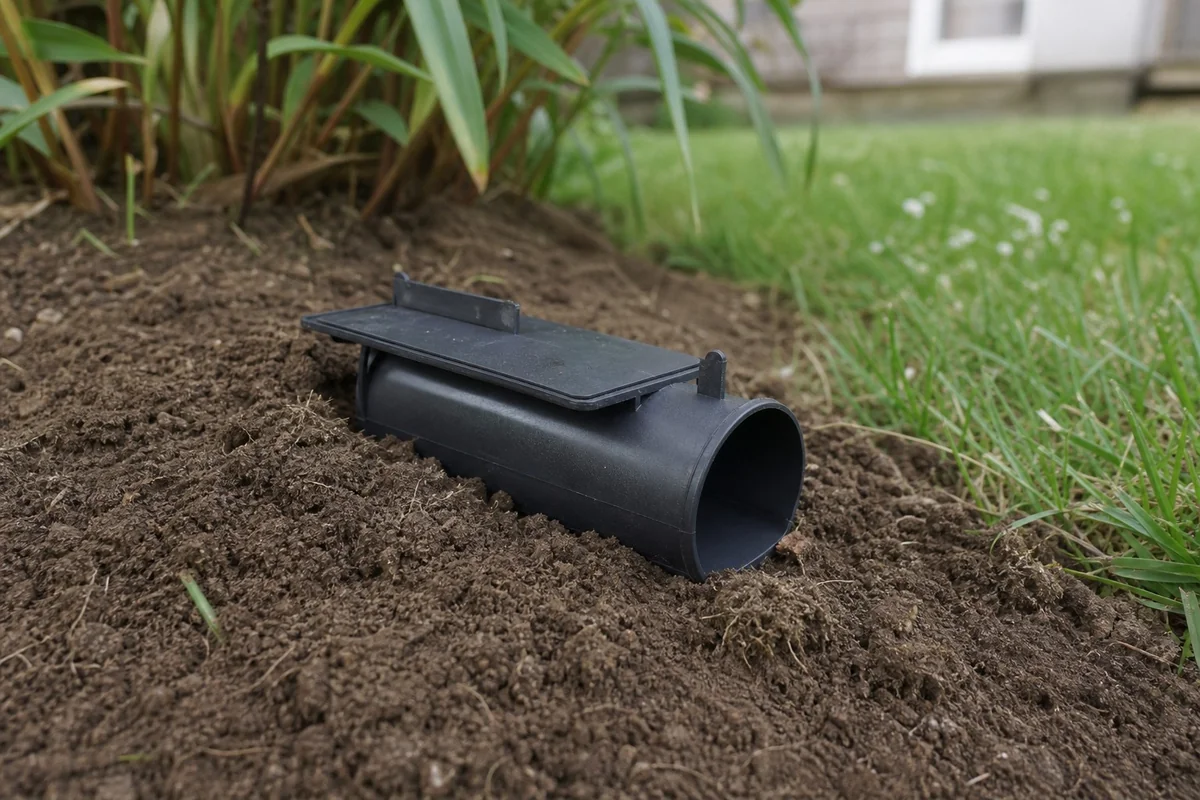
GopherHawk is a 20-inch tube-style trap with stainless steel straps that slides into a probe hole, so you never dig up the tunnel or touch the soil, per the maker.
- It has an above-ground indicator that shows when the trap has fired.
- This single trap does not include the wedge and probe tool, per the listing.
- Buyers report it working well, especially on gophers; durability gets mostly negative reviews, with bent catch parts.
Choose it if your yard has both gophers and moles, or if you want a trap you can check from a distance. Buy the probe tool if you do not have one.
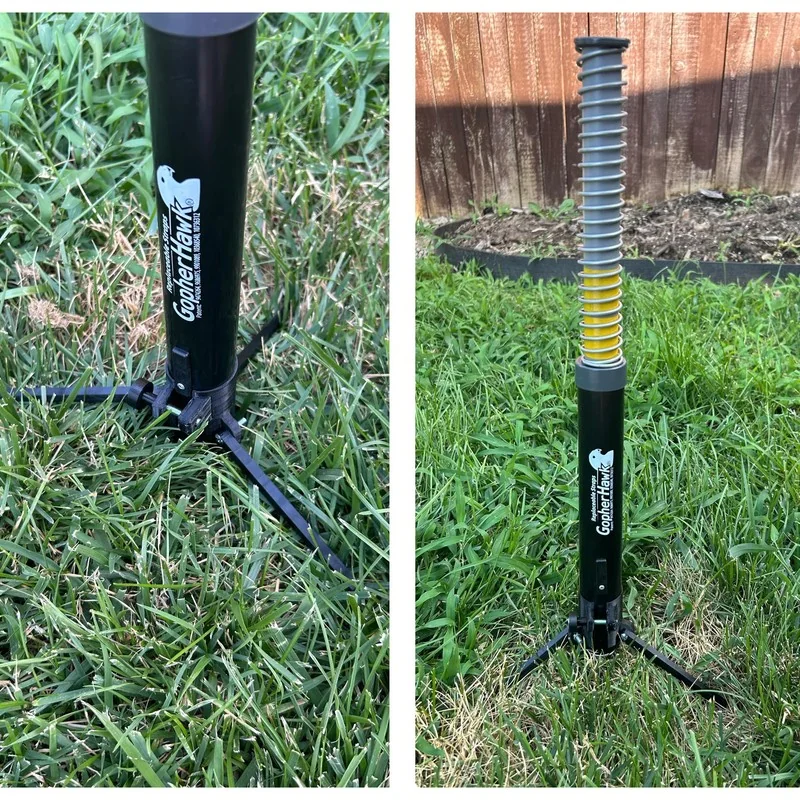
GopherHawk Single Trap for Gophers and Moles
Best for: Yards with gophers as well as moles
- ✓No digging, per the maker
- ✓Above-ground catch indicator
- ✓Effective, especially on gophers, per buyers
- −Probe tool sold separately
- −Bent catch parts, per buyers
Specifications (3)
- Product Dimensions
- 1.5"L x 1.5"W x 20"H
- Target Species
- Mole
- Unit Count
- 1 Count
Best Mole Bait
Baits are a second choice to traps, but they help on steep slopes, in rocky soil or where traps keep failing.
Talpirid Mole Killer Worm Baits: Best Mole Bait
Talpirid's box of 20 worm-shaped baits copies earthworms, the mole's main food, per the maker.
- The maker says moles usually die in their tunnels, often within 12 to 24 hours of eating it, and that one box covers two typical treatments.
- The active ingredient is bromethalin at 0.025%, and Purdue notes that worm-shaped baits containing bromethalin have proven effective on moles. It is for moles only, not gophers.
- Buyer results are mixed, and many call it overpriced.
Choose it for slopes, rock gardens or soils where traps cannot be set firmly. Drop each worm through a small hole into an active runway and close the hole so no pet or child can reach it, since bromethalin is highly toxic to dogs and cats.

Talpirid Mole Killer Worm Baits, 20 Count
Best for: Slopes and soils where traps will not set
- ✓Mimics earthworms, per the maker
- ✓Worm baits proven on moles, per Purdue
- ✓Moles only, ready to use
- −Toxic to pets; place deep in runways
- −Mixed results and high price, per buyers
Specifications (2)
- Item Type Name
- Mole Bait
- Target Species
- Rodents
- Polaflex Scissor 2-Pack wins for: lawns with active, deep runs
- Wire Tek Easyset wins for: a heavy-gauge, US-made trap
- Victor DeadSet wins for: a low-cost first try
- GopherHawk wins for: yards with gophers as well as moles
- Talpirid Mole Killer wins for: slopes and soils where traps will not set
How to Set Mole Traps So They Catch
- Find active runs: step on a few ridges to flatten short sections, mark them, and check the next day; Purdue advises treating any section pushed back up as active.
- Pick the right spot: UC IPM recommends setting traps at least 18 inches from a mound, in tunnels the mole uses often.
- Prepare the soil: for scissor traps, flatten or dig a small section of the main run so the jaws straddle it; water dry ground the day before.
- Set firmly: push the trap down until it is snug and the trigger sits in or just above the tunnel.
- Block light: cover any opening with soil or a bucket, since moles avoid light and drafts and will plug or bypass an open tunnel.
- Wait and check daily: it can take several days for a mole to reach a trap; UC IPM notes that adding more traps speeds results.
- Move traps that do not fire: if a trap sits untouched for days, recheck the tunnel and reset in a fresher run.
Spring and fall, when soil is moist and moles feed near the surface, are the easiest seasons. In hot, dry summers and frozen winters moles stay deep, and traps catch less. Check state rules before trapping, as some states restrict body-gripping traps.
What Does Not Work
- Grub control: Purdue explains that moles mostly eat earthworms, so treating the lawn for grubs will not get rid of them.
- Repellents and gadgets: mothballs, human hair, chewing gum, pinwheels and ultrasonic or vibrating devices do not work, according to Purdue and UC IPM.
- Castor oil: UC IPM reports some effect on eastern moles but notes that repelled moles may simply move next door.
- Grain baits: moles rarely eat them.
- Flooding tunnels: typically ineffective and wastes water, per UC IPM.
- Burrow fumigation: UC IPM notes it is not often used for moles because their tunnels are shallow.
Many of these remedies seem to work because moles move around on their own, shifting to deeper tunnels in dry weather or leaving after they have worked through an area. When damage returns weeks later, a trap in an active run is still the fix.
Common Questions About Mole Traps
Why isn't my mole trap catching moles?
Why isn't my mole trap catching moles?
Usually the tunnel is no longer active, the trap is set in or too close to a mound, or the trap is loose so the mole pushes soil past it. Confirm the run is active by stepping it flat and checking the next day, set the trap snugly away from mounds and block light from any openings.
How many mole traps do I need?
How many mole traps do I need?
For a typical yard with one mole, two traps in separate active runs are a good start. Larger lawns or several tunnel systems benefit from more, since each additional trap shortens the time until a mole passes one.
How do I get rid of moles without traps?
How do I get rid of moles without traps?
Options are limited. Bromethalin worm baits can work if placed in active runways, and castor oil repellents may move eastern moles elsewhere for a while. Grub control, flooding and ultrasonic devices do not solve the problem.
How long does it take to catch a mole?
How long does it take to catch a mole?
It can take several days for a mole to pass a trap, even in an active run. Setting two or more traps in different active tunnels shortens the wait.
What do golf courses use to get rid of moles?
What do golf courses use to get rid of moles?
Golf course and sports turf managers rely mainly on trapping, often by professional trappers, sometimes alongside labeled mole baits. Treating turf for grubs does not stop moles, since they feed mostly on earthworms.
Which One Should You Buy?
The Polaflex 2-pack is the mole trap to buy for most lawns. Its galvanized scissor design suits the deep runs that moles use every day, it sets without digging, and buyers find it effective and durable.
Choose Wire Tek's 2-pack for heavy-gauge, US-made traps, Victor's DeadSet to try trapping cheaply, GopherHawk where gophers are also at work, and Talpirid's worm baits for slopes and rocky ground. With any of them, set traps only in tunnels you have confirmed are active.
Before you buy, check whether the mounds are round or crescent-shaped, since that tells you whether you need a mole trap or a gopher trap.