 Pest Pro Reviews Editorial Team • • 10 min read •
Best Home Pest Control Sprays: Ready-to-Use and Concentrates
Best pest control spray for the home: Ortho Home Defense MAX, Talstar One and Tempo SC Ultra concentrates, peppermint spray, Sevin lawn granules and a pump sprayer.
The best pest control spray for most homes is Ortho Home Defense MAX, a ready-to-use trigger spray for baseboards, entry points and the outside foundation. Talstar One and Tempo SC Ultra are concentrates for larger or tougher jobs, Smart Grower is the peppermint option, Sevin granules handle the lawn, and a Chapin pump sprayer applies concentrates evenly.
- Identify the pest before buying: a spray that lists your pest on the label works far better than a general bug killer.
- Residual sprays applied as a band at entry points and along the foundation do more than misting whole rooms.
- University of California IPM advises choosing the least toxic product that solves the problem, mixing only what you need and keeping every pesticide in its original container.
How to Choose a Pest Control Spray
“Pest control spray” covers very different products: ready-to-use bottles, concentrates you dilute, plant-oil sprays and lawn granules. The right one depends on the pest, where it lives and how much area you need to treat. University of California IPM's guide to understanding pesticides puts the order clearly: correctly identify the pest first, combine non-chemical steps such as sealing and cleaning, and then choose the least toxic product labeled for that pest and site.
Labels matter more than brand names. A product must list the pest and the place you plan to use it, such as indoors, along the foundation or on the lawn. Signal words on the label, Caution, Warning or Danger, tell you the short-term toxicity, from lowest to highest, but not long-term effects.
Our pest control spray guides go deeper into indoor sprays and sprayers, and the general pest control section covers natural and pet-safe options.
Identify your needs and get personalized recommendations
Ants, roaches, spiders.
Big perimeter and yard.
Plant-based preference.
Pest Control Spray Types Compared
| Ready-to-Use Spray | Insecticide Concentrate | Plant-Oil Spray | Lawn Granules | Pump Sprayer | |
|---|---|---|---|---|---|
| Best for | Most homes, indoors and perimeter | Large homes, recurring problems | Spot use where you avoid synthetics | Lawn and garden insects | Applying concentrates |
| Effort | Spray from the bottle | Mix, gear, sprayer | Spray from the bottle | Spreader and watering in | Fill and pump |
| Key trade-off | Higher cost per square foot | Label care and mixing | Short-lived, contact only | Outdoor use only | Seals and pressure wear out |
Most homes need one ready-to-use spray for indoors and the perimeter; homes with large yards or persistent pests add a concentrate and a sprayer.
Best Ready-to-Use Pest Control Spray
Ready-to-use sprays need no mixing and are labeled for both indoor crack-and-crevice use and the outside perimeter. For more indoor choices, see our guide to the best indoor pest control sprays.
Ortho Home Defense MAX: Best Overall Pest Control Spray for the Home
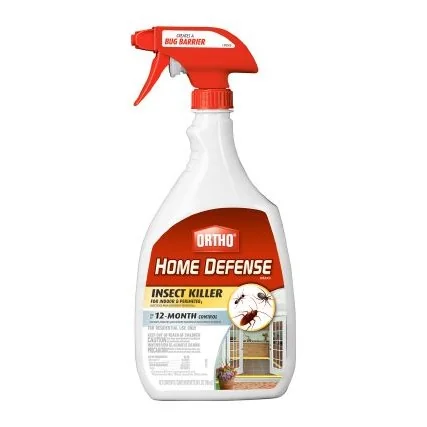
As a general home spray, Ortho Home Defense MAX covers the pests most homes deal with in one odor-free trigger bottle; this pack holds two 24-ounce bottles.
- The maker says it controls ants, roaches and spiders indoors for up to 12 months on non-porous surfaces.
- It is labeled for indoor use and for a barrier around the home's perimeter, and also lists stinkbugs and centipedes.
- It is non-staining and odor-free, per the maker.
- Buyers find it effective on a wide range of household pests and like that it has no smell; value opinions are mixed.
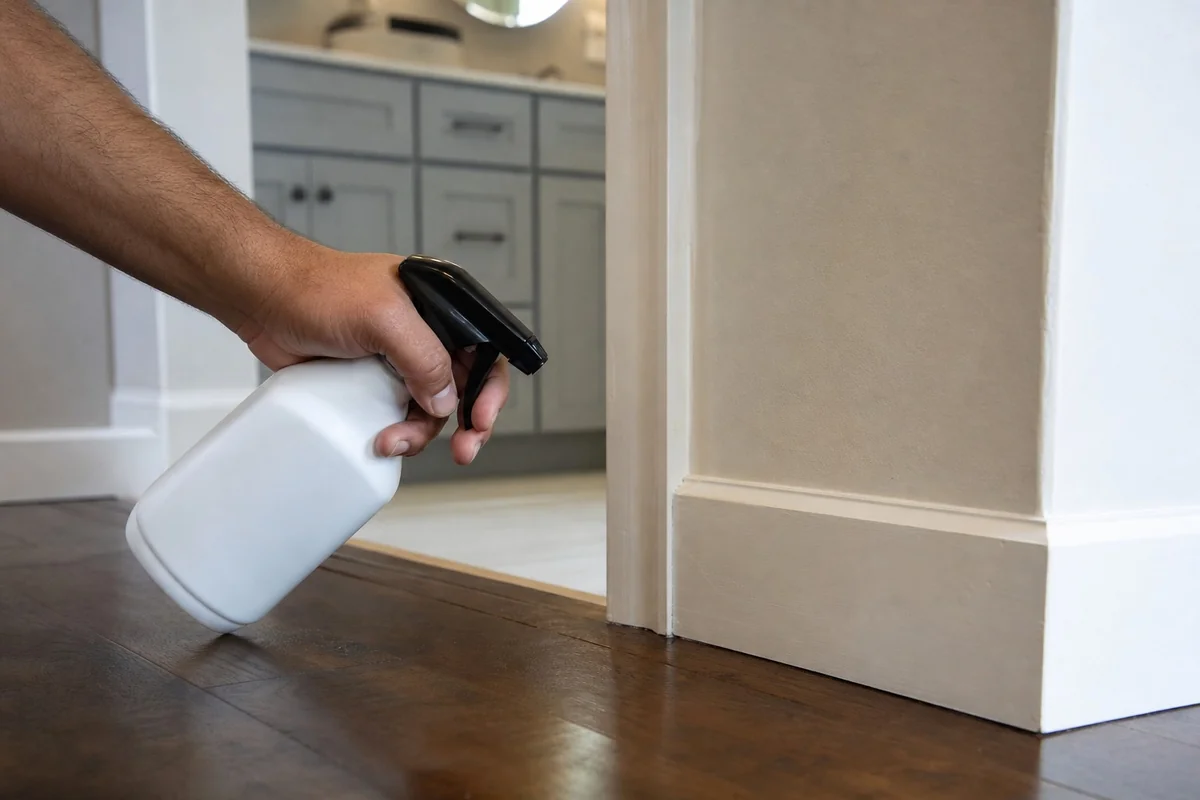
Choose it for baseboards, door and window frames, under sinks and a band along the outside foundation. Spray cracks and edges rather than open floors, keep people and pets away until it dries, and expect a shorter residue on porous surfaces such as concrete and bare wood.
Ortho Home Defense MAX Insect Killer 24 oz 2-Pack
Best for: Most homes, indoors and along the foundation
- ✓Up to 12 months on non-porous surfaces, per the maker
- ✓Odor-free and non-staining, per the maker
- ✓Effective on many household pests, per buyers
- −Shorter residue on porous surfaces
- −Mixed value feedback
Specifications (3)
- Liquid Volume
- 24 fluid ounces
- Item Form
- Spray
- Target Species
- Insects
Best Insecticide Concentrates
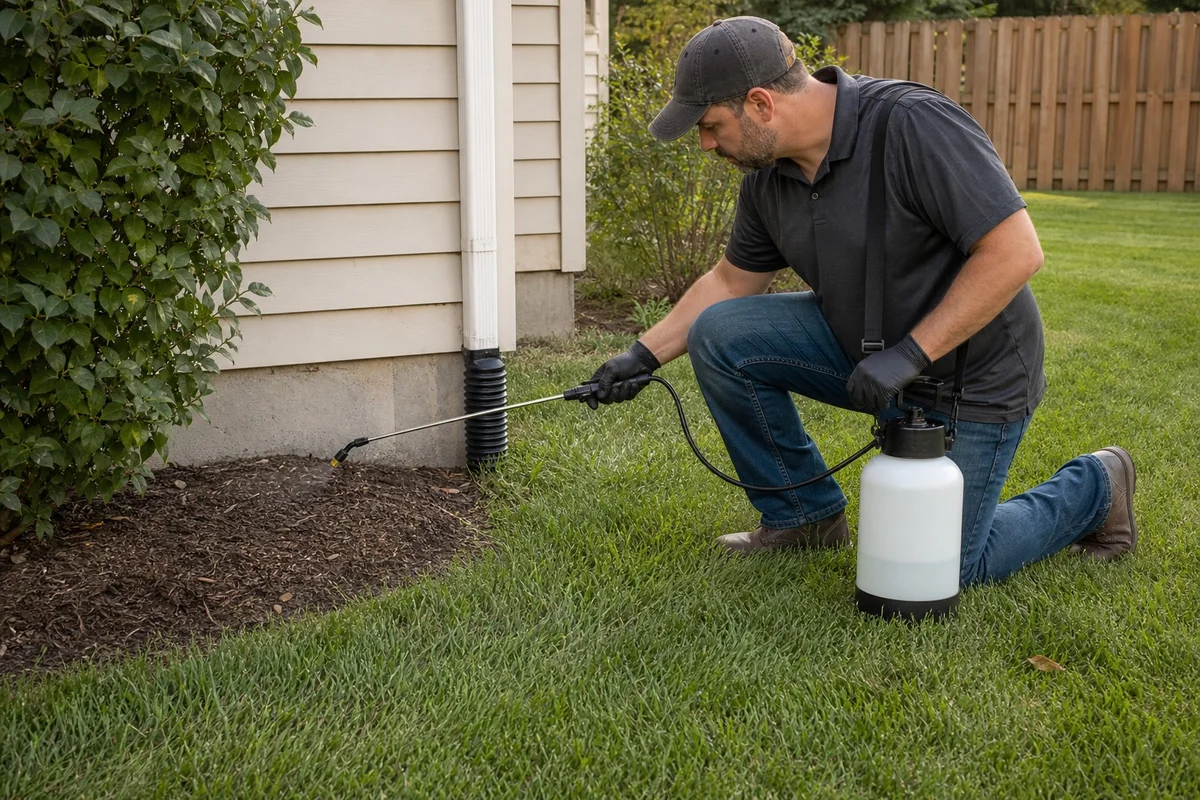
Concentrates cost far less per square foot and suit large homes, outbuildings and repeat treatments. They need a pump sprayer, protective gear and careful mixing; UC IPM recommends gloves, eye protection, long sleeves and closed shoes at minimum, and mixing only what you will use that day.
Talstar One: Best Concentrate for Whole-Home Perimeters
For a whole-house perimeter, Talstar One's 1-gallon jug of bifenthrin concentrate goes a long way once diluted in a pump sprayer.
- The maker lists ants, spiders, roaches, fleas, ticks and mosquitoes among more than 75 pests.
- It is labeled for perimeter sprays around foundations, doors and windows and for indoor cracks and crevices.
- Buyers find it effective, call it exceptional value and report that it lasts for months.
Choose it for treating a large house and yard several times a season. Keep it off blooming plants, ponds and storm drains, since bifenthrin is highly toxic to bees and fish, and check the label for any limits in your state.
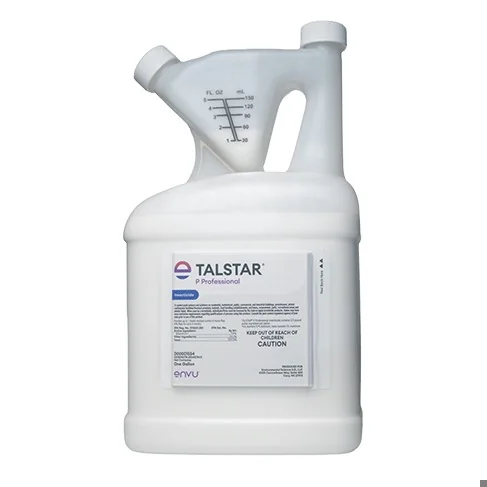
Envu Talstar One Insecticide 1 gal
Best for: Whole-home perimeters on large properties
- ✓Lists more than 75 pests
- ✓Exceptional value, per buyers
- ✓Lasts for months, per buyers
- −Needs mixing and a pump sprayer
- −Keep off blooming plants bees visit
Specifications (3)
- Unit Count
- 128 Fluid Ounces
- Target Species
- ants, beetles, spiders, flies, ticks, and wasps
- Material Features
- Water-Based
Tempo SC Ultra: Best Concentrate for Tough Infestations
Envu's Tempo SC Ultra is a 240-milliliter suspension concentrate with fast knockdown and residual control, per the maker.
- It lists ants, flies, cockroaches, crawling pests and ticks.
- It is labeled for indoor and outdoor structural and perimeter treatments, with low odor and no staining, per the maker.
- A small amount treats a large area, per the maker.
- Buyers find it effective, including on swarms of Asian lady beetles, ants, scorpions and spiders.
Choose it when a general spray has not worked, such as heavy beetle invasions on siding or persistent crawling insects in a garage or basement. It is highly concentrated, so measure carefully at the label rate.

Envu Tempo SC Ultra Insecticide 240 ml
Best for: Tough infestations a general spray missed
- ✓Lists ants, flies, roaches and ticks
- ✓Low odor and non-staining, per the maker
- ✓Effective on beetle swarms and ants, per buyers
- −Highly concentrated; measure carefully
- −Needs a pump sprayer
Specifications (3)
- Item Volume
- 240 ml
- Item Form
- Liquid
- Target Species
- Ants, flies, cockroaches, crawling pests, and ticks
Best Plant-Based Pest Control Spray
Plant-oil sprays kill or repel insects on contact and suit spots where you would rather not use a synthetic insecticide. Most are sold as minimum-risk products, which the EPA does not evaluate for effectiveness, so expect less residual effect than from the sprays above.
Smart Grower Peppermint Oil Spray: Best Plant-Based Option
Smart Grower's 16-ounce ready-to-use spray is made with peppermint oil for indoor and outdoor use.
- The maker lists spiders, ants, wasps, roaches and other insects.
- It is meant for kitchens, basements, garages, patios and similar spaces.
- Buyers find it effective, especially on ants, and like the scent; value opinions are mixed.
Choose it for ant trails, window sills and entry points in kitchens and living areas. Reapply often, test on a hidden spot first, and keep it away from cats, which are sensitive to peppermint and other essential oils.
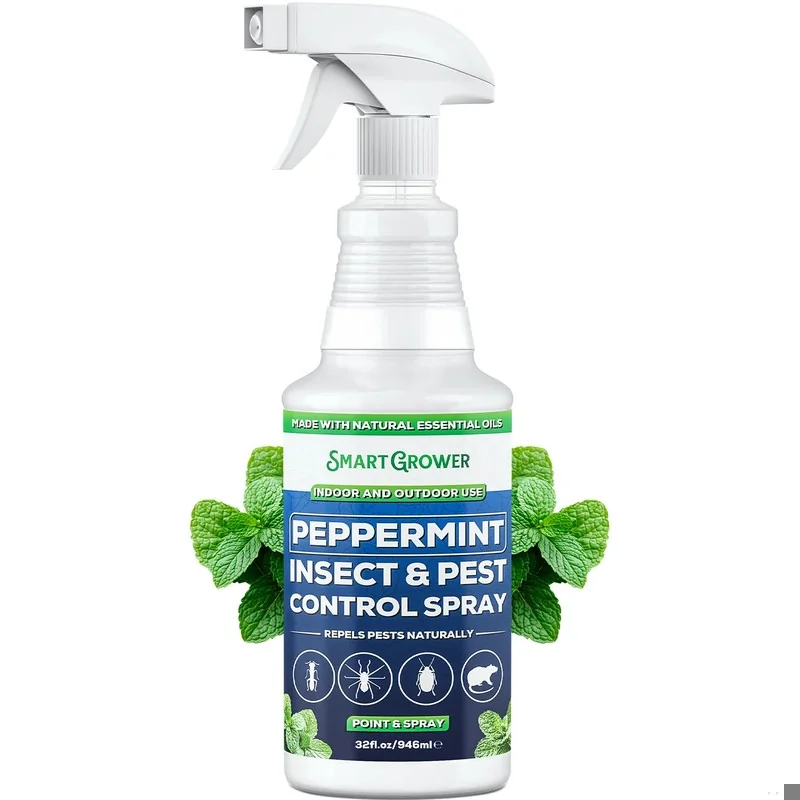
Smart Grower Peppermint Oil Pest Spray 16 oz
Best for: Plant-based spot treatment
- ✓Effective on ants, per buyers
- ✓Pleasant scent, per buyers
- ✓Indoor and outdoor use
- −Contact only; short-lived
- −Keep away from cats
Specifications (3)
- Item Volume
- 16 fluid ounces
- Scent Name
- Peppermint
- Indoor Outdoor Usage
- Indoor, Outdoor
Best Lawn Insect Granules
Granules spread over the lawn reach insects in soil and thatch, where sprays from a bottle cannot, and they keep pests from building up near the foundation.
Sevin Insect Killer Granules II: Best for Lawns and Gardens
For the lawn, Sevin's 10-pound bag of zeta-cypermethrin and bifenthrin granules goes on with a spreader.
- The maker says it kills by contact above and below the surface, controls more than 100 listed insects and lasts 3 months.
- It lists ants and ticks, and is labeled for lawns and listed fruits and vegetables.
- People and pets may return once the dust has settled, per the maker.
- Buyers find it good value and effective on lawn insects, ticks and fleas.
Choose it for ants, grubs, ticks and other lawn insects that move toward the house. Water it in as the label directs, keep it off hard surfaces where it can wash into drains, and follow the harvest intervals on the label for garden use.
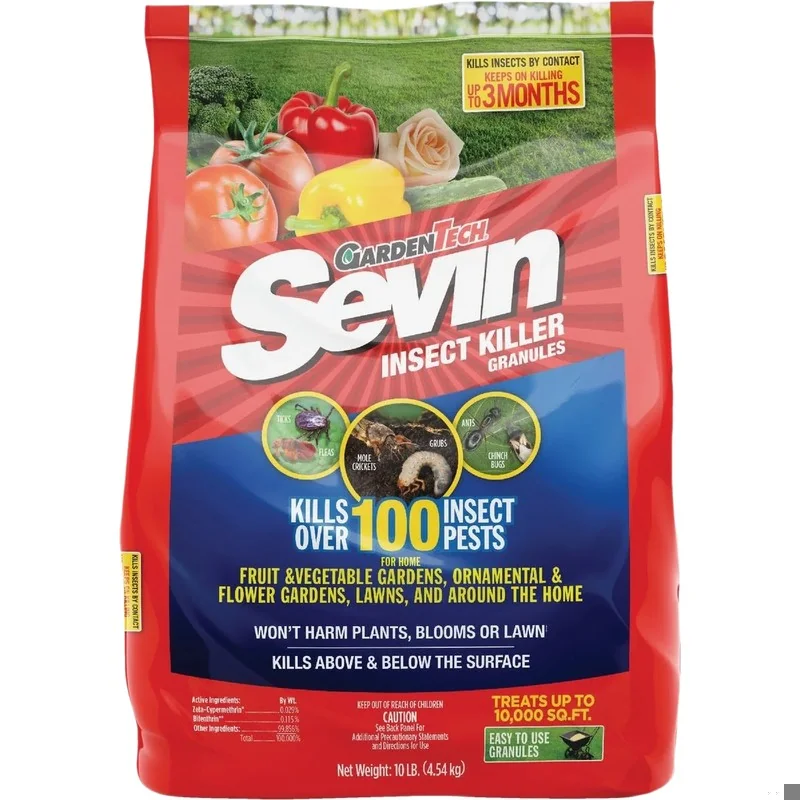
Sevin Insect Killer Granules II 10 lb
Best for: Lawn and garden insects
- ✓Lasts 3 months, per the maker
- ✓Lists ants and ticks
- ✓Great value, per buyers
- −Outdoor use only
- −Needs a spreader and watering in
Specifications (2)
- Item Form
- Granules
- Active Ingredients
- Zeta-Cypermethrin,Bifenthrin
Best Pump Sprayer for Concentrates
A dedicated pump sprayer applies concentrates evenly and keeps pesticide out of the garden sprayer you use for fertilizer. Our guide to the best pump sprayers for pest control compares sizes and types.
Chapin 20004 SureSpray: Best Budget Pump Sprayer
The Chapin 20004 is a 1-gallon translucent poly tank with a funnel top, a 34-inch hose and an adjustable cone nozzle.
- The funnel top makes refilling easier and the translucent tank shows the fluid level, per the maker.
- The nozzle switches between a stream for cracks and a broad spray for foundations.
- Buyers say it works well for small jobs; several report leaks at the lid and parts wearing out within months.
Choose it for mixing a gallon of concentrate at a time for the house perimeter. Label it for pesticides only, rinse it after each use, and replace seals when it stops holding pressure.
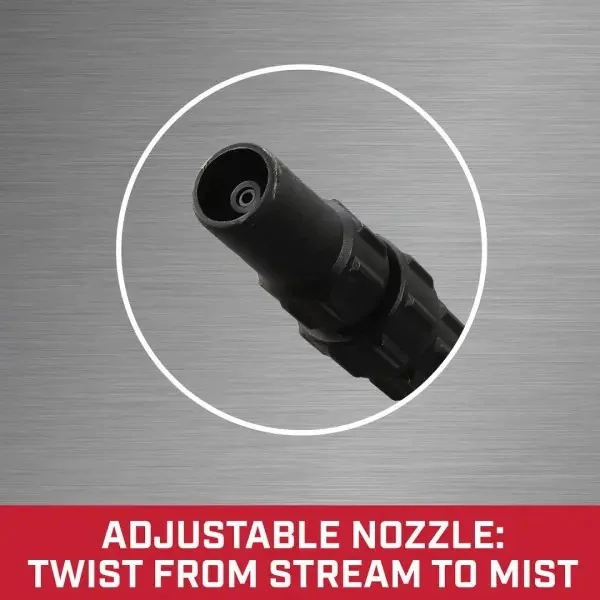
Chapin 20004 SureSpray 1-Gallon Pump Sprayer
Best for: Applying concentrates on a budget
- ✓Translucent tank shows fluid level
- ✓Stream or broad spray nozzle
- ✓Good quality for small jobs, per buyers
- −Lid leaks, per some buyers
- −Durability mostly negative, per buyers
Specifications (3)
- Tank Volume
- 1 gallons
- Hose Length
- 34 inches
- Maximum Pressure
- 60 psi
Matching the Spray to the Pest
A general home spray handles the most common invaders, but some pests respond better to a different product type. Use this as a starting point before reading the label:
- Ants: a residual spray at entry points stops ants coming in, but baits do more against the colony; spray only where ants enter, not along trails you are baiting.
- Cockroaches: sprays alone rarely solve a roach problem; gel baits in cracks and an insect growth regulator work better, with spray reserved for entry points.
- Spiders and crawling insects: a residual band along baseboards, door frames and the foundation catches them as they move.
- Fleas indoors: choose a carpet spray with an insect growth regulator; general bug sprays do not reach flea larvae.
- Lawn insects and ticks: granules or a lawn-labeled spray, applied to the yard rather than the house.
- Stinging insects: a wasp and hornet aerosol that sprays from a distance, not a trigger bottle.
When the pest is unclear, catch one on clear tape or take a sharp photo before buying. The wrong product wastes money and leaves the real problem untreated.
Where to Spray Indoors and Outdoors
Placement decides how well a residual spray works. Indoors, treat the edges insects follow: baseboards, the backs of cabinets, under sinks, around pipes and behind appliances. Keep sprays off countertops, dishes, toys, bedding and pet bowls, and never spray where food is prepared.
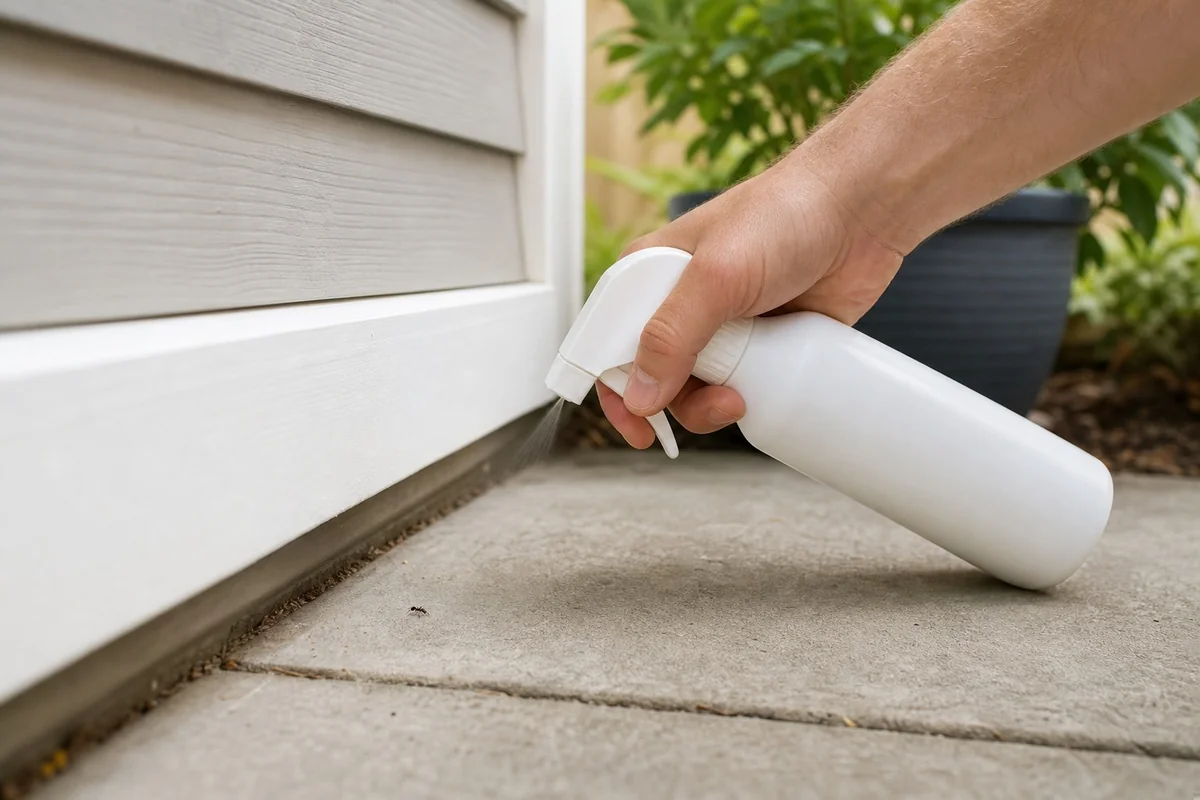
Outdoors, a band about a foot wide on the ground along the foundation, plus a short band up the wall, intercepts most crawling insects before they reach the door. Treat around door and window frames, vents and utility openings, and the undersides of decks. Skip flower beds in bloom and anything near water, and treat again only at the interval the label gives.
How to Use Pest Control Sprays Safely
- Identify the pest: and make sure the product's label lists it and the site you will treat.
- Fix the cause first: seal gaps, remove food and water sources and clear clutter.
- Wear protection: chemical-resistant gloves, eye protection, long sleeves and closed shoes.
- Mix only what you need: and never store leftover diluted spray.
- Spray bands, not rooms: cracks, edges, entry points and the foundation.
- Keep people and pets away: until the spray dries, and ventilate indoor spaces.
- Avoid drift and runoff: UC IPM advises not spraying in winds over 5 mph, before rain or on driveways and sidewalks.
- Store and dispose properly: in the original container, locked away; never pour pesticides down drains.
Common Questions About Pest Control Sprays
Can I sleep in a room after spraying bug spray?
Can I sleep in a room after spraying bug spray?
Wait until the spray has completely dried and the room has been aired out, and follow any re-entry time on the label. Spraying in the morning and ventilating during the day usually leaves a bedroom ready by night.
Should I spray pest control inside the house?
Should I spray pest control inside the house?
Only with a product labeled for indoor use, applied to cracks, baseboards and entry points rather than open floors and furniture. Sealing gaps and removing food and water often reduce the need to spray indoors at all.
How do insecticides work?
How do insecticides work?
Most household sprays use pyrethroids such as bifenthrin, which disrupt insects' nervous systems on contact or after they walk across a treated surface. Residual sprays keep working for weeks or months; contact sprays only kill what they hit.
Which is better, Sevin or Triazicide?
Which is better, Sevin or Triazicide?
Both are lawn insect killers built on pyrethroids; Sevin's granules use zeta-cypermethrin and bifenthrin. Choose by the pests and sites on each label and whether you prefer granules or a spray, rather than by brand.
Which One Should You Buy?
- Ortho Home Defense MAX wins for: most homes, indoors and along the foundation
- Talstar One wins for: whole-home perimeters on large properties
- Tempo SC Ultra wins for: tough infestations a general spray missed
- Smart Grower Peppermint Spray wins for: plant-based spot treatment
- Sevin Insect Killer Granules II win for: lawn and garden insects
- Chapin 20004 SureSpray wins for: applying concentrates on a budget
For most homes, buy Ortho Home Defense MAX and apply it as a band along the foundation and at entry points, then along baseboards inside. It needs no mixing, lists the common household pests and keeps working for months on non-porous surfaces.
Choose Talstar One with a Chapin sprayer for large properties, Tempo SC Ultra for stubborn infestations, Sevin granules for the lawn and Smart Grower for plant-based spot treatment. With any of them, identify the pest first and fix the gaps that let it in; our indoor pest control spray guide covers the inside of the house in more detail.
Before you buy, catch or photograph the pest you are dealing with, since the label has to list it.