
How to Keep Snakes Out of Your House: Seal, Clear and Check
How to keep snakes out of your house: seal gaps, fit door sweeps and vent covers, control mice, remove a snake safely, and why indoor repellents and mothballs fail.
The best snake repellent for a home is a sealed house: snakes get in through gaps under doors, foundation cracks, weep vents and utility holes, so closing every opening of 1/4 inch or larger, fitting door sweeps and controlling the mice that draw snakes in does far more than any spray. No repellent is labeled for use inside living spaces, and home remedies such as vinegar, garlic and mothballs either fade within hours or are unsafe indoors.
What You Need
- For finding gaps: a flashlight, a small mirror and a notepad to map entry points around the foundation.
- For sealing: copper or stainless mesh fill, fine galvanized hardware cloth, sheet metal flashing, exterior caulk or mortar patch, expanding foam for use behind mesh, and screws.
- For doors: door sweeps for exterior and garage-entry doors, and a rubber bottom seal for the garage door.
- For vents: weep vent covers and screened crawl space vent covers.
- For rodent control: snap traps, sealed bins for pet food and birdseed.
- For a snake inside: a towel, a large bucket or trash can with a lid, and the number for animal control or a wildlife removal service.
Most of the work is a weekend of sealing. The materials cost less than a season of repellent granules, and the result lasts for years.
How Snakes Get Into Houses
Snakes do not chew or dig into houses; they slip through gaps that already exist, usually while following mice or looking for a cool, dark place to rest. Common entry points include:
- Gaps under doors: especially garage-entry doors, sliding doors and worn thresholds.
- Garage doors: torn or missing bottom seals and gaps at the sides.
- Foundation cracks and gaps: where siding meets the foundation, and around slabs and porches.
- Weep vents in brick: the small open joints near the base of brick walls.
- Utility penetrations: holes around pipes, AC lines, dryer vents and cables.
- Crawl space and foundation vents: with damaged or missing screens.
Can snakes climb walls? Many species climb rough bark, brick and stucco, vines and downspouts, and rat snakes in particular reach attics, eaves and porch ceilings. Trim vines and branches that touch the house, and seal gaps at the roofline as well as at ground level.
Snakes Most Often Found Indoors
Which snakes turn up depends on where you live, but the usual visitors are small and harmless. Garter snakes, brown snakes and ring-necked snakes slip under doors after insects and slugs. Rat snakes and corn snakes follow mice into garages, basements and attics, and climb well enough to reach eaves. In parts of the South and East, copperheads sometimes shelter in garages and crawl spaces, and in the West rattlesnakes may rest in cool garages on hot days. Learn the venomous species in your area so you know when to keep your distance and call for help.
Signs of a Snake in the House
Signs that a snake is using your house include shed skins in the garage or basement, a musky smell in a closed room, droppings that look like bird droppings with a white tip, and a sudden drop in mouse activity. Snakes are quiet, so most people find them by chance, often in the garage, laundry room or basement, the parts of a house closest to the ground and coolest in summer.
Our wildlife control guides cover snakes in the yard as well as raccoons, squirrels and moles, and the section on keeping snakes out of the house covers garages and homemade options.
Step-by-Step: Snake-Proof Your House
- Walk the foundation: on hands and knees if needed, with a flashlight, and mark every gap, crack and hole near the ground.
- Seal small gaps: the Internet Center for Wildlife Damage Management's guide to snake damage prevention recommends sealing openings of 1/4 inch and larger, and even 1/8 inch for small snakes, with sheet metal, copper mesh or fine hardware cloth.
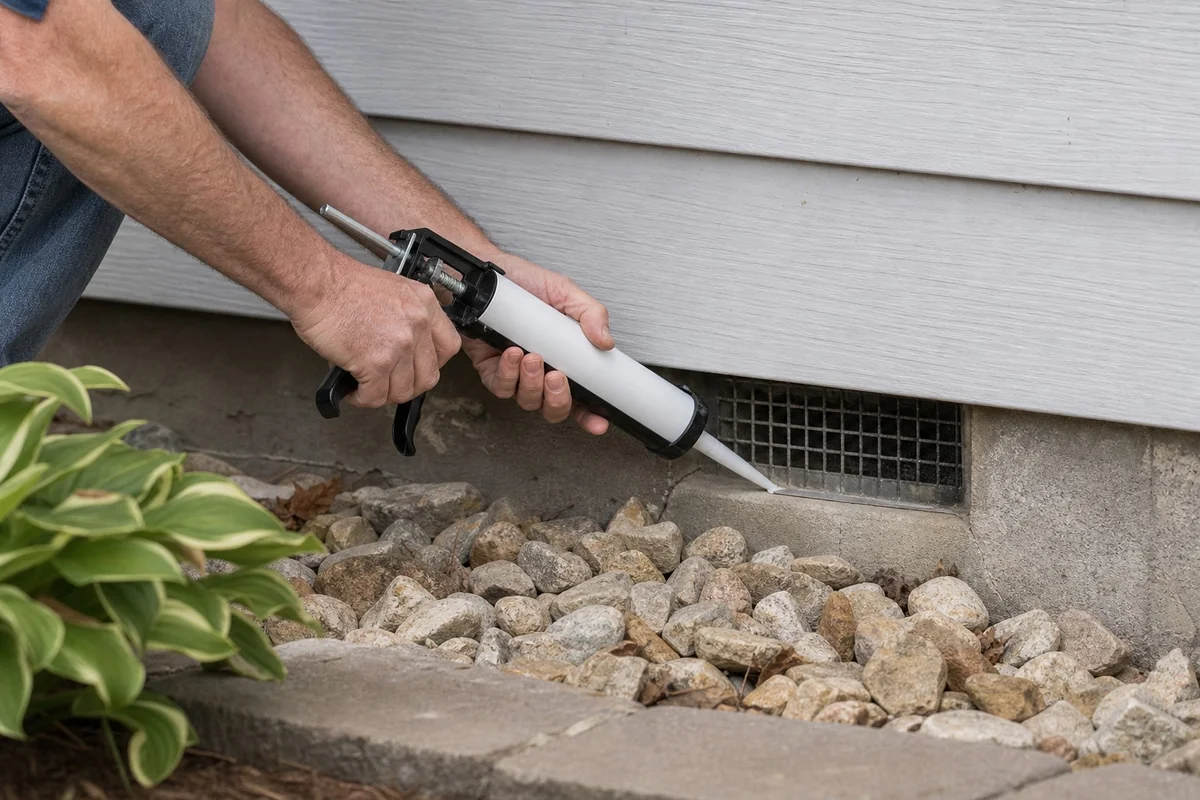
- Patch masonry: fill foundation cracks with mortar patch or caulk, and cover weep vents with weep vent covers so moisture can still drain.
- Fix doors: install sweeps on exterior and garage-entry doors and replace the garage door's bottom seal.
- Screen vents: cover crawl space and foundation vents with sturdy screens, and check dryer and bathroom vents for missing flaps.
- Seal utility holes: stuff copper mesh around pipes and AC lines, then caulk over it; foam alone is easy to push through.
- Clear a strip around the house: keep a band of short grass, gravel or bare mulch next to the foundation, with no woodpiles, boards or dense shrubs touching the walls.
- Control mice: set snap traps in the garage and basement and store pet food and birdseed in sealed bins.
- Trim climbing routes: cut vines and branches that touch walls, eaves and the roof.
- Recheck in spring and fall: when snakes are most active looking for food or winter shelter.
Quick Checklist
How to snake-proof a house.
The outside zone matters as much as the seals. A snake that finds no cover within a few feet of the walls has less reason to explore the foundation at all. Move firewood, lumber, kayaks and garden pots away from the house, keep doormats and outdoor rugs lifted off the ground or swept under, and avoid thick ground covers such as ivy right against the walls. Outdoor lights near doors attract insects, frogs and then snakes, so switching to yellow bug lights or motion-only lights helps break that chain.
What to Do About a Snake Already Inside
Stay calm and keep children and pets away. Most snakes found indoors are harmless, but treat any snake you cannot identify as venomous. The CDC's guidance on venomous snakes is simple: do not touch or handle any snake.
- Contain it: close the room door and push a towel against the gap underneath, so the snake stays put.
- Open an exit: if the snake is near an outside door, open it and step back; many snakes leave on their own.
- Call for help: animal control, a wildlife removal service or a local snake relocation volunteer can remove it safely.
- For a snake you cannot find: ICWDM suggests placing damp towels or burlap covered by a dry bag where it was seen; snakes crawl under for the cool, moist shelter, and after a day or two you can carry the bundle outside with a shovel.
- Glue boards: large boards can catch snakes indoors, but they also catch pets; ICWDM notes that vegetable oil releases a snake from the glue if you want to free it alive, so check boards often.
Call a professional right away if the snake might be venomous, if you have young children or pets that cannot be kept away, or if snakes keep appearing, which usually means an entry point or a den in a wall void or crawl space that needs finding.
Never try to kill a snake inside the house; it is how many bites happen, and a cornered snake strikes in self-defense.
Snake-Proofing the Garage, Basement and Crawl Space
These three spaces are where most indoor snakes turn up, because they sit at ground level, stay cool and often hold mice.
The Garage
The garage door is the biggest gap in most houses. Replace a cracked or flattened bottom seal, add side and top weatherstripping, and keep the door closed when you are not using it, especially at dusk in warm weather. Store birdseed, grass seed and pet food in metal or heavy plastic bins with tight lids, lift boxes off the floor onto shelves, and set snap traps along the walls. Clutter on the floor gives both mice and snakes places to hide.
The Basement
Check where the foundation meets the sill plate, around basement windows and window wells, and where pipes and the sewer line enter. Cover window wells with clear covers, and seal floor drains with a grate or check valve if snakes or rodents have come up through them. A dehumidifier helps too, since damp basements attract the insects and frogs that snakes eat.
The Crawl Space
Crawl spaces are cool, dark and rarely visited, which makes them ideal for snakes. Replace damaged vent screens with heavy hardware cloth, fit a solid access door that closes tightly, and seal gaps where plumbing and ducts pass through. If you must go in, wear boots and gloves and carry a light, and look before you reach into dark corners.
Do Snake Repellents Work Indoors?
There are no snake repellents labeled for use inside living spaces. Granules such as Snake-A-Way are outdoor products, and ICWDM describes research on snake repellents in general as lacking or inconsistent. Spreading outdoor granules or oils inside exposes your family and pets to the chemicals while doing little to a snake that is already in a wall void or crawl space.
Mothballs deserve a special warning. The National Pesticide Information Center's mothball guidance explains that the label requires use in tightly closed containers, and that using them to control snakes or other wildlife is a misuse. Loose mothballs in a basement or crawl space release vapors into the home that cause headaches and nausea, and children and pets can mistake them for candy.
Essential oil sprays are no better indoors. Cinnamon, clove and peppermint oils are toxic to cats and irritating to people and dogs in enclosed rooms, and the smell is gone long before a snake would be put off by it.
Outside, along the foundation of a garage or shed, a registered repellent band can be part of the plan where pets and children cannot reach it, but it never replaces sealing the gaps.
Homemade Remedies Compared
| Remedy | Claimed Effect | What to Expect | Safety |
|---|---|---|---|
| Vinegar | Sour smell drives snakes off | Fades within hours; no evidence | Low risk; can damage stone and plants |
| Garlic or onion spray | Strong odor repels | Little evidence; short-lived | Low risk |
| Essential oils (cinnamon, clove) | Irritates snakes' senses | Brief at best | Toxic to cats; irritating indoors |
| Sulfur powder | Burns snakes' skin | No consistent effect | Irritates eyes and lungs |
| Mothballs | Fumes drive snakes away | No proven effect | Pesticide misuse; poisonous to pets and children |
| “Snake-repelling” plants | Marigolds, lemongrass repel | No evidence | Low risk |
The pattern is the same as in the yard: scent-based remedies give little or no protection, while sealing and removing food and cover actually keep snakes out.
Common Questions About Keeping Snakes Out of the House
Will mothballs keep snakes out of the house?
Will mothballs keep snakes out of the house?
No. There is no good evidence they repel snakes, and using them loose in a basement, crawl space or yard is a misuse of the pesticide. The vapors cause headaches and nausea, and children and pets can swallow them.
How long will vinegar keep snakes away?
How long will vinegar keep snakes away?
Not long, if at all. The smell fades within hours, especially outdoors, and there is no evidence that it stops snakes from entering a house. Sealing gaps is far more effective.
How do you use snake repellent powder around a house?
How do you use snake repellent powder around a house?
Use only products labeled for outdoor use, and apply them as a band on the ground along the outside of the foundation, garage or shed as the label directs. Keep pets and children away from the band and never spread powder inside living spaces.
Does garlic repel snakes?
Does garlic repel snakes?
There is little evidence that it does. Garlic sprays and planted garlic may smell strong to people, but snakes looking for mice or shelter cross them; sealing entry points and clearing cover work better.
Why do snakes come into houses?
Why do snakes come into houses?
Usually to follow mice and other prey, or to find a cool, damp place in summer or a sheltered spot to spend the winter. A house with gaps at ground level and a rodent problem is the most likely to have snake visitors.
Key Takeaways
- Snakes enter through existing gaps, so sealing openings of 1/4 inch and larger is the most effective home snake repellent.
- Fit door sweeps, garage door seals, weep vent covers and screened vents.
- Control mice and clear debris and shrubs from the foundation to remove what draws snakes in.
- No snake repellent is labeled for indoor living spaces, and mothballs indoors are unsafe and a pesticide misuse.
- If a snake gets in, close it in a room, keep people and pets away and call for removal rather than handling it.
- Recheck seals, door sweeps and vent screens every spring and fall.