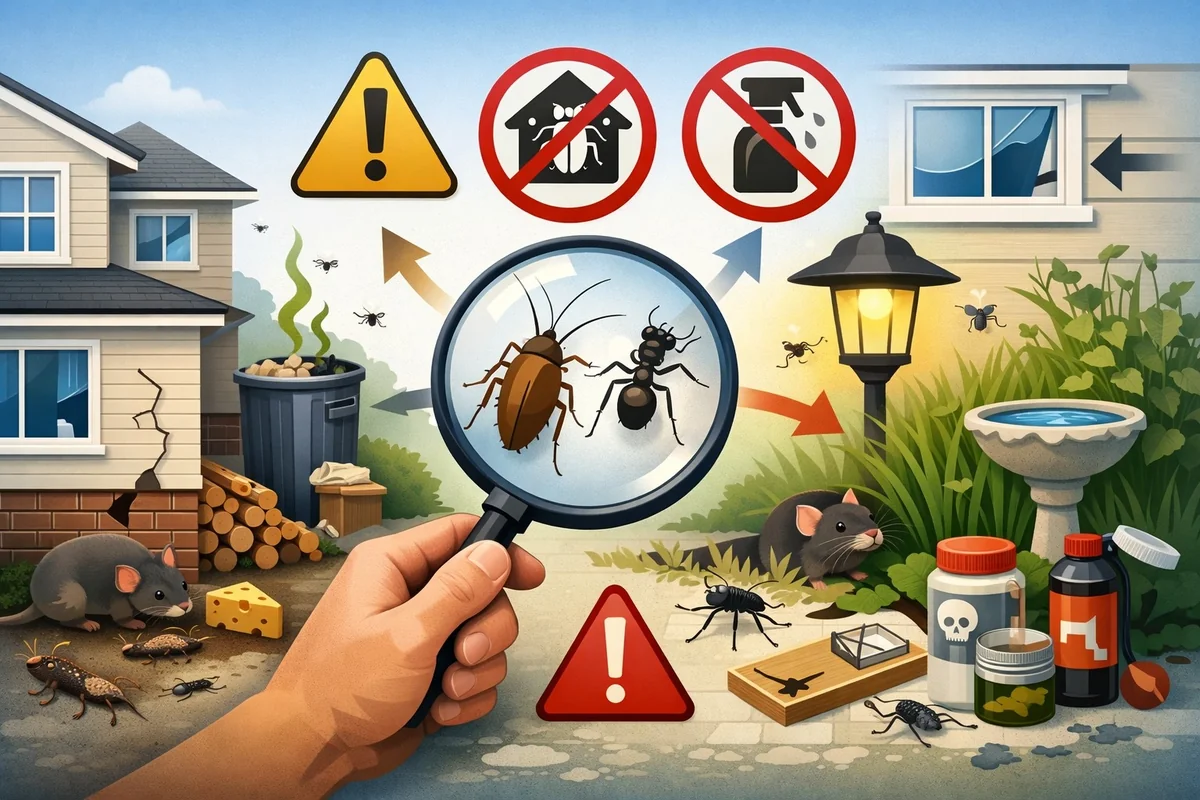

10 Common Pest Prevention Mistakes to Avoid in 2026
Learn the top 10 pest prevention mistakes homeowners and renters make, why they matter, and practical fixes. Avoid common pest errors and protect your home with expert, budget-friendly tips for 2026.
What Counts as a Pest Prevention Mistake?
Pest prevention mistakes are actions or oversights that actually make it easier for pests to enter, survive, or multiply in your home. Unlike an old wives’ tale that simply fails to help, a true mistake creates new vulnerabilities or worsens an existing problem. If you’ve ever sealed a door but left a pipe gap open, you know how quickly pests take advantage.
Mistakes vs. Ineffective Methods
There’s a real difference between using something that just doesn’t work and making your home more inviting to pests. For example, spraying an outdated repellent in corners won’t solve anything, but blocking only the obvious holes and ignoring hidden ones is a direct invitation for rodents or ants. Understanding this difference matters: ineffective methods waste time, but mistakes force you to play catch-up with a growing infestation.
Why Small Errors Lead to Big Infestations
Minor gaps or skipped steps - like forgetting to check behind appliances or under sinks - can allow a single pest to enter and multiply fast. Pests notice weak spots before you do, and they exploit them relentlessly. Take ants: one unsealed pipe gap can cause a recurring invasion, even if you think you’ve cleaned every crumb.
For a broader strategy covering all aspects of pest control, the Complete Guide to Pest Prevention in Homes offers step-by-step prevention and long-term tactics.
Overlooking Hidden Entry Points
Most people focus on doors, windows, and baseboards, but pests are much better at finding hidden ways in. Utility penetrations, dryer vents, and foundation gaps are some of the most commonly missed entry points. Caulk and foam sealants can work for small, stable cracks, but they often fail when it comes to large, shifting, or seasonal gaps that expand and contract with weather.
Visual inspection isn’t enough because some openings are out of sight, or only appear at certain times of year - like when soil settles or wood swells. A flashlight and mirror help, but even then, attic and crawl space vulnerabilities are easy to miss.
Attic, Basement, and Crawl Space Vulnerabilities
Rodents and insects often exploit attic vents, loose soffits, and crawl space screens. Home inspections rarely check these areas closely, and even pros sometimes miss them unless you specifically request it. DIY sealing in these spaces can disturb insulation or wiring, so move carefully and document what you change for safety and future repairs.
For more on holistic protection strategies, the General Pest Prevention overview breaks down the most effective, research-backed approaches for 2026.
Improper Food and Waste Storage
Pests don’t need much encouragement to invade a kitchen or pantry: a single package of cereal left open is enough. Unsealed food containers, even in otherwise clean kitchens, attract ants, roaches, and rodents. Glass and metal containers block scent trails completely, but plastic bags and cardboard boxes are no match for determined pests.
Pantry and Kitchen Storage Errors
Leaving dry goods in original packaging is a top mistake - especially pet food bags, which are easily chewed through. Even one forgotten snack wrapper can start a trail for ants. Proper storage means airtight glass or metal containers, not just rolling up the bag or using a chip clip.
Garbage and Compost Mistakes
Open or overflowing trash bins, indoors or out, are basically an open invitation for flies, rats, and raccoons. Compost piles without pest-proof covers are a magnet for wildlife and insects. Airtight bins can help by reducing odor and access, but they need regular cleaning to prevent mold and keep pests from being attracted to residues.
Neglecting Moisture and Water Issues
Moisture is a major attractant for many pests. Leaky pipes and persistent dampness create ideal breeding grounds for cockroaches, silverfish, and even termites. Water damage behind walls or under sinks can go unnoticed for months, allowing pests to settle in and multiply.
Leaky Pipes and Damp Areas
Surface cleaning isn’t enough - regular plumbing checks are far more effective. Fixing a slow drip under the sink can prevent a cockroach nest from forming. Don’t rely on visible signs alone; often, the worst problems are hidden behind walls or beneath floors.
Poor Yard Drainage and Standing Water
Mosquitoes breed in as little as a tablespoon of water left for a week. Clogged gutters and low spots near the foundation draw pests close to your home’s entry points. Improving drainage may require landscaping changes or professional help, but it’s worth it for long-term control.
| Item | ★Difficulty Level | ★Time Commitment | ★Estimated Cost | Coverage Area | Effectiveness Rating | Best For |
|---|---|---|---|---|---|---|
| DIY Sealing and Exclusion | Medium | 3-5 hours for a standard home | $50-$150 (materials only) | Up to 2,000 sq ft per session | ★★★★★ 4/5 stars | Homeowners seeking long-term structural solutions; not ideal for renters |
| Regular Cleaning and Sanitation | Easy | 1-2 hours per week | $10-$30 per month (supplies) | Entire household, scalable | ★★★★★★ 3.5/5 stars | Busy families and apartment dwellers; good for basic prevention but limited against severe infestations |
| Scheduled Professional Inspections | Hard | 2-3 hours per visit, 1-2 times per year | $100-$300 per inspection | Full property assessment | ★★★★★ 5/5 stars | Large properties or those with persistent pest issues; not cost-effective for small apartments |
Misusing Pesticides and Repellents
Pesticides should be a last line of defense - not the first. Overusing sprays or applying them too often can drive pests deeper into walls, where they’re harder to kill, or cause resistance that makes them tougher to control in the future. The directions on the label specify safe intervals and concentrations for a reason.
Overuse and Repeated Application
Excessive pesticide use is counterproductive. Where targeted baits offer long-term colony control, broad-spectrum sprays only provide surface kill and can create a cycle of retreat and return. Following label instructions ensures you don’t make the problem worse or put your family at risk.
Wrong Product for the Pest
Using ant spray on cockroaches, or vice versa, leads to poor results. Different pests require different active ingredients - pyrethroids, for example, work well on flying insects but are almost useless for German cockroaches. Multi-purpose sprays rarely solve entrenched problems and can mask the real issue.
Ignoring Safety for Pets and Children
Surface sprays can linger on floors and toys, posing risks to kids and animals. Bait stations with tamper-resistant designs are safer but must be placed where pets and children can’t reach them. Natural remedies might be safer for light problems but usually aren’t strong enough to clear a heavy infestation.
Delaying Action After First Signs
It’s easy to ignore a stray bug or a few droppings, but pests multiply fast. What looks like a minor nuisance often signals a much bigger hidden problem. Immediate response is key - waiting for visible damage means you’re already behind.
Underestimating Early Warning Signs
Droppings, gnaw marks, and insect sightings are all red flags. A single mouse may represent a whole family nesting nearby. The faster you act, the less time pests have to establish themselves and breed.
DIY Monitoring Tools and Their Limits
Sticky traps and motion cameras can help confirm what type of pest you’re dealing with and how many, but they’re not foolproof. Nocturnal pests or those hiding deep in walls may evade detection. Professional inspections use pheromone traps and tracking powders for greater accuracy, but for small or well-hidden infestations, even experts can miss early signs.
Relying on Myths and Home Remedies
Not every tip you hear online works in real life. Ultrasonic pest repellers have little to no scientific support for effectiveness. Cucumber peels, essential oils, and other home remedies may have anecdotal success but rarely deter a determined pest population.
Popular Myths That Fail
User reports and studies show that ultrasonic repellers don’t consistently drive away pests. Essential oils might mask odors briefly, but they don’t kill pests or break breeding cycles. Relying on these methods wastes critical time during an infestation.
Risks of Homemade Solutions
DIY mixtures like vinegar, baking soda, or borax sprays can disrupt surfaces and create stains, but don’t kill pests at the source. Some mixtures even corrode finishes or create slip hazards. Unlike regulated products, homemade solutions lack safety testing and may introduce new risks for pets and children.
Ignoring Outdoor Attractants and Landscaping
What’s outside your home can be just as important as what’s inside. Bushes, trees, and mulch touching the foundation act as bridges for ants, termites, and rodents. Organic mulches are especially attractive to insects compared to gravel or rubber alternatives.
Vegetation and Mulch Placement
Bushes and tree limbs should be trimmed 12 inches away from the house. Thick mulch layers hold moisture and create shelter for pests. Dense landscaping might look nice, but it increases pest risk by providing continuous cover from the yard to your walls.
Outdoor Lighting Choices
Bright white bulbs attract moths, beetles, and spiders to doors and windows. Yellow “bug lights” reduce attraction but don’t deter all insects, and security lighting needs can conflict with pest control best practices. Consider motion-activated lights as a compromise: they only come on when needed, reducing pest attraction.
Skipping Regular Maintenance and Inspections
Even the best-sealed homes develop new vulnerabilities over time. Skipping gutter cleaning, roof checks, or screen repairs leaves unnoticed points of entry for pests. Seasonal changes like spring thaw or fall leaves can open new access points, so scheduled maintenance makes a real difference.
Seasonal Home Maintenance Gaps
Neglecting seasonal upkeep often leads to pest problems. For example, clogged gutters provide both water and shelter for insects and rodents. Scheduled maintenance - rather than only reacting when there’s a problem - prevents most pest entry before it starts.
Rental Properties and Shared Responsibility
Renters often assume landlords will handle pest prevention, but lease agreements may leave gaps. Communication between tenants and property managers is critical - unreported leaks, holes, or broken screens can quickly turn into larger infestations. Knowing who’s responsible for sealing and repairs makes prevention much more effective.
❓ Frequently Asked Questions
What are the most common pest prevention mistakes homeowners make?
What are the most common pest prevention mistakes homeowners make?
The most common pest prevention mistakes include ignoring small entry points, improper food storage, skipping regular inspections, overusing chemical sprays, and neglecting yard maintenance. These missteps can attract pests like ants and rodents. Addressing these issues early helps prevent infestations and reduces long-term pest control costs.
How often should I inspect my home for signs of pests?
How often should I inspect my home for signs of pests?
Inspect your home for signs of pests at least once per month. Focus on kitchens, basements, and entry points. Monthly checks help catch early activity and prevent infestations. Seasonal changes, such as spring and fall, are high-risk times. Prompt action based on regular inspections reduces the need for extensive treatments.
How do I properly seal entry points to prevent pests?
How do I properly seal entry points to prevent pests?
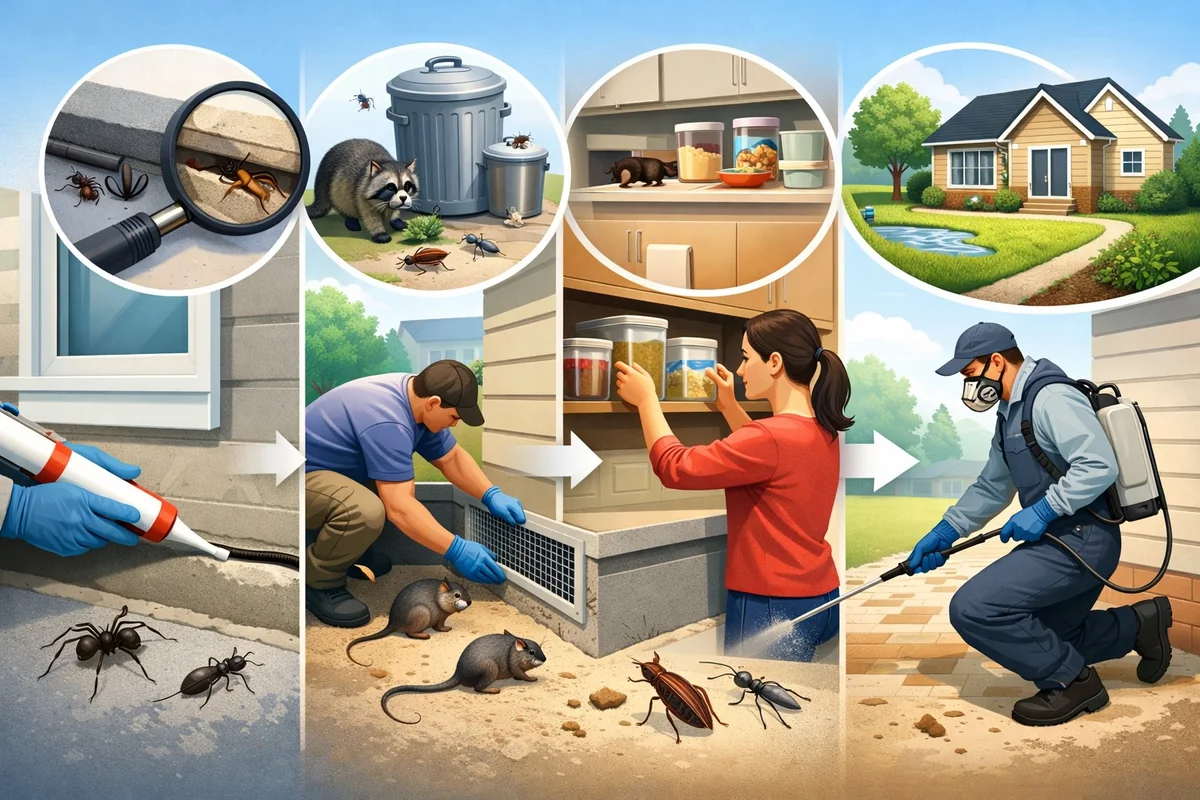
To properly seal entry points and prevent pests:
- Inspect for cracks around doors, windows, and foundations
- Fill gaps with silicone caulk or weatherstripping
- Install door sweeps and mesh screens on vents
- Check utility line entry points for gaps
- Re-inspect annually for new vulnerabilities
Using durable, weather-resistant materials provides longer-lasting protection.
What is the difference between chemical and non-chemical pest prevention methods?
What is the difference between chemical and non-chemical pest prevention methods?
Chemical pest prevention uses pesticides or repellents to kill or deter pests, while non-chemical methods focus on exclusion, sanitation, and habitat modification. Non-chemical strategies, such as sealing cracks and removing food sources, are safer for households with children or pets. However, chemical solutions may be necessary for severe infestations.
What should I look for when choosing a pest removal service?
What should I look for when choosing a pest removal service?
When choosing a pest removal service, consider:
- Licensing and certifications: ensures compliance with local laws
- Experience: more years in business often means better problem-solving
- Treatment methods: look for integrated pest management (IPM) options
- Customer reviews: consistent ratings reflect reliability
- Guarantees: clear warranties or follow-up policies
Compare at least three companies before deciding.
Why is regular yard maintenance important for pest prevention?
Why is regular yard maintenance important for pest prevention?
Regular yard maintenance reduces pest habitats by eliminating standing water, trimming vegetation, and clearing debris. Overgrown plants and clutter attract pests like mosquitoes, rodents, and termites. Most pest control experts recommend seasonal yard checks to limit breeding grounds and reduce the chances of indoor infestations.
How can improper food storage attract household pests?
How can improper food storage attract household pests?
Improper food storage, such as leaving food uncovered or using non-airtight containers, attracts pests like ants, cockroaches, and rodents. Pests are drawn to accessible crumbs and spills. Storing food in sealed containers and cleaning up immediately after meals significantly reduces the risk of infestations.
Key Takeaways for Effective Pest Prevention
Preventing pests isn’t about a single “magic bullet” - it’s about avoiding common errors that make your home more inviting to unwanted guests. The most effective approaches combine sealing entry points, controlling food and moisture, and maintaining both indoor and outdoor spaces. Acting fast on early warning signs is critical for stopping infestations before they start.
Below is a summary table matching each common mistake to a proven fix, along with the impact of each error on infestation risk. Use it as a quick reference for smarter, safer pest proofing.
Key Takeaways
Preventing pest infestations in 2026 means more than just setting traps or spraying chemicals. The biggest risks come from overlooked entry points, improper food storage, ignored moisture problems, and relying on myths or outdated advice. Each mistake can quickly turn a minor inconvenience into a major infestation if left unchecked.
The most effective prevention strategies are proactive: seal all gaps (not just visible ones), store food in pest-proof containers, fix leaks quickly, and keep outdoor vegetation trimmed away from your home. Regular maintenance and fast response to early warning signs make the difference between a pest-free home and a recurring problem.
If you’re not sure where to start, use the summary table above to find your top risk factor and address it right away. For more detail, check the linked guides for step-by-step instructions and additional tips. Smart prevention now saves time, money, and headaches later.
Related Articles
Complete Guide to Pest Prevention in Homes: Stop Pests in 2026
Protect your home in 2026 with this complete pest prevention guide. Discover proven DIY methods, room-by-room tips, safe solutions for families, and expert advice to stop pests before they start.

Complete Guide to Pest Control Maintenance: Upkeep Tips & Ongoing Management 2026
Learn how to keep your home pest-free with our complete pest control maintenance guide. Discover expert pest upkeep tips, safe DIY solutions, and step-by-step ongoing pest management strategies for 2026.

Best Natural and Organic Pest Control Products 2026: Safe, Eco-Friendly Solutions for Every Home
Find the best natural and organic pest control products for 2026. Safe, eco-friendly solutions for ants, roaches, rodents, and more - ideal for families and pet owners.

Best Pest Control Products for Summer 2026: Baits, Sprays, Natural Options
Discover the best pest control products for summer 2026. Compare baits, sprays, traps, and natural solutions to tackle ants, roaches, mosquitoes, and more - safe, effective, and budget-friendly options for every home.