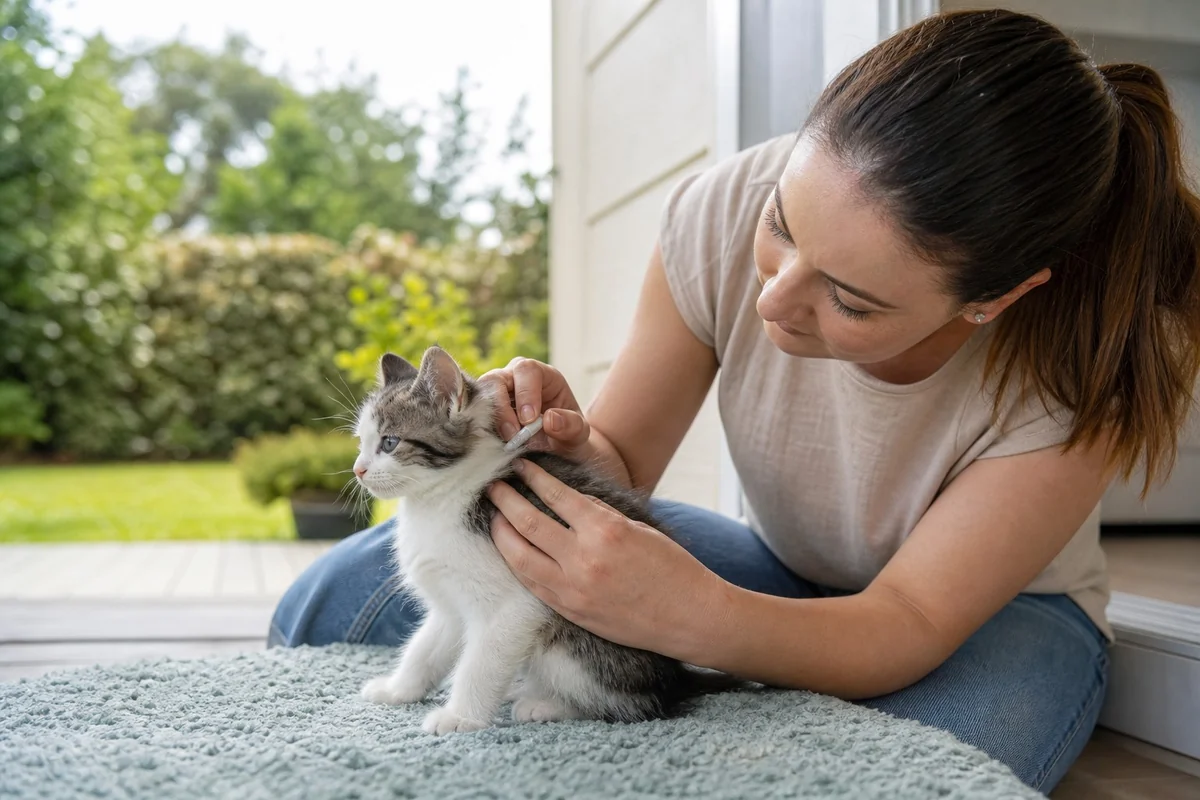

Best Flea Treatment for Kittens: What Is Safe at Each Age
Best flea treatment for kittens by age and weight: comb and bath under 4 weeks, nitenpyram from 4 weeks, spot-ons from 8 weeks, plus treating the mother and home.
The best flea treatment for kittens depends on age and weight. Under 4 weeks, use only a flea comb and a gentle bath and call a vet. From 4 weeks and 2 pounds, a nitenpyram tablet labeled for kittens kills fleas within hours. From 8 weeks, many cat spot-ons with an insect growth regulator are labeled for monthly use. The home and the mother cat need treating too.
Why Kittens Need Different Flea Treatment
Kittens are small, their livers and kidneys are still developing, and they groom constantly, so a dose that is safe for an adult cat can make a kitten seriously ill. They are also more vulnerable to fleas themselves: a heavy infestation can take enough blood to cause anemia in a young kitten within days.
The National Pesticide Information Center's guidance on using pesticides on pets warns that products designed for adult pets should never be used on kittens or puppies unless the label says so, that doses depend on weight, and that dog products must never be used on cats. For kittens, the label's minimum age and weight are the most important lines on the box.
Flea Treatment Options by Kitten Age
The table shows which options fit each stage. Always check the specific product's label, since minimum ages and weights vary between brands, and a product labeled for kittens at one weight is not automatically safe for a smaller kitten of the same age. Sprays, powders and collars are a separate question: many are labeled only for adult cats, so read their age limits before using them anywhere near a kitten.
| Method | Safe Options | Avoid | Note |
|---|---|---|---|
| Under 4 weeks | Flea comb, gentle warm bath | Any insecticide | Call a vet; treat the mother |
| 4 to 8 weeks, 2 lb or more | Nitenpyram tablet labeled for kittens, comb | Adult spot-ons, sprays, oils | Relief only; no lasting protection |
| 8 weeks and older | Cat spot-on labeled for the age and weight | Dog products, essential oils | Reapply monthly; resize as it grows |
| Any age, weight unknown | Comb and bath until weighed | Guessing the dose | Weigh on a kitchen scale |
If a kitten's age is unknown, weigh it on a kitchen scale and treat it as the youngest age that fits its weight until a vet can check it. Kittens grow fast, so the right row can change within a few weeks.
How to Deflea a Very Young Kitten
- Keep the kitten warm: work in a warm room and have a towel ready, since young kittens chill quickly.
- Comb first: use a fine flea comb from head to tail, dipping it in a cup of warm soapy water after each pass to drown the fleas.
- Bathe gently if needed: warm water with a drop of mild, unscented dish soap, keeping the head dry and working fleas away from the face.
- Rinse and dry completely: towel-dry and keep the kitten in a warm spot until fully dry.
- Repeat combing daily: new fleas will jump on from bedding and the mother until the home is treated.
- Watch for anemia: pale gums, weakness or not eating mean the kitten needs a vet the same day.
Never use flea shampoos, sprays, powders or essential oils on a kitten unless the label specifically allows its age. Many natural products contain oils that are toxic to cats of any age.
Treat the Mother Cat and the Home
Kittens catch fleas from their mother and their bedding, so treating the kitten alone does not last. Treat the mother and every other pet with products labeled for their species and weight; ask a vet before treating a nursing mother, since kittens nurse and groom against her.
Wash the nest bedding in hot water and replace it often, vacuum the room daily for two weeks, and use a home spray with an insect growth regulator in the rest of the house while kittens and cats are shut out until it dries. For products for the home, see our guide to the best pet-safe flea treatment for the home, and the flea treatment with pets guides cover cat households in detail.
How Often to Treat a Kitten for Fleas
Monthly spot-ons are reapplied every 30 days, as their labels direct, and the dose has to move up as the kitten grows into a new weight range. Nitenpyram tablets work for about a day and can be repeated as often as daily if new fleas appear, but they give no ongoing protection. Recheck the kitten's weight before each monthly dose during the first months, since kittens can double their weight quickly.
Most kittens are flea-free within two to three weeks once the kitten, every other pet and the home are treated, because new fleas keep emerging from cocoons in the home for up to two weeks after treatment.
When to Call a Vet
- Under 4 weeks old or under 2 pounds: before using any product at all.
- Pale gums, weakness or poor appetite: possible flea anemia, which can be an emergency.
- Diarrhea, vomiting or drooling after treatment: possible reaction to a product.
- Rice-like segments near the tail: tapeworms, which kittens catch by swallowing fleas.
- Fleas still present after a month: despite treating the kitten, the other pets and the home.
A vet can also recommend prescription products for young kittens and check for other parasites that often come with fleas. Shelters and low-cost clinics in many areas can often help if cost is a worry.
Common Questions About Kitten Flea Treatment
How long does it take to get rid of fleas on a kitten?
How long does it take to get rid of fleas on a kitten?
Fleas on the kitten die within hours of a nitenpyram tablet or within about a day of a spot-on, but new fleas keep hatching in the home for up to two weeks. Expect two to three weeks to be flea-free once the kitten, other pets and the home are all treated.
Is Advantage II safe for kittens?
Is Advantage II safe for kittens?
Advantage II for cats, and products with the same active ingredients, are labeled for kittens 8 weeks and older within the weight range on the package. Use the size for the kitten's current weight and never split or combine doses.
What flea treatment can I use on a kitten under 1 kg?
What flea treatment can I use on a kitten under 1 kg?
Most kitten products start at 2 pounds, about 0.9 kg. Below that, rely on a flea comb, a gentle warm bath and treating the mother and bedding, and ask a vet before using any product.
Can I use dish soap to bathe a kitten with fleas?
Can I use dish soap to bathe a kitten with fleas?
A drop of mild, unscented dish soap in warm water is a common way to wash fleas off a young kitten. Keep its head dry, rinse well and dry it completely in a warm room, since kittens chill quickly.
Key Takeaways
Match every flea product to the kitten's age and weight: comb and bathe only under 4 weeks, a nitenpyram tablet from 4 weeks and 2 pounds, and a cat-labeled monthly spot-on from 8 weeks. Treat the mother, every other pet and the home at the same time, and keep essential oil products away from cats of every age.
Call a vet before treating very young or tiny kittens and right away for pale gums, weakness or signs of a reaction.
Today, weigh the kitten on a kitchen scale, since that decides which products are safe to use, and write the weight down so you can track it before each monthly dose.
Related Articles
Best Flea Treatment for a Home With Cats: Cat-Safe Plan and Picks
Best flea treatment for a home with cats: Advecta Plus spot-on, PetArmor and Advantage home sprays, Capstar for fast relief and Rx for Fleas, without essential oils.
Best Flea Treatment for a Home With Dogs: Collars, Tablets, Spray
Best flea treatment for a home with dogs: Seresto and PetArmor Extend collars, Capstar for fast relief, Precor and PetArmor home sprays, and plant-based Vet's Best.
Best Pet-Safe Home Flea Treatment: Collars, Spot-Ons, Sprays
The best flea treatment for home and pets: Seresto collar for dogs, Advecta Plus for cats, Capstar for fast relief, PetArmor home spray, a flea comb and Vet's Best.
Best Flea Treatment for a Dog With an Infestation: A 3-Part Plan
How to treat a dog with a flea infestation: a fast-kill tablet and bath on day one, a lasting collar or spot-on, a home plan, and when to see a vet.