 Pest Pro Reviews Editorial Team • • 19 min read •
 Fly Traps vs Fly Sprays: What Works Best? (2026 Comparison)
Compare fly traps and sprays for household fly control in 2026. See which works best, key differences, safety tips, and top-rated products for effective fly removal.
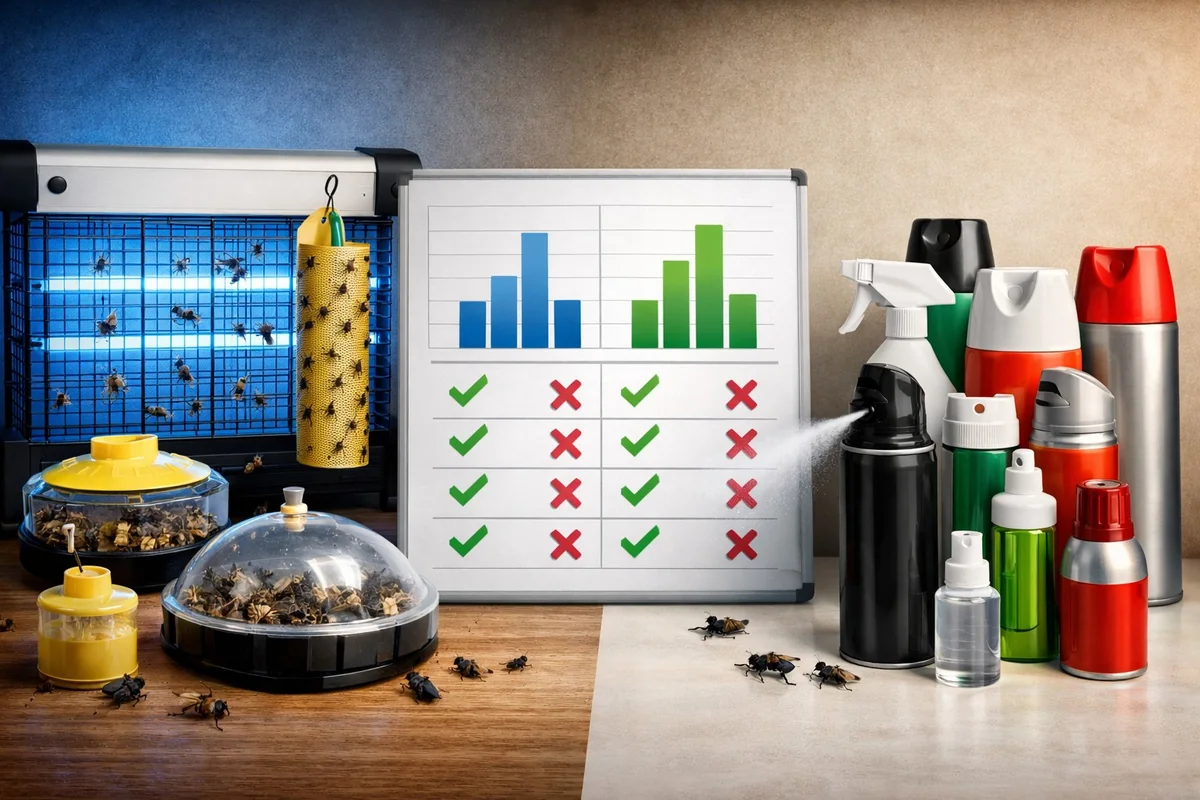
Fly traps offer ongoing reduction for kitchens and food areas, while sprays kill flies instantly for sudden outbreaks. Traps are safer for long-term use, but sprays deliver fast relief in emergencies. Choose traps for chronic issues and sprays for quick knockdown - combining both covers all scenarios.
- Traps excel for continuous fly control in sensitive areas; sprays work best for immediate results.
- Sprays require direct application and carry more safety risks; traps are passive and lower maintenance.
- For chronic or recurring flies, use traps; for emergencies or isolated rooms, sprays provide fast relief.
Key Differences: Fly Traps vs Fly Sprays
When comparing fly traps vs sprays, the main differences are how they target flies, where they work best, and what trade-offs each method brings. These differences drive which solution will actually solve your problem - or just give you temporary relief.
Identify your needs and get personalized recommendations
Learning the basics and looking for easy, safe solutions for a first try.
Wants to understand key differences and what matters most before deciding.
Focused on comparing features, pros and cons, and customer-reported results.
Wants the best balance of performance, price, and ongoing costs.
Ready to make a fast decision, cares about price, support, and availability.
Wants top-tier, reliable solutions, especially for challenging pest problems.
How Each Method Targets Flies
Fly traps use attractants like scent, UV light, or food baits to lure flies. Once drawn in, flies are either stuck to adhesive, electrocuted, or trapped inside a container. This process works passively - traps do the work once you set them up.
Sprays rely on direct application. Most use active ingredients such as pyrethroids or botanical oils that kill flies when they’re hit by the mist or land on treated surfaces. Sprays require your active participation and are only effective where you can see and spray the flies.
Where Each Method Excels
Traps shine in high-traffic, food prep, or gathering spaces where chemical sprays aren’t practical. They quietly reduce fly numbers over time, making them ideal for kitchens, dining rooms, and patios. For example, Catchmaster Window Fly Traps work well in kitchens or living areas where you want to avoid sprays.
Sprays are unbeatable when you need to kill visible flies fast - such as when a sudden swarm appears after a door is left open, or before guests arrive. Raid Flying Insect Killer is a classic choice for this situation, knocking down flies in minutes. Sprays can also target hard-to-reach spots where traps can’t be placed, like vents or high ceilings.
Primary Limitations and Trade-Offs
Traps aren’t magic - they may take hours or even days to show results, especially if fly populations are high. Placement and patience are key. Sprays, while fast, can leave chemical residues and must be reapplied for recurring infestations.
No single method addresses the root cause, like open garbage, pet waste, or unsealed entry points. For lasting control, you’ll need to combine removal with prevention. For an in-depth look at the full range of solutions, see Fly Control.
How Fly Traps Work: Mechanisms and Effectiveness
Fly traps come in several forms, but all rely on attracting flies into a device or onto a sticky surface. Understanding the types and triggers helps you pick the right trap for your situation.
Types of Fly Traps and Their Triggers
- Sticky traps: Use adhesive strips or pads to catch flies attracted by scent, color, or placement (like windows).
- Electric traps: Lure flies with ultraviolet (UV) light, then kill them with an electric grid. Best for areas where chemical use isn’t allowed.
- Baited traps: Use food-grade attractants, often water-activated, to draw flies into a container they can’t escape. These excel outdoors or near garbage bins.
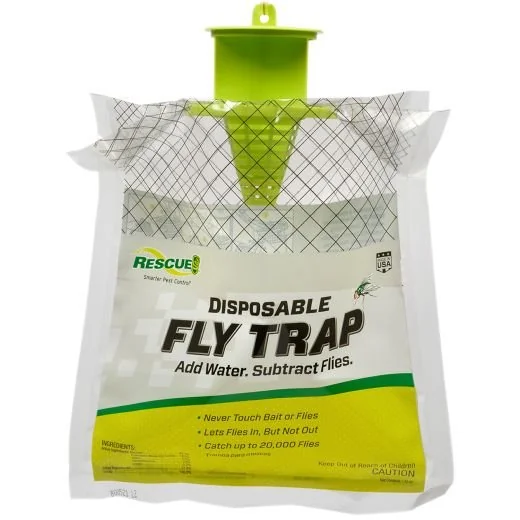
Rescue! Disposable Fly Trap is a textbook example of a water-activated, baited trap. It draws in hundreds of flies outdoors - especially around garbage or compost bins - without using sprays.
The design allows no-touch disposal, so you toss the whole bag when it’s full. The primary downside is odor: the bait is potent and best avoided indoors. This is a budget-friendly pick for those needing strong fly reduction outside, especially near animal waste or trash areas.
Rescue! Disposable Fly Trap
Effectively controls outdoor fly populations by attracting and trapping hundreds of flies using a water-activated, food-grade bait. The Rescue! Disposable Fly Trap requires no spraying or harsh chemicals and is designed for hassle-free, single-use disposal once full. Its compact 8.5 x 6-inch bag is ideal for patios, barns, or garbage areas where flies are a persistent issue.
Why We Recommend This
We recommend the Rescue! Disposable Fly Trap for those prioritizing chemical-free fly control outdoors. Its water-activated bait and high trapping capacity outperform most sticky strips and offer a more sanitary alternative to sprays, especially for families and pet owners concerned about pesticide exposure. This is a reliable, easy-to-use choice for managing flies where they breed.
vs Competitors: Compared to electric zappers and sticky traps, this baited trap is more effective for large outdoor infestations and avoids the need for electrical outlets or frequent cleaning. While sprays provide immediate knockdown, the Rescue! trap delivers longer-lasting population reduction without chemical drift.
Best For:
Homeowners, pet owners, and facility managers seeking a non-chemical, outdoor solution for heavy fly infestations in residential or agricultural settings.
- Ideal for managing flies around patios, decks, or outdoor dining areas during summer months
- Effective for livestock barns, kennels, or near garbage bins where flies breed in large numbers
- Captures up to 20,000 flies per trap
- Water-activated food-grade attractant
- Significantly reduces fly populations in outdoor areas without chemical sprays
- Easy setup and disposal process; users report installation takes under 5 minutes
- Designed for outdoor use only; not suitable for indoor fly control
- Bait odor may be noticeable if placed too close to high-traffic areas
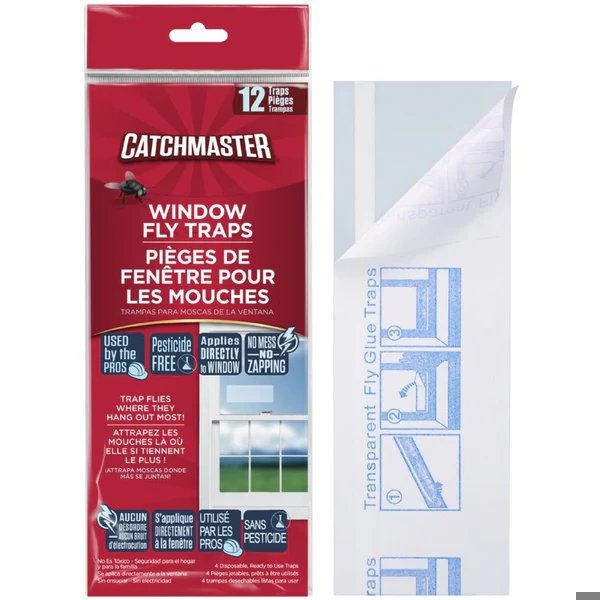
Catchmaster Window Fly Traps take a different approach. These clear adhesive strips stick to windows where flies naturally gather for light and warmth. They’re odorless, contain no chemicals, and blend in for discreet use indoors.
The biggest trade-off is aesthetics - dead flies can be visible, and you’ll need to replace the strips periodically. For renters or anyone who wants a non-toxic, low-maintenance option for kitchens or living rooms, these are a solid pick.
Catchmaster Window Fly Traps
Catchmaster Window Fly Traps offer discreet, chemical-free fly control by capturing flies on clear adhesive strips placed directly on windows where flies naturally gather. Each trap measures 8 x 3 inches, blending into window surfaces without leaving residue or odors. Ideal for kitchens, dining rooms, and other indoor spaces where sprays aren’t practical.
Why We Recommend This
We recommend Catchmaster Window Fly Traps for anyone prioritizing safety and discretion in indoor fly control. Their chemical-free design makes them especially suitable for kitchens, dining areas, and homes with children or pets, where aerosol sprays are less desirable. Based on customer feedback, these traps consistently deliver reliable results with minimal effort.
vs Competitors: Compared to traditional fly sprays, these traps offer safer use in food-related areas but require more time to reduce fly populations. They’re less visible and leave no lingering odors, unlike some competing adhesive traps.
Best For:
Homeowners and renters seeking non-chemical, low-maintenance fly control in food prep and shared living spaces.
- Perfect for kitchens and dining rooms where chemical sprays are not desired
- Useful in homes with pets, children, or sensitive individuals avoiding aerosols
- Clear, unscented adhesive strips for low-visibility use
- Chemical-free design safe for food prep and family areas
- Safe for use near food and children due to no chemicals or scents
- Blends into window glass for unobtrusive control
- Needs regular replacement as adhesive fills with flies
- Does not provide instant results like aerosol sprays
Competitive Advantages of Traps
The true edge of traps is ongoing, hands-free control. Once placed correctly, most work for days to weeks before needing attention. This means less labor and fewer safety worries compared to daily spraying.
Traps don’t aerosolize chemicals, so there’s no residue on food surfaces or risk of inhalation. They’re safer for families with young kids or pets, and for food businesses. Plus, many traps (like window strips or electric zappers) are reusable or refillable, minimizing waste.
Limitations and When Traps Fall Short
If you need fast results - say, you have a sudden housefly swarm - traps alone won’t clear the room quickly. They’re also less effective if not placed near active fly zones, like windows or trash cans. If left unattended, some traps can become unsightly or release odors, so regular monitoring is smart.
Traps alone rarely eradicate a severe infestation. They chip away at populations but don’t stop breeding if flies have access to food, moisture, or garbage. For heavy or recurring issues, layering with other strategies works best. For more on effective trap options, check out Best Fly Traps and Zappers 2026.
How Fly Sprays Work: Ingredients, Action, and Results
Fly sprays kill by direct contact or by creating a residual film that remains toxic for hours. Their formulas range from synthetic chemicals to plant-based oils - each with unique strengths and safety considerations.
Active Ingredients and How They Kill Flies
Most conventional sprays, like Raid Flying Insect Killer, use pyrethroids - synthetic chemicals modeled after chrysanthemum flower extracts. These compounds disrupt the fly’s nervous system, killing within seconds to minutes of contact. Some sprays also leave a thin residue that remains active on surfaces for several hours, killing flies that land later.
Natural sprays, such as Zevo Instant Action Spray, rely on essential oils. These are less toxic to humans and pets but can still kill flies on contact. The main trade-off is a shorter window of effectiveness and the need for more direct spraying.
When Sprays Offer a Competitive Edge
Sprays are the go-to for emergencies. If you walk into a room swarming with flies, nothing beats the speed of a direct spray. Raid Flying Insect Killer is engineered for these moments: it knocks down flies fast, and its residual action means fewer survivors.
Sprays also reach places traps can’t: ceiling corners, air vents, or above cabinets. For those needing a less harsh option, Zevo Instant Action Spray is a decent fit for homes with pets, sensitive individuals, or light fly problems. Its plant-based formula is a gentler alternative - but it’s less effective for heavy infestations and requires more frequent use.
Drawbacks and Safety Considerations
The downside with sprays is safety. Synthetic formulas, especially, can leave residue on countertops or food prep surfaces. This residue may be unsafe for children or pets if not cleaned up thoroughly.
Inhaling the mist is also a risk, so always ventilate the area after use.
Repeated spraying can lead to a strong odor buildup and even cause flies to develop some level of resistance over time. Plus, sprays are only as effective as your aim - missed flies survive to breed and multiply.
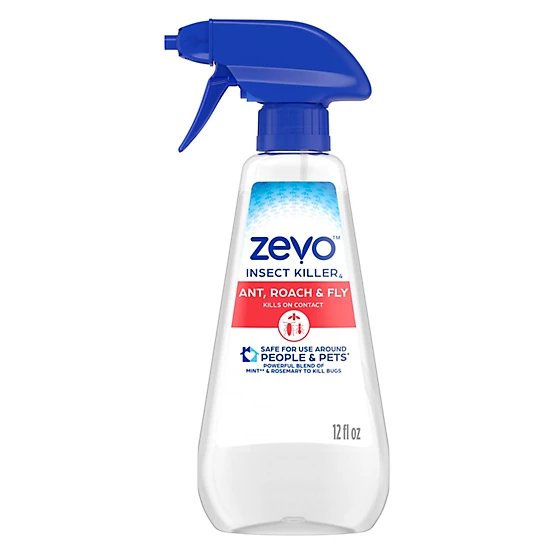
Zevo Instant Action Spray is a plant-based option made with essential oils, designed for families who want to avoid harsh chemicals. Its main strength is that it can be used around kids and pets when applied as directed. The catch is that it works on direct contact and won’t handle a full-blown infestation.
It’s best suited for light to moderate fly issues or as a supplement to other methods.
Zevo Instant Action Spray
Zevo Instant Action Spray provides fast-acting fly control using a bio-selective formula powered by essential oils, effectively killing flies on contact without harmful residues. Safe for use in kitchens and food prep areas, its low-odor, residue-free spray is ideal for households prioritizing safety around food and family. Users report reliable performance for both indoor and outdoor fly problems, making it a convenient choice for regular home use.
Why We Recommend This
We recommend Zevo Instant Action Spray for families and households prioritizing safety and ease of use. Its essential oil-based formula is effective at killing flies without the lingering chemical odors or residues typical of traditional sprays. In our research, it stands out for food-area safety and user-friendly application, making it an excellent choice for kitchens and indoor spaces.
vs Competitors: Compared to brands like Raid and Hot Shot, Zevo offers a safer profile for use around food and sensitive environments, though it may require more frequent application for severe infestations.
Best For:
Homeowners and renters seeking a fast, safe, and food-area-friendly fly spray solution, especially those with children, pets, or sensitivities to harsh chemicals.
- Quickly eliminating flies in kitchens, dining rooms, or near food prep spaces
- Safe spot treatment for fly problems in homes with pets or children
- Bio-selective formula targets flies and other flying insects
- Powered by essential oils (geraniol, lemongrass oil) with no synthetic pyrethroids
- Kills flies on contact for rapid relief
- Residue-free and food-area safe, according to manufacturer guidelines
- May require repeated applications for heavy infestations
- Bottle nozzle can clog if not cleaned after use
Raid Flying Insect Killer is the classic choice for rapid knockdown. The pyrethroid formula kills flies and other flying insects instantly and provides short-term residual protection on sprayed surfaces. However, it’s not safe for use near food and leaves a strong chemical scent.
For urgent outbreaks or hard-to-reach spots, it’s hard to beat for speed and reliability. This is a budget-friendly staple for most households, but should be used with care around children, pets, and sensitive individuals.
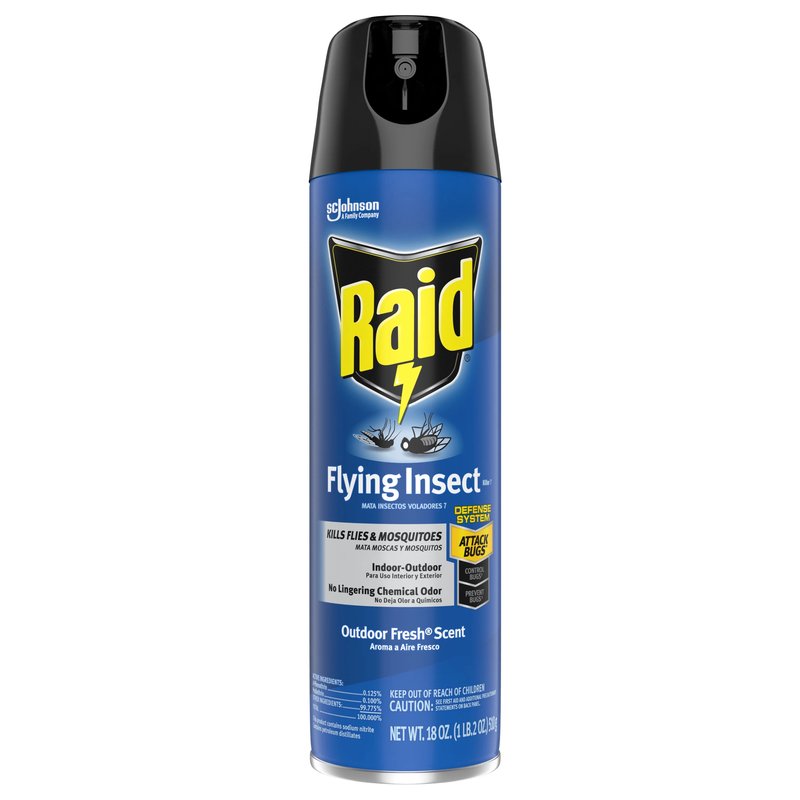
Raid Flying Insect Killer
Raid Flying Insect Killer delivers fast-acting protection against flies, mosquitoes, gnats, and other flying insects with a powerful pyrethroid-based aerosol formula. The spray provides rapid knockdown within seconds and is suitable for both indoor and outdoor use, making it a practical choice for kitchens, patios, and entryways. Its 15-ounce can offers wide coverage without lingering residue when used as directed.
Why We Recommend This
We recommend Raid Flying Insect Killer as a reliable choice for those needing quick results against common flying pests. Its proven pyrethroid formula consistently delivers rapid knockdown and is widely trusted by homeowners for both indoor and outdoor use. While the scent is noticeable, its efficacy and convenience make it one of the most practical options available.
vs Competitors: Compared to plant-based alternatives like Wondercide or Eco Defense, Raid acts faster but has a stronger chemical odor and is less suitable for sensitive households.
Best For:
Homeowners and renters seeking fast, effective control of flying insects indoors and outdoors without the need for professional pest services
- Quickly eliminating flying insects in kitchens, bathrooms, or living rooms
- Spot-treating patios, decks, and entryways to reduce insect nuisance before gatherings
- Pyrethroid-based formula for rapid insect knockdown
- Effective against flies, mosquitoes, gnats, and wasps
- Fast-acting - users report visible results within seconds
- Versatile for use in multiple home areas and outdoors
- Strong chemical odor may be unpleasant to some users
- Not suitable for use around food preparation areas during application
Cost, Maintenance, and Ease of Use Compared
When weighing traps against sprays, cost and convenience are major factors - especially for renters or homeowners dealing with repeat fly problems.
Upfront and Ongoing Costs
Most fly traps, like Rescue! Disposable Fly Trap and Catchmaster Window Fly Traps, fall into the affordable or budget-friendly price category. They last several days to weeks per unit. Sprays such as Raid and Eco Defense are also budget-friendly or mid-range, but a single can may be used up quickly if flies keep returning.
Traps need periodic replacement or cleaning, but the cost per day is often lower for chronic issues. Sprays require repeated purchase and can add up over time, especially if you’re chasing flies daily.
Application and Maintenance Effort
Traps require a little setup - correct placement is key - but then they work passively. You’ll need to check and empty or replace them periodically, especially for baited or sticky types.
Sprays demand your active attention each time you use them, and you’ll need to ventilate the area after. Sprays often can’t be left in place like traps, and you must be cautious about where and when you spray, especially around food and pets.
Long-Term Value and Trade-Offs
Traps are the clear winner for ongoing, low-maintenance control - if you don’t mind waiting for results. They’re more economical for chronic fly issues. Sprays offer instant gratification but may cost more (and require more effort) in the long run if flies keep coming back.
A layered approach - using traps for background control and sprays for emergencies - often gives the best balance of cost, labor, and effectiveness.
Safety and Environmental Impact
Safety is a major concern for anyone with kids, pets, or food prep areas. Here’s what you need to know about risks and environmental impact.
Risks to Humans and Pets
Traps are generally low risk, especially sticky or window traps that contain no chemicals. Baited traps do pose a risk if the attractant spills - pets may be tempted to investigate, so keep them out of reach.
Sprays are another story. Chemical formulas can be hazardous if inhaled, absorbed, or left on food surfaces. Even “pet-safe” sprays demand close attention to the instructions, as some essential oils are toxic to cats or small animals.
Environmental Considerations
Traps create some waste, such as used sticky pads or bags of dead flies, but produce little to no chemical runoff. Some newer traps are refillable or biodegradable, reducing landfill impact.
Sprays can contribute to indoor air pollution and chemical buildup in drains, especially if used heavily. Natural sprays are better in this regard but still require responsible use - the concentrated oils are not always harmless to aquatic life or beneficial insects.
Best Practices for Safe Use
- Always follow label instructions for placement, usage, and disposal.
- Keep all traps and sprays away from direct food contact and out of reach of children and pets.
- Ventilate rooms thoroughly after spraying, and never use sprays near aquariums or open flames.
- Dispose of full traps and empty spray cans responsibly - check local guidelines for hazardous waste.
Best Use Cases: When to Choose Traps or Sprays
The best fly control method is often situation-specific. Here’s how to match the right tool to your scenario.
Scenarios Where Traps Outperform Sprays
- Chronic, low-level fly problems in kitchens, patios, or garbage areas - traps quietly chip away at populations with little maintenance.
- Food-sensitive or chemical-restricted environments like daycares, restaurants, or homes with kids and pets - traps pose far less risk.
- Any area where you want to avoid repeated chemical exposure or can’t be present to spray multiple times a day.
Situations Where Sprays Are Superior
- Sudden or heavy outbreaks - like after leaving a door open or during a summer heat wave - where immediate knockdown is needed.
- Rooms or spots where you can’t place a trap, such as high ceilings, vents, or areas with no surfaces for sticky strips.
- Moments when you need the fastest possible relief - before guests arrive, during a party, or when you spot a cluster of flies in one area.
Combining Both Methods for Maximum Control
Using both traps and sprays isn’t overkill - it’s smart strategy. Sprays handle emergencies and wipe out visible flies, while traps provide a baseline of ongoing reduction.
For persistent or recurring infestations, rotating between methods can also prevent flies from adapting or becoming resistant to chemicals or trap baits.
- Traps win for ongoing, low-maintenance control in kitchens, food prep areas, and homes with kids or pets.
- Sprays win for urgent knockdown during sudden fly outbreaks, hard-to-reach areas, and short-term relief.
Product Comparison: Top Fly Traps and Sprays
Here’s how the most effective fly traps and sprays stack up for household use in 2026. Each has a distinct edge for specific scenarios and user priorities.
Rescue! Disposable Fly Trap
This outdoor baited trap uses a water-activated attractant to lure and capture hundreds of flies over several days. It’s designed for use near garbage, compost, or animal waste - places where fly populations spike fastest.
No chemical spraying is required, making it a safe choice for outdoor spaces or anywhere you’d prefer not to use aerosols. Disposal is simple and mess-free: seal the bag and toss it when full. The main trade-off is odor - the bait is strong, so this isn’t a trap you’ll want near patios or doors you use often.
Best for: Homeowners with outdoor fly problems, especially near trash, compost, or animal pens.
Catchmaster Window Fly Traps
These clear adhesive traps are designed for windows, where flies naturally gather for light and warmth. There’s no scent or chemical involved, so they’re ideal for indoor spaces - especially kitchens and living rooms.
Installation is simple: peel and stick to a window, then replace every couple of weeks as needed. The main downside is visibility - you’ll see dead flies on the strip, which some users dislike. But for renters, families, or anyone avoiding chemicals, they’re a convenient, budget-friendly solution.
Best for: Apartments, kitchens, and low-traffic rooms where chemical sprays aren’t wanted.
Raid Flying Insect Killer
This pyrethroid-based aerosol delivers instant knockdown of flies and other flying bugs. It’s suitable for both indoor and outdoor use, but works best for sudden outbreaks or when you spot a cluster of flies in a single room.
The formula provides residual protection for several hours after spraying, so flies landing later are also affected. The drawbacks: strong chemical odor and unsuitability for use near food or prep surfaces. Use with care, ventilate well, and keep away from kids and pets.
Best for: Immediate fly emergencies, hard-to-reach spots, and outdoor spaces where fast results matter more than long-term safety.
Zevo Instant Action Spray
This plant-based spray uses peppermint and geraniol oils to kill and repel flies without harsh chemicals. It’s safe for use around children and pets, and the light scent is less overpowering than conventional aerosols.
It’s most effective for light to moderate fly infestations, since it works best when sprayed directly on flies. For heavy or recurring issues, it should be paired with traps or other methods. The trade-off is frequency: repeated applications are needed for ongoing control.
Best for: Families, pet owners, or anyone seeking a gentler fly spray for everyday use.
| Product | Type | Best For | Key Advantage | Main Limitation |
|---|---|---|---|---|
| Rescue! Disposable Fly Trap | Baited Outdoor Trap | Outdoor garbage, compost, barns | Catches hundreds of flies, no spray | Strong odor, outdoor use only |
| Catchmaster Window Fly Traps | Sticky Indoor Trap | Kitchens, living rooms, rentals | Safe, odorless, discreet | Visible dead flies, needs replacement |
| Raid Flying Insect Killer | Pyrethroid Spray | Sudden outbreaks, single rooms | Instant knockdown, residual effect | Chemical odor, not food-safe |
| Zevo Instant Action Spray | Plant-based Spray | Light infestations, pet areas | Safe for kids and pets, minimal odor | Less effective for heavy infestations |
Frequently Asked Questions About Fly Control Methods
❓ Frequently Asked Questions
What is the difference between fly traps and fly sprays?
What is the difference between fly traps and fly sprays?
Fly traps are devices that attract and capture flies using bait, adhesive, or light, providing chemical-free, ongoing control. Fly sprays use insecticides to kill flies on contact for immediate results. Traps are suitable for long-term reduction, while sprays offer rapid relief but require repeat application.
How do I choose between fly traps and fly sprays for my home?
How do I choose between fly traps and fly sprays for my home?
When choosing between fly traps and sprays, consider these factors:
- Area size: traps are better for ongoing control in larger or infested areas
- Chemical sensitivity: traps are safer for homes with pets or children
- Speed of results: sprays provide instant knockdown
For lasting results, most users combine both methods strategically.
How often should I replace or reapply fly control products?
How often should I replace or reapply fly control products?
Most fly traps need replacing every 2-4 weeks, depending on usage and infestation levels. Fly sprays should be reapplied every few days or as soon as flies reappear. Always follow manufacturer instructions for safe and effective use, and check product labels for specific schedules.
Are fly traps safer than fly sprays around children and pets?
Are fly traps safer than fly sprays around children and pets?
Fly traps generally pose less risk to children and pets since most work without chemicals. However, some baited traps may contain attractants that should not be ingested. Fly sprays contain insecticides that can cause irritation if inhaled or touched, so always keep sprays out of reach and ventilate after use.
When is the best time to use fly traps versus fly sprays?
When is the best time to use fly traps versus fly sprays?
Fly traps are best used at the start of fly season or for ongoing prevention, as they gradually reduce populations. Fly sprays are most effective when you need immediate control, such as after opening windows or doors. For heavy infestations, combining both methods improves results.
What should I look for when choosing a fly trap?
What should I look for when choosing a fly trap?
Key criteria to consider:
- Trap type: sticky, baited, or UV light for different environments
- Capacity: larger traps handle bigger infestations
- Safety: non-toxic options for homes with kids or pets
- Ease of use: check for simple setup and disposal
Check verified user reviews for real-world performance before buying.
How do I use fly sprays safely indoors?
How do I use fly sprays safely indoors?
To use fly sprays safely indoors:
- Read and follow all label instructions
- Remove pets and cover food before spraying
- Spray only in targeted areas; avoid overuse
- Ventilate rooms thoroughly after application
- Wash hands after handling the product
Always store fly sprays out of reach of children and pets.
Our Verdict: Which Fly Removal Method Is Best for You?
If you need long-term, low-risk fly control - especially in kitchens, food prep areas, or homes with children and pets - traps are the better choice. They’re safe, easy to use, and deliver steady results with little effort. For urgent fly problems or sudden outbreaks, sprays are your fastest route to relief, but require more caution and ongoing purchase.
Choose traps for chronic, low-level fly issues, or if you need to avoid chemicals altogether. Go with sprays for emergencies, single-room outbreaks, or when you need instant knockdown. For the best results, combine both: use traps as your first line of defense, and sprays as your backup when things get out of hand.
If flies persist after a week or two - despite using both methods - check for underlying problems. Clean up breeding grounds, seal entry points, and consider bringing in a professional if populations don’t drop. DIY fly control works for most homes, but severe infestations sometimes need expert intervention.
Related Articles
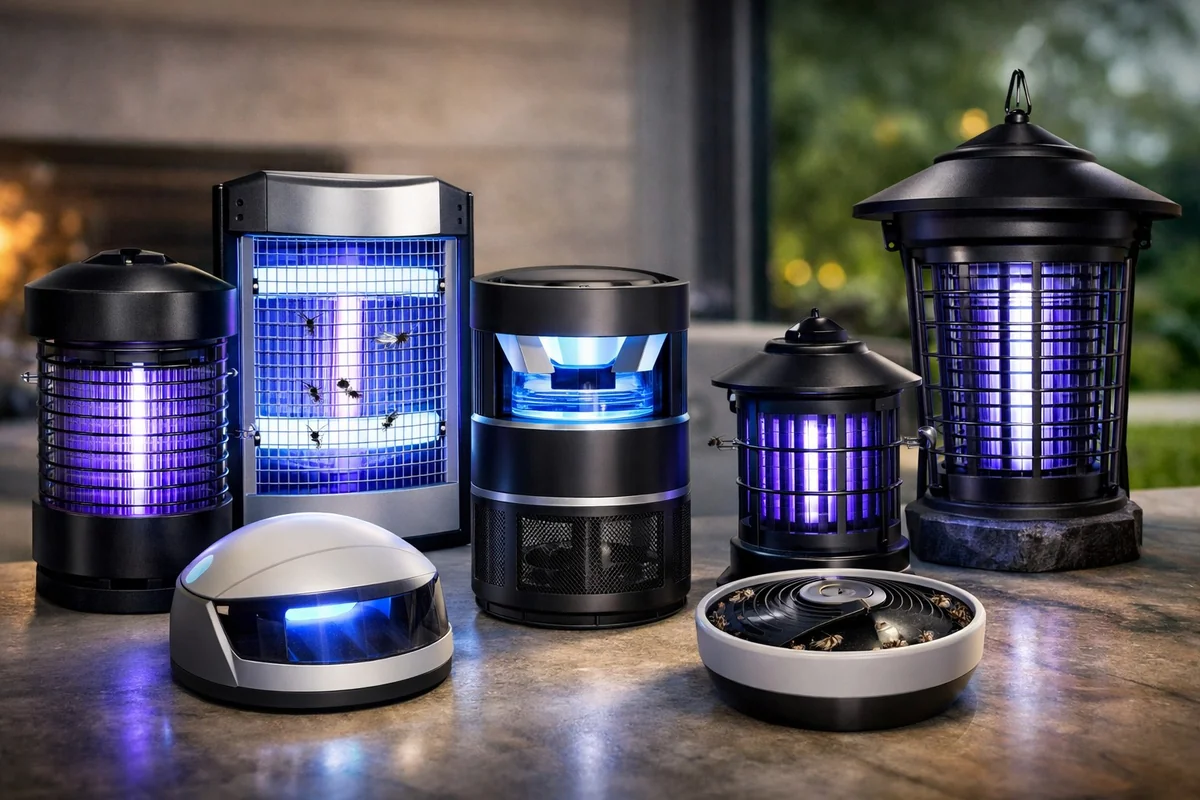
Best Fly Traps and Zappers 2026: Expert Reviews for Every Home
Looking for the best fly traps and zappers in 2026? Discover top-rated products, expert reviews, and the most effective fly control solutions for your home - indoors and out.
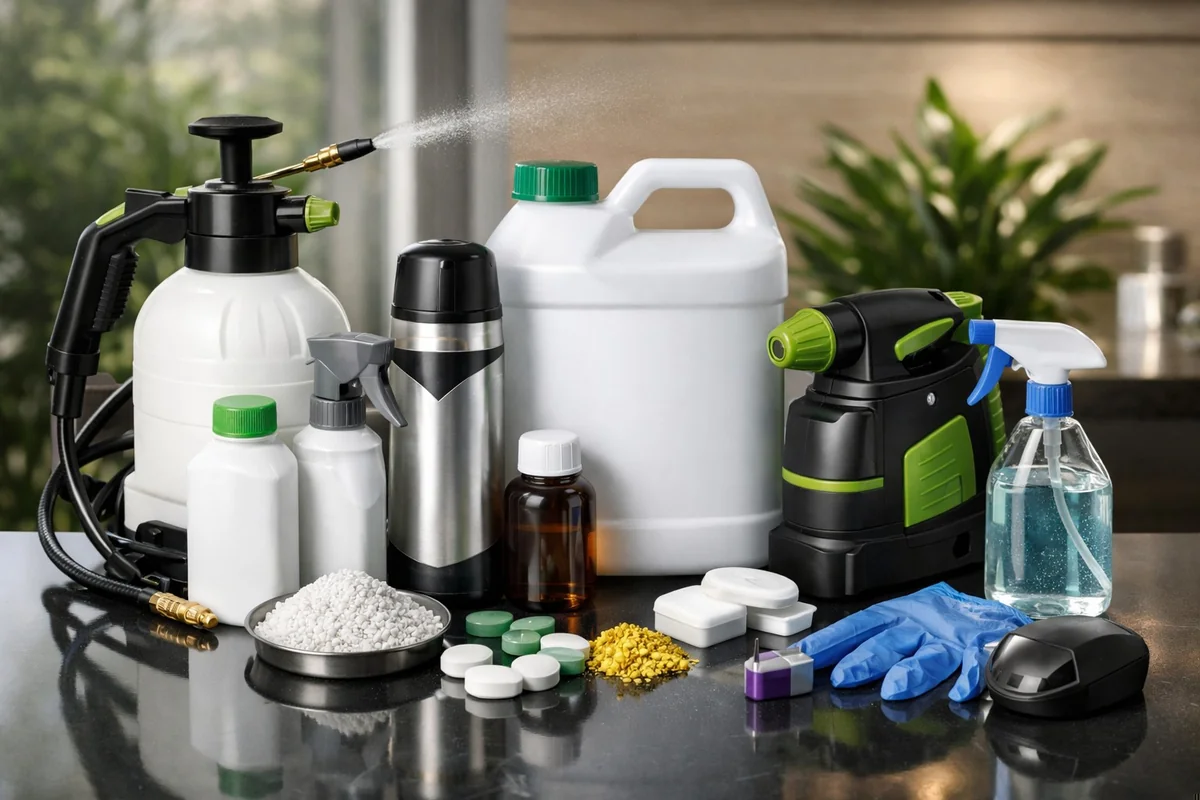
Best Chemical Pesticides for Home Use 2026: Safe, Effective, and Affordable Options
Discover the best chemical pesticides for home use in 2026. Compare top-rated baits, sprays, gels, and natural options for ants, roaches, fleas, and more. Find safe, effective, and budget-friendly pest control solutions for every room.
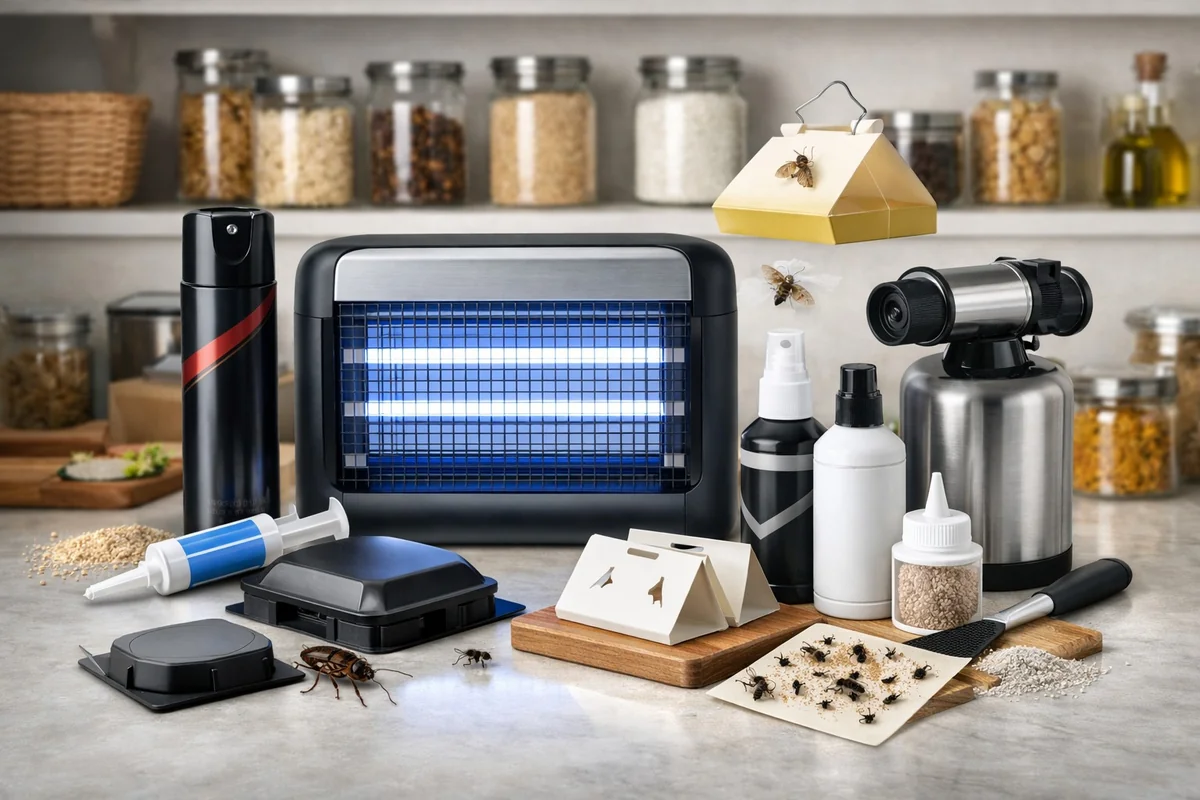
Best Kitchen Pest Control Products 2026: Ant, Roach, Moth & Fly Solutions
Find the best kitchen pest control products for 2026, including safe ant baits, cockroach gels, pantry moth traps, fly solutions, and natural options. Expert advice on choosing safe, effective, and budget-friendly pest killers for food storage areas.
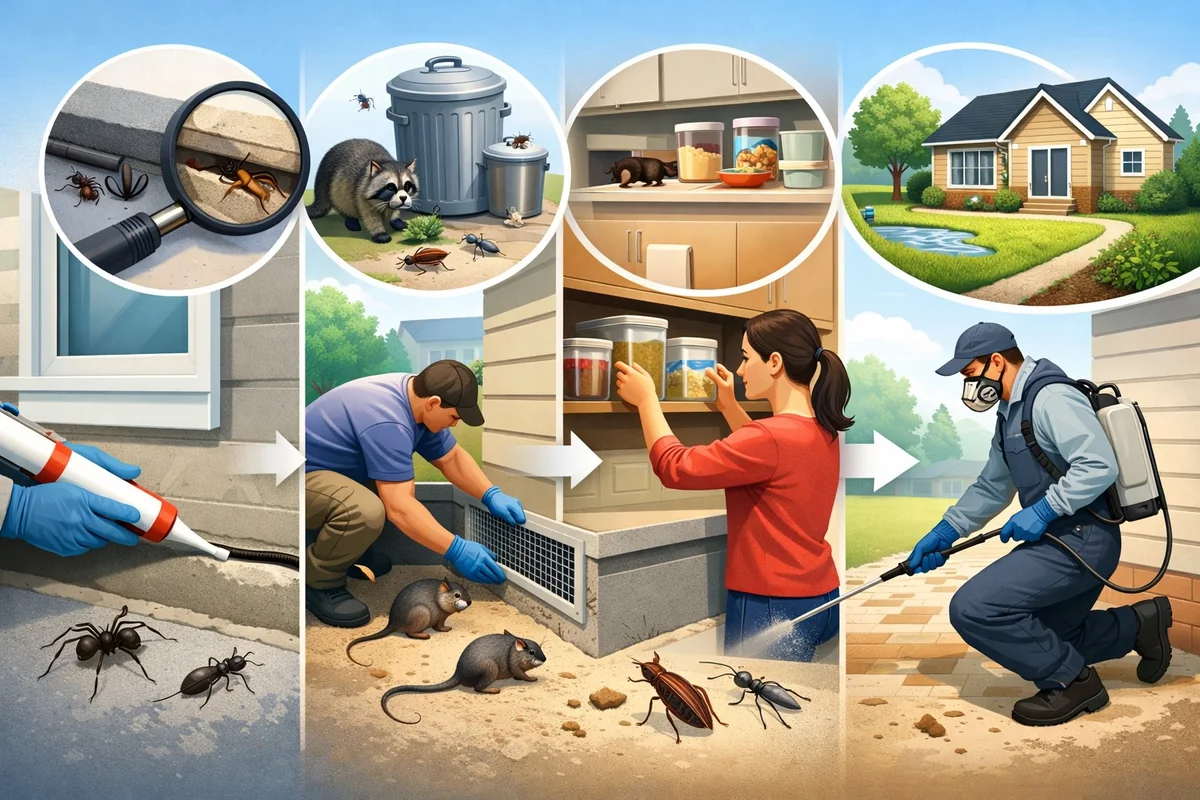
Complete Guide to Pest Prevention in Homes: Stop Pests in 2026
Protect your home in 2026 with this complete pest prevention guide. Discover proven DIY methods, room-by-room tips, safe solutions for families, and expert advice to stop pests before they start.