
How to Make a Fruit Fly Trap: Vinegar, Funnel, No-Vinegar Traps
How to make a fruit fly trap that works: a cider vinegar jar with dish soap, paper funnel, banana, wine and yeast traps, the best baits and why a trap stops working.
The best homemade fruit fly trap is a small jar of apple cider vinegar with a drop of dish soap, covered with plastic wrap poked with a few small holes. The fruity, fermented smell draws fruit flies in, the soap makes them sink, and the tiny holes keep them from finding the way out. A slice of overripe banana or a splash of wine makes it even stronger. Set the jar right where the flies hover and clear out the produce or trash they are breeding in, and most kitchens are fly-free within a week.
What You Need
- A container: a small jar, glass, mug or the bottom of a plastic bottle.
- Bait: apple cider vinegar, plus a slice of overripe banana, a few drops of wine or beer, or a spoonful of fruit juice to strengthen it.
- Dish soap: one drop, so flies sink.
- A cover: plastic wrap and a rubber band, or a sheet of paper rolled into a funnel and tape.
- Something to poke holes: a toothpick or skewer.
Each trap takes two or three minutes to make. Make two or three at once, since fruit flies rarely stay in one spot of the kitchen.
How a Homemade Fruit Fly Trap Works
Fruit flies find food by smell, and the smell they want is fermenting fruit. Apple cider vinegar, wine, beer and overripe bananas all give it off, which is why they make the best baits. The University of Kentucky's entomology fact sheet on fruit flies describes the classic version: a paper funnel set into a jar baited with a few ounces of cider vinegar, placed wherever fruit flies are seen, which it calls simple but effective at catching the remaining adults.
Three things make the trap work. The bait has to smell stronger than anything else nearby, so ripe fruit on the counter needs to go in the refrigerator. The entry has to be small or funnel-shaped, so flies that get in fly upward and miss the exit. And the liquid needs a drop of soap, which breaks the surface tension so flies that touch it sink instead of standing on top and flying away.
It helps to know what you are up against. Adult fruit flies are tiny, and each female lays hundreds of eggs on fermenting food, as the same University of Kentucky fact sheet explains. That is why a kitchen goes from a few flies to a cloud in a week, and why a trap that catches the adults steadily, day after day, can turn the tide once the eggs have nowhere to develop.
Homemade traps also have an advantage over sprays: they keep working while you are not watching, they put no insecticide near food, and they show you how many flies are left. A trap that catches fewer each day is a sign the problem is fading; one that keeps filling means a breeding source is still active.
Our flying insect guides compare store-bought fruit fly traps too, and the homemade fruit fly trap section has versions with and without cider vinegar.
Step-by-Step: Make a Cider Vinegar Jar Trap
- Pick a small jar or glass: a short, wide one is easiest for flies to find.
- Pour in the vinegar: about an inch of apple cider vinegar is plenty.
- Add a booster: a thin slice of overripe banana or a few drops of wine or beer.
- Add one drop of dish soap: and swirl gently so it mixes without foaming.
- Cover with plastic wrap: pull it tight across the top and hold it with a rubber band.
- Poke small holes: make five or six holes with a toothpick, just big enough for a fruit fly.
- Place the trap: next to where the flies hover, such as the fruit bowl spot, the trash, the sink or the compost pail.
- Refresh it: pour out and rebait every three or four days, or sooner if it fills or the banana starts to rot.
Quick Checklist
How to make a cider vinegar fruit fly trap.
How Many Traps and Where to Put Them
For a typical kitchen, two or three traps work better than one. Put the first beside wherever the fruit bowl used to sit, the second next to the trash or recycling, and the third by the sink or compost pail. Fruit flies rarely travel far from their food, so a trap across the room from the problem catches only the odd wanderer, while a trap right beside it can catch dozens in an evening.
Keep traps on stable surfaces at counter height, away from the edge where they can be knocked over, and out of direct sunlight, which dries the bait quickly. If flies are also showing up in a bathroom, pantry or near a bar cart, add a trap there too. This is the most reliable best fruit fly trap indoor DIY setup: several small jars spread across the spots flies visit, rather than one large trap in the middle.
Four More Homemade Fruit Fly Traps
Paper Funnel Jar
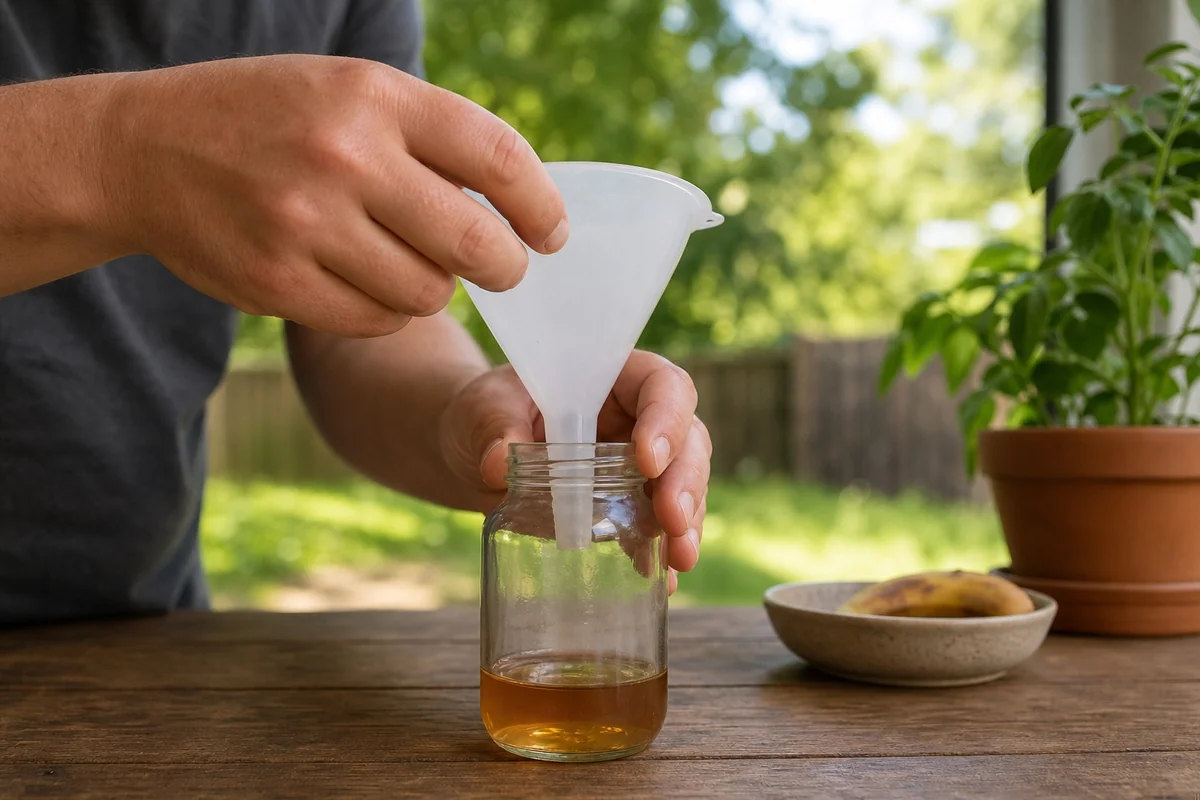
Roll a sheet of paper into a cone, snip the point to leave a hole about the width of a pencil, and set it into a jar of cider vinegar so the tip sits above the liquid. Tape the rim to seal the gaps. Flies walk down the funnel toward the smell and rarely find the small hole on the way back. It is the version the Kentucky fact sheet describes and it holds a lot of flies.
Banana in a Jar
When you have no vinegar, a chunk of very ripe banana in a jar works almost as well. Cover it with plastic wrap poked with small holes and add a spoonful of water with a drop of soap at the bottom. Replace the banana every two days, before the trap itself becomes a place for flies to breed.
Leftover Wine Bottle
A bottle with an inch of red wine or beer in the bottom is a ready-made trap. The narrow neck works like a funnel: flies crawl in and cannot find their way back out. Add a drop of soap to the wine, and leave the bottle near the sink or recycling.
Sugar and Yeast Without Vinegar
Stir a spoonful of sugar and a pinch of baker's yeast into a cup of warm water, then cover the cup with punctured plastic wrap. The yeast starts fermenting within an hour, producing the same smell fruit flies follow to ripe fruit. It is a good choice if the vinegar smell bothers you or you have none in the house.
Which Bait Works Best
| Bait | How Well It Attracts | Notes |
|---|---|---|
| Apple cider vinegar | Very well | The standard; add soap |
| Cider vinegar with overripe banana | Best | Replace the fruit every few days |
| Red wine or beer | Very well | Good use for leftovers |
| Sugar water with yeast | Well | No vinegar smell |
| Balsamic or rice vinegar | Well | Fruity vinegars work better than plain |
| White vinegar alone | Poorly | Lacks the fermented fruit smell |
If you are not sure which works in your kitchen, set two traps side by side with different baits for a day and keep the one that catches more. Fruit flies in different homes sometimes prefer different smells, and a quick comparison beats guessing.
Why Your Fruit Fly Trap Is Not Working
The most common reason is competition. If ripe bananas, a fruit bowl, an open trash can or a sticky recycling bin sits nearby, the flies have a better meal than your trap. Move or refrigerate the fruit, take out the trash, rinse the recycling, and the trap suddenly becomes the most interesting smell in the room.
The second reason is the entrance. Holes that are too big let flies walk back out, while a funnel that touches the liquid lets them crawl up its sides. Keep holes toothpick-sized and the funnel tip just above the bait. The third is missing soap: without it, flies land on the surface, feed and leave.
Timing can mislead you as well. A trap may catch very little in the first hour and then fill overnight, because fruit flies are most active in the warm afternoon and evening. Give a new trap a full day before deciding it does not work.
Finally, check the fly. If the small flies are dark and rise from houseplant soil, they are fungus gnats, which vinegar barely attracts; let the soil dry and use yellow sticky cards. If they are fuzzy and rest on the bathroom wall, they are drain flies, which need the drain scrubbed rather than a jar on the counter.
Stop Fruit Flies Coming Back
Traps catch adults, but the Kentucky fact sheet warns that the problem will continue as long as breeding sites remain, and that a single rotting potato or onion can breed thousands of fruit flies. The life cycle from egg to adult takes about a week, so new flies keep appearing for several days after you clean up unless every source is gone.
- Refrigerate ripe fruit and vegetables: or eat them before they turn.
- Check dark storage: potato and onion bins, the back of the pantry and under the sink.
- Rinse recycling: bottles, cans and cartons hold sugary residue.
- Empty and wash the trash and compost pail: including the bottom of the can.
- Scrub drains and the disposal: with a brush, then flush with boiling water.
- Replace sour sponges and mops: they are a hidden breeding spot.
Drains deserve a quick test, since they are an easy source to miss. Tape a strip of clear packing tape over the drain opening overnight, sticky side down, leaving a small gap at the edge for air. If you find small flies stuck to the underside in the morning, they are coming up from the pipe, and scrubbing the drain with a stiff brush will do more than any trap on the counter.
Keep one trap out for a week after the flies seem gone. It catches the last few that hatch from eggs you could not see, and it tells you quickly if a new source appears.
Common Questions About Homemade Fruit Fly Traps
Why do fruit flies keep coming back after I set a trap?
Why do fruit flies keep coming back after I set a trap?
Because eggs and larvae are still developing somewhere nearby, often in produce, a drain or the recycling. Each new batch hatches over several days, so the trap keeps catching flies until every breeding spot is cleaned out.
Can I use balsamic vinegar for a fruit fly trap?
Can I use balsamic vinegar for a fruit fly trap?
Yes. Balsamic and rice vinegars have fruity, fermented notes that fruit flies like, and they work better than plain white vinegar. Add a drop of soap as with cider vinegar.
How long does a homemade fruit fly trap last?
How long does a homemade fruit fly trap last?
Rebait every three or four days. The vinegar's smell fades as it sits, and any fruit added to it starts to rot and can become a breeding spot itself.
Is a homemade fruit fly trap safe around pets and kids?
Is a homemade fruit fly trap safe around pets and kids?
The ingredients are household foods and a drop of soap, so they are low risk, but a curious pet can tip a jar over. Set traps on counters or shelves out of reach and wipe up spills.
Key Takeaways
- A jar of apple cider vinegar with a drop of dish soap under punctured plastic wrap is the best homemade fruit fly trap.
- Overripe banana, wine or beer make the bait stronger; white vinegar alone works poorly.
- Small holes, a funnel above the liquid and a drop of soap keep flies from escaping.
- Move ripe fruit away from the trap so the bait has no competition, and use two or three traps near the spots flies visit.
- Remove breeding sites such as rotting produce, recycling residue and drain film, or new flies keep hatching.
- Keep one trap out for a week after the flies seem gone to catch late hatchers.