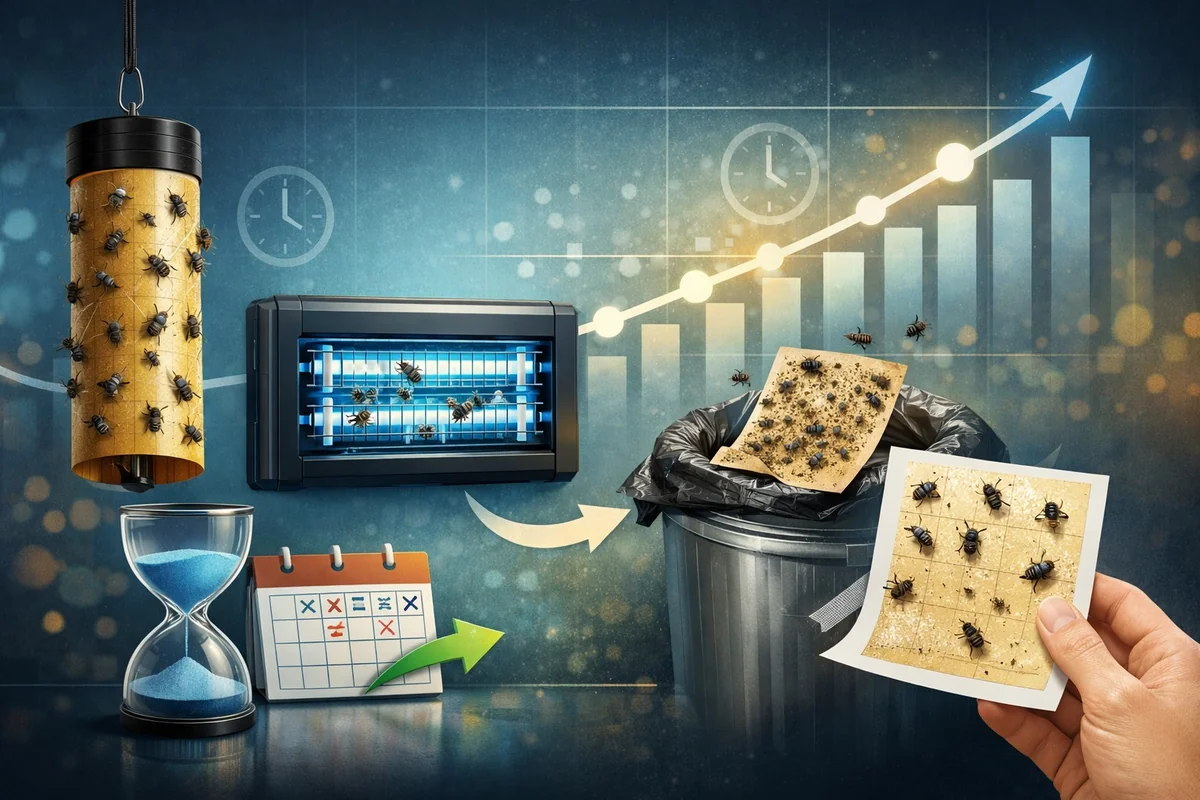

How Long Do Fly Traps Last? Lifespan, Duration, and Tips for 2026
Wondering how long fly traps last? Learn the typical lifespan of sticky, baited, and electric fly traps, what affects their duration, and tips to maximize their effectiveness in 2026.
What Determines Fly Trap Lifespan?
Fly trap lifespan depends on the trap type, the environment it’s used in, and how well it’s maintained. Some traps last just a few days, while others can serve you for months with the right care. Understanding these factors helps you choose the best method for your space and budget.
Trap Type: Disposable vs Reusable
Disposable fly traps use preloaded bait or sticky surfaces that stop working once filled, dried, or contaminated. Most last 2-4 weeks under normal use, but can fill up in just days if the fly population is high. Once spent, you throw them out - convenient, but wasteful over a full season.
Reusable traps, on the other hand, are designed for refill and cleaning. Well-made models can last through an entire season (3-6 months) or even several years if you keep up with cleaning and refilling the bait. Upfront, they cost more, but over time, you’ll spend less on replacements and generate less waste.
Think of disposable traps as a quick fix - perfect for a sudden surge in flies or a party on the patio. Reusable traps make sense for persistent problems, larger outdoor areas, or anyone who wants a longer-term, cost-effective solution.
Environmental Factors That Shorten Duration
Heat and sunlight are the main culprits when it comes to shortening fly trap duration. In direct sun, attractants in baited traps can evaporate in days, and sticky surfaces become gooey or dry out fast. Rain and humidity dilute baits and ruin sticky paper, especially outdoors.
Even inside, dust and grease from kitchens can coat sticky traps, making them useless in less than a week. Placement matters: stable, protected indoor spots usually extend trap life, but if you hide the trap where flies rarely go, it won’t catch much at all.
The right trap for your conditions is key. For a full breakdown of product types and their performance in real-world settings, see the Best Fly Traps and Zappers 2026 guide.
If you’re dealing with an active infestation, you’ll want to know how each trap type stands up to real use, not just what’s on the label. That’s where understanding the details really starts to pay off.
For an overview of fly control strategies beyond traps alone, visit our Fly Control resource page.
| Option | ★Typical Lifespan | ★Maintenance Level | ★Coverage Area | Cost Range | ★Best For | Limitations |
|---|---|---|---|---|---|---|
| Sticky Board Trap | 2-4 weeks | Low | Up to 200 sq ft | Budget | Small indoor spaces; easy monitoring | Needs replacement when full; less effective for heavy infestations |
| UV Light Trap | 6-12 months (bulb), trays: 2-4 weeks | Medium | Up to 600 sq ft | Moderate | Larger rooms, kitchens, commercial use | Requires power source; bulbs need periodic replacement |
| Baited Bag Trap | 1-2 weeks (per bag) | Medium | Outdoor use, 300-500 sq ft | Budget | Outdoor patios, garbage areas | Odor from bait; must be disposed after use |
| Reusable Liquid Trap | Indefinite (with refill); lure: 2-3 weeks | High | Up to 400 sq ft | Moderate | Frequent use areas; cost-effective over time | Requires regular cleaning and refilling |
How Long Do Different Fly Trap Types Last?
Different fly traps have very different lifespans. The duration depends on how they work, how quickly they fill up, and how environmental factors affect their core mechanism. Here’s what you can expect from each major category.
Sticky Paper and Ribbon Traps
Sticky traps catch flies on a coated surface. Indoors, these last 2-4 weeks on average - sometimes longer if the fly load is low and the area is clean. The sticky layer stays effective until it’s covered in dead flies, dust, or kitchen grease. Outdoors, they’re much less durable: rain, wind, and airborne particles can make them useless in just a few days.
Once the surface is full or loses its tackiness, there’s no way to revive it. You’ll need to swap it out for a new strip. For that reason, sticky traps are best for spot treatment near windows or trash cans, not as your only line of defense in a larger infestation.
Baited Bag and Jar Traps
Baited traps use a scent attractant to lure flies inside. The bait typically stays potent for 2-6 weeks, but high fly activity can fill the trap fast - sometimes in just days. If the bait dries out, gets diluted by rain, or starts to rot too aggressively, it loses its pull.
Reusable traps let you refill the bait and clean the container, which helps extend their service life. The real variable here is cleanliness: if you let dead flies build up, you’ll get foul odors and lower catch rates, especially as the bait ferments past its prime.
Electric Fly Zappers and Light Traps
Electric traps use UV light to attract flies, then kill them on contact with a high-voltage grid or trap them in a container. The bulbs in most models last 4-6 months with daily use, though some may dim sooner. The body itself can run for years if you keep it clean.
Performance drops fast if you skip maintenance: dust on the light or a grid clogged with insects reduces effectiveness. Higher upfront costs are offset by less frequent replacement, making them a good pick for kitchens, patios, or barns where flies are a year-round issue.
Signs Your Fly Trap Needs Replacing
Knowing when to replace your fly trap is crucial for keeping fly numbers down. Traps that are full, dry, or dirty lose their effectiveness quickly, sometimes without obvious visual cues until you check closely.
Visual Cues: Full, Dry, or Dirty Traps
Sticky traps reach capacity once their surface is covered with flies or dust, even if some sticky area is left. Baited traps should be swapped out or refilled when they emit strong, foul odors or lose their scent entirely - both signs the attractant is spent or contaminated.
Electric traps accumulate dead insects on the grid, which blocks the current and reduces kill rates. Regularly inspect and clean the grid, and replace bulbs when the light dims or flies stop responding.
Reduced Fly Capture Rates
If you notice a sudden drop in the number of flies caught per day, it’s usually a sign the trap is saturated, the bait is dried or spoiled, or the sticky surface is no longer attractive. Consistent lack of new captures means it’s time to replace, refill, or clean the trap - even if it doesn’t look full at a glance.
Don’t wait for zero results. A poorly maintained trap can let fly numbers rebound fast, undoing your hard work.
Maximizing the Lifespan of Your Fly Traps
Getting the most out of your fly traps comes down to smart placement and simple but regular maintenance. A little attention can double or triple the effective life of many traps, saving you money and hassle.
Optimal Placement for Longevity
Keep traps out of direct sunlight and rain, especially outdoors. Sun evaporates bait and dries sticky surfaces, while rain dilutes attractant and ruins glue. For best results, place traps near fly entry points or in high-traffic areas, but be ready to rotate them to new spots as catches slow down.
Indoors, you’ll get the longest trap life, but you may need multiple traps to cover all hot spots. Avoid placing traps right next to food or in areas where kids and pets could touch them.
Maintenance Tips for Reusable Traps
Reusable traps need to be emptied and cleaned regularly - ideally every week during peak fly season. Remove dead insects and rinse the container with warm, soapy water. Make sure to dry thoroughly before refilling with new bait.
Never mix old and new bait; this can cause fermentation issues and kill the scent strength. Always check the manufacturer’s instructions for safe cleaning agents to avoid damaging plastics or attracting unwanted pests like ants or wasps.
Cost Comparison: Trap Lifespan vs Value
When comparing disposable and reusable fly traps, the real question isn’t just “how long do fly traps last?” - it’s “how much fly control do I get per dollar spent over a whole season?” Here’s what experience shows on cost versus value.
Disposable Trap Replacement Frequency
In high-infestation areas, disposable traps may need replacing every 2-4 weeks, or even more often if they fill up quickly. Bulk packs can lower the cost per trap, but unused traps degrade over time if not stored in a sealed bag.
Convenience is the main selling point here: just toss and replace. That said, if you’re swapping out traps every week all summer, waste and cost add up fast.
Reusable Trap Investment and Payback
Reusable traps cost more upfront but pay for themselves with months or even years of use - only bait refills needed. This is the best value if you’re fighting flies all season or year-round, especially outdoors or in barns and garages.
The main trade-off is upkeep: you’ll need to clean, refill, and watch for wear and tear. If you’re willing to do a little maintenance, the savings and reliability are hard to beat.
Common Mistakes That Shorten Trap Duration
Plenty of traps fail early - not because they’re badly made, but because of simple mistakes in placement or maintenance. Avoiding these common pitfalls extends both the lifespan and effectiveness of your fly traps.
Improper Placement and Environmental Exposure
Putting traps in direct sun or rain is the fastest way to shorten their useful life. Heat and moisture degrade both bait and sticky surfaces. Positioning traps too close to food, trash, or high-traffic areas can cause accidental damage, spills, or contamination - ruining the trap before it’s done its job.
Always follow manufacturer placement guidelines, and be ready to move traps if catches drop off or the environment changes (like after a deep clean or new pets in the house).
Neglecting Maintenance or Overloading
Reusable traps that aren’t emptied get moldy and smelly, scaring off flies and attracting other pests. Sticky traps that are overloaded with dead flies have no room for new captures. Letting bait dry out or spoil means the trap stops working, even if it looks fine from a distance.
How Fly Trap Performance Changes Over Time
Every fly trap, no matter the type, loses effectiveness over time. The speed and reason for this decline depend on the mechanism - bait, stickiness, or electric lure. Knowing what to watch for helps you swap or refresh at the right moment.
Declining Attractant Potency
Baited traps lose scent as attractants evaporate or get used up. Sticky traps lose tackiness as the adhesive dries or gets coated in dust. Electric traps see fewer catches as UV bulbs dim with age, making them less attractive to flies.
This decline can be slow or sudden, but you’ll see the difference in daily catch rates. If a trap that was catching 10 flies a day suddenly drops to 1 or 2, it’s probably time to replace or refresh.
Trap Saturation and Diminished Results
Once a trap is full, new flies won’t enter - sometimes they’re even repelled by the crowd or the odor. In a heavy infestation, traps can saturate in just a few days, requiring more frequent attention. Monitoring fullness is crucial, especially early in the season when fly numbers spike rapidly.
Frequently Asked Questions About Fly Trap Duration
❓ Frequently Asked Questions
What should I look for when choosing Pest removal products?
What should I look for when choosing Pest removal products?
When choosing Pest removal products, prioritize build quality, warranty length (minimum 1-2 years recommended), and verified user reviews. Based on industry data, products with metal construction typically last 40% longer than plastic alternatives. Set a realistic budget and compare at least 3-5 options before deciding. Check specifications carefully, focusing on durability features and compatibility with your specific needs.
How do I maintain Pest removal products?
How do I maintain Pest removal products?
To maintain Pest removal products, follow manufacturer guidelines and perform regular maintenance. Clean the unit weekly using appropriate cleaning materials (avoid harsh chemicals that can damage protective coatings). Inspect for wear monthly and replace worn components immediately to prevent further damage. According to manufacturer data, proper maintenance extends product life by 50-70%. Professional servicing once per year is recommended for complex models.
What's the typical lifespan of Pest removal products?
What's the typical lifespan of Pest removal products?
Most Pest removal products last 5-7 years with proper care. Premium models ($500+) can last 10-15 years if maintained correctly. Lifespan depends on three key factors: build quality (metal vs plastic construction), usage frequency (daily vs occasional use), and maintenance habits. Regular professional servicing significantly extends product life compared to unmaintained units.
Key Takeaways: Choosing a Trap That Lasts
Fly trap lifespan varies widely: sticky and disposable traps last 2-4 weeks, while reusable bait traps and electric zappers can deliver months or even years of service with proper care. Environmental factors like sun, rain, and humidity can dramatically shorten trap duration - especially outdoors.
For long-term, cost-effective fly control in 2026, match your trap choice to the size and persistence of the problem. Reusable and electric traps are best for chronic issues and large areas; disposable and sticky traps work well for quick fixes or spot treatment. Regular cleaning and smart placement go further than any marketing claim.
Ready to get serious about fly control? Start by assessing your infestation level and choosing the trap type that fits your needs. Keep an eye on trap fullness and performance - swap, refill, or clean as needed to stay ahead of the flies, not behind them.
Related Articles
Best Fly Traps and Zappers 2026: Expert Reviews for Every Home
Looking for the best fly traps and zappers in 2026? Discover top-rated products, expert reviews, and the most effective fly control solutions for your home - indoors and out.
Best Pest Traps and Monitors 2026: Top Reviews for Every Pest Problem
Discover the best pest traps and monitors for 2026. In-depth reviews and expert buying advice for ants, roaches, rodents, bed bugs, flies, and more. Find safe, effective, and budget-friendly solutions for your home.
Complete Guide to Pest Prevention in Homes: Stop Pests in 2026
Protect your home in 2026 with this complete pest prevention guide. Discover proven DIY methods, room-by-room tips, safe solutions for families, and expert advice to stop pests before they start.
Best Pest Control Products for Summer 2026: Baits, Sprays, Natural Options
Discover the best pest control products for summer 2026. Compare baits, sprays, traps, and natural solutions to tackle ants, roaches, mosquitoes, and more - safe, effective, and budget-friendly options for every home.