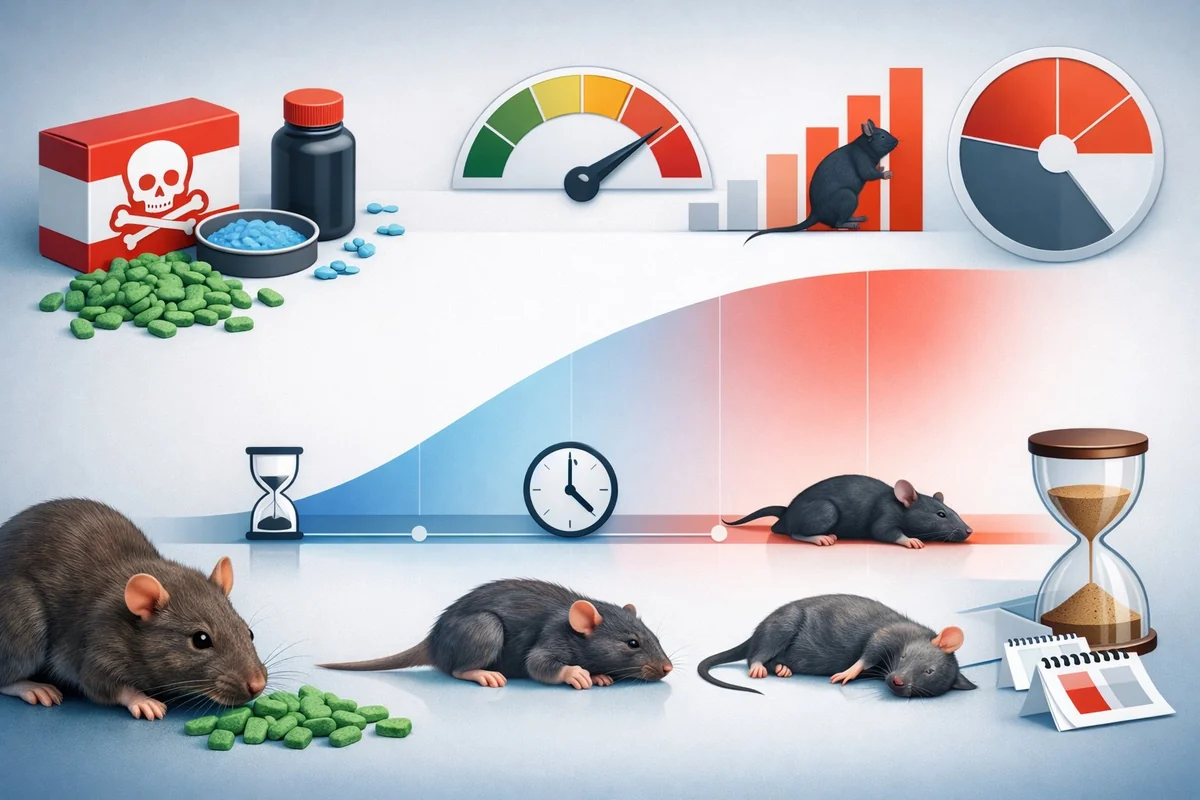

How Long Does Rat Poison Take to Work? Timing & Control Timeline 2026
Wondering how long rat poison takes to work? Learn about typical timelines, what affects results, signs it's working, and safer alternatives for effective rat control in 2026.
What Determines How Fast Rat Poison Works
Rat poison timing depends on several factors, from the type of active ingredient to how and where you place the bait. Understanding these variables is the first step toward effective, safe, and timely rat control.
Active Ingredients and Their Modes of Action
The main ingredient in a rat poison dictates both how quickly it acts and how effective it will be against different rat populations. There are two broad families: anticoagulants and non-anticoagulants.
- Anticoagulants like bromadiolone and warfarin interfere with the rat’s ability to clot blood. This process leads to internal bleeding, typically causing death after several days. The slow action is intentional - it reduces bait shyness and lets more rats consume a lethal dose before others die and alarm the colony.
- Non-anticoagulants such as bromethalin and cholecalciferol attack the nervous system or disrupt calcium balance. These can kill rats faster - sometimes within 24-48 hours - but their effectiveness depends on the amount consumed and the specific rat species.
- In some cities, rats have developed resistance to first-generation anticoagulants. This means the active ingredient you choose can directly affect whether you see results at all.
Rat Feeding Behavior and Bait Consumption
Even the best poison won’t work if rats don’t eat enough of it. Rats are naturally wary of new foods, a trait called neophobia. This means they might nibble at a new bait for several nights before taking a full meal.
Bait palatability plays a role too. If the bait isn’t attractive or is placed in the wrong spot, rats may ignore it or eat just enough to make them sick - not enough to kill them. Sub-lethal doses can actually teach rats to avoid that bait in the future, a problem known as bait shyness.
In practice, how long rat poison works is a combination of chemical action, rat behavior, and your application strategy. That’s why even with a fast-acting poison, results aren’t always immediate. For more on effective baits and traps, see Best Rat Traps and Baits 2026.
For a broader view on controlling rats in homes and businesses, check out our detailed Rat Control guide.
| Item | ★Speed of Action | ★Ease of Use | Monitoring Needed | ★Safety Precautions | Best For | Effectiveness |
|---|---|---|---|---|---|---|
| Anticoagulant Baits | 3-7 days (delayed effect) | Easy | Moderate | High (toxic to pets & wildlife) | Widespread infestations; standard for residential use | High (industry standard when multiple feedings occur) |
| Acute Toxin Baits | 4-48 hours (fast-acting) | Medium | High | Very High (extremely toxic, accidental risk) | Situations requiring rapid knockdown; experienced users | Very High (single feeding lethal) |
| Non-Toxic Control (Traps & Exclusion) | Variable (instant to several days) | Medium | Very High (daily checks required) | Low (little to no chemical hazard) | Pet/child-safe environments, small infestations, sensitive locations | Moderate (depends on trap placement & skill) |
Typical Timeline: How Long Rat Poison Takes to Kill
If you’re hoping for overnight results, you’ll probably be disappointed. The rat control timeline varies depending on the poison type, environmental factors, and how the bait is used in your home.
Timeframes for Common Rat Poison Types
- First-generation anticoagulants (e.g., warfarin): Expect visible results in 5–7 days after a lethal dose is consumed. These require multiple feedings and are less effective where rats have resistance.
- Second-generation anticoagulants (e.g., brodifacoum, bromadiolone): Can kill rats in 2–4 days after a single feeding. These are more potent and work faster, but are also riskier for pets and wildlife.
- Non-anticoagulants (e.g., bromethalin, cholecalciferol): Can act within 24–48 hours, especially if rats eat a large enough dose in one sitting. However, partial feeding or low doses can reduce their effectiveness and even cause resistance over time.
Factors That Can Extend or Shorten the Timeline
- Alternative food sources - garbage, pet food, unsealed pantry items - can delay or prevent rats from eating enough poison.
- Environmental factors like high humidity or heat can spoil bait, making it less appealing and slowing results.
- Larger rat populations may take longer to control, especially if bait is not placed along all active runways and entry points. Incomplete coverage can leave parts of the colony untouched for weeks.
The bottom line: Most users see a clear decrease in rat activity within 2–7 days of proper baiting, but full eradication often takes longer if conditions are not ideal.
Signs Rat Poison Is Working (and When to Worry)
How can you tell if the poison is actually doing its job? Observing both rat behavior and changes in activity levels will give you the clearest answer. Expect a few telltale signs, but don’t rely on just one.
Expected Behavioral Changes in Rats
- Lethargy, stumbling, and disorientation are common in poisoned rats. You may notice them wandering in open areas they’d usually avoid, especially during the day.
- Thirsty rats often seek water after ingesting poison, so increased activity near sinks, toilets, or pet water bowls is a red flag that the bait is working.
- While some rats die in plain sight, most crawl into hidden spots (walls, crawlspaces) to die. You may see a few carcasses, but many will be out of view.
When You Should See Results - and Red Flags If Not
- You should notice a drop in sightings, noise, and fresh droppings within 3–7 days if the poison is effective and placed well.
- If you’re still seeing active rats, new gnaw marks, or droppings after one week, you may be dealing with bait avoidance, under-dosing, or resistance.
- The smell of decaying rats is unpleasant but can signal that poison is working. However, it also means you’ll need to address odor and possible health hazards from hidden carcasses.
Comparing Rat Poison Types: Pros, Cons, and Timing
Choosing the right poison isn’t just about speed. The best option for your home also depends on the size of the infestation, safety concerns, and potential for resistance. Here’s how the main types stack up for rat control timeline and effectiveness.
Anticoagulant vs Non-anticoagulant Poisons
- Anticoagulant baits are slower but offer the advantage of colony-wide exposure. Because rats don’t die immediately, others in the group are less likely to avoid the bait.
- Non-anticoagulant poisons work faster but require more careful bait placement to ensure all rats get a lethal dose. In large or scattered infestations, some rats may not eat enough before others die and alarm the colony.
- Resistance to first-generation anticoagulants is now common in some cities. This makes non-anticoagulant options more important, but also riskier for pets and wildlife due to higher toxicity and lack of an antidote.
Single-Feed vs Multiple-Feed Formulas
- Single-feed poisons like brodifacoum are powerful - one meal is enough for a lethal dose, meaning faster knockdown. But these are highly toxic to non-target animals and require tamper-resistant bait stations.
- Multiple-feed poisons (mostly first-generation anticoagulants) require several meals over a few days, which helps for cautious rats but means a slower timeline.
- The trade-off: Single-feed baits are best for quick results in severe infestations, but only when you can guarantee safety for children, pets, and wildlife.
What Affects Rat Poison Effectiveness in Real Homes
Even with the right poison, results depend on how you use it. Here’s what matters most in a typical household setting.
Bait Placement and Accessibility
- Put bait stations directly along walls, behind appliances, and near known rat runs. Rats rarely cross open spaces, so bait in the middle of a room gets ignored.
- Don’t overload with poison in one place. Spread bait stations throughout the infested area for better coverage and faster results.
- Always use tamper-resistant stations if pets or children are present. Accidental exposure is a serious risk.
Competing Food Sources and Sanitation
- Rats will almost always choose familiar food over bait if given the option. Secure all food in sealed containers, clean up crumbs, and remove pet food at night.
- Poor sanitation can undo your efforts. Even if you kill a few rats, others will keep coming as long as food and shelter are available.
- Good sanitation speeds up the rat control timeline and makes poison more attractive, ensuring a higher kill rate in less time.
Rat Species and Resistance Issues
- Norway rats (large, burrowing) and roof rats (smaller, agile climbers) respond differently to certain poisons. Some baits are more effective on one species than the other.
- Urban rat populations in some regions have developed resistance to first-generation anticoagulants. If you’re still seeing activity after a week, resistance could be to blame.
- Choosing the wrong poison or failing to match the bait to your local rat species can stall your efforts for weeks or months.
Safety and Legal Considerations for Home Use
Rat poison is dangerous - not just for rats. It’s critical to understand the risks and legal restrictions before using any chemical control method in your home.
Risks to Pets, Children, and Non-Target Wildlife
- Second-generation anticoagulants are especially hazardous. Secondary poisoning can occur if pets or wildlife eat dead or dying rats.
- Always use tamper-proof bait stations and keep all poison out of reach. Even brief exposure can be fatal for small animals or children.
- Improper disposal of unused bait or dead rats can contaminate the environment and harm local wildlife.
Local Regulations and Product Restrictions
- As of 2026, some of the most potent poisons are restricted or banned for consumer use in several states and cities. Check your local laws before purchasing or applying any rodenticide.
- Fines and liability can result from improper use, storage, or disposal. Environmental contamination is a growing concern with second-generation poisons.
- In some areas, you may be required to use snap traps, electronic traps, or non-toxic alternatives instead of chemical baits.
Alternatives to Poison: When and Why to Consider Other Methods
Poison isn’t always the answer - and in many situations, it shouldn’t be your first line of defense. Here’s what works instead, and when you should make the switch.
Traps, Exclusion, and Integrated Pest Management
- Snap traps and electronic traps provide immediate results and let you remove carcasses directly, avoiding the problem of hidden dead rats and secondary poisoning.
- Exclusion means sealing every possible entry point, from gaps under doors to roofline vents. It’s the single most important step for long-term success - no poison will prevent new rats from coming in.
- Integrated Pest Management (IPM) combines sanitation, exclusion, monitoring, and targeted trapping or baiting. IPM is now the standard in professional pest control because it’s sustainable, effective, and safer for homes with pets or children.
When Poison Is Not the Best Choice
- Homes with pets, children, or regular wildlife visitors face higher risks from rodenticides, even when using bait stations. Non-poison methods are usually the safer call.
- For small, isolated infestations - or when you can’t access where dead rats might end up - traps are more effective and give you direct proof of success.
- Legal or ethical restrictions may also rule out poison entirely in some settings, especially near water, food storage, or protected wildlife areas.
Common Questions About Rat Poison Timing
❓ Frequently Asked Questions
How long does rat poison take to work?
How long does rat poison take to work?
Rat poison typically takes 2 to 7 days to kill rodents after ingestion. Most anticoagulant baits require multiple feedings for full effect, while some newer formulas act faster. However, results can vary based on the poison type, bait consumption, and the size of the rat population.
What factors affect how quickly rat poison works?
What factors affect how quickly rat poison works?
Several factors influence how quickly rat poison works:
- Poison type: single-feed poisons act faster than multi-feed types
- Amount eaten: higher consumption leads to quicker results
- Rat size and health: smaller or weaker rats succumb faster
- Environmental conditions: food availability and competition can affect bait uptake
Always follow label instructions for best results.
How do I safely use rat poison in my home?
How do I safely use rat poison in my home?
To use rat poison safely:
- Place bait stations in areas only accessible to rodents, avoiding spots near children or pets
- Wear gloves to prevent direct contact
- Secure all baits inside tamper-resistant stations
- Monitor regularly and remove dead rodents promptly
- Store unused poison in a locked cabinet
Always read and follow manufacturer safety guidelines.
What is the difference between anticoagulant and non-anticoagulant rat poisons?
What is the difference between anticoagulant and non-anticoagulant rat poisons?
Anticoagulant rat poisons work by preventing blood clotting, leading to internal bleeding over several days. Non-anticoagulant poisons, like bromethalin or cholecalciferol, disrupt nervous or metabolic systems and can act faster. However, non-anticoagulants may be more toxic to non-target animals and require careful use.
How often should I check and replace rat poison bait stations?
How often should I check and replace rat poison bait stations?
Check bait stations every 2 to 3 days at first, then weekly as activity decreases. Replace consumed or contaminated bait promptly to maintain effectiveness. Most users find that regular checks help monitor rodent activity and prevent accidental exposure to pets or children.
When is the best time to use rat poison for effective control?
When is the best time to use rat poison for effective control?
The best time to use rat poison is during cooler months when rats seek indoor shelter and food is scarce, increasing bait uptake. Nighttime placement is ideal as rats are nocturnal. Monitoring activity patterns with tracking powder or cameras can help time applications for maximum effect.
What should I look for when choosing a rat poison product?
What should I look for when choosing a rat poison product?
When choosing rat poison, consider these key factors:
- Active ingredient: determines toxicity and speed
- Bait formulation: blocks, pellets, or soft baits suit different sites
- Tamper-resistant packaging: protects kids and pets
- Secondary poisoning risk: lower risk options are safer for pets
Compare several products and read user reviews for proven results.
Key Takeaways: What This Means for Your Rat Problem
Rat poison timing depends on chemistry, rat behavior, and your own application. For most products, expect a noticeable drop in activity within 2–7 days if you’re using the right bait and following best practices.
If you don’t see improvement after a week, it’s time to reassess - check your bait placement, remove alternative food sources, or try a different approach. Ongoing monitoring and prevention are critical to avoid a new infestation.
Balance speed with safety. Faster poisons can solve urgent problems but increase risk to pets, children, and wildlife. Combining sanitation, exclusion, and targeted control offers the best long-term results.
Always follow label directions and local laws for safe, effective rat control in 2026.
Related Articles

Best Rat Traps and Baits 2026: Top Picks for Every Infestation
Find the best rat traps and baits of 2026 for fast, safe, and affordable DIY rat control. Compare top snap, electric, live-catch, poison, and natural products to eliminate rats from your home.

Best Rodent-Proofing Materials and Products 2026: Steel Wool, Mesh, Kits, and More
Find the best rodent-proofing materials, products, and exclusion kits for 2026. Compare steel wool, mesh, sealants, vent covers, and natural deterrents to keep your home rodent-free with expert DIY recommendations.

Complete Guide to Pest Prevention in Homes: Stop Pests in 2026
Protect your home in 2026 with this complete pest prevention guide. Discover proven DIY methods, room-by-room tips, safe solutions for families, and expert advice to stop pests before they start.
Best Chemical Pesticides for Home Use 2026: Safe, Effective, and Affordable Options
Discover the best chemical pesticides for home use in 2026. Compare top-rated baits, sprays, gels, and natural options for ants, roaches, fleas, and more. Find safe, effective, and budget-friendly pest control solutions for every room.