
How to Bait Roaches: Placement, Amounts and Why Bait Fails
How to bait roaches: which bait type to use, where to put gel and stations in each room, how much to use, how long it takes and what to do when roaches ignore it.
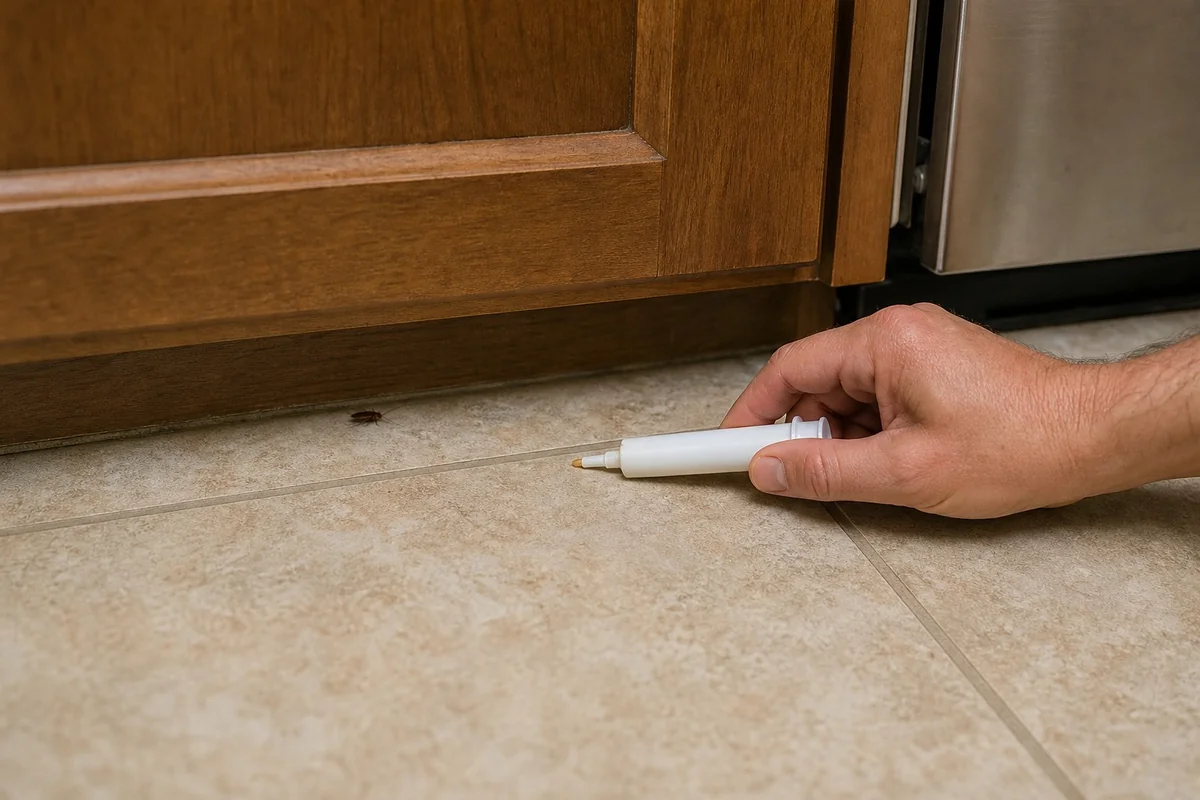
To bait roaches, you place a slow-acting insecticide mixed with food exactly where roaches hide, in many small amounts, and leave it undisturbed. Roaches eat it and die over the following days, and some baits spread further through their droppings. Placement, freshness and removing other food decide whether bait works.
How Roach Bait Works
Roach bait is food laced with a slow-acting insecticide. Roaches find it during their nightly foraging, eat it and return to their hiding spots before they die, so the bait reaches the crowded cracks and voids where sprays never go. University of California IPM's cockroach guide calls baits a primary control tool and lists active ingredients such as abamectin, boric acid, fipronil, hydramethylnon, indoxacarb, imidacloprid and clothianidin.
The same guide notes that baits are slow-acting, with results taking about 7 days or longer, and that they do not attract roaches from far away. That second point is the key to baiting: the bait has to sit in or right next to the places roaches already live.
Baiting is one part of the whole plan in our guide on how to get rid of roaches, and the getting rid of roaches section links the room and situation guides.
Types of Roach Bait
Roach baits come in a few forms, and the best one depends on where you need to put it and who else lives in the home. The table compares them.
| Method | How It Is Used | Strength | Watch For |
|---|---|---|---|
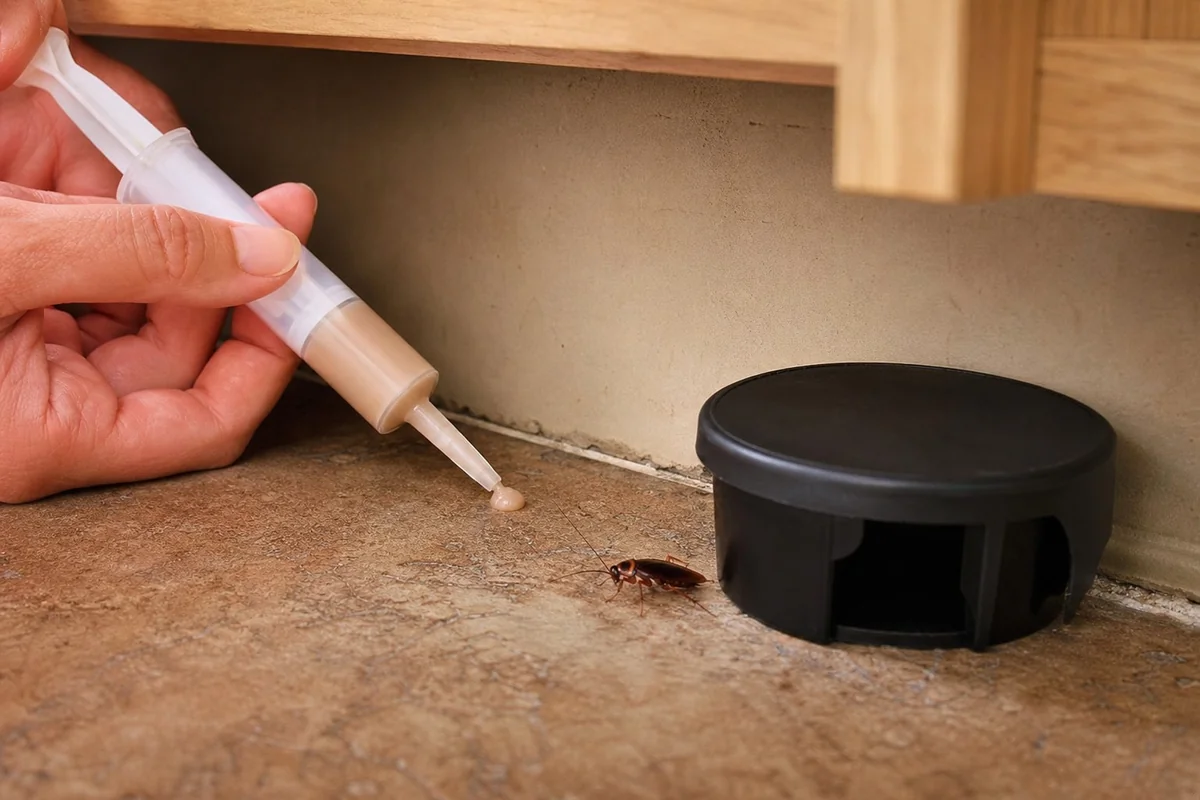
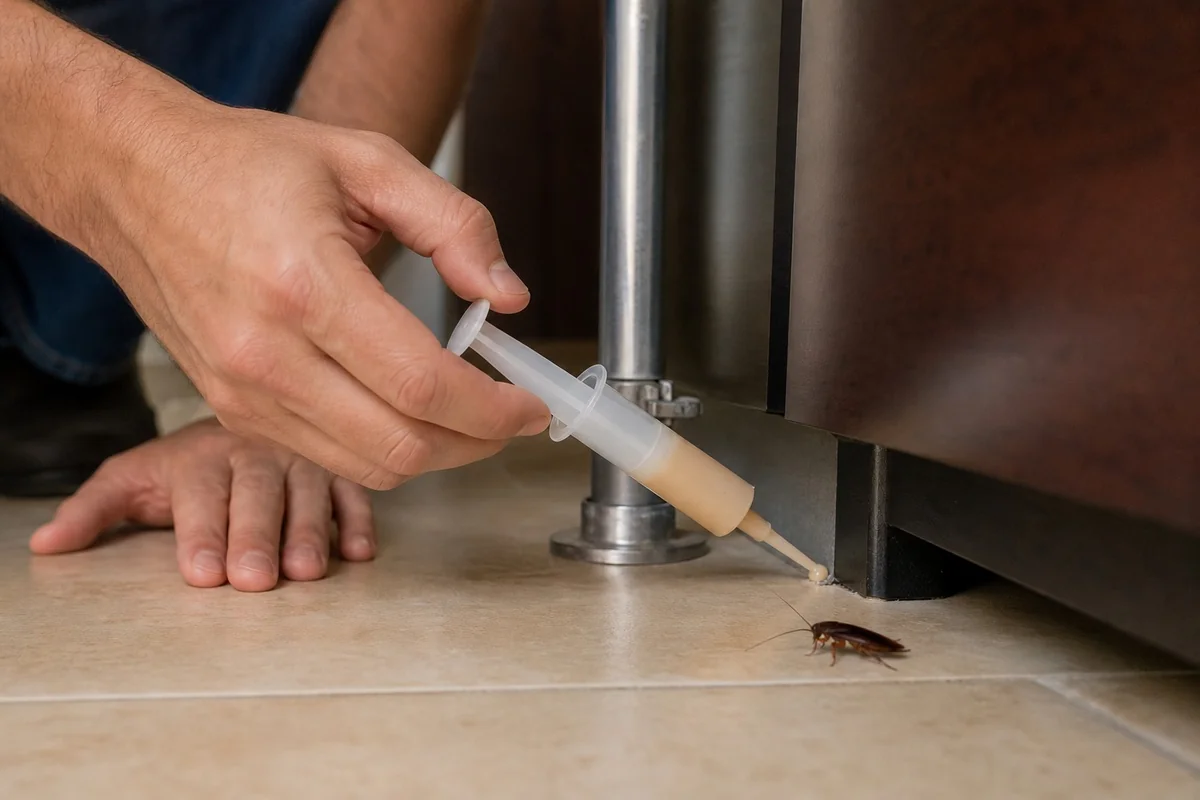
| Gel bait | Small dabs from a syringe into cracks and crevices | Fits tiny gaps; many placements from one tube | Dries out; exposed to children and pets |
| Bait stations | Set flush against walls, corners and cabinet edges | Tamper-resistant; lasts many months | Must sit right next to hiding spots |
| Granular bait | Scattered in voids, garages and outdoor sites per label | Covers larger areas | Not for open indoor floors |
| Homemade boric acid dough | Pea-sized balls in corners and cracks | Cheap and easy to make | Hardens; must be kept from children and pets |
Gel is the most flexible, since it goes into cracks no station fits, but it is exposed. Stations are tamper-resistant and confine the insecticide, which makes them the safer choice on floors and in lower cabinets in homes with children or pets; UC IPM notes they stay effective for many months. Many homes use both: gel deep in cracks, stations in open spots. Granular baits are mainly for voids, garages and outdoor sites listed on the label.
Where to Put Roach Bait
Find the hiding spots first. Look for droppings, smears, egg cases and shed skins with a flashlight, or turn the light on suddenly at night and watch where roaches run. Those cracks are your bait sites.
- Kitchen: cabinet hinges, the back corners of shelves, cracks around the sink, under and behind the fridge, stove and dishwasher, and around small appliances.
- Bathroom: under the vanity around pipe openings, behind the toilet and along cracks where the tub meets the wall.
- Other rooms: near droppings in closets, around electronics and furniture where brownbanded roaches hide.
- Basement and garage: damp corners, around floor drains and near doors to the outside.
Put stations flush against walls, corners and cabinet edges, where roaches travel, rather than in the open. A station in the middle of a shelf is easy to see but rarely visited.
How Much Bait to Use
Use many small placements rather than a few large ones. Pea-sized dabs of gel spaced along a crack give more roaches a chance to feed than one big blob, which also dries out faster. A heavily infested kitchen can need dozens of placements, with the most under the sink and around appliances.
Check the bait every few days at first. Where a dab has been eaten, add more; where gel has dried into a hard bead, replace it, since UC IPM notes gel may need reapplication as it hardens. Stations last longer, but empty or dusty ones should be replaced.
Why Roach Bait Stops Working
When bait fails, it is usually for one of a few reasons:
- Competing food: crumbs, grease and pet food give roaches a better meal; UC IPM notes that removing other food greatly improves bait results.
- Contaminated bait: sprays or cleaners applied near bait can make roaches avoid it, so keep both away from bait sites.
- Bait in the wrong place: bait more than a short distance from hiding spots is rarely found.
- Old bait: dried gel and empty stations stop attracting roaches.
- Bait aversion or resistance: some German cockroach populations avoid certain bait ingredients or tolerate certain insecticides after long use of the same product.
- A steady supply of new roaches: in apartments, roaches from neighboring units keep replacing the ones you kill.
The fix for the last two is to switch to a bait with a different active ingredient, add more placements and look for the source. Brownbanded cockroaches are also harder to control with baits, according to UC IPM, so identify the species if bait seems ignored.
Homemade Roach Bait
Boric acid mixed into a flour, sugar and milk dough is the classic homemade bait, and it works on the same principle as store bait. It needs the same placement rules and the same care, since boric acid is harmful if eaten by children or pets.
Mixes of baking soda and sugar are often shared online, but we found no good evidence that they kill roaches. Commercial gel and stations are more consistent, and they are sealed or measured in a way homemade bait is not.
If you do use homemade dough, roll small balls rather than one lump, label the container and replace the balls once they harden, since roaches lose interest in dried bait just as they do with old gel.
Common Questions About Baiting Roaches
How long does it take roach bait to kill roaches?
How long does it take roach bait to kill roaches?
A roach that eats bait usually dies within a few days, and the infestation shows a clear drop in about a week or longer, according to UC IPM. Full control takes several weeks of keeping bait fresh, because eggs keep hatching and new roaches need time to find it.
Should I leave dead roaches out when using bait?
Should I leave dead roaches out when using bait?
No, clean them up. Vacuum dead roaches daily, since their bodies and droppings carry allergens and bacteria. Leave the bait itself and the area right around it undisturbed, and avoid wiping the bait sites with cleaners, which can make roaches avoid the bait.
Why is my roach bait not killing roaches?
Why is my roach bait not killing roaches?
Usually the bait is too far from hiding spots, other food is easier to get, the gel has dried out, or sprays nearby are repelling roaches. If all of that is fixed and roaches still ignore it, switch to a bait with a different active ingredient and check for roaches coming from next door.
Can I use gel bait and stations together?
Can I use gel bait and stations together?
Yes, and most homes benefit from both. Use gel in cracks, hinges and gaps that stations cannot fit, and stations on floors and in lower cabinets where children or pets might reach. Using baits with two different active ingredients also covers roaches that avoid one of them.
Is roach bait safe in a kitchen?
Is roach bait safe in a kitchen?
Most roach baits are labeled for kitchens when placed in cracks and crevices or in stations, away from food and food-prep surfaces. Read the label, keep gel off countertops and dishes, and use stations where children or pets could touch exposed gel.
Key Takeaways
Roach bait works because roaches eat it where they hide and die days later, but only when it sits right at their hiding spots. Many small dabs of gel in cracks and stations flush against edges, refreshed as they are eaten or dry out, reach far more roaches than a few large placements.
Remove competing food, keep sprays and cleaners away from bait and expect results in about a week. If roaches stop feeding, switch to a different active ingredient and check for a source in a neighboring unit or cluttered room.
Tonight, find the three spots with the most droppings and put five pea-sized dabs of gel at each.
Related Articles
How to Get Rid of Roaches in a Car: Clean, Bait and Trap
The best way to get rid of roaches in a car: empty it, vacuum seat tracks, mats and trunk, set enclosed bait stations and traps, and find the source. Skip foggers.
Best Roach Killers for Apartments: Gels, Stations and Tablets
The best roach killers for apartments: Vendetta Plus gel with a growth regulator, TERRO gel to rotate, Combat and Raid stations and Harris tablets for renters.
How to Get Rid of Roaches: Baits, Boric Acid and a Working Plan
How to get rid of roaches for good: identify the species, clean and seal, use gel bait and boric acid, and skip sprays and bug bombs that scatter them.
How to Get Rid of Roaches in an Apartment: A Tenant's Plan
The best way to get rid of roaches in an apartment: bait your unit, dust behind appliances, seal gaps shared with neighbors and report to management in writing.