
How to Get Rid of Roaches: Baits, Boric Acid and a Working Plan
How to get rid of roaches for good: identify the species, clean and seal, use gel bait and boric acid, and skip sprays and bug bombs that scatter them.
To get rid of roaches, remove the food, water and clutter they live on, put gel bait and bait stations right where they hide, and dust a thin film of boric acid into wall voids and under appliances. Seal the gaps they use and track progress with sticky traps. Expect results in about a week and full control over several weeks.
Identify the Roach You Have
The best thing to get rid of roaches depends on which roach you have, because the species decide where you treat. University of California IPM's cockroach guide describes four common household species, and a German cockroach in a kitchen cabinet calls for a different plan from an American cockroach coming up a floor drain.
| Species | Adult Size and Look | Where It Lives | What It Means for Control |
|---|---|---|---|
| German cockroach | About 1/2 inch, light brown, two dark stripes behind the head | Kitchens and bathrooms, warm and humid spots | Breeds indoors fast; baits and boric acid inside |
| Brownbanded cockroach | About 1/2 inch, light bands across the body | Warm spots around 80°F: behind pictures, inside appliances, furniture | Spread through the home; harder to control with baits |
| Oriental cockroach | About 1 1/4 inches, nearly black, cannot fly | Cool, damp basements, garages, drains, meter boxes | Mostly outdoor; seal entries and fix moisture |
| American cockroach | About 2 inches, reddish brown | Sewers, storm drains, meter boxes, warm basements | Comes in through drains and gaps; seal and bait entry areas |
German cockroaches cause most indoor infestations, and they are the reason roach problems escalate so quickly. For the wider picture of crawling pests, see our overview of ants, roaches and other crawling bugs.
Why Roaches Spread So Fast
Roaches hide during the day in warm, dark, moist places and come out at night to feed, so the few you see are a small share of the population. UC IPM notes that a German cockroach egg case holds about 30 young, and that one female and her offspring can produce more than 30,000 roaches in a year under good conditions.
That breeding rate is why sudden sightings usually mean an established population, not a lone visitor. Roaches also ride in on boxes, used appliances, furniture and grocery bags, so a clean home can still get them from a delivery or a neighbor's unit.
Look for the signs before you treat: fecal specks like ground pepper or dark smears along edges, shed skins, egg cases and a musty smell in cabinets. Where you find the most droppings is where your bait belongs.
Roach Control Methods Compared
Every roach product falls into a few groups, and they do very different jobs. The table compares the main options.
| Method | Reaches Hidden Roaches? | Speed | Best Use |
|---|---|---|---|
| Gel bait and bait stations | Yes, roaches eat it where they hide | About a week or longer | The core of any indoor plan |
| Boric acid dust | Yes, picked up while grooming | About a week or longer | Wall voids, under appliances, pipe gaps |
| Sticky traps | No | Immediate catch | Finding hiding spots and tracking progress |
| Contact sprays | No, and can scatter roaches | Immediate | Killing a roach you see |
| Foggers and bug bombs | Rarely; fog does not reach cracks | Hours, short-lived | Not recommended for roaches |
| Cleaning and sealing | Starves and blocks them | Weeks | Makes every other method work |
UC IPM puts it plainly: pesticides alone will not solve a cockroach problem, and baits work far better once other food is gone. The getting rid of roaches section links our room-by-room and product guides.
How to Get Rid of Roaches Step by Step
- Find where they hide: at night, turn on the lights in the kitchen and bathroom and watch where roaches run; check under the sink, behind the fridge and stove, and in cabinet corners for droppings.
- Set sticky traps: place them along floor-wall edges, behind appliances and in cabinets, and count the catch after a day or two.
- Clean deeply: vacuum crumbs and droppings from cracks, degrease the stove, under the fridge and the toaster, and empty the trash nightly.
- Remove food and water: store food in sealed jars or containers, put pet food away at night, fix leaks and dry the sink before bed.
- Clear clutter: get rid of cardboard boxes, paper bags and stacks of newspaper, which roaches use as shelter.
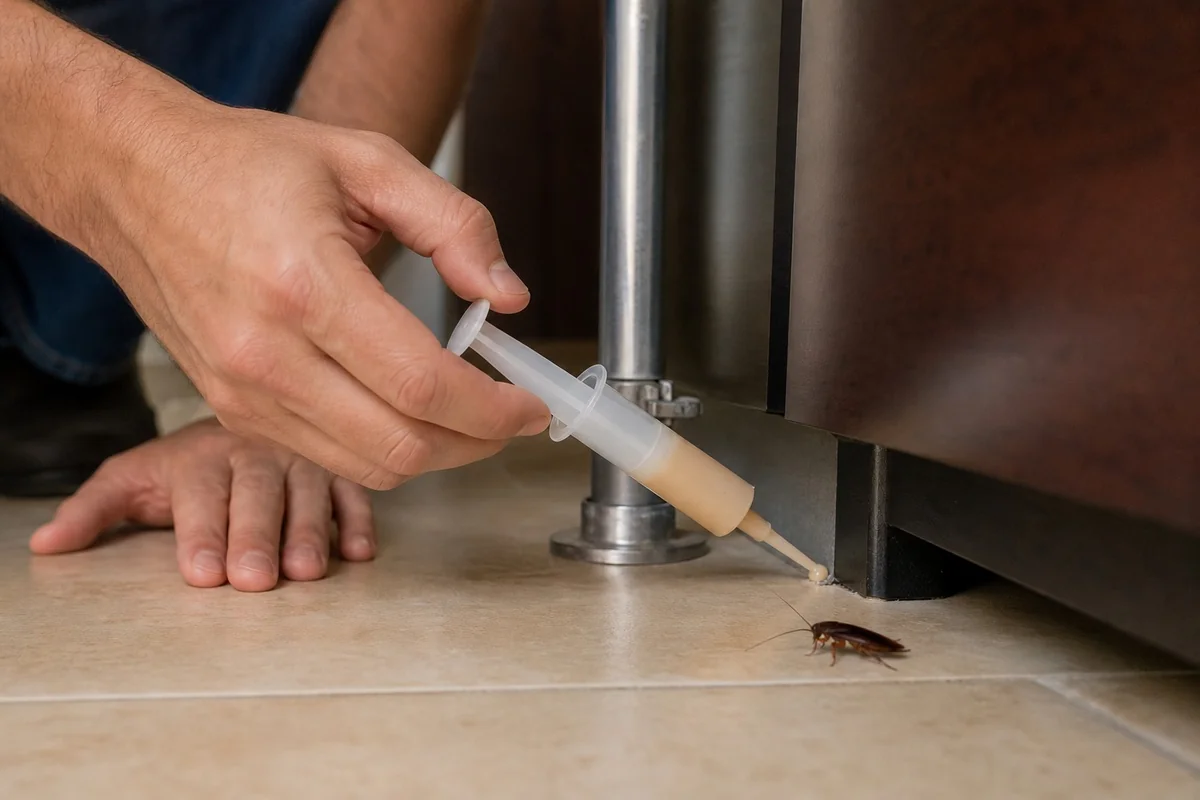
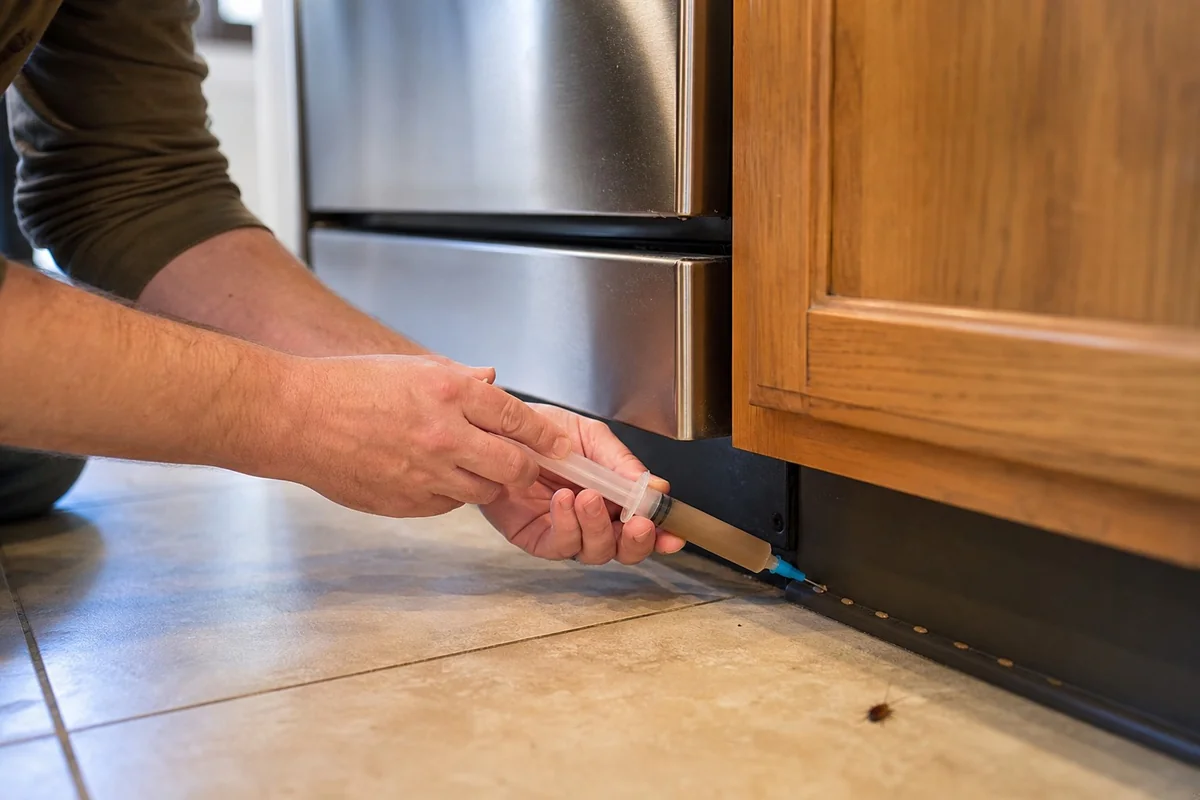
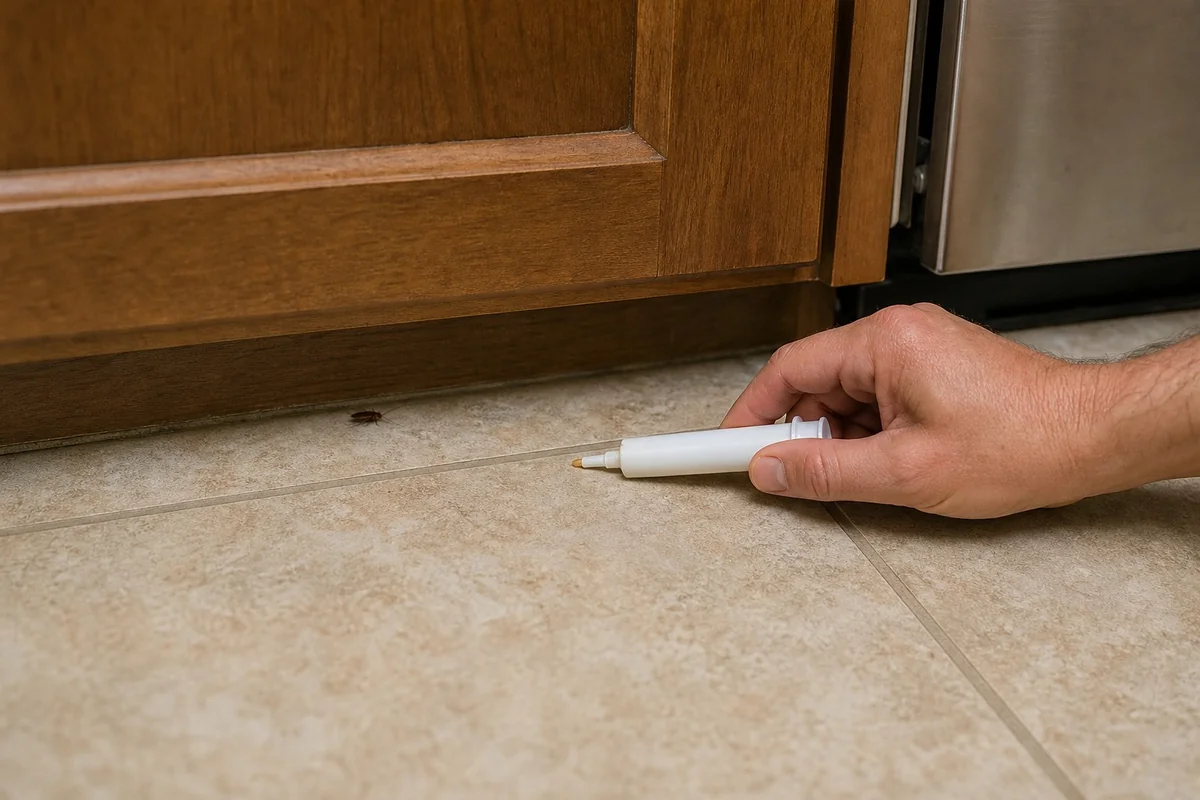
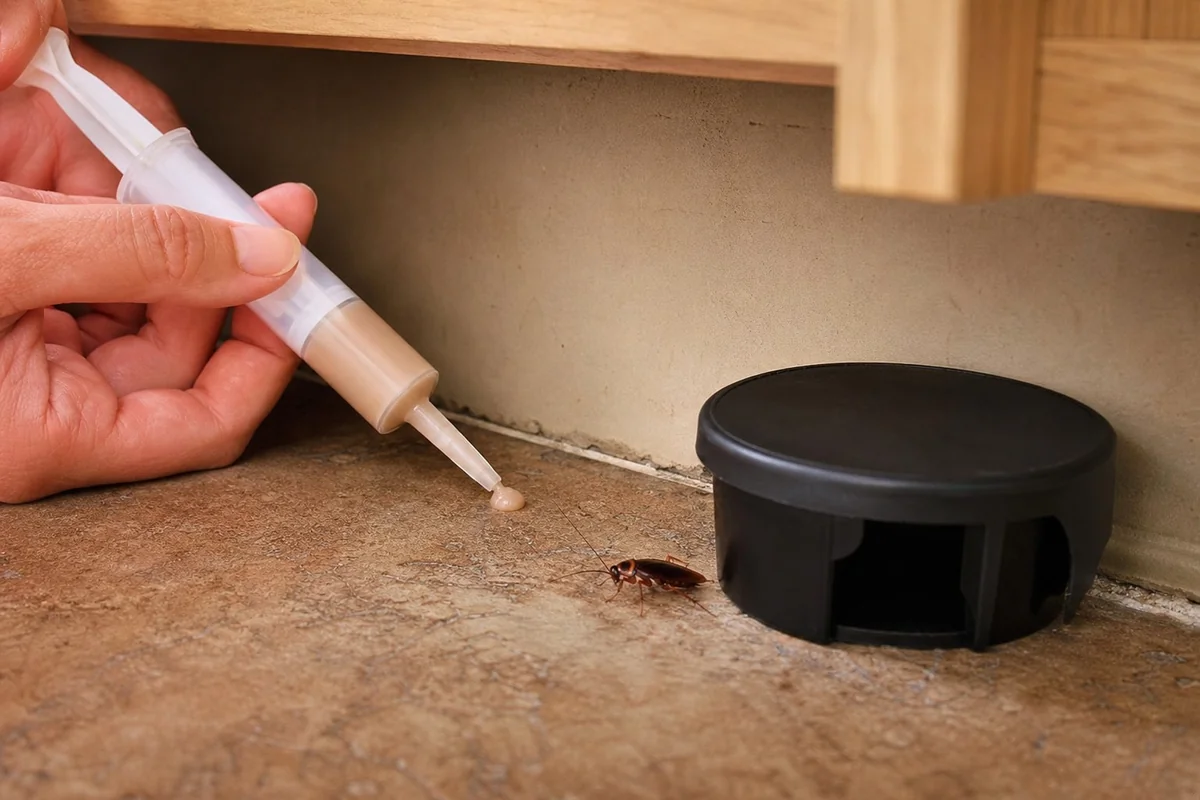
- Apply gel bait: put small dabs in cracks and corners near droppings and trap hot spots, under sinks, at cabinet hinges and behind appliances.
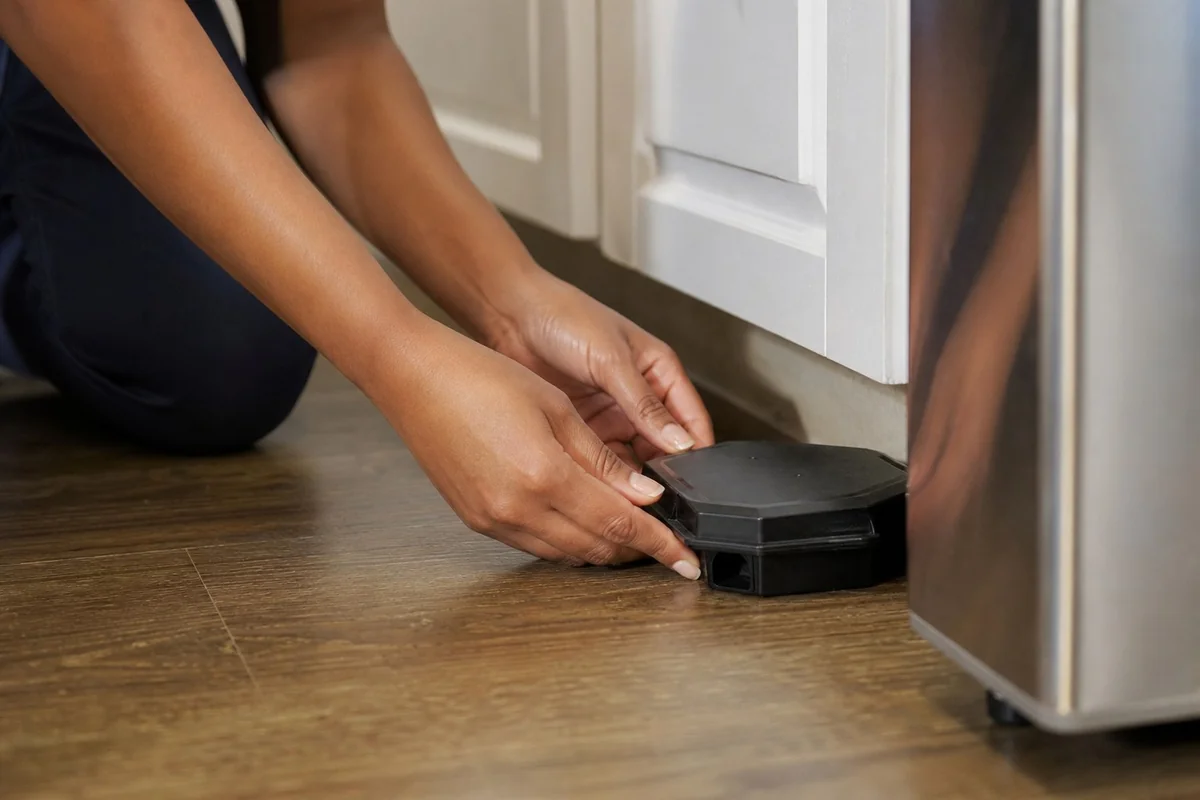
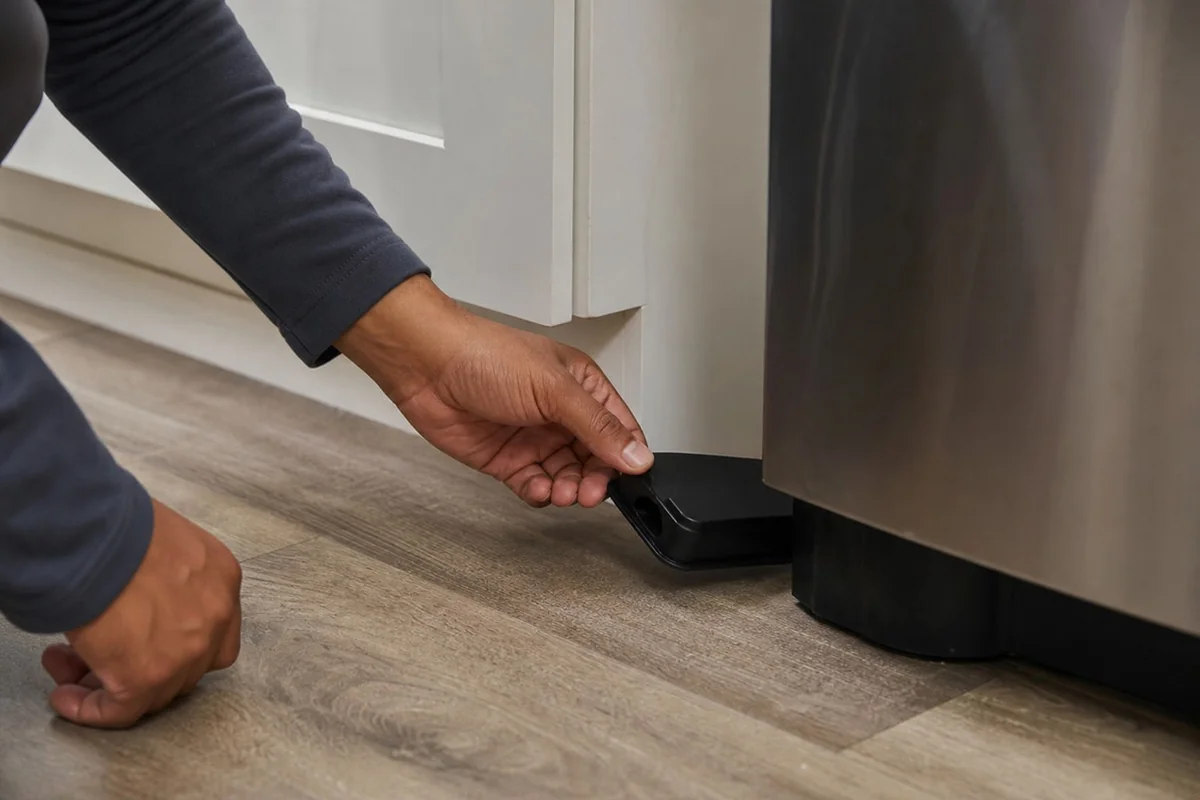
- Place bait stations: add stations under appliances, along walls and inside cabinets, where children and pets cannot reach them.
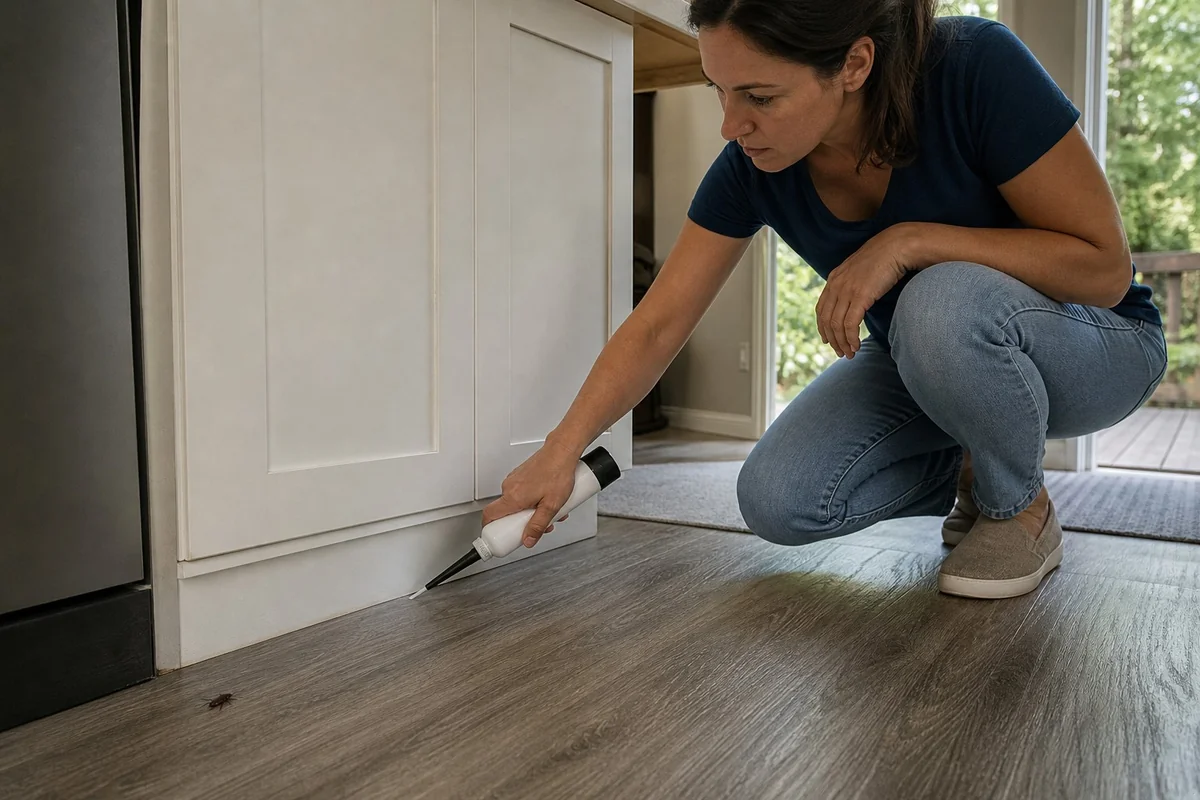
- Dust the voids: puff a thin film of boric acid under the fridge and stove kick panels, behind the sink and around pipe openings.
- Seal the gaps: caulk cracks, close holes around pipes and add door sweeps once the population drops.
- Monitor and refresh: check traps weekly, add gel where it has been eaten and switch to a different bait if roaches stop taking it.
Quick Checklist
How to get rid of roaches indoors with cleaning, bait, boric acid and sealing.
- Warning: Keep baits away from children and pets.
- Warning: Thin film only; keep off food surfaces.
How to Use Roach Bait So It Works
Baits are the main tool for indoor roaches. UC IPM lists gels, pastes, granules and bait stations with active ingredients such as abamectin, boric acid, fipronil, hydramethylnon, indoxacarb and imidacloprid, and notes that baits are slow-acting, taking 7 days or longer to show results.
Placement decides whether bait works, because roaches do not travel far to find it. Put bait in or right next to the places they hide, near droppings, rather than in the open middle of a counter. Small dabs of gel in many spots beat a few large blobs, and gel that has dried out needs replacing.
Keep sprays and cleaners off baited spots, since they can contaminate the bait or kill the roaches before they feed. Our guide on how to bait roaches covers placement room by room and what to do when roaches stop eating a bait.
Boric Acid Dust in the Right Places
Boric acid works as a dust as well as a bait ingredient. Roaches walk through a thin film, pick it up on their bodies and swallow it while grooming, and it keeps working as long as it stays dry. UC IPM recommends thin films in cracks and crevices, under refrigerator and stove kick panels, in voids under sinks and around pipe openings.
Thin is the key word. A visible pile of powder makes roaches walk around it, while a barely visible film is what they cross. The National Pesticide Information Center's boric acid fact sheet rates it low in toxicity to people but harmful if eaten, so keep it out of reach of children and pets and away from food surfaces.
Boric acid is for indoor use only in this role. UC IPM warns that it is toxic to plants, so do not dust it outdoors in beds or around foundations.
Why Sprays and Bug Bombs Disappoint
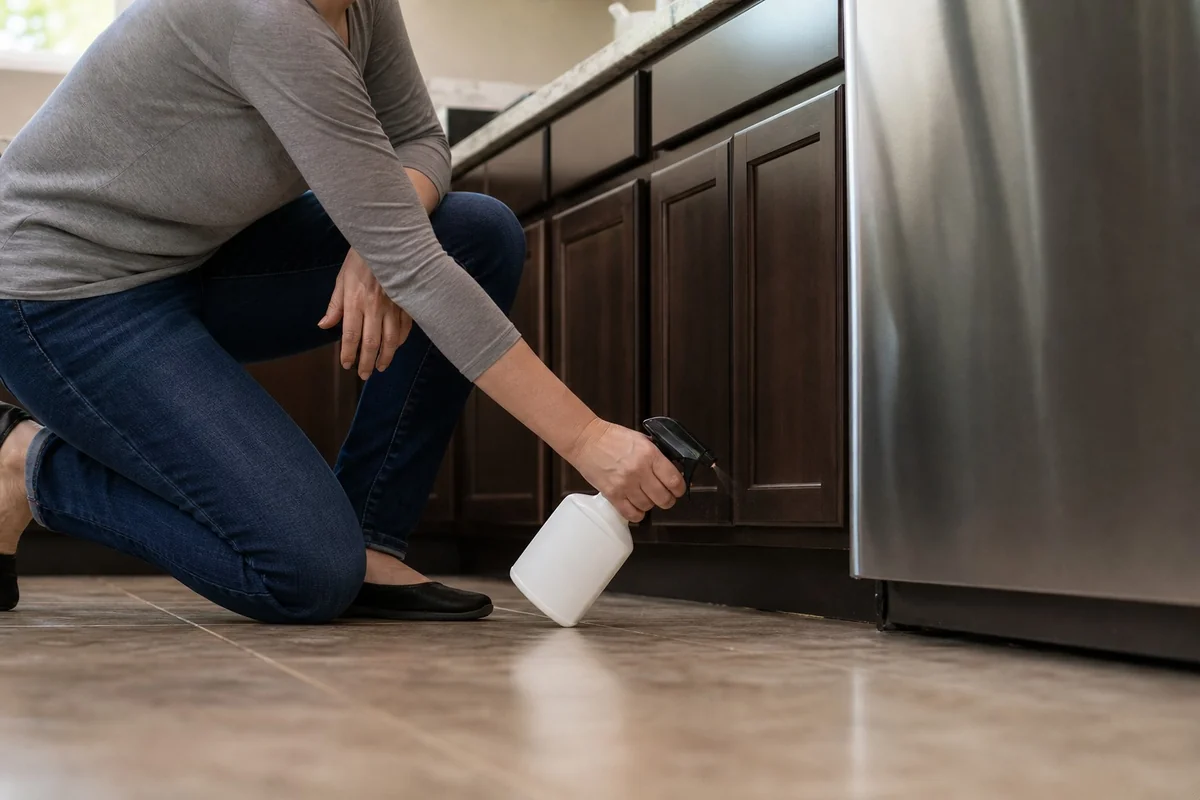
A spray kills the roach it hits and little else. UC IPM notes that sprays give only a quick, temporary knockdown, can drive roaches deeper into walls or into other rooms, and that roaches have developed resistance to many common sprays. Use a spray for the one roach on the wall, not as a treatment.
Foggers, often called bug bombs, are worse. The fog settles on open surfaces but does not reach the cracks where roaches live, and the EPA's fogger safety precautions warn that using too much fogging material has caused accidents and that going back in too early can make people ill. The same guidance limits use to one fogger per room, set at least 6 feet from any flame or pilot light.
If you still want a spray for crack treatments, our guide to the best sprays to get rid of roaches compares the types and when each one is worth using.
Roaches in the House, an Apartment or a Car
The same plan adapts to each place. In a house, the kitchen and bathrooms come first, then the garage and basement for outdoor species; our guide on how to get rid of roaches in the house goes room by room.
Apartments add a complication: roaches move between units through shared walls, plumbing and trash rooms, so your work can be undone by a neighbor's kitchen. Our guide to getting rid of roaches in an apartment covers what tenants can do and when to involve the landlord, and the best roach killers for apartments lists products suited to rentals.
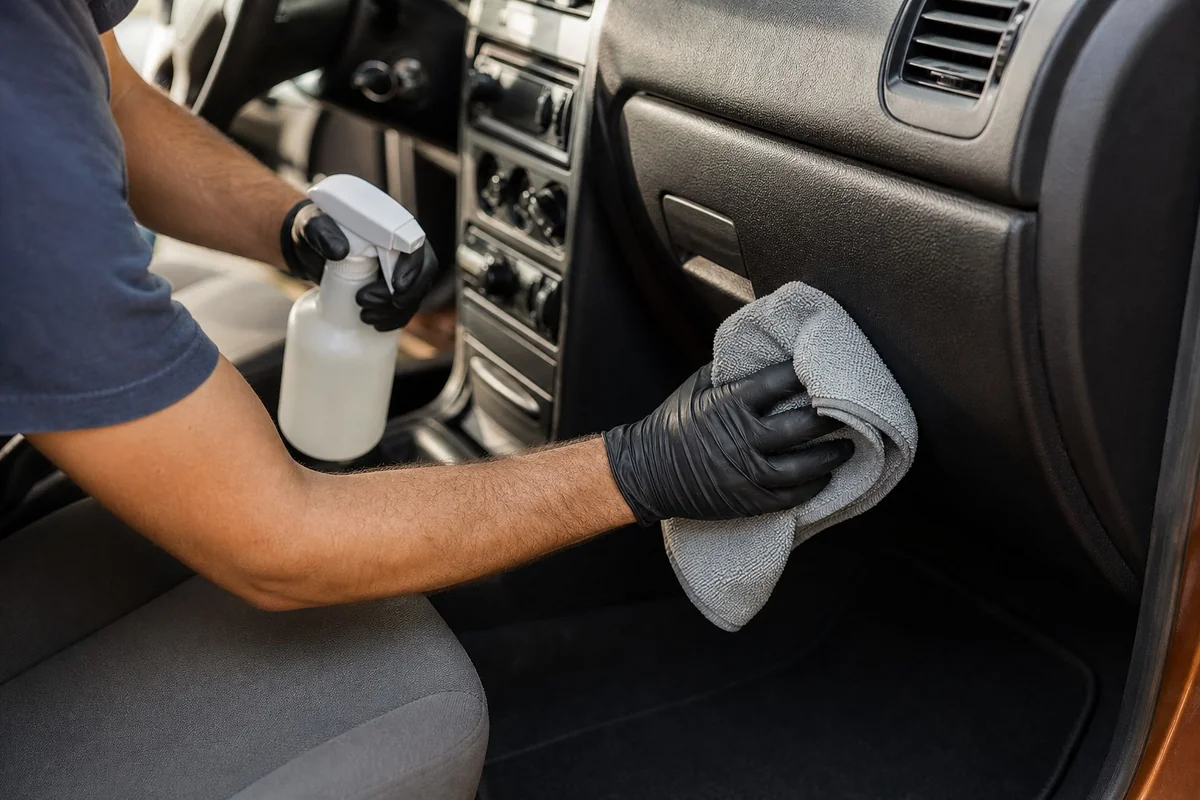
Cars get roaches from food crumbs, bags and boxes, and the fix is mostly cleaning and bait stations; see how to get rid of roaches in a car.
Getting Results Fast
There is no honest way to wipe out a roach population in one night, but you can cut the numbers you see right away. Deep cleaning, putting food away and setting sticky traps the same evening removes their food and catches the wanderers, and UC IPM notes that many roaches are caught within the first 24 hours of trapping.
The bait you place that night starts working as roaches feed, with visible results in about a week. Our guides on getting rid of roaches fast and getting rid of roaches overnight lay out a first-night routine.
Resist the urge to spray every roach you see during that first week. Each one killed on the counter is one that will not carry bait back to the others, and a spray film near your bait can make roaches avoid it.
Home Remedies: Baking Soda, Vinegar and Dish Soap
Baking soda mixed with sugar is a popular roach remedy, but we found no good evidence that it kills roaches, and it is no substitute for a real bait. Vinegar is a useful cleaner for wiping away grease and food residue, which helps, but it does not kill roaches in hiding.
Soapy water, including a mix of Dawn and water, kills a roach that is thoroughly soaked, because soap acts as a contact insecticide. Like any spray, it does nothing to the roaches in the walls. The home remedy that does work is boric acid, used as a thin dust or in a bait, plus relentless cleaning.
Keeping Roaches Out for Good
Once the population is down, sealing and habits keep it down. UC IPM recommends sealing cracks and openings, adding door sweeps and weather stripping, sealing hollow walls and false-bottom cupboards, and keeping trash in containers with tight lids away from doors.
- Fix moisture: repair leaks and improve ventilation where condensation forms.
- Check deliveries: inspect boxes, used appliances and furniture before bringing them in.
- Keep the outside tidy: trim shrubs and ivy from walls and move firewood and lumber away from the house.
- Keep monitoring: leave a few sticky traps in place to catch a new arrival early.
A single roach on a monitoring trap months later is a cue to bait that spot again right away, before a new population can build.
When to Call a Professional
Call a licensed pest control professional when you see roaches in daylight across several rooms, when a month of steady baiting has not reduced trap counts, or when roaches keep arriving from a neighboring unit. UC IPM also notes that boric acid treatment inside hollow walls may require a professional.
Ask any company you hire to rely on baits and crack treatments rather than broad spraying, and to monitor with traps. That approach matches what works for a homeowner and avoids scattering the roaches.
In a rental, tell the landlord or manager early and in writing. Roaches in one unit usually mean roaches in the walls and neighboring units, and treating the whole building at once is far more effective than each tenant fighting alone.
Common Questions About Getting Rid of Roaches
Is it possible to 100% get rid of roaches?
Is it possible to 100% get rid of roaches?
Yes, an indoor infestation can be wiped out, especially German cockroaches in a single-family home. It takes steady baiting, cleaning and sealing for several weeks, plus traps to confirm none are left. In apartments, roaches can return from neighboring units, so building-wide treatment works best.
Can roaches come back after treatment?
Can roaches come back after treatment?
Yes, if the cause is still there. New roaches arrive in boxes, used appliances and grocery bags, or from neighboring units, and leftover egg cases can hatch after the bait is gone. Keep a few sticky traps in place, keep food sealed and re-bait at the first new catch.
What do roach eggs look like?
What do roach eggs look like?
Roaches lay eggs in a capsule called an egg case. It is a small, brown, bean-shaped case with a ridged edge, often stuck in cracks, under furniture or inside appliance motors. German cockroach females carry theirs until the eggs are about to hatch, so you may see it on the roach itself.
Why am I suddenly seeing a lot of roaches?
Why am I suddenly seeing a lot of roaches?
Usually because a hidden population has grown large enough that roaches are pushed into the open, or because something drove them out, such as a neighbor treating their unit, heavy rain flooding drains or a change in the weather. Daytime sightings in particular point to a crowded infestation.
Do all apartments have roaches?
Do all apartments have roaches?
No, but multi-unit buildings give roaches more ways to spread through shared walls, pipes and trash areas, and UC IPM notes indoor infestations are a particular concern in multi-unit housing. A clean unit with sealed gaps and a few monitoring traps can stay roach-free.
Do roaches carry diseases?
Do roaches carry diseases?
They can. UC IPM notes American cockroaches can spread Salmonella and Shigella bacteria, and that indoor roaches are a source of allergens and a risk factor for childhood asthma. Cleaning up droppings with a HEPA-filter vacuum and keeping food sealed reduce the risk.
Key Takeaways
Roaches are beaten where they hide. Bait and thin boric acid dust in cracks, voids and under appliances reach the population, while sprays and foggers only touch the roaches that happen to be in the open.
Cleaning, sealed food, dry sinks and less clutter make every bait work better, and sticky traps show whether you are winning. If trap counts do not fall after a month, or roaches keep coming from a neighbor, bring in a licensed professional who baits rather than sprays.
Tonight, put away all food, wipe the stove and set three numbered sticky traps where you have seen roaches.
Guides in This Topic
 How to Get Rid of Roaches in the House, Room by Room
 How to Get Rid of Roaches Overnight: A Bedtime Routine
 How to Get Rid of Roaches in an Apartment: A Tenant's Plan
 How to Get Rid of Roaches in a Car: Clean, Bait and Trap
 How to Get Rid of Roaches Fast: A One-Evening Blitz That Lasts
 Best Sprays for Roaches: What Actually Ends an Infestation
 How to Bait Roaches: Placement, Amounts and Why Bait Fails
 Best Roach Killers for Apartments: Gels, Stations and Tablets