
How to Prevent Rodents in Garages and Basements (2026 Guide)
Learn step-by-step how to prevent rodents in your garage and basement with proven DIY methods. Discover the best supplies, sealing techniques, and maintenance tips for lasting rodent control in 2026.
To prevent rodents in garages and basements, seal all small gaps, use metal or airtight storage, eliminate clutter, and control moisture. This process takes a weekend and basic DIY skills. Consistent upkeep and choosing the right materials are key to keeping mice and rats out for good.
How Rodents Invade Garages and Basements
Rodents like mice and rats are masters at finding their way into garages and basements. Most homeowners don't realize that even a 1/4 inch gap is big enough for mice to squeeze through. That means a pencil-sized hole is an open door to them.
Garages and basements tend to be less visited and more cluttered than your main living areas. This makes them ideal for rodents looking for food, water, and a safe place to nest. Understanding how they get in is the first step to stopping them for good.
Common Entry Points to Watch For
Start by checking for gaps around doors, especially where the garage door meets the floor. The weatherstripping often wears down, leaving enough space for a mouse to squeeze in. Doors leading from the garage to the house should also close tightly with no visible light around the edges.
Foundation cracks - often found near corners or where the concrete meets wood - are another favorite. Unsealed utility lines (like for gas, water, or electrical) create hidden access points. Don’t forget floor drains and dryer vents; these are often overlooked but can provide a direct highway into your home.
Why Garages and Basements Attract Rodents
Food kept in cardboard boxes, open bags of pet kibble, or birdseed is a major draw. Even if you don’t store food, clutter (like stacks of newspapers or old insulation) provides excellent nesting material. Rodents love a mess - they feel safe hiding out of sight.
Temperature and moisture are big factors, too. Basements and garages stay warmer in winter and cooler in summer, making them attractive year-round. Because these spaces usually see less daily activity, rodents have the freedom to explore and settle in without being disturbed.
If you want a deeper dive into pest control strategies for these spaces, check out Garage, Basement & Attic Pest Control for more details on why these areas are at high risk for infestations.
Essential Supplies for Rodent Prevention
Stopping rodents before they invade is all about using the right supplies in the right places. Not all sealants, storage bins, or tools are created equal. Here’s what actually works and what usually fails in real-world garages and basements.
Sealants and Barriers: What Works Best
- Steel wool and copper mesh block rodents from chewing through gaps. Foam sealants alone are useless - mice chew right through them, but when combined with mesh, the hole stays blocked.
- Silicone caulk is flexible and weather-resistant, making it great for small cracks and gaps that expand or contract with temperature changes.
- Concrete patch is the only real fix for larger foundation holes. It creates a permanent barrier, but the area must be clean and dry before you patch, or it won’t hold.
Rodent-Proof Storage Solutions
- Metal bins with tight-fitting lids are the gold standard for keeping rodents out of stored food and supplies. Mice chew right through plastic totes, no matter how thick.
- Elevated shelving keeps boxes and bins off the floor, making it harder for rodents to hide or nest out of sight. Ideally, leave at least 12 inches of clearance below.
- Airtight containers for pet food, birdseed, and snacks cut off major attractants. If you can smell it, so can rodents.
Tools for Inspection and Maintenance
- LED flashlights and inspection mirrors reveal entry points in dark corners and behind appliances.
- Measuring tape ensures you cut mesh and barriers to the right size. Gaps over 1/4 inch are a red flag.
- Caulking guns and utility knives make proper installation quick and clean - don’t try to do this by hand.
For a complete list of recommended products, see our Best Pest Control Products for Garages and Basements 2026 guide for up-to-date picks that work in real homes.
Step-by-Step Guide: Securing Your Garage and Basement
Ready to rodent-proof your space? Here’s how to inspect, seal, and organize for lasting results. Expect this process to take a few hours per area, but it’s far less work than dealing with a full-blown infestation later.
Step-by-Step Guide
Preventing rodents in garages and basements requires targeted sealing, cleaning, and maintenance. Follow these practical steps to block entry points, remove food sources, and use proven deterrents for lasting rodent control.
Total Time
1 hour 20 minutes
Difficulty
Beginner
Inspect for Entry Points
Thoroughly inspect all walls, floors, doors, and windows for gaps larger than 1/4 inch. Use a flashlight to check hidden areas behind appliances and along baseboards. Sealing these gaps first is critical - rodents can squeeze through tiny openings, making this step essential for prevention.
Pro Tips:
- Check corners and behind stored items for hidden gaps.
- Look for chew marks or droppings as signs of previous entry.
- Inspect around utility lines and vents—these are common access points.
Important Warnings:
- Do not skip small cracks—rodents can enter through holes as small as a dime.
Required Tools:
- Flashlight (LED preferred)
- Measuring tape
Seal All Gaps and Holes
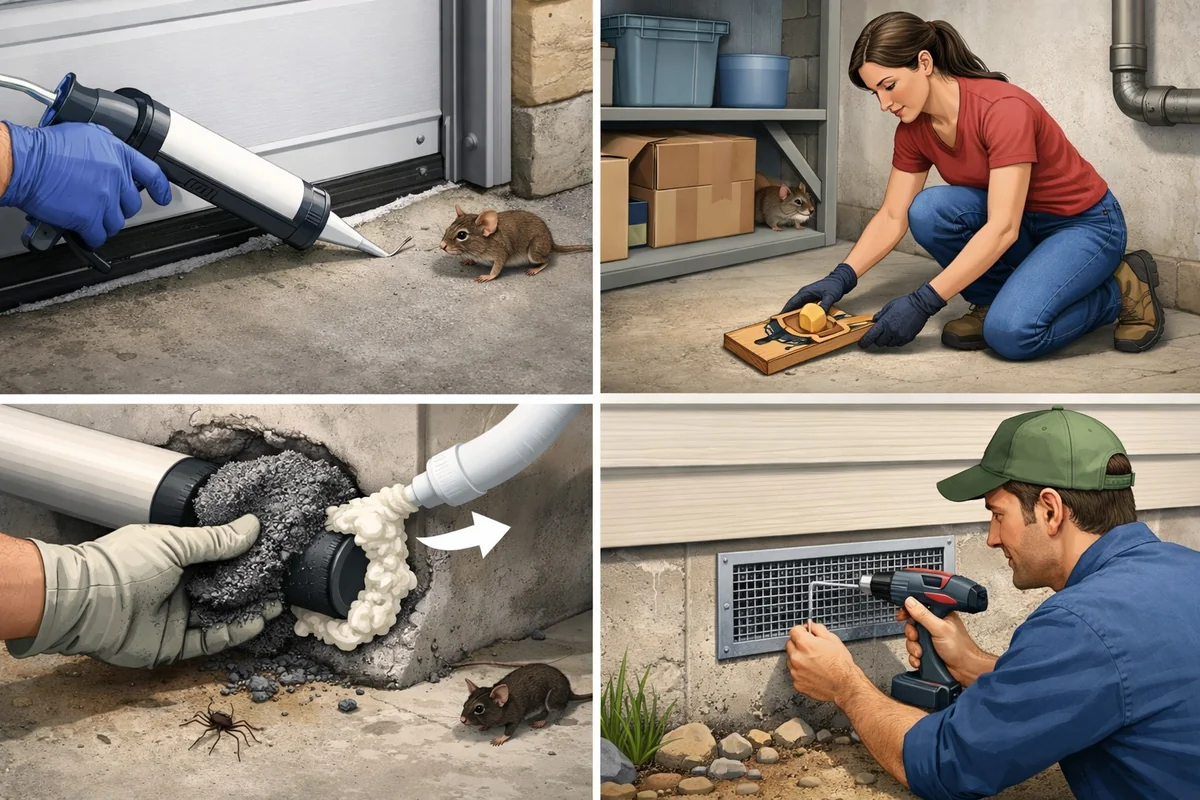
Seal cracks, holes, and gaps with steel wool and silicone caulk for small openings, or use metal mesh and expanding foam for larger areas. Proper sealing creates a barrier that blocks rodent access, following 2026 best practice standards for pest exclusion.
Pro Tips:
- Use steel wool for gaps under 1/2 inch; rodents can't chew through it.
- Apply caulk smoothly to prevent peeling or gaps.
- Secure metal mesh with screws for durability.
Important Warnings:
- Avoid using only foam or soft materials—rodents can chew through them.
Required Tools:
- Steel wool (medium grade)
- Silicone caulk (rodent-resistant)
- Metal mesh (1/4 inch hardware cloth)
- Expanding foam
- Caulking gun
- Screwdriver
Eliminate Food and Water Sources
Store all food, pet food, and birdseed in airtight, rodent-proof containers. Fix any leaks and wipe up spills immediately. Removing attractants lowers the chance of infestation and is a key step recommended by pest control experts.
Pro Tips:
- Choose metal or thick plastic containers with tight-fitting lids.
- Check for water leaks under sinks or along walls.
- Sweep or vacuum floors to remove crumbs regularly.
Important Warnings:
- Leaving even small food scraps can attract rodents quickly.
Required Tools:
- Airtight storage containers (metal or heavy-duty plastic)
- Mop or absorbent towels
Declutter and Organize Storage
Remove unused items and organize stored materials at least 18 inches off the floor and away from walls. This reduces hiding spots and allows for easy inspection, making detection and cleaning more effective.
Pro Tips:
- Use shelving units to keep belongings off the floor.
- Dispose of cardboard boxes—rodents use them for nesting.
- Space items to allow for regular visual inspections.
Important Warnings:
- Stacking items directly on the floor or against walls creates rodent harborage zones.
Required Tools:
- Storage shelves (metal or plastic)
- Heavy-duty garbage bags
- Gloves (nitrile or latex)
Set Traps and Monitor Regularly
Place snap traps or electronic traps along walls and in corners where rodent activity is likely. Check traps weekly and reset as needed. Consistent monitoring helps catch any early intruders and ensures long-term effectiveness.
Pro Tips:
- Position traps perpendicular to walls for best results.
- Use bait such as peanut butter or oats.
- Record trap locations and results in a notebook or app.
Important Warnings:
- Keep traps out of reach of children and pets to prevent accidental injury.
- If rodent activity continues after implementing all steps, consult a licensed pest professional.
Required Tools:
- Snap traps or electronic rodent traps
- Disposable gloves
- Bait (peanut butter, oats)
Inspecting for Vulnerabilities
Start with a systematic check of all walls, floors, ceilings, and around windows and doors. Use a bright flashlight and get low to the ground - this is where most gaps hide. Talcum powder or plain flour sprinkled along baseboards is a simple way to reveal fresh rodent tracks overnight.
Look for droppings, gnaw marks, or greasy rub marks along walls. Take photos of any cracks or holes you find so you can follow up with repairs. Documenting problem areas means you won’t miss anything once you start sealing.
Sealing Entry Points Effectively
For persistent holes, shove steel wool or copper mesh deep into the gap before sealing over it with caulk. This stops rodents from chewing through later. For garage doors, apply new weatherstripping along the bottom and sides - most gaps happen at ground level.
Let all sealants dry fully before exposing them to moisture or heavy use. Rushing this step leads to cracked or peeling barriers that rodents exploit. Good sealing is a “measure twice, cut once” job - take your time, and it lasts for years.
Decluttering and Organizing for Prevention
Cardboard boxes and paper clutter are rodent magnets because they provide both food and nesting material. Switch to metal or heavy-duty plastic storage, and keep the area as tidy as you can. Store infrequently used items on shelves, not the floor.
Regular sweeping and debris removal makes the space less appealing. The less clutter, the fewer places rodents can hide. This also makes ongoing inspections much easier.
Choosing and Placing Rodent Deterrents
Physical exclusion is always step one, but deterrents can add an extra layer of defense. Not all products work equally well, so use them to reinforce - not replace - your main prevention strategy.
Ultrasonic Repellers: Do They Really Work?
Ultrasonic devices may startle rodents at first, but they quickly adapt and ignore the noise. They’re best used as a temporary or supplemental measure, not your primary defense. Dense clutter or walls block the sound waves, making them ineffective in most real-world basements and garages.
Natural Repellents and Scent Barriers
Peppermint oil and ammonia-based sprays can mask food odors and may deter rodents in the short term. The catch: these scents fade fast, especially in damp or drafty areas, so you’ll need to reapply often. Mothballs are toxic and risky for homes with pets or kids - avoid them entirely.
Repellents alone won’t solve the problem if entry points remain open or food is accessible. Think of them as a bonus, not a solution.
Mechanical Traps vs. Prevention: When to Use
Traps are for when you already have rodents inside - not for prevention. Snap traps and live-catch traps should be placed along walls or behind objects, where rodents naturally travel. If you use traps, check them daily to avoid odor and hygiene issues from dead or trapped animals.
Improper trap placement (like in the middle of open floors) rarely works. Prevention always beats reaction when it comes to keeping rodents out of garages and basements.
Moisture and Ventilation: Hidden Factors in Rodent Prevention
Most people overlook moisture control, but rodents are attracted to water as much as food. Damp, poorly ventilated basements and garages offer ideal nesting conditions.
Controlling Humidity and Water Leaks
Dehumidifiers pull excess moisture from the air, making the space less inviting to rodents. Repair leaking pipes, dripping faucets, or any visible water stains right away. If you have a sump pit or floor drain, make sure they’re covered or screened - standing water is a major attractant.
Seal cracks in basement walls to keep water out and eliminate the dampness rodents need to thrive. This also helps prevent mold and other pests.
Improving Airflow to Discourage Nesting
Screened vents let air circulate while still blocking rodents from getting in. Use a fan or open windows when possible to increase airflow - stuffy, stagnant air is a signal to rodents that a space is unused and safe.
Poor ventilation can lead to mold, which attracts insects, and insects are another food source for rodents. Good airflow makes your garage or basement less appealing to all pests, not just mice and rats.
Routine Maintenance to Keep Rodents Out Long-Term
Rodent prevention isn’t a one-and-done job. Regular checks and quick repairs are the secret to keeping your garage and basement rodent-free year after year.
Seasonal Checks and Upkeep Tasks
- Inspect seals, weatherstripping, and barriers every spring and fall - temperature swings cause materials to shrink and crack.
- Clear debris, leaves, and woodpiles from around the garage and basement exterior to eliminate potential hiding places.
- Check for signs of gnawing, new droppings, or rub marks - early detection is crucial to stopping a small problem before it explodes.
When to Reapply or Replace Materials
- Caulk and weatherstripping degrade over time, especially in areas exposed to sunlight or freezing temperatures. Replace if you see cracks or gaps.
- Steel wool can rust or compress, losing its effectiveness - swap it out annually or whenever you notice deterioration.
- Even “rodent-proof” containers can warp, crack, or lose their seal. Inspect lids and edges for chew marks or gaps.
Common Mistakes and How to Avoid Them
Even the most diligent homeowners make mistakes that give rodents a second chance. Here’s what to watch out for so you don’t have to do this all over again.
Overlooking Small Gaps and Hidden Access Points
Mice only need a pencil-sized gap to get inside. Utility lines, floor drains, and the corners behind water heaters are the most commonly missed spots. Foam-only sealants look solid but are quickly chewed open - always pair with mesh or steel wool.
Relying Too Much on Repellents Alone
Scent-based repellents fade or wash away quickly and don’t fix structural vulnerabilities. Ultrasonic devices can actually drive rodents into other parts of the home rather than out. Use repellents as part of a layered defense, not as your only strategy.
Frequently Asked Questions About Rodent Prevention
❓ Frequently Asked Questions
How do I prevent rodents from entering my garage or basement?
How do I prevent rodents from entering my garage or basement?
To prevent rodents from entering your garage or basement:
- Seal all cracks and gaps larger than 1/4 inch with steel wool or caulk
- Install door sweeps and weather stripping
- Store food and pet supplies in sealed containers
- Remove clutter and debris
Regularly inspect for new entry points to maintain protection.
What signs indicate a rodent infestation in my garage or basement?
What signs indicate a rodent infestation in my garage or basement?
Common signs of a rodent infestation include droppings, gnaw marks on wood or plastic, nesting materials like shredded paper, and foul odors. You may also hear scratching noises, especially at night. Spotting these indicators early helps prevent larger infestations and limits damage to stored items or wiring.
Which rodent repellents work best for garages and basements?
Which rodent repellents work best for garages and basements?
When selecting rodent repellents for garages and basements, consider:
- Effectiveness: ultrasonic devices deter some rodents but may not work for all
- Chemical repellents: peppermint oil-based sprays offer short-term results
- Safety: ensure products are safe for children and pets
Most users combine repellents with sealing entry points for best long-term results.
How often should I inspect my garage or basement for rodent activity?
How often should I inspect my garage or basement for rodent activity?
Inspect your garage or basement for rodent activity at least once a month. Check more frequently during colder months when rodents seek shelter indoors. Regular inspection helps catch early signs like droppings, chewed materials, or new entry points, allowing for faster intervention and minimizing long-term damage.
What materials are most effective for sealing rodent entry points?
What materials are most effective for sealing rodent entry points?
The most effective materials for sealing rodent entry points are steel wool, hardware cloth (1/4-inch mesh), and silicone or polyurethane caulk. These materials resist gnawing and block access through small gaps. Standard foam sealants are not recommended because rodents can chew through them. For long-term results, focus on durable, chew-resistant barriers.
Why do rodents choose garages and basements as nesting sites?
Why do rodents choose garages and basements as nesting sites?
Rodents are attracted to garages and basements because these areas offer easy access, shelter from weather, and potential food or nesting materials. Cluttered spaces provide hiding spots, while unsealed gaps allow entry. Reducing clutter and sealing entry points are key strategies to discourage rodents from establishing nests.
What should I look for when choosing a professional pest removal service?
What should I look for when choosing a professional pest removal service?
When choosing a professional pest removal service, consider:
- Licensing: ensure the company is certified and insured
- Methods: ask about humane and safe removal practices
- Reputation: check verified customer reviews
- Guarantees: look for services offering follow-up visits
Compare at least three providers and request written estimates before committing.
Key Takeaways for Lasting Rodent Prevention
Keeping rodents out of your garage and basement is about more than just blocking holes. Lasting prevention means combining physical barriers, smart storage, moisture control, and regular maintenance. If rodents return, reinspect your barriers and look for new entry points or damage.
For persistent or large infestations, a professional may be needed to uncover hidden entry points or address health risks. Take photos, track changes, and update your prevention plan each season to stay ahead of new problems.
Think of rodent prevention as an ongoing process, not a one-time fix. The upfront effort saves you time, money, and a lot of frustration down the line.
Related Articles
Best Pest Control Products for Garages and Basements 2026: Top Sprays, Baits & Solutions
Find the best pest control products for garages, basements, and attics in 2026. Compare top baits, sprays, traps, and natural options for safe, effective DIY pest removal.

Best Rodent-Proofing Materials and Products 2026: Steel Wool, Mesh, Kits, and More
Find the best rodent-proofing materials, products, and exclusion kits for 2026. Compare steel wool, mesh, sealants, vent covers, and natural deterrents to keep your home rodent-free with expert DIY recommendations.

Best Rat Traps and Baits 2026: Top Picks for Every Infestation
Find the best rat traps and baits of 2026 for fast, safe, and affordable DIY rat control. Compare top snap, electric, live-catch, poison, and natural products to eliminate rats from your home.

Complete Guide to Pest Control Maintenance: Upkeep Tips & Ongoing Management 2026
Learn how to keep your home pest-free with our complete pest control maintenance guide. Discover expert pest upkeep tips, safe DIY solutions, and step-by-step ongoing pest management strategies for 2026.