 Pest Pro Reviews Editorial Team • • 11 min read •
Best Raccoon Repellents: Motion Sprinklers, Trash Locks and More
The best raccoon repellents: Orbit motion sprinkler, TrashLocker and suifaly trash locks, Broox and CKCOEO solar deterrents, plus exclusion and what does not work.
The best raccoon repellent is the Orbit Yard Enforcer, a motion-activated sprinkler that soaks raccoons with a sudden burst of water as they cross the yard. The TrashLocker straps and suifaly's budget locks keep them out of garbage cans, and the Broox and CKCOEO solar units startle them with sound and flashing light. Research has not found a chemical spray or granule that keeps raccoons away, so removing food and sealing entry points matter more than any product.
- University of California IPM reports that no chemical repellent has been effective for raccoons, and home remedies such as mothballs and blood meal have failed.
- Lights, sounds and water sprays can scare raccoons for a few days, so move them often and pair them with removing food and blocking access.
- Pet food left outside overnight, unsecured trash, compost and bird feeders are what bring raccoons back night after night.
Do Raccoon Repellents Work?
Mostly not, and it helps to know that before spending money. University of California IPM's pest note on raccoons states that no chemical repellents have been effective for them, and that home remedies such as mothballs and blood meal have failed. Frightening devices that use light, sound or water can work, but only for a few days before raccoons learn they are harmless.
Raccoons are smart, strong and persistent. An adult runs about 2 to 3 feet long and can weigh up to 30 pounds, and it will return every night to a reliable meal. A smell that bothers it for an evening rarely outweighs a full garbage can or a bowl of cat food on the porch.
So the most effective plan has three parts: take away what attracts them, block the places they get in, and use motion-activated scare devices to break the habit while those changes take effect. Our wildlife control guides cover raccoons alongside squirrels, snakes and moles, and the raccoon repellent section collects the articles on sprays, home remedies and attic problems.
Identify your needs and get personalized recommendations
Digging and raiding beds.
Knocked-over bins.
No water nearby.
Remove What Draws Raccoons In
Food is the reason raccoons choose your yard. UC IPM notes that pet food left outside overnight ranks high among their food sources, and garbage cans, compost piles and bird feeders follow close behind.
- Feed pets indoors: or pick up bowls before dark, including water dishes raccoons use to wash food.
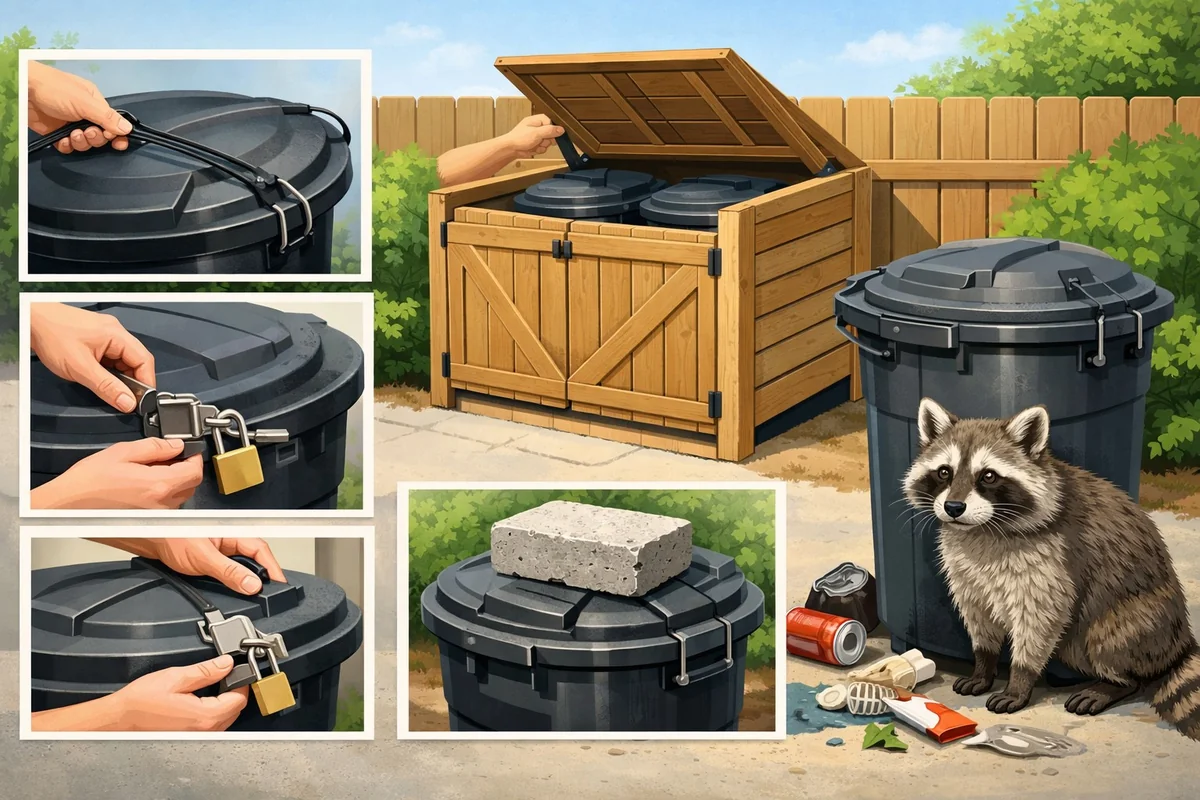
- Lock trash cans: use straps or latching lids, and keep cans in a garage or shed until collection morning.
- Close the compost: use a sealed bin rather than an open pile, and never add meat, fish or dairy.
- Bring in bird feeders at night: and sweep up spilled seed under them.
- Pick ripe fruit and vegetables promptly: raccoons will pull down corn stalks and climb fruit trees for a meal.
- Watch the lawn: raccoons roll back new sod and dig in lawns looking for grubs and worms, so treat a grub problem if one exists.
Our guide to what deters raccoons from attics and yards goes through these changes room by room and corner by corner of the yard.
Block the Way In
Raccoons that move into attics, chimneys and the space under decks do real damage. Females looking for a den will rip off shingles, fascia boards and roof vents, and they tear insulation from ducts once inside. Exclusion is the permanent fix:
- Cap the chimney: UC IPM recommends a spark arrester that meets your local fire code, which also keeps raccoons out.
- Screen crawl spaces and decks: use galvanized hardware mesh of 1/4- or 1/3-inch openings in 10-gauge wire, with the bottom edge buried at least 6 inches deep, as UC IPM advises.
- Trim tree branches: leave a gap of at least 5 feet between branches and the roof.
- Repair damaged vents and fascia: with sturdy metal covers, not plastic.
- Protect gardens: a single electrified wire about 8 inches above the ground makes an ordinary garden fence raccoon-resistant, according to UC IPM.
Timing matters. Raccoons usually have three to six young, born in spring, and sealing an entry with a mother outside and kits inside leaves the young to die in your attic and the mother tearing at the roof to get back in. Check for young before closing any opening, or wait until the family leaves; a wildlife control professional can install one-way doors when you are unsure.
Raccoon Deterrent Types Compared
| Type | How It Works | Best For | Limit |
|---|---|---|---|
| Motion-activated sprinkler | Sudden spray of water | Gardens, lawns, patios | Needs a hose; works for a while |
| Solar light and sound unit | Flashing LED and ultrasound on motion | Yard edges, fence lines, sheds | Raccoons may get used to it |
| Trash can lock | Keeps lids closed | Garbage, recycling, compost bins | Needs a hinged-lid bin |
| Exclusion materials | Physical barrier | Chimneys, decks, crawl spaces | Takes labor; check for young first |
| Repellent sprays and granules | Scent or taste | Not recommended | No proven effect |
We compared raccoon deterrents on how they work, the areas they protect, power source and setup, and what buyers report about results and durability. Our sources were the makers' listings, Amazon's review digests and the UC IPM, CDC and NPIC guidance cited here; we did not test the products. Because research does not support repellent sprays and granules for raccoons, we chose devices and locks that physically scare raccoons off or keep them out. We left out repellent sprays and pouches whose buyers mostly report no effect or poor value, sprinklers with mostly negative reliability and battery reviews, and new listings with no reviews.
Best Motion-Activated Raccoon Deterrents
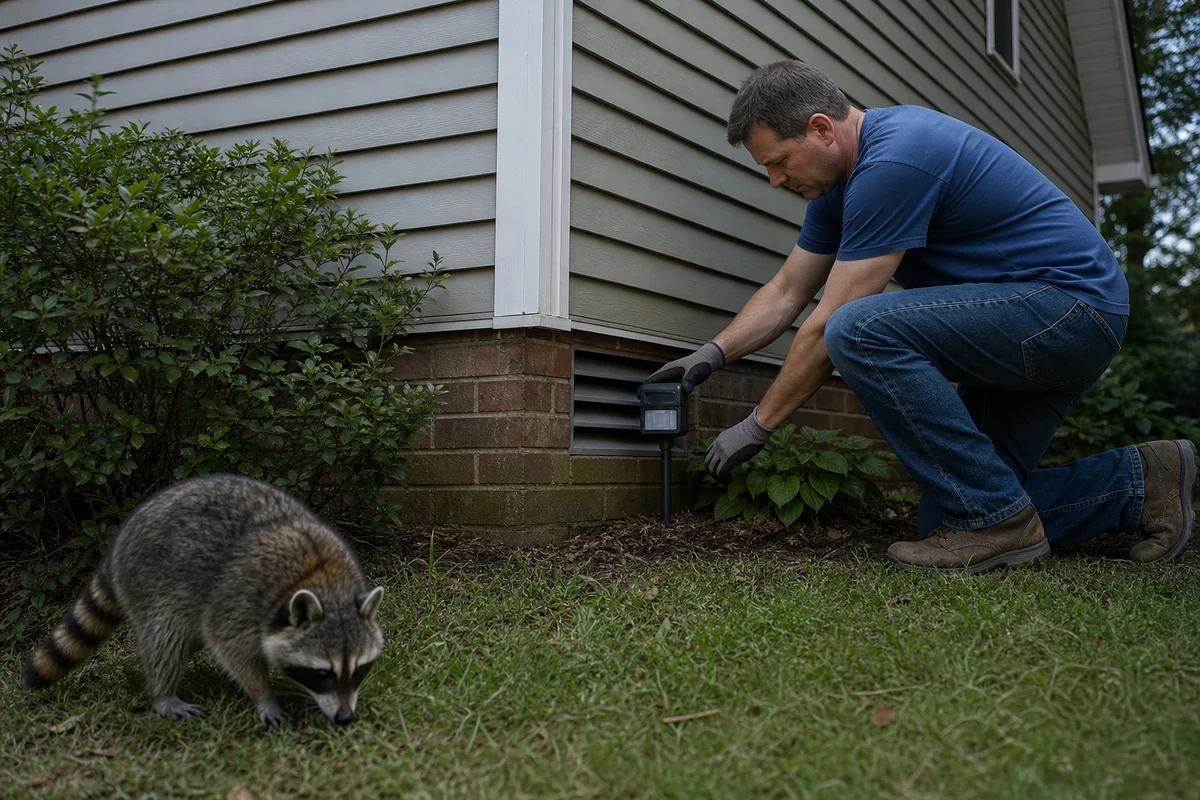
Scare devices work best right where raccoons feed or travel: the garden bed they dig, the path to the trash, the corner of the deck. Move them every week or two so raccoons do not settle into ignoring them.
Orbit Yard Enforcer: Best Overall Raccoon Repellent
Orbit's Yard Enforcer 2-pack uses a heat and motion sensor that detects movement up to 40 feet away and fires a burst of water, per the maker.
- It connects to a garden hose and can also water the garden on a timer for 30 minutes at a time, per the maker.
- Buyers report it keeping many animals away, including deer, dogs, squirrels and feral cats.
- Durability gets mostly negative reviews, with some valves cracking within months, and some buyers say the spray covers only one direction.
Choose it for a vegetable garden, a lawn raccoons keep digging or the patio where they eat pet food. Aim it along the route they use, turn it off before you walk through, and drain it before freezing weather. Two units let you cover two approaches or move one while the other stays put.
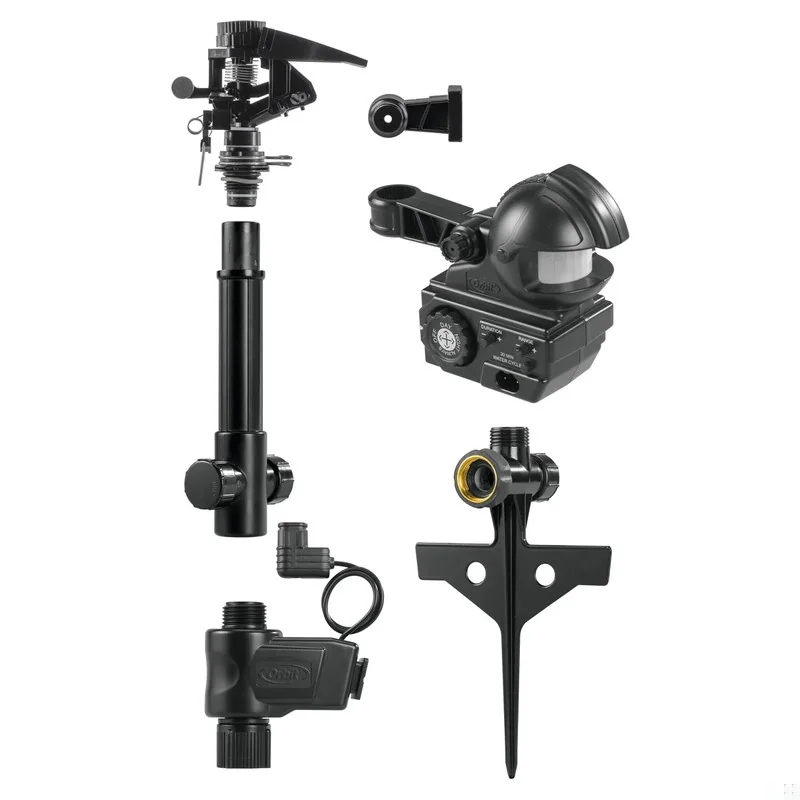
Orbit Yard Enforcer Motion-Activated Sprinkler 2-Pack
Best for: Gardens, lawns and patios within reach of a hose
- ✓Detects movement up to 40 feet, per the maker
- ✓Keeps many animals away, per buyers
- ✓Two units to cover or rotate
- −Durability mostly negative, per buyers
- −Sprays one direction, per some buyers
Specifications (1)
- Unit Count
- 2 Count
Broox Solar Animal Repellent: Best Light and Sound Deterrent
Where a hose will not reach, Broox's solar stake answers movement with ultrasound and a flashing LED, per the maker.
- Its 110-degree infrared sensor detects animals at 20 to 25 feet, depending on their size, per the maker.
- It charges by solar panel or USB cord, is rated IP65 and mounts in the ground or on a wall.
- Buyers report it keeping deer, rabbits, squirrels and cats away; durability is mixed, with some units failing within weeks.
Choose it for the side of the house, a shed or a fence line where raccoons travel at night. Light and sound alone lose their effect faster than water, so pair it with locking the trash and removing food.

Broox Solar Animal Repellent
Best for: Fence lines and sheds without water
- ✓Motion sensor with flashing LED
- ✓Solar or USB charging
- ✓Effective on deer, rabbits and cats, per buyers
- −Some units fail within weeks, per buyers
- −Not for snakes, per the maker
Specifications (2)
- Recommended Uses For Product
- Outdoor
- Target Species
- Cat, Dog, Rabbit, Raccoon, Skunk, Squirrel
CKCOEO Solar Animal Repeller: Best Budget Light and Sound Unit
CKCOEO's lower-cost solar unit combines ultrasound with flashing LED strobes when its sensor sees motion.
- The maker states a detection angle of up to 150 degrees and a range of 25 to 30 feet, and lists raccoons among its targets.
- It mounts on a stake about 9 to 10 inches above the ground or on a tree or fence, and the maker advises charging it in direct sun for 2 days before first use.
- Buyers find it easy to set up and like the responsive sensor; results and value are mixed.
Choose it to add a second scare point, such as near the compost bin, alongside a sprinkler elsewhere. Move it every week or two, since raccoons learn quickly.

CKCOEO Solar Ultrasonic Animal Repeller
Best for: A low-cost second scare point
- ✓Wide detection angle, per the maker
- ✓Easy to set up, per buyers
- ✓Responsive sensor, per buyers
- −Mixed results, per buyers
- −Raccoons learn to ignore it
Specifications (2)
- Color
- Green
- Unit Count
- 1 Count
Best Trash Can Locks for Raccoons
An unlocked trash can is the most common reason raccoons visit a home. Locking it removes the reward that brings them back, which no repellent can do.
TrashLocker Lid Lock Straps: Best for Garbage Cans
TrashLocker's two-strap system uses non-elastic straps with stainless steel hardware and a stated 2,000-pound breaking strength, per the maker.
- It fits hinged-lid carts from 32 to 96 gallons and opens with one hand, per the maker.
- It carries a 2-year limited warranty against animal damage, per the maker.
- Buyers report it keeping raccoons, squirrels, opossums and even bears out, and find it easy to install and worth the money.
Choose it for city-issued carts that sit outside overnight. Check with your hauler that automated trucks can still tip the bin, and fit it to the recycling and organics carts too, since raccoons raid those as well.
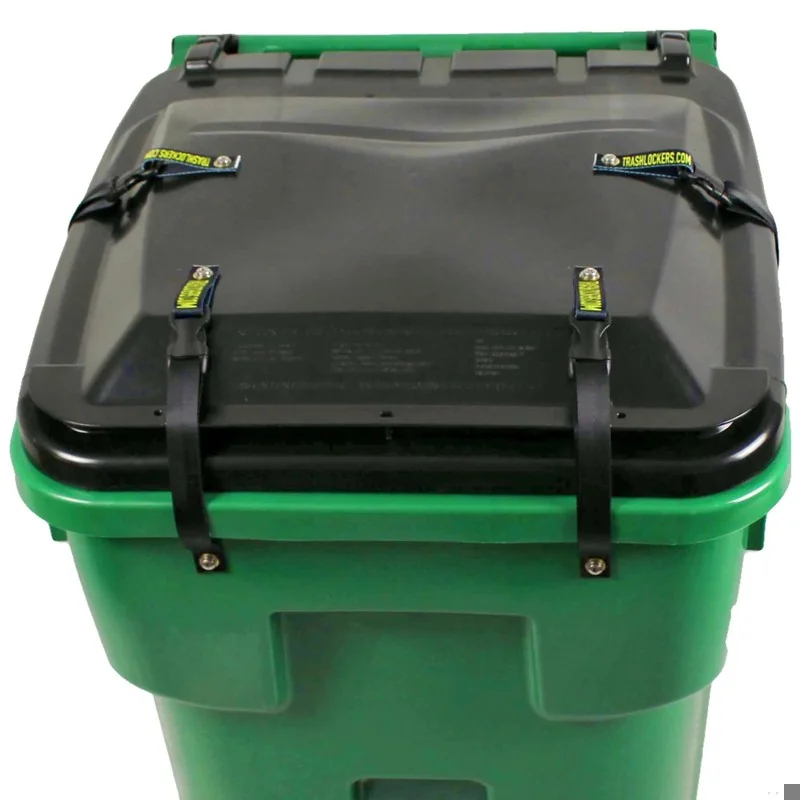
TrashLocker Lid Lock Straps, Two-Strap
Best for: Garbage carts left outside overnight
- ✓Keeps raccoons and bears out, per buyers
- ✓Easy to install, per buyers
- ✓2-year animal-damage warranty, per the maker
- −Hinged-lid carts only
- −Check compatibility with automated trucks
Specifications (2)
- Material
- Stainless Steel
- Special Feature
- One-handed operation
suifaly Trash Can Lock Straps: Best Budget Trash Can Lock
For less money, suifaly's 2-pack pairs nylon straps with metal hardware that screws to the bin.
- The straps fit 28 to 96 gallon bins and need a 5/16-inch drilled hole for each mount, per the maker.
- Buyers report them keeping raccoons and bears out and find them easy to install.
- Durability and the locking buckle get mixed reviews.
Choose it to secure several bins at low cost. Check the buckles every few weeks, since a strap that slips is all a raccoon needs.
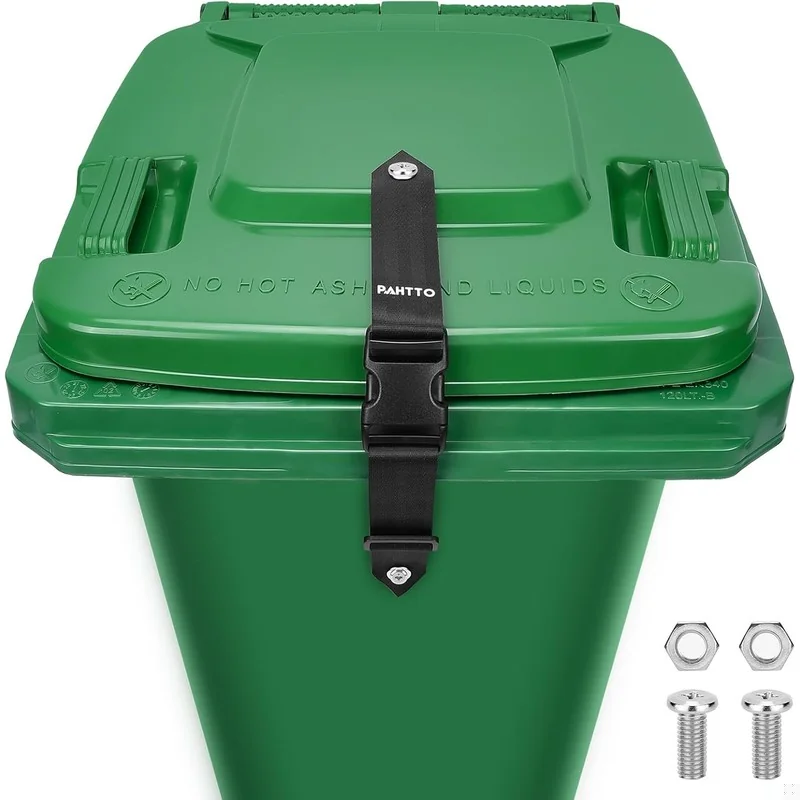
suifaly Trash Can Lock Straps 2-Pack
Best for: Securing several bins on a budget
- ✓Keeps raccoons out, per buyers
- ✓Easy to install, per buyers
- ✓Fits 28 to 96 gallon bins, per the maker
- −Mixed durability, per buyers
- −Buckle can slip, per some buyers
Specifications (2)
- Material
- Metal
- Unit Count
- 2 Count
- Orbit Yard Enforcer wins for: gardens, lawns and patios within reach of a hose
- Broox Solar Animal Repellent wins for: fence lines and sheds without water
- CKCOEO Solar Repeller wins for: a low-cost second scare point
- TrashLocker Lid Lock Straps win for: garbage carts left outside overnight
- suifaly Lock Straps win for: securing several bins on a budget
Raccoon Repellents That Do Not Work
Many popular remedies have no evidence behind them, and some are unsafe:
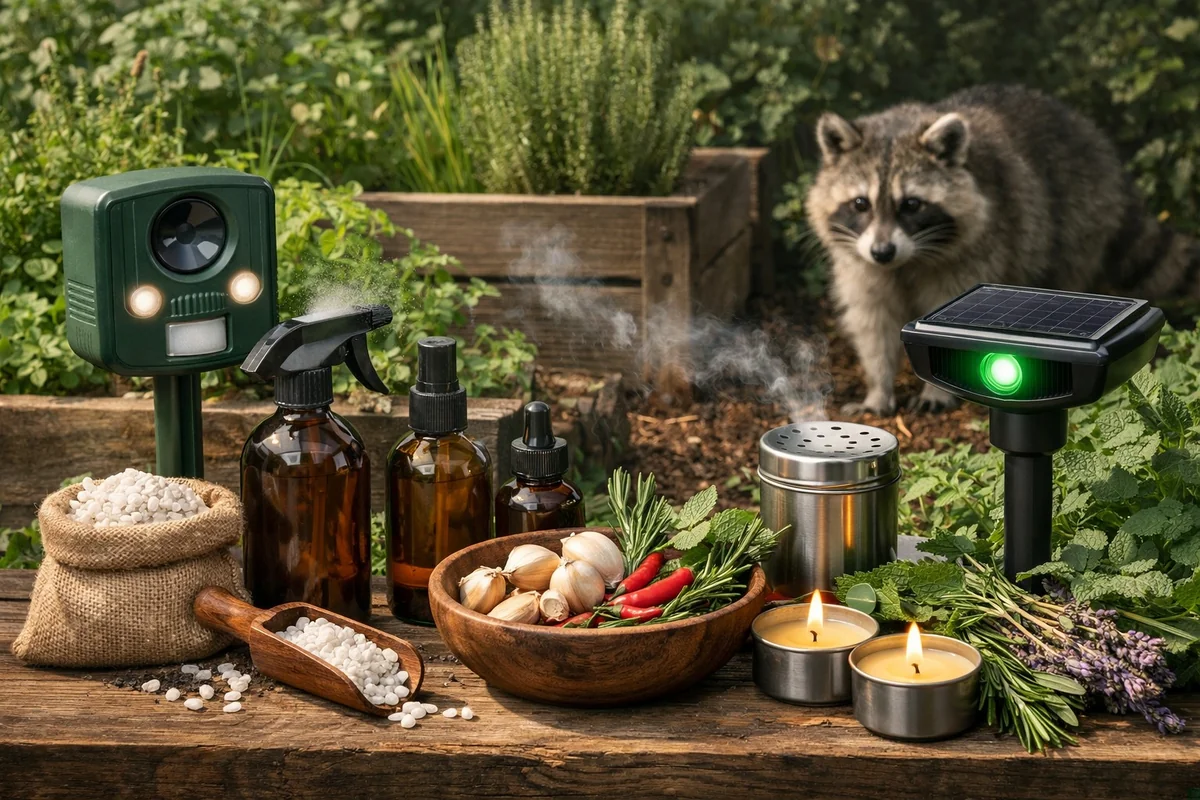
- Repellent sprays and granules: peppermint, castor oil, pepper and predator scent products have not been shown to keep raccoons away; buyer reviews on the ones we considered were mostly negative. Our guide to raccoon repellent sprays for the garden looks at the options in detail.
- Mothballs: using them in yards, gardens or attics to repel animals is a misuse of a pesticide, and the National Pesticide Information Center's mothball guidance warns that outdoor use can harm children and pets and contaminate soil and water.
- Ammonia-soaked rags: the fumes fade within a day or two and are unpleasant and irritating in enclosed spaces.
- Irish Spring soap and hot pepper: raccoons quickly ignore scents that are not tied to danger.
- Constant-tone ultrasonic devices: research has not shown that ultrasound alone drives raccoons away.
- Raccoon “eviction fluid”: sold as female raccoon scent to make a mother move her young; there is little published evidence, and it does not replace checking for kits before sealing.
Poisoning raccoons is illegal in most places and dangerous to pets and other wildlife. Trapping and moving them is regulated too; California, for example, prohibits relocating raccoons without written permission from its wildlife department, so check your state's rules or call a licensed wildlife control operator.
Raccoons and Your Health
Raccoons can carry rabies and canine distemper, so keep pets vaccinated and never approach a raccoon that seems sick, unafraid or active in daylight. Their droppings can also carry raccoon roundworm, which is most dangerous to young children.
Raccoons use the same spots as toilets, called latrines, often on decks, roofs, woodpiles and attic floors. The CDC's guidance on preventing raccoon roundworm recommends disposable gloves, rubber boots or booties, and an N95 respirator in confined spaces, misting the area lightly to keep dust down, and bagging the droppings for disposal. Most chemicals do not kill the eggs, but heat does, so boiling water works on decks and patios. Keep sandboxes covered when children are not using them.
Common Questions About Raccoon Repellents
Do ultrasonic devices work on raccoons?
Do ultrasonic devices work on raccoons?
Not on their own. Devices that play a constant tone have no proven effect, and motion-activated units with light and sound scare raccoons only until they learn there is no danger. Use them briefly, move them often and pair them with locking trash and removing food.
Will raccoons eventually leave on their own?
Will raccoons eventually leave on their own?
A mother using an attic or chimney as a den usually moves on once her young can travel, but she may return the next season unless the entry is sealed. Raccoons feeding in a yard keep coming back as long as food is available.
Does peppermint oil repel raccoons?
Does peppermint oil repel raccoons?
There is no good evidence that it does. Strong scents may make a raccoon hesitate briefly, but the smell fades fast outdoors and does not outweigh a reliable meal nearby.
What is a raccoon's worst enemy?
What is a raccoon's worst enemy?
In the wild, coyotes, bobcats, great horned owls and other large predators hunt raccoons. Predator urine products try to copy that threat, but raccoons in yards quickly learn the smell comes with no danger.
Is it legal to trap and relocate a raccoon?
Is it legal to trap and relocate a raccoon?
It depends on where you live. Many states restrict or ban relocating raccoons because of disease and because moved animals rarely survive, so check with your state wildlife agency or hire a licensed wildlife control operator.
Which One Should You Buy?
The Orbit Yard Enforcer is the raccoon repellent to buy for most yards. A sudden spray of water is the scare that works longest, and two units let you cover the garden and the patio or rotate their positions.
Add TrashLocker straps to every outdoor bin, choose suifaly's straps for several bins on a budget, and use Broox or CKCOEO where a hose does not reach. Then remove pet food, seal attic and deck openings once you know no young are inside, and the devices only have to break the habit.
Before you buy, walk the yard at dusk and note where raccoons feed and enter, since that decides where each device goes.