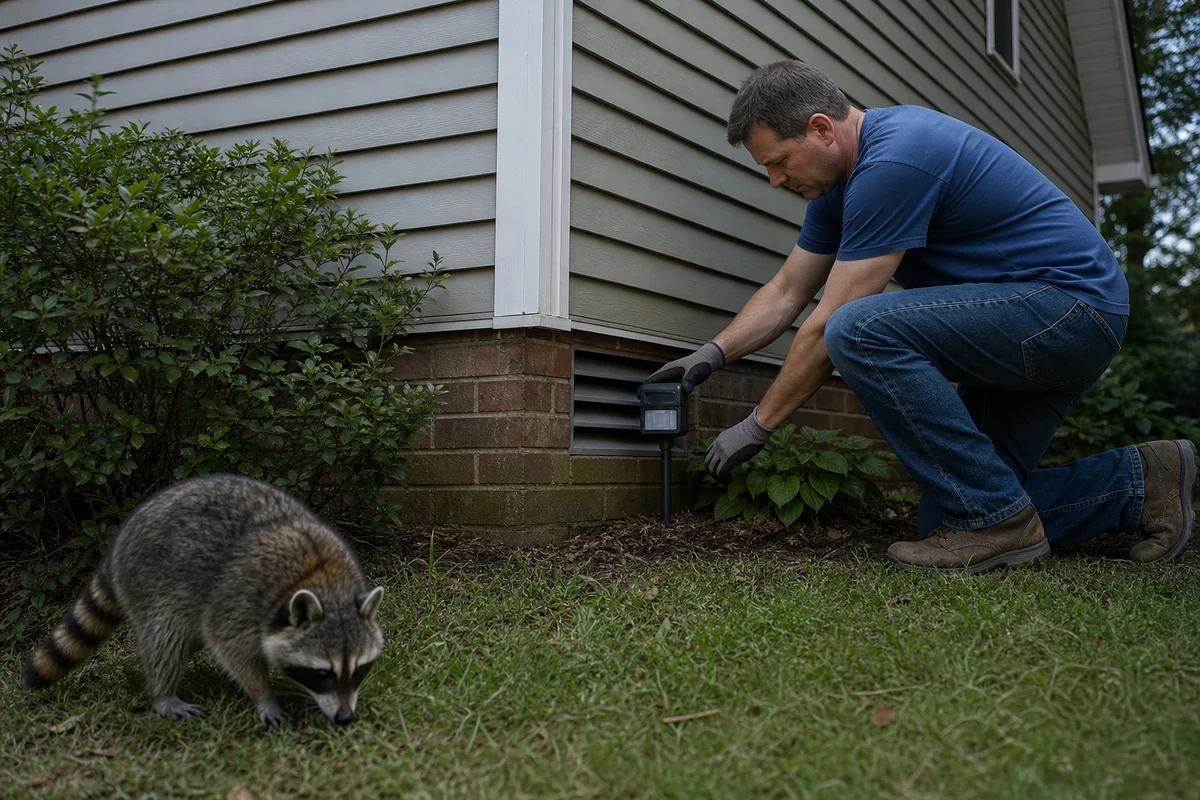

What Deters Raccoons From Attics and Yards: What Really Works
What deters raccoons: removing food, sealing attic and roof entries, trimming branches and motion lights and sprinklers, how to get raccoons out of an attic safely.
Three things deter raccoons: no food, no way in and no peace. Raccoons leave yards where trash, pet food and compost are locked away, they cannot den in attics with sealed vents, capped chimneys and trimmed branches, and they avoid spots where lights, noise or a spray of water keep surprising them. Scents and store-bought repellents rarely work on their own, so use them only alongside these changes.
What Actually Deters Raccoons
Raccoons are practical animals. They return to places that reliably feed and shelter them and abandon places that do not. University of California IPM's pest note on raccoons found no chemical repellent that works on them and says frightening devices such as lights, sound and water sprays are effective only for a few days. That leaves three approaches that hold up:
- Take away food: pet food, garbage, compost, bird feeders, fallen fruit and lawn grubs.
- Take away shelter: attics, chimneys, sheds, crawl spaces and the gap under decks.
- Make the yard unpredictable: motion lights, motion sprinklers and noise, moved around so raccoons never get comfortable.
| Deterrent | How Long It Works | Where to Use It |
|---|---|---|
| Locked trash and indoor pet feeding | As long as you keep it up | Whole yard |
| Sealed vents, capped chimney, screened decks | Permanent once done | Attic, roof, crawl spaces |
| Trimmed branches and metal guards | Permanent with upkeep | Roof access routes |
| Motion sprinklers and lights | Days to weeks; move them | Gardens, trash area, paths |
| Electrified fence wire | While powered | Gardens and chicken runs |
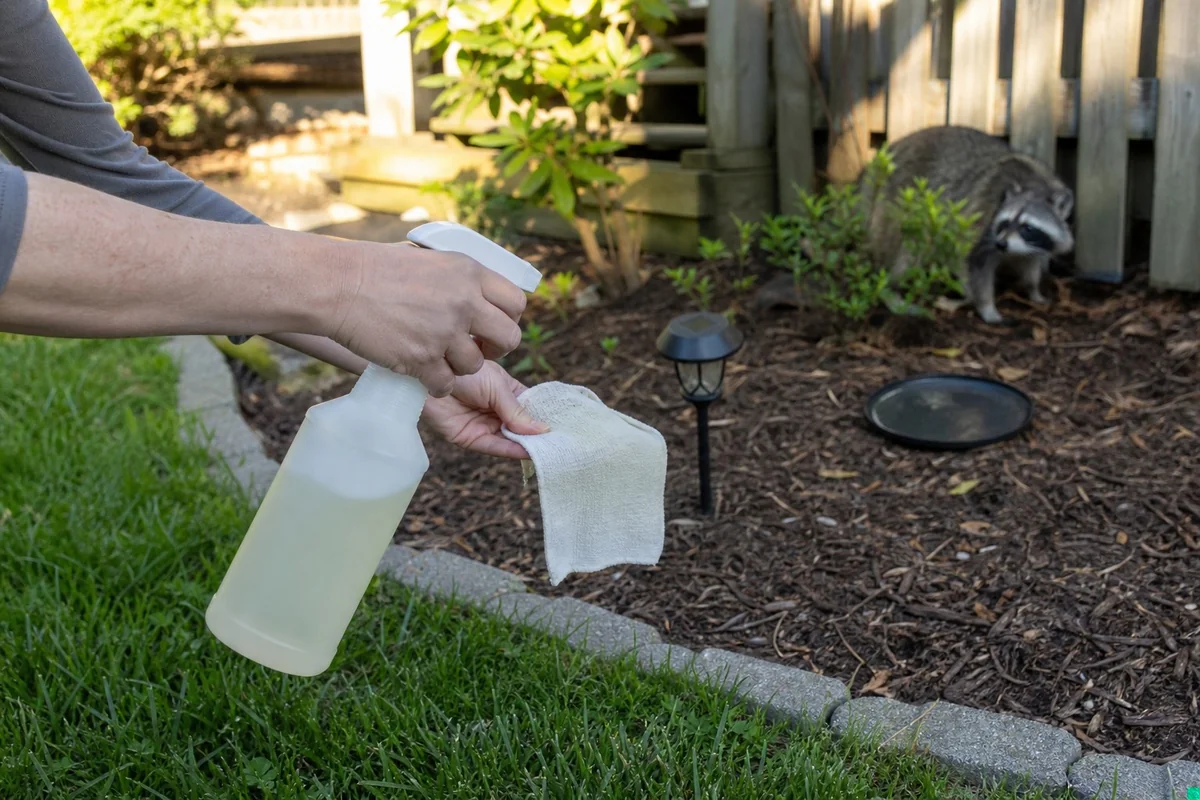
| Scents, sprays, ammonia, mothballs | Hours to a day, if at all | Not recommended |
If you are wondering how to repel raccoons quickly, the table shows the answer: the fast-acting options are the scare devices, and the lasting ones are the changes that remove food and block entry.
For specific products, from motion sprinklers to trash can locks, see our guide to the best raccoon repellents; the raccoon repellent section also covers garden sprays.
Signs a Raccoon Is in Your Attic
A raccoon in the attic is usually a mother looking for a safe place to raise young, most often in spring. Look and listen for:
- Heavy thumping or dragging sounds: at dusk and before dawn, much louder than mice or squirrels.
- Chirping, chattering or whimpering: the sound of kits, which means you must not seal the entry yet.
- Damage outside: torn shingles or fascia, bent roof vents, broken soffit screens and muddy paw prints on downspouts or siding.
- Flattened or torn insulation: and insulation pulled off ducts.
- Droppings in one spot: raccoons use latrines, often in a corner of the attic or on the roof.
- Strong odor or stains on the ceiling: from urine soaking through.
How to Get Raccoons Out of an Attic
The goal is to persuade the raccoon to leave, then close the door behind it. Nothing you place in the attic will deter it for long by itself.
- Find the entry: walk the roofline in daylight and look for torn vents, gaps at the eaves and damaged soffits.
- Check for young: listen for kits, especially from March through summer, and assume they are present if a female is using the attic in spring.
- Make the attic uncomfortable: a bright light and a radio left on in the attic for a few nights encourage a mother to move her young elsewhere.
- Confirm everyone has left: loosely plug the entry with newspaper and see whether it is pushed out overnight.
- Seal with strong materials: replace torn vents with metal covers and cover gaps with heavy galvanized hardware cloth screwed in place.
- Clean up safely: remove droppings and soiled insulation, which can carry raccoon roundworm.
- Call a professional if needed: a licensed wildlife control operator can install a one-way door and handle trapped young.
For cleanup, the CDC's guidance on preventing raccoon roundworm recommends disposable gloves, boots, a respirator in confined spaces and misting droppings lightly before bagging them. Most chemicals do not kill the eggs, but heat does, which is why professionals often replace soiled attic insulation rather than treating it.
Ammonia rags, mothballs and repellent sprays in the attic are poor substitutes. Their fumes fade, they irritate people living below, and mothballs used this way are a pesticide misuse that can harm children and pets.
Keeping Raccoons Off the Roof and Out of the Yard
- Trim branches: UC IPM advises leaving at least 5 feet between tree limbs and the roof.
- Cap the chimney: with a spark arrester or cap that meets your local fire code.
- Guard climbing routes: a wide band of smooth sheet metal around a tree trunk, and a sleeve around downspouts, gives raccoons nothing to grip.
- Lock trash and compost: strap lids shut and put cans out only on collection morning.
- Feed pets indoors: and bring in water bowls and bird feeders at night.
- Use motion lights and sprinklers: aimed at the trash area, garden and the path raccoons take, and moved every week or two.
- Screen decks and sheds: with hardware cloth buried at least 6 inches deep, as UC IPM recommends.
To protect a garden or chicken run at night, an electrified wire about 8 inches above the ground on an existing fence makes it far harder for raccoons to climb, according to UC IPM. Close chickens in a coop with hardware cloth and latches raccoons cannot open, since they can work simple hooks with their hands.
Common Questions About What Deters Raccoons
How long will a raccoon stay in your attic?
How long will a raccoon stay in your attic?
A mother raising young may stay until the kits are old enough to follow her, which can mean a couple of months in spring and summer. Raccoons using an attic as a winter shelter may stay on and off for the whole season unless the entry is sealed after they leave.
Is there a raccoon repellent that actually works?
Is there a raccoon repellent that actually works?
No scent-based repellent has been shown to work reliably. Motion-activated sprinklers and lights work for a while, and trash locks, sealed entries and indoor pet feeding are what keep raccoons away for good.
What do raccoons hate to walk on?
What do raccoons hate to walk on?
Raccoons avoid surfaces they cannot grip or that move under their feet, such as smooth sheet metal on trees and downspouts and loose, floppy fence tops. An electrified wire low on a fence is the most effective barrier for gardens.
What deters raccoons but not cats?
What deters raccoons but not cats?
Locking trash, feeding pets indoors and screening decks deter raccoons without affecting cats. Motion sprinklers and lights startle cats too, and electric fence wire can shock them, so keep those away from where your own cat roams.
How do I keep raccoons out of my yard at night?
How do I keep raccoons out of my yard at night?
Remove everything that feeds them before dark: pet bowls, bird feeders and fallen fruit, and put trash out only in the morning. Add a motion light or sprinkler where they enter and move it every week or two.
Key Takeaways
- Raccoons are deterred by losing food and shelter, not by scents or sprays, so start with trash, pet food and compost.
- Lights, noise and water startle raccoons, but only for a few days unless moved around.
- In attics, check for kits, encourage the mother to leave, confirm the attic is empty, then seal entries with metal.
- Trim branches back from the roof, cap the chimney and guard trees and downspouts raccoons climb.
- Clean latrines with gloves and a respirator; heat, not chemicals, kills roundworm eggs.
- Ammonia, mothballs and repellent sprays in the attic fade fast and can harm the people and pets living below.
Related Articles
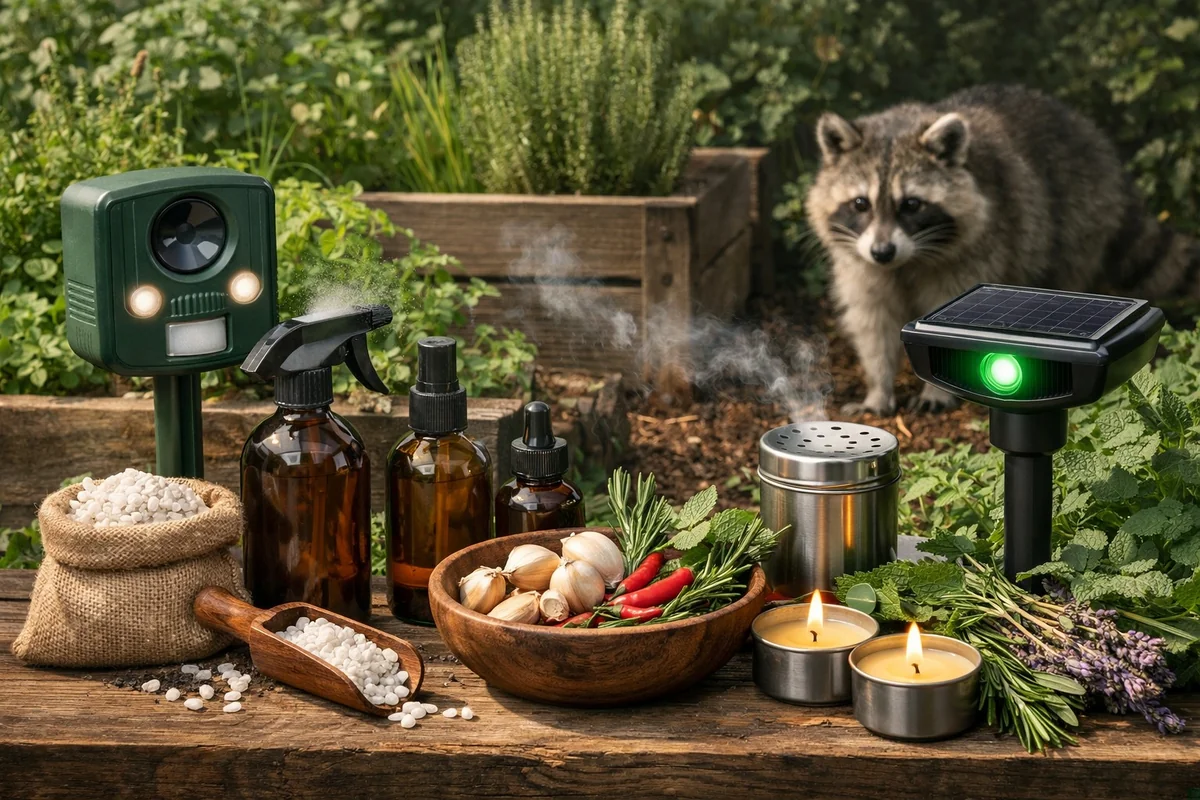
Best Raccoon Repellent Sprays for the Garden: What Works Instead
Best raccoon repellent for gardens: the Orbit motion sprinkler, a solar electric fence wire, a Broox solar unit and a coyote urine spray to try, plus a garden plan.
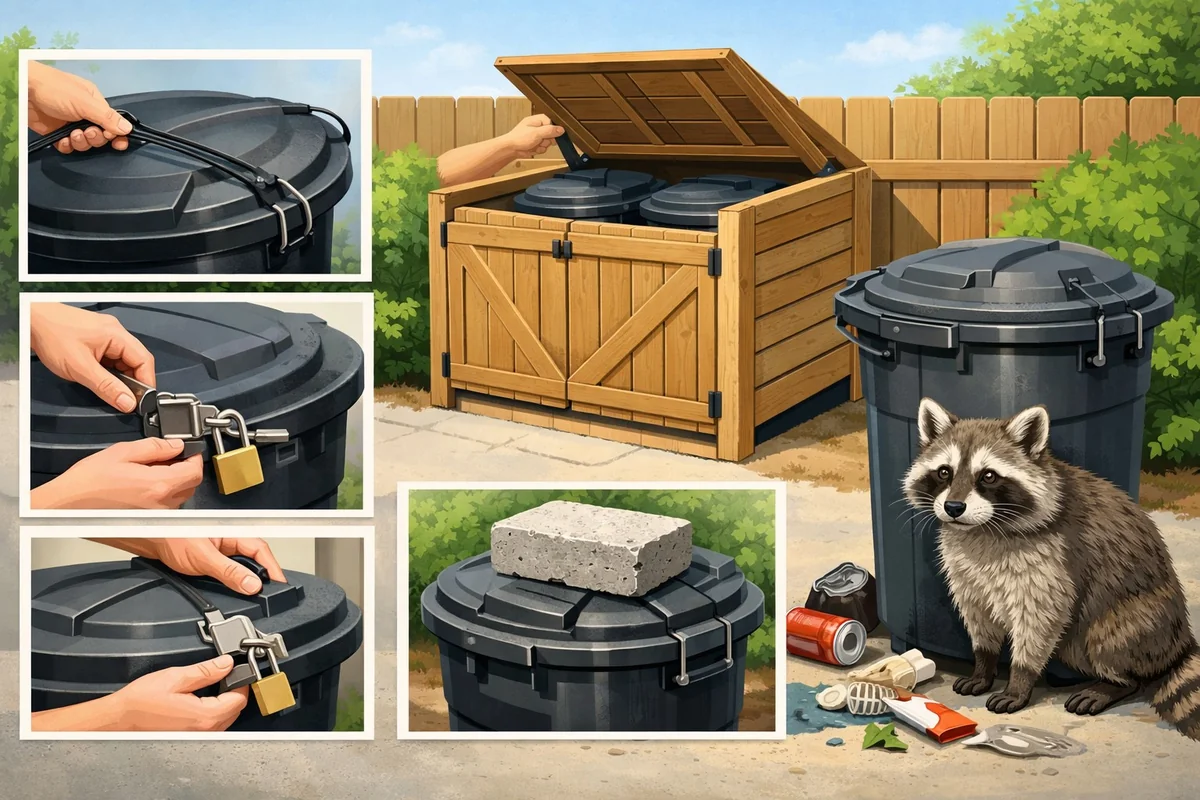
Best Raccoon Repellents: Motion Sprinklers, Trash Locks and More
The best raccoon repellents: Orbit motion sprinkler, TrashLocker and suifaly trash locks, Broox and CKCOEO solar deterrents, plus exclusion and what does not work.
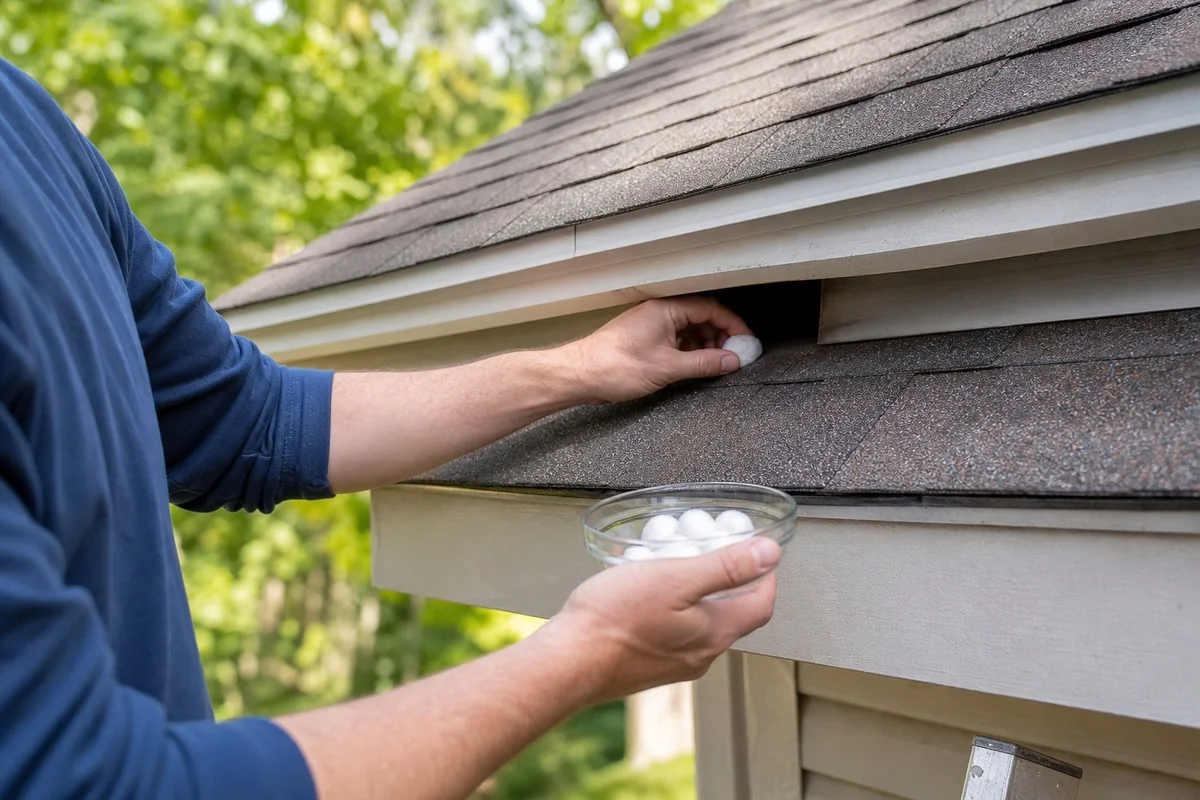
How to Make a DIY Raccoon Repellent for the Attic, Step by Step
A DIY raccoon repellent for the attic: a light, radio and vinegar eviction kit, how to confirm the attic is empty,, how to seal vents, soffits and chimneys for good.
Homemade Raccoon Repellents: What Works and How to Use It
Homemade raccoon repellents that work: food control, DIY exclusion, a hot pepper spray recipe and scare tactics, plus why vinegar, ammonia and mothballs fall short.