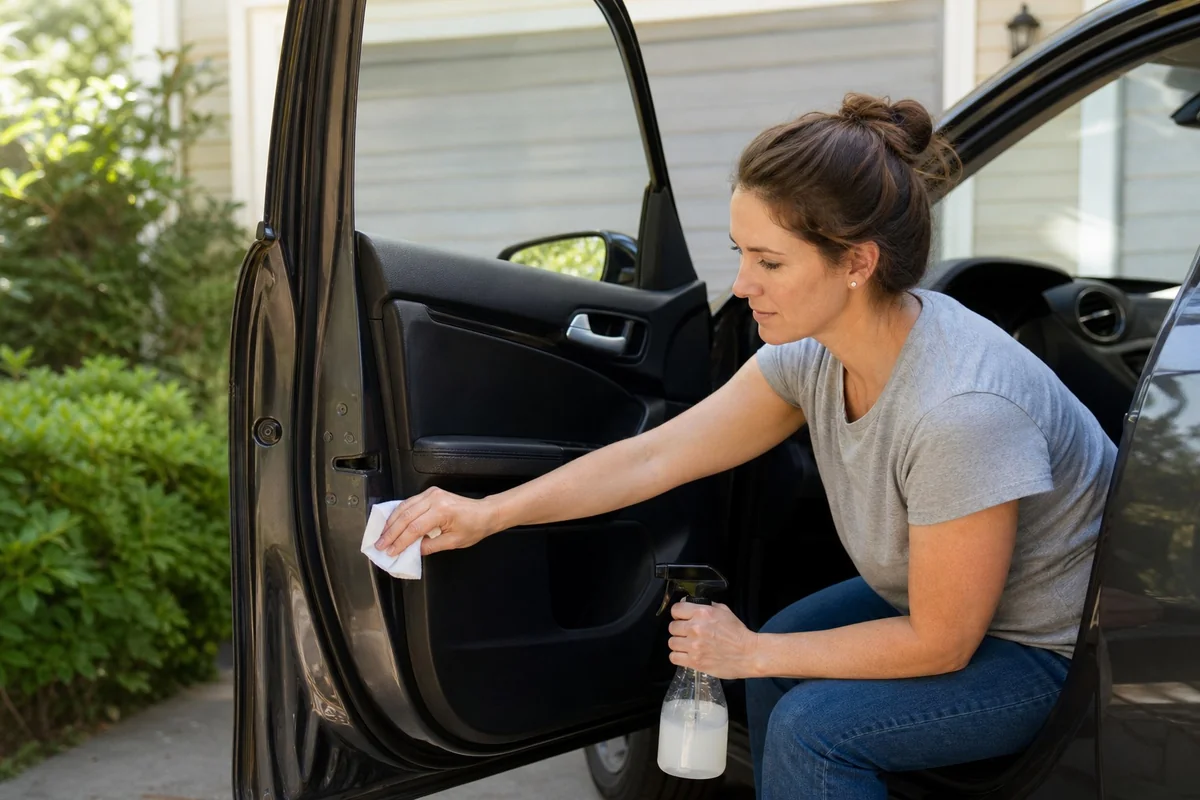

Keep Spiders Out of Your Car: Cleaning, Parking and Repellents
How to keep spiders out of your car: where they hide, how to clean them out, what you can put in a car to repel spiders, and why insecticides belong in the garage.
The best spider repellent for a car is not a spray but a routine: park away from shrubs and lights, wash out mirror housings and door jambs, vacuum the cabin and keep it free of food and clutter. No repellent is proven to keep spiders out of a car, and most household insecticides are not labeled for vehicle interiors.
Why Spiders End Up in Cars
Spiders do not seek out cars; cars park where spiders already live. A car left overnight beside a hedge, under a tree, next to a porch light or in a cluttered garage sits in the middle of spider territory, and its mirrors, gaps and seals look like any other sheltered crevice. Insects drawn to nearby lights then bring spiders to the outside of the car, and from there a few wander in through open windows, doors and vents.
The problem is not only cosmetic. Mazda has recalled Mazda6 sedans more than once because yellow sac spiders built webs inside a fuel-system vent line, which could block it and stress the fuel tank. That is an unusual case, but it shows why spiders around a car are worth dealing with rather than ignoring.
The same habits that keep spiders out of the house work for the car. Our guide to the best spider repellents for the house covers sprays and traps for the home and garage, and the indoor spider repellent guides cover pet-safe and homemade options.
Where Spiders Hide on a Car
- Side mirror housings: the gap between the mirror glass and its housing is the most common web site on a car.
- Door jambs and seals: the space between the door and the body, especially around the hinges.
- Window seals and roof rails: narrow channels that stay dry and sheltered.
- Wheel wells and under the bumpers: dark spots with plenty of crevices.
- The cowl and cabin air intake: the area below the windshield where outside air enters the ventilation system.
- Under the seats and in door pockets: where wrappers, crumbs and clutter collect inside.
Knowing these spots matters because a spider seen on the dashboard usually came from one of them. Cleaning and checking them is most of the job.
How to Get Rid of Spiders in Your Car
- Park in an open spot: move the car away from shrubs, trees, woodpiles and walls before you clean, so new spiders do not move straight back in.
- Wash the outside thoroughly: use a hose or pressure washer on the mirror housings, door jambs, window seals, wheel wells and under the bumpers to wash out webs and egg sacs.
- Vacuum the cabin: go under and between the seats, along the door pockets, the trunk and the spare wheel well, using a crevice tool along every seam.
- Remove clutter and food: take out bags, boxes, wrappers and anything that gives spiders or the insects they eat a place to hide.
- Check the cabin air filter: inspect it and the cowl area for webs and debris, and replace the filter if it is dirty.
- Run the fan on high: with the windows down, run the ventilation for a few minutes to blow out anything left in the vents.
- Repeat after a few days: wash the mirrors and vacuum again to catch spiders that hatched from missed egg sacs.
Wear gloves when cleaning a car that has sat unused in a shed or garage for a long time, since black widows favor dark, undisturbed places like these. If a spider appears while you are driving, keep your eyes on the road and pull over somewhere safe before dealing with it.
What Can You Put in Your Car to Repel Spiders?
Many products and home remedies are sold or suggested for cars. The table compares the common choices by what they actually do in a vehicle.
| Method | Works? | Why | Notes |
|---|---|---|---|
| Washing and vacuuming | Yes | Removes spiders, webs and egg sacs | Mirrors, jambs, seals, under seats |
| Parking away from shrubs and lights | Yes | Fewer spiders and insects nearby | Cheapest long-term fix |
| Peppermint oil | Unproven in cars | Some lab evidence; scent fades in heat | Use on a cloth; test surfaces |
| Dryer sheets | No evidence | No tests show spiders avoid them | Not recommended |
| Household insecticide spray | Not for car interiors | Most labels cover buildings only | Use in the garage instead |
| Bug fogger | No | Unsafe residue in a closed cabin | Never in a car |
Peppermint oil has some lab evidence for deterring certain spider species, but none in cars, and a hot cabin makes any scent fade fast. Oil sprays can also mark leather, fabric and dashboard plastics, so test on a hidden spot first. Most household insecticide sprays are labeled for buildings, not vehicle interiors; never use one inside a car unless its label lists vehicles, and never set off a fogger in a closed car. If you want to try peppermint, put a few drops on a cotton ball or cloth in a door pocket rather than spraying the interior.
What Is the Best Outdoor Spider Spray for Cars?
The car itself is the wrong place for an outdoor spider spray. Insecticides are not made for car paint, glass or rubber seals, and rain and car washes remove them anyway. Treat where the car is parked instead.
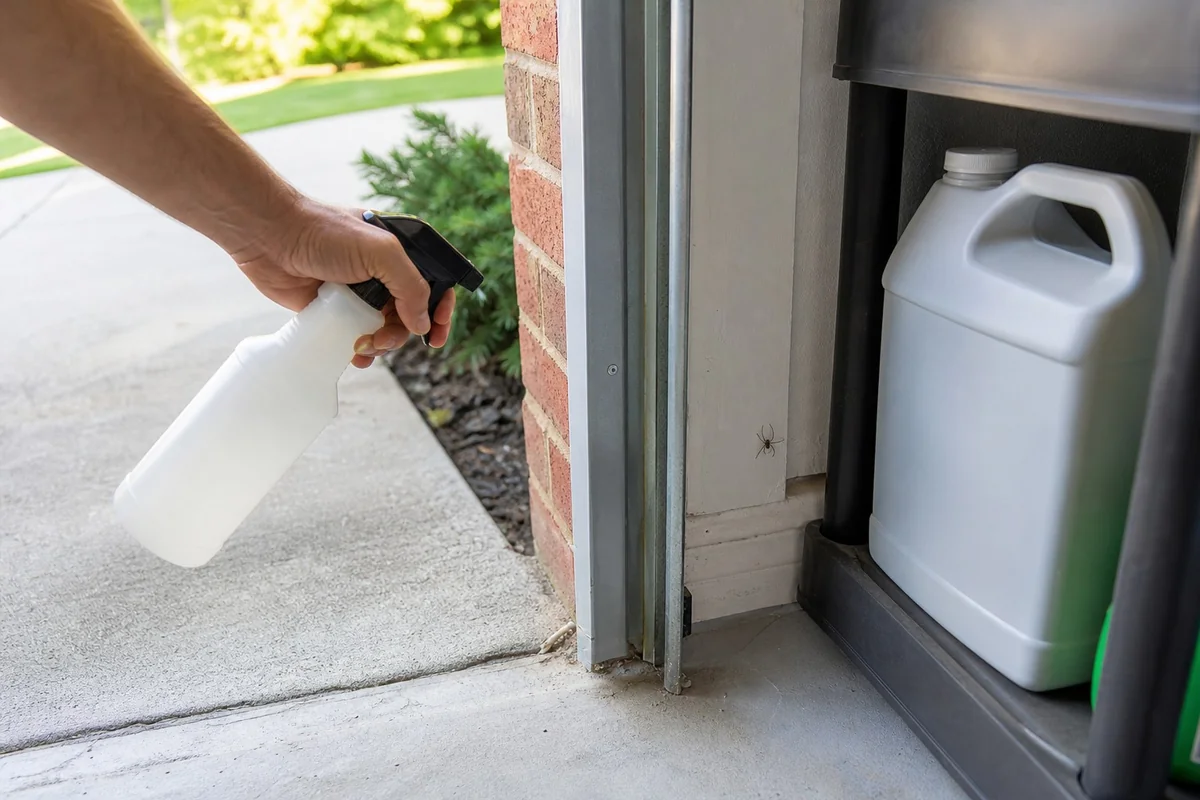
- In a garage: a residual spider spray along the base of the walls, the door opening and the corners keeps spiders from reaching the parked car.
- On a driveway: trim shrubs and branches back from where you park and move outdoor lights away from the parking spot.
- Under a carport: knock down webs on the posts and roof regularly with a broom or hose.
A clean car parked in a tidy spot away from bright lights and shrubs gives spiders little reason to move in.
How to Keep Spiders Out of Your Car Long Term
Prevention comes down to where you park and how you keep the car:
- Keep windows and the sunroof closed when parked, especially overnight.
- Wash the car regularly, paying attention to the mirrors, jambs and seals where webs start.
- Vacuum every few weeks and keep food, wrappers and clutter out of the cabin.
- Drive cars that sit at least every week or two, since a car that never moves becomes a quiet shelter.
- Keep the garage clear, with boxes in closed bins on shelves rather than piled next to the car.
Spiders are most noticeable in late summer and fall, when many wander in search of mates, so step up the washing and checks then.
Common Questions About Spiders in Cars
Why do spiders keep building webs on my side mirrors?
Why do spiders keep building webs on my side mirrors?
The gap behind the mirror glass is dry, sheltered and sticks out into the air where insects fly, which makes it an ideal web site. Hose or pressure-wash the housing regularly and park away from lights and shrubs to cut the number of spiders that find it.
Can spiders get into a car's air vents?
Can spiders get into a car's air vents?
They can reach the cowl and cabin air intake below the windshield. Check the cabin air filter and the cowl area for webs, replace a dirty filter, and run the fan on high for a few minutes after cleaning.
Are spiders in a car dangerous?
Are spiders in a car dangerous?
Most are harmless. The real risk is distraction: a spider on the dashboard can startle a driver, so pull over safely before dealing with it. Wear gloves when cleaning a car that has been stored for a long time, where black widows may have settled.
Will a car wash get rid of spiders?
Will a car wash get rid of spiders?
It removes many webs on the outside, but automatic washes often miss the inside of mirror housings, door jambs and seals. Follow up with a hose on those spots and vacuum the cabin.
Key Takeaways
No spray or scent is proven to keep spiders out of a car. Washing the mirrors, jambs and seals, vacuuming the cabin and removing clutter get rid of the spiders that are there, and parking away from shrubs and lights keeps new ones from moving in.
Use insecticides in the garage or around the parking spot, not inside the car, unless a product's label specifically lists vehicles. Peppermint is harmless to try on a cloth, but expect little from it in a hot car.
This week, hose out both side mirror housings and vacuum under the seats, then check again in a few days.
Related Articles
Best Pet-Safe Spider Repellents: Options for Dog and Cat Homes
Best pet-safe spider repellents for indoors: Vanquar and Waspika peppermint sprays for dog homes, glue boards for cat homes, and why essential oils and cats clash.
Homemade Indoor Spider Repellents: What Works and How to Spray
Homemade indoor spider repellents: what the evidence says about peppermint, vinegar, lemon and lavender, plus a peppermint spray recipe.
Best Spider Repellents for the House: Sprays, Peppermint, Traps
The best spider repellent sprays for the house: Miss Muffet's Revenge barrier, Raid MAX and TERRO aerosols, peppermint sprays, Catchmaster traps and sealing tips.
Best Spider Repellents for the Garage: Sprays, Traps and Seals
The best spider repellents for the garage: Miss Muffet's Revenge barrier spray, Raid MAX for black widows, Catchmaster traps, a door threshold seal and Mighty Mint.