
 Pest Pro Reviews Editorial Team • • 20 min read •
 Termite Baits vs Liquid Treatments: Which Is Better? Full Comparison 2026
Compare termite baits vs liquid treatments to find the best method for your home in 2026. Discover how each works, cost, safety, and which is right for your termite problem.
Termite baits vs liquid treatments: Baits eliminate entire colonies for lasting control, while liquid treatments offer fast, perimeter protection. Baits are best for hidden infestations or sensitive environments, but require patience. Liquids work quickly for urgent problems, especially outdoors.
Choose baits for long-term peace of mind; use liquids for immediate results.
- Termite baits excel at wiping out colonies for long-term protection, while liquid treatments provide rapid, localized defense.
- Liquid barriers work instantly but may leave colonies untouched; baits are slower but more thorough.
- Pick baits for colony elimination and sensitive sites; choose liquids for quick results and perimeter-only threats.
Key Differences Between Termite Baits and Liquid Treatments
Both termite baits and liquid treatments can stop termite damage, but how they work - and what problems they solve - are very different. You need to know these differences to pick the approach that actually fits your home, your risk, and your patience level.
Identify your needs and get personalized recommendations
Learning about termite solutions, focused on easy and safe options.
Wants a solid introduction to pest removal and simple, reliable products.
Compares detailed features to find the best overall fit.
Focuses on balancing price, effectiveness, and ongoing costs.
Wants a quick and confident decision based on key factors.
Aims for top performance and support, even if it costs more.
How Each Method Targets Termites
Termite baits use slow-acting toxicants hidden inside stations, which worker termites carry back to the colony. The real strength here is that the bait doesn't kill instantly, so workers keep feeding it to the queen and the rest of the nest. Over time, this can wipe out the entire colony, not just the foragers near your house.
Liquid treatments, on the other hand, work by creating a treated zone in the soil around your foundation. These chemicals kill or repel termites that try to cross, acting as a shield. But if termites are already inside your walls, liquids may not reach them unless you inject the chemical directly where they’re hiding - which is rarely practical for DIYers.
Timeframe for Results
Results from baits aren’t overnight. It usually takes 2-4 weeks for termite activity to noticeably drop, since the active ingredient needs to move through the colony. If you’re dealing with a stubborn or very large colony, it can take several months for total elimination.
Liquid treatments can knock down termites fast - sometimes within hours of application. However, this speed comes with a catch: you may stop the visible damage, but unless every access point is sealed, some termites can still survive and reappear later.
Colony Elimination vs Immediate Protection
If your goal is to end the entire termite colony, baits are designed for that. They get carried deep into the nest, targeting every caste - including the queen and developing nymphs. But they demand patience and regular monitoring.
Liquids shine for immediate defense. They stop termites at the property line, but unless you treat every possible entry, hidden colonies can persist out of reach. That's why many experts recommend combining both methods for severe infestations.
If you want a deeper dive on termite control strategies, see our main guide on Termite Control.
Evaluation Criteria for Termite Treatment Comparison
When comparing termite baits vs liquid treatments, we focused on what matters most for homeowners and renters trying to solve a real infestation - not just the technical specs. Here are the criteria we weighed and why they matter for your decision:
- Speed of Results: Is it fast enough to stop active damage?
- Colony Elimination: Will it wipe out the nest, or just stop current activity?
- Ease of Use: Can a DIYer install, monitor, and maintain it safely?
- Long-Term Effectiveness: Will you need to retreat every year, or does it solve the problem for good?
- Safety & Environmental Impact: Is it safe around pets, kids, wells, or gardens?
- Cost Over Time: What’s the real price after maintenance and retreatment?
Each of these factors plays a different role depending on your situation. For example, speed matters most when termites are chewing your walls; safety matters most near play areas or edible plants. Keep these priorities in mind as we break down each method.
How Termite Bait Systems Work
Bait systems take a long-game approach. Instead of killing termites immediately, they exploit termite behavior - workers forage, find the bait, and carry it back to the colony to share. The slow-acting ingredient is key: it gives time for the poison to circulate before any termites realize what's happening.
Active Ingredients and Their Effects
Most baits use insect growth regulators (IGRs) like hexaflumuron or noviflumuron. These chemicals don’t kill termites outright; they disrupt molting, so termites die when they shed their skins. This delayed effect is intentional - it prevents the colony from learning to avoid the bait.
Because foragers feed the entire colony (including the queen and larvae), an effective bait can collapse a nest from the inside out. The Advance Termite Bait System by BASF (Trelona ATBS) is a professional-grade example, using noviflumuron for maximum spread within the colony. It’s a premium option with a strong track record for total colony elimination.

Advance Termite Bait System
The Advance Termite Bait System by BASF targets entire termite colonies using noviflumuron, a proven insect growth regulator for effective colony elimination. Its in-ground stations provide ongoing monitoring and gradual control, making it suitable for long-term prevention in homes with existing or high risk of termite activity. Designed for professional use, it offers higher reliability and coverage than typical DIY kits.
Why We Recommend This
We recommend the Advance Termite Bait System for those prioritizing comprehensive, proven termite colony elimination. Its use of noviflumuron and professional-grade monitoring delivers superior results over most DIY bait kits, especially for homes with ongoing or high-risk termite issues. This system stands out for reliability and the potential for total colony collapse with minimal disruption.
vs Competitors: Compared to entry-level DIY bait kits like Spectracide, the Advance system offers more robust monitoring and higher efficacy, though it requires professional installation and maintenance.
Best For:
Homeowners and property managers seeking professional-grade, long-term termite control with minimal disruption to landscaping and structures.
- Ideal for homeowners seeking discreet, ongoing protection against subterranean termites
- Recommended for properties with previous infestations or in high-risk termite zones
- Contains noviflumuron 0.5% active ingredient for colony-wide impact
- Includes 10 in-ground bait stations with tamper-resistant design
- Demonstrated long-term efficacy in eliminating entire termite colonies
- Less invasive than liquid barrier treatments - no trenching or drilling required
- Requires ongoing monitoring and periodic bait replacement by a trained professional
- Higher upfront investment compared to basic DIY bait kits
For budget-conscious homeowners, Spectracide Terminate Termite Detection & Killing Stakes use hexaflumuron in easy-to-place in-ground stakes. They’re meant for quick detection and ongoing colony suppression, though the active ingredient and station design are less robust than pro systems. They’re a strong fit for small yards or spot protection.
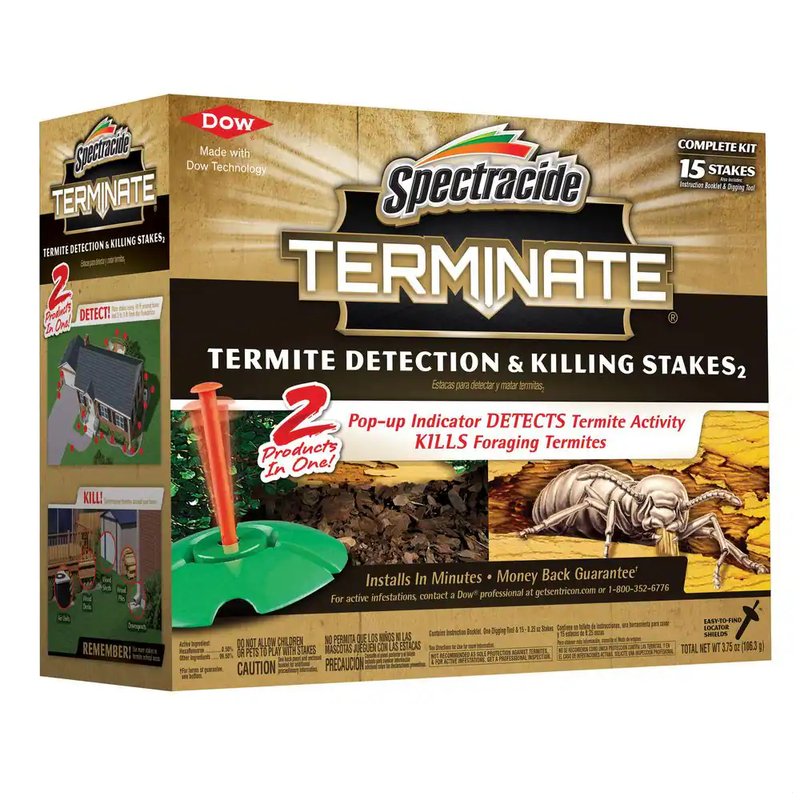
Spectracide Terminate Termite Detection & Killing Stakes
Delivers fast termite detection and targeted colony suppression for small yards with 15 in-ground bait stakes containing hexaflumuron. Each stake provides continuous monitoring over a 12-month period, making it ideal for homeowners seeking straightforward, hands-off termite protection without professional intervention.
Why We Recommend This
We recommend Spectracide Terminate stakes for homeowners prioritizing affordability and ease of use over professional-level coverage. These stakes are a smart starting point for early detection and localized protection, especially in low-to-moderate risk areas. While not suited for severe infestations, they offer dependable monitoring and colony suppression for typical residential needs.
vs Competitors: Compared to premium systems like the Sentricon baiting system, Spectracide Terminate offers a more accessible DIY option but with a lower capacity for colony elimination and less frequent servicing.
Best For:
Budget-conscious homeowners seeking convenient, DIY termite detection and prevention for small to medium-sized yards.
- Ideal for homeowners protecting small yards or specific high-risk zones
- Useful as a supplemental measure alongside liquid barriers for added peace of mind
- Includes 15 in-ground bait stakes for perimeter coverage
- Uses 0.5% hexaflumuron as the active ingredient for termite colony suppression
- Affordable DIY solution suitable for spot treatments and small properties
- Easy installation with visual monitoring - no special tools required
- Less effective for large infestations or expansive properties compared to professional-grade systems
- Requires regular checking and annual replacement for continued protection
Installation and Monitoring Process
Bait stations are installed around the home - typically every 10-20 feet along the foundation. Placement is crucial: too far apart, and termites slip through; too close, and you’re wasting money. After installation, you must check stations every 2-3 months to replenish bait and monitor for activity.
DIY kits like Spectracide’s are simple to place, but professional systems (such as Advance Termite Bait System) offer better long-term monitoring and more durable stations. If you want peace of mind without constant oversight, investing in a premium bait system may be worthwhile.
Limitations and Common Pitfalls
Baits aren’t foolproof. If termites have plenty of alternative food (like wet firewood or mulch), they may ignore your stations. Poor placement or skipped monitoring also undermine their effectiveness.
Don’t use baits as your only line of defense during a major, fast-moving infestation - liquids or combined approaches are often necessary for urgent knockdown. For a full overview of top-performing termite bait systems, see our Best Termite Treatments and Baits 2026 guide.
How Liquid Termite Treatments Work
Liquid treatments rely on chemistry and coverage. They create a treated zone in the soil that termites must cross to reach your home. This can either kill termites outright or repel them, depending on the active ingredient and formula.
Barrier Creation and Soil Application
Non-repellent termiticides, like Taurus SC Termiticide by Control Solutions Inc., are the gold standard for creating invisible, deadly barriers. These chemicals are injected into the soil along the foundation, where termites encounter them as they tunnel. Because they’re non-repellent, termites don’t know to avoid the area and carry the toxin back to the colony.
Repellent formulas, like those containing permethrin, drive termites away instead of killing them. This can lead to problems if termites simply find a new, untreated entry point.
Taurus SC stands out as a professional-strength, long-lasting liquid treatment. It’s designed for those willing to do the labor of trenching or drilling for maximum home protection.
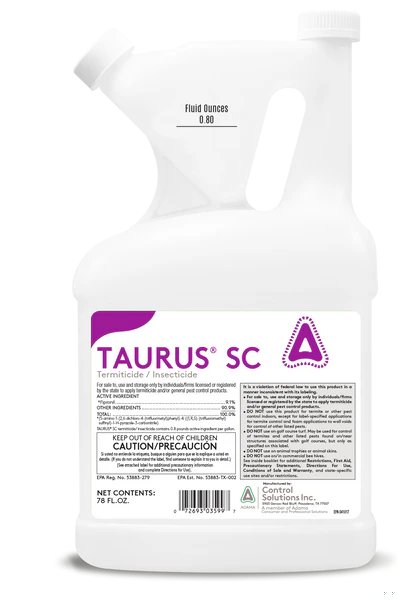
Taurus SC Termiticide
Taurus SC Termiticide delivers professional-grade termite control by forming a non-repellent barrier in soil that targets termites as they tunnel. With a low-use rate formula containing 9.1% fipronil, it provides long-lasting protection for up to 10 years when applied along foundations. Ideal for homeowners and professionals seeking proven, invisible defense against subterranean termites.
Why We Recommend This
We recommend Taurus SC Termiticide for its proven efficacy in eliminating subterranean termites and providing years of protection with a single application. Its non-repellent action is a gold standard in the industry, making it a top choice for those who want reliable, low-maintenance termite defense. While application requires some effort, the long-term peace of mind is unmatched.
vs Competitors: Compared to bait systems, Taurus SC delivers faster overall colony reduction and requires less ongoing monitoring, though initial application is more labor-intensive.
Best For:
Homeowners, property managers, and pest control professionals seeking long-term, professional-grade termite prevention for residential or commercial structures.
- Perimeter soil treatment around residential foundations to prevent termite entry
- Pre-construction barrier installation for new builds in high-risk termite zones
- Contains 9.1% fipronil for effective termite elimination
- Non-repellent formula ensures termites carry fipronil back to the colony
- Creates an undetectable barrier that controls entire termite colonies
- Long-lasting residual action reduces need for frequent reapplications
- Requires trenching and careful soil application, which can be labor-intensive for DIY users
- Not suitable for indoor use or spot treatments - must be applied outdoors per label directions
For DIYers who want a less labor-intensive option, Ortho Home Defense MAX Termite & Destructive Bug Killer is a consumer-grade liquid solution. It’s ideal for spot treatments of exposed wood or small soil areas but doesn’t offer the same depth of protection as professional-grade liquids.
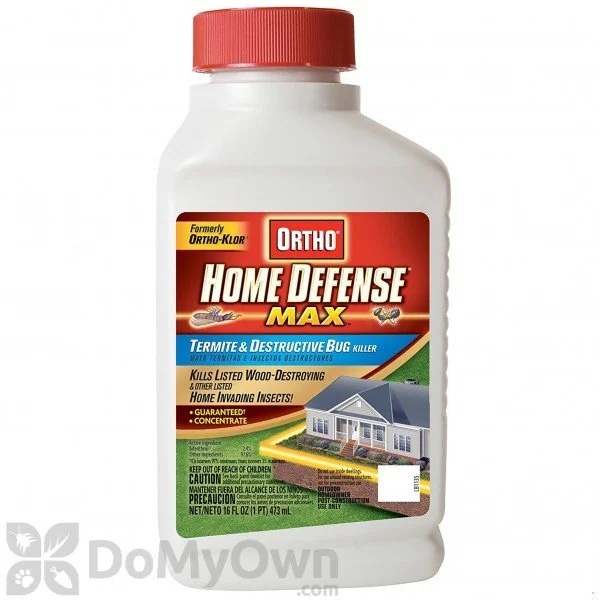
Ortho Home Defense MAX Termite & Destructive Bug Killer
Ortho Home Defense MAX Termite & Destructive Bug Killer delivers targeted protection for homes with localized termite or destructive insect issues. The ready-to-use liquid formula treats up to 32 linear feet of perimeter soil or exposed wood, making it practical for spot applications and DIY pest control projects. Its 1-gallon container is designed for manageable use by homeowners, especially where full-scale professional treatments aren't necessary.
Why We Recommend This
We recommend Ortho Home Defense MAX for readers tackling small-scale or early-stage termite problems who want a manageable, consumer-friendly liquid option. Its ease of use and targeted application make it ideal for spot treatments on exposed wood or minor soil infestations, though it can't fully replace professional-grade barrier treatments for severe issues.
vs Competitors: Compared to professional liquid termiticides, Ortho Home Defense MAX is more accessible for DIYers but offers less long-term protection and coverage depth. It is a practical alternative to termite baits for immediate spot control, though not a substitute for comprehensive soil barriers.
Best For:
Homeowners seeking a DIY solution for spot-treating minor termite or destructive bug problems without hiring a professional.
- Treating localized termite infestations on exposed wood or fence posts
- Creating a barrier in small soil sections around sheds, decks, or outbuildings
- Covers up to 32 linear feet per 1-gallon container (manufacturer spec)
- Targets termites, carpenter ants, and wood-destroying beetles
- Simple application process with included spray wand - suitable for DIYers
- Effective for spot treatment of visible termite activity or problem areas
- Limited to surface and shallow soil protection - not suitable for full structural defense
- Shorter residual effect compared to professional-grade termiticides
Active Ingredients and Mode of Action
Most effective liquid termiticides use fipronil or imidacloprid. Fipronil (found in Taurus SC) disrupts termite nervous systems, killing on contact and through transfer among colony members. Imidacloprid works similarly but tends to be slightly less persistent in the soil.
Non-repellent formulas allow termites to pick up the chemical and bring it back to the colony, offering some secondary kill. Repellent formulas (like permethrin in many consumer sprays) act faster but rarely eliminate the nest.
Limitations and Application Challenges
Liquid barriers only work if you apply them everywhere termites could enter. This often means trenching around the entire home, which is physically demanding and time-consuming. For homes with slab foundations or landscaping features, full coverage may be impossible without professional drilling.
Barriers can be broken by digging, heavy rain, or construction. If the soil shifts, you may lose protection in key areas - requiring reapplication.
Effectiveness in Different Scenarios
Which method wins depends on where the termites are, how urgent your problem is, and the conditions around your home. Here’s how each approach fares in real-world situations.
Best for Active Infestations Inside Homes
If termites have already set up inside your walls or inaccessible areas, bait systems have the edge. The slow-acting poison reaches deep into the colony - even where you can’t physically get with a sprayer.
Liquid treatments may not penetrate far enough to reach termites hidden behind drywall or deep in wood. In severe cases, using both methods together is often the best way to knock down activity quickly and finish the job long-term.
Best for Preventing New Infestations
Liquid barriers are the clear winner for prevention. A well-applied, non-repellent liquid treatment can stop 100% of new termites from entering your home for years - assuming the barrier stays intact.
Bait systems, meanwhile, offer ongoing monitoring. If termites return, you’ll see activity in the stations before they reach your walls. Liquids give you instant defense; baits provide peace of mind over the long haul.
Performance in Different Climates and Soil Types
Liquid barriers can struggle in sandy or very wet soils - rain and irrigation can dilute or wash away the chemical, leaving gaps. In these cases, baits are less affected, since they’re placed in protected stations and don’t rely on soil chemistry.
That said, extreme cold or drought can slow termite foraging, making baits less attractive and reducing their effectiveness until conditions improve. If you’re in a dry or cold region, be patient and monitor stations closely.
Safety and Environmental Considerations
When it comes to safety, both methods have their strengths - and their risks. The right option for your family depends on your tolerance for chemicals, your environment, and how much oversight you can manage.
Risks to Pets, Children, and Non-Target Species
Bait stations are designed to be tamper-resistant, containing small amounts of active ingredient deep inside. They’re generally safe for homes with kids and pets, as long as the stations are left undisturbed.
Liquid termiticides can pose more risk - especially if applied improperly or if runoff occurs. They can harm beneficial soil organisms, aquatic life, and in rare cases, pets or kids who touch treated areas before they dry.
Environmental Impact of Each Method
Baits use a fraction of the pesticide required for full liquid barriers, lowering the chemical load on your property. Most bait actives are insect growth regulators, which have lower toxicity for mammals and birds.
Liquids, especially if overapplied or used near wells and streams, can leach into groundwater and threaten non-target species. That’s why baits are often preferred near gardens, edible plants, or sensitive natural areas.
Regulatory and Labeling Requirements
Most termiticides are tightly regulated by the EPA and must be applied according to the label. Some states restrict DIY use of professional-grade liquids due to environmental risks. Baits, especially consumer kits, are generally easier for homeowners to use safely without any special licensing.
Cost Comparison: Baits vs Liquid Treatments
Cost isn’t just about the price of a kit - it’s about long-term value, maintenance, and how often you need to retreat. Here’s how the two methods stack up for the average homeowner tackling termites themselves.
Upfront Costs and Long-Term Value
Bait systems range from budget options like Spectracide Terminate Stakes to premium choices like Advance Termite Bait System. DIY kits are economical upfront but may need more frequent replacement. Premium systems cost more initially but can pay off by eliminating the colony and reducing retreatment needs.
Liquid treatments like Taurus SC require a moderate investment for chemicals, but you’ll need the right tools and, often, a significant time investment to dig and apply properly. DIY liquid applications are cost-effective if you’re able to do the work yourself; pro installation quickly raises the price.
Maintenance and Reapplication Requirements
Baits require regular monitoring - typically every 2-3 months - and bait replenishment as termites feed. Skipping maintenance leaves you open to reinfestation.
Liquids generally last 5-10 years in stable soil, but any major landscaping, construction, or soil disturbance can break the barrier and require retreatment sooner. If you neglect reapplication, protection vanishes - and termites can return fast.
Professional vs DIY Approaches
DIY bait kits like Spectracide’s are easy for most homeowners to install, though they aren’t as rugged or long-lasting as professional systems like Advance. Liquid treatments often require trenching tools or soil injectors, and mistakes in mixing or application can lead to gaps in coverage.
Professional installation adds cost but may come with warranties or guarantees - something to consider if you want extra peace of mind.
When to Choose Each Method: Real-World Scenarios
Every home and infestation is different. Here’s how to decide which termite control method fits your situation, risk, and DIY comfort level.
Best for DIY Homeowners
Bait systems are generally easier for homeowners to install and monitor safely. There’s less risk of exposure to strong chemicals, and most kits walk you through placement and maintenance step by step.
Liquid treatments require more skill - correct trenching, mixing, and application are critical. Some areas may require permits or restrict DIY use of professional-strength products.
If you want a hands-off approach that minimizes chemical exposure, baits are the safer bet.
Best for Severe or Large-Scale Infestations
When you’re up against a big, active infestation, nothing beats the speed of a liquid perimeter treatment for immediate relief. But if you want to wipe out the colony for good, combining liquids with baits covers both the urgent and long-term angles.
If the infestation is widespread or in hard-to-reach areas, consider a professional assessment to make sure you don’t miss hidden termite nests.
Best for Sensitive Environments
Bait systems are the method of choice near wells, edible gardens, or wildlife habitats. The low environmental impact and tamper-resistant design make them ideal where repeated chemical application is risky or restricted.
Liquids are often banned or tightly regulated near water sources, so check your local rules before using any termiticide outdoors in sensitive areas.
- Termite baits win for patient homeowners who want colony elimination and minimal chemical exposure.
- Liquid treatments win for urgent infestations, perimeter-only threats, and situations where rapid knockdown is essential.
Frequently Asked Questions About Termite Treatments
❓ Frequently Asked Questions
What is the difference between termite baits and liquid treatments?
What is the difference between termite baits and liquid treatments?
Termite baits use slow-acting toxins in stations placed around a property to attract and eliminate colonies over time. Liquid treatments involve applying termiticide barriers into soil to kill or repel termites immediately. Baits offer targeted control and monitoring, while liquids provide a quicker protective barrier but may require more invasive application.
How do I choose between termite baits and liquid treatments?
How do I choose between termite baits and liquid treatments?
When choosing between termite baits and liquid treatments, consider these factors:
- Home construction: slab vs. crawl space affects application
- Severity of infestation: liquids act faster for active problems
- Environmental impact: baits use less chemical overall
- Long-term monitoring: baits can indicate new activity
Consult a licensed pest control professional before deciding.
How often should termite bait stations be checked or replaced?
How often should termite bait stations be checked or replaced?
Termite bait stations should be checked every 2–4 months by a pest control professional. Most users report that stations need refilling or replacement once or twice per year, depending on termite activity and product type. Regular inspections ensure early detection and ongoing protection against new infestations.
Which is better for severe termite infestations: baits or liquid treatments?
Which is better for severe termite infestations: baits or liquid treatments?
For severe termite infestations, liquid treatments are generally more effective because they create an immediate chemical barrier and kill termites on contact. Baits work slower and are ideal for monitoring or preventing new colonies, but may not control large, active infestations as quickly as liquid termiticides.
Are termite baits or liquid treatments safer for pets and the environment?
Are termite baits or liquid treatments safer for pets and the environment?
Termite baits are typically considered safer for pets and the environment because they use smaller amounts of targeted active ingredient, placed in secure stations. Liquid treatments use more chemical, which can contaminate soil or water if misapplied. Always follow product labels and consult professionals for best safety practices.
How do I maintain a liquid termite barrier?
How do I maintain a liquid termite barrier?
To maintain a liquid termite barrier:
- Schedule annual inspections with a licensed professional
- Address any soil disturbance around the treated area
- Repair leaks or drainage issues that can dilute termiticide
- Avoid landscaping changes that disrupt the barrier
Proper upkeep helps maintain protection for 5-10 years, but retreatment may be needed sooner in high-risk areas.
What factors affect the cost of termite baits versus liquid treatments?
What factors affect the cost of termite baits versus liquid treatments?
Termite bait systems usually have a lower upfront cost but require ongoing monitoring fees. Liquid treatments involve higher initial expense for labor and chemicals but often last longer without frequent service. Key cost factors include property size, local termite pressure, and the need for follow-up visits or repairs.
Our Verdict: Which Termite Control Method Is Better?
If you want to eliminate the entire termite colony and reduce the need for retreatment, go with a quality bait system. Advance Termite Bait System by BASF stands out for its colony-wide reach and professional durability, while Spectracide Terminate Stakes offer a budget-friendly entry point for smaller homes or as an early warning system.
For urgent infestations or as a robust perimeter defense, liquid treatments like Taurus SC deliver fast results and long-lasting protection - provided you’re willing to do the groundwork. Ortho Home Defense MAX is a solid option for spot treatments or areas where professional-grade liquids aren’t practical.
Choose baits if you’re patient, want minimal chemical exposure, or need peace of mind in sensitive areas. Opt for liquids when you need immediate protection or have a straightforward, accessible perimeter. For the toughest cases, a combination of both approaches often delivers the best of both worlds - fast relief and lasting colony control.
Related Articles
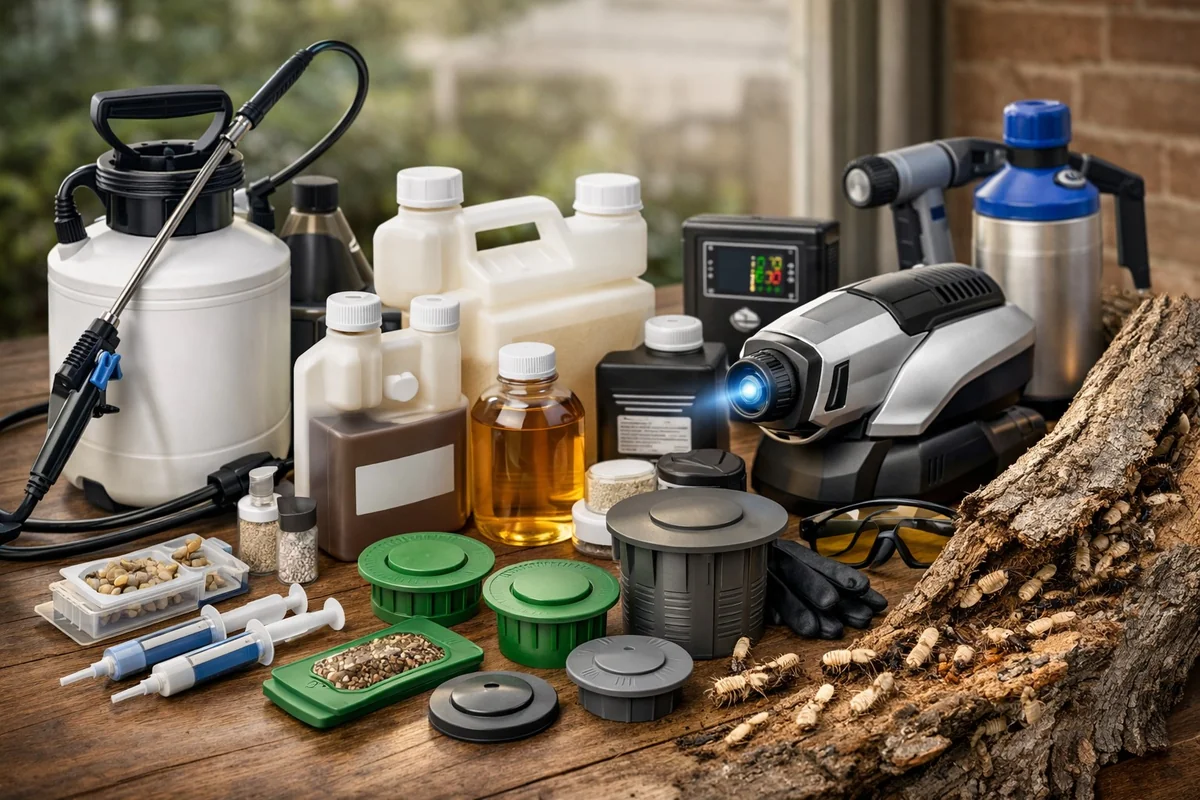
Best Termite Treatments and Baits 2026: Expert Picks for DIY Control
Best termite treatments and baits for 2026. Compare top-rated liquid barriers, bait stations, sprays, and natural solutions for effective DIY termite control.
Best Carpenter Ant and Wood Borer Treatments 2026: Top Baits, Sprays, and Safe Solutions
Discover the best carpenter ant treatments and wood borer control products for 2026. Compare effective baits, sprays, natural solutions, and expert tips to eliminate pests and protect your home - DIY-friendly and budget-conscious.

Complete Guide to Pest Prevention in Homes: Stop Pests in 2026
Protect your home in 2026 with this complete pest prevention guide. Discover proven DIY methods, room-by-room tips, safe solutions for families, and expert advice to stop pests before they start.
![Best Protective Gear for Pest Control 2026 [Expert Reviews]](https://pestproreviews.com/images/hero/hero_best_protective_gear_for_pest_control_2026_expert.webp)
Best Protective Gear for Pest Control 2026 [Expert Reviews]
Protect yourself during DIY pest control in 2026 with our expert-reviewed guide to the best protective gear. Compare top-rated respirators, gloves, coveralls, and more for safe, effective pest removal at home.