 Pest Pro Reviews Editorial Team • • 21 min read •
 Top 7 Termite Sprays for Homeowners (2026): Expert Reviews & Picks
Find the top 7 termite sprays for homeowners in 2026. Compare effectiveness, safety, and value to pick the best termite spray for fast, reliable DIY pest control.
The best termite sprays for homeowners in 2026 are Termidor Foam, Spectracide Terminate, and Ortho Home Defense. We compared 7 top products for effectiveness, safety, and ease of use. This guide is for DIYers looking to tackle termite infestations with proven, practical solutions.
- Foam sprays excel at hidden termite galleries, while granules target soil-based colonies.
- Nerve agents like fipronil and bifenthrin deliver weeks to months of protection per application.
- Budget picks work for small problems, but severe infestations often require professional-grade products or escalation.
How Termite Sprays Work to Eliminate Infestations
Termite sprays disrupt termite colonies by targeting their nervous system, growth, or ability to feed. The most effective options use active ingredients that either kill on contact or linger to eliminate workers and queens over time. The right spray can mean the difference between total eradication and a recurring headache.
Identify your needs and get personalized recommendations
Looking for simple, safe, and easy-to-understand termite spray options.
Wants to understand the basics and avoid common mistakes when buying termite sprays.
Compares features and performance to find the most effective termite spray.
Focuses on getting the best combination of quality and price.
Wants the most reliable, available, and well-supported termite spray right now.
Needs effective termite protection without spending too much.
Active Ingredients and Their Effects
Most leading termite sprays rely on one of three actives: imidacloprid, bifenthrin, or fipronil. Fipronil and bifenthrin are neurotoxicants - meaning they disrupt the termite’s nervous system, causing paralysis and death within hours to days. Imidacloprid is a neonicotinoid that interferes with nerve signaling but does so more slowly, allowing affected termites to return to the colony and spread the poison.
Residual sprays (such as those with bifenthrin) leave a chemical barrier that keeps working for 1-6 months after application. Contact killers act quickly but don’t always reach hidden termites deep in wood or soil. Colony-level eradication depends on the ingredient: fast-acting products may stop visible activity but leave the queen alive, while slower formulas (like imidacloprid granules) can collapse the entire colony over several weeks.
Spray Application Methods
Direct sprays are best for visible surface infestations or isolated swarms. Perimeter treatments create a chemical barrier around the home’s foundation, blocking new invaders and catching wandering workers. Foam injections expand to fill wall voids and wood galleries - critical for drywood termites or when you hear hollow-sounding wood but can’t see the nest.
Penetration matters: foam can reach several inches into wall voids, while liquid sprays mostly coat the surface. Granules, like imidacloprid-based BioAdvanced Termite Killer Granules, soak into soil to target subterranean colonies. The trade-off is that perimeter and granular methods take more prep but offer broader protection, while direct sprays and foams are faster but need precise application. For a broader strategy, see the Best Termite Treatments and Baits 2026 guide.
How We Selected the Best Termite Sprays for 2026
Our analysis focused on effectiveness, safety, and ease of use - factors that matter most to homeowners tackling termites themselves. We researched each product’s active ingredient, reported performance against both subterranean and drywood species, and how well it fit typical DIY scenarios.
Products were evaluated for:
- Efficacy against major termite types - especially in moderate to severe infestations
- Safety for indoor and outdoor use, including risk to pets and children
- Clarity of instructions and application method (spray, foam, granule)
- Odor, residue, and staining potential on common surfaces
- User-reported success rates and expert pest control recommendations
We excluded niche or hard-to-find products in favor of widely available, proven solutions. This list is built for homeowners and renters looking for reliable, budget-conscious termite control. For broader prevention and wood pest advice, see the Termite Control resource.
With those criteria set, here are the products that consistently outperformed the rest - starting with the one that works for most households.
BASF Termidor Foam: Best Overall for Wall Voids
BASF Termidor Foam stands out for its ability to reach and destroy hidden termite galleries inside walls, joists, and wood structures. It uses fipronil, a professional-grade active that’s slow-acting enough to spread through the colony, but still delivers visible results within days.
- Expanding foam formula penetrates deep into wall voids and wood
- Professional-strength fipronil attacks both workers and the queen
- Minimal odor and non-staining, making it suitable for indoor use
- Easy-to-use nozzle targets cracks, crevices, and entry points
- Residual effect lasts several weeks in treated areas
This is the go-to for homeowners dealing with drywood termites or wall infestations you can’t fully expose. The trade-off is cost and the need for careful targeting, but for most indoor jobs, it’s the most effective DIY option.
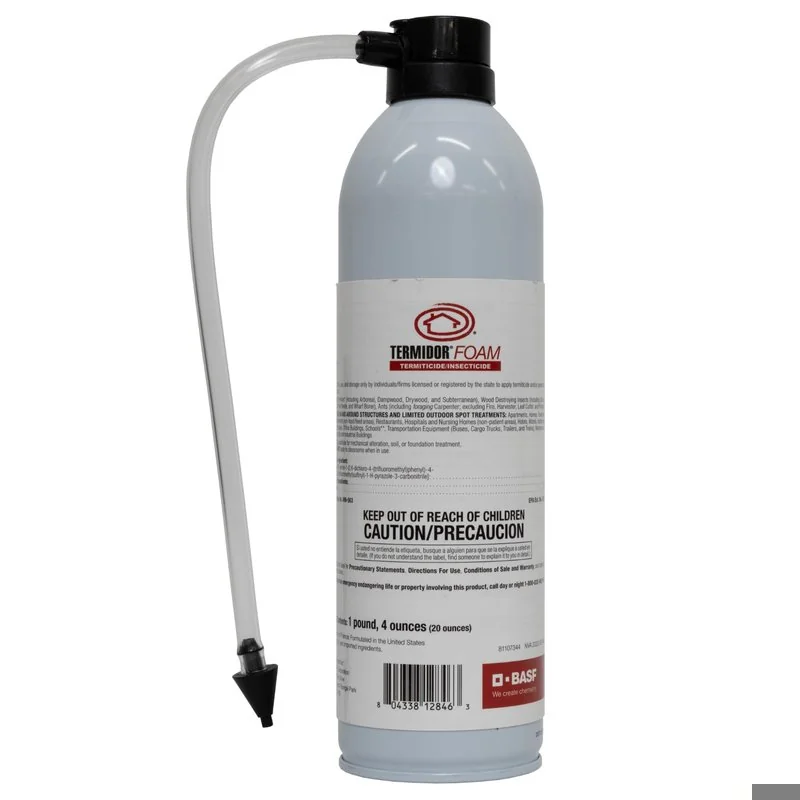
Termidor Foam
Termidor Foam delivers targeted termite control with a precision applicator and expanding foam that penetrates deep into wall voids and hidden galleries. Its 0.005% fipronil formula quickly eliminates termites at the source, making it ideal for treating hard-to-reach infestations behind drywall or in structural cavities. The ready-to-use aerosol ensures minimal disruption to household routines during spot treatments.
Why We Recommend This
We recommend Termidor Foam as the top spray solution for addressing concealed termite activity in walls and structural voids. Its fipronil-based formula and expanding reach outperform most aerosol competitors, making it a reliable choice for homeowners and professionals managing spot infestations where liquid barriers can't reach. This product excels in focused applications rather than whole-structure treatments.
vs Competitors: Compared to Spectracide foam sprays, Termidor Foam offers professional-grade fipronil and superior penetration, though it's less suited for widespread infestations than products like Taurus SC.
Best For:
Homeowners, DIY pest controllers, and professionals needing a targeted solution for hidden or hard-to-access termite activity
- Treating active termite galleries inside wall voids or behind baseboards
- Spot treating localized infestations in crawl spaces, attics, or wood framing
- Contains 0.005% fipronil for rapid termite elimination
- Expanding foam reaches up to 4 feet inside voids and galleries
- Highly effective for localized, hidden termite infestations
- Expanding foam ensures thorough coverage in inaccessible areas
- Not designed for large-scale or perimeter treatments
- Requires careful application to avoid accidental exposure in living areas
Spectracide Terminate: Best for Budget-Friendly Spot Treatments
Spectracide Terminate Termite & Carpenter Ant Killer is a surface spray that delivers quick results for visible termites and localized infestations. It’s an affordable choice for spot treatments - ideal if you’re dealing with isolated swarms or want a backup spray for new sightings.
- Ready-to-use trigger spray - no mixing required
- Fast-acting formula targets termites and carpenter ants on contact
- Good for perimeter baseboards, crawlspaces, and exposed wood
- Budget-friendly for small jobs or frequent re-treatments
- Not designed for deep penetration or colony elimination
If you’re on a tight budget and need to stop termites fast, this is your best bet. However, it’s less effective for severe or hidden infestations compared to foams and granules.
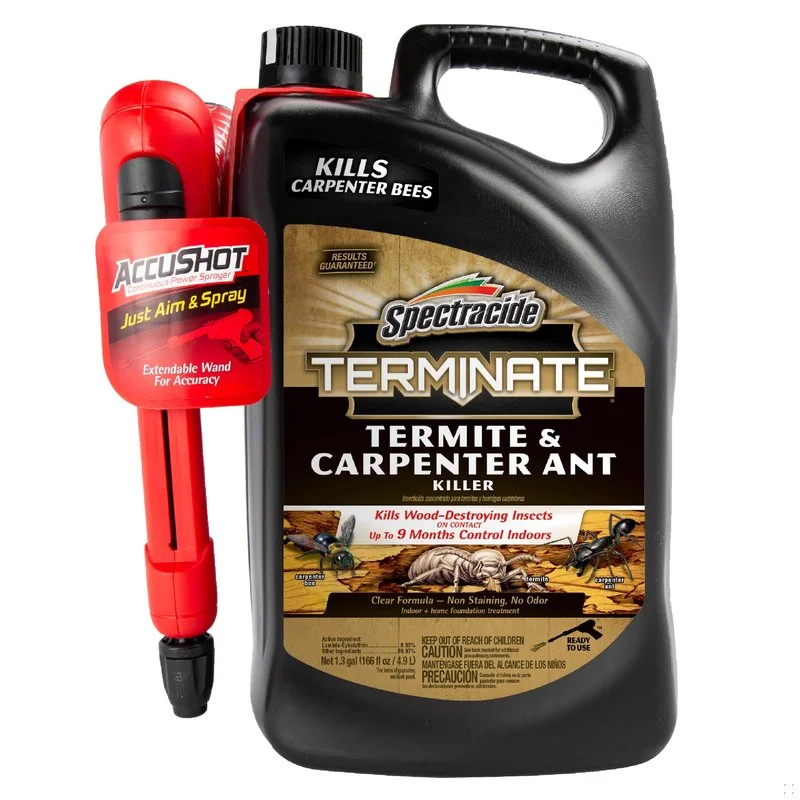
Spectracide Terminate Termite & Carpenter Ant Killer
Spectracide Terminate Termite & Carpenter Ant Killer provides immediate spot treatment for visible termite and carpenter ant infestations, requiring no mixing or special equipment. The 1-gallon ready-to-use spray delivers targeted control for indoor and outdoor applications, making it ideal for quick responses to localized pest problems. Designed for homeowner convenience, it is suitable for direct application to infested areas, decks, and wood structures.
Why We Recommend This
We recommend Spectracide Terminate Termite & Carpenter Ant Killer for homeowners who need a fast and accessible option to control visible pest activity. Its no-mix, ready-to-use design makes it ideal for spot treatments, especially when a more involved solution like liquid trenching isn’t practical. This is a reliable pick for quick, targeted intervention.
vs Competitors: Unlike Taurus SC, which requires mixing and is suited for perimeter protection, Spectracide’s ready-to-use spray excels for immediate, localized action but is less effective for long-term prevention.
Best For:
Best for homeowners seeking a fast, ready-to-use solution for spot-treating visible termite and ant activity without advanced equipment or professional help.
- Treating active termite or carpenter ant trails found on exposed wood or around the home perimeter
- Spot-treating infested areas in decks, fences, crawl spaces, or garages where pests are visible
- Ready-to-use 1-gallon spray format for instant application
- Effective against both termites and carpenter ants
- Quick and convenient for treating visible infestations without setup
- Allows homeowners to address small problems before they spread
- Not suitable for large-scale or preventative treatments
- Requires direct contact with pests for effectiveness
Ortho Home Defense Termite & Destructive Bug Killer: Best for Perimeter Protection
Ortho Home Defense Termite & Destructive Bug Killer is built for creating a lasting barrier around your home’s perimeter. Its bifenthrin-based formula works well for ongoing defense, especially in areas known for heavy termite activity.
- Designed for outdoor use - apply to foundations, crawlspace perimeters, and entry points
- Forms a protective barrier lasting up to several months
- Non-staining, low-odor, safe for most exterior materials
- Easy-to-use sprayer covers large areas quickly
- Effective against multiple destructive insects, not just termites
Choose this if you’re focused on prevention or want to keep termites from returning after treatment. It’s less direct for wall voids but shines as the first line of defense outside.
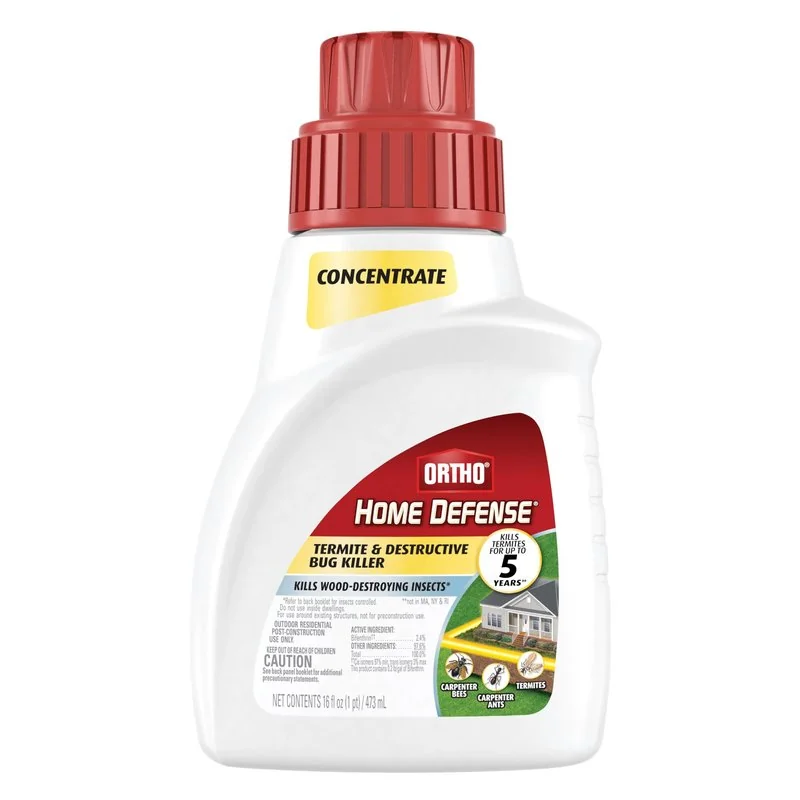
Ortho Home Defense Termite & Destructive Bug Killer
Ortho Home Defense Termite & Destructive Bug Killer provides strong perimeter protection against termites and other destructive bugs with its bifenthrin-based formula. Designed for exterior application, it creates a long-lasting barrier around home foundations and entry points, making it well-suited for properties in high-risk termite regions. The 1-gallon ready-to-use spray treats up to 200 linear feet in a single application.
Why We Recommend This
We recommend Ortho Home Defense Termite & Destructive Bug Killer for homeowners looking to proactively shield their homes from termite damage. Its user-friendly application and wide coverage make it a practical choice for DIY perimeter protection, particularly where professional treatments may be cost-prohibitive or unnecessary for prevention.
vs Competitors: Compared to other perimeter sprays, Ortho’s formula offers similar residual protection and ease of use but stands out for its nationwide availability and clear application instructions.
Best For:
Homeowners seeking a simple, DIY solution for exterior termite prevention and those living in regions with moderate to high termite pressure.
- Protecting the foundation and exterior wood elements of homes in termite-prone areas
- Preventive perimeter spraying during spring and summer to block seasonal termite activity
- Contains 0.3% bifenthrin as the active ingredient for broad-spectrum insect control
- Covers up to 200 linear feet per gallon for large area protection
- Effective at creating a reliable barrier against termites and carpenter ants
- Easy-to-use applicator allows quick setup and targeted spraying along perimeters
- Not intended for direct treatment of active indoor termite infestations
- Requires periodic reapplication to maintain optimal protection in heavy rain regions
BioAdvanced Termite Killer Granules: Best Granular Option for Soil Treatment
BioAdvanced Termite Killer Granules are made for soil treatment, targeting subterranean colonies before they invade your home. The imidacloprid granules are easy to spread and water in, reaching the tunnels where termites live and breed.
- Granular formula - spread around foundations, patios, and wood-to-soil contact points
- Imidacloprid works through trophallaxis (termites feed each other and the queen)
- Effective for large perimeter areas or hard-to-spray spots
- No strong odor and minimal residue after watering in
- Colony elimination may take several weeks as the active ingredient spreads
This is the right choice for homes with visible mud tubes or repeated outdoor infestations. It’s slower than sprays but covers a broad area with less risk of missed spots.
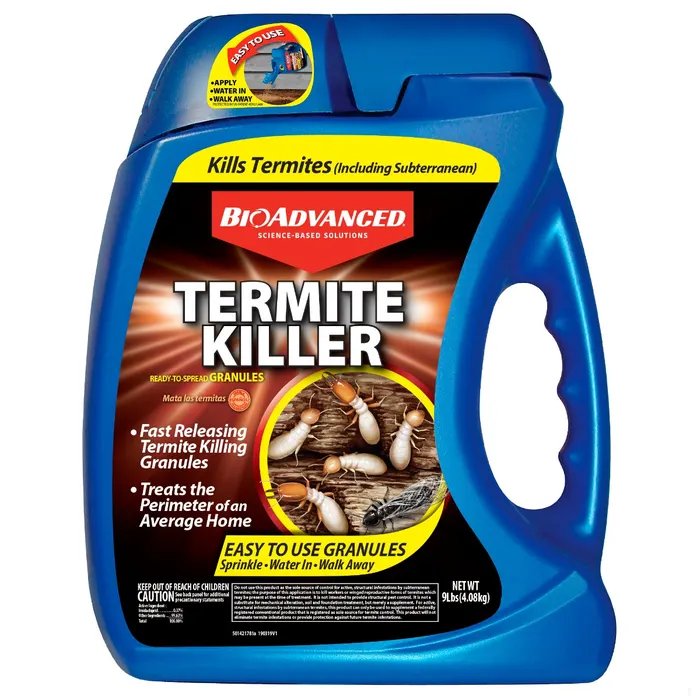
BioAdvanced Termite Killer Granules
BioAdvanced Termite Killer Granules provide long-lasting protection by targeting subterranean termite colonies directly in the soil around your home's foundation. The imidacloprid-based formula penetrates deeply when watered in, helping disrupt termite activity below ground. Ideal for homeowners seeking broad perimeter defense with measurable colony control.
Why We Recommend This
We recommend BioAdvanced Termite Killer Granules for homeowners who want to address subterranean termites with minimal disruption to their property. Its granular formula is easy to apply around foundations and offers broader coverage than many direct sprays or foams. This is a reliable pick for those prioritizing long-term, preventative termite control outdoors.
vs Competitors: Compared to liquid perimeter sprays, these granules require more prep but deliver longer-lasting protection and reach deeper into the soil, though they may act more slowly than direct-contact foams for active infestations.
Best For:
Homeowners seeking a low-maintenance, preventative termite solution for larger outdoor or perimeter areas, especially where direct access to infestations is limited.
- Best for creating a protective barrier around home foundations to prevent termite entry
- Ideal for treating lawns, crawl spaces, and soil adjacent to wooden structures in termite-prone regions
- Contains 0.37% imidacloprid granules for effective soil treatment
- Covers up to 200 linear feet per 9 lb bag
- Targets entire colonies by soaking into the soil and reaching below-ground nests
- Simple perimeter application reduces need for direct wall or void access
- Requires thorough watering and some prep for optimal effectiveness
- Not suitable for spot-treating visible infestations inside walls or structures
Premise Foam: Best for Professional-Grade Indoor Use
Premise Foam by Bayer is a pro-grade imidacloprid foam designed to treat wall voids and deep wood infestations. It expands rapidly, filling spaces that liquid sprays can’t reach, and is favored by pest control operators for its reliability indoors.
- Professional-strength imidacloprid targets hidden galleries and cracks
- Dense foam expands to fill irregular spaces, maximizing contact
- Low odor and minimal staining - suitable for indoor, family spaces
- Works well in combination with perimeter or soil treatments
- Requires careful application to avoid overspray or waste
If you want the thoroughness of a professional application without hiring an exterminator, this is your best bet for hidden or stubborn infestations inside the home.
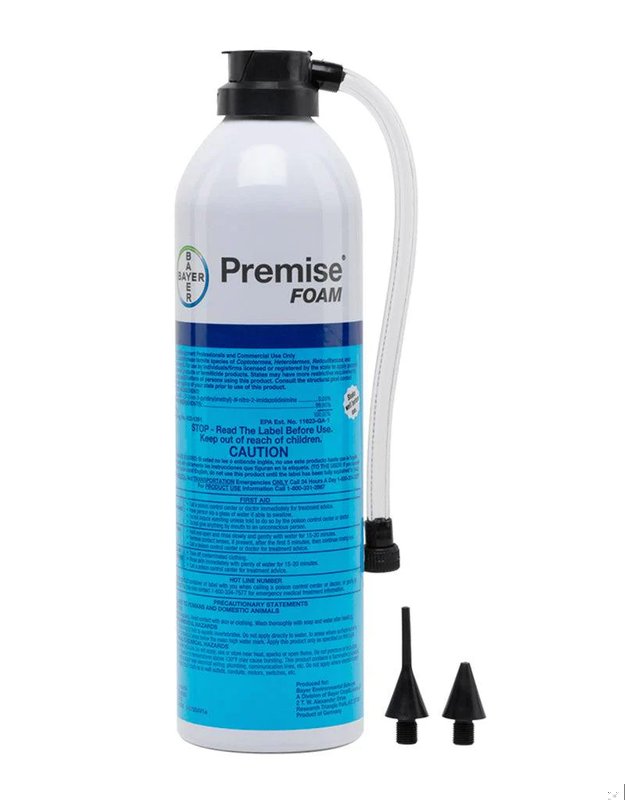
Premise Foam
Premise Foam by Bayer delivers targeted protection against termites with its professional-grade imidacloprid formula, expanding deeply into wall voids and wood to eliminate hidden infestations. The 18 oz can produces a dense foam that penetrates areas liquid sprays often miss, making it ideal for indoor spot treatments. Its precise application minimizes disruption during home pest control projects.
Why We Recommend This
We recommend Premise Foam for homeowners who need a proven, professional-grade termite solution for interior spaces. Its expanding imidacloprid foam reliably targets hidden infestations where liquid sprays fall short, and pest control operators consistently rate it highly for indoor spot treatments. This is our top pick for precise, low-disruption termite control inside the home.
vs Competitors: Compared to Termidor Foam, Premise Foam offers similar deep penetration for wall voids but has a slightly lower active ingredient concentration, resulting in a gentler indoor formulation with less odor.
Best For:
Homeowners seeking professional-grade indoor termite control for localized infestations, especially those wanting precision treatment in hard-to-access areas.
- Treating active termite infestations inside walls or behind baseboards
- Spot-treating structural wood where signs of termite activity are detected
- Contains 0.05% imidacloprid for effective termite control
- Expanding foam reaches deep wall voids and structural lumber
- Expands rapidly to fill hard-to-reach galleries and voids
- Favored by pest professionals for reliable indoor performance
- Not intended for outdoor use or large-scale perimeter treatments
- Requires careful application to avoid overfilling confined spaces
Harris Termite Killer: Best for Odorless Indoor Application
Harris Termite Killer stands out for its low-odor, water-based formula. It’s designed for indoor use where strong chemical smells or residues are a concern - think living rooms, bedrooms, or areas with kids and pets.
- Water-based spray dries quickly with minimal odor
- Suitable for baseboards, window sills, and exposed wood inside the home
- Contact kill formula - works best on visible termites
- Leaves little to no residue on most interior surfaces
- Safer alternative for sensitive households or frequent use
It’s the right choice if you’re spraying in living spaces and need to minimize fumes or chemical exposure. The downside is less residual action compared to foams or barrier sprays.
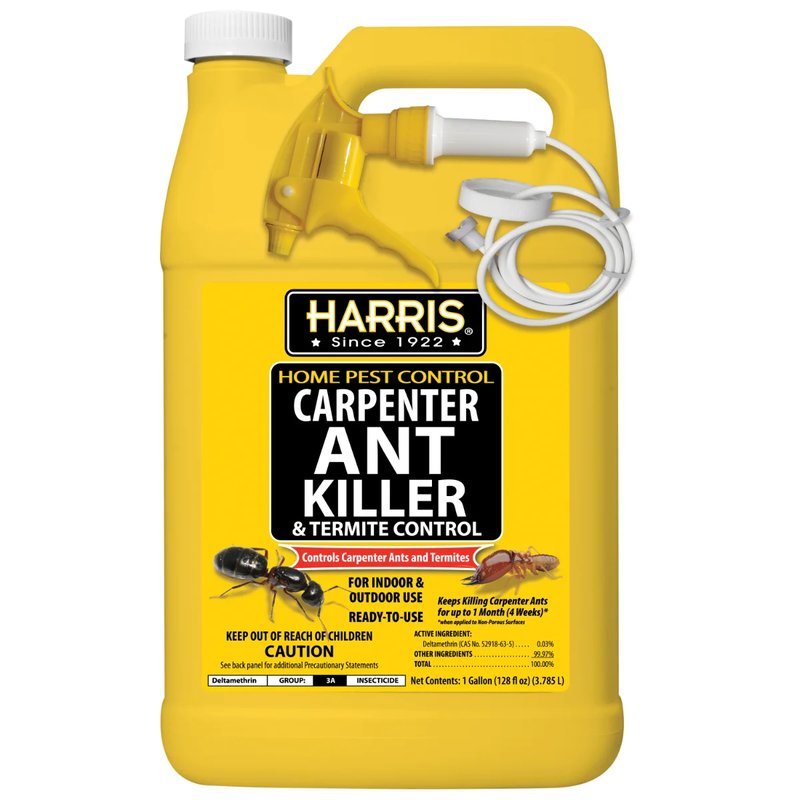
Harris Termite Killer
Harris Termite Killer offers low-odor, water-based protection designed specifically for indoor spaces where air quality and residue are concerns. Its targeted formula works effectively on contact to eliminate termites without leaving strong chemical smells or heavy residue, making it suitable for living areas, bedrooms, and homes with children or pets. The spray delivers quick results while maintaining a user-friendly application process.
Why We Recommend This
We recommend Harris Termite Killer for homeowners who prioritize indoor air quality and require a user-friendly solution for localized termite problems. Its low-odor, water-based formula stands out in situations where strong chemical smells are unacceptable, making it a reliable choice for families and pet owners. While it works best for small, visible infestations, its ease of use and safety profile make it one of our top picks for indoor applications.
vs Competitors: Compared to foam or heavy-duty sprays like Termidor, Harris Termite Killer is less suited for deep infestations but excels in ease of use and minimal odor, making it preferable for everyday household use.
Best For:
Homeowners seeking a low-odor, easy-to-apply termite spray for indoor spot treatments, especially those with children, pets, or sensitivity to strong chemicals.
- Applying in living rooms, bedrooms, or other frequently used indoor spaces
- Spot-treating visible termite activity around baseboards, window frames, or entry points
- Low-odor, water-based formulation for minimal indoor impact
- Fast-acting contact kill for visible termites and localized infestations
- Virtually odorless, ideal for sensitive indoor environments
- Simple application process with minimal cleanup required
- Not intended for large-scale or deep-structural infestations
- Requires direct contact with termites for best results
BioAdvanced Termite & Carpenter Bee Killer Plus Foam: Best Dual-Use for Multiple Pests
BioAdvanced Termite & Carpenter Bee Killer Plus Foam is a flexible option for homes battling both termites and wood-boring insects like carpenter bees. The expanding foam reaches deep into voids, cracks, and nests where standard sprays can’t go.
- Dual-action foam targets both termites and carpenter bees
- Expands to fill hard-to-reach areas, including eaves and behind siding
- Effective for spot treatments, especially in wood decks and outdoor structures
- Safe for most indoor and outdoor applications
- May require multiple applications for severe infestations
This is a smart pick for homes with recurring wood pest problems or where both termites and bees are active. It won’t replace a full soil or perimeter treatment but offers excellent flexibility for DIYers.
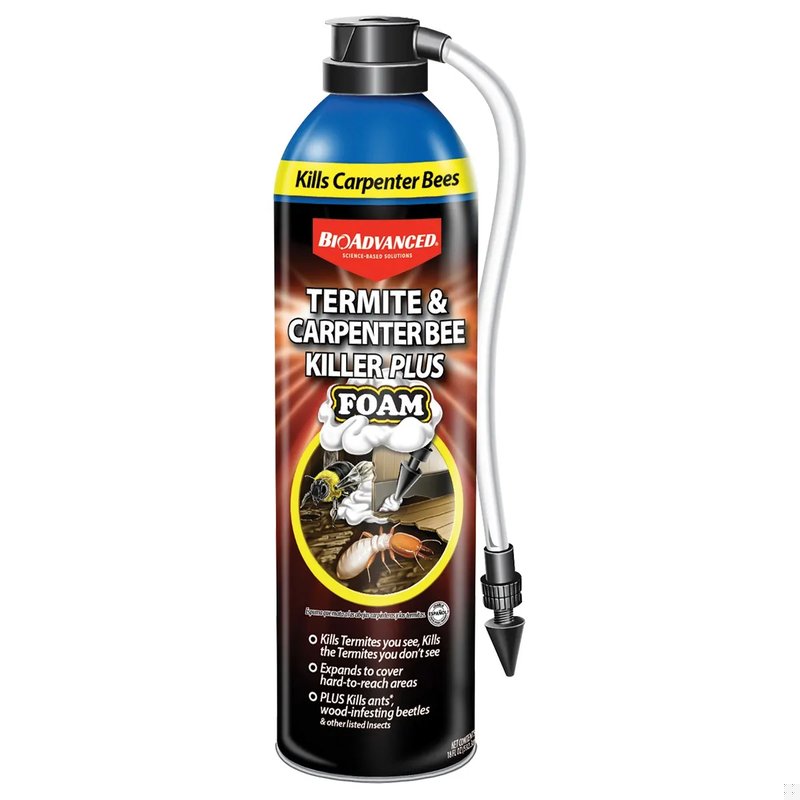
BioAdvanced Termite & Carpenter Bee Killer Plus Foam
BioAdvanced Termite & Carpenter Bee Killer Plus Foam delivers targeted pest control with an expanding foam that fills cracks, voids, and nests to eliminate termites and carpenter bees at the source. The 18 oz aerosol can dispenses foam that penetrates wood and hard-to-reach areas for thorough coverage. Ideal for homeowners needing precision treatment in wall voids, attics, and crawl spaces.
Why We Recommend This
We recommend BioAdvanced Termite & Carpenter Bee Killer Plus Foam for its versatility and ease of use in tackling both termites and carpenter bees in tight spaces. Its expanding foam ensures thorough coverage where standard sprays fall short, making it a strong pick for targeted home pest control. This is an excellent choice for DIYers who need precision in pest management.
vs Competitors: While Termidor Foam is best for deep wall infestations, BioAdvanced stands out for its dual-pest targeting and user-friendly nozzle, making it especially convenient for homeowners treating visible activity.
Best For:
Homeowners seeking a DIY solution for localized termite or carpenter bee infestations, especially in hard-to-reach areas.
- Treating localized termite activity in wall voids or crawl spaces
- Eliminating carpenter bee nests in wooden structures or eaves
- Expanding foam formula reaches deep into cracks and crevices
- Dual-action control for both termites and carpenter bees
- Effective against multiple wood-destroying pests
- Foam expands to treat hidden nests and galleries
- Limited to spot treatments, not suitable for large-scale infestations
- Some users report foam can be messy if over-applied
- Termidor Foam: Best for deep wall infestations and hidden galleries
- Spectracide Terminate: Best for budget spot treatments and quick kills
- Ortho Home Defense: Best for long-lasting perimeter and outdoor defense
- BioAdvanced Termite Killer Granules: Best for widespread soil and foundation protection
- Premise Foam: Best for professional-grade, indoor-only applications
- Harris Termite Killer: Best for sensitive households needing low-odor, indoor use
- BioAdvanced Termite & Carpenter Bee Killer Plus Foam: Best for dual pest (termite + carpenter bee) infestations
How to Choose the Right Termite Spray for Your Home
Seven strong options - but the right one depends entirely on your situation. Here’s how to match your infestation, home layout, and household needs to the product that fits.
Matching Spray Type to Infestation Location
If termites are active in wall voids, behind baseboards, or inside wood beams, foam products like Termidor Foam and Premise Foam are far more effective than liquids. Foams expand to reach hidden nests and galleries that flat sprays simply can’t touch.
For soil or outdoor infestations - especially if you spot mud tubes or evidence near your foundation - granular formulas like BioAdvanced Termite Killer Granules perform better. Perimeter sprays such as Ortho Home Defense are vital for ongoing prevention, especially in regions with high termite pressure. The trade-off: foams and liquids are faster for direct hits, but granules and barriers provide longer-term, broader coverage.
Safety Considerations for Kids and Pets
Indoor sprays and foams often contain water-based carriers, which lower the risk of lingering fumes or residue. Harris Termite Killer stands out for low odor and fast drying, making it suitable for family rooms and bedrooms.
Always check label guidance on re-entry times - most require waiting until surfaces are fully dry, typically 2-4 hours. For sensitive households, water-based sprays are preferable to solvent-based ones. If accidental exposure occurs, ventilate the area and wash skin or clothing immediately; call poison control for ingestion or severe reactions.
Balancing Cost, Coverage, and Long-Term Effectiveness
Budget-friendly sprays like Spectracide Terminate work for small, visible problems but may require frequent reapplication. Higher-end options (Termidor Foam, Premise Foam) cost more upfront but eliminate hidden colonies and reduce repeat work - making them a smarter investment for serious infestations.
Professional-grade products are worth it if you’ve had repeat infestations, structural damage, or need to treat hard-to-reach areas. If you see damage spreading, mud tubes reappearing, or can’t access the nest, it’s time to escalate beyond DIY.
If you’ve worked through the criteria, you already know which direction to go. Here’s the short version.
Safe Application Tips and Common Mistakes to Avoid
Preparation and precision separate successful termite treatments from wasted effort - or worse, accidental exposure risks. Apply these best practices for safer and more effective results.
Preparing Your Home Before Spraying
Clear clutter from application areas, especially food, pet bowls, and children’s toys. Cover or remove items that could absorb spray. Identify all entry points - door frames, windows, baseboards, and plumbing cutouts - so you don’t miss hidden galleries.
Open windows for ventilation and wear gloves, long sleeves, and a mask if spraying in enclosed areas. Even low-odor products can cause irritation with prolonged exposure.
Avoiding Overapplication and Ineffective Coverage
Using more spray doesn’t always mean better results - in fact, overapplication can cause chemical buildup, surface staining, or even resistance in termite populations. Always follow label rates and focus on coverage, not volume.
Spot treatments are fine for single sightings or isolated swarms, but for structural infestations, comprehensive application is key. Missed cracks, voids, or soil gaps are the most common reason infestations return. Use a flashlight and a flathead screwdriver to probe wood for hollowness - a subtle change in sound can reveal hidden galleries that need foam injection.
Frequently Asked Questions About Termite Sprays
❓ Frequently Asked Questions
What is a termite spray and how does it work?
What is a termite spray and how does it work?
A termite spray is a liquid insecticide formulated to kill or repel termites on contact. It works by coating wood surfaces or entry points, disrupting the pests’ nervous systems. Most sprays provide fast knockdown and residual protection. For example, pyrethroid-based sprays are widely used for home perimeter treatments.
How do I apply termite spray safely at home?
How do I apply termite spray safely at home?
To apply termite spray safely at home:
- Wear gloves, eye protection, and a mask to avoid contact with chemicals
- Read and follow all label instructions carefully
- Spray only on targeted areas, avoiding food and pet zones
- Ventilate the area during and after application
- Keep children and pets away until the spray dries
Always test on a small area first.
What should I look for when choosing a termite spray?
What should I look for when choosing a termite spray?
When choosing a termite spray, consider these factors:
- Active ingredients: look for proven insecticides like bifenthrin or imidacloprid
- Residual effect: longer-lasting formulas reduce reapplication frequency
- Application type: ready-to-use sprays are more convenient
- Coverage area: check label for maximum square footage
- Safety rating: prefer products with EPA registration
Balance efficacy with safety for your home environment.
How often should I reapply termite spray for effective protection?
How often should I reapply termite spray for effective protection?
Most termite sprays should be reapplied every 3 to 6 months for continued protection, depending on the product and infestation severity. Some high-residual sprays may last up to 12 months. Always follow label instructions, and reapply after heavy rain or if you notice renewed termite activity.
What is the difference between contact and residual termite sprays?
What is the difference between contact and residual termite sprays?
Contact termite sprays kill termites immediately upon direct exposure, providing fast results but limited long-term protection. Residual sprays create a barrier that continues to kill or repel termites for weeks or months after application. Most users find residual sprays are better for preventing reinfestation in high-risk areas.
Are termite sprays safe to use around pets and children?
Are termite sprays safe to use around pets and children?
Many termite sprays are formulated with safety in mind, but direct exposure can be harmful to pets and children. Always follow product safety guidelines - keep treated areas off-limits until dry and ventilate thoroughly. Some natural sprays use plant-based ingredients, but even these should be used with caution indoors.
Which type of termite spray is best for outdoor use?
Which type of termite spray is best for outdoor use?
For outdoor use, opt for termite sprays labeled for exterior or perimeter treatment. These typically contain water-resistant active ingredients like bifenthrin or permethrin, which withstand rain and sunlight. Most users report longer-lasting results with concentrated formulas applied to soil and foundation zones.
Our Verdict: Which Termite Spray Should You Buy?
Termidor Foam is the most versatile and effective termite spray for typical indoor and wall void infestations - especially when you need to reach hidden galleries or want professional-grade results without hiring an exterminator. Its ability to deliver colony-level control, combined with ease of use and minimal odor, puts it at the top of our list for 2026.
Spectracide Terminate is the right choice if you’re on a tight budget or just need to kill visible termites fast. For perimeter or soil problems, Ortho Home Defense and BioAdvanced Termite Killer Granules provide the coverage and residual action necessary to keep colonies at bay. Choose Premise Foam for the closest thing to a professional indoor treatment, or Harris Termite Killer for safe, low-odor spraying in living spaces.
BioAdvanced Termite & Carpenter Bee Killer Plus Foam is your pick if you’re also battling carpenter bees or need a flexible foam for outbuildings and decks.
If you see repeated infestations, structural damage, or can’t access the main nest, don’t waste money on repeated DIY attempts - call a licensed professional. But for most homeowners, one of these seven sprays will resolve the issue quickly and restore peace of mind. Ready to take action?
Pick the termite spray that fits your home, infestation, and safety needs, and follow the usage tips above for the best results.
Related Articles
Best Termite Treatments and Baits 2026: Expert Picks for DIY Control
Best termite treatments and baits for 2026. Compare top-rated liquid barriers, bait stations, sprays, and natural solutions for effective DIY termite control.

Best Carpenter Ant and Wood Borer Treatments 2026: Top Baits, Sprays, and Safe Solutions
Discover the best carpenter ant treatments and wood borer control products for 2026. Compare effective baits, sprays, natural solutions, and expert tips to eliminate pests and protect your home - DIY-friendly and budget-conscious.
![Best Protective Gear for Pest Control 2026 [Expert Reviews]](https://pestproreviews.com/images/hero/hero_best_protective_gear_for_pest_control_2026_expert.webp)
Best Protective Gear for Pest Control 2026 [Expert Reviews]
Protect yourself during DIY pest control in 2026 with our expert-reviewed guide to the best protective gear. Compare top-rated respirators, gloves, coveralls, and more for safe, effective pest removal at home.

Complete Guide to Pest Prevention in Homes: Stop Pests in 2026
Protect your home in 2026 with this complete pest prevention guide. Discover proven DIY methods, room-by-room tips, safe solutions for families, and expert advice to stop pests before they start.