
Bed Bug Infestation Signs: How to Spot and Act Fast
Learn how to identify bed bug infestation signs quickly and accurately. Discover visual clues, bite symptoms, and expert tips for fast, effective action to protect your home in 2026.
Bed bug infestation signs are the visual, physical, and behavioral clues that indicate the presence of bed bugs in your home. Recognizing these signs early is crucial because bed bugs multiply rapidly and are difficult to eliminate once established. Spotting the symptoms quickly allows for faster, less expensive intervention and better protection of your living space.
What Are Bed Bug Infestations?
Bed bug infestations happen when these small, blood-feeding insects find shelter and begin to breed inside human living spaces. They are experts at hiding, which makes early detection challenging for most people. Because they rely on human or animal blood, they gravitate toward areas where people sleep or rest for extended periods.
Bed Bug Biology and Behavior
Bed bugs are nocturnal insects that feed on blood at night and hide during the day. Their bodies are flat and oval, allowing them to squeeze into tight spaces like mattress seams, headboard joints, and even inside electrical outlets. Bed bugs go through several life stages: egg, nymph, and adult, each leaving its own clues behind.
The eggs are tiny and sticky, making them difficult to spot unless you’re searching closely. Nymphs look like smaller, lighter versions of adults, while adults become more reddish-brown and easier to see after feeding. Understanding these stages helps you identify an infestation at any point in its development.
How Bed Bugs Spread in Homes
Bed bugs don’t fly or jump, but they are relentless hitchhikers. They spread by clinging to clothing, luggage, backpacks, and used furniture. This means travel, moving, or buying second-hand items are the most common ways bed bugs enter new homes.
Once inside, they usually start in bedrooms - especially near beds - but can quickly move to couches, recliners, and even baseboards if not contained. Multi-family housing, like apartments, is especially vulnerable because bed bugs can travel between units through walls and shared spaces.
If you’re interested in a deeper dive into how infestations develop and spread, see our Bed Bug Control resource for step-by-step guidance.
Why Fast Identification Matters
Speed is everything when it comes to bed bugs. The longer they go unnoticed, the bigger the problem becomes - and the harder it is to fix. Early detection can mean the difference between a simple DIY cleanup and a full-scale, expensive extermination.
Rapid Reproduction and Infestation Growth
One female bed bug can lay 200-500 eggs in her lifetime, with eggs hatching in about 6-10 days. These numbers add up quickly, especially if you miss the initial signs. In apartment buildings and hotels, a single undetected infestation can spread to multiple units in a matter of weeks.
Delaying action gives bed bugs more time to hide, reproduce, and colonize new areas. This means you’ll end up spending more time and money - and likely need harsher chemicals - to get things under control.
Health and Psychological Impacts
Bed bug bites can cause itchy welts, allergic reactions, and even secondary skin infections if scratched excessively. For many people, the psychological effects are just as serious: sleep loss, anxiety, and embarrassment are common when an infestation drags on.
Although bed bugs are not known to transmit diseases, the stress and disruption they cause shouldn’t be underestimated. Fast identification preserves your health and your peace of mind.
Visual Signs of Bed Bug Infestation
Learning to spot the physical evidence is the fastest, most reliable way to confirm a bed bug problem. Don’t rely solely on bites - visual clues are what professionals look for first.
Live Bed Bugs: What They Look Like
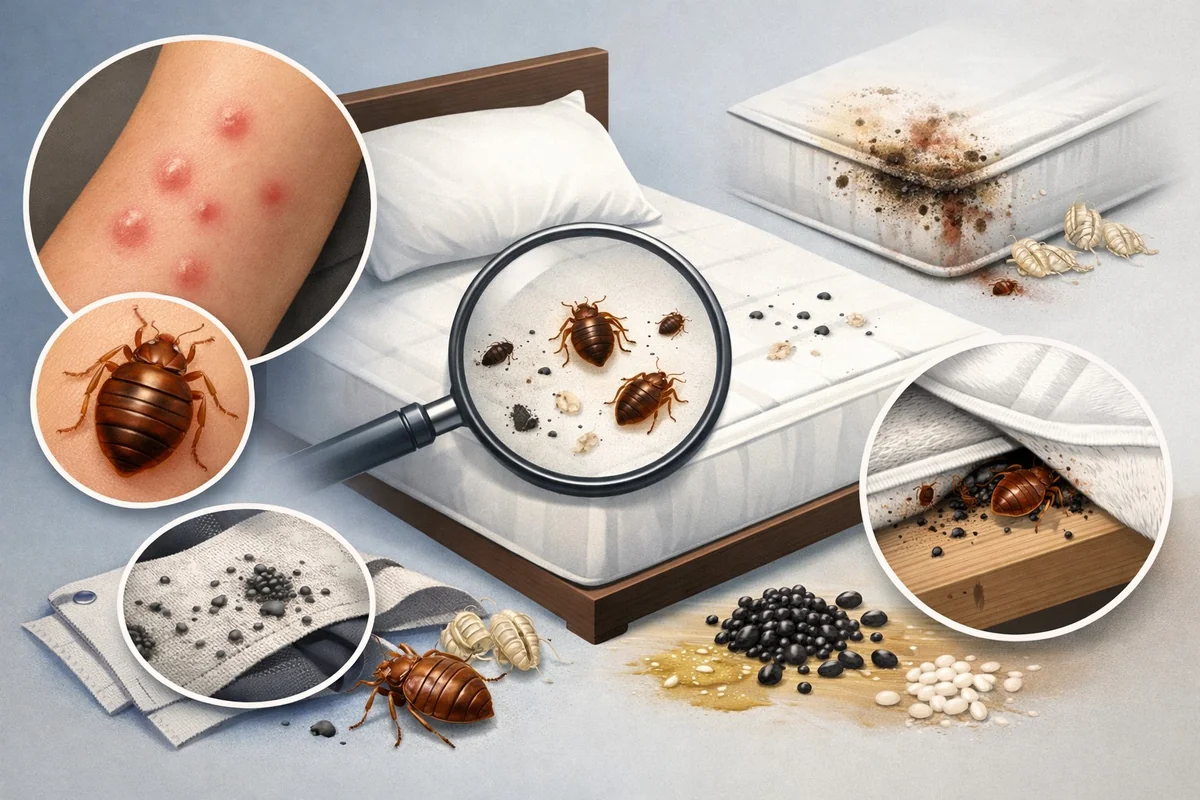
Adult bed bugs are about 4-5 mm long, reddish-brown, and shaped like an apple seed. After feeding, they become rounder and darker, sometimes appearing swollen. Nymphs are smaller (1-3 mm), lighter in color, and harder to spot - especially on light-colored sheets.
Unlike fleas, bed bugs move slowly and do not jump or fly. If you spot a bug crawling on your mattress or headboard at night, use a flashlight to get a closer look at its size and shape.
Bed Bug Eggs and Molt Casings
Bed bug eggs are about 1 mm long, white, and sticky, usually hidden in seams, cracks, or crevices. As they grow, bed bugs shed their outer skins (exuviae), which are translucent and accumulate in hiding spots.
Finding eggs or molts is a strong indication of an active and breeding infestation. These signs are often overlooked by beginners, but they’re a red flag to experienced inspectors.
Blood Stains and Fecal Spots
One of the clearest bed bug infestation signs is the appearance of small, dark fecal spots or tiny blood smears on sheets, pillowcases, or mattresses. Fecal spots are actually digested blood and look like tiny ink dots - these will smear if wiped with a damp cloth.
Crushed bed bugs leave rusty, red stains, especially if you roll over them after they’ve fed. Fecal spots don’t flake off easily and usually appear in clusters near hiding places.
| Option | ★Difficulty Level | ★Time Required | Cost Range | ★Reliability | Best For | Limitations |
|---|---|---|---|---|---|---|
| Visual Inspection | Medium | 30-60 minutes per room | Budget | Moderate | DIY homeowners and renters with small infested areas | Misses low-level or hidden infestations |
| Interceptor Traps | Easy | 10 minutes to set up, monitor for 7-14 days | Moderate | High | Long-term monitoring and early detection in bedrooms or living areas | Requires patience; less effective on carpeted floors |
| Canine Scent Detection | Hard | 15-30 minutes per visit (by professional) | Premium | Very High | Large properties, hotels, or when confirmation is critical | Dependent on handler skill; higher upfront cost |
| Active Monitors (CO2/Lure-Based) | Medium | 15 minutes setup, 1-2 nights monitoring | Moderate | Above Average | Detecting low-level or hidden infestations in unoccupied rooms | Requires power/batteries; may attract but not always capture all bugs |
Physical Symptoms: Bed Bug Bites and Reactions
Physical reactions are often the first thing people notice, but they’re not always reliable for diagnosis. Still, knowing what to look for in bite patterns and skin symptoms can help you spot a problem early - especially if you find other signs as well.
Typical Bed Bug Bite Patterns
Bed bug bites usually appear in clusters or straight lines - sometimes called the “breakfast, lunch, dinner” pattern. They tend to show up on exposed skin like the arms, legs, neck, and face. Bites are painless at first, but itching and swelling develop over hours or days.
Variability in Bite Reactions
Not everyone reacts the same way to bed bug bites. Some people have no visible reaction at all, while others develop red, itchy welts, blisters, or even hives. Children and people with allergies are especially prone to more severe symptoms.
It’s easy to confuse bed bug bites with mosquito or flea bites, so don’t rely on bite appearance alone. Always look for visual evidence to confirm your suspicion.
Secondary Infections and Complications
Scratching bites can lead to open sores that easily become infected with bacteria. In severe or long-lasting infestations, sleep loss and persistent anxiety are common side effects.
Unlike ticks, bed bugs are not known to transmit diseases like Lyme or Rocky Mountain spotted fever. The real risk is skin infection and the impact on mental health.
Where to Check for Bed Bugs in Your Home
Knowing where to look is half the battle when it comes to identifying bed bug infestation signs. Bed bugs are experts at hiding, so you need to check thoroughly and methodically in both obvious and surprising places.
High-Risk Areas: Beds and Bedrooms
The bed is ground zero for most infestations. Check mattress seams, box springs, and the cracks of bed frames with a flashlight. Look behind headboards and inside screw holes - bed bugs love tight, dark spaces.
Don’t forget nightstands, dressers, and upholstered furniture near the bed. These spots become secondary hiding places as the infestation grows.
Less Obvious Hiding Places
Bed bugs don’t stop at the bedroom. Electrical outlets, behind picture frames, curtain folds, and baseboards can all harbor hidden clusters. Personal items like luggage, backpacks, and piles of clothing are common introduction sources during travel or moving.
With time, bed bugs can spread to living rooms, home offices, and even vehicles if not caught early. That’s why a thorough inspection is so important.
Common Mistakes When Identifying Bed Bugs
Misidentification is one of the biggest reasons infestations persist. Don’t waste time or money treating the wrong pest - here’s what to watch out for when trying to identify bed bug infestation signs.
Misidentifying Other Insects as Bed Bugs
Carpet beetles, bat bugs, and fleas are the most common lookalikes. Carpet beetles are rounder and covered in tiny hairs, while fleas are smaller, darker, and jump rather than crawl. Bat bugs are nearly identical to bed bugs but are usually found near bat roosts, not beds.
Look at the bug’s shape, color, and movement; bed bugs move slowly and have a flat, oval body. Feeding habits also set them apart - only bed bugs feed exclusively on blood at night near sleeping humans.
Overreliance on Bite Symptoms
It’s tempting to blame every itchy welt on bed bugs, but the truth is many skin reactions look similar. Not everyone bitten by bed bugs will have visible symptoms, so absence of bites isn’t proof that your home is bug-free.
Visual confirmation - finding live bugs, eggs, or fecal spots - is always necessary for a reliable diagnosis and effective treatment.
What to Do If You Find Bed Bug Signs
Once you spot the signs of a bed bug infestation, acting quickly and strategically makes all the difference. Here’s how to contain the problem and start treatment immediately.
Immediate Steps to Contain the Infestation
- Seal all infested bedding and clothing in plastic bags and keep them isolated until washing.
- Avoid moving items between rooms - cross-contamination is the fastest way to spread bugs.
- Vacuum thoroughly around beds, baseboards, and cracks. Dispose of vacuum bags in sealed trash bags outside your home.
DIY Treatment Options and Limitations
- Launder bedding and clothes on high heat (at least 120°F/49°C) - this kills all life stages, including eggs.
- Use mattress and box spring encasements to trap bugs inside and prevent new infestations.
- Home-use sprays and powders can help with small infestations, but most require multiple applications over several weeks.
If you’re considering chemical treatments, our Best Bed Bug Sprays and Foggers 2026 roundup covers the most effective products and how to use them safely.
When to Seek Professional Help
If you’re facing a large, persistent, or recurring infestation - especially in cluttered or multi-unit buildings - it’s time to call a professional. Experts use heat or advanced chemical treatments that penetrate deep into walls and furniture.
Professional inspections can also pinpoint the source and extent of the infestation, giving you a clear plan for full eradication. Don’t wait if DIY methods aren’t working - delays only make the problem worse.
Comparing Bed Bug Signs vs Other Pests
Many people waste time and money treating the wrong pest. Here’s how to tell bed bug infestation signs apart from similar-looking problems.
Bed Bugs vs Fleas and Mosquitoes
- Flea bites usually occur on ankles and lower legs, especially if you have pets that go outdoors. Bed bug bites appear on exposed skin - arms, face, neck - during sleep.
- Mosquito bites are generally isolated, not clustered in lines or groups.
- Fleas and mosquitoes are active during the day and are easy to spot. Bed bugs are rarely seen in daylight.
Bed Bugs vs Carpet Beetles and Bat Bugs
- Carpet beetles don’t bite - skin irritation comes from their larval hairs, not feeding.
- Bat bugs look almost identical to bed bugs but are linked to bat infestations, not household beds.
- Using pesticides on misidentified pests is wasteful and potentially hazardous, so always confirm the species before treating.
Prevention Tips to Avoid Bed Bug Infestations
Prevention is always easier than extermination. A few simple habits can lower your risk and help you act faster if bed bugs do show up.
Travel Precautions and Luggage Handling
- Inspect hotel mattresses, headboards, and furniture before unpacking. Keep luggage on a hard surface or luggage rack, never on the bed or carpet.
- Use protective covers or plastic bags for your suitcase, especially in hotels or shared accommodations.
- When you return home, unpack directly into the washing machine and wash everything in hot water.
Protecting Your Home from Introduction
- Be cautious with second-hand furniture - inspect seams, joints, and cracks for eggs or bugs before bringing items inside.
- Seal gaps and cracks in walls, floors, and baseboards to reduce hiding spots.
- Regularly vacuum bedrooms and keep clutter to a minimum, as clutter gives bed bugs more places to hide.
Frequently Asked Questions About Bed Bug Signs
❓ Frequently Asked Questions
What are the first signs of a bed bug infestation?
What are the first signs of a bed bug infestation?
The first signs of a bed bug infestation include small, itchy red bites, rusty or dark spots on bedding, and shed bed bug skins. Early detection saves time and money on removal. For example, finding tiny blood stains on pillowcases is a common early clue.
How do I check for bed bugs in my home?
How do I check for bed bugs in my home?
To check for bed bugs, start by inspecting mattress seams, headboards, and furniture crevices for live bugs or tiny eggs. Next, examine sheets and pillowcases for blood spots. Use a flashlight to check baseboards and behind wall hangings. If unsure, place interceptor traps under bed legs. Consistent inspection every 2-3 weeks improves early detection.
What is the difference between bed bug bites and other insect bites?
What is the difference between bed bug bites and other insect bites?
Bed bug bites typically appear in clusters or straight lines on exposed skin, causing red, itchy welts. Unlike mosquito bites, bed bug bites rarely have a central puncture and often occur overnight. However, reactions can vary, and some people show little or no symptoms, making visual confirmation important.
How can I act quickly if I suspect bed bugs?
How can I act quickly if I suspect bed bugs?
If you suspect bed bugs, immediately isolate bedding and clothing in sealed plastic bags. Launder items on high heat (at least 120°F). Vacuum mattress seams, bed frames, and baseboards thoroughly. Contact a licensed pest control professional for an inspection and targeted treatment. Acting within 48 hours increases the chance of eradicating the infestation before it spreads.
How often should I inspect my home for bed bugs?
How often should I inspect my home for bed bugs?
Inspecting your home for bed bugs every 2-3 weeks is recommended, especially after travel or guests. Frequent checks help catch infestations early, reducing treatment costs. Focus on mattresses, headboards, and upholstered furniture. Consider monthly checks in low-risk situations. Increased vigilance is needed in apartments or shared housing.
What should I look for when choosing a bed bug removal service?
What should I look for when choosing a bed bug removal service?
When choosing a bed bug removal service, focus on these criteria:
- Certification: Ensure technicians are licensed for structural pest control
- Treatment methods: Look for integrated pest management (IPM) and heat treatment options
- Customer reviews: Check verified feedback for reliability
- Warranty: Prefer services offering follow-up inspections.
Request a detailed quote before deciding.
Why do bed bugs spread so quickly in homes?
Why do bed bugs spread so quickly in homes?
Bed bugs spread quickly because they hide in small crevices, travel on clothing or luggage, and can survive for months without feeding. Female bed bugs lay 1-5 eggs daily, leading to rapid population growth. Shared walls in apartments or hotels make infestations harder to contain without professional help.
Key Takeaways for Spotting and Acting Fast
Early identification of bed bug infestation signs is the single most effective way to protect your home and avoid costly treatments. Visual clues - live bugs, eggs, molt casings, blood stains, and fecal spots - provide the strongest evidence for action.
Don’t rely solely on bites; always confirm with a thorough inspection in and around beds, furniture, and hidden crevices. If you spot evidence, act quickly by isolating infested items, using high-heat laundering, and following targeted treatment steps. DIY solutions work best in early, contained cases, but know when to bring in professionals for large-scale problems.
To stay ahead of infestations in 2026, build prevention habits into your travel and cleaning routines. When in doubt, consult a pest control expert or see our guides for practical, step-by-step strategies to regain your peace of mind.
Related Articles

Best Bed Bug Sprays and Foggers 2026: Top DIY Removal Products Reviewed
Best bed bug sprays, foggers, powders, and natural options for 2026. Compare top-rated products and find safe, effective DIY solutions for your home.

Best Bedroom Pest Control Products 2026: Safe, Effective Picks for Every Home
Discover the best bedroom pest control products for 2026, including ant baits, bed bug sprays, natural solutions, and living room pest killers. Find safe, effective, and budget-friendly options for every home.
Guide to Identifying Household Pests: Spot, Compare, and Act on Common Pest Signs in 2026
Learn how to identify household pests quickly and accurately with our 2026 step-by-step pest identification guide. Spot common pest signs, compare DIY and professional methods, and take control of your home without costly exterminators.

Complete Guide to Pest Prevention in Homes: Stop Pests in 2026
Protect your home in 2026 with this complete pest prevention guide. Discover proven DIY methods, room-by-room tips, safe solutions for families, and expert advice to stop pests before they start.