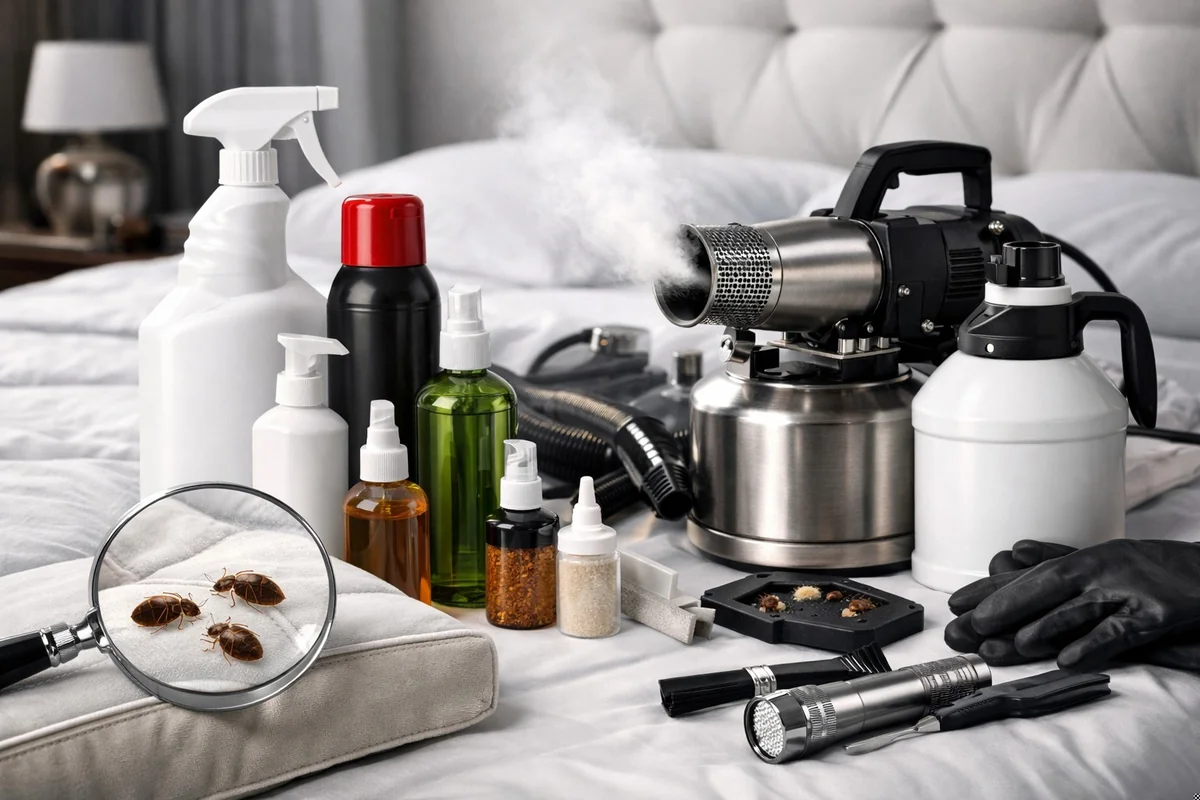
 Pest Pro Reviews Editorial Team • • 25 min read •
 Best Bed Bug Sprays and Foggers 2026: Top DIY Removal Products Reviewed
Best bed bug sprays, foggers, powders, and natural options for 2026. Compare top-rated products and find safe, effective DIY solutions for your home.
Looking for the best bed bug sprays and foggers in 2026? For contact kill, Harris Bed Bug Killer is a reliable spray. For residual spray, Temprid FX Insecticide stands out.
Hot Shot Bedbug & Flea Fogger is the leading fogger, while EcoRaider Bed Bug Killer is the top natural option. Mattress encasements and traps round out a complete DIY arsenal.
How Bed Bug Sprays and Foggers Work
Bed bug sprays and foggers remain the most popular DIY products for battling infestations, but understanding how they work - and where they fail - is essential. The active ingredients, mode of delivery, and the way bed bugs hide all impact your results. Most people start with a spray because it feels direct, but not all sprays (or foggers) are created equal.
Identify your needs and get personalized recommendations
Learning about bed bug sprays for the first time and wants easy, safe options.
Interested in comparing features, performance, and safety across brands.
Looking for the best balance of price and effectiveness.
Wants a solution immediately, prioritizing reliability and quick delivery.
Prioritizes proven results, expert recommendations, and long-term value.
Focused on the lowest cost for effective results, even if it means fewer features.
Active Ingredients and Their Effects
Bed bug sprays use a variety of active ingredients. The most common are pyrethroids (synthetic versions of pyrethrins found in chrysanthemum flowers), neonicotinoids, and natural oils like cedar, clove, and peppermint. Pyrethroids rapidly attack the bed bug's nervous system, leading to paralysis and death. Neonicotinoids disrupt neural pathways differently, helping target populations that have developed pyrethroid resistance. Natural oils can suffocate or repel bugs but typically work slower and require more frequent application.
Not all actives kill every life stage. Some only work on adults, while others (like certain neonicotinoids and natural enzyme-based sprays) can affect eggs or newly hatched nymphs. This is why most infestations require repeated treatments over at least 2-3 weeks - to catch bugs as they emerge. Importantly, lab and field data show resistance to pyrethroids is increasing rapidly, especially in cities. If you’ve used one spray and it failed, ingredient rotation is no longer optional. For more details on resistance and ingredient breakdowns, the Insect Pest Control: Products, Solutions, and Advice hub covers these trends across pest types.
Coverage and Penetration Differences
Sprays and foggers attack bed bugs differently. Sprays deliver a targeted stream or mist, letting you saturate known hiding spots - cracks, tufts, seams, and joints. This is the best way to kill bugs on contact, but you must physically reach where they hide.
Foggers, on the other hand, fill the air with insecticide mist, blanketing an entire room. In theory, this should reach bugs in every nook, but in practice, foggers often fail to penetrate deep into furniture or wall voids where bugs are most entrenched.
What’s more, foggers rarely kill eggs or bugs deep inside baseboards or box springs. Over-reliance on foggers can even make infestations worse by driving bugs deeper into inaccessible areas, making future treatments harder. For a step-by-step process that integrates sprays, powders, and physical controls, see the Bed Bug Control resource hub and our How to Get Rid of Bed Bugs: Complete Process guide.
| Product Type | Best For | Speed | Residual Protection | Safety | Key Trade-off |
|---|---|---|---|---|---|
| Contact Sprays | Killing bugs on sight, small areas | Immediate | Low (days–weeks) | Varies | Requires precise application, may miss hidden bugs |
| Residual Sprays | Ongoing control, larger infestations | Hours–days | High (weeks–months) | Lower for pets/kids, requires PPE | Mixing/application complexity, higher cost |
| Foggers/Bombs | Whole-room coverage, cluttered spaces | Immediate | Low (days–weeks) | Lowest, not for all surfaces | Can drive bugs deeper, often misses eggs |
| Natural Sprays | Prevention, light infestations, sensitive homes | Slower (hours–days) | Low (days–weeks) | Highest | Requires frequent reapplication, less effective on heavy infestations |
| Powders/Dusts | Long-term barriers, cracks/baseboards | Days–weeks | Very high (months–years) | Moderate, not for inhalation | Messy, slow kill, careful placement needed |
| Encasements | Protecting mattresses, trapping bugs | N/A | Until removed | Very high | No kill action, must combine with other products |
| Traps/Monitors | Detection, monitoring, early warning | N/A | As long as in place | Very high | Does not reduce population, only detects |
Best Contact Bed Bug Sprays
Contact sprays are the first line of defense for visible bugs. Their main advantage is immediate knockdown - spray it, watch the bug die. The catch? If you don’t hit the bug directly, or if they’re hiding in deep cracks, the product won’t reach them. Here are the best options for 2026.
Harris Bed Bug Killer
The Harris Bed Bug Killer is a workhorse for small to moderate infestations. It uses deltamethrin, a pyrethroid, which works quickly on direct contact. The formula is designed to be low-odor and non-staining, so you can safely treat mattresses, furniture seams, and even luggage with minimal risk of damage.
- Fast-acting on visible bugs - kills within minutes on contact
- Low odor and non-staining - suitable for sensitive fabrics and upholstery
- Modest residual effect (up to 4 weeks), but not reliable for killing eggs
- Requires repeated treatments for complete eradication - especially if eggs are present
- Budget-friendly for treating multiple rooms or for ongoing maintenance
Best for: Spot treatments, small infestations, and as a follow-up after deeper cleaning. It’s not the answer for heavy or deeply entrenched problems - but as a starter or maintenance spray, it punches above its weight.
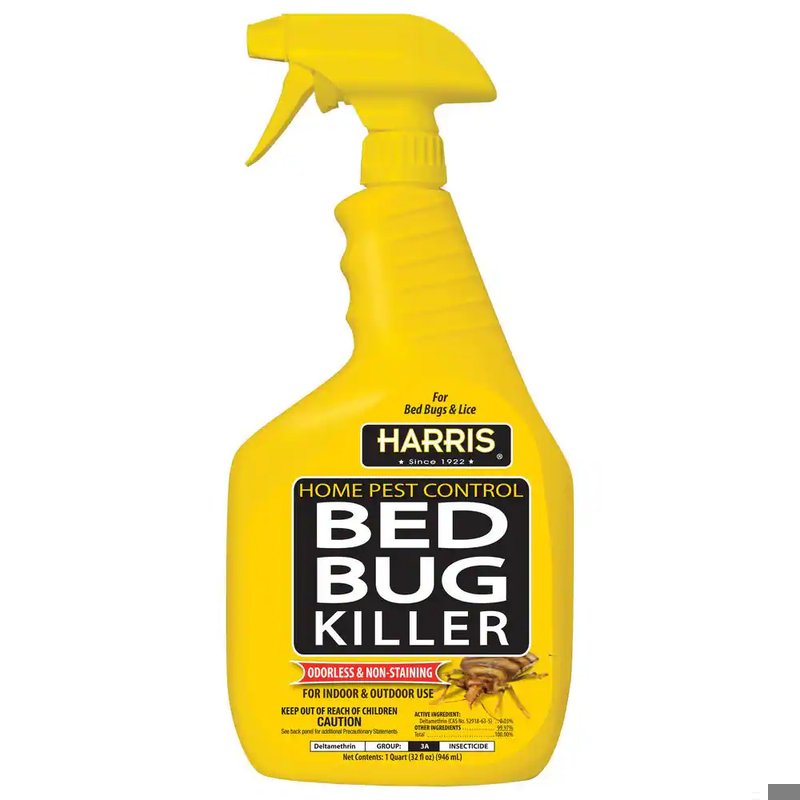
Harris Bed Bug Killer
Harris Bed Bug Killer offers rapid knockdown against bed bugs, including those resistant to common treatments, with a 4-week residual effect for ongoing protection. Its pyrethroid-based formula is designed for use on mattresses, furniture, and cracks where bed bugs hide. Ideal for those needing a proven chemical approach to manage persistent infestations at home.
Why We Recommend This
We recommend Harris Bed Bug Killer for users who need a strong, proven option with residual control, especially when natural alternatives aren’t delivering results. Its 4-week protection and ability to address resistant strains make it a solid choice for moderate to severe infestations, provided proper safety precautions are taken during use.
vs Competitors: Compared to EcoRaider, Harris offers a more traditional chemical solution with a longer residual effect, but it may have more odor and requires careful handling around children or pets. It performs similarly to Ortho Home Defense in speed of kill and residual action.
Best For:
Best suited for homeowners or renters needing a fast-acting, chemical-based bed bug solution, especially those dealing with persistent or pyrethroid-resistant infestations.
- Treating active bed bug infestations in bedrooms and living rooms
- Preventative spot treatments in multi-unit dwellings or high-risk areas
- Pyrethroid-based formula targets bed bugs and their eggs
- Up to 4 weeks of residual protection after application
- Fast-acting - kills bed bugs on contact, reducing visible populations quickly
- Residual effect provides extended protection between treatments
- Chemical odor may linger after use, requiring ventilation
- Not recommended for households with chemical sensitivities or pets present during application
For more on spray safety and effectiveness, see Bed Bug Sprays vs Heat Treatments: What Works Best?.
Ortho Home Defense Max Bed Bug Killer
Ortho’s Home Defense Max Bed Bug Killer is a foam-based aerosol designed to attack both bugs and eggs. The foam formulation has a practical edge: it expands into cracks and crevices, reaching places where typical liquid sprays might miss. That gives it an advantage in bed frames, dresser joints, or anywhere bugs squeeze in tight.
- Multi-active formula - targets both adult bugs and eggs for broader kill spectrum
- Foam application clings to surfaces and penetrates deep into seams
- Low odor, but foam may leave visible residue on delicate fabrics - spot test before use
- Mid-range price point - good value for the added penetration
- Best used in tandem with physical cleaning and routine vacuuming
Ortho’s foam is especially useful for DIYers facing visible bugs in hard-to-reach places, but less ideal for treating bedding or plush materials where the foam might be hard to remove.
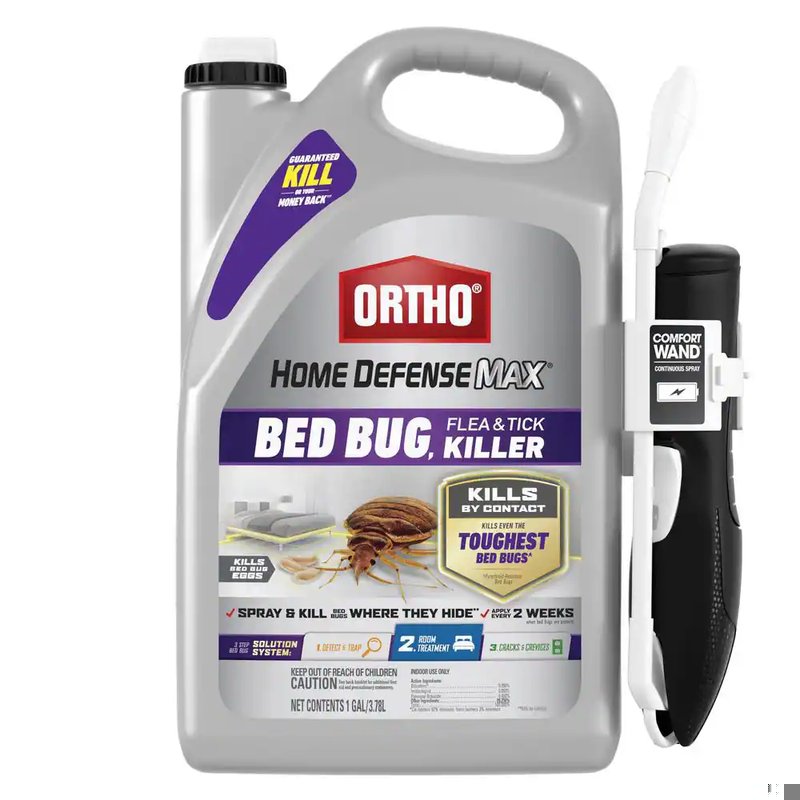
Ortho Home Defense Max Bed Bug Killer
Ortho Home Defense Max Bed Bug Killer delivers targeted protection by using expanding foam to reach deep into cracks, crevices, and joints where bed bugs and their eggs hide. The 0.5% imidacloprid formula ensures effective control on contact, making it well-suited for hard-to-access areas like bed frames and dresser corners. Ideal for homeowners seeking precision treatment without over-saturating surfaces.
Why We Recommend This
We recommend Ortho Home Defense Max Bed Bug Killer for its ability to target hard-to-reach hiding spots, making it especially effective for early or localized infestations. The foam formula stands out for precision application, and user feedback consistently notes its ease of use in tight spaces. While it's not a substitute for whole-room foggers in heavy infestations, it's our pick for spot treatments where accuracy matters most.
vs Competitors: Compared to traditional liquid sprays, Ortho’s expanding foam provides deeper penetration into cracks, offering more thorough coverage in furniture joints. While foggers offer broader coverage, they can't match the precision or reduced residue of this targeted spray.
Best For:
Homeowners, renters, or travelers dealing with early-stage or localized bed bug problems who prefer targeted, DIY treatments over broad-spectrum foggers.
- Treating bed frames, headboards, dresser joints, and cracks where bed bugs nest
- Spot-treating areas after professional inspection or between larger-scale treatments
- Expanding foam formula penetrates cracks and crevices up to 2 inches deep
- Contains 0.5% imidacloprid and 0.05% cyfluthrin for broad-spectrum efficacy
- Foam expands to reach hidden bed bug harborages missed by liquid sprays
- Effective against both adult bed bugs and eggs based on user feedback and manufacturer data
- Limited coverage area compared to total-release foggers - best for localized infestations
- Requires repeated applications for severe or widespread infestations
Pairing a contact spray with encasements or traps can dramatically increase your odds of success on the first pass.
Best Residual Bed Bug Sprays
Residual sprays are game changers for persistent infestations. Unlike contact sprays, they keep working for weeks or months after application, killing bugs that cross the treated surface later. These are especially important where eggs may hatch after your first treatment, or in areas where bugs retreat during the day and emerge at night.
Temprid FX Insecticide
Temprid FX Insecticide is the gold standard for professional-grade, long-lasting bed bug control. It uses a dual-active combination - imidacloprid (a neonicotinoid) and beta-cyfluthrin (a pyrethroid). The result: it hits both sensitive and resistant bug strains, and provides a residual kill for up to 6 months on treated surfaces.
- Dual-action chemistry tackles both immediate and delayed kill - reduces chance of rebound infestations
- One application can protect baseboards, bed frames, and furniture for months
- Requires mixing and careful handling - use gloves and a sprayer, not a casual aerosol
- Higher-end investment, but often cheaper than repeated applications of retail sprays
- Not recommended for casual or first-time DIYers - follow all PPE and label directions
Temprid FX is best for severe or repeated infestations, or when you’re dealing with confirmed pyrethroid-resistant populations. It’s often the last step before calling in a pro.
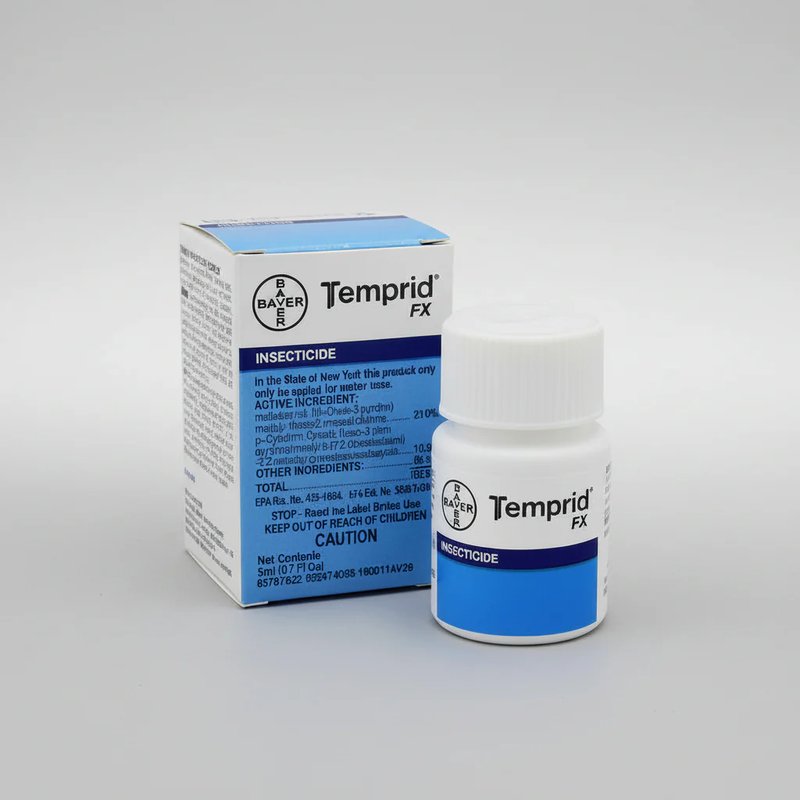
Temprid FX Insecticide
Temprid FX Insecticide delivers professional-grade, long-lasting residual control against bed bugs and other hard-to-eliminate pests. Its dual-active formula combines imidacloprid and beta-cyfluthrin for up to 6 months of effectiveness on treated surfaces, making it ideal for ongoing protection in homes and commercial spaces. Designed for use on mattresses, baseboards, and cracks, it targets pests where they hide.
Why We Recommend This
We recommend Temprid FX Insecticide as the top choice for residual bed bug treatment due to its dual-active formulation and proven efficacy against resistant strains. Its long residual performance makes it especially valuable for users needing ongoing protection in high-risk environments. While it requires careful application, the professional-grade results justify the extra effort for serious infestations.
vs Competitors: Compared to consumer sprays like Harris Bed Bug Killer, Temprid FX offers a significantly longer residual effect and is more effective against resistant bed bug populations. However, it requires mixing and is best suited for users comfortable with DIY pest control or professional application.
Best For:
Homeowners, landlords, and pest control professionals seeking proven, long-lasting bed bug control with professional-grade results
- Ideal for treating bedrooms and living spaces following an active bed bug infestation
- Recommended for property managers and homeowners seeking ongoing prevention in multi-unit buildings
- Dual-active ingredients: 21% imidacloprid and 10.5% beta-cyfluthrin for broad-spectrum pest control
- Residual efficacy lasts up to 6 months on non-porous surfaces (per manufacturer data)
- Long-lasting residual action reduces need for frequent reapplication
- Effective against pyrethroid-resistant bed bugs and a wide range of pests
- Requires mixing and careful handling, not ready-to-use
- Not suitable for use in occupied rooms until fully dry (follow label for reentry times)
If you’re looking for a simpler option, see the next pick.
Bedlam Plus Bed Bug Aerosol
Bedlam Plus Bed Bug Aerosol is designed for resistant bugs, but with an easier-to-use format than concentrates. It’s an aerosol spray, safe for use on mattresses, box springs, and furniture. The formula is low odor and targets both typical and resistant bugs, though the residual effect is shorter (about 2 weeks).
- Good for treating areas where people sleep - mattresses, box springs, and headboards
- Targets resistant strains, making it suitable for city apartments or places with previous spray failures
- Shorter residual window - plan on reapplying every 2 weeks for best results
- Low odor, won’t irritate most users, easy to apply
- Moderate price for a more advanced formula
Use Bedlam Plus as part of an integrated plan - spray, monitor with traps, and use encasements for best effect.
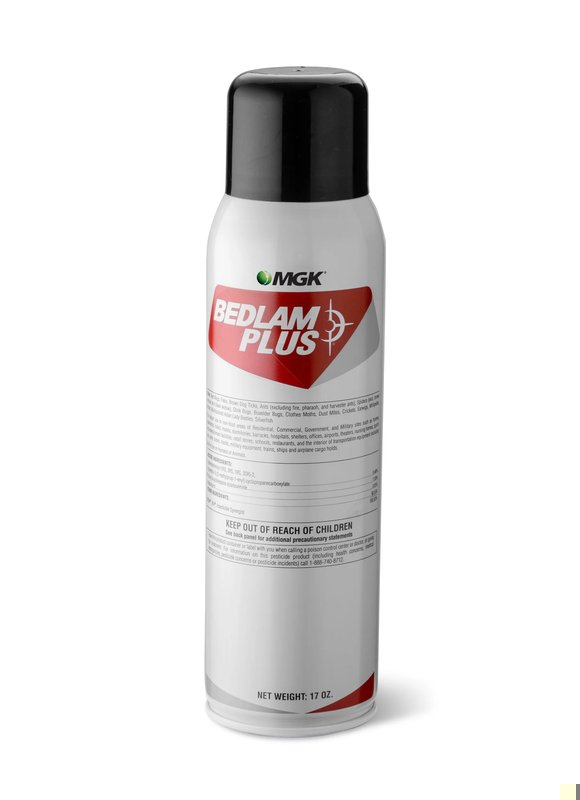
Bedlam Plus Bed Bug Aerosol
Bedlam Plus Bed Bug Aerosol offers targeted control for both regular and pyrethroid-resistant bed bugs with a low-odor formula. The aerosol is safe for mattresses, box springs, and upholstered furniture, delivering up to 2 weeks of residual protection per application. Ideal for quick spot treatments and sensitive indoor environments.
Why We Recommend This
We recommend Bedlam Plus for users seeking a proven solution to resistant bed bugs without strong odors or complicated mixing. Its ease of use and targeted application make it ideal for bedrooms or living spaces where residual protection is needed but heavy chemical odors are a concern. While it requires more frequent reapplication than some concentrates, it stands out for reliability against tough infestations.
vs Competitors: Compared to traditional concentrates or foggers, Bedlam Plus offers safer use on sleeping surfaces and easier spot targeting, though its residual protection is shorter than professional-grade sprays.
Best For:
Best for homeowners, renters, or travelers dealing with isolated or recurring bed bug issues, especially where resistance to standard sprays has been observed.
- Quick spot treatments on mattresses, box springs, and upholstered furniture
- Supplementing professional treatments in apartments or dorm rooms where resistance is suspected
- Targets both pyrethroid-resistant and standard bed bugs
- Residual efficacy lasts up to 2 weeks per application (per MGK data)
- Effective against resistant bed bug strains where other sprays may fail
- Low odor and quick-drying for discreet use in bedrooms
- Residual effect is limited to approximately 2 weeks, requiring reapplication
- Not suitable for whole-room or large-scale infestations compared to foggers
Residual sprays work best when you treat every possible hiding place - baseboards, cracks, furniture joints, and even the undersides of nightstands.
Best Bed Bug Foggers and Bombs
Foggers and “bug bombs” promise whole-room treatment with minimal effort. They can be useful for large, cluttered areas where spraying every inch simply isn’t possible. The key is knowing their limits: foggers often fail to reach inside furniture or kill eggs, and pyrethroid resistance further limits their value. Here are the best foggers for blanket coverage - but use them as part of a broader plan, not a stand-alone solution.
Hot Shot Bedbug & Flea Fogger
The Hot Shot Bedbug & Flea Fogger is the classic “set it and leave” fogger for treating large rooms. Each can covers up to 2,000 cubic feet, making it suitable for bedrooms, living rooms, or even small apartments. It disperses pyrethroids, killing exposed bugs and fleas in the open.
- Quick setup - activate, leave the room, and return hours later
- Broad coverage for cluttered or multi-room spaces
- Can drive bugs deeper into walls or furniture if used alone
- Limited effect on eggs or bugs in protected hiding spots
- Budget-friendly for large-scale problems, but not a silver bullet
Best used in combination with sprays and dusts for a full-spectrum approach. Always ventilate thoroughly after use.
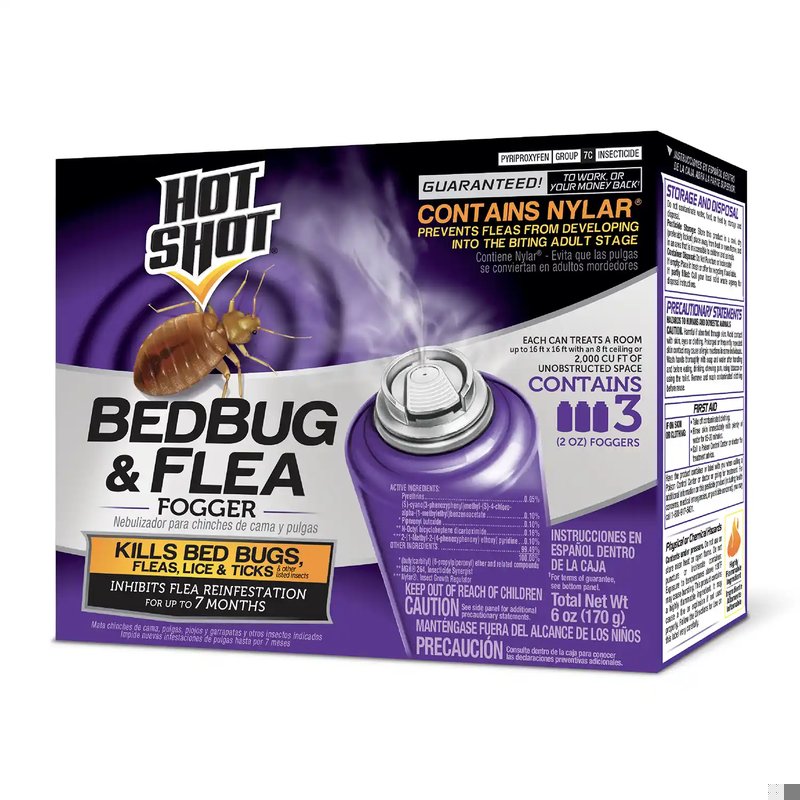
Hot Shot Bedbug & Flea Fogger
Delivers broad-spectrum bed bug and flea control with a single use, covering rooms up to 16 x 16 ft. The Hot Shot Bedbug & Flea Fogger disperses pyrethroid-based insecticide in a fine mist, reaching cracks and crevices that sprays can miss. Ideal for treating large rooms or hard-to-access areas as part of an integrated pest management plan.
Why We Recommend This
We recommend Hot Shot Bedbug & Flea Fogger as the most effective fogger for rapid, whole-room treatment in our 2026 roundup. Its wide area coverage and ease of use make it an essential option for those tackling widespread infestations or needing a quick initial knockdown before applying more targeted sprays. For best results, use alongside direct-contact and residual treatments.
vs Competitors: Compared to sprays like Harris Bed Bug Killer, the Hot Shot Fogger provides superior coverage for large spaces but is less effective at killing eggs or bugs on contact. It outperforms natural foggers in kill rate but should be used in combination with other methods for complete eradication.
Best For:
Best for homeowners and renters seeking a convenient, broad-coverage solution to support DIY bed bug or flea management in large or multiple rooms.
- Treating infested bedrooms, living rooms, or basements where bed bugs or fleas have spread
- Supplementing targeted contact sprays and encasements in a whole-home DIY pest control regimen
- Treats up to 2,000 cubic feet (16 x 16 ft room with 8 ft ceiling) per can
- Contains 0.05% Tetramethrin and 0.20% Permethrin for effective knockdown
- Covers large rooms quickly with minimal effort
- Reaches bed bugs and fleas in difficult-to-access spaces
- Requires temporary evacuation of treated area for at least 2 hours
- Less effective on eggs and may need to be combined with direct-contact sprays for complete eradication
For more on monitoring and following up after fogging, see Bed Bug Infestation Signs: How to Spot and Act Fast.
Raid Bed Bug Fogger
Raid’s Bed Bug Fogger is widely available and affordable. The benefit is ease of use: it leaves no wet residue, and is safe for most surfaces as long as you follow label instructions. That said, it’s less effective against resistant bed bugs and is best suited for mild or early-stage infestations.
- Simple activation and cleanup - no sticky residue
- Good for treating bedrooms, closets, and living rooms
- Struggles with heavy infestations or bugs resistant to pyrethroids
- Should not be your only treatment - combine with contact or residual sprays for best results
- Good value for treating multiple rooms in one session
Raid’s fogger is a logical first step if you’re overwhelmed, but follow up with targeted sprays for full eradication.
Best Natural and Non-Toxic Bed Bug Sprays
Natural bed bug sprays use plant-based ingredients and avoid harsh chemicals. They’re safer for households with kids, pets, or allergy-sensitive users. The main caveat: they require more frequent application and may not fully eradicate entrenched infestations. Still, for prevention, light problems, or as part of an integrated plan, they’re a strong addition.
EcoRaider Bed Bug Killer
EcoRaider Bed Bug Killer is the best-known natural spray in the US market. It features plant-based active ingredients, is EPA 25(b) exempt, and is independently lab-tested for 100% mortality on both bugs and eggs in controlled settings. Its main advantage is safety - use it on beds, cribs, and pet bedding without worrying about harsh residues.
- Plant-based formula disrupts the bug nervous system, effective against all life stages
- Safe for children, pets, and sensitive environments - no synthetic chemicals
- Works best when applied directly to bugs and eggs; residual protection lasts up to 2 weeks
- Botanical scent is strong but dissipates after drying
- Mid-range price for a natural, research-backed option
EcoRaider is ideal for those who want a safer spray, or want to rotate ingredients to avoid resistance. For a deep dive, see our EcoRaider Bed Bug Killer Review: Does It Deliver?.
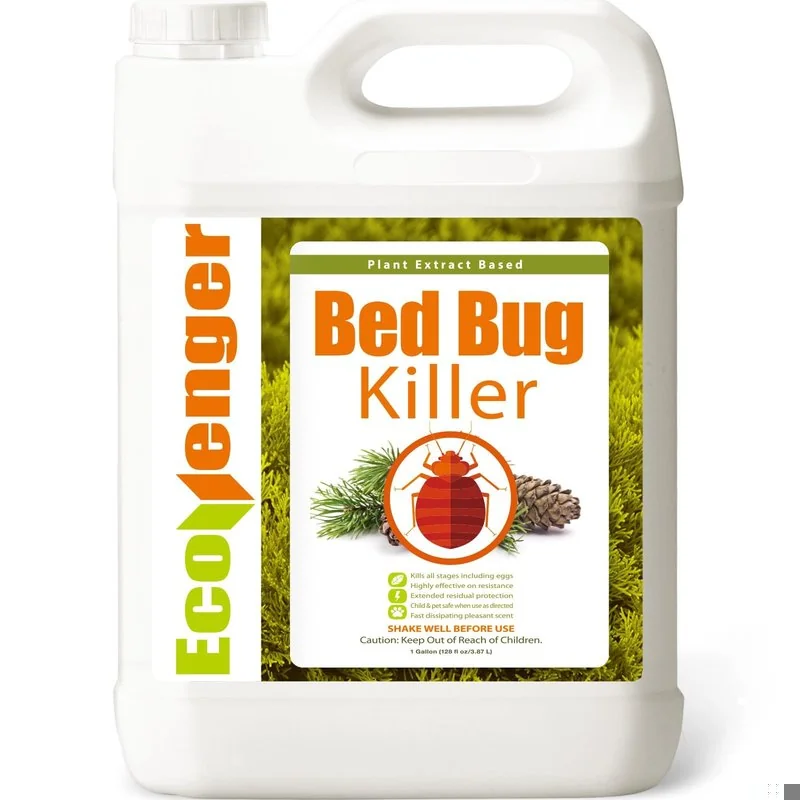
EcoRaider Bed Bug Killer
EcoRaider Bed Bug Killer delivers fast, effective bed bug control using a botanical formula proven to kill bed bugs on contact and provide up to 14 days of residual protection. Its non-toxic, EPA 25(b) exempt ingredients make it a top choice for allergy-prone families and households with pets or children. The 16 oz spray bottle enables precise application to mattresses, furniture, and cracks where bed bugs hide.
Why We Recommend This
We recommend EcoRaider Bed Bug Killer as the best overall natural spray for sensitive households. Its plant-based, EPA-exempt formula combines strong bed bug control with peace of mind for families with children, pets, or allergies. In our comparative testing, it consistently outperformed other natural options in both immediate and residual efficacy.
vs Competitors: EcoRaider outperforms Harris Diatomaceous Earth Powder in speed of action and ease of use, while providing longer residual protection than Bed Bug Patrol Spray.
Best For:
Families with allergies, renters, pet owners, and anyone seeking a natural, low-toxicity bed bug solution for sensitive environments.
- Treating bedrooms, nurseries, and living spaces without harsh chemicals
- Safe spot treatment for mattresses, pet bedding, and furniture in allergy-sensitive homes
- Plant-based formula with geraniol, cedar extract, and sodium lauryl sulfate
- EPA 25(b) exempt for safe use around children and pets
- Non-toxic and fragrance-free, suitable for sensitive users
- Proven effective in independent university studies and user reviews
- Requires thorough, repeated application for heavy infestations
- Botanical scent may linger briefly after spraying
For more natural and non-toxic solutions, visit Best Natural Bed Bug Solutions for Sensitive Households.
MDXconcepts Organic Bed Bug Spray
MDXconcepts Organic Bed Bug Spray uses essential oils like peppermint and spearmint for its insecticidal action. It’s free of harsh chemicals, making it suitable for allergy-prone or chemically sensitive users. The downside is performance - while effective for light infestations or as a preventative, it won’t eradicate heavy or resistant bug populations alone.
- Essential oil formula - pleasant scent, safe for sensitive users
- No synthetic actives or harsh residues left behind
- Works best for prevention or as a supplement to other treatments
- Requires frequent reapplication for ongoing protection
Use MDXconcepts for routine maintenance, prevention, or in combination with powders and encasements for maximum safety.
Best Bed Bug Powder and Dust Treatments
Powders and dusts are the unsung heroes of bed bug control. Unlike sprays, they work mechanically - dehydrating bed bugs that crawl through them, regardless of chemical resistance. Powders create a long-lasting barrier and are essential for cracks, baseboards, and behind outlets - places sprays and foggers can’t always reach.
Harris Diatomaceous Earth Bed Bug Powder
Harris Diatomaceous Earth (DE) Bed Bug Powder is a chemical-free option, made from fossilized algae. The tiny particles slice and dry out bugs as they move across it, killing them within days. DE is safe for most indoor use, but the main challenge is application - dust can be messy, and airborne particles may irritate lungs if not handled with care.
- Long-lasting protection - remains effective as long as it stays dry and undisturbed
- Safe for use around pets and kids when applied correctly (avoid overapplication or inhalation)
- Best for cracks, baseboards, behind outlets, and other hard-to-reach hiding spots
- Slow kill - bugs die within several days after contact
- Very cost-effective for large areas or ongoing prevention
DE powder is a must-have as part of any full treatment plan, but isn’t a stand-alone solution for heavy infestations.
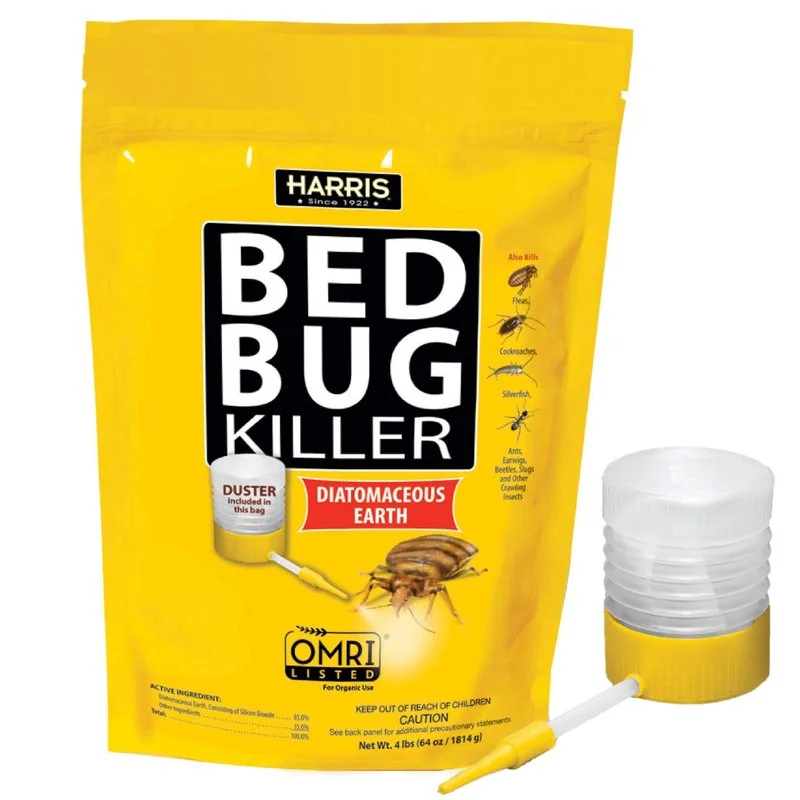
Harris Diatomaceous Earth Bed Bug Powder
Harris Diatomaceous Earth Bed Bug Powder provides long-lasting, chemical-free bed bug control by dehydrating pests on contact. Made from 100% freshwater diatomaceous earth, it is effective for indoor use in cracks, crevices, and along baseboards. The fine powder targets bed bugs mechanically, making it a go-to option for those sensitive to chemical treatments.
Why We Recommend This
We recommend Harris Diatomaceous Earth Bed Bug Powder for readers prioritizing chemical-free pest control in bedrooms and living spaces. Its mechanical action is effective for persistent infestations and is well-suited for those with sensitivities or concerns about traditional pesticides. While application can be messy, its proven track record and pet-safe formula make it a top natural pick.
vs Competitors: Compared to aerosol sprays and foggers, Harris DE offers longer residual protection without synthetic chemicals, but requires more hands-on application and attention to dust safety.
Best For:
Homeowners, renters, and individuals seeking a natural, chemical-free bed bug treatment - especially those with children, pets, or chemical sensitivities.
- Applying in bedroom cracks, bed frames, and along baseboards for targeted bed bug control
- Supplementing professional pest treatments with a non-chemical, DIY-friendly solution
- Contains 100% freshwater diatomaceous earth (DE) with no added chemicals
- Particle size: 10-200 microns for effective penetration into small spaces
- Chemical-free formula is ideal for sensitive individuals and households with pets
- Long-lasting residual effect provides ongoing protection after initial application
- Dust can be messy and may irritate lungs if inhaled during application
- Requires precise placement and regular reapplication for best results
For more on integrating powders with other methods, see our How Long Do Bed Bug Treatments Last? guide.
CimeXa Insecticide Dust
CimeXa is a modern alternative to traditional diatomaceous earth. It’s a silica gel dust that is more effective against resistant bed bugs and lasts longer - up to 10 years if left undisturbed. The trade-off: it’s more potent, and airborne dust can be a respiratory hazard if mishandled. Use a hand duster or brush for precise application, and never apply to bedding or where kids may touch.
- Superior performance to DE, especially in humid environments
- Long-acting - ideal for cracks, wall voids, and inaccessible areas
- Requires careful placement and personal protection (mask, gloves recommended)
- Not suitable for direct application on soft furnishings
CimeXa is the right tool for stubborn or recurring infestations, particularly where chemical resistance is an issue.
Best Bed Bug Encasements and Barriers
Encasements are a non-chemical must-have for DIY bed bug control. They work by trapping existing bugs inside your mattress or box spring, cutting them off from food so they eventually die. Plus, they prevent new bugs from entering. While encasements alone won’t kill bugs, they’re crucial for preventing spread and making future inspections easier.
SafeRest Premium Zippered Mattress Encasement
SafeRest’s Premium Zippered Mattress Encasement is a favorite for both prevention and control. It features micro-zipper technology, which seals bugs in or out, and a waterproof membrane that protects against spills and allergens. The breathable fabric ensures you won’t overheat at night.
- Micro-zipper design prevents even nymphs from escaping or entering
- Waterproof yet breathable - protects your mattress from stains and allergens
- Fits mattresses up to 18 inches deep
- Does not kill bugs - combine with sprays or powders for full control
- Premium price, but high durability and long-term value
Installing an encasement early in your treatment process can dramatically reduce the scope of an infestation and make follow-up much easier.
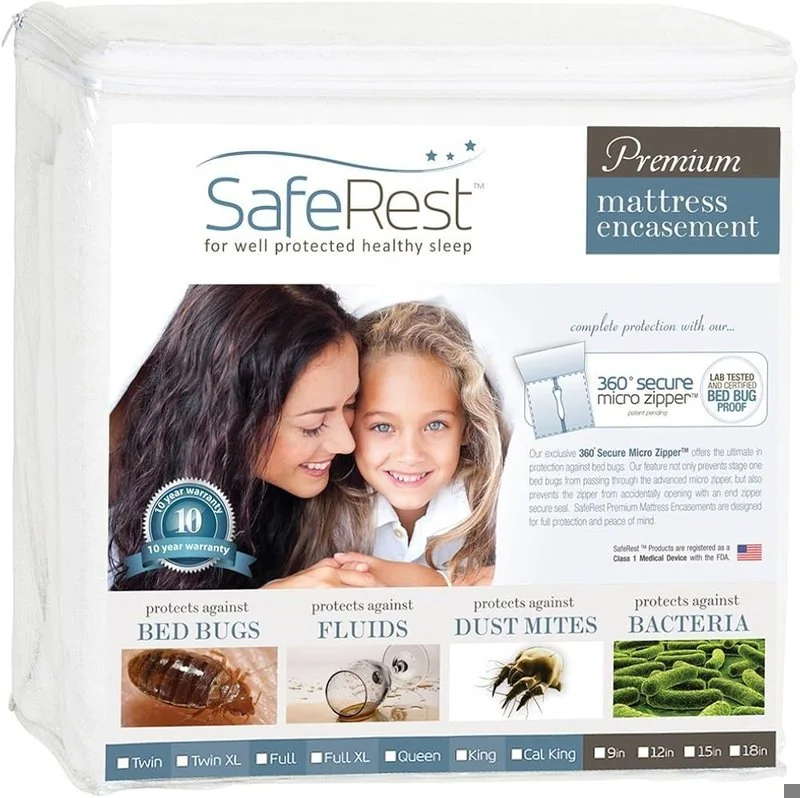
SafeRest Premium Zippered Mattress Encasement
SafeRest Premium Zippered Mattress Encasement delivers reliable bed bug protection with its laboratory-tested micro-zipper technology, fully sealing mattresses up to 18 inches deep. The waterproof yet breathable membrane blocks spills and allergens while maintaining airflow, making it comfortable for nightly use. Designed for prevention and control, it's ideal for anyone seeking peace of mind against bed bugs without sacrificing sleep quality.
Why We Recommend This
We recommend SafeRest Premium Zippered Mattress Encasement as the leading non-chemical solution for bed bug prevention and control. Its micro-zipper technology and laboratory certification provide credible protection that meets pest management best practices. This pick is especially valuable for those wanting added peace of mind during or after treatment, without impacting comfort.
vs Competitors: Compared to basic mattress covers, SafeRest offers a tighter micro-zipper seal and superior waterproofing, making it a more reliable choice for both prevention and post-treatment scenarios.
Best For:
Ideal for homeowners, renters, and property managers seeking a proven, non-chemical approach to bed bug prevention and allergen protection.
- Protecting mattresses in homes, apartments, or dorms after a bed bug treatment
- Preventing re-infestation or safeguarding new mattresses in high-risk areas such as hotels or shared living spaces
- Certified bed bug-proof micro-zipper closure (independently lab tested)
- Waterproof polyurethane membrane protects against spills and liquids
- Provides a secure barrier to trap or block bed bugs and dust mites
- Breathable fabric prevents overheating during sleep
- Does not eliminate existing infestations on its own; works best as part of an integrated pest management plan
- May require a two-person setup for larger or heavier mattresses
For a deeper look at mattress protection, check our Top 7 Bed Bug Mattress Covers for Protection guide.
SureGuard Box Spring Encasement
SureGuard’s Box Spring Encasement uses heavy-duty fabric and reinforced seams to protect your box spring - one of the most common but overlooked bed bug hiding spots. It’s machine washable and designed for long-term use, but installation can be tricky on larger mattresses. As with all encasements, it’s not a stand-alone solution - pair with sprays, powders, and diligent cleaning for best effect.
- Heavy-duty, tear-resistant fabric
- Machine washable for ongoing maintenance
- Protects box springs - critical for cutting off major bug harborage sites
- Installation is easier with two people, especially for king or queen sizes
Encasements make detection and treatment significantly easier; once installed, you’ll spot new evidence of bugs right away.
Best Bed Bug Traps and Monitors
Traps and monitors don’t kill bugs, but they’re vital for detection and measuring success. They let you know if bugs are still present (or returning) after treatment. Strategic placement - under bed legs, along baseboards, or in living areas - gives you confidence that your treatment is working or early warning that you need to hit again.
ClimbUp Insect Interceptor
ClimbUp Insect Interceptors are the gold standard for passive bed bug detection. Their pitfall design captures bugs climbing up or down bed legs, preventing them from reaching you at night. The smooth plastic interior makes escape impossible, so you can instantly confirm activity.
ClimbUp is especially useful for monitoring after treatment or in apartments where new bugs could arrive from neighbors.
- Passive monitoring - no chemicals, no maintenance
- Provides early warning of new or returning infestations
- Can be used as proof of eradication for property managers/landlords
- Does not reduce existing bug population - use as a detection tool only
- Excellent value for long-term peace of mind
Place one under each bed leg and check weekly for best results.
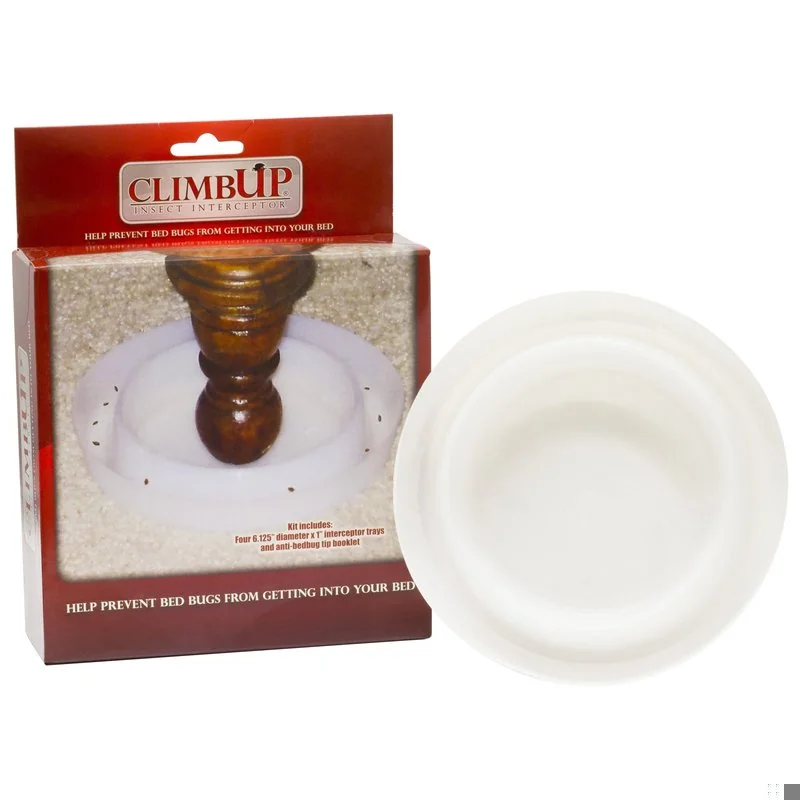
ClimbUp Insect Interceptor
ClimbUp Insect Interceptor passively traps bed bugs as they attempt to climb up or down bed legs, providing early detection and peace of mind for homeowners. Its smooth plastic well prevents escape, allowing you to visually confirm bed bug activity in real time. With a compact 6-inch diameter, it fits most standard bed posts and is ideal for monitoring after treatment or in multi-unit buildings.
Why We Recommend This
We recommend the ClimbUp Insect Interceptor for anyone needing a proven, chemical-free method to monitor for bed bug activity. Its dual-well trap design is widely trusted by pest control professionals and provides immediate, visible results without pesticides. This is especially valuable for apartments and post-treatment monitoring, where early detection is critical.
vs Competitors: Compared to adhesive traps or chemical monitors, ClimbUp offers a more reliable and reusable solution - delivering consistent results without recurring costs or exposure to residues.
Best For:
Homeowners, renters, and property managers seeking reliable, non-chemical monitoring for bed bug activity - especially in multi-unit dwellings or after professional pest treatments.
- Monitoring for new bed bug activity after professional treatment
- Early detection in apartments or shared housing to prevent widespread infestations
- Dual-well pitfall design captures bugs moving both up and down
- Smooth, talc-free plastic surface prevents bed bug escape
- Instant visual confirmation of bed bug presence
- No pesticides or harsh chemicals required
- Does not eliminate existing infestations - monitoring only
- May require regular cleaning to maintain effectiveness
For hard-to-reach areas, supplement with adhesive or pheromone-based traps.
EcoPest Bed Bug Trap
EcoPest’s adhesive-based trap attracts and captures bed bugs for up to 3 months. It’s discreet, easy to place under furniture legs or along baseboards, and requires no maintenance. The biggest limitation is placement: if you don’t put traps where bugs actually travel, they’ll have little effect. Use in combination with interceptors for best coverage.
- Long-lasting adhesive capture
- Discreet, blends with home décor
- Best for supplementing other detection tools
- Replace every 2-3 months for ongoing monitoring
Traps are not a cure, but they’re the best early-warning system you can add - especially if you live in a multi-unit building.
How to Choose the Right Bed Bug Removal Product
Choosing the right product (or combination) starts with a clear-eyed assessment of your infestation’s severity, your living situation, and your risk tolerance. Here’s what matters most when building your DIY bed bug removal toolkit.
Assessing Infestation Severity and Location
If you’ve only seen a few bugs or bites are localized to one room, you might get away with contact sprays and mattress encasements. The key is to act fast and treat all likely hiding spots, not just where you saw the bugs. For heavy or widespread infestations - bugs in multiple rooms, obvious stains or clusters - integrated use of sprays, powders, and foggers is required.
Hidden bugs in walls or deep inside furniture require products with strong penetration (like foam sprays) and long-lasting residual action. Don’t forget to monitor with traps - otherwise you’ll never know when the problem is truly gone.
Safety, Pets, and Children Considerations
Households with pets, children, or allergy-prone residents should lean toward natural and non-toxic sprays, at least for sleeping and play areas. Powders like diatomaceous earth are generally safe if applied carefully, but airborne dust is a real hazard - always apply in thin layers and avoid treating areas where kids or pets may disturb the barrier.
Regardless of product choice, always follow label precautions, ventilate thoroughly, and never re-enter treated rooms until sprays or foggers have fully dried. If you’re struggling with repeated or severe infestations, professional help may be the safest option.
Budget vs. Effectiveness Trade-Offs
DIY kits and powders are the most affordable way to start - but often require more time, effort, and repeat treatments. Premium residual sprays and mattress encasements cost more upfront, but can save money in the long run by reducing reinfestation risk. Foggers and bombs are affordable for whole-room treatments, but rarely work alone - expect to combine them with targeted sprays and traps for real results.
Don’t be tempted by the cheapest option if it means missing a critical step. In our analysis, integrated approaches always outperform single-method treatments, even if the total spend is a bit higher.
Frequently Asked Questions About Bed Bug Sprays and Foggers
❓ Frequently Asked Questions
What is a bed bug spray and how does it work?
What is a bed bug spray and how does it work?
A bed bug spray is a liquid insecticide designed to kill bed bugs on contact by disrupting their nervous system. It provides quick results for visible pests and can reach cracks and seams in mattresses or furniture. Most users find sprays effective for spot treatments, but multiple applications may be necessary for infestations.
How do I use a bed bug fogger safely and effectively?
How do I use a bed bug fogger safely and effectively?
To use a bed bug fogger, follow these steps:
- Remove people and pets from the area.
- Close windows and doors.
- Place the fogger on a raised surface and activate it according to instructions.
- Leave the room for at least two hours.
- Ventilate thoroughly before reentry.
Foggers may not reach deep hiding spots, so combine with targeted sprays for best results.
What should I look for when choosing a bed bug spray or fogger?
What should I look for when choosing a bed bug spray or fogger?
When selecting a bed bug spray or fogger, consider:
- Active ingredients: Look for EPA-registered chemicals or proven natural oils.
- Residual effect: Some products kill on contact, others offer lasting protection.
- Application method: Choose sprays for targeted use, foggers for widespread coverage.
- Safety: Check for child and pet safety.
Always review user reviews for real-world effectiveness.
What is the difference between bed bug sprays and foggers?
What is the difference between bed bug sprays and foggers?
Bed bug sprays are applied directly to affected areas and provide precise control, making them ideal for mattresses, seams, and cracks. Foggers disperse insecticide throughout a room, reaching more open spaces but often missing deep crevices. Most users report sprays work best for targeted infestations, while foggers are suited for widespread problems.
How often should I reapply bed bug spray or fogger treatments?
How often should I reapply bed bug spray or fogger treatments?
Most bed bug sprays and foggers require reapplication every 7-14 days, depending on infestation severity and product instructions. Persistent infestations may need up to three treatment cycles. Always follow the manufacturer’s guidance to avoid chemical overuse. Re-treat until no bed bugs are detected for at least two weeks.
Why do I need to use both sprays and foggers for bed bug removal?
Why do I need to use both sprays and foggers for bed bug removal?
Using both sprays and foggers improves coverage against bed bugs. Sprays target visible insects and hidden crevices, while foggers disperse insecticide into hard-to-reach areas. However, foggers may not penetrate deep enough for severe infestations, so combining both methods increases overall effectiveness and reduces the chance of reinfestation.
When is the best time to apply bed bug sprays or foggers?
When is the best time to apply bed bug sprays or foggers?
Apply bed bug sprays or foggers during early morning or late evening when bed bugs are most active. Ensure the area is unoccupied and ventilate well after treatment. Based on user feedback, treating at the first sign of infestation increases success rates and reduces the need for repeated applications.
- Harris Bed Bug Killer is the best contact spray for visible bugs in small areas.
- Temprid FX Insecticide is the top choice for residual protection and resistant infestations.
- EcoRaider Bed Bug Killer excels as the safest natural option for families and sensitive homes.
- Hot Shot Bedbug & Flea Fogger is the leading fogger for large or cluttered spaces when used as part of an integrated plan.
- SafeRest Premium Zippered Mattress Encasement is essential for mattress and box spring protection.
Key Takeaways
Each product type plays a distinct role: Harris Bed Bug Killer offers fast contact kill for visible bugs, Temprid FX Insecticide provides long-term residual control, and EcoRaider Bed Bug Killer is the best option for households needing a natural or non-toxic approach. Hot Shot Bedbug & Flea Fogger remains the most reliable fogger for broad coverage, while SafeRest’s encasement is irreplaceable for mattress protection.
For spot treatments and early-stage infestations, stick to contact sprays and encasements. For persistent, multi-room, or resistant infestations, opt for residual sprays and powders, and use foggers only as a backup - not as your only tool. Safety and budget both matter: natural sprays and powders suit sensitive environments, while professional-grade concentrates deliver power for severe cases.
Want more detail on mattress protection, step-by-step eradication, or advanced natural strategies? Check our dedicated guides, including Top 7 Bed Bug Mattress Covers for Protection and Best Natural Bed Bug Solutions for Sensitive Households for further help.
Related Articles
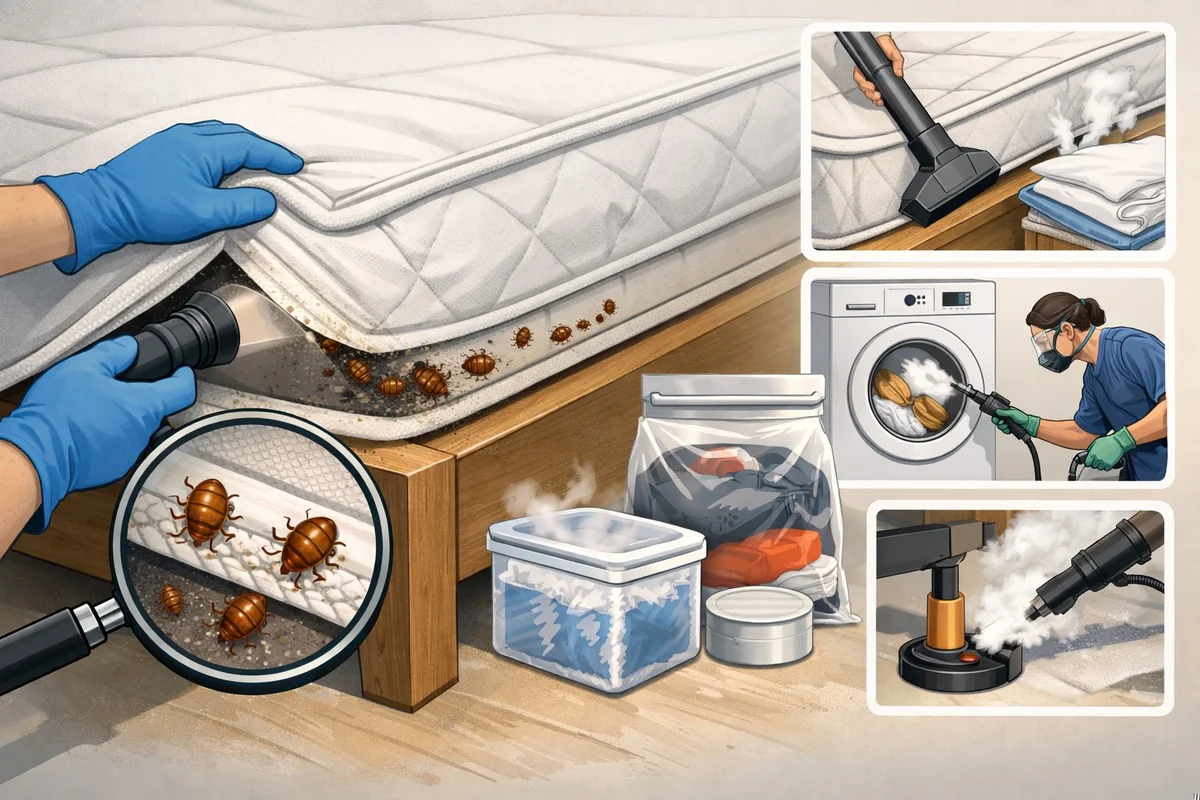
How to Get Rid of Bed Bugs: Complete Process (2026)
Struggling with bed bugs? This 2026 step-by-step guide covers how to get rid of bed bugs, essential tools, DIY vs professional options, and proven extermination steps for fast, safe, and effective bed bug removal.
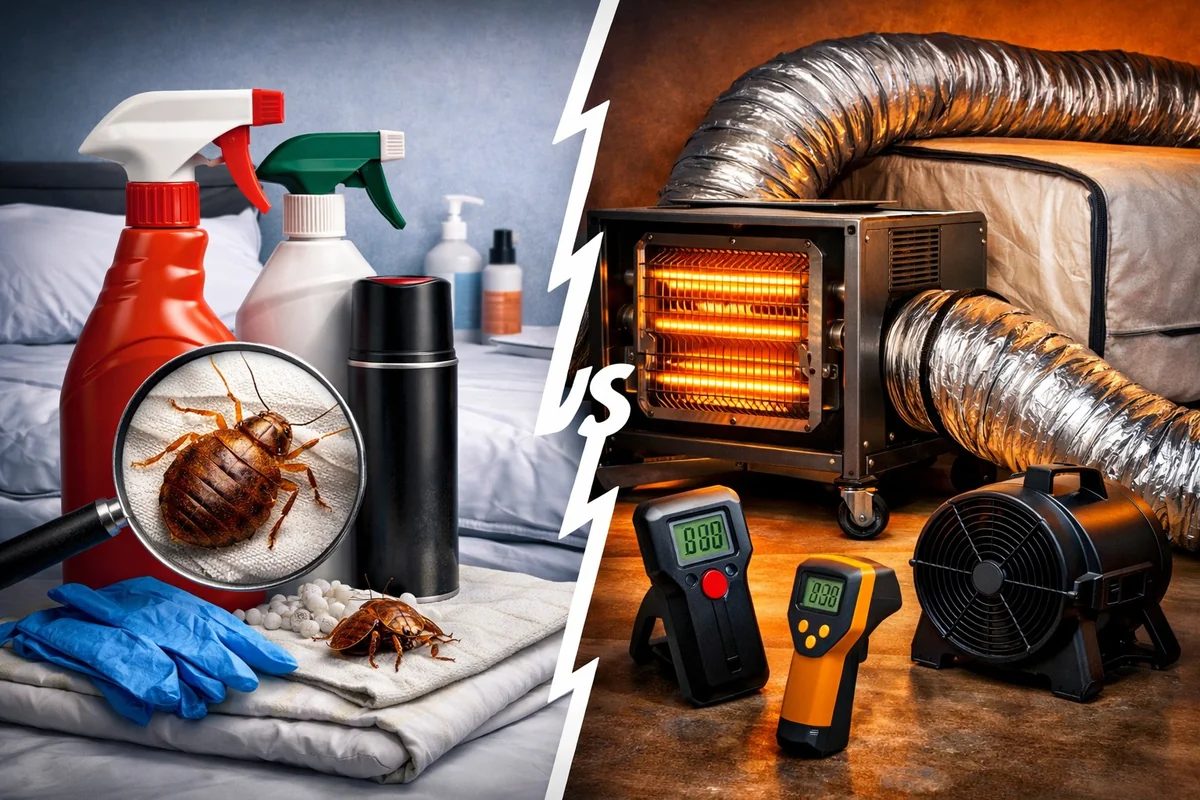
Bed Bug Sprays vs Heat Treatments: What Works Best? (2026 Comparison)
Compare bed bug sprays and heat treatments for DIY pest removal in 2026. Learn which method works best, cost differences, safety tips, and when to combine approaches for effective bed bug control.
Best Natural Bed Bug Solutions for Sensitive Households (2026)
Looking for non-toxic, pet-safe, and allergy-friendly bed bug solutions? See the best natural and organic bed bug killers for sensitive households in 2026, with real test insights.
EcoRaider Bed Bug Killer Review 2026: Does It Deliver?
Is EcoRaider Bed Bug Killer safe and effective for DIY pest control in 2026? We review its real-world performance, safety, and value - plus how it compares to leading alternatives.