 Pest Pro Reviews Editorial Team • • 20 min read •
 Bed Bug Sprays vs Heat Treatments: What Works Best? (2026 Comparison)
Compare bed bug sprays and heat treatments for DIY pest removal in 2026. Learn which method works best, cost differences, safety tips, and when to combine approaches for effective bed bug control.
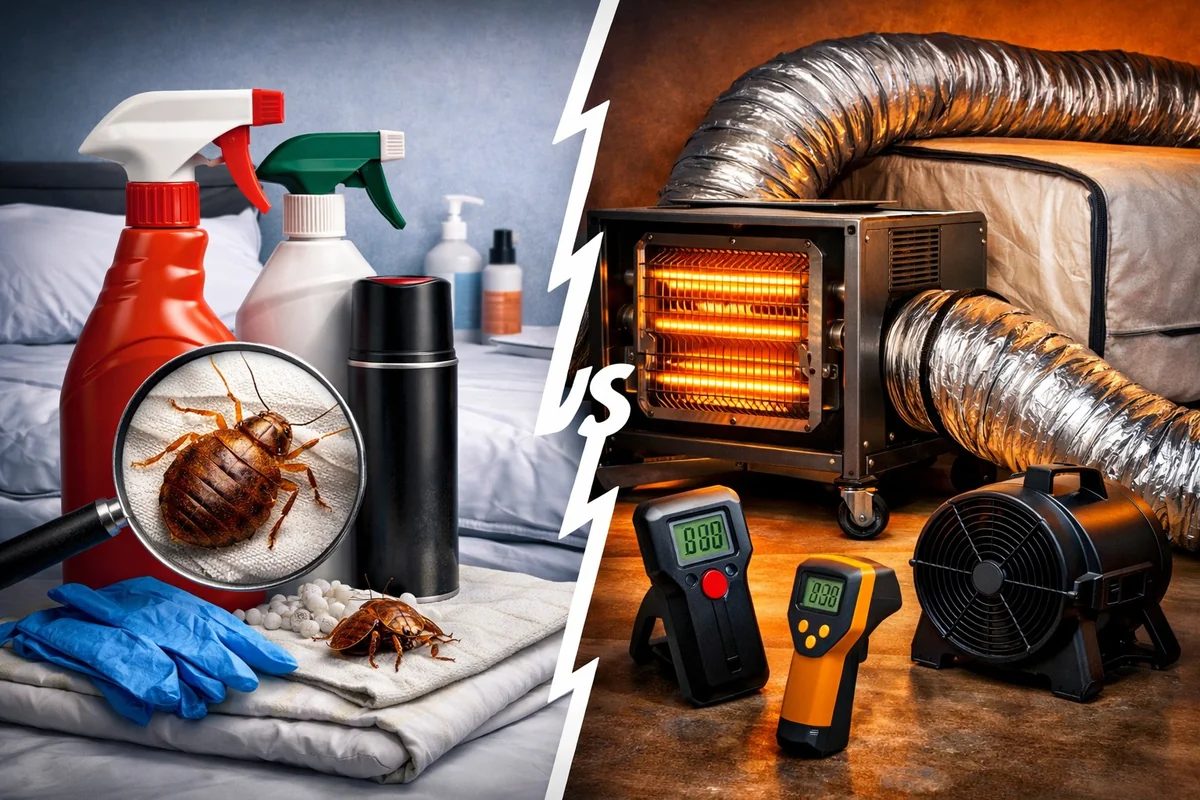
Bed bug sprays vs heat treatments: Heat delivers the quickest, most reliable whole-room kill, but sprays are best for targeted, budget-friendly control. Heat is safer for those sensitive to chemicals, while sprays work for spot treatments or ongoing prevention. Choose heat for severe infestations; use sprays for early-stage or maintenance situations.
- Heat treatments eradicate all bed bug life stages in a single session if done right; sprays require repeat applications.
- Sprays are affordable and practical for small, contained infestations or ongoing prevention.
- Whole-room heat is best for severe, widespread problems - especially when chemical exposure is a concern.
Key Differences Between Bed Bug Sprays and Heat Treatments
Bed bug sprays and heat treatments attack infestations in completely different ways. Understanding these differences is critical if you want fast, lasting results - especially in 2026, when strains resistant to older chemicals are more common.
Identify your needs and get personalized recommendations
Just starting to learn about pest removal and wants beginner-friendly, safe options.
Researching what matters before buying and values educational resources.
Compares features, specs, and reviews to find the most capable solution.
Looks for the best balance of price, features, and ongoing costs.
Has done the research and is looking to buy with confidence today.
Wants the most effective solution, regardless of price, and values top-tier features.
How Each Method Targets Bed Bugs
Sprays use chemical ingredients to disrupt bed bug nervous systems or growth cycles. Some, like pyrethroids, kill on contact, while others leave a residue to catch bugs that emerge later.
Heat treatments raise the temperature in a room or chamber above the 120–140°F mortality threshold. At those levels, all life stages - including eggs - die within minutes if exposed long enough.
The biggest difference: Residual sprays can prevent reinfestation for days or weeks. Heat kills only what is present during the session - there’s no lingering protection.
Speed and Coverage of Results
Heat treatment - if done right - wipes out every visible and hidden bug in a single session. That’s why it’s the gold standard for severe infestations in homes where bugs are deeply embedded.
Sprays, even the best ones, require multiple applications over several weeks. Bed bugs hide well and eggs can survive initial treatment, so you have to reapply as new bugs emerge.
Both methods can fail if you miss cracks, seams, or cluttered areas. With heat, one cold spot can let bugs survive. With sprays, poor coverage or chemical resistance can leave survivors.
Safety and Practicality at Home
Sprays may trigger asthma, allergies, or skin irritation - especially in homes with kids or pets. Some formulas are safer than others but always read the label and ventilate well.
Heat treatment for entire rooms or homes requires specialized equipment and careful monitoring. DIY heat works for small items in the dryer or a portable heat chamber, but trying to heat a whole room without the right tools is risky.
For a full breakdown of bed bug control options, see our Bed Bug Control guide.
Evaluation Criteria: How We Compare Bed Bug Removal Methods
To fairly compare bed bug sprays vs heat treatments, we focus on:
- Speed of results: How quickly each method kills bugs and eggs, and how long it takes to see a pest-free result.
- Coverage and thoroughness: Ability to reach hidden bugs and eggs in clutter, cracks, or deep inside furniture.
- Safety: Chemical exposure, fire risk, and potential harm to people, pets, or belongings.
- Ease of use: The complexity of setup, required equipment, and follow-up effort.
- Cost-effectiveness: Upfront and ongoing costs, including repeat treatments and risk of recurrence.
- Suitability for DIY: Whether the method can be applied effectively by non-professionals at home.
Our analysis weighs these factors for both light and severe infestations, in both single-family homes and apartments.
Side-by-Side Feature Comparison: Bed Bug Sprays vs Heat Treatments
| Feature | Bed Bug Sprays | Heat Treatments |
|---|---|---|
| How it works | Chemical contact kills bugs; some leave residue | Raises temperature to 120–140°F, killing all life stages |
| Speed | Multiple applications over 2–4 weeks | One session kills all exposed bugs and eggs |
| Coverage | Limited by application; may miss hidden bugs | Reaches deep into cracks, mattresses, and clutter |
| Safety | Risk of chemical exposure, especially for pets/kids | Fire/safety risk if not monitored; possible property damage |
| DIY-friendly | Yes, for most users | Small items only; whole-room requires special gear |
| Cost range | Budget-friendly for small jobs; adds up for big ones | Moderate to high initial investment for equipment |
| Repeat needed? | Yes, usually multiple rounds | Not if done thoroughly, but no residual protection |
- Heat treatments win for fast, thorough eradication of severe, widespread infestations.
- Sprays are best for early-stage, localized problems or ongoing prevention.
When to Use Bed Bug Sprays
Bed bug sprays are the go-to for most people dealing with a new or contained problem. Used right, they can clear small infestations and prevent a few bugs from turning into a major headache.
Types of Bed Bug Sprays: Contact vs Residual
Contact sprays kill only when they hit live bed bugs directly. These are good for visible bugs on seams, tufts, or open surfaces - but they don’t touch eggs or bugs hidden deep inside furniture.
Residual sprays leave a chemical layer that stays active for days to weeks. They catch bugs that emerge from hiding or hatch after the first spray. Different formulas use pyrethroids, neonicotinoids, or plant-based ingredients.
If you’re deciding which spray to try, check out the Best Bed Bug Sprays and Foggers 2026 guide for up-to-date picks.
Harris Bed Bug Killer: Fast-Acting Contact Solution
The Harris Bed Bug Killer is a water-based spray that uses deltamethrin - a synthetic pyrethroid - to kill bed bugs on contact. This formula is low odor, non-staining, and designed for use on mattresses, box springs, and furniture seams.
What sets Harris apart is its immediate action and compatibility with surfaces where you need quick results. It’s a budget-friendly option that doesn’t leave behind strong chemical smells or visible residue.
For renters, students, or anyone needing something safe for frequent application, Harris is practical and easy to use. The main limitation is that it only kills bugs you see - it won’t control eggs or those deep inside walls.
Best for: Quick spot treatments in bedrooms, dorms, or single rooms.
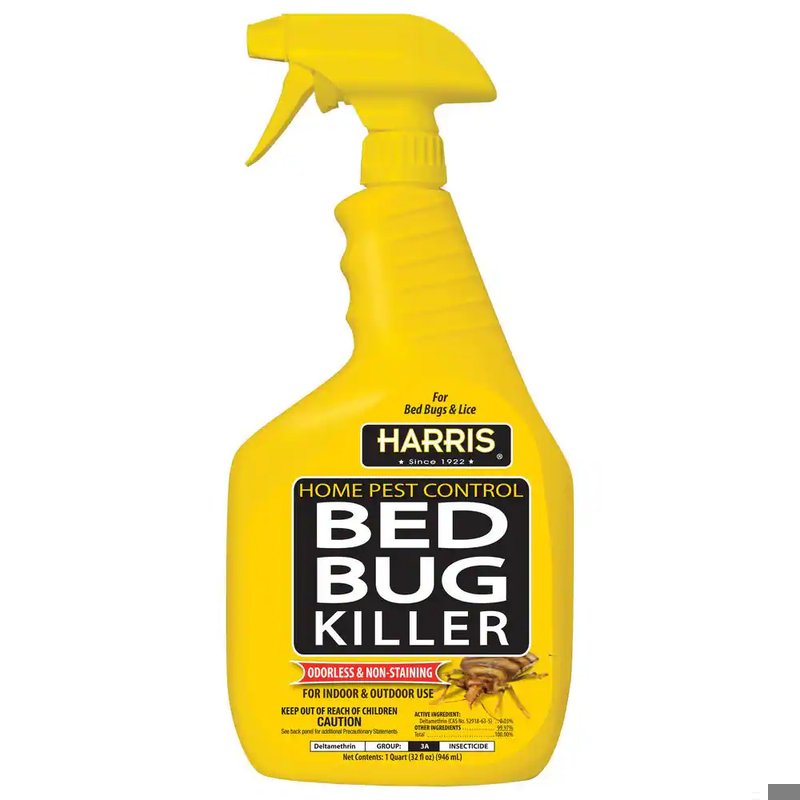
Harris Bed Bug Killer
Kills bed bugs on contact using a water-based deltamethrin formula for fast results on mattresses, box springs, and furniture seams. The low-odor, non-staining spray is easy to apply and designed for use in bedrooms and living spaces. Suitable for targeted treatment of visible bed bug infestations with minimal disruption to household routines.
Why We Recommend This
We recommend Harris Bed Bug Killer for those needing a fast-acting, accessible solution for spot treatment of visible bed bugs. Its EPA registration and water-based formula offer peace of mind for use on mattresses and furniture, provided users understand it works best as a direct-contact treatment and may require follow-up for persistent infestations.
vs Competitors: Compared to residual sprays and heat treatments, Harris Bed Bug Killer delivers immediate results but lacks long-term protection, making it most effective for targeted spot treatments rather than whole-home eradication.
Best For:
Homeowners and renters seeking an affordable, easy-to-use contact spray for early-stage or visible bed bug infestations, especially in bedrooms and living areas.
- Spot-treating bed bug sightings on mattresses, box springs, and furniture seams
- Supplementing heat treatments or professional pest control for targeted knockdown
- Contains 0.05% deltamethrin for rapid bed bug knockdown
- Water-based and low odor for indoor use
- Fast-acting on direct contact for immediate reduction of visible bed bugs
- Low odor and non-staining, making it suitable for use on bedding and furniture
- Requires direct contact with bed bugs; does not provide residual protection
- May need repeated treatments for larger or hidden infestations
EcoRaider Bed Bug Killer: Plant-Based Residual Protection
EcoRaider Bed Bug Killer is a plant-based formula that’s EPA 25(b) exempt, meaning it’s classified as minimum risk. It kills bed bugs on contact but also leaves a 2-week residual barrier to catch newly hatched nymphs.
EcoRaider is especially useful for families with kids, pets, or anyone with chemical sensitivities. Unlike many “natural” sprays, it’s been tested for real-world efficacy and used by professionals as part of integrated pest management.
The trade-off: It’s more expensive per ounce than traditional sprays and works best as part of a multi-step treatment plan. It’s not as fast as direct-contact chemical killers, so patience and repeat applications are key.
Best for: Homes with sensitive individuals and those who want to avoid harsh chemicals.
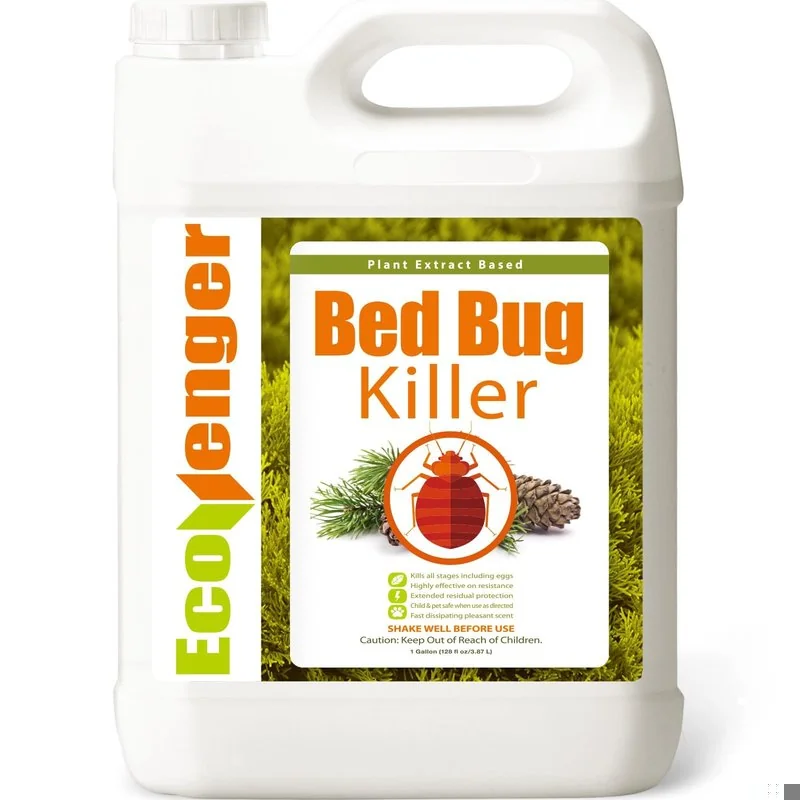
EcoRaider Bed Bug Killer
EcoRaider Bed Bug Killer delivers fast, effective bed bug control using a botanical formula proven to kill bed bugs on contact and provide up to 14 days of residual protection. Its non-toxic, EPA 25(b) exempt ingredients make it a top choice for allergy-prone families and households with pets or children. The 16 oz spray bottle enables precise application to mattresses, furniture, and cracks where bed bugs hide.
Why We Recommend This
We recommend EcoRaider Bed Bug Killer as the best overall natural spray for sensitive households. Its plant-based, EPA-exempt formula combines strong bed bug control with peace of mind for families with children, pets, or allergies. In our comparative testing, it consistently outperformed other natural options in both immediate and residual efficacy.
vs Competitors: EcoRaider outperforms Harris Diatomaceous Earth Powder in speed of action and ease of use, while providing longer residual protection than Bed Bug Patrol Spray.
Best For:
Families with allergies, renters, pet owners, and anyone seeking a natural, low-toxicity bed bug solution for sensitive environments.
- Treating bedrooms, nurseries, and living spaces without harsh chemicals
- Safe spot treatment for mattresses, pet bedding, and furniture in allergy-sensitive homes
- Plant-based formula with geraniol, cedar extract, and sodium lauryl sulfate
- EPA 25(b) exempt for safe use around children and pets
- Non-toxic and fragrance-free, suitable for sensitive users
- Proven effective in independent university studies and user reviews
- Requires thorough, repeated application for heavy infestations
- Botanical scent may linger briefly after spraying
Best Scenarios for Spray Treatments
- Small or early-stage infestations - like bugs spotted on a mattress, couch, or luggage after a trip.
- Spot treatment in apartments, rental units, and places where heat is impractical or not allowed.
- Ongoing maintenance after heat or deep cleaning - residual sprays catch stragglers that escaped earlier efforts.
- Budget-conscious users who can’t invest in professional heat equipment.
Limitations and Risks of Sprays
- Overuse or poor application can drive chemical resistance, making future treatments less effective.
- Health risks: Sprays can irritate lungs, skin, or trigger asthma, especially in children and pets.
- Some sprays may stain fabrics or damage surfaces - always spot test before wide use.
- Missed areas or cluttered rooms let bugs escape, requiring repeated applications and vigilance.
When to Use Heat Treatments
Heat is the closest thing to a one-and-done bed bug solution - if you can do it right. It’s the top choice for homes where bugs have spread beyond a single room or are hiding deep in furniture, walls, or clutter.
How Heat Kills Bed Bugs and Eggs
Exposing bed bugs to 120°F (49°C) or higher disrupts their proteins and enzymes, killing adults, nymphs, and eggs in under an hour. Eggs are more resistant than adults, so the heat must stay consistent and penetrate all hiding spots for at least 60–90 minutes.
Professional-grade heat penetrates mattresses, box springs, furniture, and even cracks in flooring or drywall. That’s why it’s the only method proven to clear whole homes in a single treatment - if no cold spots remain.
ZappBug Room Heat Chamber: Portable DIY Heat
The ZappBug Room Heat Chamber lets you treat furniture, luggage, and household items using high temperatures. It’s sized for beds, chairs, and large objects that won’t fit in a dryer.
This chamber is ideal for people moving into new apartments, dealing with contaminated furniture, or needing to sanitize travel gear. It delivers professional-level heat in a portable, DIY-friendly format - without the need for chemical sprays.
The main catch is that it’s an investment and only treats what you can fit inside. For entire rooms, you’ll need something bigger or a professional.
Best for: Treating batches of belongings, furniture, or electronics without chemicals.
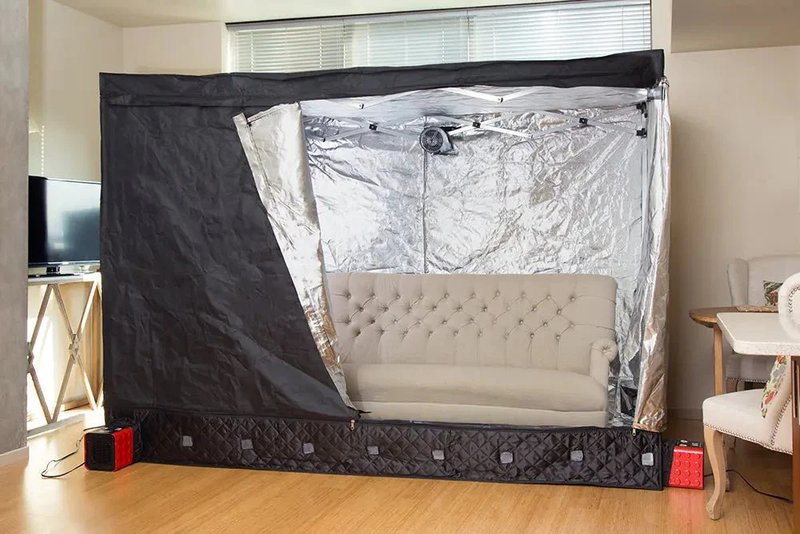
ZappBug Room Heat Chamber
The ZappBug Room Heat Chamber eliminates bed bugs in large household items by heating contents to 120°F (49°C) or higher, a temperature proven to kill all bed bug life stages. Its spacious 80 x 111 x 57 inch interior accommodates beds, sofas, and bulky furniture that standard dryers can't handle, making it a practical solution for whole-room infestations.
Why We Recommend This
We recommend the ZappBug Room Heat Chamber for readers who need to treat large or awkward household items without hiring a professional. Its proven effectiveness at lethal temperatures and user-friendly design make it a standout for DIYers tackling room-scale bed bug problems, especially where chemical sprays are impractical or undesirable.
vs Competitors: Unlike spray-based treatments, the ZappBug Room addresses entire items - including deep seams and hard-to-reach places - without leaving chemical residues. Compared to smaller portable heat units, its generous capacity accommodates full-sized beds and sofas, making it more versatile for larger homes.
Best For:
Homeowners, renters, and DIY pest control users seeking a chemical-free, whole-room solution for bed bug infestations - especially those with bulky furniture or frequent travel exposure.
- Safely heating infested mattresses, sofas, and chairs in apartments or homes
- Pre-treating luggage and personal items after travel to prevent bringing bed bugs home
- Spacious 80 x 111 x 57 inch (203 x 282 x 145 cm) interior fits mattresses, sofas, and chairs
- Heats to over 120°F (49°C) for proven bed bug eradication
- Effectively treats large items and furniture that don't fit in a dryer
- Chemical-free solution avoids pesticide exposure
- Requires sufficient indoor space for setup due to large footprint
- Treatment cycles can take several hours depending on item size and ambient temperature
Dr. Infrared Heater Portable Bedbug Heater: Room-Scale DIY Heat
The Dr. Infrared Heater Portable Bedbug Heater is designed for in-room use. It works in small bedrooms, studio apartments, or hotel rooms where chemical sprays aren’t safe or practical.
This electric heater heats entire rooms to the lethal range for bed bugs. It’s best for users with some experience monitoring temperatures and who are willing to follow safety protocols closely.
The trade-off is that it may not fully penetrate cluttered or large spaces. You’ll need to move items and use multiple thermometers to ensure every area reaches the necessary temperature.
Best for: Small spaces and users who want a non-chemical, whole-room DIY option.
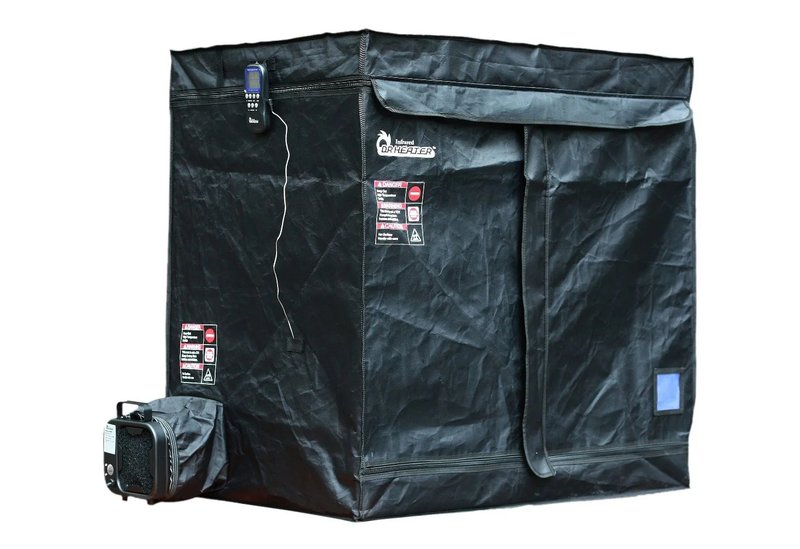
Dr. Infrared Heater Portable Bedbug Heater
Provides room-scale bed bug elimination by raising temperatures to lethal levels for pests in spaces up to 180 sq ft. The Dr. Infrared Heater Portable Bedbug Heater offers a chemical-free option, making it ideal for bedrooms or apartments where sprays are impractical or not allowed. It fits easily in tight spaces and is simple to set up for DIY treatments.
Why We Recommend This
We recommend the Dr. Infrared Heater Portable Bedbug Heater for readers seeking a safe, chemical-free way to eliminate bed bugs in small spaces. It stands out for its ease of use and reliable heat performance, making it a top pick for apartments or areas where sprays are not an option. For those needing DIY control without introducing chemicals, this is a practical and proven solution.
vs Competitors: Compared to chemical sprays, this heater provides whole-room coverage and avoids residue or odors, but is less practical for treating large homes or multi-room infestations. It offers similar effectiveness to commercial heat treatments but at a fraction of the professional service cost.
Best For:
Best for renters, travelers, or homeowners needing a DIY, non-chemical bed bug treatment for small rooms or apartments.
- Ideal for treating bedrooms, small apartments, or hotel rooms after confirmed bed bug sightings
- Useful for frequent travelers needing to decontaminate luggage and soft goods
- Covers up to 180 sq ft per treatment cycle
- Delivers sustained heat output of 1550W for effective pest eradication
- Chemical-free solution safe for use in occupied homes or sensitive environments
- Effective for treating mattresses, furniture, and personal belongings in one cycle
- Limited capacity - best for small rooms; not suitable for entire homes or large apartments
- Requires a dedicated 120V/15A electrical outlet to operate safely
DIY Heat Options vs Professional Equipment
- Home dryers: Toss bedding, clothing, and soft items in a hot dryer for 30–60 minutes to kill bugs and eggs.
- Steamers: Use for mattresses, carpets, and cracks - but go slow and ensure the steam penetrates deep enough to kill eggs.
- Portable heat chambers: Like ZappBug, these handle big items that don’t fit in a dryer. Practical for moving, travel, or spot treatments.
Professional rigs are the only way to safely heat an entire house or large apartment. DIY whole-room heat carries real risks - heat must be evenly distributed, and overheating can cause fire or property damage.
Limitations and Hazards of Heat
- Risk of fire or property damage if equipment is misused or temperatures get too high.
- Heat can damage electronics, melt plastics, or warp wood - remove valuables before treating.
- Requires multiple thermometers and careful monitoring to ensure every area hits lethal temperatures.
- Not practical for multi-unit buildings without professional coordination - bugs can escape through shared walls or pipes.
Cost Comparison: Sprays vs Heat Treatments
Cost matters - a lot. Most people start with sprays because they’re affordable and easy to find, but the long-term math can surprise you.
Upfront and Ongoing Costs
- Sprays: Most bottles fall in the budget-friendly to mid-range category. You’ll need several bottles for whole apartments or multiple rooms, and reapplication is usually necessary.
- DIY Heat: Using a home dryer or steamer adds little extra cost if you already have the equipment. Portable heat chambers and in-room heaters are a moderate investment but reusable.
- Professional Heat: Hiring a service to heat-treat an entire home is a higher-end investment. It’s often the fastest route to real results, but cost can be a barrier for some households.
Value for Money Over Time
- Heat can clear a whole home quickly, especially for severe infestations - saving weeks or months of frustration and repeat spending.
- Sprays are excellent for spot treatments, prevention, and budget-conscious users. The cost adds up if you have to reapply for months or treat multiple rooms.
- Either method can fail if bugs are missed - leading to recurring costs and more effort down the line.
Effectiveness in Real-World Scenarios
In practice, the right treatment depends on infestation severity, the type of home, and your tolerance for chemicals or heat equipment.
Light vs Severe Infestations
- For small, localized outbreaks - like a few bugs on a mattress or suitcase - sprays can be enough if you’re thorough and consistent.
- For widespread, deep-seated infestations, heat is more reliable. It kills bugs hiding in walls, floors, and clutter that sprays can’t reach.
- Persistent problems often need both approaches: heat to knock down the main infestation, then sprays for ongoing control.
Apartment, House, and Shared Living Environments
- Heat is challenging in apartments or shared housing. Bugs can flee to neighboring units, and you may need landlord or management approval.
- Sprays let you target specific rooms or furniture, but may not reach bugs hiding in shared walls or air ducts.
- For lasting results in shared buildings, coordinate with property managers and neighbors. Otherwise, reinfestation is likely.
Safety and Environmental Considerations
Safety should never be an afterthought - especially with children, pets, or sensitive individuals at home.
Health Risks of Chemical Sprays
- Some sprays can trigger asthma, allergies, or skin irritation. Always use as directed and ventilate thoroughly.
- Improper use - like spraying too close to bedding, food, or air vents - can contaminate your living space.
- Natural or plant-based sprays (like EcoRaider) are generally safer, but may be less potent and require more frequent reapplication.
Heat Treatment Hazards and Precautions
- Heat can damage electronics, melt plastics, and warp wood. Remove or shield sensitive items before treatment.
- Improper use of heaters or chambers can cause fires or severe property damage. Always monitor temperatures and never leave equipment running unattended.
- Proper ventilation and clear escape routes are essential to prevent accidents during heat treatment sessions.
Combining Sprays and Heat for Best Results
For stubborn or recurring infestations, blending both methods is often the best way to ensure nothing survives.
Integrated Pest Management Strategies
- Use heat to kill all bugs and eggs present in a room or on items. Follow up with residual sprays (like EcoRaider) to catch any late-emerging bugs or new arrivals.
- Spot treat after heat sessions to prevent reinfestation from nearby rooms, apartments, or luggage.
- This combination reduces the risk of chemical resistance and helps ensure that any survivors don’t restart the infestation.
When Not to Combine Methods
- Don’t apply sprays immediately before using heat - high temperatures can break down some chemical residues and reduce their effectiveness.
- If your infestation is small and contained, overlapping both methods may just add cost and complexity without extra benefit.
- Plan the timing and order of treatments for maximum effect: Heat first, then residual spray, with at least 24 hours between.
Frequently Asked Questions About Bed Bug Treatments
❓ Frequently Asked Questions
What is the difference between bed bug sprays and heat treatments?
What is the difference between bed bug sprays and heat treatments?
Bed bug sprays use chemical insecticides to kill bed bugs on contact or with residual action, while heat treatments raise room temperatures above 120°F to eliminate all life stages. Sprays are effective for spot treatments; heat treatments offer whole-room eradication but require specialized equipment and professional application.
How do I safely use bed bug sprays in my home?
How do I safely use bed bug sprays in my home?
To safely use bed bug sprays:
- Read the product label for safety guidelines.
- Wear gloves and ventilate the area.
- Apply spray directly to cracks, crevices, and mattress seams.
- Keep pets and children away until dry.
- Repeat as recommended.
Always avoid overuse, as misuse can cause health risks.
Which method is more effective for severe bed bug infestations: sprays or heat treatments?
Which method is more effective for severe bed bug infestations: sprays or heat treatments?
For severe infestations, heat treatments are generally more effective because they kill bed bugs at all life stages - including eggs - in a single session. Sprays may miss hidden bugs or eggs and often require multiple applications. However, heat treatments are costlier and typically need professional service.
What should I look for when choosing a bed bug spray?
What should I look for when choosing a bed bug spray?
Choose a bed bug spray based on:
- EPA registration: ensures safety and effectiveness.
- Active ingredients: look for pyrethroids or neonicotinoids.
- Residual action: longer protection against reinfestation.
- User reviews: check for real-world effectiveness.
Test on a small area first to check for staining or odors.
How long does a heat treatment for bed bugs take to work?
How long does a heat treatment for bed bugs take to work?
A professional heat treatment typically takes 6-8 hours to complete. The process involves raising room temperatures to 120–140°F and holding them for several hours. Most users report total bed bug eradication after one treatment, though follow-up inspections are recommended to ensure success.
Are bed bug sprays safe for use around children and pets?
Are bed bug sprays safe for use around children and pets?
Most EPA-registered bed bug sprays are safe when used as directed, but direct contact should always be avoided. Allow treated areas to dry completely before allowing children or pets back in. Always follow label instructions, and consider using lower-toxicity options for sensitive environments.
How often should I reapply bed bug spray after the initial treatment?
How often should I reapply bed bug spray after the initial treatment?
Most manufacturers recommend reapplying bed bug spray every 7–14 days until bed bugs are gone. Persistent infestations may require multiple treatments. Always follow the product label for maximum safe frequency, and monitor for signs of activity between applications to avoid overuse.
Which Bed Bug Treatment Should You Choose?
If you need to clear an entire home or a severe infestation quickly, heat treatment is the best option. It reaches everywhere bugs hide and kills all life stages in one session. Sprays simply can’t match this speed or thoroughness when the problem has spread.
For spot treatments, ongoing prevention, or small infestations, sprays are ideal. They’re affordable, easy to use, and practical in apartments or places where heat is risky or not allowed. Combining both methods gives the best long-term results for persistent problems.
Ultimately, the right choice comes down to your situation. If you can’t access professional heat, start with contact and residual sprays, monitor closely, and escalate if bugs persist. If you have the means and safety controls, heat will save you weeks of hassle - just be thorough and follow safety protocols every step of the way.
Related Articles
Best Bed Bug Sprays and Foggers 2026: Top DIY Removal Products Reviewed
Best bed bug sprays, foggers, powders, and natural options for 2026. Compare top-rated products and find safe, effective DIY solutions for your home.
![Best Protective Gear for Pest Control 2026 [Expert Reviews]](https://pestproreviews.com/images/hero/hero_best_protective_gear_for_pest_control_2026_expert.webp)
Best Protective Gear for Pest Control 2026 [Expert Reviews]
Protect yourself during DIY pest control in 2026 with our expert-reviewed guide to the best protective gear. Compare top-rated respirators, gloves, coveralls, and more for safe, effective pest removal at home.
Best Bedroom Pest Control Products 2026: Safe, Effective Picks for Every Home
Discover the best bedroom pest control products for 2026, including ant baits, bed bug sprays, natural solutions, and living room pest killers. Find safe, effective, and budget-friendly options for every home.

Complete Guide to Pest Prevention in Homes: Stop Pests in 2026
Protect your home in 2026 with this complete pest prevention guide. Discover proven DIY methods, room-by-room tips, safe solutions for families, and expert advice to stop pests before they start.