
How to Make a DIY Mouse Trap for Indoors
How to make a DIY mouse trap for indoors: a dry bucket trap with a spinning bottle and ramp, plus simpler toilet paper roll and cup designs and common mistakes.
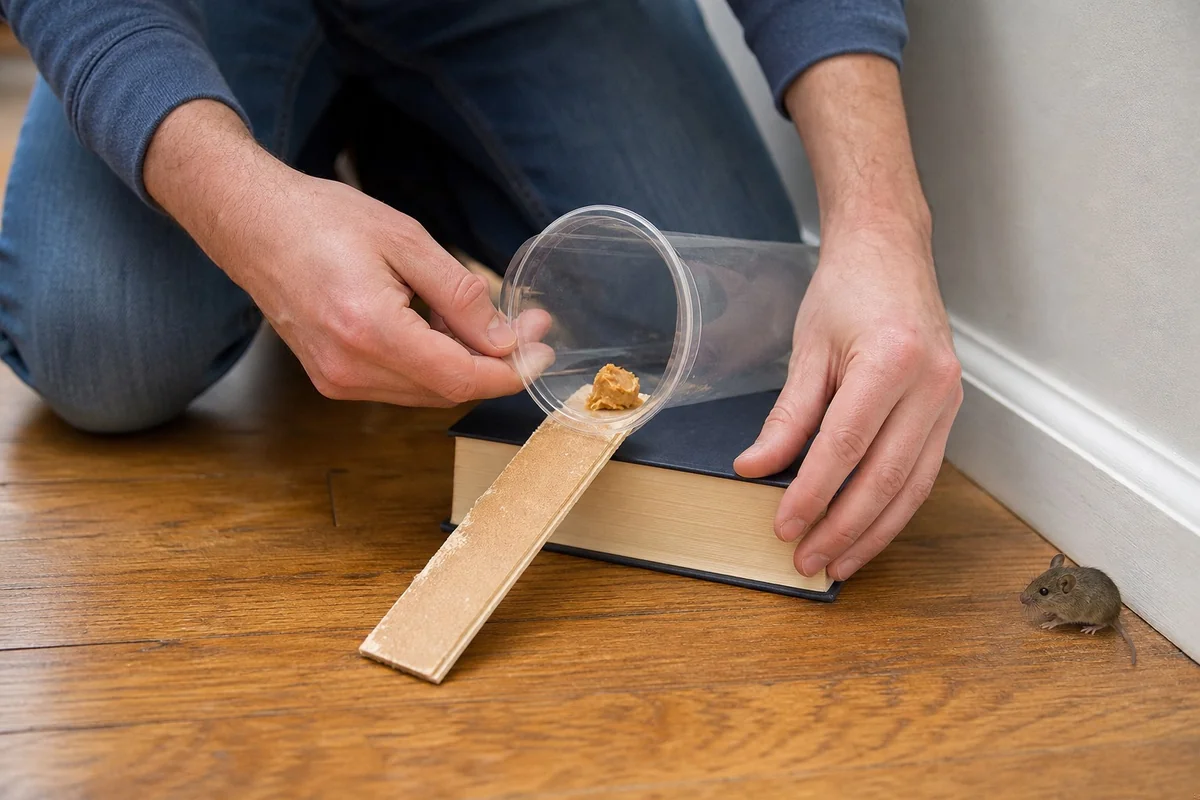
To make a DIY mouse trap for indoors, thread a plastic bottle onto a wire across the top of a dry 5-gallon bucket, smear peanut butter on the bottle and lean a ramp against the side. A mouse walks onto the bottle, it spins, and the mouse drops into the bucket. Leave the bucket dry and check it every morning.
What a Homemade Mouse Trap Can and Cannot Do
The bucket trap is the most effective homemade design because it can catch several mice in one night without resetting. It costs almost nothing if you already own a bucket, and it keeps the mouse alive, so you decide what happens next.
It is still a supplement, not a replacement for store-bought traps. The CDC's trapping guidance recommends traditional snap traps for removing mice and advises against live traps, because a frightened rodent urinates and that raises the risk of illness. A bucket trap is a live trap, so treat each catch with gloves and care.
If you would rather buy something that works out of the box, our guide to the best mouse traps compares snap, electronic and enclosed designs, and the mouse traps section covers every trap type.
What You Need
- A 5-gallon bucket with smooth sides, clean and dry.
- An empty plastic bottle or a soda can to act as the spinning roller.
- A straight piece of stiff wire or a thin dowel longer than the bucket is wide, such as a cut coat hanger.
- A drill or a large nail to make holes in the bucket and the bottle.
- A ramp: a scrap board, a ruler or a strip of cardboard long enough to reach from the floor to the rim.
- Bait: chunky peanut butter, plus disposable gloves for checking the trap.
Everything here is common household material; the only real decision is the bottle, and a light plastic one spins more easily than a can.
How to Make a Bucket Mouse Trap Step by Step
- Drill the bucket. Make one hole on each side of the bucket a short distance below the rim, directly opposite each other, just big enough for the wire.
- Pierce the bottle. Make a hole in the center of the cap and another in the center of the bottom, so the wire passes straight through the bottle's long axis.
- Thread the roller. Push the wire through one bucket hole, through the bottle, and out the opposite bucket hole. The bottle should hang over the middle of the bucket.
- Test the spin. Roll the bottle with a finger; it should turn freely with almost no effort. Widen the bottle holes if it sticks, because a bottle that does not spin lets the mouse eat and walk away.
- Bait the bottle. Wearing gloves, smear a thin band of peanut butter around the middle of the bottle, far enough from the rim that the mouse must step onto the roller to reach it.
- Add the ramp. Lean the board against the outside of the bucket so it reaches the rim next to one end of the bottle.
- Place the trap. Set the bucket against a wall where you have seen droppings, with the ramp along the wall, since mice run along walls rather than across open floor.
- Check it every morning. Mice are active at night, so check first thing, and deal with any catch right away.
Quick Checklist
Build a dry bucket trap with a spinning bottle that catches mice alive.
- Warning: Keep the bucket dry; wear gloves when handling a catch.
Why the Bucket Should Stay Dry
Many online versions fill the bucket with water so the mouse drowns. UC IPM's house mouse guide states that drowning is not considered humane and points to veterinary euthanasia guidelines instead. A dry bucket with smooth, tall sides holds a mouse alive until morning.
That leaves you two options for each catch. You can release the mouse, wearing gloves and following local rules on releasing wildlife, or you can use a store-bought snap trap for the rest of the problem. A released mouse that is let go close to home usually finds its way back inside through the same gaps.
Other Homemade Trap Designs
The bucket trap is the most reliable, but a couple of simpler designs work for a single mouse in a small space.
- Toilet paper roll trap: flatten one side of an empty roll so it sits without rolling, put a dab of peanut butter at the far end, and balance it half over the edge of a counter above a tall bin. The mouse's weight tips the roll and it drops into the bin. It catches one mouse at a time and needs a counter edge mice already travel.
- Cup trap: prop a heavy cup or glass upside down on a coin standing on its edge, with bait stuck to the inside of the cup. A mouse that knocks the coin traps itself under the cup. It is fiddly to set and holds only one mouse.
Both designs catch the mouse alive, so the same rules apply: check them every morning, wear gloves and follow local rules on release.
Common Mistakes With DIY Traps and How to Fix Them
- Bottle does not spin: the mouse eats the bait and leaves; widen the holes until the bottle turns at a touch.
- Too much bait: a thick coat lets the mouse feed from the ramp end; use a thin band around the middle only.
- Bucket in open floor: mice avoid crossing open rooms; put it against the wall near droppings.
- Short or rough bucket: a mouse can climb out of a low or textured container; use a tall, smooth-sided bucket.
- Checking too rarely: a trapped mouse left for days suffers and fouls the bucket; check every morning.
- Relying on one trap: a single homemade trap rarely clears a house; add snap traps along the other active walls.
Common Questions About DIY Mouse Traps
Where can I release a caught mouse?
Where can I release a caught mouse?
Only where local rules allow, since they vary by state, so check with your state wildlife agency. A mouse released next to the house usually finds its way back in, often through the same gap it used before, so seal entry points while you trap.
Can a mouse jump out of a 5-gallon bucket?
Can a mouse jump out of a 5-gallon bucket?
A clean bucket with smooth, tall sides usually holds a mouse, but a bucket with a rough or dirty inside, a low rim or debris in the bottom gives it something to climb. Keep the inside clean and empty, and check the trap every morning.
What can I use instead of peanut butter on a DIY trap?
What can I use instead of peanut butter on a DIY trap?
Use the food your mice are already eating, a little soft fat, or a seed mix pressed into something sticky. Whatever you use, keep it to a thin band on the roller so the mouse has to step onto it to reach the bait.
Will a DIY trap work on rats?
Will a DIY trap work on rats?
Not reliably. Rats are larger, stronger and warier of new objects, so they can climb out of a bucket or avoid the trap altogether. Use rat-size snap traps or enclosed rat traps instead.
Key Takeaways
A dry bucket with a spinning bottle and a ramp is the most effective trap you can build at home, and it catches several mice in a night. Keep the bucket dry, set it against a wall near droppings, and check it every morning with gloves on.
Homemade traps catch mice alive, which means you have to release them where local rules allow or switch to snap traps for the rest of the job. For a bigger infestation, store-bought snap traps along every active wall will do more than any single homemade trap.
Build one bucket trap tonight from what you have, and set it beside the wall with the freshest droppings.
Related Articles
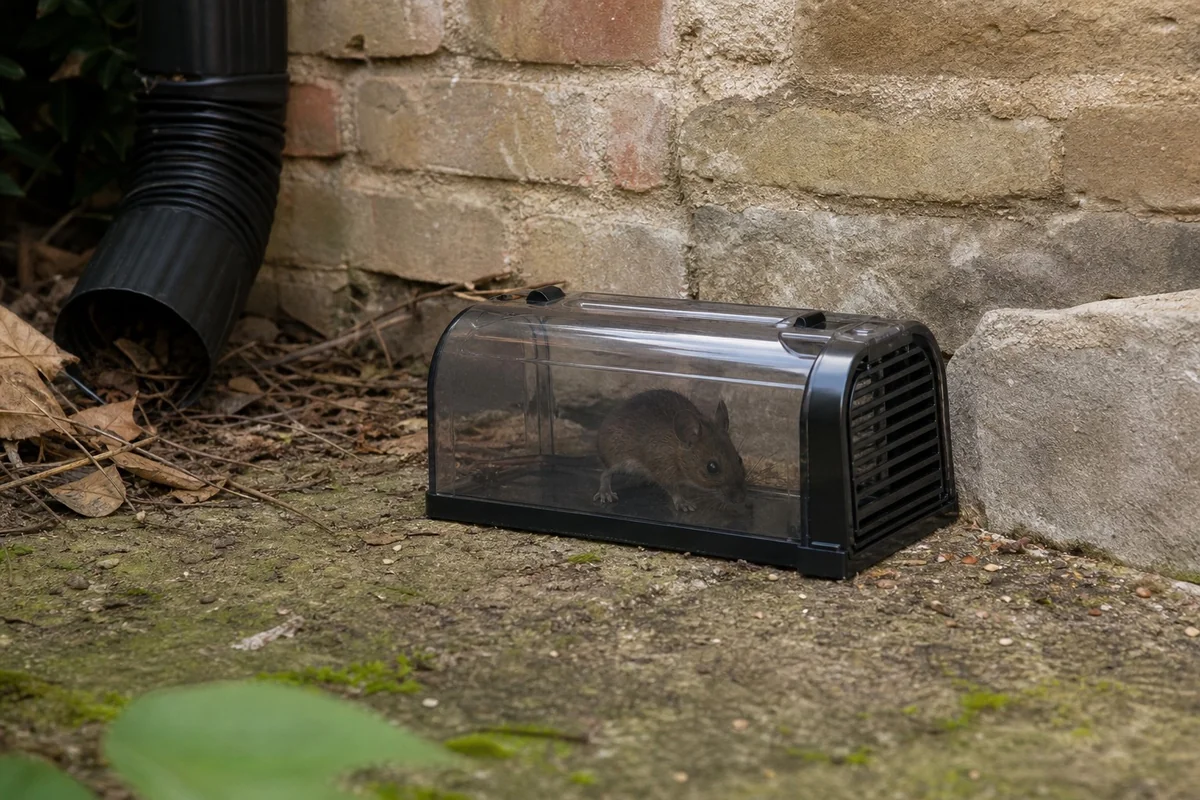
Best Mouse Traps for Homes With Pets: Enclosed and No-Kill Picks
The best mouse traps for homes with pets: enclosed electronic and tunnel snap traps that keep bait out of reach, plus live traps for no-kill households.
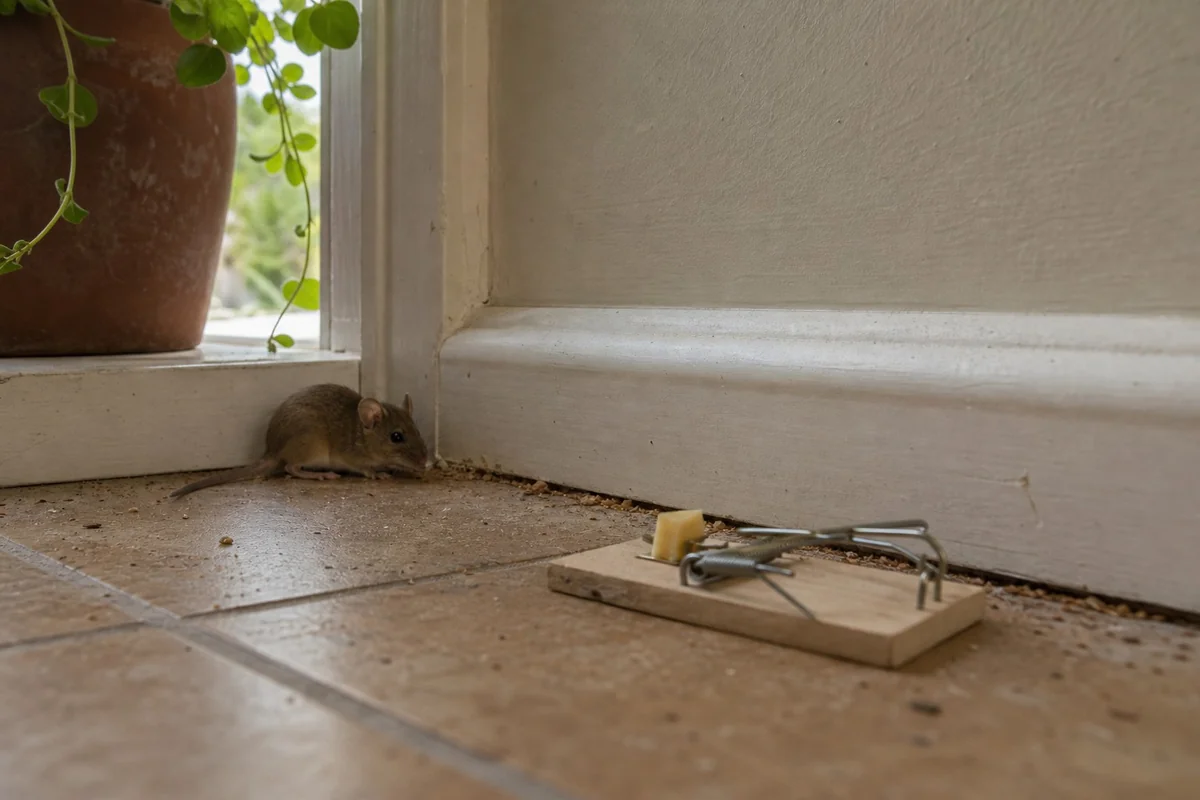
Do Mouse Traps Work? Why Some Fail and How to Fix It
Mouse traps work when they sit on the runways mice use. Why traps fail, how a snap trap kills, whether mice learn to avoid traps, and traps for rats.
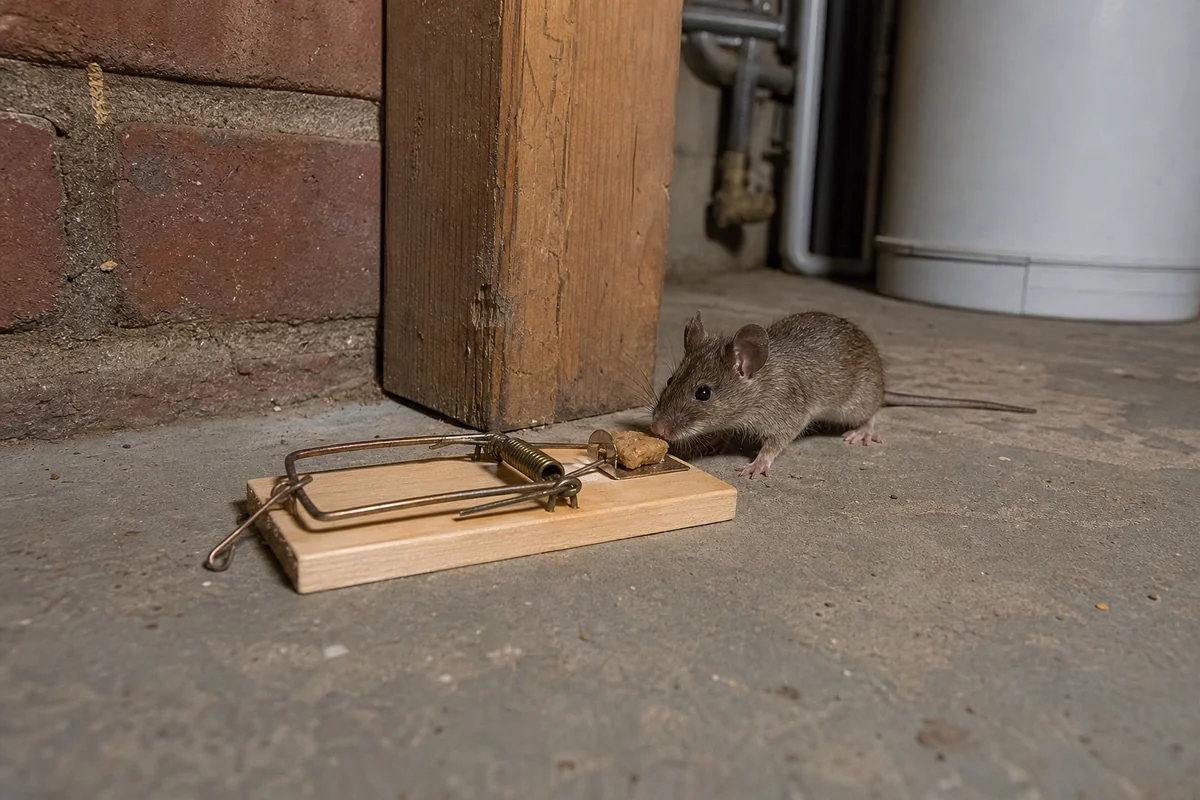
Best Mouse Traps: Snap, Electronic, Live and Glue Picks
The best mouse traps for every home: snap traps for most infestations, electronic and enclosed traps for kids and pets, and live-catch traps for no-kill homes.
Best Outdoor Mouse Traps for Yards, Garages and Sheds
The best outdoor mouse traps: covered tunnel traps for yards with pets, open plastic snap traps for garages and sheds, and a lockable station for the perimeter.