
Do Mouse Traps Work? Why Some Fail and How to Fix It
Mouse traps work when they sit on the runways mice use. Why traps fail, how a snap trap kills, whether mice learn to avoid traps, and traps for rats.
Mouse traps do work: a snap trap set in the right place kills a mouse on contact, and public health agencies recommend snap traps as the main way to remove mice from a home. When traps seem to fail, the cause is almost always too few traps, the wrong spot or bait the mouse can steal.
Why Mouse Traps Sometimes Seem Not to Work
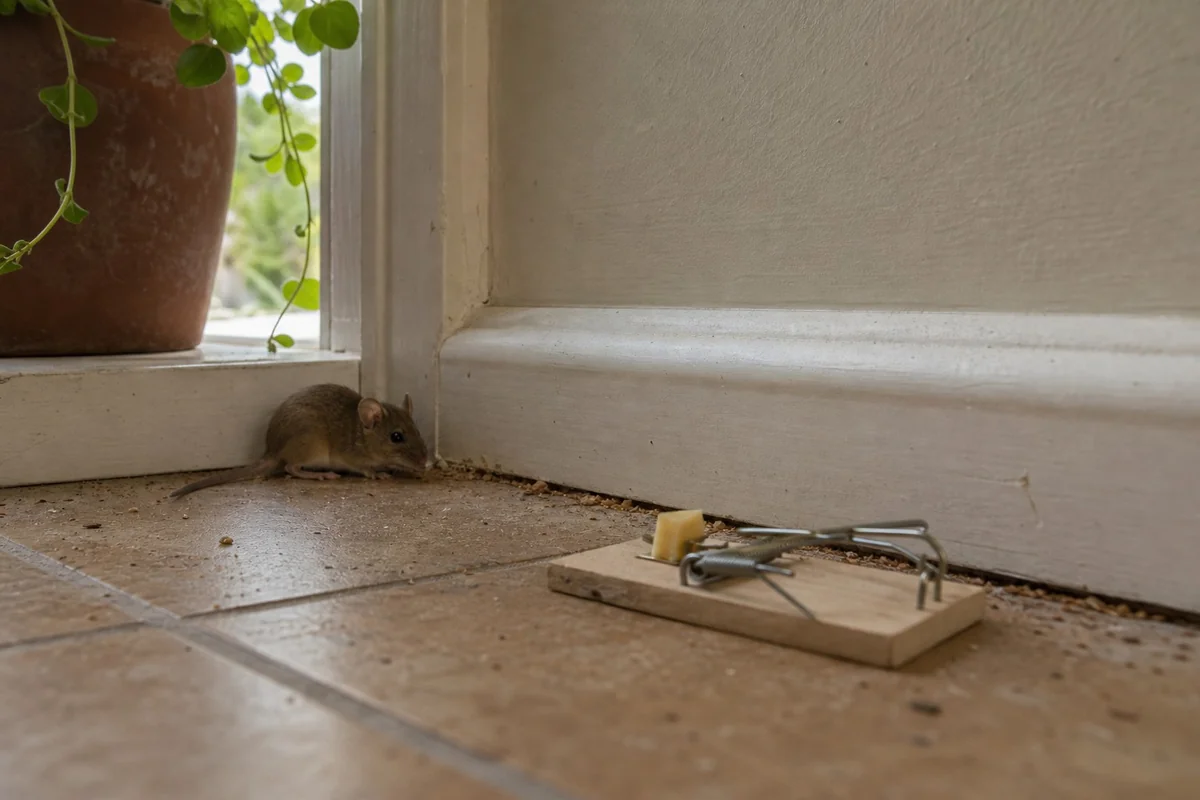
Most “failed” traps are placement problems. Mice run along walls and seldom cross open floor, so a trap set in the middle of the kitchen can sit untouched for weeks while droppings pile up a few feet away. The CDC's trapping guidance recommends setting snap traps against the wall with the baited end touching it, so the trap forms a T with the wall.
Numbers matter just as much. House mice stay close to home, seldom moving more than 30 feet from their nest and food, so one trap covers only a small slice of their range. Pest guidance suggests spacing traps no more than about 10 feet apart wherever you see activity, which means a typical kitchen needs several traps, not one.
| What You See | Likely Cause | Fix |
|---|---|---|
| Droppings nearby, trap untouched | Trap off the runway or in open floor | Push it flat against the wall, bait end touching |
| Bait gone, trap not sprung | Bait piled loosely on the pedal | Press a pea-sized dab into the pedal |
| Trap sprung, no mouse | Mouse brushed the edge and jumped clear | Set a second trap right beside it |
| Catches stop, droppings continue | Too few traps for the area | Add traps about every 10 feet along active walls |
| Mice ignore the bait | Open food in the house competes | Store food in sealed containers, use what they already eat |
If you are choosing traps rather than troubleshooting them, our guide to the best mouse traps compares snap, electronic, enclosed and live-catch designs.
How a Snap Trap Kills a Mouse
A snap trap stores energy in a coiled spring held back by a catch. When a mouse pulls or presses on the bait pedal, the catch releases and the spring drives a metal bar down onto the mouse's neck or back. A well-set trap with the bait pressed into the pedal makes the mouse put its head right under the bar, which is what makes the strike lethal.
Do mouse traps kill instantly? A trap that strikes the head or neck usually kills very quickly. A mouse caught by a leg or tail, often because the bait was placed too far forward or the trap was too sensitive, can survive and struggle, which is one reason to check traps every morning. The question of how much each trap type hurts the animal has its own answer in our guide on whether mouse traps hurt mice.
Will Mice Learn to Avoid Mouse Traps?
House mice are generally curious about new objects in their territory, so a fresh trap on a runway often gets investigated within a night or two. That curiosity is why mice are easier to trap than rats, which the CDC describes as wary of new objects.
Mice can still become harder to catch. A mouse that sets off a trap and escapes may avoid that exact spot, and adult mice often detect glue boards and walk around them, so glue traps catch mostly young mice. Moving traps a short distance, setting them in pairs and switching to a bait they are already eating usually gets cautious mice back over the trigger.
For more trap styles and setup advice in one place, see the mouse traps section of the site.
How Many Mice Are There If You See One?
There is no reliable rule that turns one sighting into a count. What is certain is that mice breed quickly and mostly stay hidden, active at night, so the one you see is rarely the only one. A mouse out in daylight can be a sign that food is scarce or the population is crowded.
The practical answer is to trap as if there are several. Set traps along every wall with droppings, check them daily and keep going until a full week passes with no catches and no fresh signs; the number you catch tells you more than any rule of thumb.
Do Mouse Traps Work on Rats?
Not reliably. A mouse trap's bar and spring are sized for a mouse, so a rat can trigger it and pull free, often injured, and then become wary of traps. The CDC advises using different snap traps for mice and for rats.
Rat signs are larger droppings, gnaw marks higher on walls and food dragged to hidden spots. If you see those, switch to rat-size snap traps or enclosed rat traps rather than adding more mouse traps.
Rats also need a different approach to the first few nights. Because they are wary of new objects, the CDC suggests putting bait on unset traps until the rats are eating it, then setting the traps, a step that mouse trapping usually does not need.
Common Questions About Whether Mouse Traps Work
How long does it take for a mouse trap to catch a mouse?
How long does it take for a mouse trap to catch a mouse?
A trap on an active runway often catches a mouse within the first night or two. If a trap stays empty for several days while fresh droppings keep appearing nearby, move it closer to the droppings or set a second trap beside it.
Should I wear gloves when setting mouse traps?
Should I wear gloves when setting mouse traps?
Yes. Gloves protect you from droppings and urine on surfaces near the trap, and they keep your scent off the trap. Wear them again whenever you empty or reset a trap, and wash your hands afterward.
Can I reuse a trap that already caught a mouse?
Can I reuse a trap that already caught a mouse?
Yes, most snap traps can be reused after you empty them with gloves and clean them with disinfectant. Some people prefer to throw inexpensive wooden traps away with the catch, which avoids handling the mouse at all.
Why did the trap go off with no mouse in it?
Why did the trap go off with no mouse in it?
Usually the trap was set too sensitively and sprang from a vibration, or a mouse brushed the edge and jumped clear. Reset it on a flat surface, press the bait into the pedal and set a second trap right next to it so a mouse that jumps lands on the other one.
Key Takeaways
Mouse traps work when they sit on the runways mice use: against walls, close to droppings and about every 10 feet where activity shows. Snap traps are the type public health guidance recommends, and they kill quickly when the bait makes the mouse reach under the bar.
If traps are not catching anything, change the setup before you change the trap: add more traps, move them flat against the wall, use less bait and put food away. Rats need rat-size traps.
Tonight, move every trap you already own against the wall nearest the freshest droppings and check them in the morning.
Related Articles
How to Make a DIY Mouse Trap for Indoors
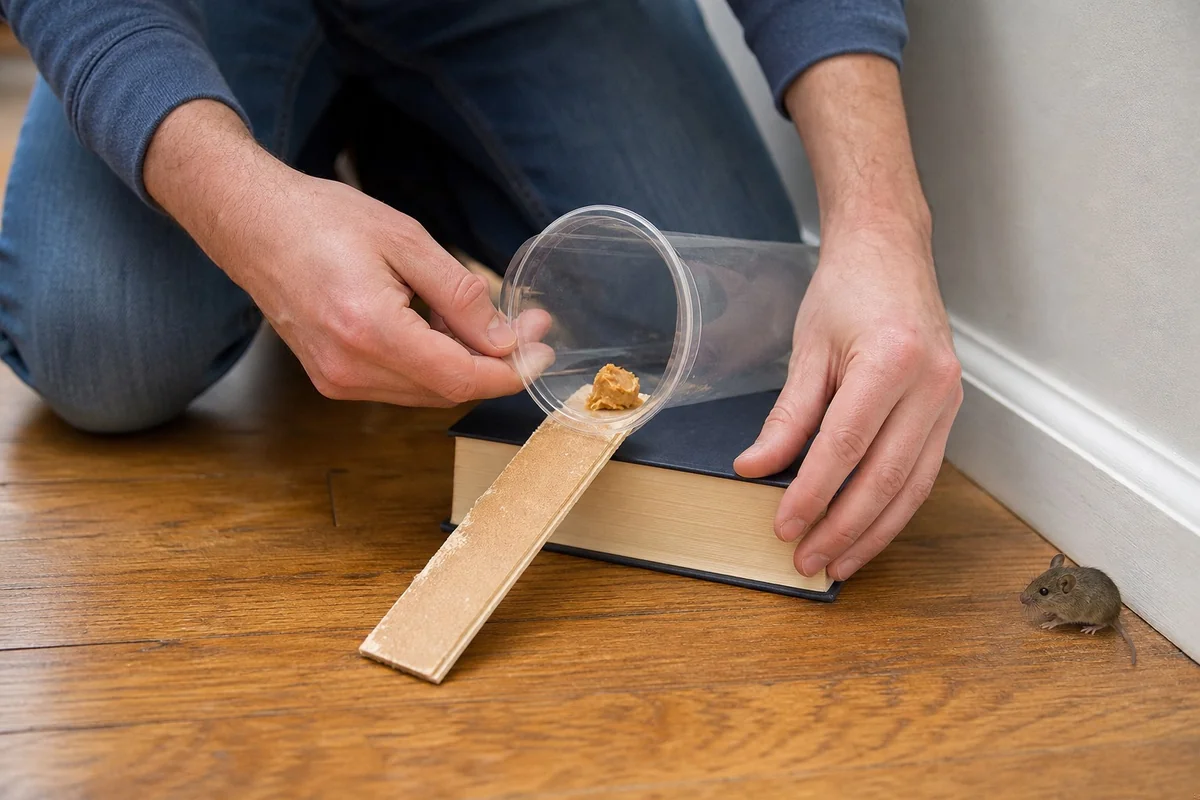
How to make a DIY mouse trap for indoors: a dry bucket trap with a spinning bottle and ramp, plus simpler toilet paper roll and cup designs and common mistakes.
Best Mouse Traps for Homes With Pets: Enclosed and No-Kill Picks
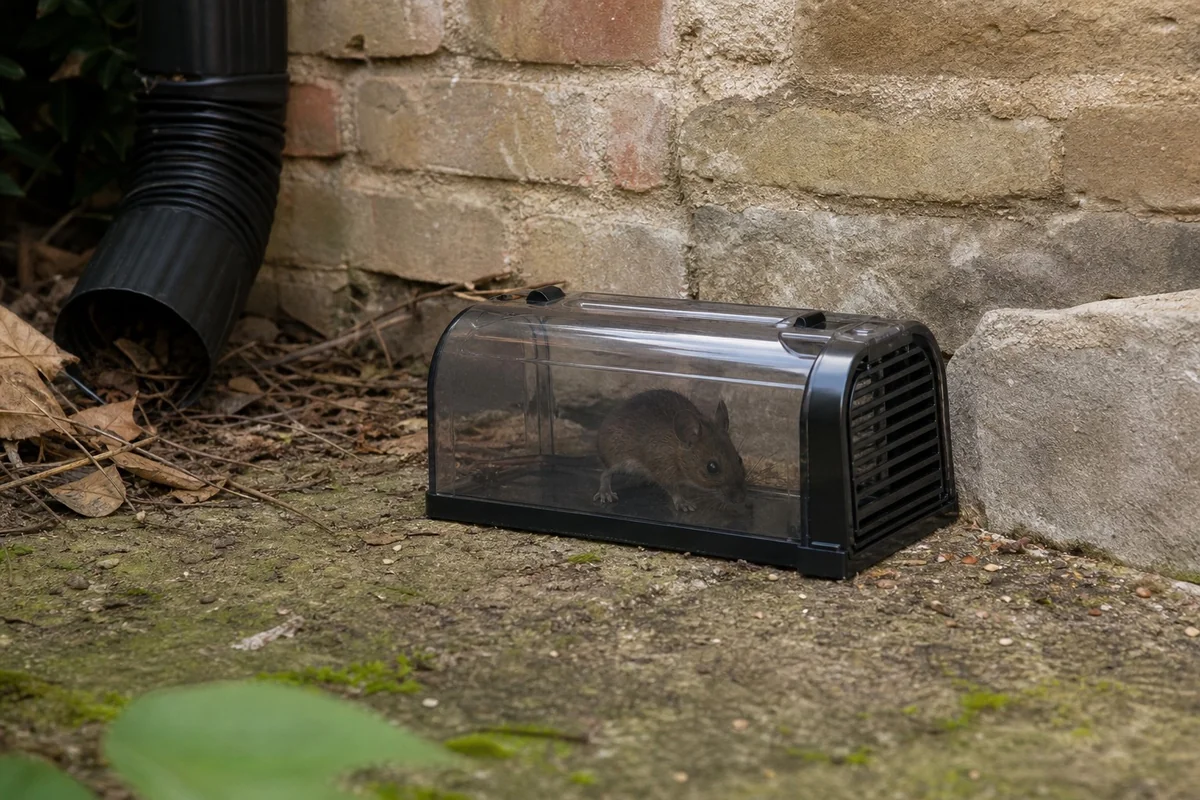
The best mouse traps for homes with pets: enclosed electronic and tunnel snap traps that keep bait out of reach, plus live traps for no-kill households.
Best Mouse Traps: Snap, Electronic, Live and Glue Picks
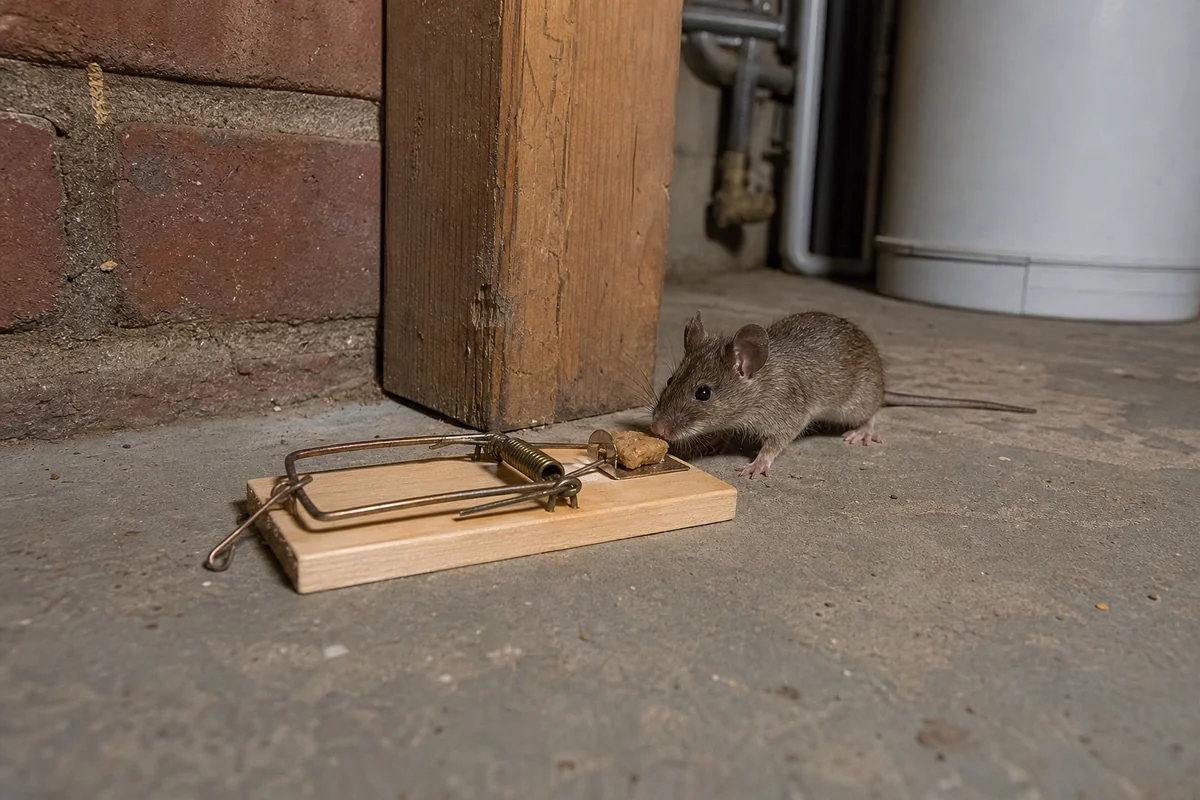
The best mouse traps for every home: snap traps for most infestations, electronic and enclosed traps for kids and pets, and live-catch traps for no-kill homes.
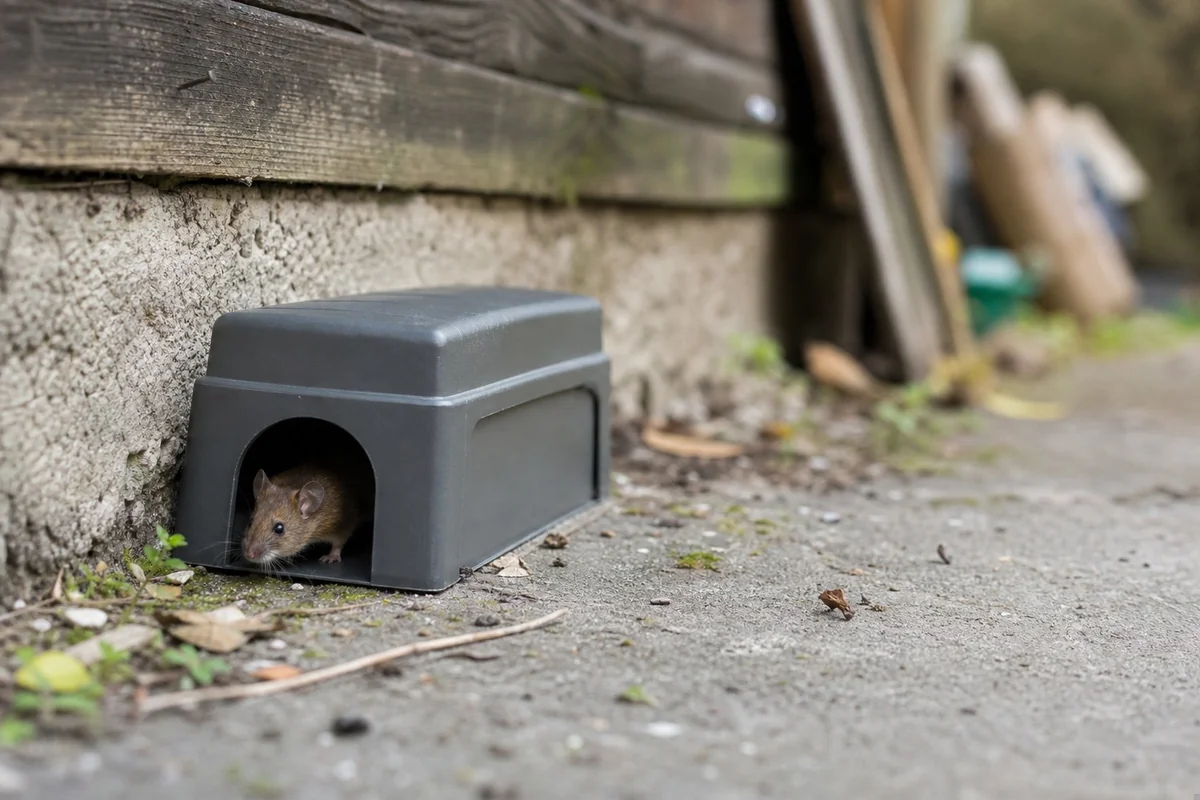
Best Outdoor Mouse Traps for Yards, Garages and Sheds
The best outdoor mouse traps: covered tunnel traps for yards with pets, open plastic snap traps for garages and sheds, and a lockable station for the perimeter.