
How to Get Rid of Mice Fast: A One-Week Plan
The fastest way to get rid of mice in a house: many snap traps at once, no food left out and gaps sealed in the first days. A one-week plan and what slows it down.
The fastest way to get rid of mice in a house is to hit them with many snap traps at once instead of a few at a time, remove every food source on the same day, and seal entry gaps within the first few days. A decisive first week does more than a month of half measures.
Why Speed Comes From Volume, Not Gadgets
Most slow mouse problems have the same cause: too few traps, set in the wrong places, with food left out that competes with the bait. Mice breed fast, so a slow approach lets young mice replace the ones you catch. UC IPM's house mouse guide advises using enough traps to make the trapping period short and decisive.
Speed also comes from cutting off resupply. Sealing gaps in the first few days means each catch reduces the population instead of making room for a new mouse from outside. Our main guide on how to get rid of mice explains each technique; this plan puts them on a fast schedule.
What You Need on Day One
- Plenty of snap traps: enough to set one about every 10 feet along each wall with droppings, plus extras to set in pairs.
- Peanut butter or the food the mice have been eating.
- Sealed containers for all dry food and pet food.
- Steel wool, caulk or spray foam and hardware cloth for gaps.
- Gloves, bags and disinfectant for catches and cleanup.
Buying traps in bulk is the single biggest time saver; a second trip to the store on day three costs you two nights. Wooden snap traps sold in large boxes cost little per trap, which makes high volume affordable.
How to Get Rid of Mice Fast: A One-Week Plan
- Day 1, morning: remove all food. Move pantry food, pet food and birdseed into sealed containers, clean up crumbs, and empty the trash into a lidded bin.
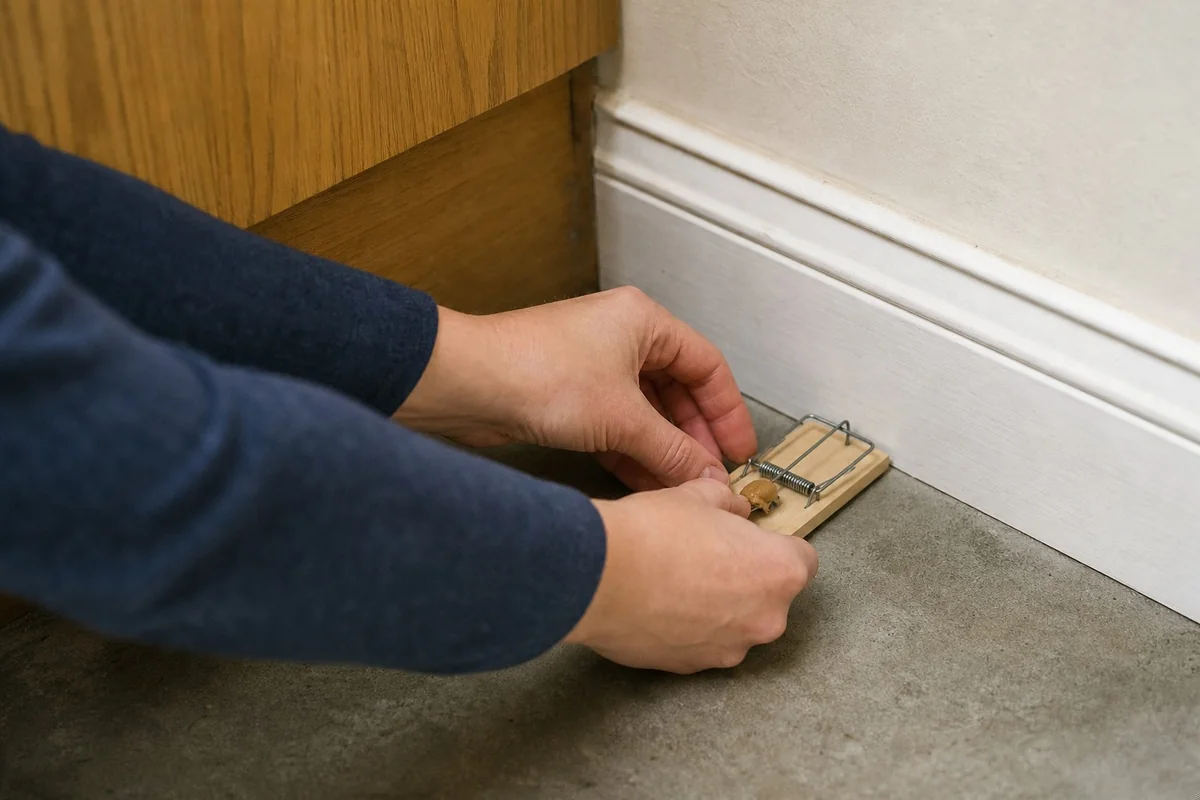
- Day 1, evening: set every trap. Place snap traps at every spot with droppings, about every 10 feet along the walls, with the bait end touching the wall and some in pairs.
- Day 2: check and move. Empty catches with gloves, rebait, and move traps that caught nothing closer to fresh droppings; add traps where catches happened.
- Days 2-3: seal the obvious gaps. Pack steel wool into holes around pipes, vents and utility lines, seal it with caulk or foam, and fit door sweeps.
- Day 3: clean up safely. Soak droppings with a bleach solution before wiping them up, and throw out food mice reached.
- Days 4-7: keep trapping. Check every morning, rebait every day or two, and keep traps in place even after a quiet night.
- Day 7 and after: judge the result. When a full week passes with no catches and no fresh droppings, the mice are likely gone; if not, look for missed gaps and keep going.
Quick Checklist
A one-week schedule that removes mice quickly and keeps new ones out.
- Warning: Never sweep or vacuum droppings.
What Slows Mouse Removal Down
When a fast plan stalls, the cause is usually one of a few things, and each has a quick fix.
| What Slows You Down | Why It Matters | Fast Fix |
|---|---|---|
| Too few traps | Mice have routes that never cross a trigger | Add traps every 10 feet along active walls |
| Food left out | Bait is not the easiest meal | Seal all food and pick up pet bowls |
| Traps in open floor | Mice run along walls | Push traps flat against the wall |
| Unsealed gaps | New mice replace the ones caught | Seal holes in the first few days |
| Poison instead of traps | Takes several days and mice die in walls | Use snap traps for quick removal |
For room-specific plans, from the kitchen to an apartment, see the getting rid of mice section.
When Fast Is Not Fast Enough
Most homes see catches drop sharply within the first week of this plan. If catches stay steady after two weeks, mice are still getting in, which usually means a gap you have not found: around the roofline, a crawl space vent, a garage door seal or a utility line.
At that point a licensed pest professional can be worth it, especially for entry points you cannot reach safely. Ask them to find and seal entries, not only to set bait, since bait alone will not stop new mice from walking in. Share your catch notes with them; the spots where traps fired point straight to the runways.
Common Questions About Getting Rid of Mice Fast
Are electronic traps faster than snap traps?
Are electronic traps faster than snap traps?
They kill just as quickly but usually come in small packs at a premium price, so you can afford fewer of them. Speed depends on covering every runway, which is easier with inexpensive snap traps; electronic traps suit rooms where pets or children make open traps a problem.
Should I use poison to speed things up?
Should I use poison to speed things up?
No. Poison bait takes several days to work, poisoned mice often die inside walls, and bait is a risk to pets and children. Traps remove mice faster and let you see results each morning.
How many mice can I catch in the first week?
How many mice can I catch in the first week?
It depends on how many live in your home, which is why the catch count is useful information. A rising or steady count means a larger group or new arrivals; a falling count means the plan is working.
Does a cat speed up getting rid of mice?
Does a cat speed up getting rid of mice?
Not reliably. Some cats hunt, many do not, and mice living in walls and behind appliances stay out of reach. A cat can also find and trigger traps, so keep traps where only mice can get to them.
Key Takeaways
Fast mouse removal comes from doing everything at once: enough snap traps to cover every active wall on the first night, no food left out, and gaps sealed within the first few days. Move traps to proven spots each morning and keep going for at least a week.
Poison and repellents slow you down rather than speed you up, and electronic gadgets cannot replace volume. If catches continue after two weeks, a missed entry point is the likely cause, so recheck the roofline, vents and garage door seal.
Today, count the walls with droppings, buy enough traps to set one about every 10 feet along them, and set them all tonight.
Related Articles
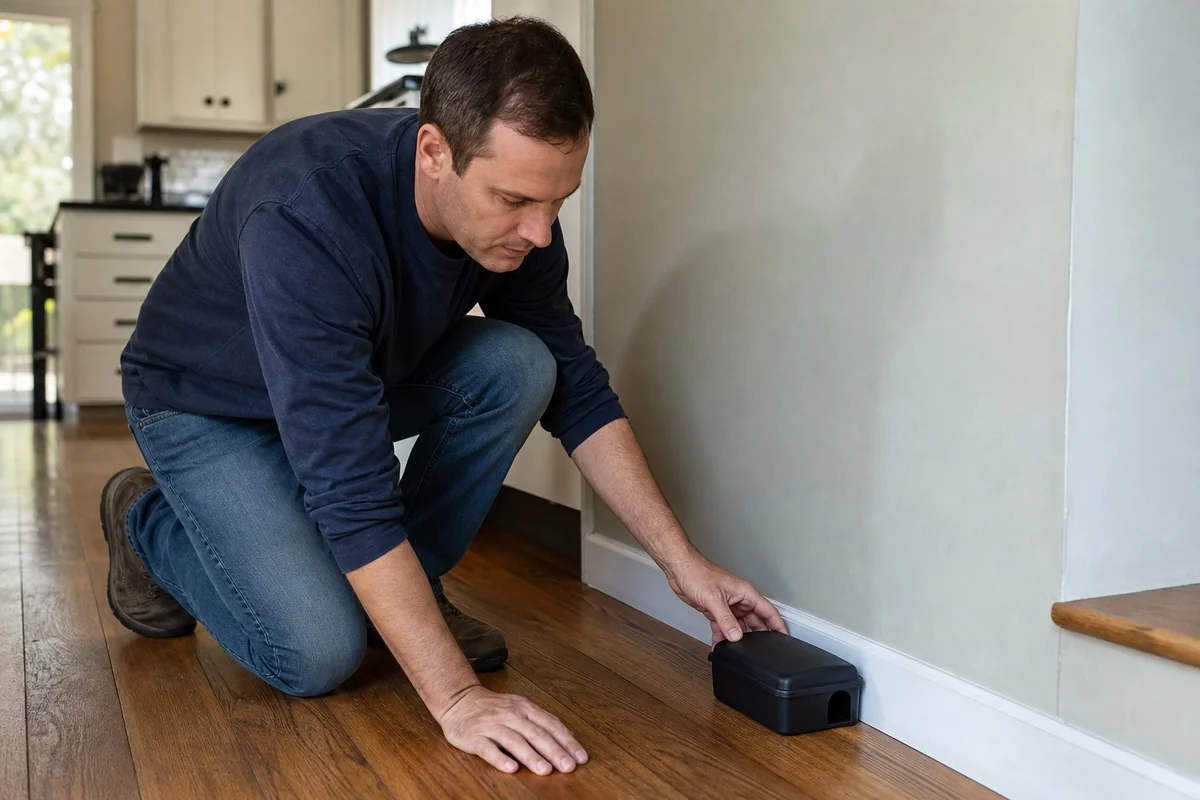
How to Get Rid of Mice in the House: A Whole-House Plan
The best way to get rid of mice in a house: map every room with droppings, trap them all at once, store food sealed and seal pencil-sized gaps outside.
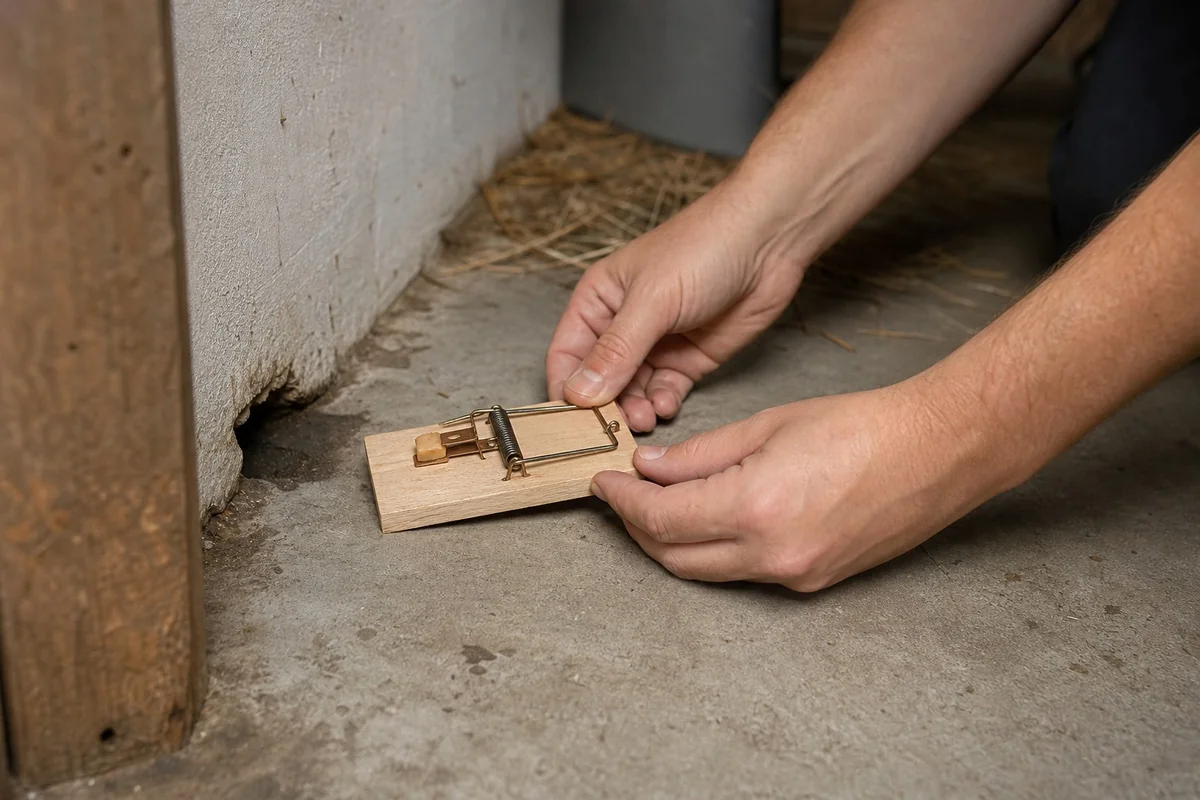
How to Get Rid of Mice and Rats: Different Traps, One Plan
How to get rid of mice and rats together: tell them apart, use the right trap size, pre-bait for wary rats and seal every hole larger than 1/4 inch.
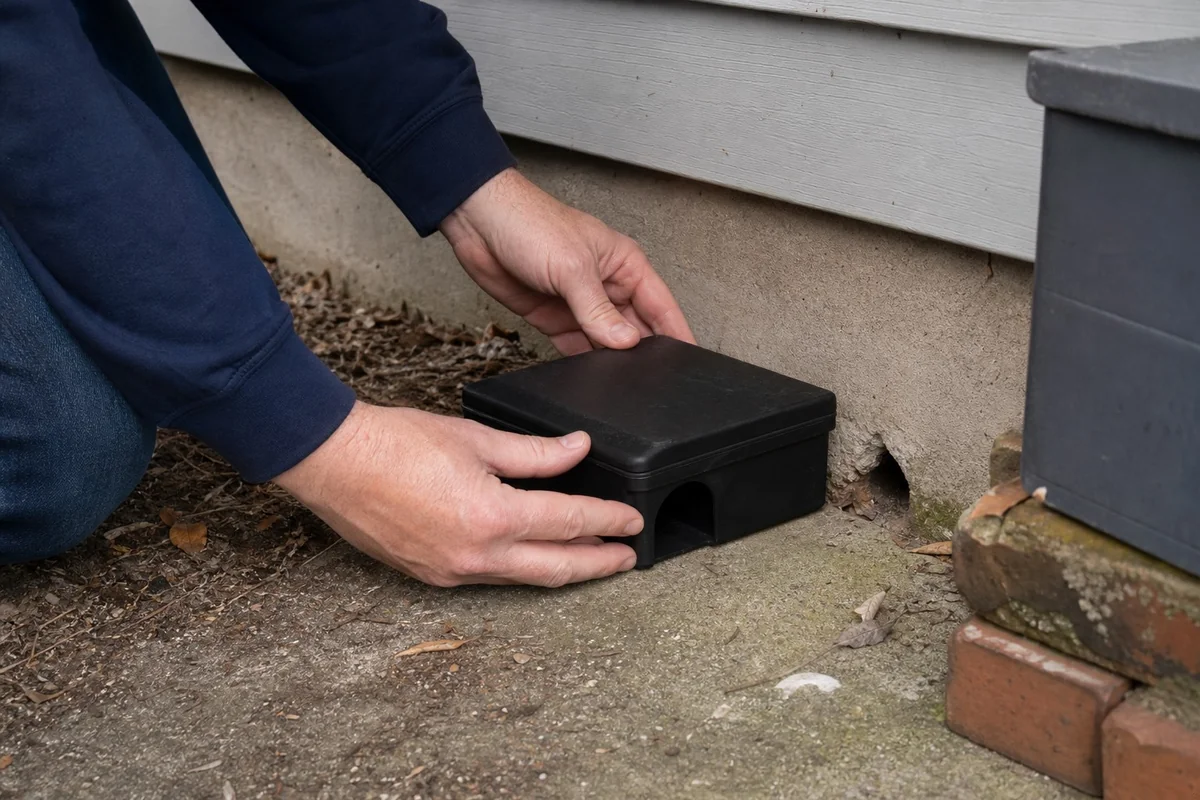
How to Get Rid of Mice: A Step-by-Step Plan That Works
How to get rid of mice for good: find their runways, set snap traps the right way, remove food, seal pencil-sized gaps and clean up droppings safely.
How to Get Rid of Mice Overnight: A Before-Dark Plan
You can catch most active mice in one night: remove food, set snap traps in pairs along walls, bait lightly and block gaps. What works overnight and what does not.