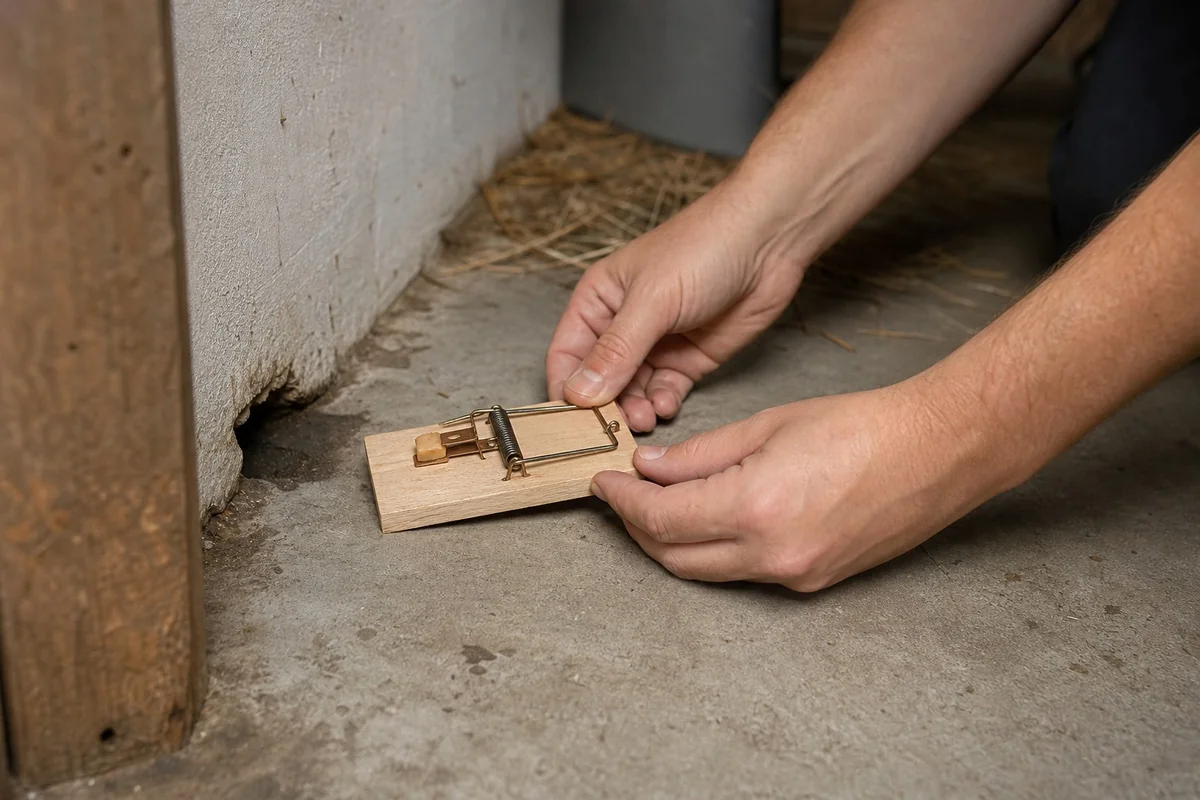

How to Get Rid of Mice and Rats: Different Traps, One Plan
How to get rid of mice and rats together: tell them apart, use the right trap size, pre-bait for wary rats and seal every hole larger than 1/4 inch.
To get rid of mice and rats together, confirm which you have from droppings and gnaw marks, set mouse-size snap traps for mice and rat-size snap traps for rats along their runways, pre-bait the rat traps for a few nights, and seal every hole larger than 1/4 inch. Mice and rats need different traps and placement, so one setup rarely works for both.
Mice or Rats: How to Tell Which You Have
The plan depends on the animal, so start by reading the signs. Rats are much larger than house mice, and young rats can be mistaken for mice, but they give themselves away with big heads and feet for their size.
- Gnaw marks: UC IPM notes rat tooth marks are about 1/6 inch wide, while mouse marks are scratchy and about 1/12 inch.
- Droppings: rat droppings are noticeably larger than the small, rice-like droppings mice leave.
- Rub marks: rats leave greasy smudges along beams, pipes and walls where their fur brushes the surface.
- Location: rats often show up around pet food, garbage, fruit trees and garden debris outside.
If you only find mouse signs, our main guide on how to get rid of mice is the simpler path. If you see both, follow the steps below.
What You Need
- Mouse snap traps for mouse runways and rat snap traps for rat runways; a mouse trap is too small to hold a rat.
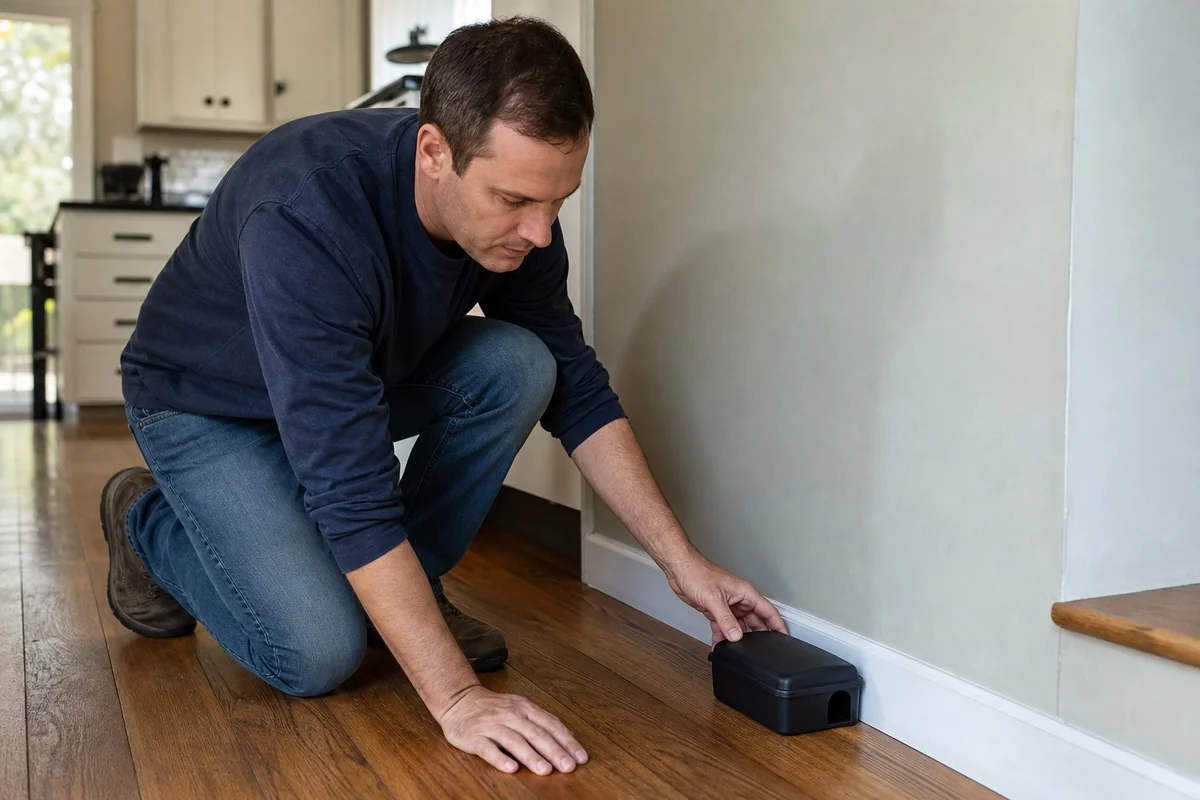
- Enclosed traps or tamper-resistant stations where children or pets can reach.
- Bait: peanut butter, dried fruit, nuts or the food the animals are already eating.
- Sealing materials: steel wool, caulk, and heavy galvanized mesh or metal sheeting for larger gaps.
- Gloves, bags and a bleach solution for handling catches and cleaning up.
Do not rely on lightweight chicken wire for sealing; UC IPM warns that rats pass through its openings easily. Buy more traps than you think you need, since both animals are caught faster when every runway has one.
How to Get Rid of Mice and Rats Step by Step
- Map the activity. Mark where you find droppings, gnaw marks and rub marks, and note which are mouse-size and which are rat-size.
- Remove food and shelter. Store food, pet food and birdseed in sealed containers, cover garbage cans tightly, and clear clutter and garden debris near the house.
- Set mouse traps. Place mouse traps along walls about every 10 feet where mice are active, with the bait end against the wall.
- Pre-bait the rat traps. Rats avoid new objects, so put baited but unset rat traps along their runways and leave them until the bait has been taken several times.
- Set the rat traps. Once rats are eating the bait, set the traps, spacing them about 10 to 20 feet apart along walls and runways.
- Check daily. Remove catches with gloves, rebait and reset, and move traps that stay untouched to fresher signs.
- Seal entry points. Seal every hole larger than 1/4 inch, fit door sweeps that close gaps under doors, and cover vents with heavy galvanized mesh.
- Clean up safely. Air out the area, soak droppings with a bleach solution, then wipe up with gloves; never sweep or vacuum them dry.
Quick Checklist
Remove mice and rats with the right traps for each, then seal the house.
- Warning: Rat traps can injure fingers and pets; place them where only rats travel.
Why Mice and Rats Need Different Approaches
Mice are curious and investigate new objects quickly, so a fresh trap on a runway often catches the first night. Rats are the opposite: UC IPM's rat pest guide notes they quickly detect and avoid new objects and foods, which is why pre-baiting matters and why a rat that escapes a trap may avoid it.
Size changes everything else too. A rat can trigger a mouse trap and pull free, injured and trap-shy, and rats of either species can squeeze under a door with only a 1/2-inch gap. UC IPM calls snap traps the safest, most effective and most economical way to trap rats, and it does not recommend glue boards for nonprofessional use.
| Factor | House Mice | Rats |
|---|---|---|
| Trap size | Mouse snap trap | Rat snap trap |
| Trap spacing | About every 10 feet | About 10 to 20 feet apart |
| Reaction to new traps | Curious, often investigate quickly | Wary; pre-bait for several nights |
| Gaps to seal | Holes larger than 1/4 inch | Also door gaps of 1/2 inch |
| Gnaw marks | About 1/12 inch, scratchy | About 1/6 inch |
Rooms with only mouse signs can follow our room-by-room guides in the getting rid of mice section, while rat runways need the larger traps and pre-baiting above.
Common Mistakes When Fighting Mice and Rats
- Mouse traps for rats: rats escape injured and become trap-shy; use rat-size traps on rat runways.
- Setting rat traps on day one: wary rats avoid them; pre-bait for several nights first.
- Chicken wire over openings: rats get through it; use heavy galvanized mesh or metal.
- Leaving garbage and pet food out: outdoor food keeps rats coming back; use tight lids and bring bowls in.
- Glue boards outdoors: they catch birds and other wildlife; keep to snap traps.
Most of these mistakes come from treating rats like large mice. Matching the trap, the timing and the sealing to the animal fixes nearly all of them.
Common Questions About Getting Rid of Mice and Rats
Can mice chew through walls?
Can mice chew through walls?
Mice gnaw through drywall, wood, insulation and plastic, and they also use existing gaps around pipes and wiring. That is why sealing should use materials they cannot chew easily, such as steel wool held with caulk, and metal mesh or sheeting for larger holes.
Are mice and rats active in the winter?
Are mice and rats active in the winter?
Yes. Neither hibernates, and both often move closer to or into buildings as temperatures drop, looking for warmth and food. Fall is the best time to check seals and set a few traps in the garage and basement.
Do mice and rats live together?
Do mice and rats live together?
They can share a building but usually not the same spaces, and where rats are active, mice often keep their distance. Treat each set of signs on its own terms, with the trap size and placement that fits.
What is the lifespan of a house mouse?
What is the lifespan of a house mouse?
According to UC IPM, a house mouse usually lives 9 to 12 months, though some have lived up to 3 years. A population will not fade on its own in that time, because mice breed quickly.
Key Takeaways
Read the signs first, because mice and rats need different traps: mouse traps every 10 feet along mouse runways, and pre-baited rat traps 10 to 20 feet apart along rat runways. Remove outdoor food and garbage that draw rats, and seal every hole larger than 1/4 inch with materials rats cannot chew or squeeze through.
Expect mice to go faster than rats, because rats take a few nights of pre-baiting before they commit. If rat signs continue after several weeks, a licensed pest professional can find entry points you cannot reach.
Tonight, put unset, baited rat traps along the runways with the largest droppings and start the pre-bait clock.
Related Articles
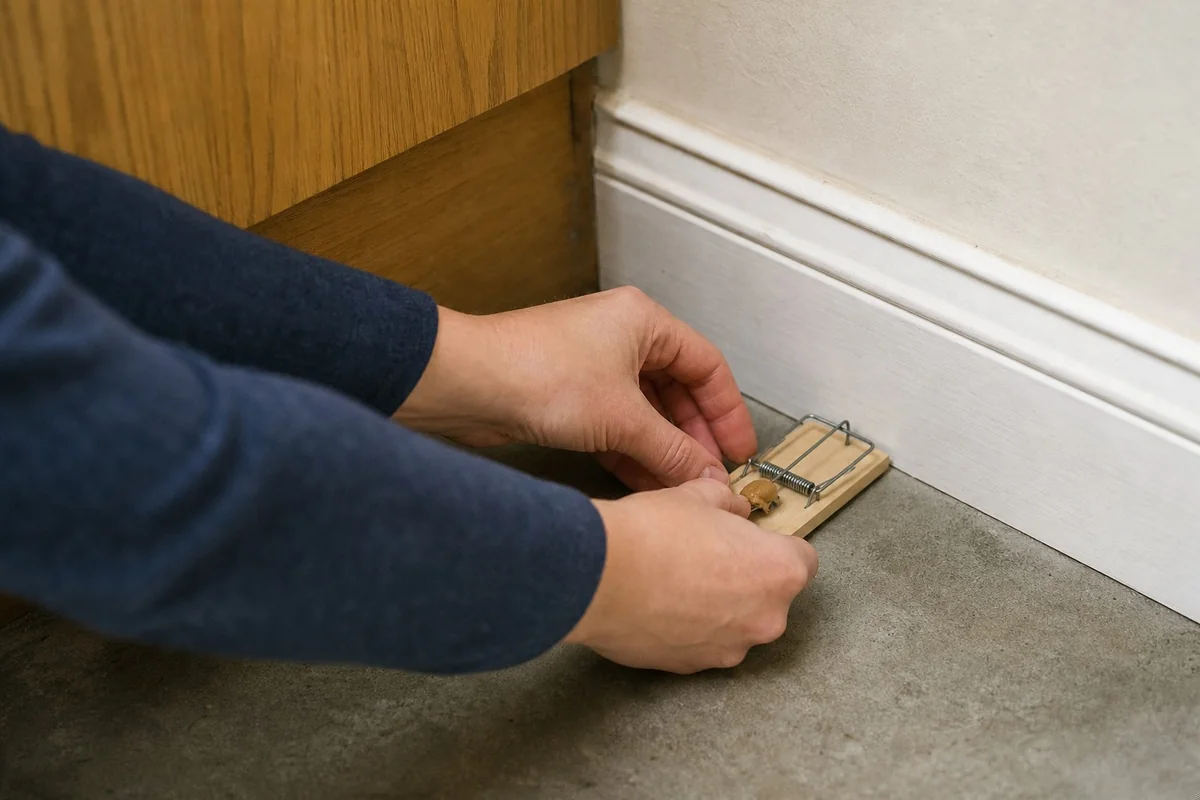
How to Get Rid of Mice Fast: A One-Week Plan
The fastest way to get rid of mice in a house: many snap traps at once, no food left out and gaps sealed in the first days. A one-week plan and what slows it down.
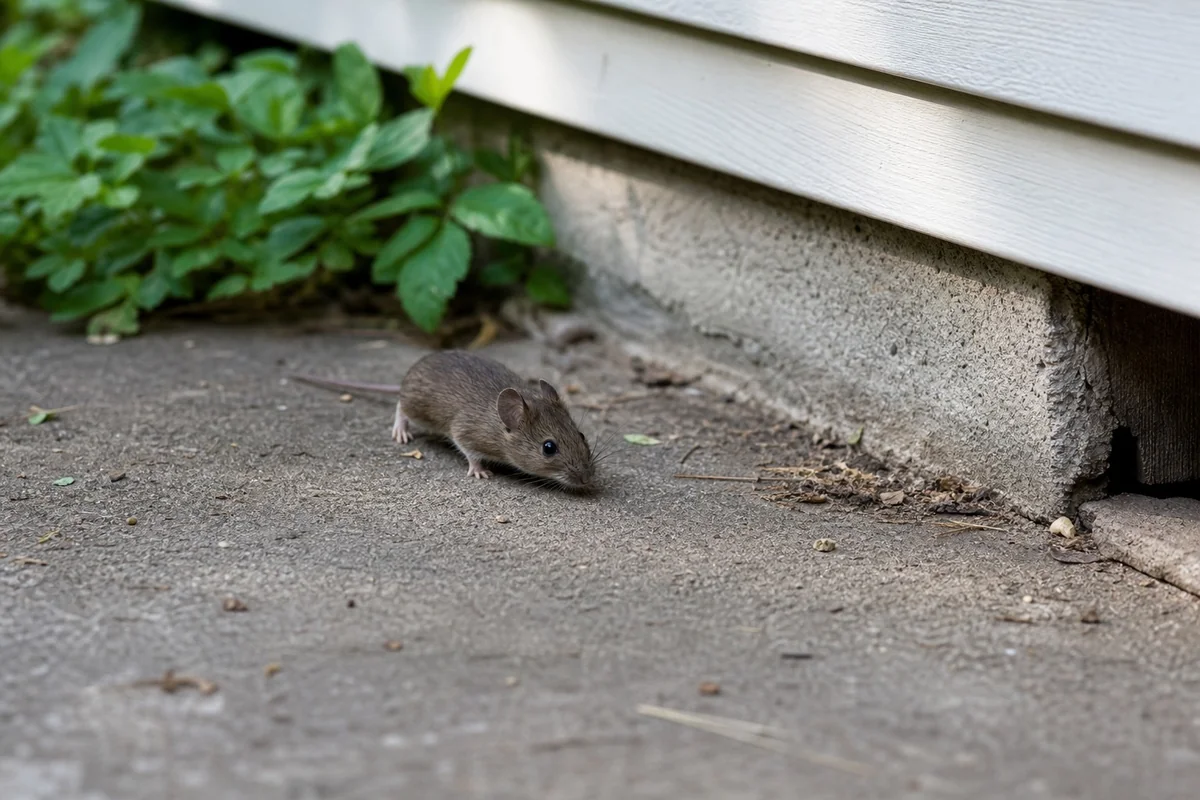
How to Get Rid of Mice Overnight: A Before-Dark Plan
You can catch most active mice in one night: remove food, set snap traps in pairs along walls, bait lightly and block gaps. What works overnight and what does not.
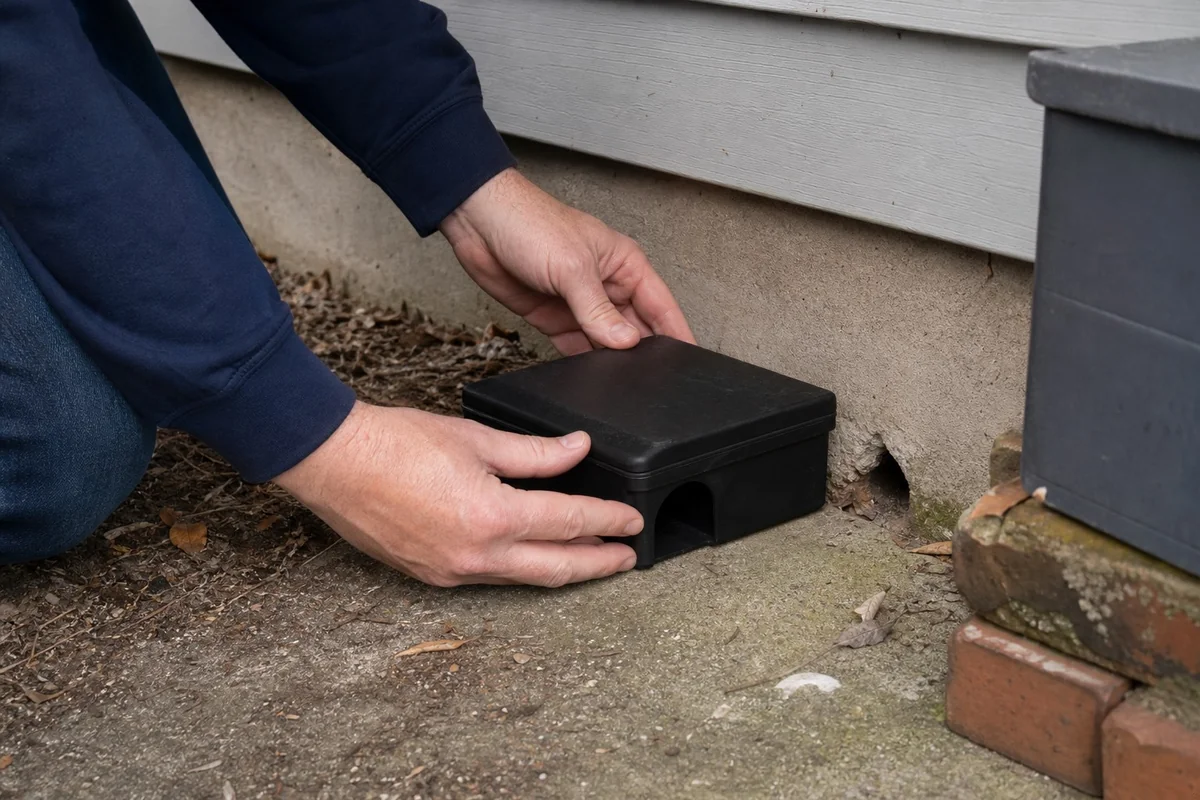
How to Get Rid of Mice: A Step-by-Step Plan That Works
How to get rid of mice for good: find their runways, set snap traps the right way, remove food, seal pencil-sized gaps and clean up droppings safely.
How to Get Rid of Mice in the House: A Whole-House Plan
The best way to get rid of mice in a house: map every room with droppings, trap them all at once, store food sealed and seal pencil-sized gaps outside.