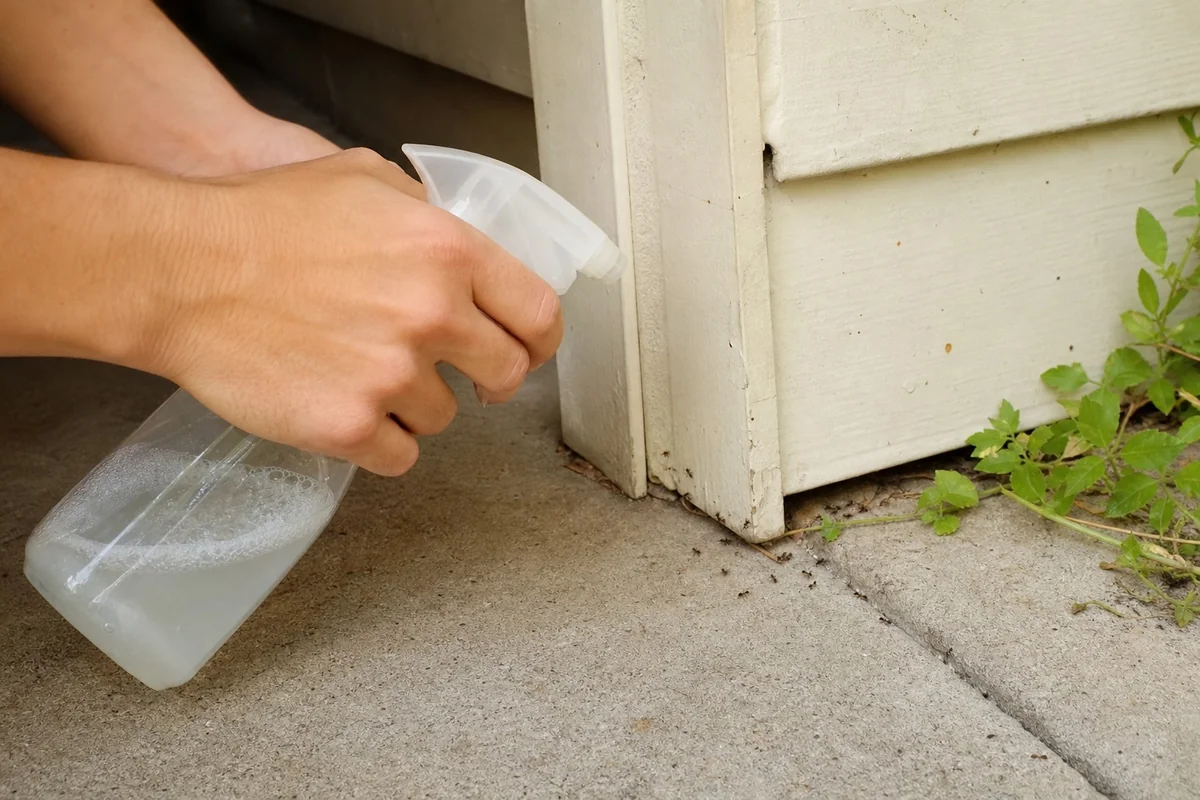

How to Make a Homemade Ant Spray With Soap and Water
How to make a homemade ant spray: 4 teaspoons of liquid dish soap per quart of water, how to use it, a strength chart, which add-ins help, how to spray near plants.
To make a homemade ant spray, stir 4 teaspoons of liquid dish soap into a quart of water, which gives roughly a 2% soap solution, and pour it into a spray bottle. Spray the ants until they are soaked, then wipe the trail. The spray kills only the ants it wets, so pair it with a bait for the colony.
What You Need
- Liquid dish soap or liquid hand soap: a plain one without bleach or added degreasers.
- Water: soft or filtered water works best if your tap water is hard.
- A clean spray bottle: labeled for ant spray only, never a bottle that held other chemicals.
- Measuring spoons and a quart jar: for an accurate mix.
- A sponge or paper towels: for wiping up dead ants and the trail.
Skip powdered dish soap and laundry detergent. University of California Cooperative Extension advice on soap sprays as insecticides calls dry dish soaps and all clothes-washing detergents too harsh, and notes that many soaps and detergents make poor insecticides, so a plain liquid soap is the safer start.
Why Soap Kills Ants
Soap works by contact. The same extension advice explains that some soaps wash off the waxy outer coating of an insect so it dries out and dies, while others may also affect the nervous system. Either way, the spray has to soak the insect; a soap film that has dried on the counter does nothing to the next ant.
That makes a soap spray a cleanup tool rather than a cure. UC IPM guidance on managing ants around the home recommends wiping trails with soapy water because it removes the scent trail that leads other workers in, but notes that spraying ants indoors will not stop more from entering. The colony keeps sending workers until a bait reaches the nest.
For the bait half of the plan, our guide to homemade ant killers that work indoors covers a low-strength borax recipe, and the homemade ant killers section lists the other mixes.
How to Make and Use a Homemade Ant Spray
- Measure the water: pour 1 quart of room-temperature water into a jar.
- Add the soap: stir in 4 teaspoons of liquid dish soap gently, so it does not foam up.
- Fill and label the bottle: funnel the mix into the spray bottle and write “ant spray, soap and water” on it.
- Spray the ants directly: soak the trail until the ants are wet; a light mist that only dampens them will not kill them.
- Wait a minute, then wipe: wipe up the dead ants and the wet trail with a sponge or towel to remove the scent the colony follows.
- Rinse food surfaces: wipe counters, cutting boards and pet feeding areas with plain water afterward.
- Leave the bait alone: never spray the ants lined up at a bait station; they are carrying it home.
- Mix fresh when needed: make a new quart whenever the bottle runs low rather than topping it up with water.
Quick Checklist
How to mix and use a soap-and-water ant spray.
Soap Spray Strength by Batch Size
Extension guidance puts typical soap sprays at about 2% to 3% soap in water. The table converts common strengths into spoon measures; the amounts are approximate.
| Soap Strength | Per Pint of Water | Per Quart of Water | Per Gallon of Water |
|---|---|---|---|
| 1% (gentle, for plants) | About 1 teaspoon | About 2 teaspoons | About 2 1/2 tablespoons |
| 2% (standard ant spray) | About 2 teaspoons | About 4 teaspoons | About 5 tablespoons |
| 3% (strongest common mix) | About 1 tablespoon | About 2 tablespoons | About 8 tablespoons |
For ants on hard indoor surfaces, the 2% mix is plenty. Stronger mixes leave more residue to wipe up without killing ants any better, because what matters is soaking each ant.
Vinegar, Essential Oils and Other Add-Ins
Most add-ins change the smell more than the result. Vinegar mixed with Dawn or another dish soap still kills through the soap; the vinegar wipes away the trail like any cleaner, but it has no proven extra killing power, and its acid can etch marble and limestone counters.
Peppermint, clove and orange oils are sold in commercial ant sprays, and UC IPM notes plant oils have contact activity but little residual effect. A few drops in the soap mix add scent, not lasting protection. Leave them out in a home with cats, because Texas A&M veterinarians list peppermint and many other essential oils as toxic to cats.
Baking soda, salt and sugar add nothing useful to a spray. Borax does not belong in a spray either, because ants have to eat it, slowly, for it to reach the colony.
Using Soap Spray Outdoors and on Plants
Soap spray also works on ants trailing over a patio, a doorstep or a pot, but plants need more care. The extension advice warns that homemade soap and detergent sprays carry a greater risk of plant damage than commercial insecticidal soaps, and lists hawthorn, sweet pea, cherries, plum and some tomato varieties as sensitive.
Test the mix on a small part of a plant a day or two before spraying more, and rinse sprayed leaves with plain water within a couple of hours. Spray early or late in the day, since slow drying helps soap work and hot afternoons stress plants.
Hard water is the other outdoor problem. Minerals turn true soap into scum and cut its effect, so if your hose water leaves white spots, mix the spray with filtered or bottled water.
Common Mistakes and Fixes
- Ants are back the next day: the spray never reaches the nest; set a bait near the entry point.
- Ants survive the spray: they were only misted; soak them until wet.
- Sticky film on counters: the mix is too strong or was not wiped; use the 2% mix and wipe after.
- Spots or burns on leaves: the soap was too strong or the plant is sensitive; dilute to 1%, test first and rinse.
- Spray clogs or foams: stir the soap in gently and use soft water.
If the ants keep coming after a week of spraying and baiting, check whether they are coming from more than one entry point, and seal each gap you find.
Common Questions About Homemade Ant Spray
Can I add borax to a homemade ant spray?
Can I add borax to a homemade ant spray?
No, it is wasted there. Borax kills ants slowly after they eat it and share it with the colony, so it belongs in a sweet bait. Sprayed on ants, it does nothing the soap does not already do, and it leaves a powdery residue that children and pets can pick up.
Can I use hand soap instead of dish soap?
Can I use hand soap instead of dish soap?
Yes. Extension advice notes that some liquid hand soaps and dishwashing liquids work as insecticides, and both are used at the same strength. Avoid powdered dish soap, laundry detergent and soaps with bleach or heavy degreasers, which are harsher and can damage plants.
Will soapy ant spray damage my floors or counters?
Will soapy ant spray damage my floors or counters?
Not if you wipe it up. The 2% mix is similar to dishwater, so sealed counters, tile and vinyl handle it fine. On wood floors, wipe the spot dry so water does not sit, and rinse food surfaces with plain water afterward.
Does a homemade ant spray keep ants away?
Does a homemade ant spray keep ants away?
Only briefly. Wiping the trail removes the scent that guides other workers, so you may see fewer ants for a while, but dried soap does not repel or kill new arrivals. Lasting relief comes from sealing entry points and baiting the colony.
How do I spray ants inside a wall or outlet?
How do I spray ants inside a wall or outlet?
Do not spray into outlets or switch plates, since liquid and electricity do not mix. Wipe the ants you can reach, then set a bait station on the trail just outside the opening so workers carry it back into the wall.
Key Takeaways
A homemade ant spray is plain soapy water: about 4 teaspoons of liquid dish soap per quart of water, roughly a 2% solution. Sprayed until the ants are soaked, it kills them on contact, and wiping afterward removes the scent trail that guides the next wave of workers.
Its limit is that nothing is left behind once the soap dries, so it never reaches the colony. Use it alongside a slow bait, keep it away from the ants feeding at that bait, and seal the gaps where the trail enters. Outdoors, test it on a few leaves first, rinse plants within a couple of hours and leave essential oils out in a home with cats.
Mix a quart today, label the bottle, spray the trail where it enters and set a bait right beside that spot.
Related Articles
Homemade Pet-Safe Ant Killer Recipes and a Safe Setup
Homemade ant killers for homes with pets: soapy water for trails, plain diatomaceous earth for cracks and weak borax bait in a sealed jar, plus recipes to avoid.
Best Pet-Safe Ant Killers: Stations, Dust and Plant-Oil Sprays
The best ant killers for homes with pets: TERRO and Raid bait stations, diatomaceous earth and plant-oil sprays, plus why some natural oils are risky for cats.
Homemade Ant Killers That Work Indoors: Recipe and Setup
The homemade ant killer that works indoors: a weak boric acid sugar bait in a closed jar, how to set it, why strong borax mixes fail and which remedies do little.
Homemade Ant Killers for Outside: Borax Bait Stations That Work
Best homemade ant killer for outside: a weak borax sugar bait in shaded stations along trails, plus soap spray, pots, garden beds and remedies that fail outdoors.