Homemade Ant Killers That Work Indoors: Recipe and Setup
The homemade ant killer that works indoors: a weak boric acid sugar bait in a closed jar, how to set it, why strong borax mixes fail and which remedies do little.
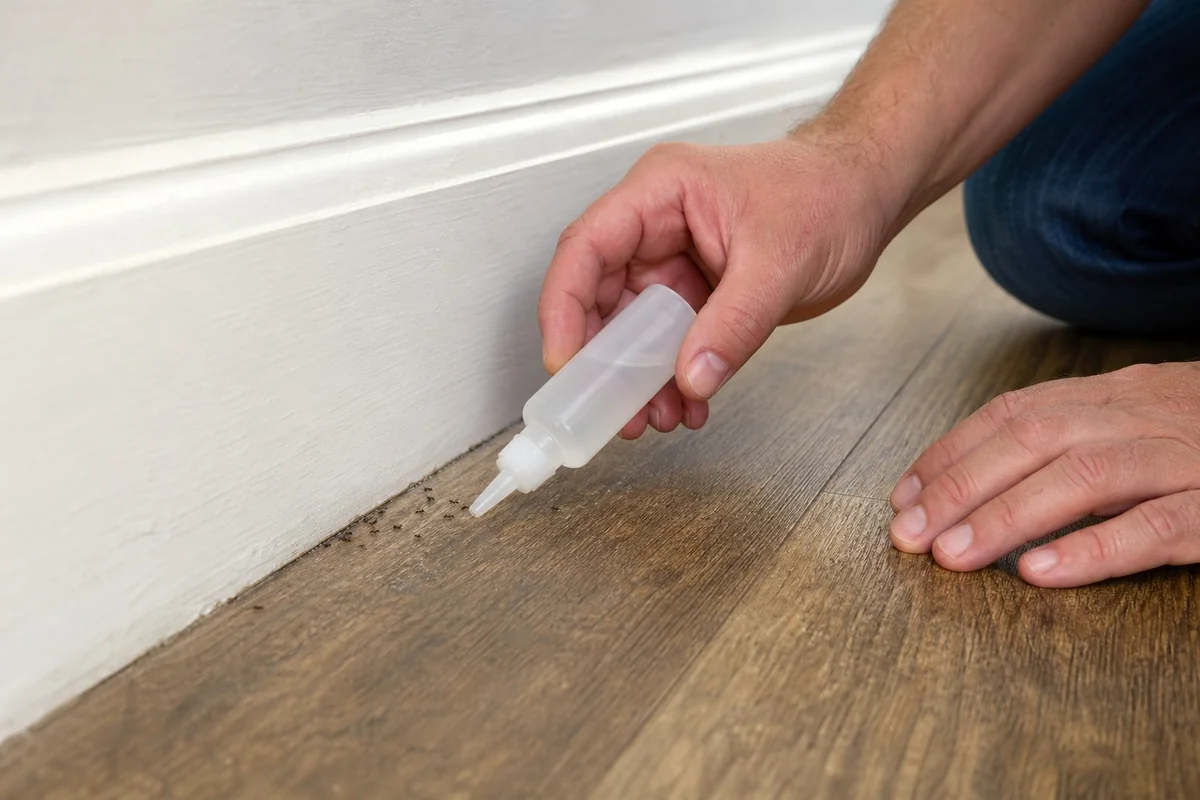
The best homemade ant killer for indoors is a weak bait: about half a teaspoon of boric acid dissolved in a cup of sugar water, offered on cotton in a closed jar near the trail. Ants carry it home and share it with the colony. Soapy water handles the ants you see, while vinegar, baking soda and cinnamon do little.
Contact Killers vs Baits: What Homemade Remedies Can Do
Every homemade ant killer falls into one of two groups. Contact killers, such as soapy water, kill the ants they touch and nothing else. Baits are eaten by foraging workers, carried back to the nest and passed mouth to mouth to other workers, larvae and queens, which is the only way a kitchen remedy reaches ants you never see.
That difference explains why so many remedies seem to work for a day and then fail. The ants on the counter are a small share of the colony, and the nest replaces them within days. University of California IPM advice on managing ants around the home calls baits the most effective way to reduce a colony and notes that spraying ants indoors will not stop more from entering.
So the plan for indoor ants uses both: a contact killer to clear the trail today and a slow bait to shrink the colony over the following weeks. Our guide to ants, roaches and other crawling bugs covers store-bought options, and the homemade ant killers section gathers every recipe on this site.
Homemade Ant Killers Compared
The table sorts the common kitchen remedies by what they actually do. Only one of them reaches the nest.
| Remedy | What It Kills | Speed | Evidence | Indoor Caution |
|---|---|---|---|---|
| Boric acid or borax sugar bait | The colony, through shared food | Fewer ants in about a week, control over weeks | University field and lab studies | Closed station, out of reach of children and pets |
| Soapy water spray | Ants it soaks | Immediate | Extension advice for trails and contact kill | Low; wipe surfaces afterward |
| Diatomaceous earth | Ants that crawl through it | Slow, while it stays dry | Extension and NPIC fact sheets | Avoid breathing the dust |
| Vinegar | Ants it drenches, and only some | Immediate if at all | No reliable evidence it repels or kills colonies | Low; can damage stone counters |
| Baking soda mixes | Little or nothing | Not established | No reliable studies | Low |
| Cinnamon, pepper and chalk lines | Nothing; ants may detour | Not established | No reliable evidence | Low, but messy |
The pattern is clear: a sweet bait with a small dose of borate does the real work, and the other remedies are trail cleaners at best. If you want to skip borates completely, getting rid of ants naturally covers the non-toxic route and what to expect from it.
The Borax Sugar Ant Bait Recipe
The recipe comes from research rather than guesswork. Entomologists at the University of California, Riverside worked out the right strength in feeding trials with Argentine ants, a common sweet-loving house invader. The ants drank 25% sugar water more readily than any commercial bait offered, and it stayed attractive with 0.5% to 3.6% boric acid mixed in.
The low end of that range held up outdoors as well. In a large field trial, sugar water with just 0.5% boric acid cut ant numbers by about 80% after nine weeks of continuous baiting.
In kitchen measures, that comes out to:
- Water: 1 cup, warm, so the sugar and borate dissolve.
- Granulated sugar: 6 level tablespoons, which gives roughly 25% sugar by weight.
- Boric acid powder: about 1/2 teaspoon, or 3/4 teaspoon if you use borax laundry booster instead.
- Cotton balls and a small jar: the jar becomes the bait station.
Those spoon amounts are our own conversion of the research figures and land near the low, colony-friendly end of the range. Powders vary in how densely they pack, so if you own a kitchen scale, weigh about 2 grams of boric acid for a cup of water instead. Stir until the liquid is completely clear and label the jar.
Why a Weaker Bait Kills More Ants
It sounds backward, but stronger is worse. The same UC Riverside team reported that baits with 5% or more borate affect ants too quickly to recruit nestmates and pass the bait along, with reports of ants dying right at the bait. A worker that dies on your counter never feeds anyone at home.
That is the problem with the popular recipes that mix borax and syrup half and half. The paste is far above the strength that ants keep sharing, so you see dead ants near the card and a colony that carries on. A dilute bait lets each worker survive long enough to feed others, and research on ant food sharing found that a single worker can feed 4 to 12 nestmates.
Borax or Boric Acid?
Both work, because their effect on ants comes from the boron they contain. Boric acid carries more boron per spoonful than the borax sold as laundry booster, which is why the recipe calls for about half again as much borax. Use one or the other, never both in the same jar.
Boric acid powder is sold in hardware stores for roaches; check the label for plain boric acid with no added dyes or other insecticides. Borax laundry booster is easier to find in a grocery store. Keep whichever you buy in its original container, away from food and baking supplies.
Sugar, Honey or Syrup?
Plain sugar water is the best base. In the same choice tests, Argentine ants drank about three times as much 25% sugar water as honey, and corn syrup or jam turns sticky and dries out fast. Thin, clear sugar water stays drinkable longer and is easy for workers to carry home in their stomachs.
How to Set a Homemade Ant Bait Station
The station matters as much as the mix. A good one keeps the bait liquid, lets ants in and keeps hands, paws and noses out.
- Find the trail: follow the ants back to where they enter or disappear, often along a baseboard, pipe or window frame.
- Clean the counters, not the trail: wipe crumbs, sticky spots and spilled sugar so the bait is the best food around, but leave the line of ants along the wall alone for now.
- Mix the bait: dissolve the sugar and borate in warm water as described above and let it cool.
- Build the station: use a small jar or food container with a lid, punch 3 or 4 small holes near the bottom edge of the lid or the side, and drop in 2 or 3 cotton balls.
- Soak the cotton: pour in just enough bait to wet the cotton without leaving a pool, then close the lid tightly.
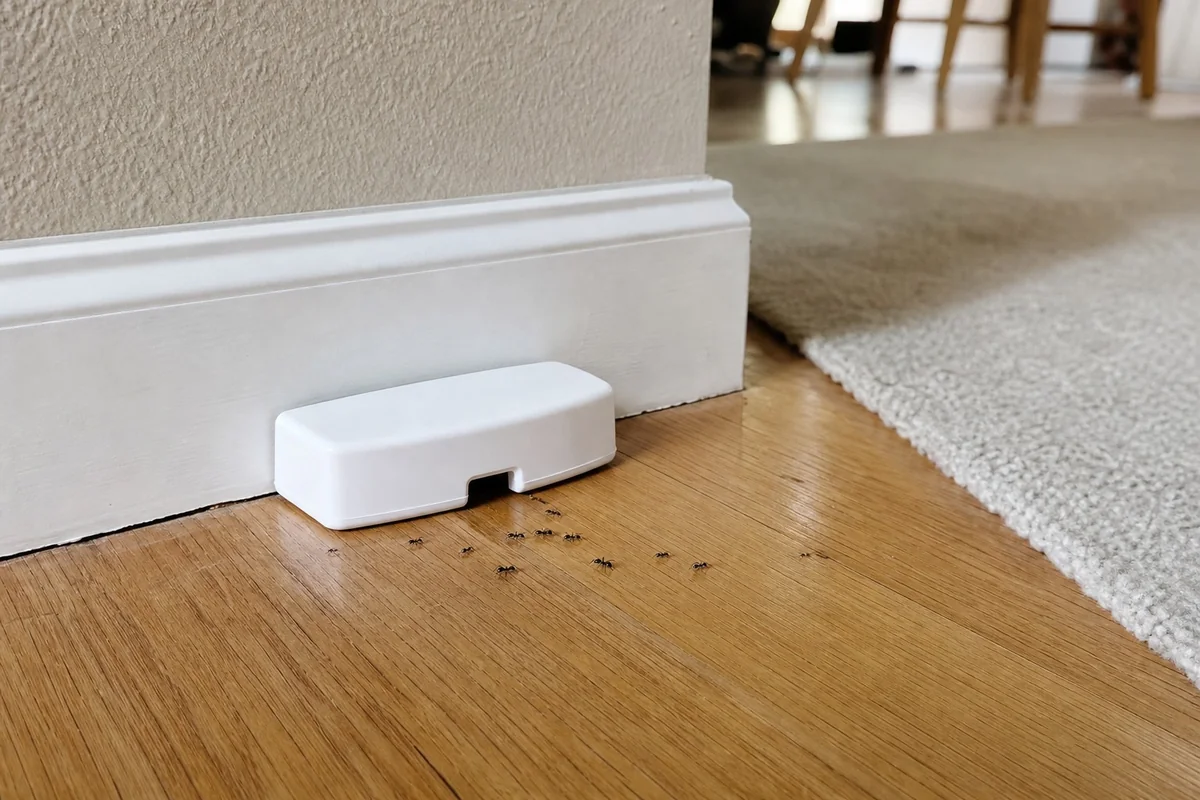
- Place it on the trail: set the jar right beside the trail or entry point, out of direct sun and somewhere children and pets cannot reach, such as behind the fridge or under the sink.
- Leave the feeding ants alone: a crowd of ants at the station is what you want; do not spray or wipe them.
- Refresh the bait: check every few days and replace the cotton and liquid once it dries, crusts or turns cloudy.
- Give it time: UC IPM says it can take 5 to 10 days to see fewer ants and several weeks for full control.
Quick Checklist
How to mix and set a homemade boric acid sugar bait indoors.
- Warning: Label the jar and keep it away from food.
- Warning: Keep the station away from children and pets.
Soapy Water for the Ants You Can See
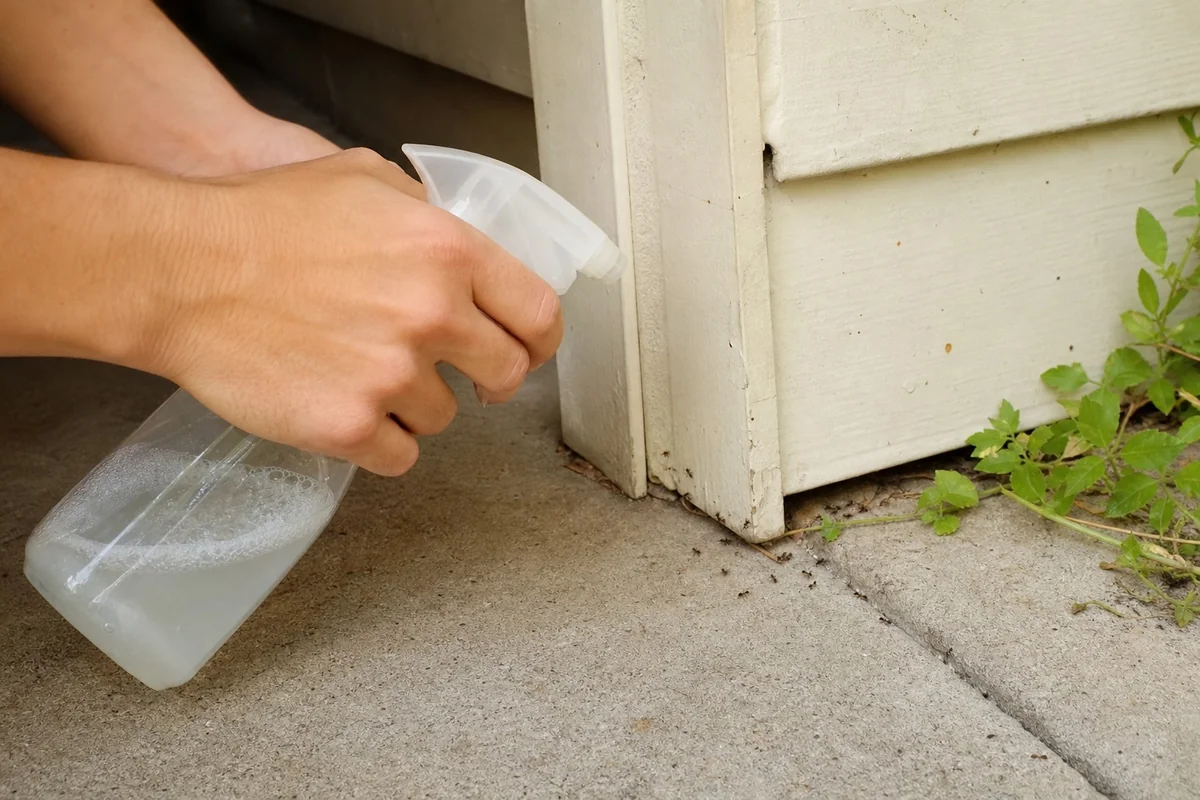
When ants are marching across the counter right now, soapy water is the quickest homemade killer. A few drops of dish soap in a spray bottle of water kills the ants it soaks on contact. Dawn is simply a common choice; the soap does the work, not the brand. UC IPM also recommends wiping trails with soapy water, because it removes the scent trail that guides other workers to the food.
The limit is that soap only works while it is wet. It leaves no residue that keeps killing, so it clears today's trail and nothing more. Use it on ants that wander away from your bait station, not on the ones lined up to feed.
Recipes with added oils or citrus can cling a little longer, but they share the same limits. Our guide on how to make a homemade ant spray compares the soap, vinegar and essential oil versions in detail.
Baking Soda, Vinegar and Other Kitchen Remedies
Many popular remedies have no good evidence behind them. Baking soda mixed with powdered sugar is often said to make ants burst from gas, but we found no study showing that it kills ants or reduces a colony. Treat it as a myth and save your sugar for a real bait.
Vinegar kills some ants it drenches and, like any cleaner, wipes away the scent trail. It does not reach the nest, and there is no reliable evidence that the smell keeps ants away once it dries. Use it as a cleaner if you like, but keep it off marble and limestone, which acid etches.
Cinnamon, black pepper, chalk and coffee grounds belong in the same group. Ants may walk around a line of powder, which can look like success, but they find another route within a day or two. These lines also leave crumbs that other pests appreciate.
Diatomaceous Earth Indoors
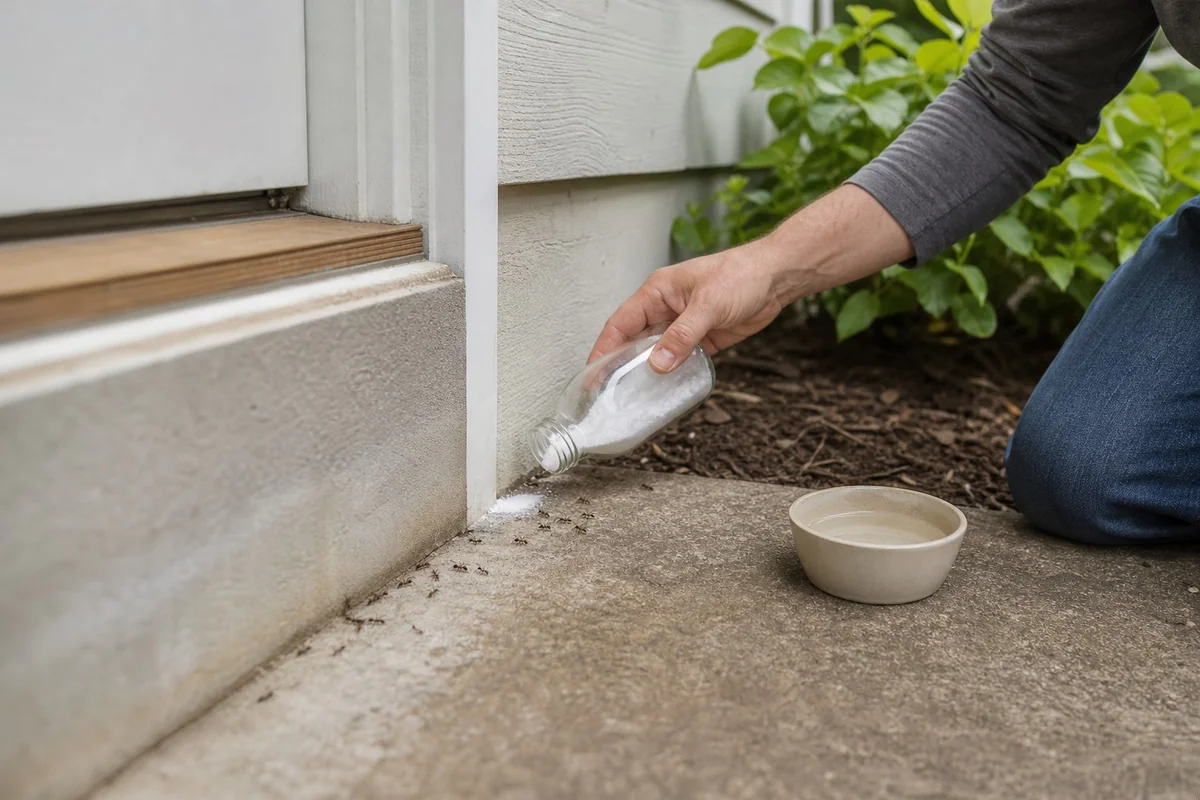
Diatomaceous earth is a fine powder made from fossilized algae. The National Pesticide Information Center says it kills insects by absorbing the oils and fats from their outer coating so they dry out, and that it works only while it stays dry and undisturbed. That makes it a slow barrier rather than a fast fix.
Indoors, use it where ants travel but people do not: a thin dusting in a crack behind the stove, under the dishwasher or along a wall void opening. A thick pile is worse than a light film, because ants avoid heaps and walk through traces. NPIC also warns that breathing the dust can irritate the nose and airways, so apply it with a small puffer bottle rather than by shaking a bag.
Diatomaceous earth does not carry back to the colony the way a bait does. Pair it with a borate bait in the same kitchen and use the powder only in the gaps the bait cannot cover.
When Ants Ignore Sugar Bait
Not every ant wants sweets. UC IPM notes that Pharaoh ants and thief ants often prefer protein or greasy foods, and that some ants change preference with the season. If ants walk past a fresh sugar bait for a full day, they are probably after something else.
Homemade protein baits are much harder to get right, because there is no tested recipe for the right borate strength in peanut butter or grease. Rather than guess, offer a store-bought protein or gel bait next to your sugar station and see which one draws the trail. Two other reasons ants skip a bait are simpler to fix: competing food on the counter and a station placed a few feet away from the trail rather than right on it.
Homemade Ant Killers Around Kids and Pets
Low toxicity does not mean harmless. The National Pesticide Information Center's boric acid fact sheet says boric acid is low in toxicity to people but has caused nausea, vomiting and diarrhea when swallowed, and that animals can show signs within about 2 hours of eating it. The UC Riverside team also points out that borates are among the few chemicals more toxic to children than to adults.
A homemade bait is riskier than a sealed store station in one way: it looks like a jar of sugar water. Label every jar, close the lid tightly and place it where a crawling toddler or a nosing dog cannot reach. Make only one cup at a time and pour leftovers down the drain with running water rather than storing them in the fridge.
If you have a dog that chews everything, a closed commercial station may be the safer pick; our best pet-safe ant killers and best kid-safe ant killers for indoors compare the options. For borate-free mixes and pet-friendly placement, see our homemade pet-safe ant killer recipes.
Indoors and Outdoors: Where Homemade Bait Works Best
Most house ants nest outdoors and come in for food and water. UC IPM recommends placing baits mainly outside, along trails and near nests, because indoor baits can draw ants inside, and indoor bait mainly makes sense during a serious invasion. That is why the indoor jar works best as a short campaign while you seal the entry points.
The best ant killer for indoor and outdoor DIY use is the same sugar bait, but outdoors it needs a bigger, shaded station, because sun and heat dry it out and concentrate the borate. The UC Riverside researchers suggested outdoor stations that hold at least 500 ml and limit evaporation. Our article on homemade ant killers for outside covers yard stations, mound treatments and what to do near garden plants.
When to Switch to Store-Bought Bait
A homemade bait is cheap and works well on sweet-loving ants, but it is not the right tool for every case. Move to a commercial bait or a professional when:
- Nothing changes after two weeks: the colony may be large, or there may be several colonies feeding.
- Ants nest in the walls or wood: large black ants carving wood need an inspection, not sugar water.
- The ants want grease or protein: commercial protein and gel baits are tested at the right strength.
- Children or pets make open jars risky: tamper-resistant stations are safer than any homemade container.
- You are dealing with fire ants: they sting, nest in mounds outdoors and need a product made for them.
Even then, keep the homemade habits that made the bait work: clean counters, sealed food and patience while ants feed.
Common Questions About Homemade Ant Killers
Can you give me a recipe for a DIY ant trap using borax?
Can you give me a recipe for a DIY ant trap using borax?
Yes.:
- Dissolve 6 level tablespoons of sugar and about 3/4 teaspoon of borax in 1 cup of warm water.
- Put 2 or 3 cotton balls in a small jar with a few small holes in the lid.
- Wet the cotton with the bait and close the lid.
- Set the jar beside the ant trail, out of reach of children and pets, and refresh it when it dries.
Why are ants ignoring my homemade bait?
Why are ants ignoring my homemade bait?
Usually because they want grease or protein rather than sugar, there is easier food on the counter, or the jar sits a few feet away from the trail. Clean up crumbs, move the station right onto the trail and, if ants still pass it for a day, try a store-bought protein bait beside it.
How often should I replace homemade ant bait?
How often should I replace homemade ant bait?
Check it every few days and replace the cotton and liquid as soon as it dries, crusts or turns cloudy. Evaporation makes the borate stronger, and a stronger bait kills ants before they reach the nest, so fresh bait works better than topping up old bait.
Can I put homemade ant bait inside a kitchen cabinet?
Can I put homemade ant bait inside a kitchen cabinet?
Yes, if the ants are trailing through that cabinet. Use a closed, labeled jar, set it on the trail away from food packages, and avoid low cabinets a child can open. Clear any open sugar or cereal from the shelf first so the bait is the easiest meal there.
Does homemade ant bait work on all kinds of ants?
Does homemade ant bait work on all kinds of ants?
It works best on sweet-feeding ants such as Argentine and odorous house ants. Pharaoh and thief ants often prefer protein or grease, carpenter ants nesting in wood need an inspection, and fire ants need products made for outdoor mounds. Match the bait to what the ants are eating.
What happens if my dog drinks homemade ant bait?
What happens if my dog drinks homemade ant bait?
Call your vet right away and tell them it contained boric acid or borax and roughly how much was in the jar. The National Pesticide Information Center notes that animals can show signs within about 2 hours, so do not wait for symptoms before calling.
Key Takeaways
Ants are beaten at the nest, not on the counter. A dilute borate bait in a closed jar is the one homemade remedy that gets there, because workers live long enough to share it, while soap, vinegar and powders only deal with the ants in front of you.
Give the bait 5 to 10 days, refresh it as it dries and leave the feeding ants alone. If nothing changes after two weeks, the ants ignore sweets or you have young children or pets who could reach the jar, switch to tamper-resistant stations or call a professional.
Today, follow the trail to where the ants come in and set your first station right beside it.
Guides in This Topic
 Homemade Ant Killers for Outside: Borax Bait Stations That Work
 Homemade Pet-Safe Ant Killer Recipes and a Safe Setup
 Best Kid-Safe Ant Killers for Indoors: Child-Resistant Picks
 How to Make a Homemade Ant Spray With Soap and Water
 Best Pet-Safe Ant Killers: Stations, Dust and Plant-Oil Sprays
 How to Get Rid of Ants Naturally: What Works and What Does Not