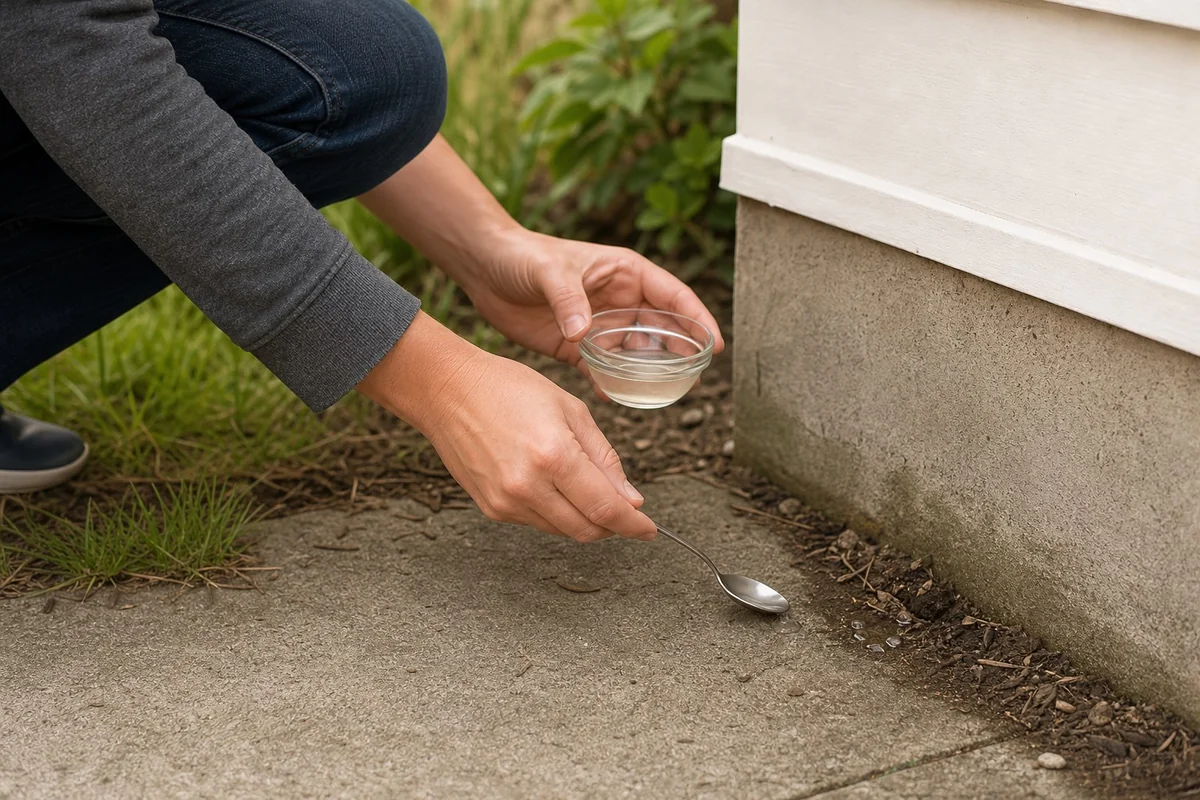

Homemade Pet-Safe Ant Killer Recipes and a Safe Setup
Homemade ant killers for homes with pets: soapy water for trails, plain diatomaceous earth for cracks and weak borax bait in a sealed jar, plus recipes to avoid.
To kill ants at home without putting pets at risk, wipe and spray trails with plain soapy water, dust cracks thinly with plain diatomaceous earth, and set a weak borax sugar bait inside a sealed, pet-proof jar placed where pets cannot reach. Skip essential oil sprays around cats, and never leave homemade bait in open lids.
What You Need
- Plain liquid dish soap: for the contact spray and for wiping trails.
- A spray bottle and a sponge: one bottle reserved for ant spray, labeled.
- Boric acid or borax and white sugar: for the bait, if you need to reach the colony.
- A small jar with a screw lid and cotton balls: this becomes the bait station.
- Plain food-grade diatomaceous earth and a puffer bottle: optional, for cracks and gaps.
- Tape and a marker: to label every container.
Everything here is cheap and easy to find. What makes it pet-safe is not the recipe itself but how little you use and where you put it.
Which Homemade Ant Killers Are Safe Around Pets
Soapy water is the lowest-risk homemade ant killer. It kills the ants it soaks and wipes away their scent trail, and once wiped dry it leaves nothing a pet can lick. Its limit is that it never reaches the nest.
Borax and boric acid baits do reach the nest, but they are only pet-safe when pets cannot get to them. The National Pesticide Information Center's boric acid fact sheet rates boric acid low in toxicity, but notes it affects animals much as it affects people and that signs can start within about 2 hours of eating it. A sealed jar with tiny holes, tucked behind an appliance, keeps the dose with the ants.
Plain diatomaceous earth sits in between: NPIC describes it as not poisonous when eaten, but the dust irritates noses and airways if pets breathe it. Our guide to homemade ant killers that work indoors compares every kitchen remedy, and the homemade and pet-safe ant killers section links the other recipes.
Pet-Safe Homemade Ant Killers by Job
Each homemade option does one job well. The table shows how to mix each one and the precaution that keeps it pet-safe.
| Recipe | How to Mix It | What It Does | Pet Precaution |
|---|---|---|---|
| Soapy water spray | About 4 teaspoons of plain dish soap per quart of water | Kills ants it soaks; removes the scent trail | Wipe surfaces after spraying so pets do not lick soap |
| Weak borax sugar bait | 1 cup warm water, 6 tablespoons sugar, about 1/2 teaspoon boric acid or 3/4 teaspoon borax | Workers carry it to the colony | Sealed jar only, behind appliances or in a latched cabinet |
| Plain diatomaceous earth | Used dry, straight from the bag | Dries out ants crossing a crack | Thin film inside gaps; no essential oil blends with cats |
| Soapy water wipe | Same soapy water on a sponge | Erases the trail without spraying | Best choice for pet bowls, beds and feeding areas |
Most homes need the spray or wipe on day one and the bait for the following weeks. Diatomaceous earth is optional, for a crack that keeps leaking ants.
Recipes to Avoid in Pet Homes
Some popular homemade ant remedies are riskier for pets than the ants are for you. Leave these out:
- Essential oil sprays in cat homes: Texas A&M veterinarians warn that many essential oils are toxic to cats, including peppermint, rosemary, lavender and tea tree, and cats swallow oil when they groom.
- Hydrated lime lines: lime is caustic and can burn paws, noses and eyes, so it has no place where pets walk.
- Bait in open bottle caps: a dog will lick a sweet dish clean in seconds.
- Thick borax and syrup pastes: they put far more borax within reach and kill ants too fast to reach the nest.
- Cayenne and pepper lines: they irritate pets' eyes and noses and have no reliable evidence of stopping ants.
Baking soda mixed with sugar is harmless in small amounts but has no good evidence of killing ants, so it wastes the time a real bait would use.
How to Set Up a Pet-Safe Homemade Ant Plan
- Find the trail: follow the ants to where they come in, often a baseboard gap, window frame or pipe.
- Spray and wipe the visible ants: mix about 4 teaspoons of plain dish soap into a quart of water, spray the ants, then wipe the trail so the scent is gone and no residue is left for pets.
- Clear competing food: pick up pet bowls between meals, sweep kibble crumbs and wipe sticky spots.
- Mix a weak bait: dissolve 6 level tablespoons of sugar and about 1/2 teaspoon of boric acid, or 3/4 teaspoon of borax, in 1 cup of warm water.
- Build a sealed station: put 2 or 3 cotton balls in a small screw-top jar, wet them with bait and punch a few holes in the lid no wider than a pencil lead.
- Place it out of reach: set the jar on the trail behind the fridge, under the stove or inside a cabinet your pet cannot open.
- Dust the gap, if needed: puff a thin film of plain diatomaceous earth into the crack where ants enter, never a pile on open floor.
- Check and refresh: look at the jar every few days, replace the cotton when it dries and pour old bait down the drain with running water.
The bait strength follows UC Riverside research on Argentine ants: sugar water with as little as 0.5% boric acid reached colonies better than stronger mixes, which kill workers before they share the bait. Expect fewer ants within about a week, and leave the ants at the jar alone so they can carry the bait home.
Quick Checklist
How to set up a homemade ant plan that keeps pets safe.
- Warning: Label the container.
- Warning: Keep the station away from pets.
Common Mistakes and Fixes
- Ants keep coming after spraying: soap only kills the ants you hit; add the sealed bait for the colony.
- Dead ants piled around the jar: the bait is too strong; pour off half and top up with plain sugar water.
- Ants ignore the bait: they may want grease or protein, or the jar is not on the trail; move it right beside the ants.
- The pet keeps finding the station: move it inside a latched cabinet or switch to a tamper-resistant store station.
- Bait dried into syrup: refresh it rather than adding water, which leaves uneven strength.
- Ants near the pet bowl: stand the bowl in a shallow dish of water for a few days and feed at set times, so ants lose the free meal while the bait works.
If the ants are still active after two weeks of steady baiting, the colony may be large or there may be several. That is the point to try a tamper-resistant store station with a different active ingredient, or to call a professional who can bait without exposing your pets.
Common Questions About Pet-Safe Homemade Ant Killers
Will vinegar and Dawn kill ants?
Will vinegar and Dawn kill ants?
The Dawn does the work. Soapy water kills ants it soaks and removes the scent trail; vinegar adds little beyond a strong smell and can etch stone counters. Plain soap and water is enough, and it is gentler around pets who lick floors.
What is a DIY insecticide I can make to get rid of ants?
What is a DIY insecticide I can make to get rid of ants?
Two cover most needs. A quart of water with about 4 teaspoons of plain dish soap kills ants on contact. A cup of warm water with 6 tablespoons of sugar and about 1/2 teaspoon of boric acid makes a slow bait that reaches the colony, as long as it sits in a sealed jar out of pets' reach.
Can I use homemade ant bait outside where my dog plays?
Can I use homemade ant bait outside where my dog plays?
Only in a station your dog cannot open or reach, and preferably not in the yard where it spends time. Outdoor bait dries out fast and needs a bigger container, so a sealed jar along the foundation behind a planter is a better spot than open lawn or a patio.
Is food-grade diatomaceous earth safe if my cat walks through it?
Is food-grade diatomaceous earth safe if my cat walks through it?
A thin film is low risk, but avoid it where your cat walks and grooms. NPIC describes diatomaceous earth as not poisonous when eaten, yet the dust irritates airways if breathed in. Keep it inside cracks and wall gaps, and choose a plain product without added essential oils.
Key Takeaways
A pet-safe homemade plan uses the gentlest tool for each job. Soapy water handles the trail, a thin film of plain diatomaceous earth guards the crack, and a weak borate sugar bait in a sealed jar reaches the colony.
Keep every homemade mix labeled and out of reach, skip essential oils around cats and leave out lime, pepper and open dishes. If a pet does get into bait, call your vet with the ingredient; if ants persist after two weeks, consider a tamper-resistant store station or a professional.
Tonight, follow the trail, wipe it with soapy water and choose a spot behind an appliance for the first jar.
Related Articles
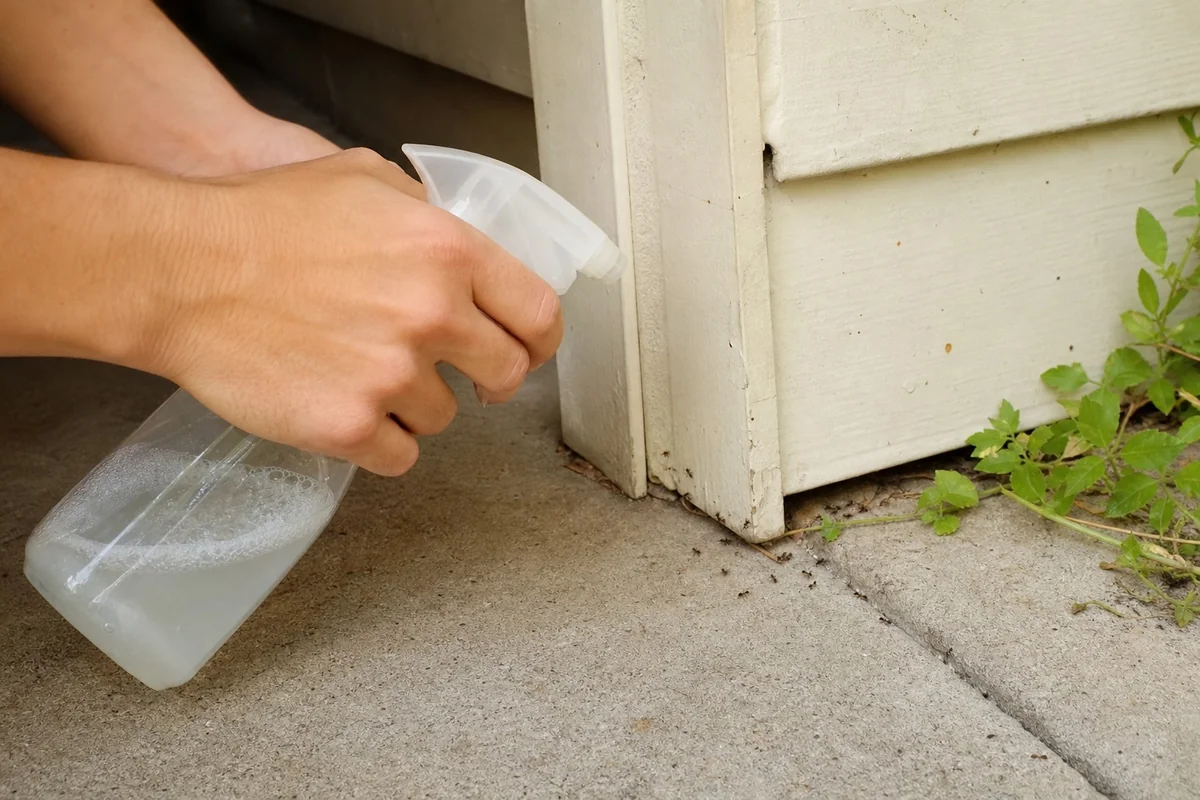
How to Make a Homemade Ant Spray With Soap and Water
How to make a homemade ant spray: 4 teaspoons of liquid dish soap per quart of water, how to use it, a strength chart, which add-ins help, how to spray near plants.
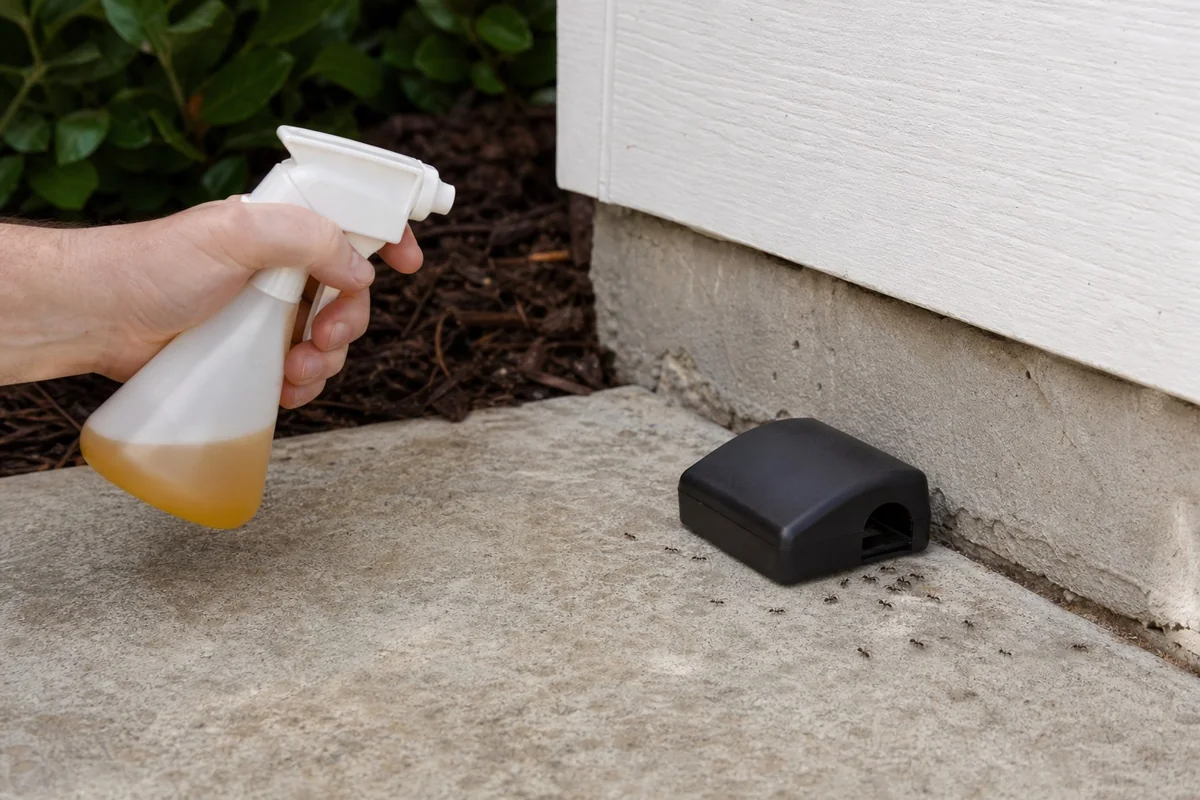
Best Pet-Safe Ant Killers: Stations, Dust and Plant-Oil Sprays
The best ant killers for homes with pets: TERRO and Raid bait stations, diatomaceous earth and plant-oil sprays, plus why some natural oils are risky for cats.
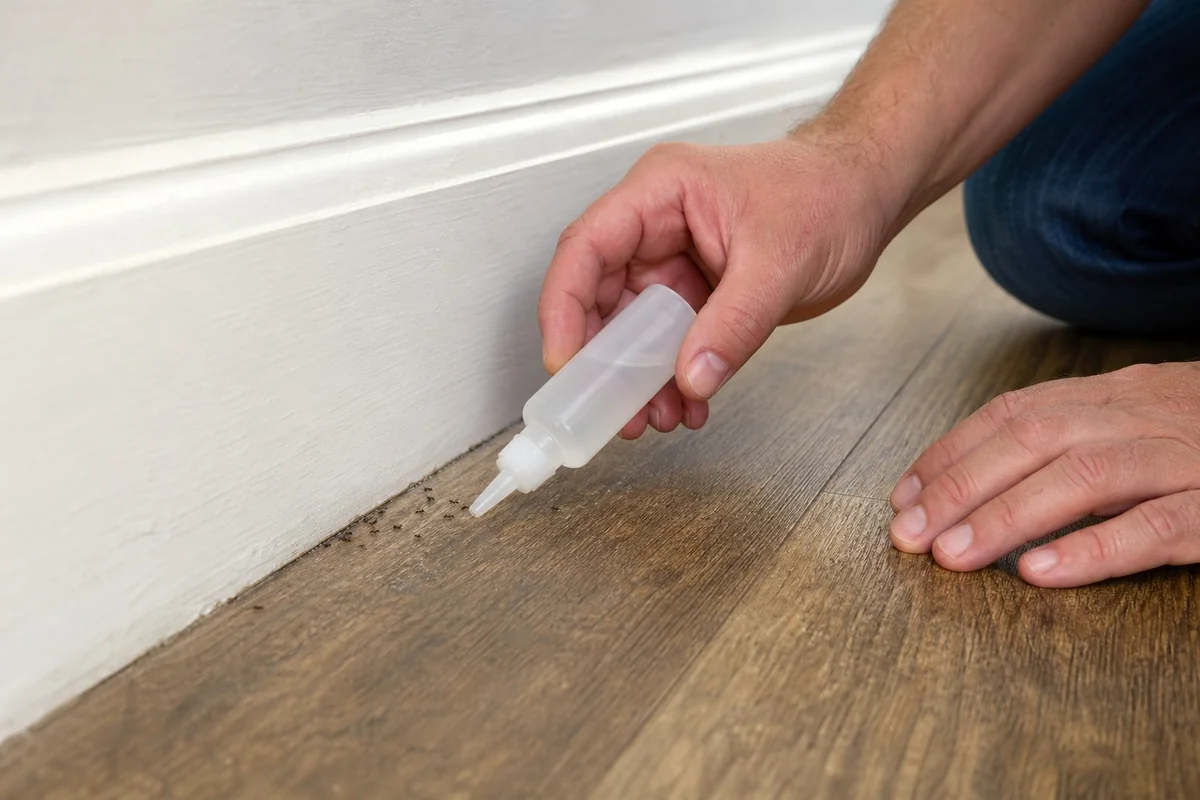
Homemade Ant Killers That Work Indoors: Recipe and Setup
The homemade ant killer that works indoors: a weak boric acid sugar bait in a closed jar, how to set it, why strong borax mixes fail and which remedies do little.
Homemade Ant Killers for Outside: Borax Bait Stations That Work
Best homemade ant killer for outside: a weak borax sugar bait in shaded stations along trails, plus soap spray, pots, garden beds and remedies that fail outdoors.