
Homemade Raccoon Repellents: What Works and How to Use It
Homemade raccoon repellents that work: food control, DIY exclusion, a hot pepper spray recipe and scare tactics, plus why vinegar, ammonia and mothballs fall short.
The best homemade raccoon repellent is not a spray but a yard that offers nothing to eat and nowhere to den: pet food brought in at night, trash cans strapped shut, compost closed, and decks and crawl spaces screened. Hot pepper sprays, vinegar and ammonia may make a raccoon hesitate for a night or two, but research has not found any scent that keeps raccoons away, so use them only as a short-term nudge while you remove what attracts them.
What You Need
- For food control: bungee cords or ratchet straps for trash cans, a lidded compost bin and a sealed bin for pet food and birdseed.
- For exclusion: galvanized hardware cloth, a shovel, wire cutters, heavy gloves and zip ties or landscape staples.
- For scare tactics: a motion-sensor light, a battery radio and a garden hose with a spray nozzle.
- For a pepper spray: a spray bottle, water, a few drops of plain dish soap and hot sauce or cayenne pepper.
- For safety: disposable gloves, eye protection and, for cleaning droppings, a fitted respirator mask.
Most of this is already in a garage or shed. The only purchases most yards need are hardware cloth for any deck or shed that raccoons get under, and straps for the trash cans.
Do Homemade Raccoon Repellents Work?
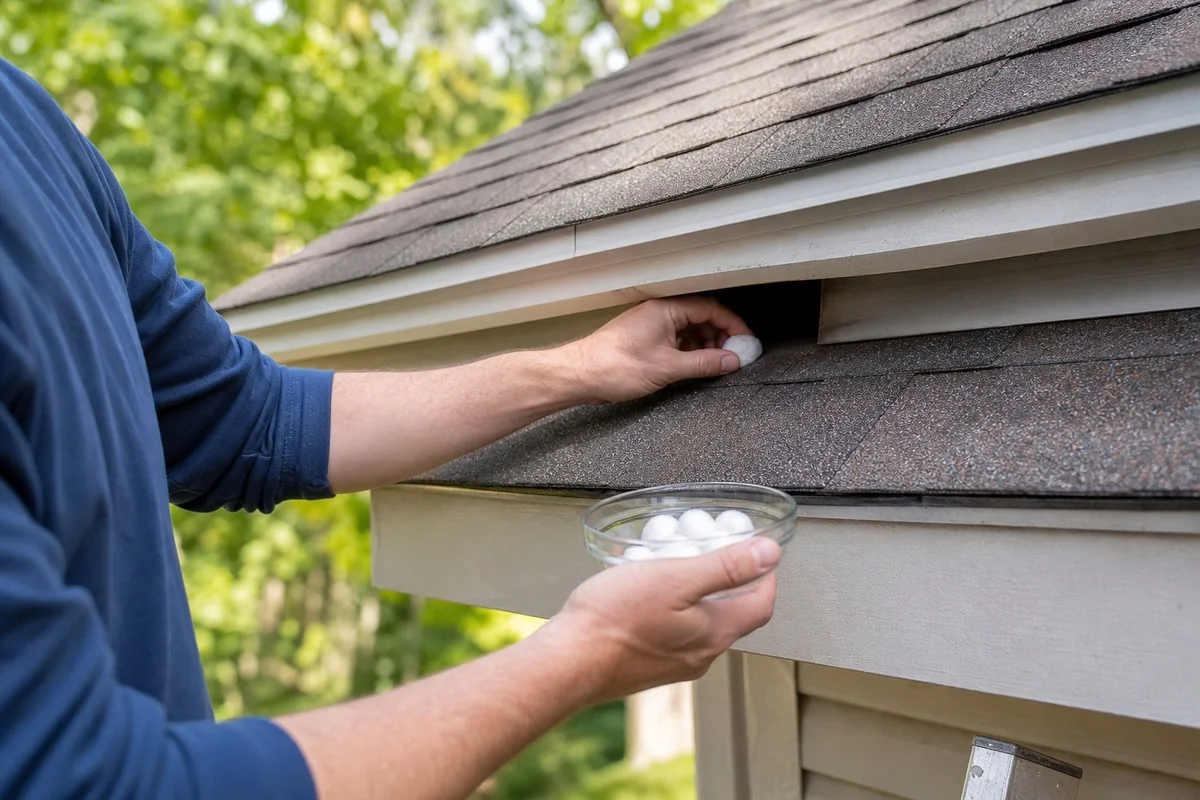
Not for long. Home remedies were among the methods examined in University of California IPM's pest note on raccoons, and the verdict was blunt: mothballs and blood meal failed, and no chemical repellent has kept raccoons away. The only things that moved them were sudden lights, noises and sprays of water, and even those lost their effect within a few days.
The reason is simple. Raccoons come back to places that feed them, and a strong smell is a small price for a full trash can or a bowl of cat food. Scents fade within hours outdoors and wash off in rain, while the food stays. That is why every effective homemade plan starts with taking food away and blocking dens, then uses scare tactics to break the habit.
Our wildlife control guides cover raccoons along with squirrels, snakes and moles, and the homemade raccoon repellent section collects the DIY articles for gardens, attics and sprays.
Homemade Raccoon Remedies Compared
| Remedy | What People Expect | What Happens | Safety Notes |
|---|---|---|---|
| Hot pepper or cayenne spray | Burning taste and smell | May deter digging or nibbling briefly | Irritates eyes and skin; reapply after rain |
| Vinegar | Sour smell repels | Fades within hours; little effect | Can burn plants it soaks |
| Ammonia-soaked rags | Smells like urine of a threat | Fades in a day or two | Harsh fumes; never mix with bleach |
| Dawn dish soap | Bitter taste | No evidence of repelling | Low risk in small amounts |
| Irish Spring or other strong soap | Perfume masks food smells | No evidence of repelling | Low risk |
| Mothballs | Fumes drive animals away | Failed in testing | Pesticide misuse outdoors; harms pets and children |
| Lights, radio and water | Startle raccoons | Works for a few days | Safe; move them often |
The pattern is clear: anything that relies on smell alone gives little or no protection, while things that physically block raccoons or startle them work better, especially when combined.
How to Make and Use a Hot Pepper Spray
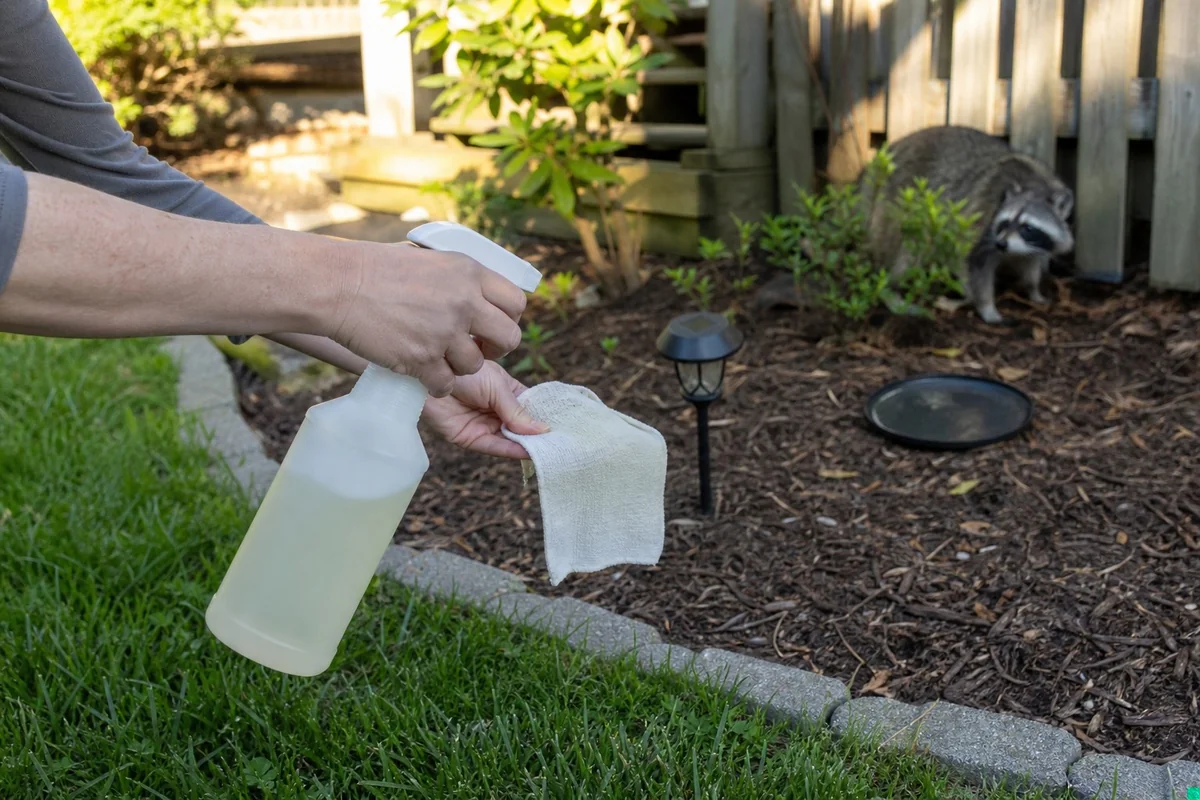
Hot pepper is the homemade deterrent most worth trying, mainly to stop raccoons from digging up a bed or nibbling a crop for a few nights. It will not stop a raccoon from raiding trash or using an attic.
- Mix the base: stir a tablespoon or so of cayenne powder or a few generous splashes of hot sauce into a quart of warm water.
- Add a drop of soap: a few drops of plain dish soap help the mix stick to leaves and soil.
- Let it steep and strain: leave it overnight, then strain out the pepper flakes so they do not clog the nozzle.
- Test first: spray a few leaves and wait a day for burn spots before treating a whole bed.
- Spray where raccoons dig or feed: soil around plants, the edges of beds and the base of fruit trees, not open flowers.
- Reapply: after rain or watering, and every few days while raccoons are active.
Garlic, onion and peppermint recipes follow the same idea and have even less behind them. If you try one, use it where raccoons dig or nibble, never as protection for trash or a den, and judge it by whether the damage stops, not by how strong it smells to you.
Wear gloves and eye protection when mixing and spraying, and keep the mix away from where children play and pets lie. Wash produce from treated beds well before eating it.
Step-by-Step: Raccoon-Proof Your Yard the DIY Way
- Bring pet food in at night: UC IPM ranks pet food left outside overnight high among raccoon food sources, so feed pets indoors or pick up bowls before dark.
- Lock the trash: run a bungee cord or ratchet strap over each lid and through both handles, or store cans in a garage until collection morning.
- Close the compost: switch an open pile to a lidded bin and keep meat, fish and dairy out of it.
- Take in bird feeders at night: and rake up spilled seed underneath.
- Harvest promptly: pick ripe fruit and corn and clear fallen fruit every day while raccoons are visiting.
- Screen decks, sheds and crawl spaces: attach galvanized hardware cloth with 1/4- or 1/3-inch openings and bury the bottom edge at least 6 inches deep, as UC IPM recommends; bend the buried part outward in an L to stop digging.
- Trim branches: cut back limbs to leave at least 5 feet between trees and the roof.
- Add scare tactics: point a motion-sensor light at the trash area and garden, and keep a hose with a jet nozzle ready to spray raccoons you catch in the act.
- Rotate and repeat: move lights and devices every week or two, and keep up the food control even after raccoons stop coming.
Quick Checklist
How to raccoon-proof a yard with DIY methods.
- Warning: Check for young before closing any opening.
Attics need extra care, because sealing an entry with young inside traps them. Our guide to making a DIY raccoon repellent for the attic covers the steps for checking, evicting and sealing an attic safely.
Homemade Fixes by Problem
Raccoon trouble usually shows up in one of a few ways, and each has a homemade fix that works better than a scent.
Raccoons Tipping Trash Cans
Strap lids shut through both handles and stand cans against a wall or inside a frame of two posts so they cannot be knocked over. Rinse cans with hot water now and then, since food smells cling to the plastic. Put trash out on collection morning rather than the night before.
Raccoons Digging the Lawn
Raccoons roll back fresh sod and dig small holes across lawns at night looking for grubs and worms. Watering less often makes the top layer less inviting, and treating a confirmed grub problem with beneficial nematodes removes the food. Newly laid sod can be pinned with landscape staples or covered with bird netting for a couple of weeks until the roots knit in.
Raccoons in the Vegetable Garden
Sweet corn, melons and ripe tomatoes are favorites. A hot pepper spray around the base of plants may buy a few nights, but a fence is what protects a crop. UC IPM notes that a single electrified wire about 8 inches above the ground makes an ordinary garden fence raccoon-resistant, and a loose, floppy top on a wire fence makes climbing harder.
Raccoons Under the Deck or Shed
Once you are sure no young are inside, screen the gap with buried hardware cloth. If an animal may still be inside, use the radio and light trick from the pro tip, then loosely block the hole with crumpled newspaper and seal it only when the paper stays undisturbed. Bend the bottom of the hardware cloth outward underground in an L shape, since raccoons dig straight down at a barrier and give up when they hit wire.
Raccoons at the Pond or Chicken Coop
Raccoons fish in shallow ponds and kill poultry. Give fish deep water or a submerged hiding cave, and lock chickens in a coop with hardware cloth on every opening and a latch raccoons cannot flip; they open simple hooks and slide bolts with their hands. Chicken wire keeps chickens in but does not keep raccoons out.
Raccoons on the Roof or in the Chimney
Trim back the branches raccoons climb, and fit a sturdy chimney cap or spark arrester that meets your local fire code, which UC IPM recommends for keeping raccoons out. Check roof vents and soffits for torn screens, and replace plastic vent covers with metal ones. If you hear chirping kits in a chimney in spring, leave the damper closed and wait for the mother to move them, or call a wildlife professional.
Raccoons Coming Through a Pet Door
Raccoons learn to use pet doors quickly when pet food sits just inside. Lock the pet door at night, move food bowls away from it, or switch to a microchip or collar-key door that opens only for your pet.
What Not to Use
- Mothballs: the National Pesticide Information Center's mothball guidance explains that using them in yards, gardens or other outdoor spots to control wildlife is a misuse of the pesticide, and that they can harm children and pets and contaminate soil and water.
- Ammonia in enclosed spaces: the fumes irritate lungs and eyes, and mixing ammonia with bleach releases toxic gas.
- Poison or antifreeze: poisoning raccoons is illegal in most places and kills pets and other wildlife.
- Trapping and moving raccoons yourself: many states restrict relocation, and moved raccoons rarely survive; call a licensed wildlife control operator instead.
- Feeding raccoons: even occasional handouts teach them to return and lose their fear of people.
Raccoons can carry rabies and raccoon roundworm, whose eggs spread in droppings. If you find a raccoon latrine on a deck or in an attic, the CDC's advice on preventing raccoon roundworm is to wear gloves and boots, use a fitted respirator in confined spaces and bag the droppings; heat such as boiling water kills the eggs, while most chemicals do not.
Common Questions About Homemade Raccoon Repellents
Is vinegar a raccoon repellent?
Is vinegar a raccoon repellent?
Not a reliable one. The smell fades within hours outdoors and does nothing to remove the food that draws raccoons. Vinegar can also burn plants it soaks, so it is a poor choice around a garden.
Does cayenne pepper deter raccoons?
Does cayenne pepper deter raccoons?
It can discourage digging or nibbling for a few nights, especially in garden beds, but it washes off in rain and raccoons return once it fades. Use it alongside fencing, food control and scare tactics.
Does Dawn dish soap deter raccoons?
Does Dawn dish soap deter raccoons?
There is no evidence that soap repels raccoons. A few drops help a pepper spray stick to leaves, but soap on its own will not keep raccoons out of trash or gardens.
What do raccoons hate the most?
What do raccoons hate the most?
Raccoons avoid places that feel unsafe or offer no food: bright light, noise, sudden sprays of water, and yards where trash, pet food and compost are locked away. No smell has been shown to keep them away for long.
What attracts raccoons to a house?
What attracts raccoons to a house?
Food and shelter: pet food, unsecured trash, compost, bird feeders, fallen fruit and grubs in the lawn, plus dens such as attics, chimneys, sheds and the space under decks.
Key Takeaways
- No homemade scent keeps raccoons away for long; food control and exclusion do the real work.
- Bring pet food in, strap trash lids shut, close compost and take in bird feeders at night.
- Screen decks and crawl spaces with buried hardware cloth and trim branches back from the roof.
- Hot pepper spray can stop digging for a few nights; reapply after rain and keep it out of eyes.
- Lights, a radio and a spray from the hose startle raccoons, but move them often.
- Never use mothballs outdoors, poison or relocate raccoons yourself.
- Match the fix to the problem: straps for trash, nematodes for lawn grubs, fencing for crops and hardware cloth for decks.