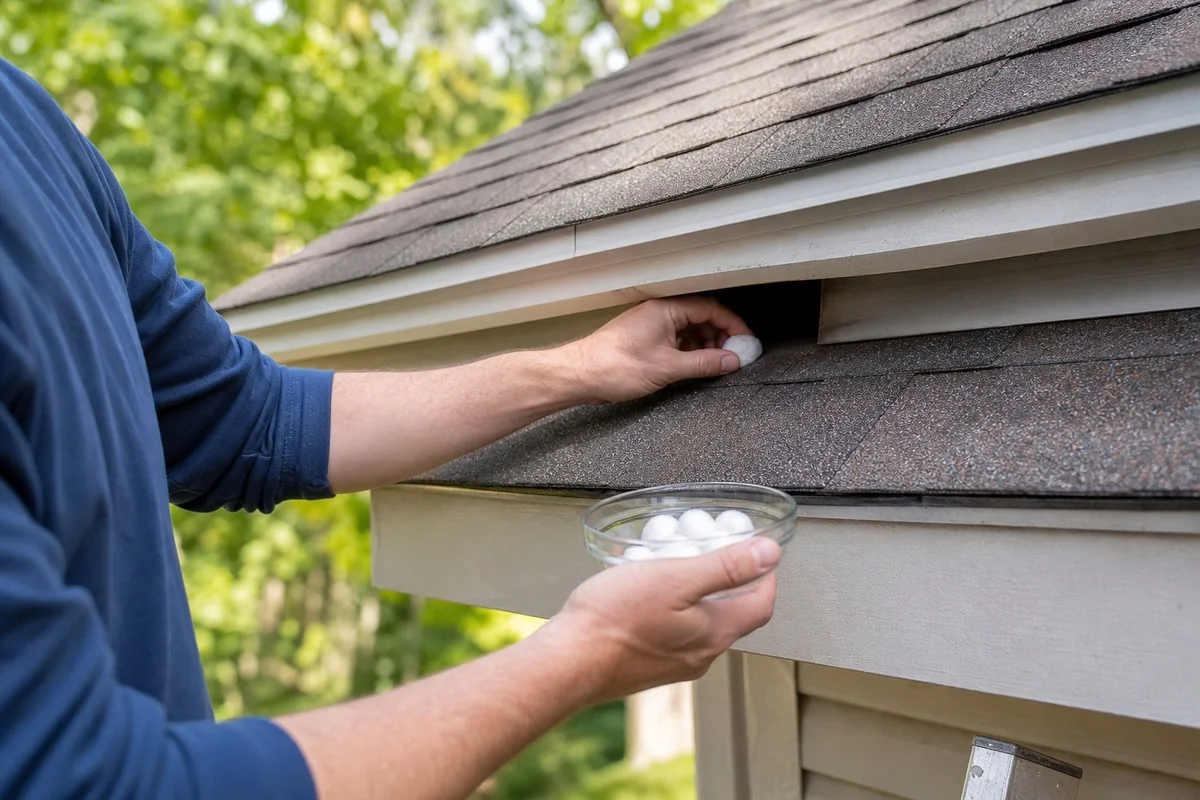

How to Make a DIY Raccoon Repellent for the Attic, Step by Step
A DIY raccoon repellent for the attic: a light, radio and vinegar eviction kit, how to confirm the attic is empty,, how to seal vents, soffits and chimneys for good.
A DIY raccoon repellent for the attic works as an eviction kit, not a spray: a bright light, a radio and a strong-smelling rag placed near the den make the attic feel unsafe, so the mother moves her young out within a few nights. Once you are sure the attic is empty, seal every entry with metal and hardware cloth. No repellent alone keeps raccoons out, and sealing an entry with young still inside traps them.
What You Need
- To find the den and entry: a flashlight, binoculars for the roofline and a ladder.
- For the eviction kit: a clip-on work light with an extension cord, a battery or plug-in radio, and old rags with apple cider vinegar in a sealed container.
- For sealing: heavy galvanized hardware cloth, metal roof vent guards, screws and washers, tin snips and a cordless drill.
- For safety: heavy leather gloves, eye protection, disposable gloves and a fitted respirator for cleanup, and a helper to hold the ladder.
Plan on about a week from start to finish: a few nights of eviction, a night or two to confirm the attic is empty, then an afternoon of sealing and cleanup.
Why an Attic Repellent Needs a Plan
Raccoons in attics are usually mothers with young. University of California IPM's pest note on raccoons notes that females looking for nest sites tear off shingles, fascia boards and roof vents, and that litters average about four young. It also states that no chemical repellents have been effective for raccoons, while lights and sounds work for a few days, which is exactly long enough for an eviction.
That shapes the approach. The goal is not to keep a raccoon away forever with a smell; it is to make the den uncomfortable enough that the mother carries her young to another site, then close the entry so she cannot come back. Our guide to homemade raccoon repellents covers the same principle for yards and gardens, and the homemade raccoon repellent section has more DIY methods.
Step-by-Step: A DIY Attic Raccoon Eviction
- Find the entry from outside: look along the roofline for torn vents, lifted shingles, broken soffit screens and dark rub marks where fur brushes the edges.
- Locate the den inside: listen from the attic hatch at dusk; kits chatter and whimper, and the den is usually near the entry in a corner or under insulation.
- Do not block the entry yet: the mother must be able to leave with her young.
- Light the den: clip a bright work light near the den and leave it on day and night; raccoons choose dark places to raise young.
- Add noise: set a radio on a talk station near the den at a moderate volume and leave it running.
- Add a strong scent: place rags soaked in apple cider vinegar in an open container near the den, refreshing them daily; never use ammonia and bleach together or mothballs.
- Wait several nights: mothers usually move young one at a time over a night or two once a den feels unsafe.
- Confirm the attic is empty: listen for silence at dusk and dawn, check the den for young, and watch the entry from outside at dark.
- Seal the entry: cover the opening with heavy hardware cloth or a metal vent guard screwed well past the edges, then check every other vent and gap on the roof.
- Clean up: remove droppings and soiled insulation with gloves and a respirator, and bag them for disposal.
Quick Checklist
How to evict raccoons from an attic and seal it.
- Warning: Have a helper hold the ladder.
- Warning: Sealing now traps the young.
- Warning: Never mix ammonia with bleach; do not use mothballs.
- Warning: Raccoon droppings can carry roundworm.
If raccoons have not left after a week, or if you find young the mother has left behind, call a licensed wildlife control operator. They can install a one-way door and reunite young with the mother. Avoid trapping and moving raccoons yourself; many states restrict it, and orphaned kits die without their mother.
For cleanup, the CDC's guidance on preventing raccoon roundworm recommends gloves, boots and a respirator in confined spaces, misting droppings lightly before bagging them, and heat rather than chemicals to kill the eggs, since most disinfectants do not.
Sealing the Attic for Good
Raccoons that are evicted test the house for the next weak spot, so seal every possible entry the same day you close the first one.
| Entry Point | Material | Notes |
|---|---|---|
| Roof vents | Metal vent guards | Screw through the base into the roof deck |
| Soffit and fascia gaps | Galvanized hardware cloth or sheet metal | Replace rotted wood first |
| Gable vents | Hardware cloth behind the louver | Fasten from inside the attic |
| Chimney | Chimney cap or spark arrester | Must meet local fire code |
| Plumbing vent stacks | Mesh vent cap | Do not block airflow |
| Roof-to-wall joints | Metal flashing | Common entry on additions and dormers |
| Overhanging branches | Pruning | Leave at least 5 feet of clearance, per UC IPM |
Avoid plastic vent covers, foam and caulk on their own; raccoons tear through all of them easily. Use screws with washers rather than staples, since a determined raccoon pulls staples out.
Common Questions About DIY Attic Raccoon Repellents
How can you keep raccoons out of your attic for good?
How can you keep raccoons out of your attic for good?
Seal every opening with metal: guards on all roof vents, hardware cloth on soffits and gable vents, a cap on the chimney and flashing at roof-to-wall joints. Trim branches back from the roof so raccoons cannot reach it easily.
Does ammonia get raccoons out of an attic?
Does ammonia get raccoons out of an attic?
Ammonia fumes may help make a den unpleasant, but they fade quickly and are harsh for people living below. Apple cider vinegar rags, a bright light and a radio do the same job more safely; never mix ammonia with bleach.
Can I make a homemade raccoon repellent spray for the attic?
Can I make a homemade raccoon repellent spray for the attic?
A spray adds little indoors, since raccoons in an attic stay for the shelter and their young, not because of smell. Light, noise and a strong scent near the den work better, followed by sealing the entry once the attic is empty.
When is the best time to evict raccoons from an attic?
When is the best time to evict raccoons from an attic?
Late summer or fall, after the young are old enough to travel, is easiest. In spring, a mother has small young that cannot leave on their own, so an eviction has to be gentle enough that she can carry them out one by one.
Key Takeaways
- An attic raccoon repellent works as an eviction: light, noise and a strong scent near the den for a few nights.
- Never seal an entry until you are sure the mother and all young have left; listen at dusk and dawn and check the den first.
- Guard every vent at once, since an evicted raccoon tests the next weak spot.
- Seal every roof vent, soffit gap and the chimney with metal and hardware cloth, not plastic or foam.
- Clean droppings with gloves and a respirator; heat, not chemicals, kills roundworm eggs.
- Call a licensed wildlife control operator if raccoons stay after a week or young are left behind.
Related Articles
Homemade Raccoon Repellents: What Works and How to Use It
Homemade raccoon repellents that work: food control, DIY exclusion, a hot pepper spray recipe and scare tactics, plus why vinegar, ammonia and mothballs fall short.
Best Squirrel Deterrents for the Attic: Seal, Exclude, Then Repel
Best squirrel deterrents for the attic: 1/4-inch hardware cloth, a one-way exclusion door and peppermint pouches, plus how to get squirrels out and keep them out.
What Deters Raccoons From Attics and Yards: What Really Works
What deters raccoons: removing food, sealing attic and roof entries, trimming branches and motion lights and sprinklers, how to get raccoons out of an attic safely.

Best Raccoon Repellent Sprays for the Garden: What Works Instead
Best raccoon repellent for gardens: the Orbit motion sprinkler, a solar electric fence wire, a Broox solar unit and a coyote urine spray to try, plus a garden plan.