
Best Bait for Glue and Sticky Mouse Traps
Do glue traps need bait? Most do not. When to bait a sticky mouse trap, what to use, where to put it, and why adult mice often avoid glue boards.
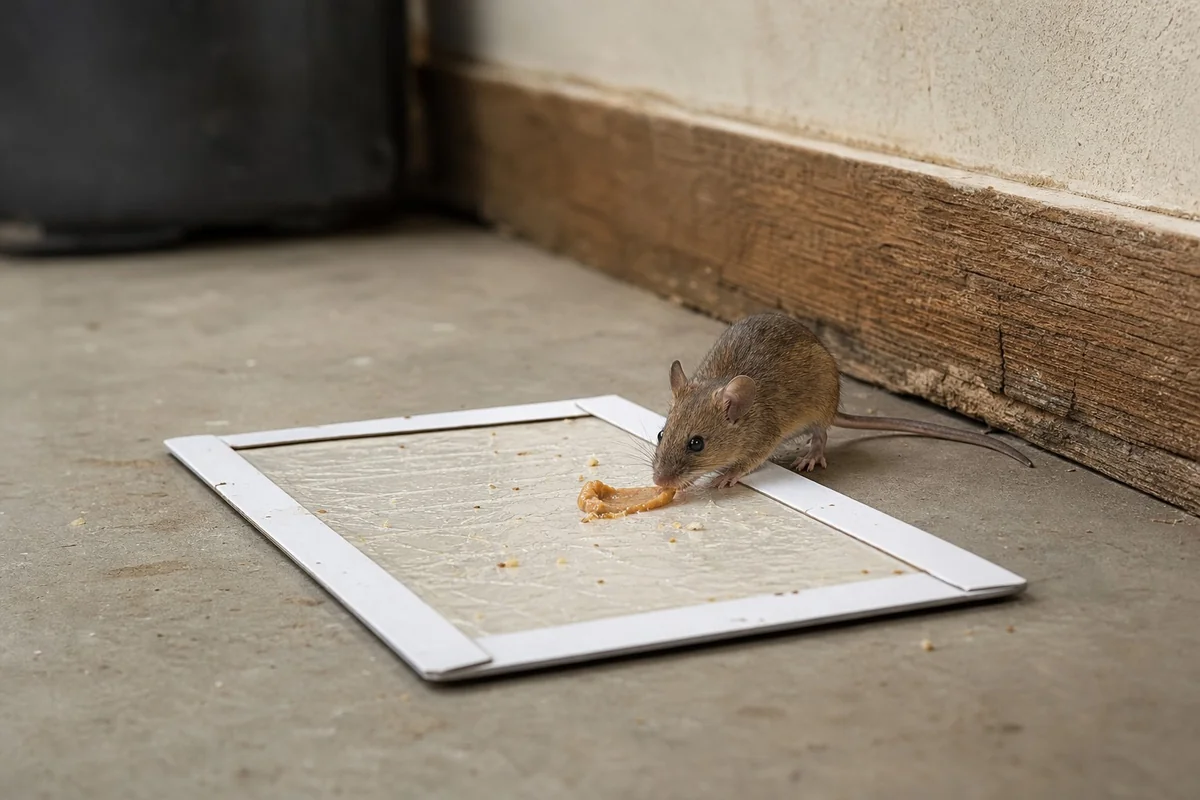
Most glue traps need no bait at all: many are pre-scented, and some makers say added bait reduces how well the board works. If you do bait a sticky trap, place a pea-sized dab of peanut butter on a small square of paper in the center, never smeared across the glue. Glue boards are better for spotting mice than for removing them.
Do You Put Food on Sticky Mouse Traps?
Usually not. Glue boards rely on placement: a mouse running along a wall steps onto the board because it is in the way, not because it was lured there. Many boards come with a peanut butter scent built in, and Catchmaster tells buyers of its Max-Catch boards not to add bait because it decreases the trap's effectiveness.
Bait can still help in two situations. On a large board set in a corner where mice wander rather than run, a central lure gives them a reason to cross the glue. And for a board used to monitor activity, a small lure shows faster whether mice are using an area.
For baits for snap, live and bucket traps, see our guide to the best mouse trap bait, and the mouse trap bait section collects every bait guide.
Best Baits for Glue Traps
If you decide to bait, choose something that stays in one small spot and does not spread across the adhesive.
- Chunky peanut butter on a paper square: a pea-sized dab on a bottle-cap-sized piece of paper pressed into the center of the board.
- A few seeds or oats: pressed into the center, where a mouse must step onto the glue to pick them up.
- A non-toxic attractant gel: a single small dot in the middle; gels stay put better than oily foods.
- The food mice are already eating: a crumb of whatever they have been chewing, in the same central spot.
Avoid oily or wet baits spread over the surface. Oil can weaken the adhesive where it spreads, and a mouse can reach bait at the edge of the board without committing all four feet to the glue.
How Mice Avoid Sticky Traps
Adult mice are cautious about surfaces that feel wrong under their feet. UC IPM's house mouse guide notes that adult mice often detect the glue and avoid it before getting stuck, so most catches on glue boards are young mice. That is the main reason glue traps rarely clear an infestation on their own.
- Small boards: a mouse can step around or jump over a narrow board; use boards wide enough to cover the whole runway.
- Dusty glue: dirt, hair or insects on the surface give mice footholds; replace boards that are no longer glossy.
- Cold rooms: glue can stiffen in a cold garage or basement and hold less firmly.
- Bait at the edge: the mouse takes it without stepping on; keep bait in the center.
Why Your Mice Are Not Eating the Bait
When bait sits untouched, the trap is usually off the mice's route or competing with better food. Check that the board lies flat against a wall where you have seen droppings, and put away open cereal, pet food and crumbs that are easier to eat.
Sometimes something else eats it. Ants, cockroaches and other insects can strip peanut butter off a board or a snap trap without catching a mouse, and they leave the glue covered in debris. If you find bait gone and insects stuck to the board, move it, clean the area and use a fresh board.
New boards can also be ignored for a night or two while mice get used to them. Give a well-placed board a few nights before you move it or change the bait.
Glue Traps vs Other Traps
Glue boards are cheap and catch insects and spiders as well as mice, which makes them useful for showing where activity is highest. As a way to remove mice they have serious drawbacks. The CDC advises against glue traps for rodents, because a frightened, stuck animal urinates and that raises the risk of illness, and a mouse caught alive on glue suffers until someone deals with it.
A practical approach is to use a few boards to find the busiest runways, then set snap traps or enclosed traps there. If you use glue boards at all, keep them away from children, pets and wildlife, and check them every morning.
Common Questions About Glue Trap Bait
How long does a glue trap stay sticky?
How long does a glue trap stay sticky?
Indoors in normal conditions, makers such as Catchmaster say their boards can last up to a year, but dust, hair and insects cut that short. Replace a board once its surface stops looking glossy or is covered in debris.
What should I do with a live mouse on a glue trap?
What should I do with a live mouse on a glue trap?
Deal with it promptly. Wearing gloves, you can loosen the glue with vegetable oil to free the mouse, though it may be injured, or contact a pest professional or wildlife rehabilitator. This is the main reason many people avoid glue traps for mice.
Can I put a glue trap inside a snap trap station or box?
Can I put a glue trap inside a snap trap station or box?
Yes. Folding a board into a tunnel, or placing it inside a covered station, keeps dust off the glue and pets away from it. Some boards are made to fold this way; follow the maker's instructions.
Do scented glue traps work better than baited ones?
Do scented glue traps work better than baited ones?
They save you a step, but scent does not replace placement. A pre-scented board set against a wall on a mouse runway will catch more than a baited board in open floor.
Key Takeaways
Glue boards work through placement more than bait, and many come pre-scented or are designed for use without it. When you do add bait, a tiny dab on a paper square in the center keeps the glue clean and makes the mouse step fully onto the board.
Because adult mice often avoid glue and the CDC advises against glue traps for rodents, use boards mainly to find where mice travel, then switch to snap or enclosed traps there.
Tonight, set two unbaited boards against the walls with the most droppings, and check them in the morning to see which runway is busiest.
Related Articles
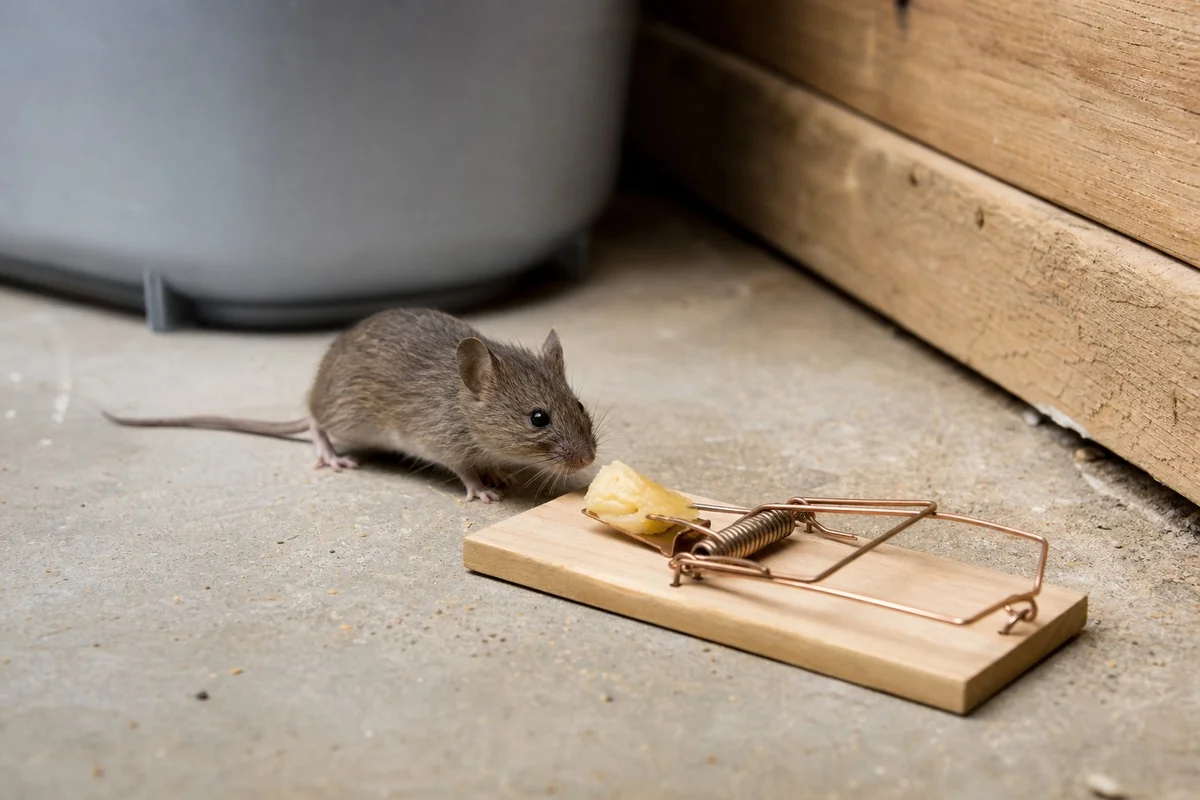
Best Mouse Trap Bait Besides Peanut Butter
The best mouse trap bait besides peanut butter: the food mice already eat, animal fat, dental floss, seeds, and peanut-free Provoke and Tomcat attractants.
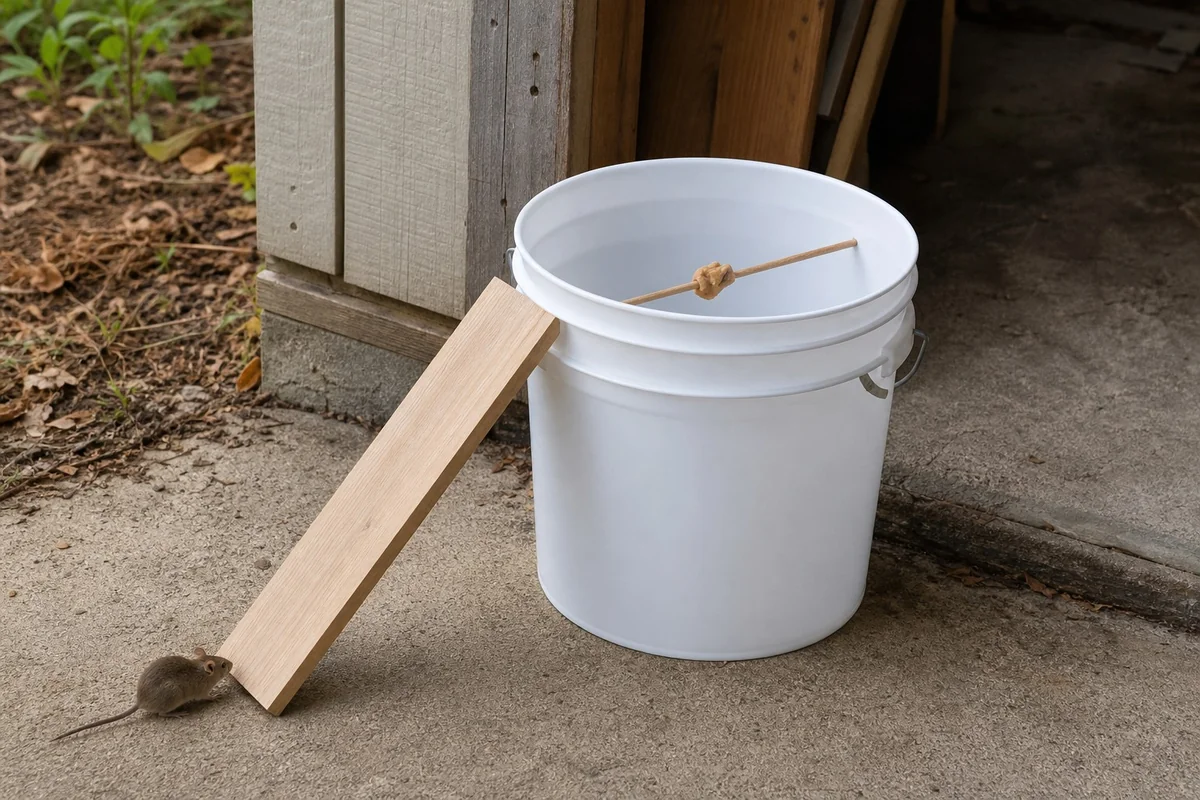
Best Mouse Bait for Bucket Traps and Where to Put It
The best mouse bait for a bucket trap is a thin band of chunky peanut butter on the roller. Baits that stick, where to place them and why a bucket trap fails.
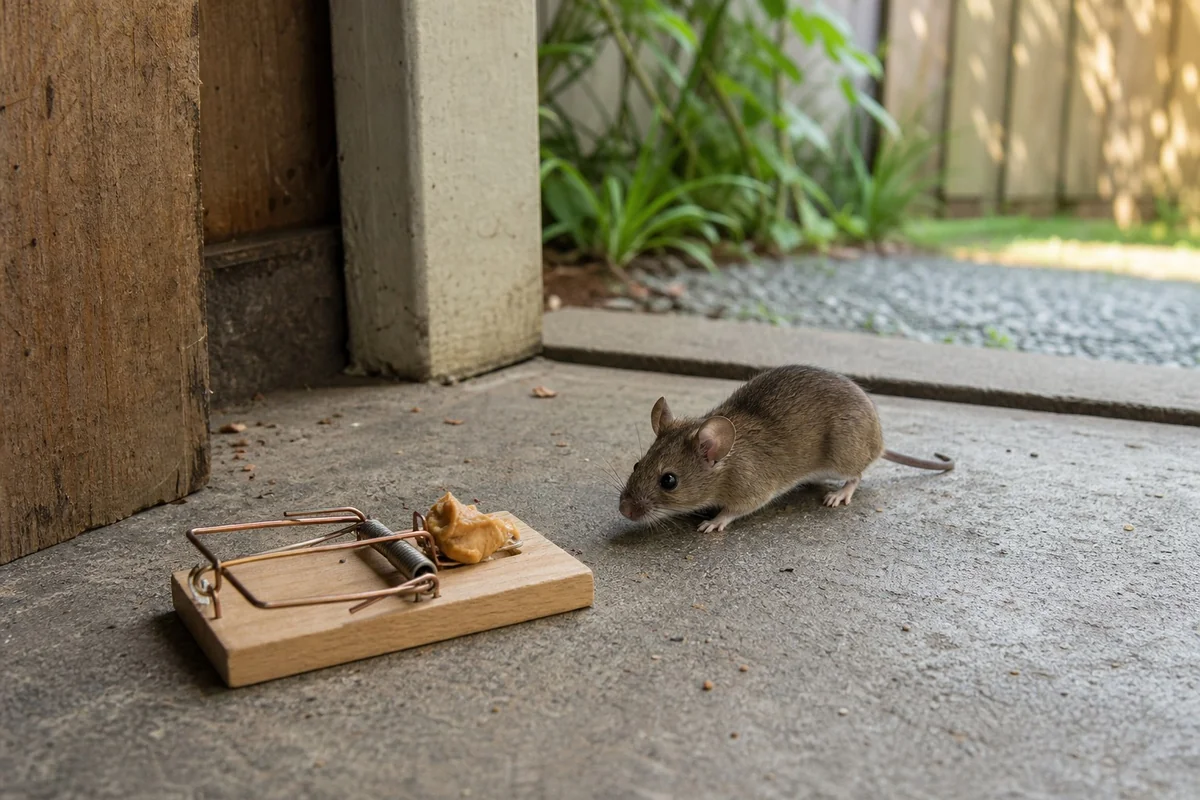
Best Mouse Trap Bait: What Works and How Much to Use
The best mouse trap bait is a pea-sized dab of chunky peanut butter or the food mice already eat. Bait by trap type, why peanut butter fails and what to try instead.
Best Bait for Live Mouse Traps: Non-Toxic Picks
The best bait for live mouse traps: non-toxic Tomcat and Provoke attractants, kitchen baits that work as well, and how to place bait past the trigger.