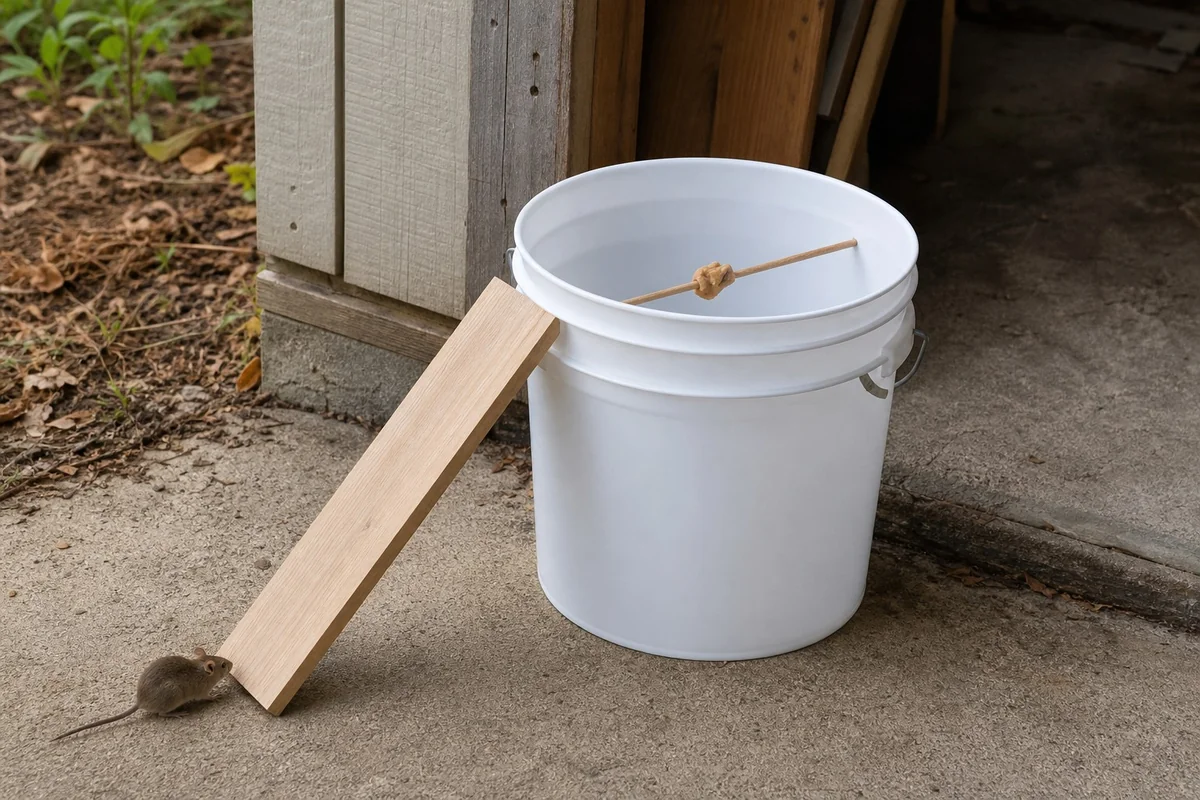

Best Mouse Bait for Bucket Traps and Where to Put It
The best mouse bait for a bucket trap is a thin band of chunky peanut butter on the roller. Baits that stick, where to place them and why a bucket trap fails.
The best mouse bait for a bucket trap is a thin band of chunky peanut butter on the spinning roller, with a few seeds or oats pressed into it. Bucket trap bait has one extra job compared with other traps: it must stay stuck while the roller turns, and it must sit where the mouse has to step onto the roller to reach it.
What Bucket Trap Bait Has to Do
A bucket trap works by making the mouse put its weight on something that moves: a bottle or can on a wire that spins, or a lid or plank that tips. The bait's only role is to pull the mouse onto that moving part, so where it sits matters more than what it is.
That rules out loose baits. Dry kibble, a crumb of cheese or a few loose seeds roll off a spinning bottle or slide off a tipping lid before the mouse gets near them. Hard cheese is a weak choice for the same reason: it dries out and falls off, and mice do not prefer it over richer foods.
UC IPM's house mouse guide notes that the best bait is often the food mice are already eating and that too much bait lets a mouse feed without triggering a trap. Both points apply to buckets. For baits for every other trap type, see our guide to the best mouse trap bait.
Best Baits for Bucket Traps
These baits stick to a moving surface and draw mice reliably. The mouse trap bait section covers each in more detail.
- Chunky peanut butter: the default; it sticks to plastic and metal, smells strong and stays put as the roller spins.
- Peanut butter with seeds or oats: pressing a few sunflower seeds or rolled oats into the band gives the mouse something to work at, which keeps it on the roller longer.
- Soft fat or bacon grease: a thin smear works on a can roller and suits homes where peanut butter is not an option.
- A store attractant gel: non-toxic gels stick well and dispense in a measured line, though buyer feedback on most of them is mixed.
- The food mice are already eating: crumble a little into a sticky base, such as peanut butter or fat, so it stays on the moving part.
Avoid poison bait in or on a bucket trap. A mouse that eats rodenticide and then falls into the bucket dies slowly, and the bait can reach pets or children who handle the bucket.
Where to Put the Bait on Each Kind of Bucket Trap
Placement depends on the moving part. Put the bait where the mouse cannot reach it from the ramp or rim.
| Bucket Trap Type | Where the Bait Goes | Common Mistake |
|---|---|---|
| Spinning bottle or can | Thin band around the middle of the roller | Bait near the ends, reachable from the rim |
| Tipping lid or flip lid | Center of the lid, past the pivot point | Bait near the edge so the lid never tips |
| Walk-the-plank | Far end of the plank over the bucket | Plank too stiff to drop under a mouse's weight |
| Paper over the opening | Center of the paper, over the slit | Slit too short to give way |
With a spinning roller, keep the band thin and centered. A thick blob lets the mouse lick bait from the end of the bottle without stepping onto it, and the bottle never turns.
Why Your Bucket Trap Is Not Catching Mice
When a bucket trap catches nothing, the bait is rarely the cause. Check these first.
- The roller does not spin freely: widen the holes or straighten the wire until the bottle turns at a touch.
- Bait within reach of the rim: move it to the middle of the roller or lid.
- The bucket sits in open floor: put it against a wall near droppings, with the ramp along the wall.
- No easy way up: make sure the ramp reaches the rim and gives a good grip.
- The mouse climbs out: use a tall, smooth-sided bucket and keep the inside clean and empty.
Keep the bucket dry. Many online versions add water, but UC IPM notes that drowning is not considered humane. A dry, tall bucket holds the mouse until you check it in the morning.
Common Questions About Bucket Trap Bait
How much peanut butter should go on a bucket trap roller?
How much peanut butter should go on a bucket trap roller?
A thin band about the width of a finger around the middle of the bottle or can is enough. More bait lets the mouse feed from the end of the roller without stepping onto it, and a heavy coat can stop a light bottle from spinning.
How often should I rebait a bucket trap?
How often should I rebait a bucket trap?
Check it every morning and refresh the band every day or two, or whenever it looks dry, dusty or licked thin. Always rebait after a catch, since a mouse that fell in usually took some bait with it.
Can I use a bucket trap with bait outdoors?
Can I use a bucket trap with bait outdoors?
Yes, in a garage, shed or along a sheltered foundation, but outdoor bait attracts birds, squirrels and pets. Use it where only mice can reach the ramp, keep it covered from rain and check it every morning.
Does a bucket trap work for rats?
Does a bucket trap work for rats?
Not reliably. Rats are larger, warier of new objects and stronger climbers, so they often avoid the ramp or climb out of the bucket. Use rat-size snap traps or enclosed rat traps for rats.
Key Takeaways
On a bucket trap, bait is a lure onto the moving part, so it has to stick and sit where the mouse cannot reach it from the rim. A thin band of chunky peanut butter with a few seeds pressed in does that better than any loose food.
If the bucket stays empty, fix the mechanics first: a roller that spins freely, a ramp that reaches the rim and a spot against the wall near droppings. Keep the bucket dry and check it every morning.
Tonight, wipe the old bait off your roller and lay down a fresh, thin band right in the middle.
Related Articles
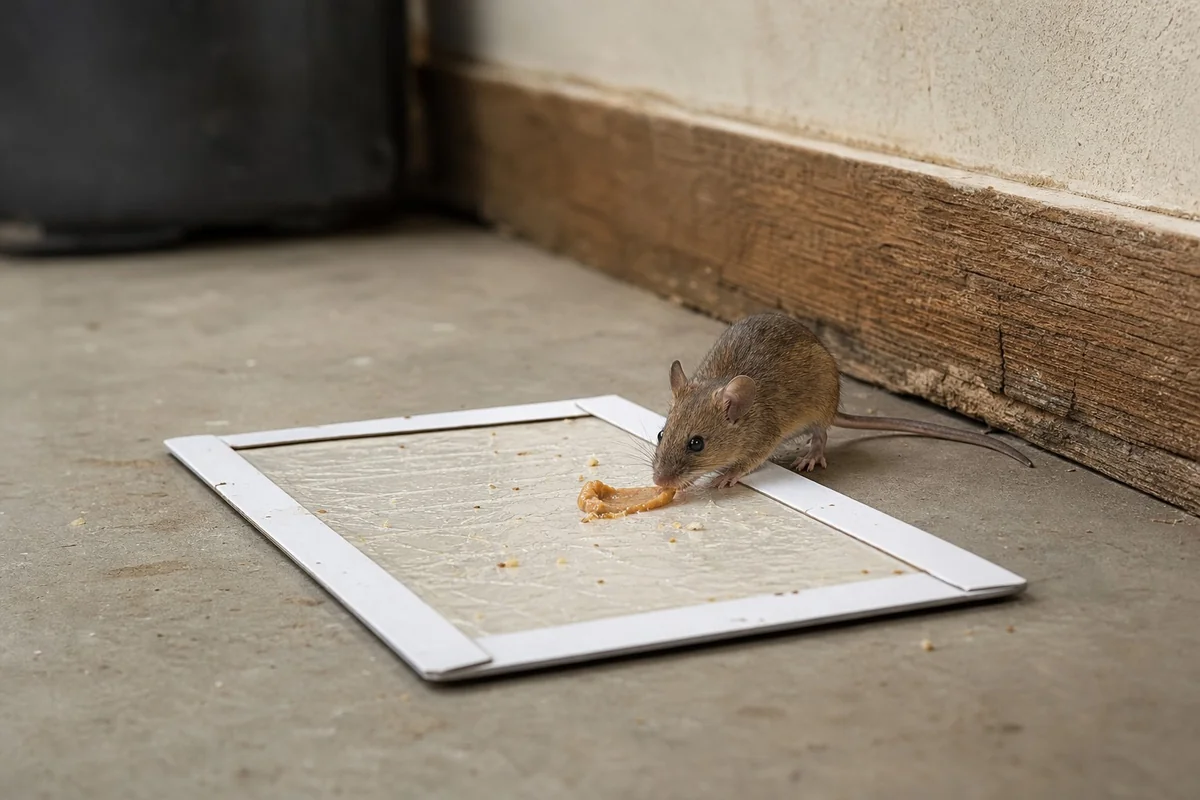
Best Bait for Glue and Sticky Mouse Traps
Do glue traps need bait? Most do not. When to bait a sticky mouse trap, what to use, where to put it, and why adult mice often avoid glue boards.
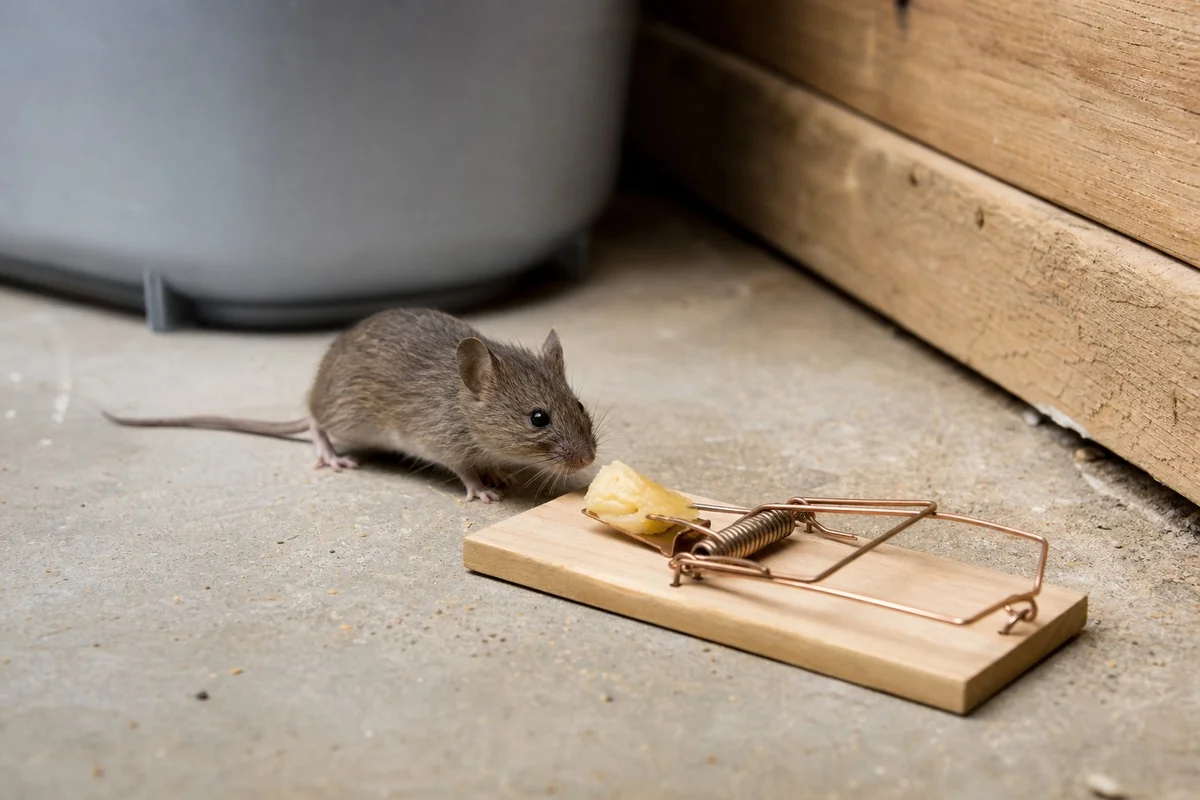
Best Mouse Trap Bait Besides Peanut Butter
The best mouse trap bait besides peanut butter: the food mice already eat, animal fat, dental floss, seeds, and peanut-free Provoke and Tomcat attractants.
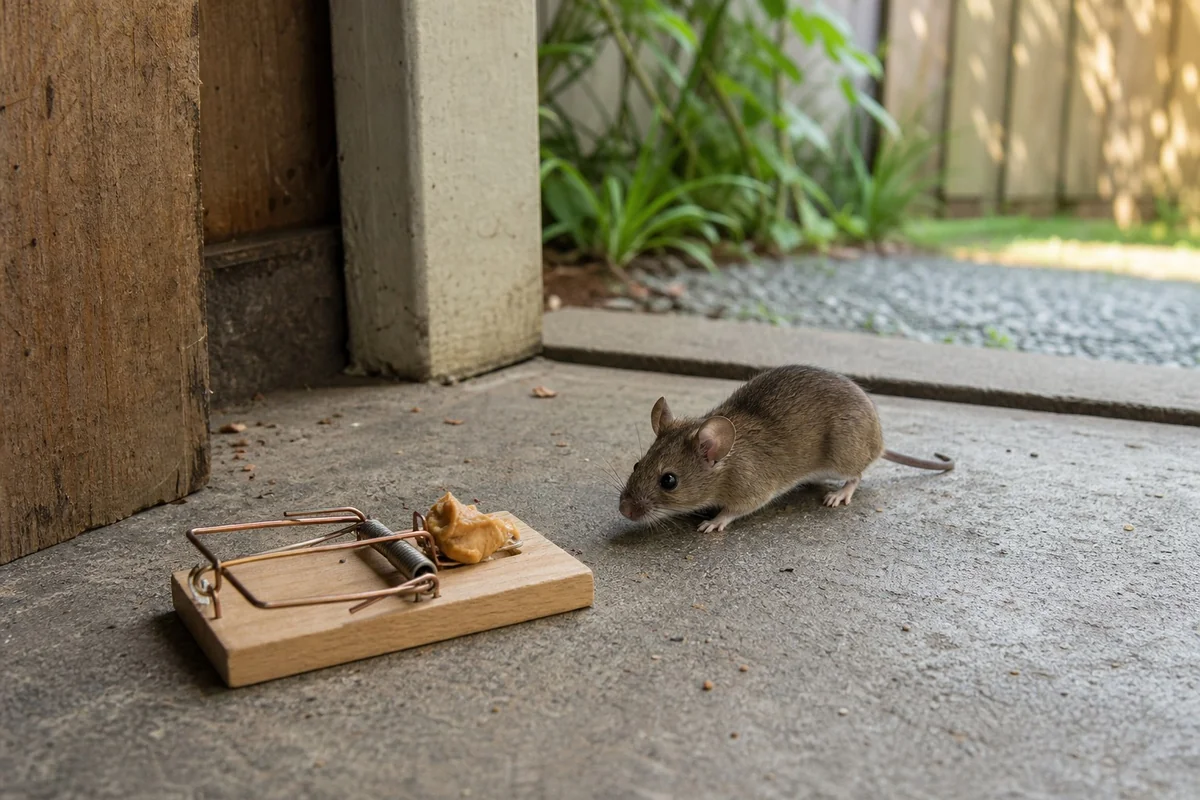
Best Mouse Trap Bait: What Works and How Much to Use
The best mouse trap bait is a pea-sized dab of chunky peanut butter or the food mice already eat. Bait by trap type, why peanut butter fails and what to try instead.
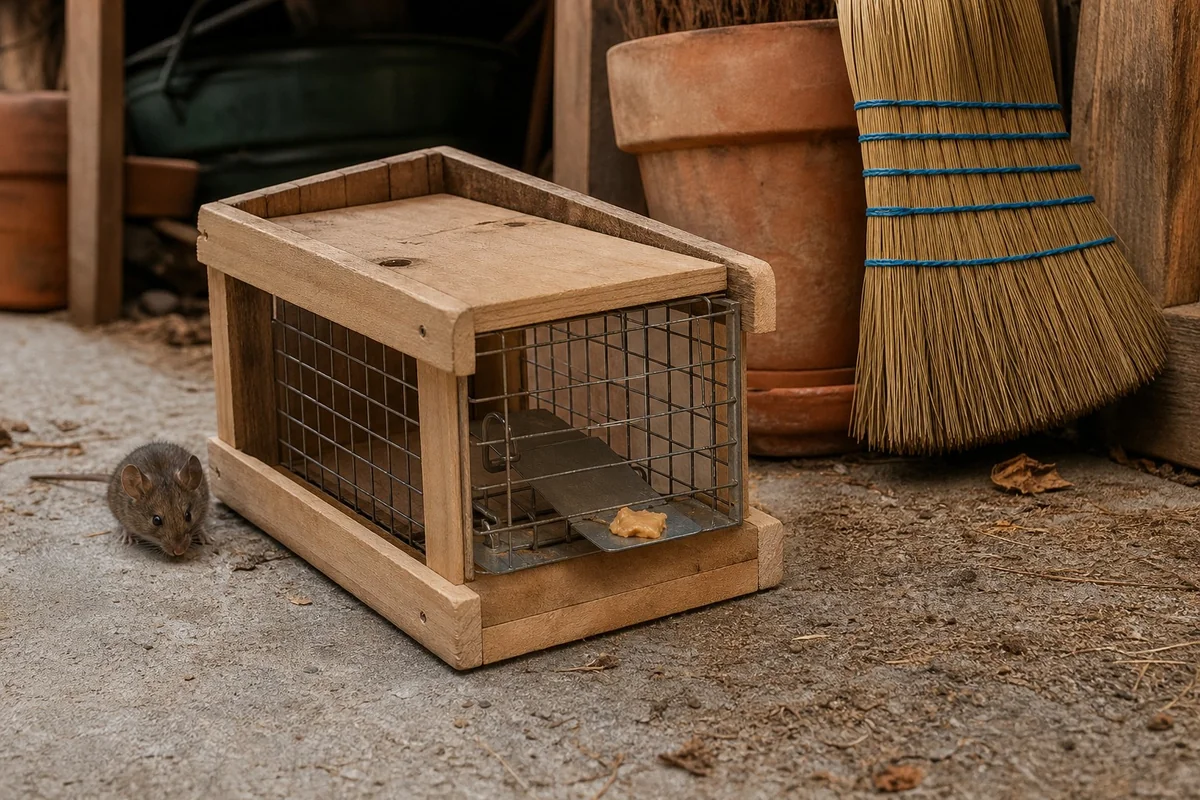
Best Bait for Live Mouse Traps: Non-Toxic Picks
The best bait for live mouse traps: non-toxic Tomcat and Provoke attractants, kitchen baits that work as well, and how to place bait past the trigger.