 Pest Pro Reviews Editorial Team • • 20 min read •
 Rat Poison vs Rat Traps: Which Is More Effective? (2026 Comparison)
Compare rat poison and rat traps for effective rodent control in 2026. Learn which method is safer, more cost-effective, and best for your home. Get expert DIY tips for fast, reliable rat removal.
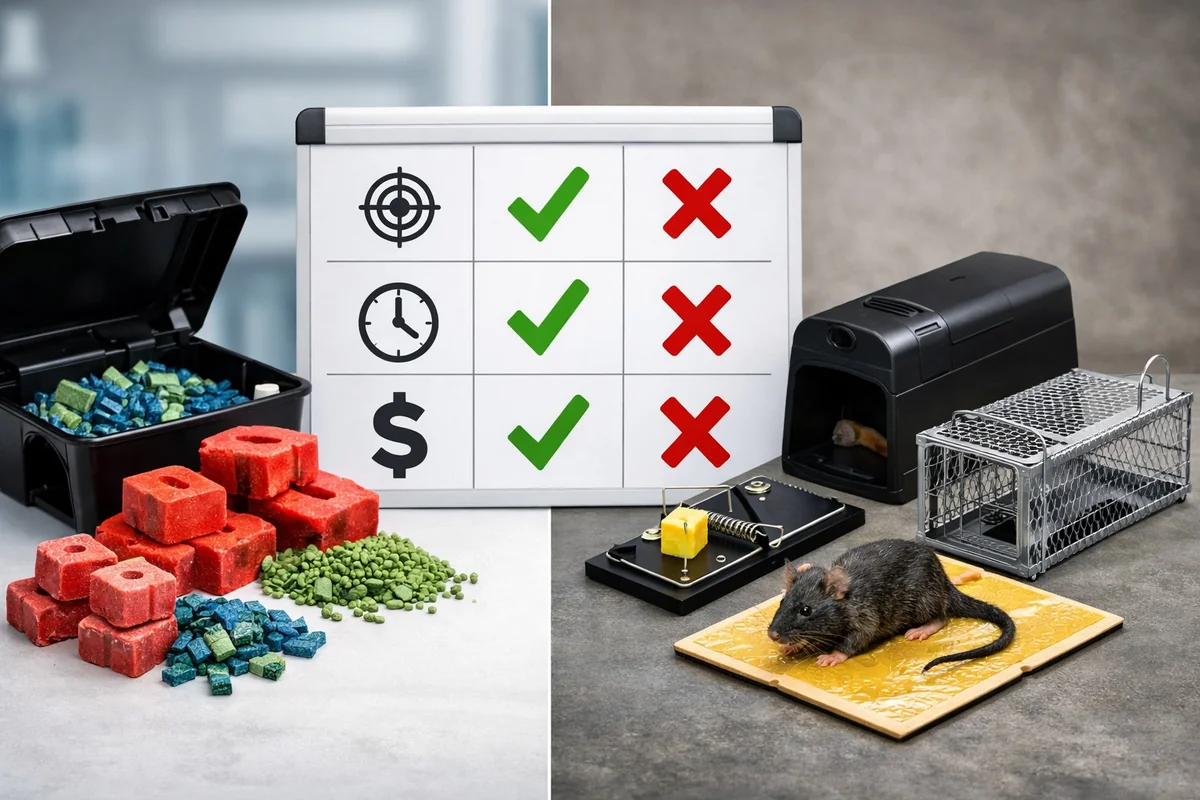
Rat poison vs rat traps: Poison works best for large, hidden infestations, while traps excel for small, visible problems and safety-sensitive homes. Traps deliver instant results and proof of removal; poison can reach where traps can’t but risks hidden carcasses and accidental poisoning. Choose traps for most households, poison for inaccessible or severe infestations.
- Rat traps are safer and more reliable for homes with pets or children.
- Poison can handle large, hard-to-reach infestations but creates odor and secondary pest risks.
- Choose traps for small, visible problems; use poison only when strict safety is possible.
Key Differences Between Rat Poison and Rat Traps
Understanding how each method works is vital for choosing the right approach - and avoiding common mistakes that drag infestations out for weeks.
Identify your needs and get personalized recommendations
Just starting out and looking for easy, safe, and effective solutions that are simple to use.
Wants to learn the basics and understand which features matter before making a choice.
Compares features, performance, and practical trade-offs between different products.
Focuses on getting the most effective solution for the best price.
Wants to make a confident, final decision and start solving their pest problem right away.
Needs an affordable solution that still gets the job done without breaking the bank.
How Each Method Works
Rat poison (rodenticide) uses toxic chemicals to disrupt a rat’s vital functions. After ingesting bait, the rat usually dies several days later, often far from where it ate the poison. This delayed action helps poison reach deeper into the colony, but it also means you rarely see the results right away.
Traps use mechanical force, adhesive, or electricity to kill or immobilize rats instantly. Snap traps, like the Victor Metal Pedal Rat Trap, rely on a strong spring-loaded bar. Glue traps, such as the Catchmaster Heavy Duty Rat Glue Board, immobilize rats on a sticky surface.
Electronic traps (for example, the Victor Electronic Rat Trap) use a high-voltage shock for quick, mess-free kills. You’ll know right away if the trap worked.
The action mechanism affects everything: speed of results, handling, safety, and cleanup. If you want visible proof and immediate impact, traps have the edge. Poison is more hands-off but requires patience and careful placement to avoid secondary risks.
When to Use Poison vs Traps
Rat poison is best when you’re dealing with a large infestation or when rats are nesting in inaccessible areas - think attics, wall voids, or crawlspaces. It also comes into play when traps have failed due to trap-shy rats.
Traps work best for smaller infestations or when you need to confirm removal. If you want to be sure there’s no decomposing rat hidden behind a wall, traps are the way to go.
Choosing the wrong method can make things worse. Using traps for a hidden or massive infestation often means missing most of the rats. Using poison in homes with pets, kids, or sensitive wildlife can create health and legal headaches.
Primary Risks and Drawbacks
Poisons create a real risk of dead rats decomposing in places you can’t reach. This leads to odor, maggots, and even new pest problems. There’s also the issue of secondary poisoning for pets or wildlife that might eat a poisoned rat.
Traps require you to check them daily and handle dead or injured rats. Snap traps can injure fingers or paws if mishandled. Glue boards are controversial for their inhumaneness and risk to non-target animals.
Both methods are dangerous if used carelessly around children or pets. No method is completely risk-free, but traps give you more control over where and how the danger is managed.
If you’re considering products, see our expert picks and usage tips in the Best Rat Traps and Baits 2026 guide.
Effectiveness for Eliminating Rats
Effectiveness is where most people make their decision: which method will actually get rid of rats fastest and with the least hassle?
Success Rates in Real-World Use
Traps, when placed correctly along known runways and baited with attractive food, can eliminate up to 95% of visible rats in targeted areas within days. This is especially true for classic snap traps like the Victor Metal Pedal Rat Trap - simple, reliable, and proven in basements, kitchens, and garages.
Poisons usually reduce populations by 70-90% over 1-2 weeks. That sounds impressive, but real-world results depend on rats actually eating the bait instead of other food sources. Some rats become bait-shy after exposure, and food competition can lead to poison avoidance.
Environmental factors matter a lot. Dirty kitchens, easy access to pet food, or abundant trash make both traps and poison less effective. Pre-baiting with non-toxic food can help overcome shyness, but patience is key.
Time to Noticeable Results
Traps, especially snap and electronic models, provide immediate or same-day results. You’ll know exactly how many rats you’ve caught and can adjust placement as needed.
Poison is slower by design. You might not notice a reduction in activity for 3-7 days, with full effects usually seen after 1-2 weeks. This delay can give a false sense of progress, masking ongoing infestations.
In situations where you need proof of eradication - like rental properties or before selling a home - traps win hands down for transparency.
Safety Considerations for Homes With Kids and Pets
Safety is the biggest deal-breaker for most families. Both traps and poison can be dangerous, but the type and likelihood of risk is very different.
Risks of Accidental Poisoning
Rodenticides are toxic to humans, pets, and wildlife - not just rats. Even a small amount can cause serious illness or death if ingested directly. Some newer formulas have reduced toxicity, but any accidental exposure still requires immediate emergency care.
Bait stations, like those used with Tomcat Rat & Mouse Killer Bait Chunx, help reduce risk. They’re lockable and designed to keep bait away from curious pets or children. However, persistent pets or determined toddlers can sometimes break into stations, so trust but verify is the rule here.
Secondary poisoning is a real concern - if your cat or dog eats a poisoned rat, they can get sick, too. Urban wildlife, including raptors and foxes, are also at risk. As of 2026, some cities have begun restricting certain rodenticides for exactly this reason.
Tomcat Rat & Mouse Killer Bait Chunx is a weather-resistant rodenticide block built for both indoor and outdoor use. Its formulation is designed to attract rats in large-scale, hard-to-reach infestations, and it holds up in damp conditions where lesser baits degrade quickly.
This bait is best for situations where traps simply can’t reach - wall voids, attics, or crawlspaces with ongoing rat activity. However, the trade-off is needing strict safety discipline and accepting the possibility of hidden carcasses.
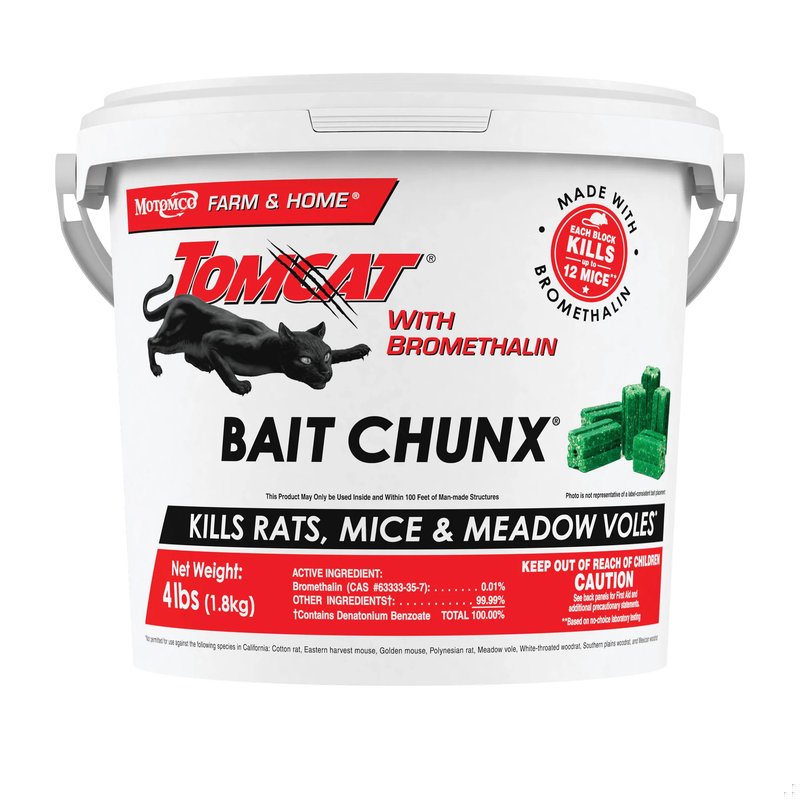
Tomcat Rat & Mouse Killer Bait Chunx
Tomcat Rat & Mouse Killer Bait Chunx delivers targeted control for large or persistent rodent infestations, utilizing a weather-resistant 1 oz block formula suitable for both indoor and outdoor use. Compatible with lockable bait stations, it helps limit unintended contact by pets or children while remaining effective in damp or hard-to-reach areas. Each block is designed to attract rodents in environments where traps may be less practical.
Why We Recommend This
We recommend Tomcat Rat & Mouse Killer Bait Chunx for users facing widespread or hard-to-reach rodent infestations, especially where traditional traps fall short. Its weather-resistant formula and compatibility with lockable bait stations make it a safer, more versatile option for both indoor and outdoor use. This product is most effective when used as part of a responsible pest management plan that prioritizes safety around children and pets.
vs Competitors: Compared to snap traps or glue boards, Tomcat's bait blocks are more effective for large-scale or hidden infestations but require diligent monitoring to minimize risks to non-target animals.
Best For:
Homeowners, property managers, and pest control professionals seeking effective rodent control in environments where traps are impractical or have failed.
- Managing rodent populations in barns, garages, or crawl spaces where traps are hard to set
- Treating outdoor infestations around sheds, fences, or perimeters during wet seasons
- Weather-resistant 1 oz bait blocks for indoor and outdoor use
- Formulated to attract rats and mice in high-infestation areas
- Effective for treating large or inaccessible infestations where traps are less practical
- Weather-resistant formulation maintains potency in damp locations
- Still presents risk if bait stations are not properly secured or monitored
- Poisoned rodents may die in hidden areas, leading to potential odor issues
For a more detailed approach to integrated rodent management, see our full Rat Control guide.
Trap-Related Hazards
Classic snap traps, like the Victor Metal Pedal Rat Trap, are reliable and low-tech but can injure fingers or paws if triggered accidentally. Always keep them out of reach of pets and small children, and use gloves when setting or cleaning.
Glue boards, such as the Catchmaster Heavy Duty Rat Glue Board, pose a different risk. They can trap non-target wildlife or pets, and removing a stuck animal can be traumatic for everyone involved. Some municipalities have even banned glue traps for this reason.
Electronic traps, like the Victor Electronic Rat Trap, are safer for humans because the high-voltage shock is contained and requires deliberate entry by the rat. Still, proper placement is crucial to keep pets out and ensure effectiveness.
Cost Comparison: Rat Poison vs Rat Traps
Cost matters - especially if you’re facing repeat infestations or treating a large property. Both poison and traps come in budget-friendly and premium options, but the long-term value often depends on your willingness to clean, reuse, and monitor.
Upfront and Ongoing Costs
Poisons like Tomcat Rat & Mouse Killer Bait Chunx fall into the mid-range price category for a box, but you may need to purchase more if the infestation persists or if baits are consumed quickly. The real hidden cost is cleanup: deodorizing, pest-proofing, and sometimes even wall repairs if rats die in hard-to-reach places.
Snap traps, including the Victor Metal Pedal Rat Trap, are the most budget-friendly option. They’re reusable with a quick rinse and dry, and buying a half-dozen to blanket a problem area is affordable for most households.
Glue traps like the Catchmaster Heavy Duty Rat Glue Board cost more per use, since they’re typically single-use and must be disposed of after each capture. Electronic traps are a premium investment, but their hands-free design and reusability can save money over time if you have repeat issues.
The Victor Metal Pedal Rat Trap is a classic for a reason. It’s simple, reliable, and can be used again and again with minimal cleaning.
It excels in accessible areas where you want clear, immediate results. The trade-off is the need for regular checking and safe handling - don’t use it where pets or kids might get curious.
Best for: Homeowners who want instant proof and a no-frills, affordable solution.
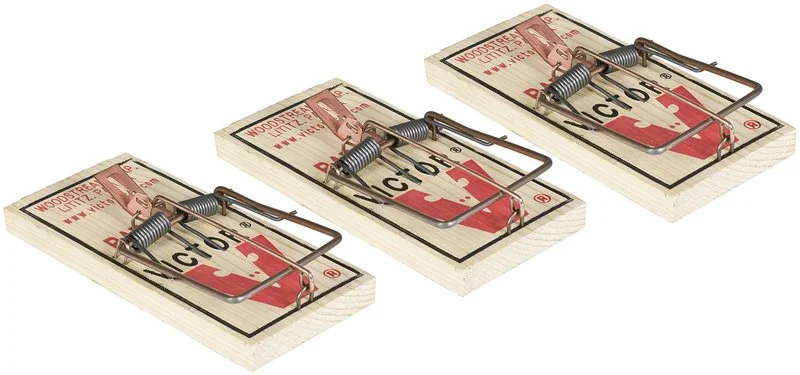
Victor Metal Pedal Rat Trap
Delivers reliable, instant kill performance using a strong spring-loaded metal bar, making it effective for quickly reducing rodent populations in homes and businesses. The classic wooden design is easy to set and check, with a trigger mechanism that provides visible results. Compact 6.75-inch size fits discreetly along walls or in tight spaces for targeted placement.
Why We Recommend This
We recommend the Victor Metal Pedal Rat Trap for those who prioritize immediate results and value a non-chemical approach to rodent control. Its proven design consistently delivers quick kills when placed correctly, making it a top pick for users who want to monitor progress and avoid the risks associated with rodenticides. This is especially effective for managing moderate infestations in homes or commercial settings.
vs Competitors: Compared to glue boards and electronic traps, this snap trap offers a balance of affordability and instant results, though it requires manual disposal and setup. It provides a more humane and efficient outcome than glue traps, while being significantly less expensive than electronic models.
Best For:
Homeowners, property managers, and small business owners seeking an affordable, proven solution for active rat infestations without the use of poisons.
- Ideal for homeowners needing fast, visible results in kitchens, garages, or basements
- Suited for small businesses or food facilities seeking chemical-free rodent control
- Powerful spring-loaded metal bar for instant kill
- Classic wooden base measures 6.75 x 3.25 inches
- Provides immediate visual confirmation of success
- Affordable and reusable for ongoing pest control
- Requires manual disposal of trapped rodents
- Improper placement or baiting can reduce effectiveness
Long-Term Value and Maintenance
Traps, especially snap and electronic types, can be reused for years if cleaned and maintained. You’re only buying new ones when you lose or damage them. Over time, this makes them the most cost-effective option for ongoing rat problems.
Poisons require ongoing purchases - especially in neighborhoods where new rats migrate in or where food competition keeps them coming back. You’re also on the hook for any hidden cleanup, which can get expensive if professional help is needed.
Maintenance time matters. If you hate checking traps or handling carcasses, poison might seem easier - but the hidden risks can cost you more in the long run.
Ease of Use and Setup for DIY Homeowners
DIYers want a solution that’s easy to set up, monitor, and clean - without complicated prep or constant supervision. Both poison and traps have a learning curve, but traps offer more day-to-day feedback, while poison is more “set and forget.”
Placement and Monitoring Requirements
Traps need to be placed along runways - places where you see droppings, gnaw marks, or rub lines. Pre-baiting (leaving traps unset but baited for a few days) can boost your catch rate by getting rats used to the new object. Once set, traps need checking every day.
Poisons like Tomcat Rat & Mouse Killer Bait Chunx require secure, hidden placement - ideally in tamper-resistant bait stations. Daily monitoring isn’t as crucial, but you do need to track if bait is disappearing and refill as needed.
Both methods work best when combined with a little knowledge of rat behavior. If you’re unsure, check our Best Rat Traps and Baits 2026 guide for placement and baiting tips.
Cleanup and Disposal
Traps give you immediate access to dead rats, so you can dispose of them safely in sealed bags. Always wear gloves and disinfect the area afterward. This limits the risk of disease and secondary pests.
Poisons leave you guessing. Rats may die in walls, under appliances, or in crawlspaces - out of sight, but not out of smell. Tracking down hidden carcasses can mean cutting into drywall or hiring a professional.
Proper disposal is essential no matter the method - don’t leave dead rats exposed, or you’ll attract new pests and perpetuate the problem.
Glue traps like the Catchmaster Heavy Duty Rat Glue Board are designed for situations where snap traps are impractical, such as tight spaces or where you can’t risk a snap bar. They’re also useful as a monitoring tool to confirm rat presence before escalating to more aggressive methods.
The main trade-off is disposal: you’ll need to deal with live or struggling rats, which can be distressing and inhumane. Use with caution, and only in areas where pets and non-target wildlife can’t reach.
Best for: Confirming infestations or targeting rats in narrow, hard-to-trap areas.
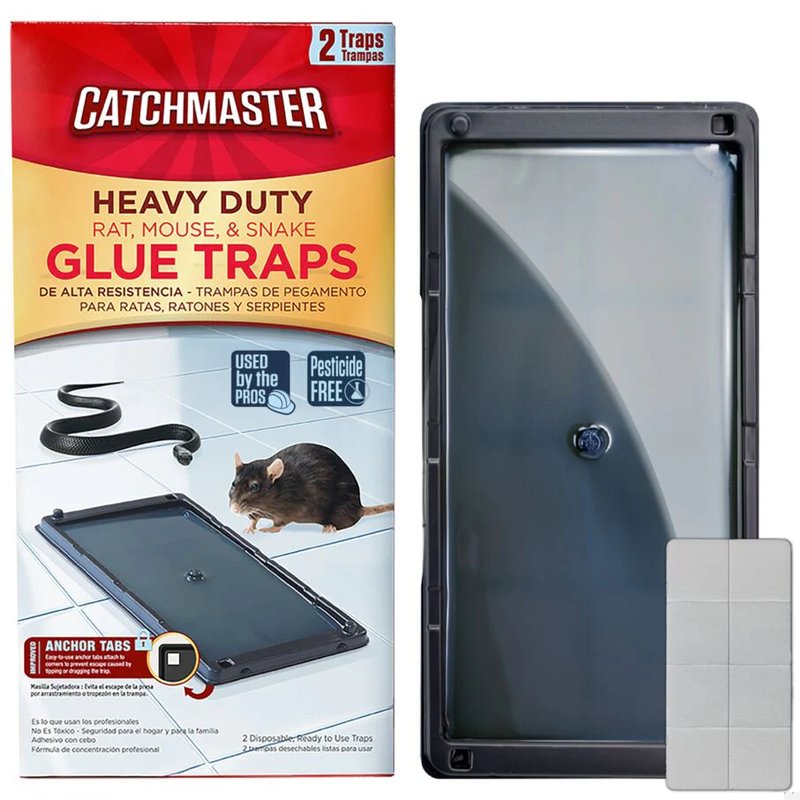
Catchmaster Heavy Duty Rat Glue Board
The Catchmaster Heavy Duty Rat Glue Board offers a non-toxic, adhesive-based solution for capturing rats in environments where snap traps or poisons are impractical or unsafe. Measuring 10 x 5 inches, its extra-large glue surface effectively immobilizes rodents upon contact, giving users immediate visibility of trap activity. Ideal for use in homes, kitchens, warehouses, or businesses where safety and ease of monitoring are priorities.
Why We Recommend This
We recommend the Catchmaster Heavy Duty Rat Glue Board for users who prioritize safety and ease of use in rodent control, especially where poisons or snap traps are not practical. Its large, adhesive surface makes it reliable for high-traffic areas, and the non-toxic formula is a key advantage for homes with pets or children. While it requires regular checking, its effectiveness and straightforward design set it apart as a dependable monitoring tool.
vs Competitors: Compared to traditional snap traps like the Victor Metal Pedal, the Catchmaster Glue Board offers a safer, no-spring design ideal for public or food-sensitive areas. However, it may not provide the immediate kill of electronic models such as the Victor Electronic Rat Trap.
Best For:
Homeowners, property managers, and business owners seeking a safe, chemical-free rat trapping solution in sensitive or high-traffic environments.
- Ideal for homes, restaurants, and food storage areas where poison use is restricted
- Useful for monitoring rodent activity in warehouses, basements, or attics with limited access
- Large 10 x 5 inch glue surface for increased catch area
- Non-toxic formula safe for use around pets and children (when placed out of reach)
- Provides instant evidence of rodent activity, aiding in monitoring and control
- Safer alternative to poisons, especially in food preparation or pet areas
- May result in prolonged distress for trapped rodents compared to instant-kill traps
- Can collect dust or debris over time, reducing adhesive effectiveness if not monitored
Electronic traps, like the Victor Electronic Rat Trap, are a newer option for homeowners who want a hands-off, mess-free solution. They use a high-voltage shock to kill rats quickly and contain the carcass for easy disposal.
They’re especially useful in kitchens, garages, and places where you want to avoid mess and handle minimal cleanup. The main trade-off is the need for batteries and a higher up-front investment, but many users appreciate the convenience and safety features.
Best for: Busy households or anyone who wants quick, clean results without handling traditional traps.
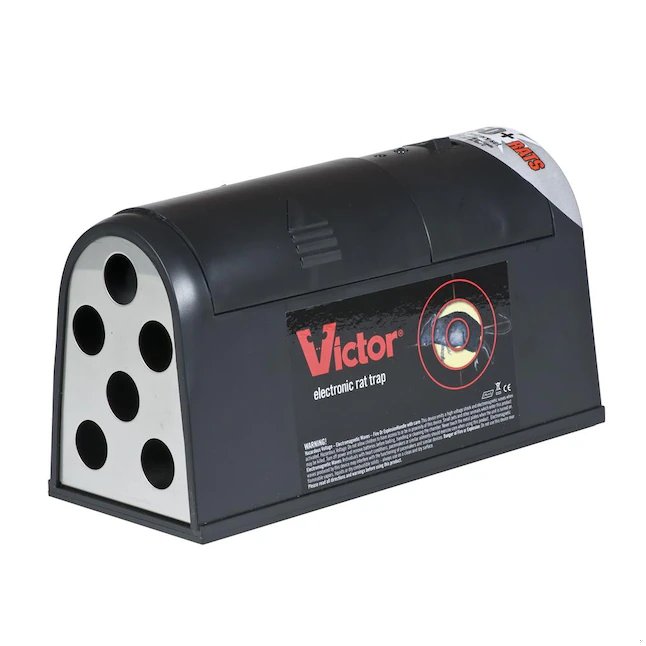
Victor Electronic Rat Trap
Delivers a quick, humane kill using a high-voltage shock, making it a safer option for indoor rat control. The Victor Electronic Rat Trap operates on 4 AA batteries and provides hands-free disposal, eliminating mess and direct contact. Ideal for households seeking an efficient, user-friendly solution to persistent rodent problems.
Why We Recommend This
We recommend the Victor Electronic Rat Trap for those prioritizing safety and convenience in indoor rat control. Its hands-free design and instant kill mechanism reduce mess and health risks compared to both snap traps and rodenticides. Based on user feedback and our expertise, it's an excellent choice for homes with children or pets where safety is essential.
vs Competitors: Compared to snap traps like the Victor Metal Pedal Rat Trap, this electronic model offers safer, more sanitary operation and immediate catch notification. While glue traps can be less humane and messier, the Victor Electronic Rat Trap provides a quick, clean kill.
Best For:
Homeowners, renters, or small business owners who need an effective and safe indoor rat control method without the risks or residue of poisons.
- Controlling rat infestations in kitchens, basements, or garages where hygiene and safety are priorities
- Homeowners or renters seeking a low-mess, low-contact solution for rodent problems indoors
- High-voltage shock kills rats instantly for humane disposal
- Runs on 4 AA batteries with up to 50 rat kills per set
- Safer for use around children and pets compared to traditional snap traps
- Quick, mess-free operation with easy-to-empty chamber
- Requires batteries, which may need to be replaced periodically
- Best suited for indoor use; not weatherproof for outdoor placement
Environmental and Legal Considerations
Environmental impact and local regulations are easy to overlook, but they can make or break your chosen method - especially if you live in a city or wildlife area.
Impact on Non-Target Animals and Wildlife
Poisons pose a significant risk to non-target animals. If a hawk, owl, or neighborhood cat eats a poisoned rat, it can become sick or die - a problem known as secondary poisoning. This is a major reason why some urban areas have begun restricting outdoor poison use as of 2026.
Traps, if placed carelessly, can catch pets, birds, or protected wildlife. Glue traps are especially risky, since anything that walks over them gets stuck. Always check local wildlife ordinances and use tamper-resistant stations or enclosed traps whenever possible.
Local Regulations and Restrictions
In 2026, several states and municipalities have banned or heavily restricted certain types of rodenticides, especially “second-generation” anticoagulant baits. Always check your city and state laws before buying or using poison outdoors.
Some areas also restrict or ban the use of glue boards, requiring humane trapping or quick-kill methods instead. Disposal of dead rats (especially those killed with poison) may fall under hazardous waste rules in some jurisdictions.
When in doubt, consult your local health or environmental agency for guidance. Fines and penalties for improper use or disposal can be steep.
Best Use Cases: When to Choose Each Method
Every infestation is different. Here’s when each method pulls ahead - and when it’s best to steer clear.
Ideal Scenarios for Rat Poison
- Large-scale infestations in places you can’t access with traps (attics, wall voids, crawlspaces)
- When you’ve tried traps but rats are too cautious (“trap-shy”)
- When you need rapid population reduction and can strictly control access to baits
In these scenarios, products like Tomcat Rat & Mouse Killer Bait Chunx are built for resilience and broad coverage. That said, be ready to deal with hidden carcasses and keep children and pets away from baited zones at all times.
Ideal Scenarios for Rat Traps
- Small to moderate infestations in visible, accessible areas (kitchens, garages, basements)
- Homes with pets, children, or wildlife concerns where poison is too risky
- When you want visible proof of eradication or need to monitor progress day by day
Traps like the Victor Metal Pedal Rat Trap and Victor Electronic Rat Trap are the top picks here. For tricky, narrow spaces or as a monitoring tool, the Catchmaster Heavy Duty Rat Glue Board can help confirm activity before you commit to a larger intervention.
- Rat traps win for: small to moderate home infestations, safety-sensitive households, and anyone wanting immediate results.
- Rat poison wins for: large, hidden infestations where traps can’t reach and safety can be strictly managed.
Frequently Asked Questions About Rat Removal Methods
❓ Frequently Asked Questions
What is the difference between rat poison and rat traps?
What is the difference between rat poison and rat traps?
Rat poison is a chemical bait that kills rodents through ingestion, often taking several days to work. Rat traps are mechanical devices that capture or kill rats instantly upon activation. Most users find traps provide quicker results and easier carcass removal, while poison can target larger infestations but raises safety concerns.
Which is more effective for eliminating rats: poison or traps?
Which is more effective for eliminating rats: poison or traps?
Traps offer faster, more controlled elimination, especially for small to medium infestations. Poison can address larger populations but poses higher risks to pets, wildlife, and children. Most users prefer traps for indoor use due to safety and easier monitoring, while poison is sometimes chosen for hard-to-reach areas.
What should I consider when choosing between rat poison and traps?
What should I consider when choosing between rat poison and traps?
When comparing rat poison and traps, consider these factors:
- Safety: traps are safer around pets and children
- Infestation size: poison may be better for large populations
- Location: traps are easier to monitor indoors
- Disposal: traps allow for direct carcass removal
Assess your specific environment and risks before selecting a method.
How do I safely use rat poison at home?
How do I safely use rat poison at home?
To use rat poison safely:
- Read and follow all label instructions carefully
- Place bait stations only in areas inaccessible to pets and children
- Wear gloves when handling poison and wash hands thoroughly afterward
- Monitor bait regularly and dispose of dead rodents promptly
- Store unused poison in a locked cabinet
Always prioritize safety and consider non-chemical options first.
How often should I check rat traps or poison stations?
How often should I check rat traps or poison stations?
Check rat traps and bait stations daily for the first week, then every 2–3 days as activity decreases. Frequent monitoring ensures quick removal of dead rats and helps prevent odor or secondary infestations. Adjust placement if traps remain empty for several days, as proper placement is key to effectiveness.
Are rat poisons safe to use around pets and children?
Are rat poisons safe to use around pets and children?
Most rat poisons pose significant risks to pets and children if ingested, even in small amounts. EPA guidelines recommend using tamper-resistant bait stations and placing them only in areas completely inaccessible to non-target animals. Always supervise children and pets in treated areas and consider traps as a safer alternative indoors.
Which rat trap type is best for indoor use?
Which rat trap type is best for indoor use?
For indoor use, snap traps are most commonly recommended due to their reliability and immediate results. Electronic traps offer a more hygienic option by delivering a quick, humane kill and containing the carcass. Most users avoid glue traps indoors due to animal welfare concerns and challenging cleanup.
Our Verdict: Which Rat Removal Method Is Best?
If you want quick, visible results and the greatest level of safety, choose traps for most household rat problems. They’re easier to monitor, less risky for pets and kids, and provide immediate proof that the infestation is under control. Snap traps are budget-friendly and effective, while electronic traps add convenience for those willing to invest a bit more.
Poisons like Tomcat Rat & Mouse Killer Bait Chunx are best reserved for severe, inaccessible infestations - especially in places where you simply can’t reach with traps. However, the risk of hidden carcasses, odor, and accidental poisoning means poison should always be a last resort, not your first move. Strict safety and legal compliance are non-negotiable.
The best long-term rat control isn’t just about killing rats - it’s about prevention. Combine traps or poison with proper sanitation, sealing entry points, and careful monitoring. If you’re unsure where to start or need product-specific advice, our expert guides on Best Rat Traps and Baits 2026 and Rat Control cover real-world solutions for every scenario.
Take action early and you’ll regain control - and peace of mind - faster than you think.
Related Articles

Best Rat Traps and Baits 2026: Top Picks for Every Infestation
Find the best rat traps and baits of 2026 for fast, safe, and affordable DIY rat control. Compare top snap, electric, live-catch, poison, and natural products to eliminate rats from your home.

Best Chemical Pesticides for Home Use 2026: Safe, Effective, and Affordable Options
Discover the best chemical pesticides for home use in 2026. Compare top-rated baits, sprays, gels, and natural options for ants, roaches, fleas, and more. Find safe, effective, and budget-friendly pest control solutions for every room.

Complete Guide to Pest Prevention in Homes: Stop Pests in 2026
Protect your home in 2026 with this complete pest prevention guide. Discover proven DIY methods, room-by-room tips, safe solutions for families, and expert advice to stop pests before they start.
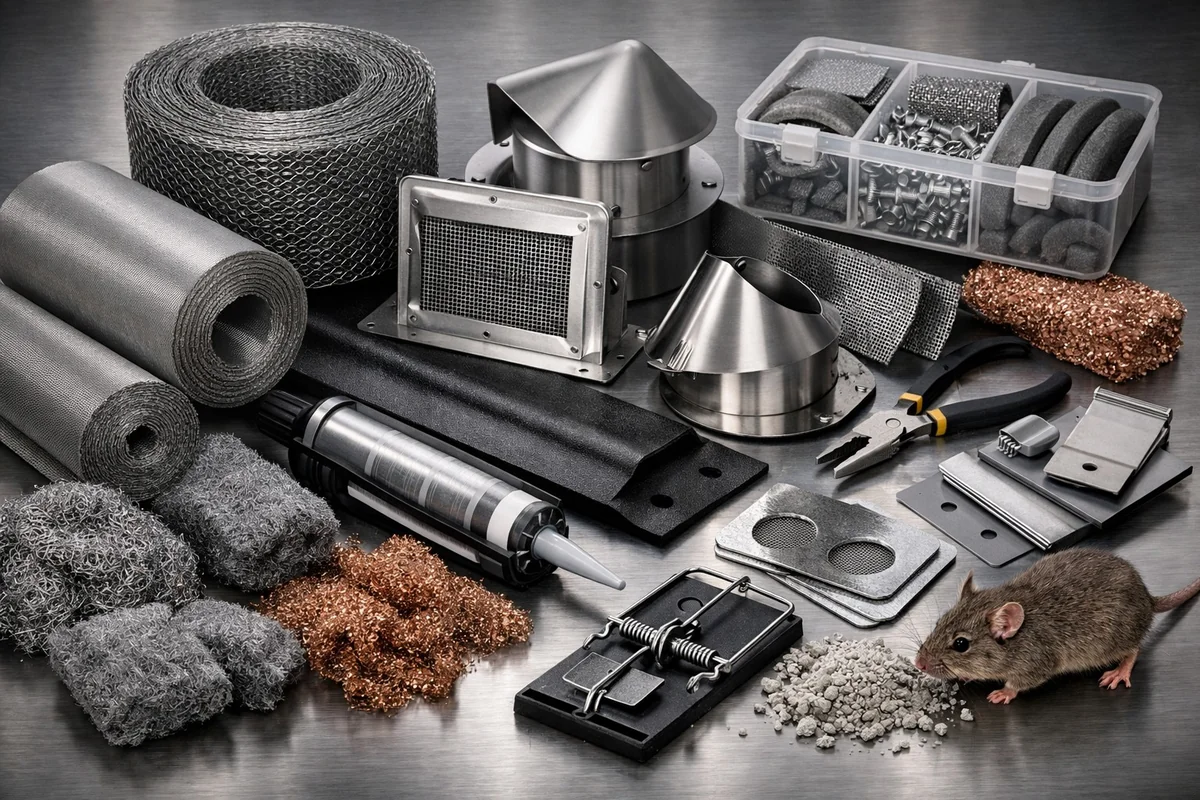
Best Rodent-Proofing Materials and Products 2026: Steel Wool, Mesh, Kits, and More
Find the best rodent-proofing materials, products, and exclusion kits for 2026. Compare steel wool, mesh, sealants, vent covers, and natural deterrents to keep your home rodent-free with expert DIY recommendations.