 Pest Pro Reviews Editorial Team • • 7 min read •
Best Rodent Repellents for Car Engines and Parked Vehicles
The best rodent repellents for car engines: Fresh Cab pouches for stored cars, BugMD, Mighty Mint and Grandpa Gus's engine sprays, plus covers and garage sealing.
The best rodent repellent for a car engine is a combination: Fresh Cab pouches in the cabin and trunk of a parked car, plus a peppermint vehicle spray such as BugMD's on the engine bay. Mighty Mint and Grandpa Gus's vehicle sprays are alternatives. Every option needs regular reapplying, and parking away from food and cover matters as much as the product.
- Rats and mice chew engine wiring insulation, which UC IPM says can cause serious malfunctions and expensive repairs.
- Vehicle sprays wear off fast; BugMD's maker advises reapplying weekly and after heavy rain.
- A weighted car cover that touches the ground and a sealed garage stop rodents better than any scent.
Why Rodents Damage Car Engines
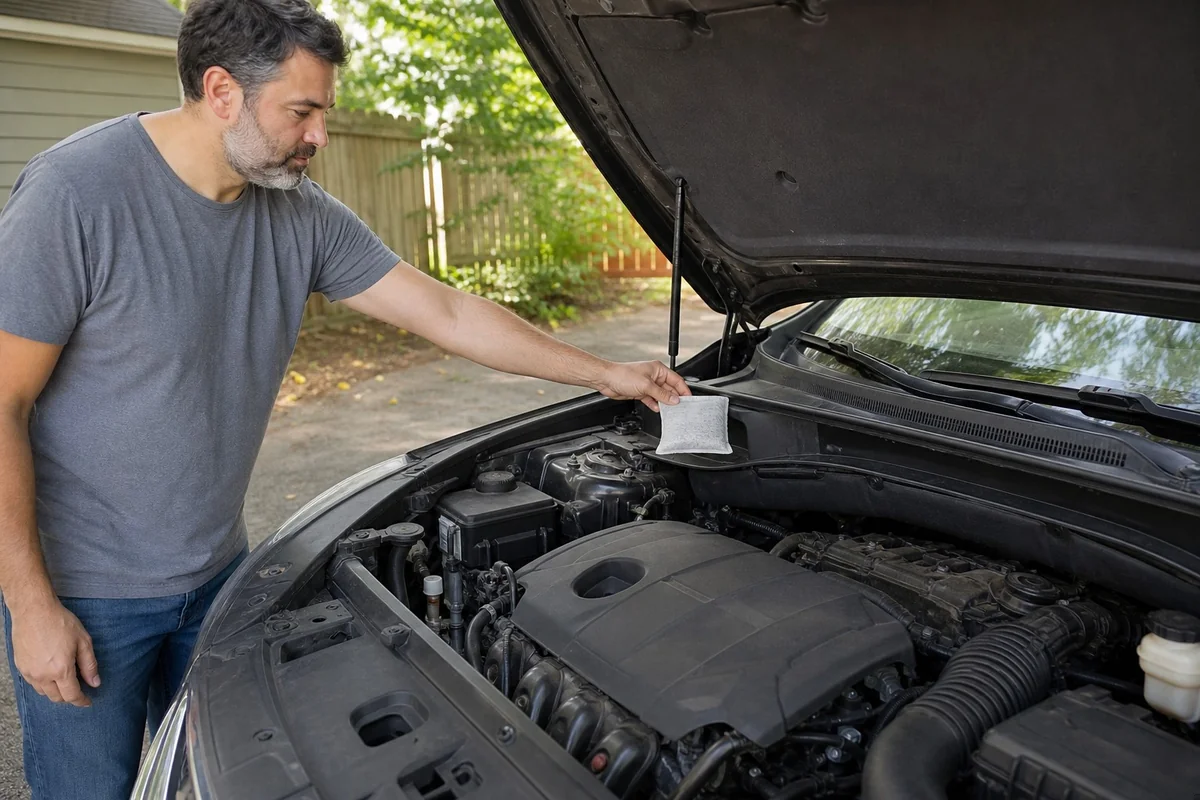
A parked engine bay is warm, sheltered and full of nesting material, from insulation to the cabin air filter housing. UC IPM's rat pest guide notes that rats commonly gnaw the insulating sheaths of engine wires, leading to significant malfunctions and expensive mechanical repairs, and that they cause similar damage to trucks, tractors and farm equipment.
Cars at risk share a pattern: they sit for days or weeks, they are parked outdoors or in an unsealed garage, and there is food or cover nearby, such as bird feeders, pet food, fruit trees, ivy or woodpiles. A car driven every day is far less attractive than one parked for a season.
How to keep mice away from a car engine starts with those conditions, then adds repellents. For repellents and sealing products for the rest of the house, see our guide to the best rodent repellents for the home.
Identify your needs and get personalized recommendations
Vehicle parked for weeks or months.
Car parked outdoors near rodent activity.
Several vehicles in a barn or shed.
Small vehicles in storage.
How We Selected These Car Repellents
We compared products on whether the maker labels them for vehicles and engine bays, how often they must be reapplied, how they are applied and what buyers report about effectiveness, scent and sprayers. Our sources were manufacturer listings as described in them, Amazon's review digests, UC IPM guidance and EPA rules for minimum-risk products; we did not test the products.
We left out under-hood ultrasonic repellers. UC IPM's house mouse guidance says ultrasonic sound is directional, does not reach behind objects and that there is little evidence sound devices drive rodents away, and an engine bay is full of objects. The rodent repellents section covers pouches and sprays for other spaces. The first pick protects the parts of a stored car that sprays cannot reach.
Fresh Cab Botanical Rodent Repellent: Best for Stored Cars
Fresh Cab pouches use balsam fir oil, 12 to a pack. The maker lists autos, trucks, tractors and farm equipment among their uses and says Fresh Cab is the only bio-pesticide rodent repellent registered by the EPA for indoor and enclosed use.
- For prevention, the maker recommends one pouch per 125 square feet, lasting up to 90 days; in active areas, more pouches replaced every 30 days.
- Buyers of Fresh Cab's pouches report no signs of mice in their homes and RVs and like the scent.
- Effectiveness feedback across the line is mixed, including mice ignoring or eating pouches.
- Pouches belong in the cabin, trunk and garage around the car; remove any placed in the engine bay before driving.
Choose it for a car, truck or tractor parked for weeks or months. Pair it with a spray on the engine bay for the parts rodents chew.
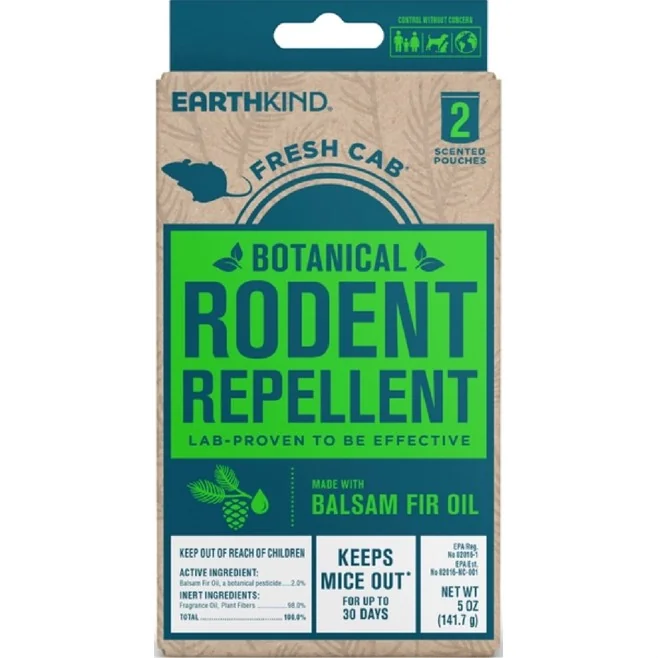
Fresh Cab Botanical Rodent Repellent 12 Pouches
Best for: Cabins and trunks of stored vehicles
- ✓EPA-registered bio-pesticide, per the maker
- ✓Buyers say it keeps mice out of homes and RVs
- ✓Pleasant scent, per buyers
- −Mixed effectiveness feedback; some mice ignored it
- −Needs many pouches for active problems
Specifications (3)
- Number of Items
- 12
- Size
- 2.5 Ounce (Pack of 12)
- Material Features
- Plant Based
BugMD Rodent Repellent for Car Engines: Best Engine Spray
BugMD Rodent Repellent for Car Engines is a 16-ounce spray of peppermint, rosemary, clove, thyme, citronella and cinnamon oils, made for engine bays, wiring and undercarriages of cars, trucks, RVs and boats. The maker says it is non-staining.
- The maker advises reapplying weekly and after heavy rain to keep the scent strong.
- Buyers report it working against mice and pack rats and like the strong mint scent.
- Effectiveness feedback is mixed, and value feedback is mostly negative.
Pick it for weekly treatment of the engine bay and wheel wells on a car that sits outside. Spray a cool engine only, and keep it off belts and hot surfaces.

BugMD Rodent Repellent for Car Engines 16 oz
Best for: Weekly engine bay treatment on cars parked outside
- ✓Labeled for engine bays and undercarriages
- ✓Non-staining, per the maker
- ✓Buyers report results against mice and pack rats
- −Reapply weekly and after rain, per the maker
- −Poor value feedback
Specifications (3)
- Item Volume
- 16 fluid ounces
- Scent Name
- Peppermint, Rosemary, Clove, Thyme, Citronella, Cinnamon
- Item Form
- Liquid
Mighty Mint Rodent Repellent Vehicle Spray: Best for Engines and Interiors
Mighty Mint Vehicle Spray is a 16-ounce peppermint oil spray labeled for engine compartments and interiors of cars, trucks, RVs, boats and ATVs. The maker says it helps prevent nesting and chewing on wiring, insulation and upholstery.
- Buyers like the minty smell.
- Effectiveness feedback is mixed, from no signs of mice to no effect.
- Sprayer feedback is mostly negative, with buyers describing excessive pumping and failures.
- Value feedback is mostly negative; a gallon refill is also sold.
Choose it if you want one spray for the engine bay and the car's interior. Consider moving it to a sturdier spray bottle.
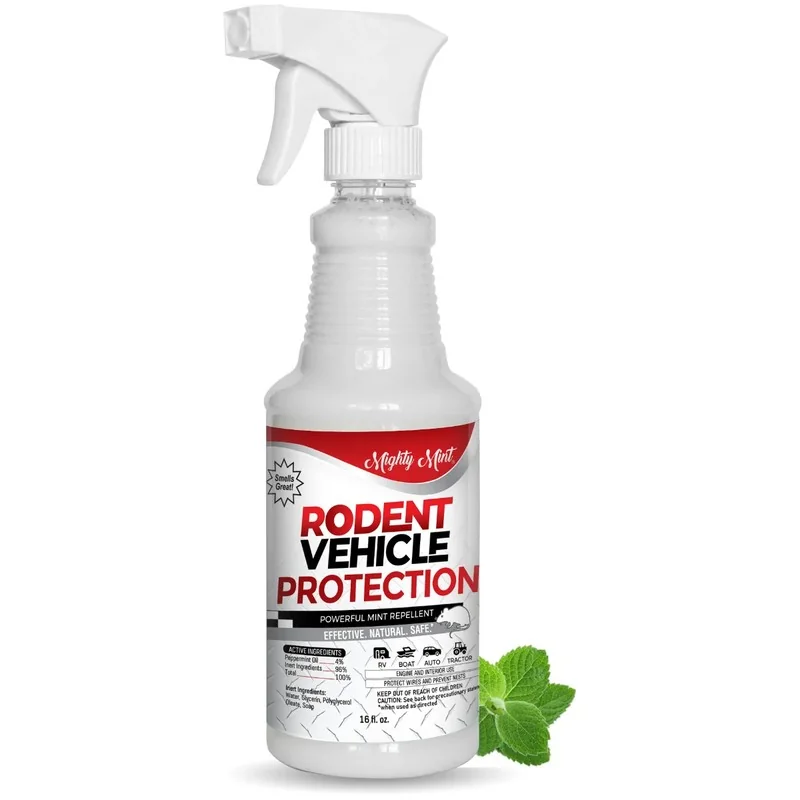
Mighty Mint Rodent Repellent Vehicle Spray 16 oz
Best for: Engines and interiors with one spray
- ✓Labeled for engines and interiors
- ✓Buyers like the minty smell
- ✓Cars, trucks, RVs, boats and ATVs
- −Sprayer problems, per buyers
- −Mixed effectiveness and poor value feedback
Specifications (2)
- Item Volume
- 16 fluid ounces
- Item Highlight
- Natural, Plant Based Protection for Engines and Interiors for Cars, Trucks, RVs, Boats
Grandpa Gus's Rodent Vehicle Repellent Spray: Best Budget Alternative
Grandpa Gus's Vehicle Spray is a 16-ounce peppermint and cinnamon oil spray for cars, trucks, RVs, motorcycles and ATVs. The maker describes adjustable spray settings for tight engine spaces, tailpipes, wheel wells and interior access points.
- The maker positions it for parked and stored vehicles.
- Buyers are split on effectiveness, from working well to unconvinced.
- There is less buyer feedback on this spray than on the others here.
Pick it as an alternative scent if mint alone has not worked, or for motorcycles and ATVs the other sprays do not mention.
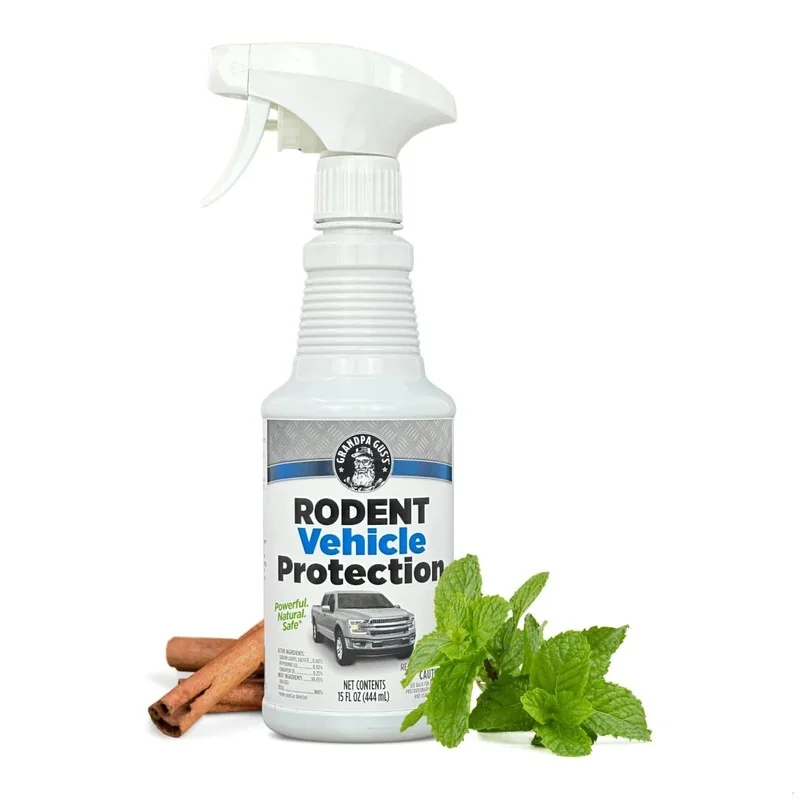
Grandpa Gus's Rodent Vehicle Repellent Spray 16 oz
Best for: A different scent, motorcycles and ATVs
- ✓Peppermint plus cinnamon oils
- ✓Adjustable spray settings, per the maker
- ✓Labeled for motorcycles and ATVs
- −Split buyer opinions on effectiveness
- −Less buyer feedback than the others
Specifications (3)
- Unit Count
- 16 Fluid Ounces
- Scent Name
- Peppermint and Cinnamon
- Number of Items
- 1
- Fresh Cab Botanical Rodent Repellent wins for: cabins and trunks of stored vehicles
- BugMD Rodent Repellent for Car Engines wins for: weekly engine bay treatment
- Mighty Mint Rodent Repellent Vehicle Spray wins for: engines and interiors with one spray
- Grandpa Gus's Rodent Vehicle Repellent Spray wins for: a different scent, motorcycles and ATVs
Products are only part of protecting a parked car.
How to Keep Mice and Rats Out of Your Car
- Use a weighted car cover: UC IPM suggests a weighted cover that touches the ground all the way around, so rodents cannot reach the engine.
- Seal the garage: fit rodent-proof door sweeps and close gaps larger than 1/4 inch with metal.
- Remove food nearby: keep pet food, bird seed and garbage out of the garage and away from where you park.
- Drive or start the car regularly: a car that moves often gives rodents less time to settle in.
- Check the engine bay: look for nesting material, droppings and chewed wires, especially in the air filter box and cabin air intake.
- Trap around the car: set covered snap traps along garage walls near where you park.
What can you spray on an engine to keep mice away? A vehicle-labeled repellent, applied to a cool engine as the label directs. UC IPM adds that rodent management in the neighborhood is usually needed for longer-term reduction, so a car parked beside an infested yard will keep attracting attention.
Common Questions About Car Engine Rodent Repellents
Is there any rodent repellent that actually works on cars?
Is there any rodent repellent that actually works on cars?
Some help for a while, none reliably on their own. Buyers of every vehicle spray and pouch here report mixed results, and sprays need weekly reapplying. The most dependable protection is physical: a sealed garage, a weighted car cover that touches the ground, and no food nearby.
Does leaving the hood up keep rodents out?
Does leaving the hood up keep rodents out?
There is no reliable evidence that it does. The idea is that an open, lit engine bay feels exposed, but rodents still climb in from below. If you try it, keep it alongside proven steps such as sealing the garage, removing food and setting traps nearby.
Where do mice usually nest in a car?
Where do mice usually nest in a car?
In the air filter box, the cabin air filter housing, under the engine cover, in the trunk's spare tire well and inside seat cushions. Check those spots when a car has been parked for a while, wearing gloves.
How often should I reapply engine repellent spray?
How often should I reapply engine repellent spray?
Follow the label; BugMD's maker says weekly and after heavy rain, and other sprays wear off similarly fast in heat and weather. Reapply after washing the engine bay and whenever you notice the scent has faded.
Which One Should You Buy?
For most cars, use two products: Fresh Cab pouches in the cabin and trunk of a vehicle that sits for long stretches, and BugMD's engine spray on the engine bay every week. Together they cover the interior and the wiring, the two places rodents do the most damage.
Choose Mighty Mint if you want one spray for the engine and the interior, and Grandpa Gus's for a different scent or for motorcycles and ATVs. Back any product with a weighted cover or a sealed garage and nothing for rodents to eat nearby.
This week, open the hood, look for nesting signs, and treat the engine bay before the car sits again.
Related Articles
Best Rodent Repellent Sprays: Aerosol, Peppermint and Vehicle
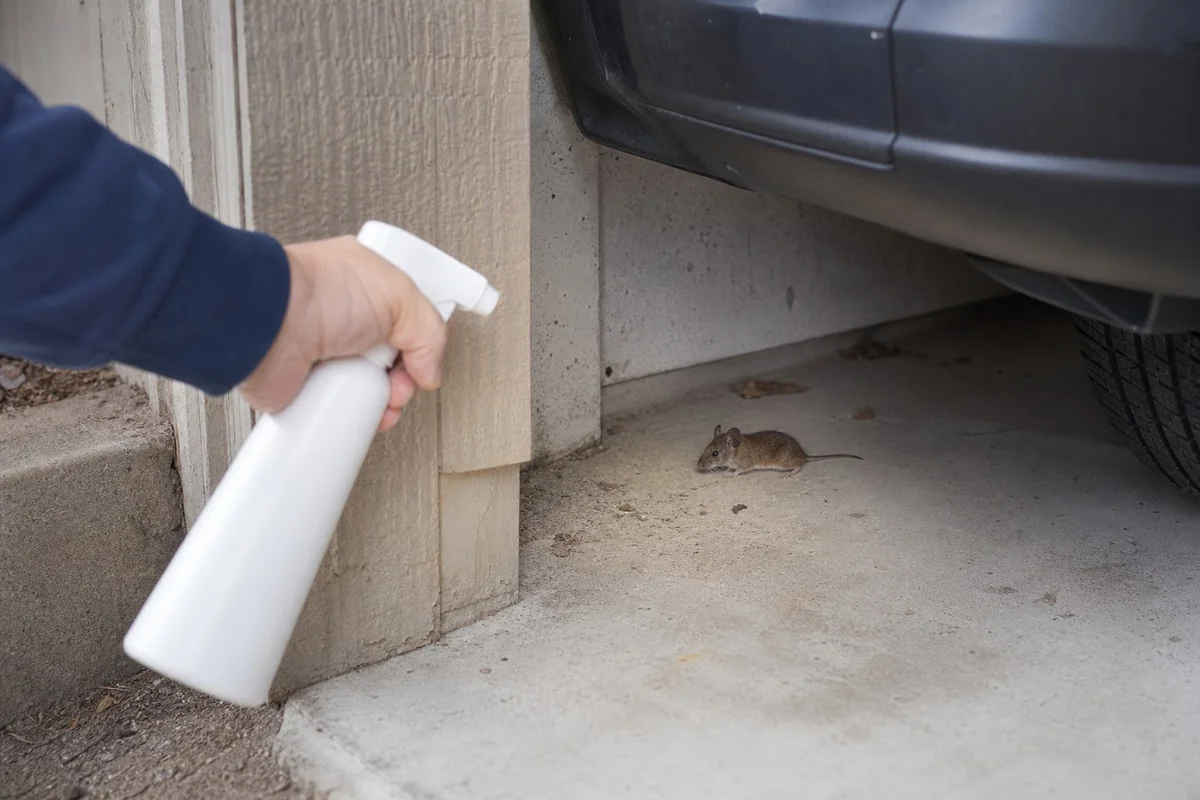
Best rodent repellent sprays: Tomcat Continuous Spray, Mighty Mint, BIO YOLO and Mighty Mint Vehicle Spray, how well sprays work and how to use them with sealing.
Best Rodent Repellent Pouches for Closets, Storage and Vehicles
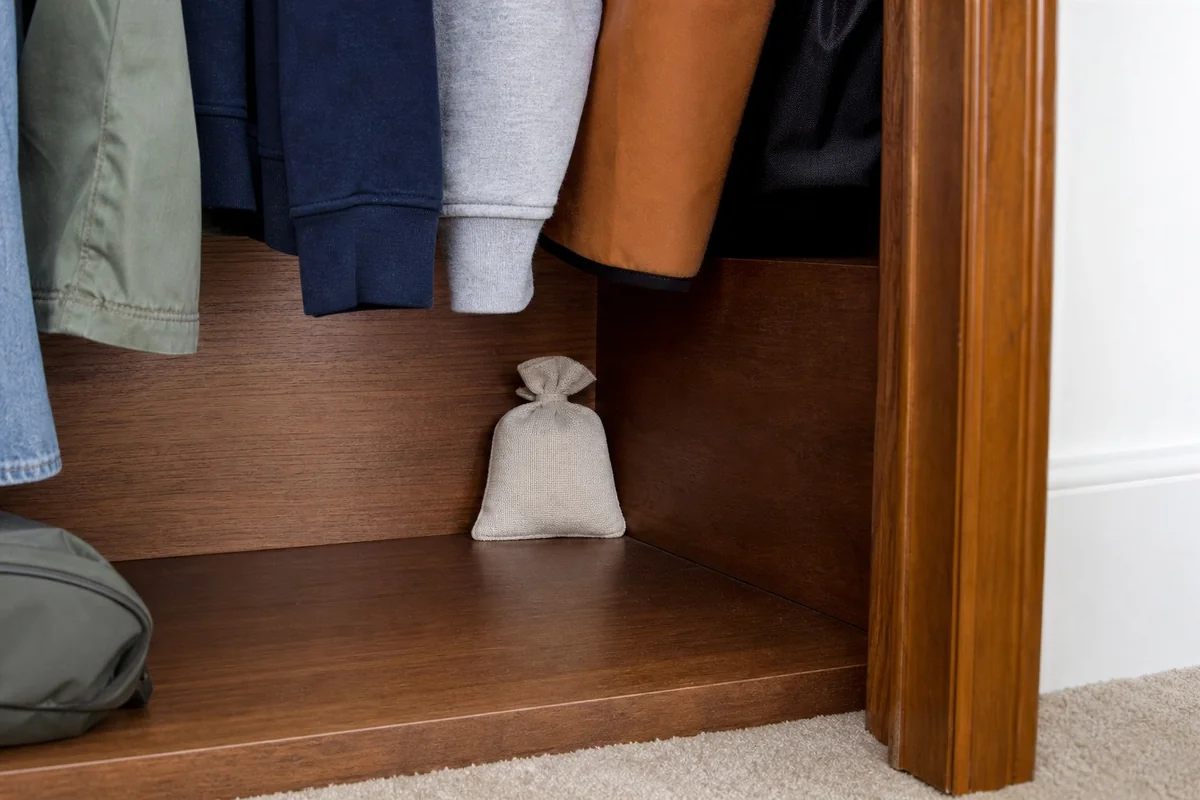
Best rodent repellent pouches: Fresh Cab, Victor Scent-Away, Tomcat and ROTIAH, where pouches work and where they do not, and how to use them with traps and sealing.
Best Rodent Repellents for the Home: What Actually Keeps Them Out
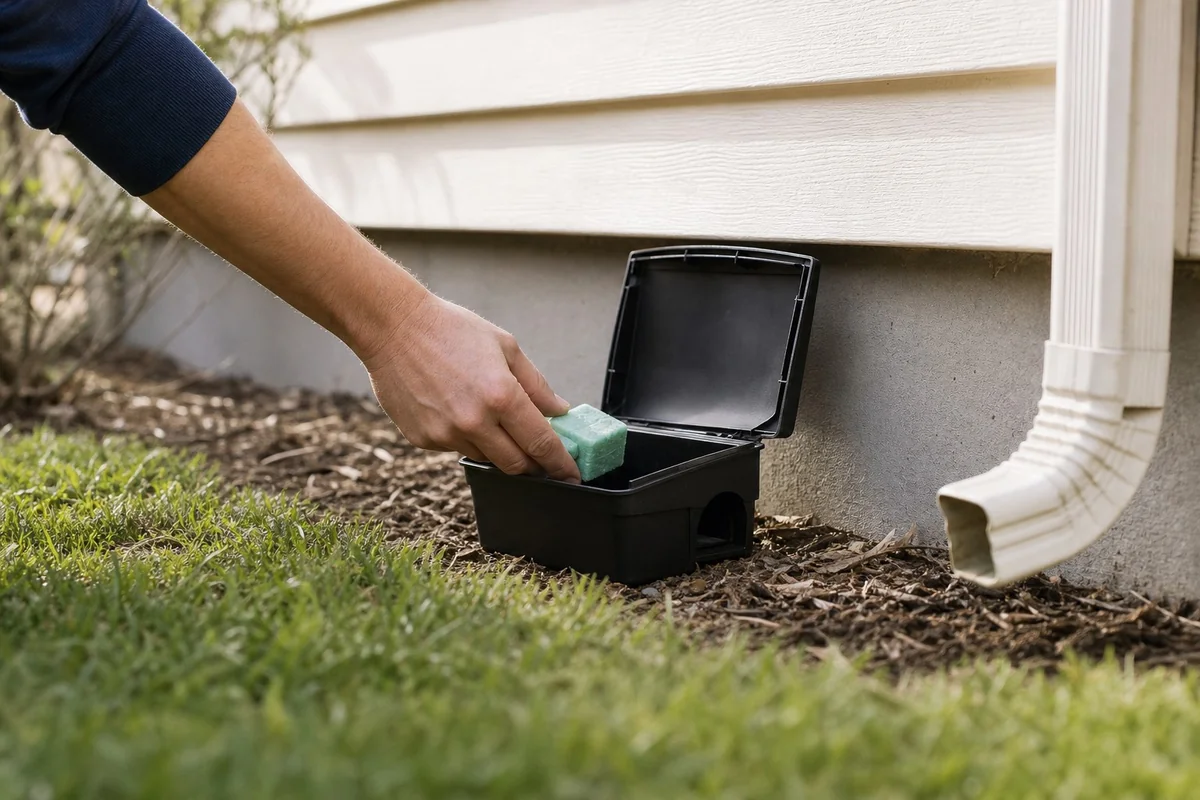
Best rodent repellents for the home: Xcluder door sweeps and steel wool, Fresh Cab pouches, Tomcat and Mighty Mint sprays, and why ultrasonic falls short.
Best Rodent Repellents for RVs and Campers in Storage
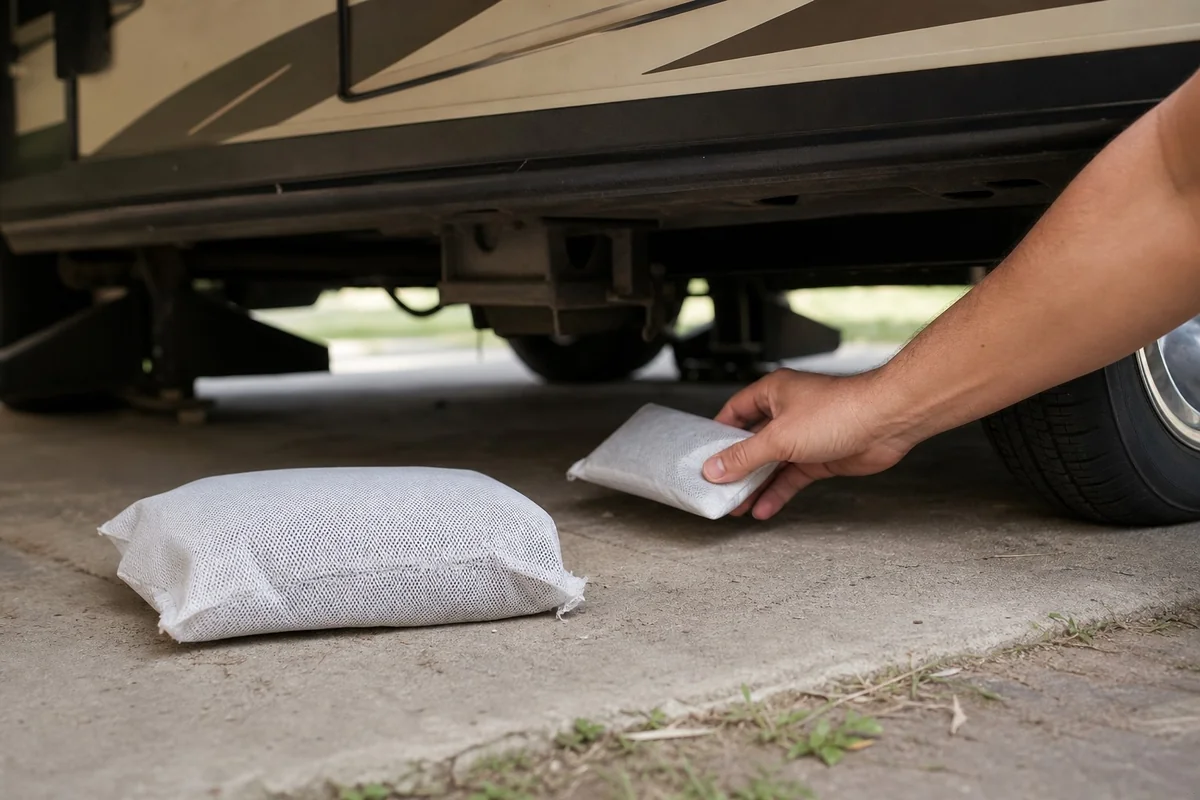
The best rodent repellents for RVs and campers: Fresh Cab pouches, BugMD Vamoose Pro, Grandpa Gus's, Mighty Mint and steel wool for sealing, plus a storage plan.