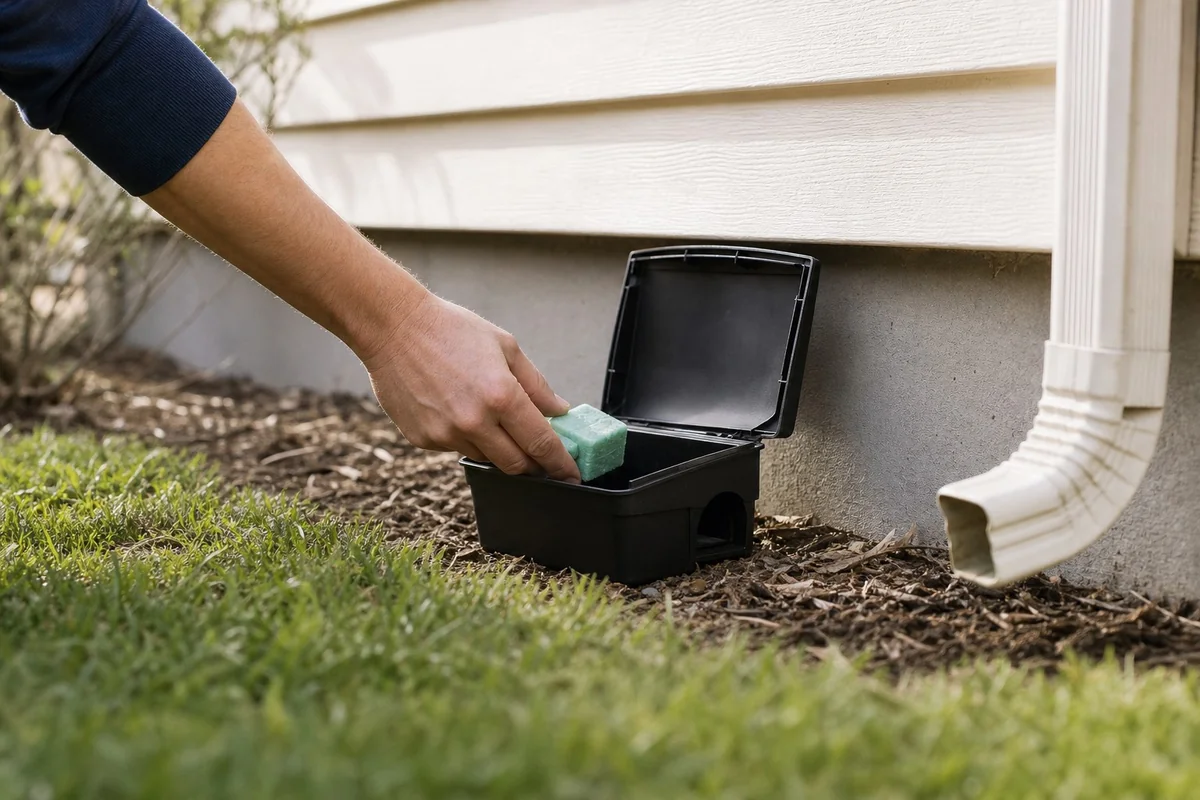
 Pest Pro Reviews Editorial Team • • 11 min read •
Best Rodent Repellents for the Home: What Actually Keeps Them Out
Best rodent repellents for the home: Xcluder door sweeps and steel wool, Fresh Cab pouches, Tomcat and Mighty Mint sprays, and why ultrasonic falls short.
The best rodent repellent for a home is a sealed house: rodent-proof door sweeps like the Xcluder Low-Profile and steel wool with stainless mesh keep mice and rats out where scents cannot. Among scent repellents, Fresh Cab pouches suit enclosed storage, while Tomcat and Mighty Mint sprays give short-term help. No repellent clears an infestation already inside.
- Exclusion, sealing gaps larger than 1/4 inch with metal, is the most successful and permanent form of mouse control, according to UC IPM.
- Scent repellents wear off and buyers report mixed results; most peppermint products are minimum-risk pesticides that the EPA does not review.
- Ultrasonic plug-in repellers have little evidence behind them, so they are not among our picks.
Do Rodent Repellents Work?
Some help a little, none work alone. A strong smell may make a mouse or rat avoid a spot for a while, but rodents that have food, warmth and a way in tend to come back once the smell fades or they get used to it. That is why the honest answer to “what is the best rodent repellent” starts with blocking the way in.
UC IPM's house mouse guide calls exclusion the most successful and permanent form of house mouse control. It advises eliminating all gaps and openings larger than 1/4 inch, noting that mice squeeze under gaps that tall and through openings 3/8 inch wide, and that they often move into homes in autumn as nights turn cold.
Repellents still have a place: keeping rodents out of enclosed storage, cars, RVs and sheds, and backing up sealing work. For what science says about each scent, see our guide to what repels rodents, and for the full control plan, our overview of mouse and rat control.
Identify your needs and get personalized recommendations
Rodents entering the house.
Cabins, sheds, storage units and stored vehicles.
Entry points around the foundation.
No poisons or chemicals.
Rodent Repellent Types Compared
We compared repellents and exclusion products on how they work, how long they last, where they fit and what buyers report. Our sources were manufacturer listings and labels as described in them, Amazon's review digests, UC IPM guidance and EPA's rules for minimum-risk pesticides; we did not test the products.
| Type | How It Works | Best For | Key Trade-Off |
|---|---|---|---|
| Door sweeps and gap fillers | Physically block entry points | Every home, permanently | Takes an afternoon of finding gaps |
| Botanical scent pouches | Strong scent in an enclosed space | Cabinets, closets, storage, vehicles | Needs replacing; mixed results |
| Repellent sprays | Scent and taste barrier on surfaces | Entry points outside, short-term | Reapply often; wears off in rain and sun |
| Ultrasonic plug-in repellers | High-pitched sound | Not recommended | Little evidence; blocked by furniture and walls |
The rodent repellents section has a guide for each type and setting, from pouches and sprays to cars and RVs.
Where Mice and Rats Get Into a House
Before buying anything, find the openings. Rodents rarely chew a new hole when an existing gap will do, and most homes have a few obvious ones.
- Under doors: exterior, garage and basement doors with worn or missing sweeps.
- Around pipes and cables: where plumbing, gas lines, dryer vents and wiring pass through walls and the foundation.
- Vents: foundation and attic vents with torn or missing screens; UC IPM recommends galvanized 1/2-inch wire mesh and never lightweight chicken wire.
- The roofline: gaps at eaves, soffits and roof vents, which climbing roof rats reach from trees and wires.
- Garage doors: the bottom seal and the corners where the door meets the frame.
Best Exclusion Products for Keeping Rodents Out
The most effective rodent “repellent” is a barrier rodents cannot chew. UC IPM notes that plastic screening, rubber, vinyl, expanding foam and wood are ineffective for plugging holes, because mice chew through them, and advises metal or concrete instead. Under-door gaps and pipe openings are the usual entry points.
Xcluder Low-Profile Door Sweep: Best Overall Rodent Repellent
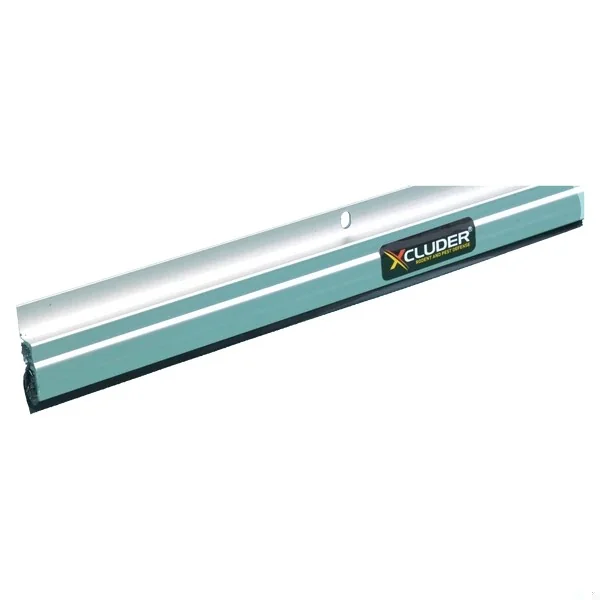
The Xcluder Low-Profile Door Sweep 2-pack seals the gap under a door with an industrial rubber seal filled with poly fibers and steel wool, which the maker says creates a barrier mice and rats cannot get through. Each sweep is 36 inches long and seals gaps up to 1 inch.
- The sweep can be cut to size with common tools and mounts with self-drilling screws and screw-on end caps.
- It adjusts vertically by 1/4 inch, per the maker, and doubles as a weather seal against drafts and light.
- Buyers say it keeps pests and drafts out, with reports of mouse problems ending, and find it easy to install.
- For older doors with taller gaps, Xcluder's Versa-Line sweep seals gaps up to 1.75 inches.
Choose it for exterior doors, garage entry doors and basement doors, the most common way rodents walk in. It is our top pick because it solves the problem permanently rather than discouraging rodents for a few weeks.
Xcluder Low-Profile Door Sweep 2-Pack
Best for: Stopping mice and rats at doors for good
- ✓Seals gaps up to 1 inch, per the maker
- ✓Buyers say it keeps pests and drafts out
- ✓Easy to cut and install, per buyers
- −Fits gaps up to 1 inch only; taller gaps need the Versa-Line
- −Doors only; other gaps need sealing too
Specifications (4)
- Material
- Aluminum
- Product Dimensions
- 36"L x 1.56"W
- Number of Packs
- 2
- Item Highlight
- Rodent & Pest Prevention, Weather Sealing, Steel Wool Filled
UZLU Steel Wool and Stainless Mesh Kit: Best for Sealing Gaps
The UZLU kit pairs 6 rolls of #1 steel wool, each 3.2 inches x 60 feet, with a roll of 304 stainless steel mesh, 5 inches x 30 feet, plus gloves and scissors. The maker suggests stuffing larger gaps with steel wool and covering them with the mesh.
- The steel wool fills irregular holes around pipes, vents and cables, per the maker.
- The stainless mesh adds strength and does not rust, which matters because UC IPM notes steel wool plugs may rust over time.
- Cutting is easy with the included scissors; wear the gloves, since steel fibers are sharp.
- There is no buyer review digest for this kit yet, so judge it on its materials.
Pick it for the gaps around plumbing under sinks, behind appliances and where cables enter the house. For a permanent seal on large holes, back the steel wool with mesh or sheet metal and seal the edges.

UZLU Steel Wool and Stainless Mesh Kit
Best for: Sealing gaps around pipes, vents and cables
- ✓Six rolls of steel wool plus stainless mesh
- ✓Mesh does not rust, unlike plain steel wool
- ✓Gloves and scissors included
- −Steel wool alone can rust over time
Specifications (4)
- Grit Material
- Steel Wool
- Grit Number
- 1
- Unit Count
- 390 Feet
- Number of Items
- 6
Best Scent Pouches for Enclosed Spaces
Scent pouches release a strong smell inside a closed space such as a cabinet, closet, storage bin, shed or vehicle. They work best where the scent stays concentrated and where rodents are not yet established; for more options, see our guide to rodent repellent pouches.
Fresh Cab Botanical Rodent Repellent: Best Scent Pouch
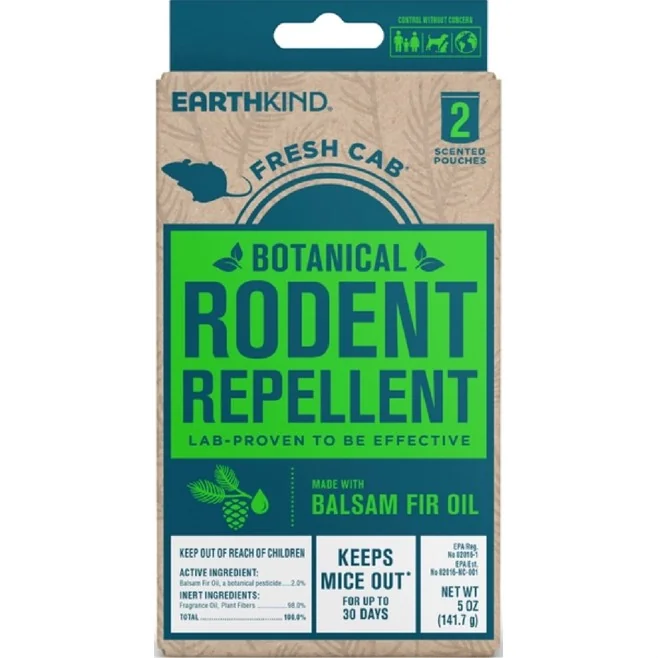
Fresh Cab pouches use balsam fir oil and come 12 to a pack. The maker says Fresh Cab is the only bio-pesticide rodent repellent registered by the EPA for use indoors and in enclosed areas, unlike the many peppermint products sold as minimum-risk pesticides.
- For prevention, the maker recommends one pouch per 125 square feet, lasting up to 90 days.
- In areas with active rodents, the maker says to use one pouch per 8 square feet and replace every 30 days.
- Buyers of Fresh Cab's pouches say they keep mice out of homes and RVs and like the scent.
- Effectiveness feedback across the line is mixed, with some buyers reporting mice ignored or even ate the pouches.
Choose it for enclosed storage areas, cabins, sheds and vehicles in storage, not for open living spaces. The pouch count needed for an active problem adds up quickly.
Fresh Cab Botanical Rodent Repellent 12 Pouches
Best for: Enclosed storage, cabins, sheds and stored vehicles
- ✓EPA-registered bio-pesticide, per the maker
- ✓Buyers say it keeps mice out of homes and RVs
- ✓Pleasant scent, per buyers
- −Mixed effectiveness feedback; some mice ignored it
- −Needs many pouches for active problems
Specifications (3)
- Number of Items
- 12
- Size
- 2.5 Ounce (Pack of 12)
- Material Features
- Plant Based
Best Rodent Repellent Sprays
Sprays put a scent and taste barrier on surfaces around entry points. They wear off, so they suit short-term use and touch-ups rather than long-term protection; our guide to rodent repellent sprays compares more of them.
Tomcat Repellents Rodent Repellent: Best for Outdoor Entry Points
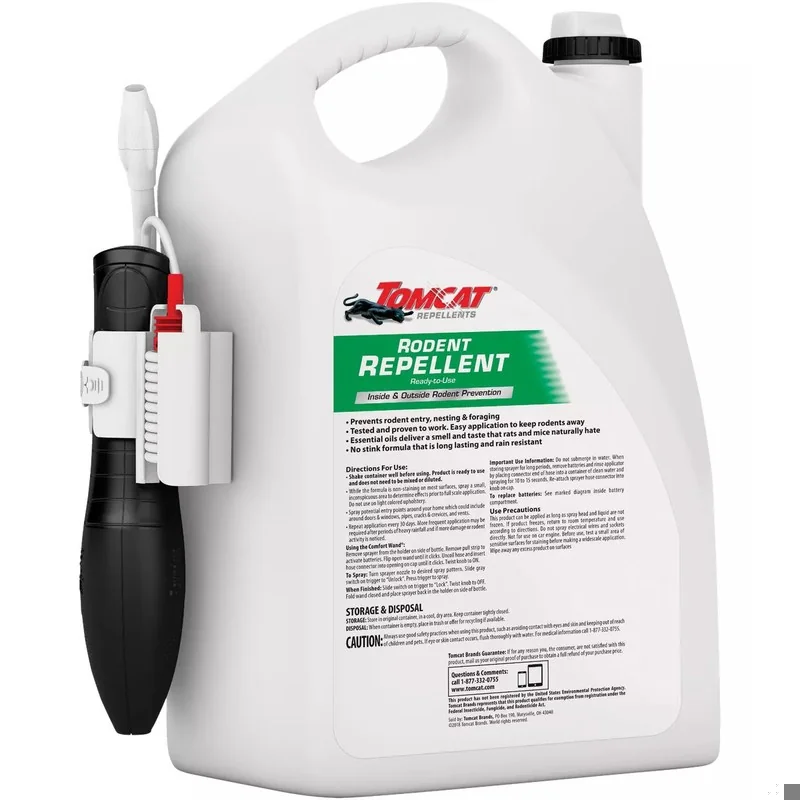
Tomcat Repellents Rodent Repellent is a 1.33-gallon ready-to-use spray of garlic, peppermint and cinnamon oils with a battery-powered Comfort Wand. The maker says it discourages rodent entry, nesting and foraging indoors and out.
- The maker lists coverage of about 3,350 square feet and says to reapply every 30 days.
- It is labeled rain-resistant for use around doors, windows, cracks, pipes and vents.
- Buyers like the scent and that it is not toxic to pets, but effectiveness is mixed and many say it does not last long enough.
- Several buyers report sprayer problems, and value feedback is mostly negative.
Pick it for treating the outside of a house around entry points while you seal them. Do not expect it to keep rodents away on its own for long.
Tomcat Repellents Rodent Repellent 1.33 Gal
Best for: Treating outdoor entry points while you seal them
- ✓Rain-resistant, per the maker
- ✓Battery-powered Comfort Wand
- ✓Buyers like the scent and pet safety
- −Buyers say it does not last long enough
- −Sprayer problems, per some buyers
Specifications (3)
- Item Volume
- 1.33 gallons
- Item Form
- Aerosol
- Target Species
- Rodents
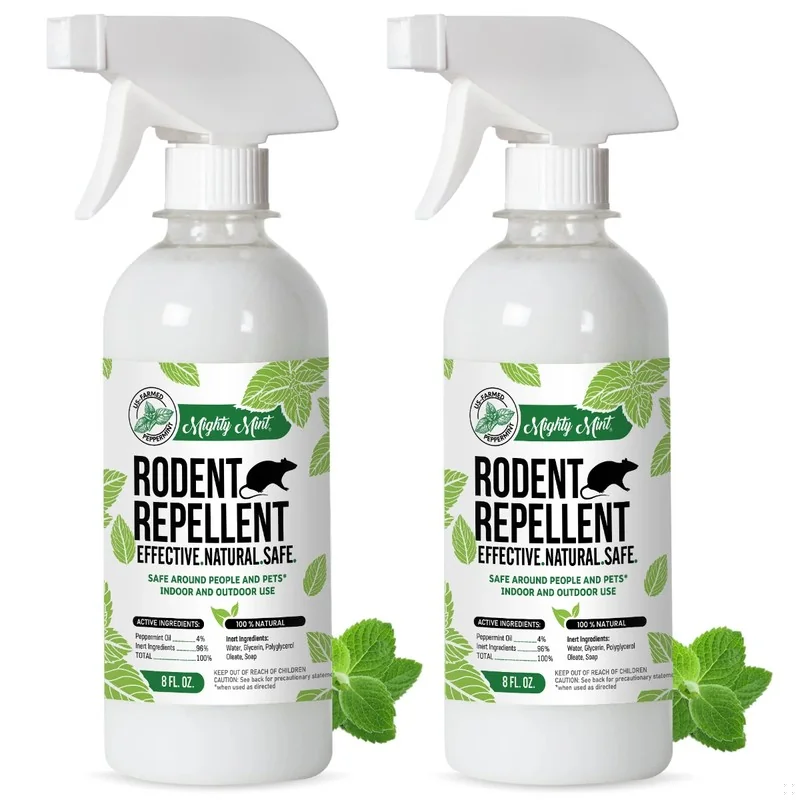
Mighty Mint Peppermint Spray: Best Budget Spray
Mighty Mint is a 16-ounce peppermint oil spray sold for indoor and outdoor use on baseboards, entryways, patios and garages. The maker describes it as safe around pets and children when applied as directed.
- Buyers of Mighty Mint's sprays, in a digest pooled across sizes, like the minty scent.
- Effectiveness feedback is mixed, and many buyers say it wears off quickly, sometimes within hours or a day.
- Value feedback is mostly negative.
- It is a minimum-risk product; the EPA says it does not review exempted products.
Choose it for a quick, pleasant-smelling treatment of a small area, such as a closet or the edge of a garage, between sealing jobs.
Mighty Mint Peppermint Spray 16 oz
Best for: Quick, low-cost touch-ups in small areas
- ✓Buyers like the minty scent
- ✓Ready to use, indoor and outdoor
- ✓Low cost to try
- −Wears off within hours to a day, per many buyers
- −Mixed effectiveness and poor value feedback
Specifications (4)
- Item Volume
- 473 ml
- Scent Name
- Mint
- Item Form
- Aerosol
- Unit Count
- 16 Fluid Ounces
Why We Don't Recommend Ultrasonic Repellers
Plug-in ultrasonic repellers are among the most searched rodent products, and some carry positive buyer reviews. UC IPM's house mouse guidance says ultrasonic sound has very limited use in rodent control: it is directional, does not reach behind objects and loses intensity quickly with distance.
The same guide adds that rodents become accustomed to regularly repeated sounds, and that there is little evidence any sound, magnetic or vibration device will drive established mice or rats from buildings. Do plug-in rodent repellers work? Not reliably enough to spend money on instead of a door sweep and traps.
There is a practical downside too. Pet rodents such as hamsters, guinea pigs and pet rats hear the same frequencies, so a repeller aimed at wild mice can stress the animals you keep. If you already own one, treat any quiet period as luck and keep sealing gaps and setting traps.
Natural Rodent Repellents and Home Remedies
Peppermint oil, cinnamon, garlic, cayenne and vinegar are the usual natural deterrents. Most commercial versions are sold as minimum-risk pesticides, which the EPA's conditions for minimum-risk pesticides exempt from registration; the agency notes that it does not review exempted products. That does not mean they never work, but no one has checked that they do.
Home remedies such as coffee grounds and dryer sheets have no reliable evidence behind them. If you want a natural approach, the most dependable one is not a smell: seal food in hard containers, clear clutter where rodents nest and close the gaps. Those three steps remove the reasons rodents come in.
How to Choose the Right Rodent Repellent
- Mice or rats getting in: door sweeps and steel wool with mesh first; nothing else lasts.
- Rodents already inside: traps, not repellents, then seal behind them.
- Stored items, cabins and sheds: Fresh Cab pouches in the closed space.
- Outside entry points while you seal: Tomcat spray, reapplied monthly.
- Cars and engines: see our guide to rodent repellents for car engines.
- RVs and campers in storage: pouches inside and sealed openings outside.
Common Questions About Rodent Repellents
What is the best way to keep mice and rats away?
What is the best way to keep mice and rats away?
Seal them out, remove what draws them and trap any already inside.:
- Close gaps larger than 1/4 inch with metal: door sweeps, steel wool with mesh, sheet metal.
- Store food and pet food in hard, sealed containers.
- Clear clutter and woodpiles near the house.
- Trap rodents inside before sealing the last gaps.
What do professionals use for rodent control?
What do professionals use for rodent control?
Mostly the same tools homeowners can use, applied thoroughly: exclusion with metal and concrete, many traps placed on runways, and tamper-resistant bait stations outdoors where the label allows. Repellents play a small role, if any, in professional rodent control.
How long do rodent repellents last?
How long do rodent repellents last?
Not long. Sprays usually need reapplying about monthly outdoors, and buyers of peppermint sprays often say the effect fades within hours or days. Pouches last longer in closed spaces; Fresh Cab's maker gives up to 90 days for prevention and 30 days in active areas.
Can I use repellents and traps together?
Can I use repellents and traps together?
Yes, but keep them apart. A strong scent next to a trap can make rodents avoid the trap. Put repellents where you want rodents not to go, such as stored items, and traps on the runways where they are already traveling.
Which One Should You Buy?
- Xcluder Low-Profile Door Sweep wins for: stopping rodents at doors for good
- UZLU Steel Wool and Stainless Mesh Kit wins for: sealing gaps around pipes and vents
- Fresh Cab Botanical Rodent Repellent wins for: enclosed storage, cabins and vehicles
- Tomcat Repellents Rodent Repellent wins for: outdoor entry points while you seal
- Mighty Mint Peppermint Spray wins for: quick, low-cost touch-ups
For most homes, start with the Xcluder Low-Profile Door Sweep on every exterior and garage door, and seal pipe and vent gaps with the UZLU steel wool and stainless mesh. Those two steps keep mice and rats out in a way no scent can, and they keep working without refills.
Add Fresh Cab pouches to enclosed storage, sheds and stored vehicles, and use Tomcat or Mighty Mint spray only as a short-term extra around entry points. Skip ultrasonic plug-ins, and if rodents are already inside, trap them before you seal. The rodent repellents section has a guide for each setting.
This weekend, check the bottom of every exterior door for daylight and fix the worst gap first.
Guides in This Topic
 How to Keep Rats Out of a Chicken Coop for Good
 Best Rodent Repellents for RVs and Campers in Storage
 Best Rodent Repellent Sprays: Aerosol, Peppermint and Vehicle
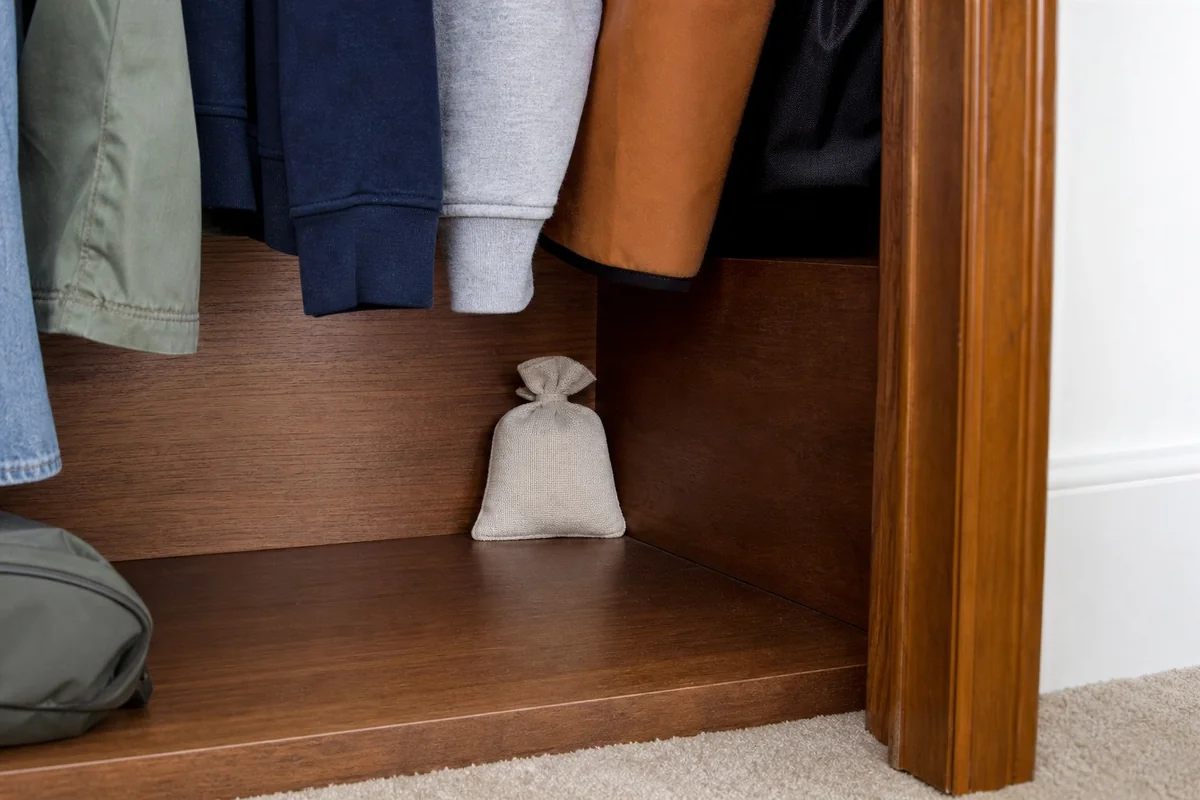 Best Rodent Repellent Pouches for Closets, Storage and Vehicles
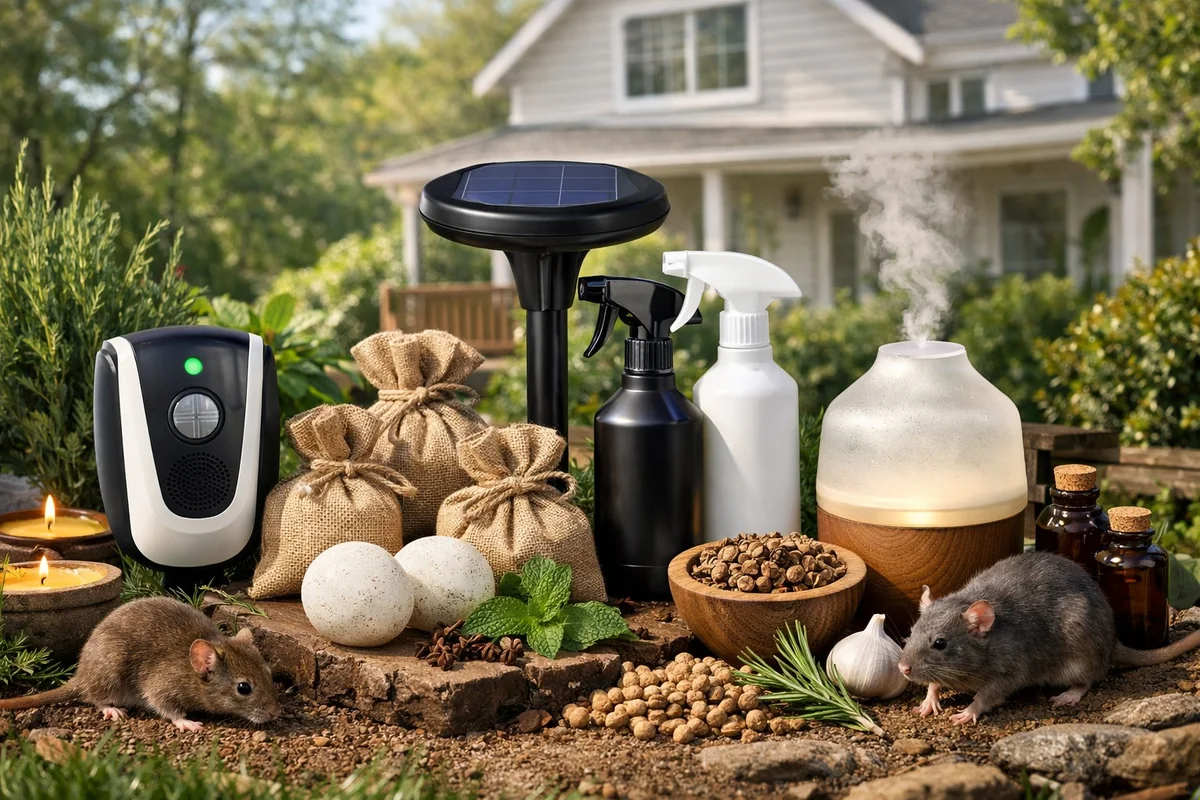 What Repels Rodents? Scents, Remedies and What Really Works
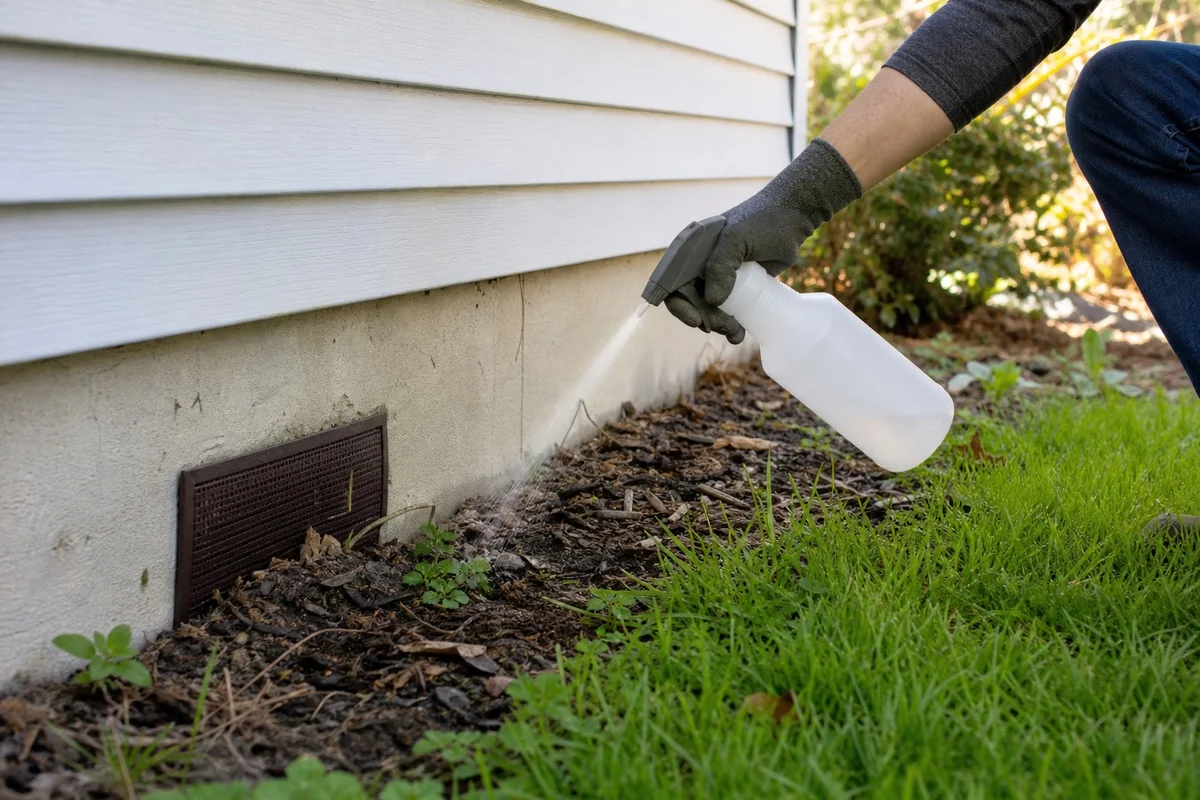 Best Outdoor Rodent Repellents: Barriers, Granules and Sprays
 Best Rodent Repellents for Car Engines and Parked Vehicles