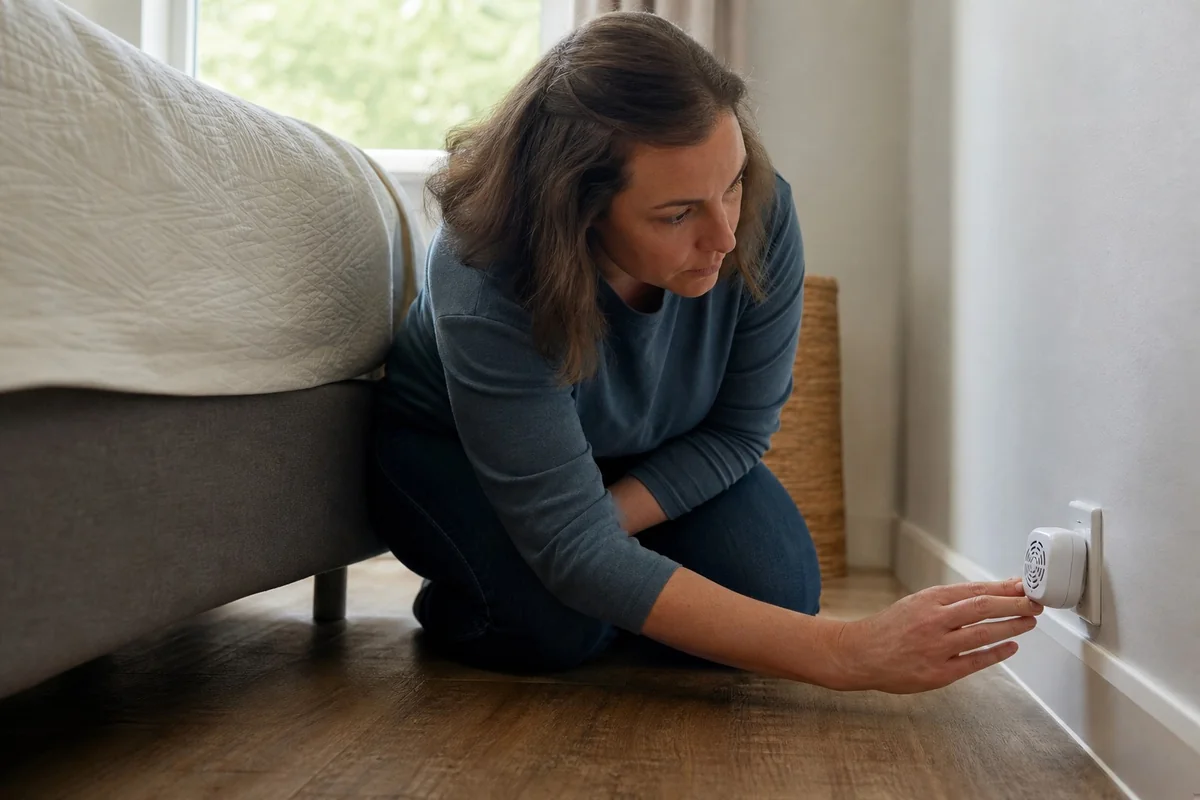

Do Ultrasonic Repellers Work on Bed Bugs? What the Research Says
Do ultrasonic repellers work on bed bugs? No: a university study and IPM reviews found no effect. Why sound cannot reach bed bugs, and what works instead.
Ultrasonic repellers do not work on bed bugs. A university study of commercial devices found that bed bugs were not repelled, and reviews of the research by integrated pest management programs reach the same conclusion. There is no “best” ultrasonic repeller for bed bugs; the money is better spent on mattress encasements, bed leg interceptors, a hot dryer cycle and, for a real infestation, professional treatment.
Does an Ultrasonic Pest Repeller Work on Bed Bugs?
No. Researchers at Northern Arizona University, Yturralde and Hofstetter, tested commercially available ultrasonic devices on bed bugs and published the results in 2012. Cornell's New York State IPM program summarizes that work, along with studies on cockroaches, fleas and rodents, in Ultrasonic Devices? Ultra-Ineffective: scientific evaluations found no effect on the target pests, bed bugs included.
That matches what pest professionals see. Bed bugs are found thriving in bedrooms with repellers plugged in a few feet away, because nothing about the device reaches them where they live or changes why they are there.
Ultrasonic devices fare no better against other household pests. Our guide to the best ultrasonic pest repellers looks at the research on mice and roaches, and the ultrasonic repeller section covers other pests.
Why Sound Cannot Drive Bed Bugs Away
Bed bugs find their hosts by the carbon dioxide, body heat and skin odors of a sleeping person. Sound plays no known role in how they feed, mate or choose a hiding place, and they have no hearing organs tuned to the frequencies these devices emit.
Even if they did, the sound would not reach them. Bed bugs spend most of their time packed into mattress seams, box spring fabric, headboard joints, the screw holes of bed frames and the gaps behind baseboards. Ultrasound travels in straight lines and is absorbed by fabric, padding and wood, so a mattress is close to soundproof for a bug hiding inside its seam.
Most important, bed bugs stay because of a blood meal. A person sleeps in the same bed every night, so the bugs have every reason to stay close, whatever noise is in the room. Repellents of any kind, ultrasonic or chemical, tend at most to push a few bugs into the next room or the next apartment, which spreads the problem rather than ending it.
What Ultrasonic Repeller Listings Claim
Many plug-in repellers list bed bugs among dozens of pests they claim to repel, often next to mice, roaches, spiders and mosquitoes. None of these listings cites a published study showing bed bug control. In 2001 the Federal Trade Commission warned makers and sellers that claims about repelling insects or eliminating rodents need scientific evidence behind them.
Reviews do not settle the question either. Bed bug numbers rise and fall with the seasons and with whatever else a household does at the same time, such as washing bedding or throwing out an old mattress, so a buyer who sees fewer bites after plugging in a device rarely knows why. Many listings also warn that pests may seem more active at first, which makes any outcome look like proof the device is working.
What Actually Works Against Bed Bugs
Bed bug control relies on physical methods and targeted treatment, not repellents. These steps make a real difference:
- Confirm it is bed bugs: look for live bugs, shed skins, tiny dark spots along mattress seams and itchy bites in lines or clusters.
- Heat bedding and clothes: run washable and dry items through a full cycle on the dryer's highest heat setting.
- Vacuum seams and cracks: use a crevice tool on the mattress, box spring, bed frame and baseboards, then empty the vacuum outside in a sealed bag.
- Encase the mattress and box spring: zippered encasements labeled for bed bugs trap any bugs inside and leave fewer hiding places.
- Isolate the bed: pull it away from the wall and put interceptor cups under each leg to catch bugs climbing up and to track whether numbers fall.
- Call a professional for an infestation: heat treatments and labeled insecticides applied to cracks and seams are the methods that clear established populations.
| Method | What It Does | Role |
|---|---|---|
| Ultrasonic repeller | Emits high-pitched sound | No effect on bed bugs in testing |
| Dryer heat | Kills bugs and eggs in fabric | Bedding, clothes, soft items |
| Vacuuming | Removes bugs and eggs from seams | Reduces numbers, not a cure |
| Encasements | Seal the mattress and box spring | Removes hiding places |
| Interceptors | Catch bugs climbing bed legs | Monitoring and protection |
| Professional treatment | Heat or labeled insecticides | Clears established infestations |
Expect several weeks of follow-up. Bed bug eggs hatch over one to two weeks, so a single round of cleaning rarely ends the problem, and interceptor catches are the best way to know when it is over.
Common Questions About Ultrasonic Repellers for Bed Bugs
Do electronic rodent repellers work?
Do electronic rodent repellers work?
The research says they do not provide lasting control. Rodents may react to a new sound at first but get used to it and return to their nesting and feeding areas, so sealing entry points and trapping remain the methods that work.
Can an ultrasonic repeller make bed bugs spread to other rooms?
Can an ultrasonic repeller make bed bugs spread to other rooms?
There is no evidence that ultrasound moves bed bugs at all. Bed bugs do spread on their own, on clothing, bags and furniture, and repellent sprays can push some into neighboring rooms, so treat and monitor every room where people sleep.
Is there any device that keeps bed bugs away?
Is there any device that keeps bed bugs away?
No plug-in device repels bed bugs. Physical tools help instead: zippered mattress and box spring encasements leave fewer hiding places, and interceptor cups under bed legs catch bugs climbing up and show whether numbers are falling.
Should I keep my ultrasonic repeller running for other pests?
Should I keep my ultrasonic repeller running for other pests?
It will not help with bed bugs, and studies have not shown it controls mice or roaches either. If you keep it, do not let it replace encasements, interceptors, traps or professional treatment.
Key Takeaways
- Ultrasonic repellers do not repel or kill bed bugs; a university study and IPM reviews found no effect.
- Bed bugs follow carbon dioxide and body heat, not sound, and hide in fabric and wood that absorb ultrasound.
- No listing that names bed bugs cites published evidence that its device controls them, and buyer reviews cannot separate the device from everything else a household did.
- Heat, vacuuming, mattress encasements and bed leg interceptors are the home steps that work, and interceptor catches show whether they are working.
- An established infestation needs professional heat or insecticide treatment, followed by several weeks of monitoring.
Related Articles
Best Outdoor Ultrasonic Rodent Repellers: Yard, Shed and Garage
The best outdoor ultrasonic rodent repellers: Broox solar for gardens, Loraffe battery units for sheds and vehicles, Neatmaster for garages, and what research says.
Best Ultrasonic Pest Repellers: Plug-In and Outdoor Picks
The best ultrasonic pest repellers: Neatmaster, REPELIX ARMOUR, Jqely, GRLEP, Bell+Howell and Broox, what the research says and how to tell if one is working.

Natural Pest Control for the Home and Garden: What Works
Natural pest control for home and garden: prevention, beneficial insects and low-toxicity soap, oil, neem and Bt, with safety tips for pets and bees.

Best Natural Pest Control for the Yard and Garden: Lawn to Beds
Best natural pest control for your yard: lawn care that resists pests, nematodes for grubs, Bt, soap and oil for beds, and habitat fixes for mosquitoes and ticks.