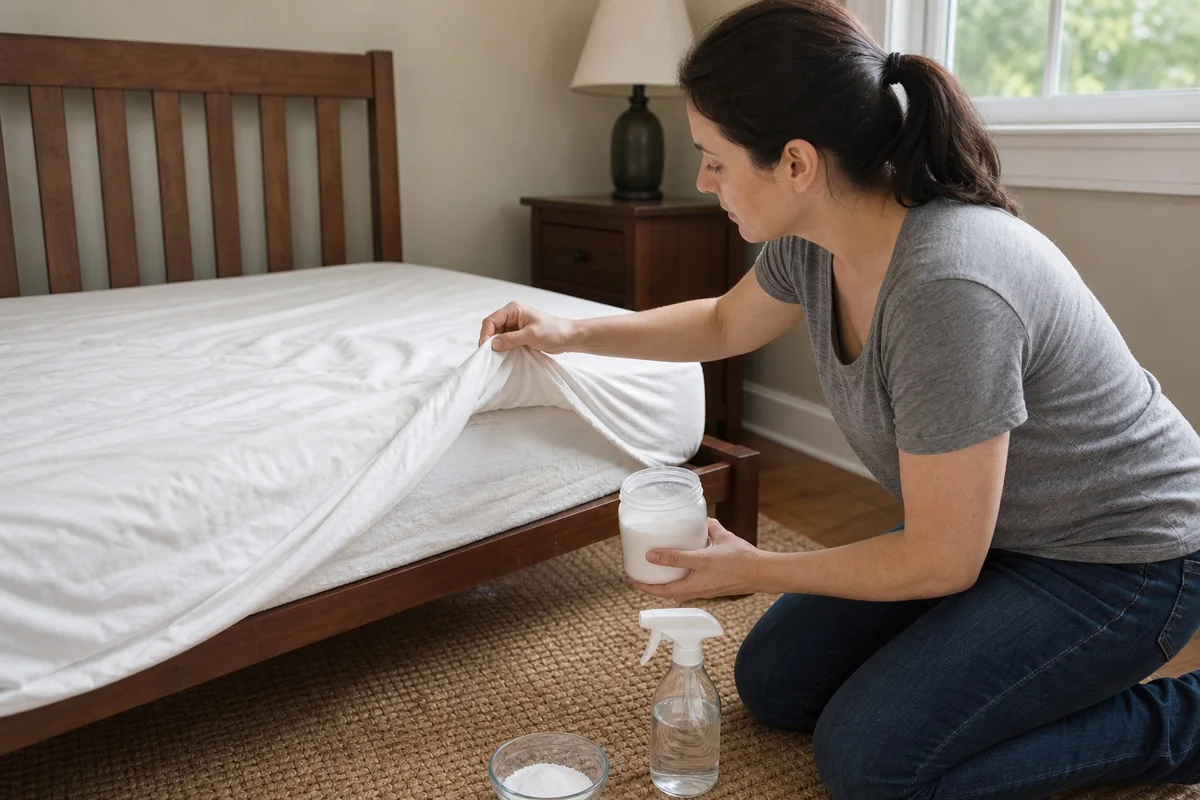

Bed Bug Home Remedies: Do Baking Soda and Vinegar Work?
Do baking soda and vinegar kill bed bugs? No reliable evidence. The home remedies that work are heat, steam, freezing, vacuuming, encasements and diatomaceous earth.
Baking soda and vinegar are not effective bed bug treatments: there is no reliable evidence that either kills an infestation. The home remedies that do work are heat and cold: hot washing and drying, steam, freezing small items, plus vacuuming and mattress encasements. Diatomaceous earth helps in voids but works slowly.
Why Home Remedies Usually Fail Against Bed Bugs
Bed bugs hide in seams, cracks and joints so narrow that most liquids and powders never touch them, and their eggs are glued in place where they are protected. A remedy that kills a bug you spray directly can still leave dozens alive a few inches away, which is why bed bugs seem to survive almost everything people try at home.
Time is the other problem. The UC IPM bed bug guide explains that bed bugs can go a very long time without feeding. Depending on conditions, that span runs from about 20 to 400 days, so starving them out or waiting for a remedy to work rarely succeeds.
Our guide to bed bug treatment at home lays out the full plan, and the bed bugs section links our spray guides.
Bed Bug Home Remedies Compared
The table sorts the remedies people most often try at home by whether there is good evidence they work, why, and where they belong in a treatment plan. Remedies based on heat, cold and physical removal come out on top; pantry mixtures do not. Use the top rows as your plan and the bottom rows as a list of what to skip, however often they are recommended online. Combining several of the top methods at once works far better than any one alone.
| Method | Works? | Why | Use For |
|---|---|---|---|
| Hot laundering and drying | Yes | Heat kills all stages in fabric | Bedding, clothes, pillows |
| Steam | Yes, where it reaches | High heat kills on contact | Mattress seams, upholstery |
| Freezing | Yes, at 0°F for days | Sustained cold kills all stages | Shoes, books, small items |
| Vacuuming | Partly | Removes bugs, misses glued eggs | Seams, frames, carpet edges |
| Diatomaceous earth | Slowly | Dries insects out while dry | Wall voids, under baseboards |
| Rubbing alcohol | Poorly; fire risk | Killed at most about half in lab tests | Not recommended |
| Baking soda | No reliable evidence | No study shows it kills bed bugs | Not recommended |
| Vinegar | No reliable evidence | Contact only, no residual | Not recommended |
The pattern is clear: the remedies that work at home rely on temperature or physical removal, while kitchen-cupboard mixtures rely mostly on hope.
Does Baking Soda Kill Bed Bugs?
There is no reliable evidence that it does. A popular claim says baking soda dries bed bugs out or damages their bodies, but we found no study showing it kills bed bugs or controls an infestation. Sprinkling it on a mattress or carpet mainly leaves a mess to vacuum up.
Baking soda does no harm as a cleaner, but every week spent relying on it is a week for eggs to hatch and nymphs to grow. If you want a dust that does work on insects, diatomaceous earth or silica dust in dry voids is the better choice, since UC IPM lists both among dusts that give long-term control.
Does Vinegar Kill Bed Bugs?
Household vinegar may kill a bug that is soaked in it, but there is no reliable evidence that it eliminates bed bugs, kills eggs or repels them. It evaporates quickly, leaves no lasting effect and cannot reach bugs packed into seams and cracks.
Mixing vinegar with baking soda makes it fizz but adds nothing useful; the two simply neutralize each other. Mixing vinegar with essential oils or dish soap does not turn it into a proven treatment either.
Vinegar is still useful for one thing: cleaning. Wiping down hard surfaces and bed frames after vacuuming removes fecal spots, which makes new signs of bed bugs easier to spot during follow-up inspections.
Rubbing Alcohol, Dish Soap and Essential Oils
Rubbing alcohol is one of the most shared remedies and one of the riskiest. In extension lab tests, direct sprays of 70% and 91% isopropyl alcohol killed at most about half the bed bugs tested. Alcohol is also flammable and a fire hazard on mattresses and furniture, as the same researchers at Rutgers warn.
Dish soap, including Dawn, can kill bugs that are thoroughly soaked, because soap acts as a contact insecticide, but there is no good evidence that it controls an infestation or reliably kills eggs glued into cracks. Of 11 natural and detergent products in the same extension lab tests, only two commercial plant-based sprays killed more than 90% of nymphs; homemade essential oil mixes have no such data behind them.
Home Remedies That Do Work
- Hot laundering and drying: UC IPM recommends washing at 120°F and drying on the hottest setting the fabric allows, with at least 10 to 15 minutes of dryer heat; bed bugs die at 113°F and above.
- Steam: a steamer kills all life stages it reaches in mattress seams and upholstery; move it slowly so heat penetrates.
- Freezing: small items sealed in bags can be frozen at 0°F for several days, checked with a freezer thermometer.
- Vacuuming: removes live bugs and shed skins from seams, frames and carpet edges; repeat often and empty the vacuum outside.
- Mattress encasements: trap bugs inside and remove hiding places on the bed.
- Interceptors: cups under bed legs catch bugs climbing to the bed and show whether treatment is working.
- Diatomaceous earth: a light film in dry wall voids and under baseboards gives slow, long-lasting control.
When Home Remedies Are Not Enough
Heat, steam, vacuuming and encasements can control a small infestation caught early. If bugs are in several rooms, keep appearing in interceptors after a few weeks, or you live in an apartment where they can move between units, add a labeled insecticide that works on resistant bed bugs or call a licensed professional. Professionals can treat whole rooms with heat, which no home remedy can match, and they can coordinate treatment of neighboring units.
For that next step, look for an EPA-registered product that lists bed bugs on its label and, ideally, works on pyrethroid-resistant bugs, since many populations resist the cheapest consumer sprays.
Common Questions About Bed Bug Home Remedies
What is the strongest homemade bed bug killer?
What is the strongest homemade bed bug killer?
Heat. Bed bugs die at 113°F and above, so a hot dryer cycle, a steamer moved slowly over seams and a heat chamber for belongings are the most powerful tools you have at home. Kitchen mixtures such as baking soda, vinegar or alcohol are far weaker or risky.
Does Dawn dish soap kill bed bug eggs?
Does Dawn dish soap kill bed bug eggs?
There is no good evidence that it does. Soapy water can kill bugs it soaks, but eggs are glued deep in seams and cracks where a spray rarely reaches, and they are protected by a shell. Steam and heat are far more reliable for eggs.
What kills bed bugs permanently overnight?
What kills bed bugs permanently overnight?
Nothing at home does that overnight. Professional whole-room heat treatment can kill bugs in a room in a single day, but home treatment with laundering, steam, vacuuming and encasements takes weeks, followed by months of monitoring to confirm they are gone.
Do bed bugs hide in the day?
Do bed bugs hide in the day?
Yes. They hide in mattress seams, box spring joints, bed frame cracks, behind headboards and in nearby furniture, usually within about 6 feet of where people sleep, and come out mostly at night to feed. Inspect those spots with a flashlight.
Key Takeaways
Baking soda and vinegar do not get rid of bed bugs, no matter how they are mixed, and rubbing alcohol adds a fire risk for little benefit. The home remedies that work use heat, cold and physical removal: hot drying, steam, freezing, vacuuming, encasements and interceptors.
Use diatomaceous earth for dry voids, monitor with interceptors and keep going for weeks, since eggs hatch after the first rounds. If bugs persist or spread to other rooms, add a proven bed bug product or bring in a professional.
Today, strip the bed and run every sheet, pillowcase and blanket through the hottest dryer cycle the fabric allows.
Related Articles
Best Bed Bug Sprays: Concentrate, Plant-Based, Dust and Kits
The best bed bug treatment sprays: Crossfire for resistant bed bugs, EcoRaider and Bed Bug Patrol plant-based sprays, CimeXa dust and Ortho's 3-step kit.
Best Bed Bug Sprays for Travel: TSA-Size Picks and Hotel Habits
The best bed bug sprays for travel: EcoRaider and Bed Bug Patrol travel sizes, Hygea Natural and CHOMP!, plus the hotel and homecoming habits that keep bed bugs out.
Bed Bug Treatment at Home: What Works and What Doesn't
Bed bug treatment at home: confirm the signs, then combine hot laundering, vacuuming, steam, encasements, interceptors and labeled insecticides. Skip foggers.
Homemade Indoor Spider Repellents: What Works and How to Spray
Homemade indoor spider repellents: what the evidence says about peppermint, vinegar, lemon and lavender, plus a peppermint spray recipe.