 Pest Pro Reviews Editorial Team • • 8 min read •
Best Bed Bug Sprays: Concentrate, Plant-Based, Dust and Kits
The best bed bug treatment sprays: Crossfire for resistant bed bugs, EcoRaider and Bed Bug Patrol plant-based sprays, CimeXa dust and Ortho's 3-step kit.
The best bed bug treatment spray is Crossfire, a non-repellent concentrate made for pyrethroid-resistant bed bugs and listed for mattress application. EcoRaider is the plant-based pick that held up in university lab tests, Bed Bug Patrol is the budget plant-based spray, CimeXa dust treats voids, and Ortho's 3-step kit bundles traps, spray and powder.
- Many bed bug populations resist pyrethroids, the active ingredients in most cheap consumer sprays, so those sprays often fail on their own.
- In university extension lab tests of 11 natural and detergent products, only two, EcoRaider and Bed Bug Patrol, killed more than 90% of nymphs on direct spray.
- No spray solves bed bugs alone; it works alongside laundering, vacuuming, steam, encasements and monitoring.
What a Bed Bug Spray Can and Cannot Do
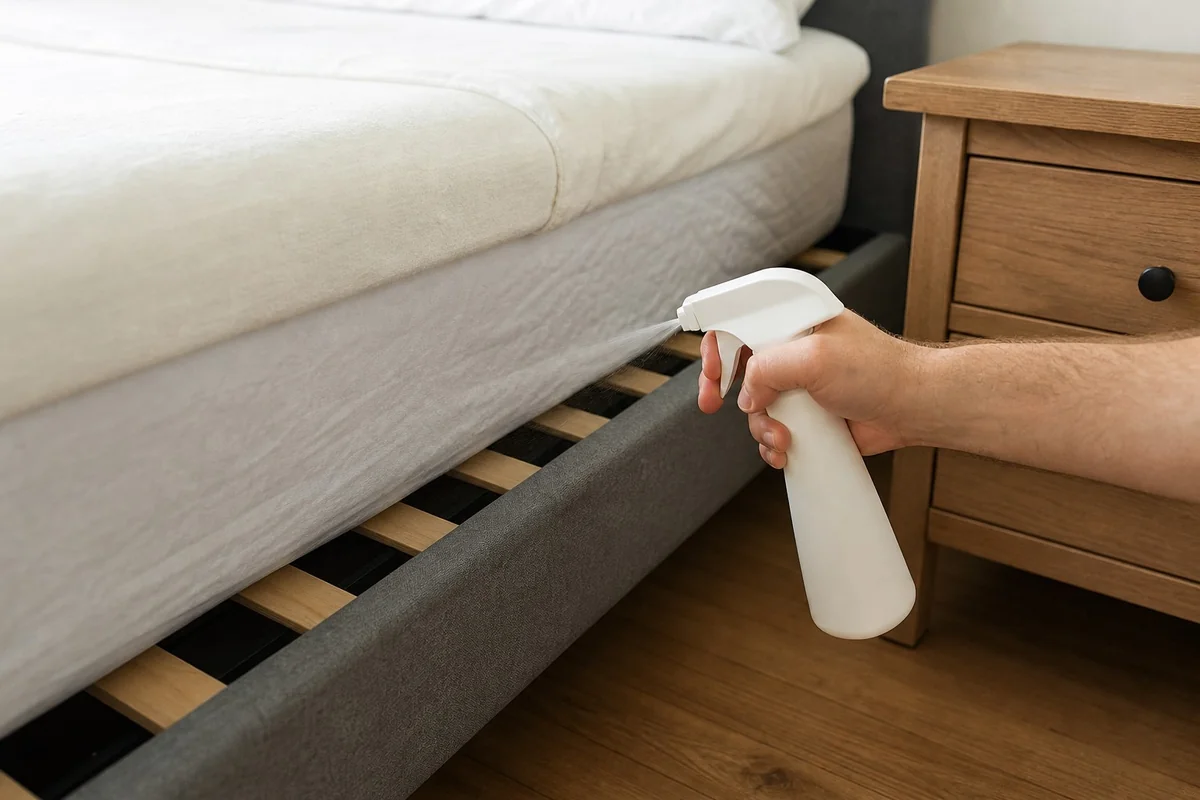
A spray kills bed bugs it reaches and, depending on the product, leaves a residue in cracks and seams. It cannot reach every egg glued deep in a bed frame or every bug inside a wall void, which is why University of California IPM's bed bug guide says insecticides alone will not solve an infestation and work best combined with cleaning, heat or steam.
Resistance is the second problem. UC IPM notes that some populations resist pyrethroids such as bifenthrin, deltamethrin and permethrin, and Rutgers Cooperative Extension researchers report that the majority of field populations they studied are resistant. A spray that relies only on a pyrethroid may kill few of your bugs.
The full home plan, from laundering to encasements, is in our guide to bed bug treatment at home, and the bed bugs section links our remedy and travel guides.
Identify your needs and get personalized recommendations
Bugs in several places; sprays failed.
Wants to avoid synthetic insecticides.
Hiding in voids and joints.
Need to confirm and start treating.
Bed Bug Spray Types Compared
| Type | How It Works | Strength | Limit |
|---|---|---|---|
| Non-repellent concentrate | Bugs contact treated surfaces without avoiding them | Residual control in cracks and seams | Must be mixed; follow the label exactly |
| Plant-based contact spray | Botanical oils and soaps kill on contact | Low toxicity; some usable on mattresses | Little or short residual effect |
| Desiccant dust | Silica damages the insect's outer coating | Long-lasting in dry voids | Slow; must stay dry and undisturbed |
| Pyrethroid consumer spray | Contact kill and residual | Cheap and widely available | Widespread resistance |
The EPA's do-it-yourself bed bug control guidance adds one rule for any product: choose an EPA-registered pesticide that lists bed bugs on the label, and follow the directions for where it may be applied.
How We Selected These Products
We compared bed bug sprays and dusts on how they deal with resistance, whether the label allows mattress use, residual action and what buyers report. Our sources were the makers' listings, Amazon's review digests, Rutgers laboratory results and UC IPM and EPA guidance; we did not test the products.
We favored products with independent evidence or a mode of action that sidesteps pyrethroid resistance. Plain pyrethroid consumer sprays were left out for that reason, and foggers were excluded because UC IPM calls them ineffective against bed bugs.
The non-repellent concentrate leads, because it is built for the resistant populations that defeat most sprays.
Crossfire Bed Bug Concentrate: Best Overall
Crossfire is a professional liquid concentrate for bed bugs, sold here as a 13-ounce bottle with a pair of protective gloves.
- The listing describes it as effective on pyrethroid-resistant bed bugs and their eggs.
- It is non-repellent, so bed bugs do not avoid treated areas, and non-staining, per the listing.
- The listing says it is approved for direct application onto mattresses, unlike many insecticides.
- It is labeled for residential, institutional and commercial settings, with knockdown and residual control.
- Buyers report bugs dying within an hour and no bites for several nights; value opinions are mixed.
Choose it for an established infestation where cheaper sprays have failed. Mix it exactly as the label directs in a pump sprayer, treat seams, frames, baseboards and cracks, and repeat on the label's schedule while you continue laundering and vacuuming.

Crossfire Bed Bug Concentrate 13 oz
Best for: Established, pyrethroid-resistant infestations
- ✓Listed for resistant bed bugs and eggs
- ✓Non-repellent and non-staining, per the listing
- ✓Mattress application allowed, per the listing
- −Concentrate must be mixed carefully
- −Mixed value feedback
Specifications (3)
- Item Form
- liquid
- Liquid Volume
- 13 fluid ounces
- Included Components
- 1 bottle and gloves
EcoRaider Bed Bug Killer: Best Plant-Based Spray
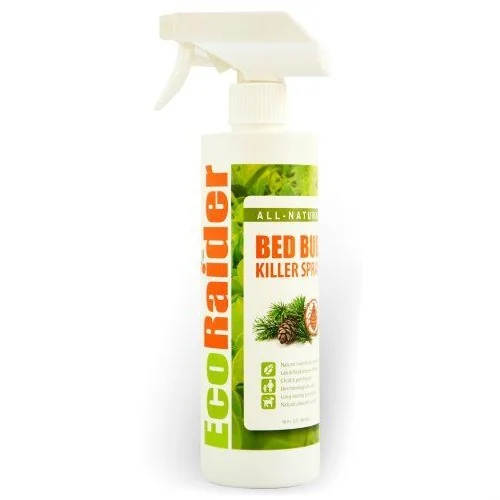
EcoRaider is a plant-based contact spray in a 16-ounce bottle, with cedarwood oil listed as the active ingredient.
- In the extension lab tests described above, it was one of only two natural products to kill more than 90% of nymphs on direct spray, and it killed 87% of eggs sprayed directly.
- The maker describes extended dry residual protection for about two weeks.
- The maker says it is safe to use directly on mattresses and box springs.
- Buyers say it kills on contact and works quickly; the scent gets mixed reviews.
Choose it for mattresses, bedding areas and homes where you want to avoid synthetic insecticides. It works on contact, so spray seams and cracks thoroughly and repeat as part of the wider plan.
EcoRaider Bed Bug Killer Spray 16 oz
Best for: Plant-based treatment of mattresses and bedding areas
- ✓Over 90% nymph kill in Rutgers tests
- ✓Usable on mattresses, per the maker
- ✓Kills on contact, per buyers
- −Strong scent, per some buyers
- −Contact action; needs repeat applications
Specifications (3)
- Active Ingredients
- Cedarwood Oil
- Item Form
- Spray
- Unit Count
- 16 Fluid Ounces
Bed Bug Patrol: Best Budget Plant-Based Spray
Bed Bug Patrol is a ready-to-use plant-based spray in a 24-ounce bottle, with clove oil at 0.03%, peppermint oil at 1.0% and sodium lauryl sulfate at 1.3%.
- It was the other natural product in those lab tests to kill more than 90% of nymphs on direct spray.
- The listing describes it as a minimum-risk product under EPA's 25(b) rules, which EPA does not evaluate for effectiveness.
- It is listed for mattresses, furniture, seams, cracks, carpet and rugs.
- Buyers find it easy to use and like the scent; effectiveness and value are mixed.
Choose it as a lower-cost contact spray for seams and furniture. Because it works on contact, it needs direct, repeated application alongside laundering and vacuuming.

Bed Bug Patrol Bed Bug Spray 24 oz
Best for: A budget plant-based contact spray
- ✓Over 90% nymph kill in Rutgers tests
- ✓Easy to use, per buyers
- ✓Pleasant scent, per buyers
- −25(b) product not evaluated by EPA for effectiveness
- −Mixed effectiveness and value
Specifications (2)
- Item Form
- Spray
- Special Ingredients
- Citric Acid, Clove Oil, Peppermint Oil, Sodium Lauryl Sulfate
CimeXa Insecticide Dust: Best Dust for Voids
Rockwell Labs' CimeXa is a silica dust in a 4-ounce bottle. UC IPM lists silica gel among the dusts that can give long-term bed bug control when placed where they stay dry.
- The maker lists bed bugs, fleas, ticks, cockroaches and other crawling insects.
- It says the dust lasts up to 10 years in undisturbed areas such as wall voids.
- It is odorless and non-staining, per the maker.
- Buyers find it easy to apply and good value, with insects dying a few days after contact.
Choose it for wall voids, behind outlet covers with the power off, inside bed frame joints and under baseboards. Apply a light puff, not piles, and wear a dust mask.

Rockwell Labs CimeXa Insecticide Dust 4 oz
Best for: Long-lasting treatment of voids and frame joints
- ✓Up to 10 years in undisturbed voids, per the maker
- ✓Odorless and non-staining
- ✓Easy to apply, per buyers
- −Slow-acting
- −Fine dust irritates airways
Specifications (2)
- Active Ingredients
- silica
- Unit Count
- 4 Ounce
Ortho Home Defense Max 3-Step Bed Bug System: Best All-in-One Kit
Ortho's kit bundles monitoring and treatment: 2 bed bug traps, a 1-gallon container of bed bug, flea and tick killer and a 12-ounce powder.
- The traps help detect bed bugs and confirm when an infestation is gone, per the maker.
- The spray is listed for bed bugs at all life stages, plus fleas and ticks.
- The powder treats hard-to-spray hiding places, per the maker.
- No buyer review summary was available, and the listing does not name the active ingredients.
Choose it if you want one box with a spray, a dust and traps to get started. Check the spray's active ingredients on the label in the store; if it relies only on a pyrethroid, pair it with a product that works on resistant bugs.

Ortho Home Defense Max 3-Step Bed Bug System
Best for: A starter kit with traps, spray and powder
- ✓Traps for detection and confirmation
- ✓Spray and powder in one box
- ✓Lists bed bugs at all life stages
- −Active ingredients not named in the listing
- −No buyer review summary
Specifications (2)
- Item Form
- Aerosol, Powder
- Item Volume
- 12 fluid ounces
- Crossfire wins for: established, pyrethroid-resistant infestations
- EcoRaider wins for: plant-based treatment of mattresses and bedding areas
- Bed Bug Patrol wins for: a budget plant-based contact spray
- CimeXa wins for: long-lasting treatment of voids and frame joints
- Ortho 3-Step System wins for: a starter kit with traps, spray and powder
Whichever product you use, it works only as part of a plan.
How to Use Bed Bug Sprays Effectively
- Prepare first: launder bedding, vacuum and declutter before spraying.
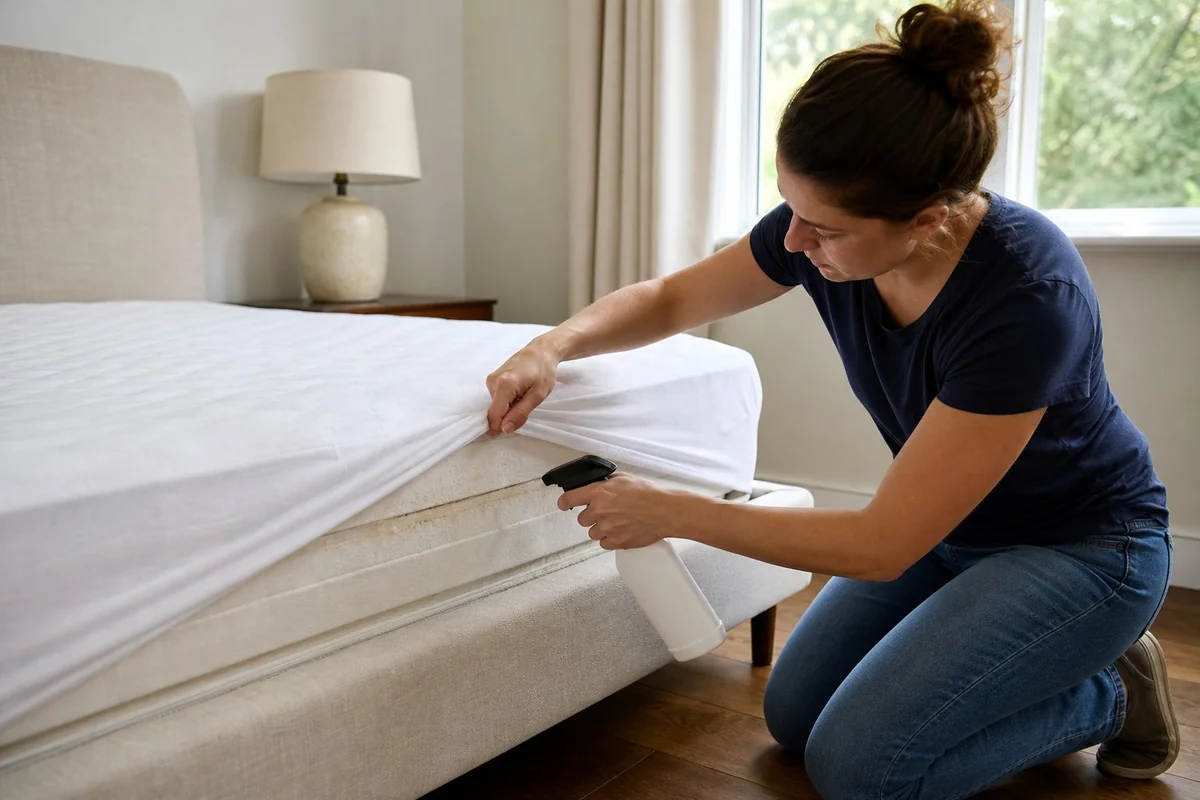
- Target hiding spots: seams, tufts, bed frame joints, headboards, baseboards and furniture cracks.
- Check the label: only spray mattresses and bedding with products whose label allows it.
- Repeat on schedule: follow-up treatments catch nymphs that hatch from surviving eggs.
- Monitor: interceptors under bed legs show whether bugs are still active.
- Skip foggers: they do not reach the cracks where bed bugs hide.
Expect several rounds over weeks rather than one treatment. A falling count in the interceptors from week to week is the sign the combination is working; a steady count means a hiding spot has been missed.
Common Questions About Bed Bug Sprays
Does Raid bed bug spray work?
Does Raid bed bug spray work?
It can kill bed bugs it hits directly, but many consumer bed bug sprays rely on pyrethroids, and most field bed bug populations studied by extension researchers resist them. Used alone, such sprays often fail. Pair any spray with laundering, vacuuming, encasements and a product that works on resistant bugs.
What chemical kills bed bugs and their eggs?
What chemical kills bed bugs and their eggs?
Eggs are the hardest stage. Heat and steam kill all stages, and some products are listed for eggs, such as Crossfire, while EcoRaider killed 87% of eggs sprayed directly in university lab tests. Because some eggs usually survive, follow-up treatments catch the nymphs that hatch.
What is a good spray for bed bugs and cockroaches?
What is a good spray for bed bugs and cockroaches?
Few products are ideal for both, because roaches are best handled with bait and bed bugs with targeted treatment in and around the bed. Some concentrates list both pests, but use roach bait in the kitchen and a bed bug product in the bedroom rather than one spray everywhere.
Can I spray bed bug killer on my mattress?
Can I spray bed bug killer on my mattress?
Only if the label allows it. Some products, such as Crossfire and EcoRaider, are listed for mattress use, while many insecticides are meant for frames, cracks and baseboards only. After treating, fit a bed bug encasement on the mattress and box spring.
How often should I spray for bed bugs?
How often should I spray for bed bugs?
Follow the product label, which usually calls for follow-up applications every one to two weeks while bugs are found. Keep monitoring with interceptors at least weekly, and continue checking for months after the last bug, since eggs and hidden bugs can survive initial treatments.
Which One Should You Buy?
Crossfire is the bed bug spray to buy for an established infestation. It is non-repellent, built for pyrethroid-resistant bugs and their eggs, and its listing allows direct mattress application, which covers the places bed bugs live most.
Choose EcoRaider for a plant-based option with the strongest lab results, Bed Bug Patrol for a cheaper plant-based contact spray, CimeXa for voids and bed frame joints, and Ortho's kit if you want traps, spray and powder in one box. Keep laundering, vacuuming and monitoring either way.
Before you buy, inspect your mattress seams and bed frame, so you know whether you are dealing with a few bugs or an established infestation.
Related Articles
Best Bed Bug Sprays for Travel: TSA-Size Picks and Hotel Habits
The best bed bug sprays for travel: EcoRaider and Bed Bug Patrol travel sizes, Hygea Natural and CHOMP!, plus the hotel and homecoming habits that keep bed bugs out.
Bed Bug Home Remedies: Do Baking Soda and Vinegar Work?
Do baking soda and vinegar kill bed bugs? No reliable evidence. The home remedies that work are heat, steam, freezing, vacuuming, encasements and diatomaceous earth.
Bed Bug Treatment at Home: What Works and What Doesn't
Bed bug treatment at home: confirm the signs, then combine hot laundering, vacuuming, steam, encasements, interceptors and labeled insecticides. Skip foggers.
Best Ant Killer Sprays for Indoors: Residual and Plant-Based
The best ant killer sprays for indoors: Raid Ant and Roach, Harris odorless residual, STEM plant-based, Mighty Mint and EcoVenger, and how to use sprays with bait.