Common Signs of Pest Infestations at Home: How to Detect and Respond in 2026
Learn how to detect pests at home by recognizing the most common signs of infestation. Get practical tips to spot early symptoms, compare evidence by pest type, and know when to take action - all in this homeowner-friendly guide for 2026.
Common signs of pest infestations at home include visible droppings, damage to food or property, strange smells, and unusual noises. Recognizing these symptoms early can help you act quickly and avoid costly repairs or health risks. Homeowners and renters need to know what to look for to protect their living spaces and keep pests from taking over.
What Counts as a Pest Infestation at Home
A pest infestation means more than the occasional bug or mouse. It’s a pattern of repeated sightings, physical evidence, or ongoing damage that signals a larger, hidden population. Understanding what qualifies as an infestation is the first step to solving the problem.
Common Household Pests Defined
Household pests fall into two broad groups: nuisance pests (like ants, houseflies, or occasional spiders) and health-threatening pests (like cockroaches, rodents, and bed bugs). Nuisance pests may be annoying but rarely cause major harm unless present in large numbers. Health-threatening pests can spread disease or trigger allergies with even a small population.
Not every pest sighting is an infestation. For example, seeing one ant after a picnic isn’t a crisis, but a steady trail in your kitchen means a colony is nearby. Some pests, like termites or bed bugs, can do significant damage even if you rarely see them.
Regional and environmental factors matter too. Urban homes tend to deal with cockroaches, mice, and bed bugs, while rural homes may face rats, pantry moths, or bats. Local climate, age of the building, and nearby vegetation all influence which pests are most likely to infest your home.
Infestation vs Occasional Intruder: Key Differences
The difference between an infestation and an isolated pest comes down to frequency, pattern, and supporting evidence. A single fruit fly or spider isn’t a red flag. Multiple sightings over days, especially in the same area, often point to a hidden nest or breeding site.
Patterns matter. If you regularly see ants in the kitchen, cockroaches in the bathroom at night, or hear scratching in the attic, you’re likely dealing with an infestation. Recurring signs in different rooms or at specific times of day are clues that pests have established themselves in your home.
Even low numbers can be serious with certain pests. For example, finding a single bed bug or termite often means many more are hiding out of sight. In these cases, a professional assessment may be warranted even before the problem becomes obvious. For a deeper dive into identifying pest species and patterns, see our Guide to Identifying Household Pests.
Physical Evidence: Droppings, Shed Skins, and Tracks
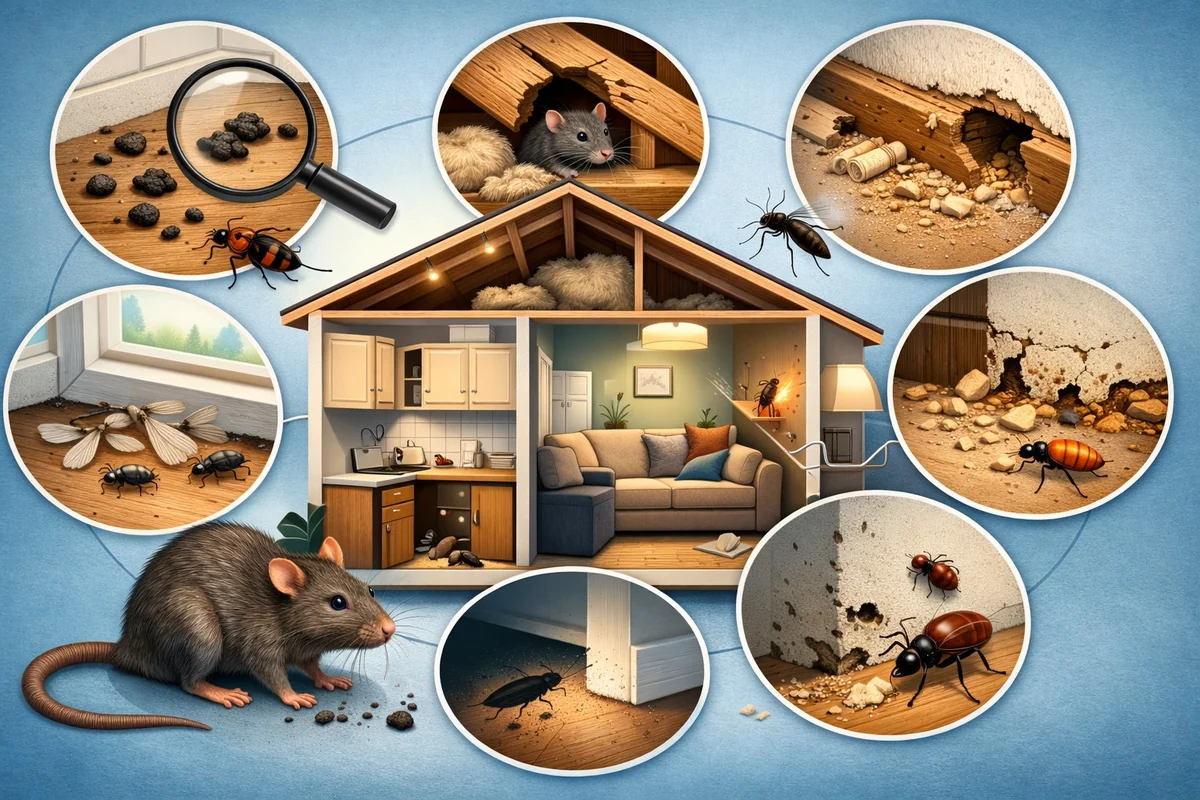
Physical evidence is the most reliable way to detect pests at home. Droppings, shed skins, tracks, and nesting materials can all reveal the type of pest and where they’re most active. Learning to recognize these signs makes it easier to pinpoint the source and treat the problem effectively.
Identifying Pest Droppings and What They Mean
Rodent droppings are usually dark, pellet-shaped, and around 1/8 to 1/4 inch long. Mouse droppings are small and pointed at both ends, while rat droppings are larger and blunt. These are most often found along walls, in cupboards, or near food storage.
Insect frass (droppings) looks different. Cockroach droppings resemble black pepper or coffee grounds, depending on the species. Termite frass appears as tiny, sand-like pellets near wood damage.
Some droppings are direct health hazards. Mouse and rat feces can carry hantavirus and Salmonella, while cockroach droppings are a major trigger for asthma and allergies. Always wear gloves and a mask when cleaning up droppings, and sanitize affected areas thoroughly.
Shed Skins, Egg Casings, and Body Parts
Many pests leave behind shed skins as they grow. Bed bugs and cockroaches are notorious for this. Bed bug skins are translucent, oval, and often found in mattress seams or behind headboards.
Cockroach nymphs shed their skins near hiding spots, especially under appliances or in dark corners.
Egg casings are another sign of active breeding. Cockroach egg cases (oothecae) are brown, capsule-shaped, and contain up to 50 eggs each. Finding them signals not just present pests, but a growing infestation.
Body parts like antennae, wings, or legs are also common where pests are active. For example, finding discarded termite wings near windowsills usually means a swarm recently emerged inside your home.
Footprints, Smudge Marks, and Nesting Materials
Rodents often leave footprints or tail marks in dusty areas. Greasy smudge marks along baseboards or wall edges are caused by rodents’ oily fur rubbing against surfaces as they travel familiar paths. These marks tend to appear near entry points and food sources.
Shredded paper, fabric, or insulation in hidden corners or inside walls is a sign of rodent or bird nesting. Rats and mice use whatever soft material they can find to build nests, often in attics, behind appliances, or inside wall cavities.
Keep in mind, not all pests leave visible tracks. Insect infestations in clean or low-traffic areas may require more careful inspection to spot subtle evidence.
Unusual Smells and Sounds Linked to Pests
Strange odors and unexplained noises are often the first clues homeowners notice before finding other signs of pest infestation. Smells and sounds can reveal not just the presence of pests, but also the likely species and location.
Musty, Oily, or Ammonia-Like Odors
Rodent urine produces a sharp, ammonia-like smell, especially in enclosed or poorly ventilated spaces. If you notice this odor in attics, basements, or behind appliances, investigate for further signs.
Cockroach infestations create a musty, oily, or slightly sweet scent. The more intense the odor, the larger and closer the infestation usually is. Fungal and moldy smells sometimes come from moisture-loving pests like silverfish or termites, which thrive in damp environments.
Odor strength often correlates with infestation size and proximity. A faint smell may mean pests are behind a wall or under the floor, while a strong odor usually signals a nearby nest or high activity zone.
Noises in Walls, Ceilings, or Floors
Scratching, scurrying, or gnawing sounds in walls and ceilings are classic signs of rodent activity. These noises are often most noticeable at night when rodents are active and the house is quiet.
Rustling or tapping noises may indicate insects like carpenter ants or termites chewing wood. Squeaking and fluttering sounds in attics can point to bats or nesting birds.
Sound transmission can make it tricky to pinpoint the exact location. Noises may seem to move or echo through drywall and hollow spaces, so combine listening with physical inspection for best results.
Visible Damage to Structures, Food, and Belongings
Pest infestations almost always cause damage. Chewed wires, ruined food, and destroyed fabrics are all red flags. Identifying the type and pattern of damage can help you determine which pest is to blame and how urgent the response needs to be.
Chewed Wires, Wood, and Insulation
Rodents gnaw on almost anything. Chewed electrical wires are a serious fire risk and should be addressed immediately. Rodents also damage wood framing, plastic pipes, and insulation, often causing costly repairs.
Termite and carpenter ant damage looks different. Termites eat wood from the inside out, leaving hollowed beams and mud tubes along foundations. Carpenter ants excavate galleries inside wood, creating smooth tunnels and piles of sawdust (frass) below entry holes.
Insulation damage often signals nesting or burrowing pests. Flattened or shredded insulation in attics, crawlspaces, or walls is a common sign of rodents or birds setting up residence.
Food Packaging and Pantry Infestations
Pests invade food storage areas seeking easy meals. Rodents chew holes in plastic or cardboard packaging, while pantry moths and beetles break into sealed containers and lay eggs inside. Webbing, larvae, or clusters of dead insects are all strong indicators.
Cross-contamination from droppings, urine, or dead pests is a real risk. If you find infested food, it’s safest to discard not just the affected item but any nearby products as well.
Extensive food damage signals a widespread infestation and means you’ll need to deep clean and sanitize the entire pantry before restocking.
Fabric, Paper, and Furniture Damage
Silverfish, carpet beetles, and clothes moths feed on textiles, books, and paper records. Look for holes in clothing, chewed book bindings, or shed skins in drawers and boxes.
Bed bugs hide in mattress seams, behind headboards, and inside upholstered furniture. Signs include blood spots, tiny dark fecal stains, and clusters of live bugs or shed skins.
Damage to valuable items like heirlooms, artwork, or important documents can occur before you ever see the pest itself. Early detection is key to minimizing loss.
Live Pest Sightings: Patterns and Red Flags
Seeing a live pest doesn’t always mean you have an infestation, but certain patterns raise real concern. Noticing pests at odd times or in large groups is often a red flag that the problem runs deeper than it appears.
Daytime Sightings of Nocturnal Pests
Cockroaches and rodents are nocturnal. Spotting them during the day almost always means their hiding places are overcrowded or food is running out. This is a strong indicator of a serious infestation.
Pests forced into the open by competition or lack of resources behave differently than small, hidden populations. Daytime sightings should prompt a thorough search for nests, droppings, and other evidence.
Some pests, like ants, forage at all hours, while others, like bed bugs, rarely show themselves except when feeding. Knowing what’s normal for each species helps you interpret live sightings correctly.
Swarming and Group Activity
Termite or ant swarms are a telltale sign of reproductive cycles and colony expansion. Swarming usually happens in spring or after rain, when winged adults leave the nest to start new colonies.
Seasonal swarms can be isolated events, but repeated swarming or the presence of discarded wings indoors indicates an ongoing infestation. Trails of ants or carpenter ants moving between nest and food sources show the location and size of the colony.
Group activity is often easier to spot than individual pests, but don’t ignore less obvious patterns. Some infestations remain hidden with only subtle signs until the population grows large enough to become visible.
| Item | ★Difficulty Level | ★Time Required | Cost Range | ★Best For | Coverage Accuracy | Limitations |
|---|---|---|---|---|---|---|
| Visual Inspection | Easy | 30-60 minutes for average home | No cost | Homeowners seeking quick, DIY assessment | Moderate | May miss hidden pests or early infestations |
| Monitoring Devices (Traps & Sensors) | Medium | 10-15 minutes setup, ongoing monitoring (daily checks recommended) | Budget to moderate | Detecting active pests over time, useful for small to medium areas | High | May require multiple devices for large spaces; some pests avoid traps |
| Professional Inspection | Not applicable (performed by trained technician) | 1-2 hours for typical home | Premium ($100-$300 per visit) | Comprehensive, whole-home evaluation; hard-to-detect infestations | Very high | Higher cost; scheduling required |
| Odor & Sound Detection | Medium | 15-30 minutes (focused checks in problem areas) | No cost | Identifying rodents, termites, or pests with distinctive smells/sounds | Low to moderate | Not effective for silent or odorless pests; requires experience |
Hidden Signs: Wall Stains, Entry Points, and Utility Clues
Not all signs of pest infestation are easy to spot. Some clues hide in out-of-the-way places or resemble other household problems. Paying attention to subtle changes in your home’s structure can reveal issues before they become severe.
Wall Stains, Bubbling Paint, and Moisture Issues
Termite mud tubes are narrow, earth-colored tunnels running up foundations or inside walls. Rodent urine stains appear as yellowish streaks or spots, sometimes visible under blacklight. Insect trails may show up as faint lines or cluster marks on ceilings and baseboards.
Bubbling paint, soft spots in drywall, or unexplained moisture often indicate hidden water leaks. These conditions attract pests like termites, silverfish, and cockroaches, which thrive in damp environments.
It’s easy to confuse pest-caused stains with plumbing or HVAC problems. If repairs don’t solve the issue, investigate for pest activity behind walls or under floors.
Entry Holes, Gaps, and Utility Penetrations
Rodents and insects exploit gaps around pipes, vents, and foundations to get inside. Look for chewed or widened holes, gnawed insulation, or dirt smudges near entry points.
Repeated pest access leaves telltale signs: loose caulking, holes in weatherstripping, or damaged screens. These often go unnoticed in attics, crawl spaces, or behind appliances, so check less obvious areas during seasonal inspections.
Sealing entry points is one of the most effective ways to reduce pest problems, but you have to find them first. Use a flashlight and mirror to inspect tight spaces and utility penetrations.
For more tips on identifying pest evidence, you may want to browse our Pest Identification resources for regional and pest-specific advice.
Health Symptoms and Allergic Reactions Linked to Pests
Pests don’t just damage property - they can also affect your health. Allergies, asthma, and skin reactions are sometimes the first signs of a hidden infestation, especially in sensitive individuals or children.
Allergies, Asthma, and Respiratory Issues
Cockroach and rodent allergens are potent triggers for asthma and allergies, particularly in children. Symptoms often include coughing, sneezing, runny nose, and wheezing that get worse at home but improve when away.
Unexplained respiratory problems, especially if they flare up in certain rooms or after cleaning, may point to hidden pest activity. Airborne particles from droppings, shed skins, and urine can linger in carpets and air ducts.
If medication or cleaning doesn’t solve the problem, consider investigating for pests as part of your health strategy.
Bites, Rashes, and Skin Irritation
Bed bug, flea, and mite bites each have telltale patterns. Bed bug bites are often grouped in lines or clusters, usually on exposed skin. Flea bites tend to be scattered, mostly on legs and ankles, while mite bites can cause widespread itching or rashes.
Some people experience delayed reactions to bites, making it hard to pinpoint the source. Scratching increases the risk of secondary infections, so treat bites promptly and look for other pest evidence nearby.
Persistent skin symptoms - especially if multiple family members are affected - should always prompt a search for pests, even if you haven’t seen any live bugs.
Comparing the Most Common Infestation Signs
Different pests leave different clues. Knowing which signs are most reliable for each type can help you prioritize your response and decide whether to go DIY or call in help. Not all detection methods are equally effective for every pest.
Summary Table: Signs by Pest Type
Below you’ll find a comparison of the most telling signs associated with key household pests. This makes it easier to match the symptoms you’re seeing with the likely culprit and plan your next steps accordingly.
Which Signs Indicate Immediate Action Is Needed?
Some signs demand urgent attention. Large numbers of rodent droppings, visible termite swarmers or mud tubes, and unexplained bites or rashes from bed bugs all require fast action. These indicate an established infestation that can quickly get worse.
DIY methods - like traps, baits, or cleaning - can handle small or early-stage problems. But if you notice structural damage, persistent health symptoms, or pests that resist repeated treatment, it’s time to call a professional. Delaying action can make the situation more costly and dangerous.
Frequently Asked Questions About Home Pest Infestation Signs
❓ Frequently Asked Questions
What are the most common signs of a pest infestation at home?
What are the most common signs of a pest infestation at home?
The most common signs of a pest infestation at home include droppings, gnaw marks on wood or food packaging, strange smells, nests or burrows, and unexplained noises in walls. Early detection helps prevent damage and health risks. For example, rodent droppings are often found near food storage areas.
How do I check my home for pest infestations?
How do I check my home for pest infestations?
To check your home for pest infestations:
- Inspect baseboards, cupboards, and attics for droppings or nesting material
- Look for chewed wires, holes, or damaged packaging
- Listen for scratching sounds, especially at night
- Check for musty or unusual odors
- Examine windows and doors for signs of entry
Regular inspections are key to early detection.
What is the difference between a minor and major pest infestation?
What is the difference between a minor and major pest infestation?
A minor pest infestation involves limited activity, such as a few droppings or isolated sightings, while a major infestation means persistent evidence, widespread damage, and frequent pest sightings. Major infestations often require professional intervention. Timely action with minor problems helps prevent escalation and costly repairs.
How often should I inspect my home for pests?
How often should I inspect my home for pests?
Inspect your home for pests every 3 months, or more frequently if you notice signs of activity. Seasonal changes, especially spring and fall, are critical times for pest entry. High-risk areas like basements, kitchens, and attics benefit from monthly checks to catch problems early and minimize damage.
What should I do if I find evidence of pests in my home?
What should I do if I find evidence of pests in my home?
If you find evidence of pests:
- Identify the pest type using droppings or damage
- Clean affected areas and remove accessible food sources
- Seal entry points such as gaps or cracks
- Set traps or use targeted baits as appropriate
- Contact a licensed pest control professional if the issue persists
Prompt response limits health risks and property damage.
What should I look for when choosing a pest removal service?
What should I look for when choosing a pest removal service?
When choosing a pest removal service, consider:
- Licensing: ensure the company is certified and insured
- Treatment methods: prefer services using EPA-approved solutions
- Experience: companies with proven track records handle complex cases better
- Customer reviews: look for consistent positive feedback
- Service guarantee: confirm follow-up support is included
Compare at least three providers and verify credentials before hiring.
Why is early detection of pest infestations important?
Why is early detection of pest infestations important?
Early detection of pest infestations prevents extensive property damage, reduces health risks from allergens or disease, and lowers treatment costs. Most users find that addressing issues early avoids long-term complications such as structural repairs or persistent odors. Regular monitoring is recommended for effective prevention.
Key Takeaways: Recognizing and Responding to Pest Infestation Signs
Spotting the signs of pest infestation early is the best way to protect your home and health. Physical evidence, patterns of live sightings, odors, noises, and even health symptoms can all reveal a hidden problem. Knowing how to interpret these clues helps you act before minor issues become major headaches.
If you find clear evidence - like droppings, nests, or damage - start with targeted cleaning, sealing, and traps. Track what you see in a pest diary to monitor progress. Escalate to professional help if the problem persists or if you notice high-risk signs like wiring damage or unexplained bites.
Regular inspections, prompt repairs, and reducing clutter and moisture make it much harder for pests to take hold. Stay alert, act quickly, and don’t ignore the early warning signs - your peace of mind (and your property value) depend on it.
Related Articles
Guide to Identifying Household Pests: Spot, Compare, and Act on Common Pest Signs in 2026
Learn how to identify household pests quickly and accurately with our 2026 step-by-step pest identification guide. Spot common pest signs, compare DIY and professional methods, and take control of your home without costly exterminators.
Complete Guide to Pest Prevention in Homes: Stop Pests in 2026
Protect your home in 2026 with this complete pest prevention guide. Discover proven DIY methods, room-by-room tips, safe solutions for families, and expert advice to stop pests before they start.

Best Chemical Pesticides for Home Use 2026: Safe, Effective, and Affordable Options
Discover the best chemical pesticides for home use in 2026. Compare top-rated baits, sprays, gels, and natural options for ants, roaches, fleas, and more. Find safe, effective, and budget-friendly pest control solutions for every room.

Best Natural and Organic Pest Control Products 2026: Safe, Eco-Friendly Solutions for Every Home
Find the best natural and organic pest control products for 2026. Safe, eco-friendly solutions for ants, roaches, rodents, and more - ideal for families and pet owners.